
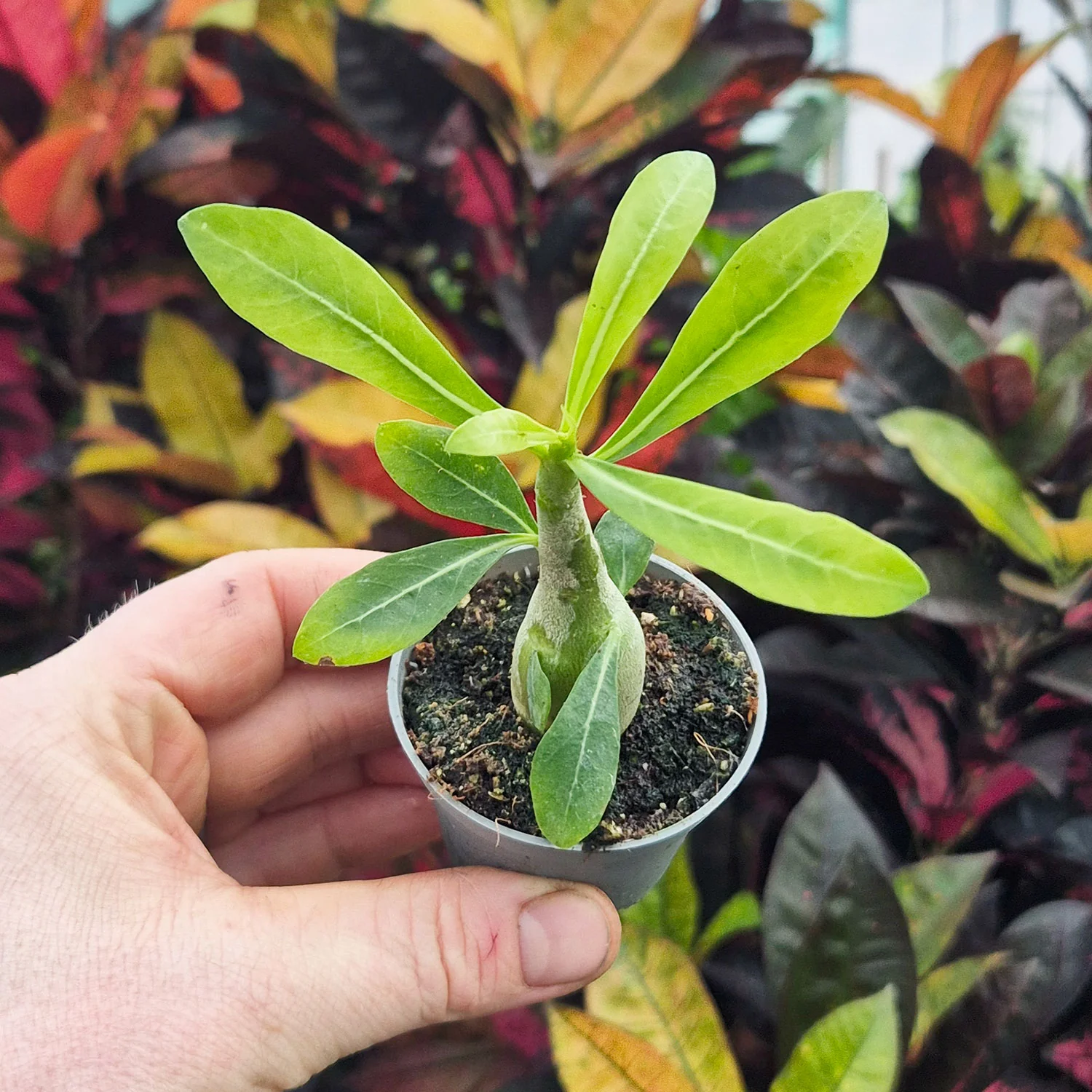


Adenium Obesum Desert Rose House Plant 6cm Pot
Adenium obesum, commonly known as the Desert Rose, is an extraordinary tropical succulent prized for its sculptural caudex and vibrant trumpet-shaped flowers. Native to arid regions of sub-Saharan Africa and the Arabian Peninsula, this striking plant embodies a perfect balance of strength and elegance, making it a favourite among collectors and bonsai enthusiasts alike.
The Desert Rose features a swollen, bulbous trunk (caudex) that serves as a water reservoir, giving the plant a distinctive, sculptural appearance. From this base, multiple branches extend, adorned with glossy, narrow green leaves and crowned by clusters of brilliant pink, red, or white blooms. The flowers appear throughout the warm months, often lasting for weeks at a time, transforming the plant into a living jewel of colour.
Compact, resilient, and artistically formed, Adenium obesum brings a touch of desert drama and exotic beauty to any plant collection — a living sculpture that celebrates both resilience and grace.
Adenium obesum – Care Guide
Light
Thrives in full sun to bright, direct light. Provide at least 6 hours of sunlight daily for compact growth and prolific flowering. Indoors, place near a south- or west-facing window. Without sufficient light, growth will slow, and flowering may diminish.
Watering
Water sparingly. Allow the soil to dry out completely between waterings. During the active growing season (spring to early autumn), water thoroughly, ensuring the pot drains freely. In winter dormancy, water only enough to prevent the caudex from shrivelling — approximately once every 3–4 weeks. Overwatering is the most common cause of root rot.
Temperature and Humidity
-
Temperature: Prefers warmth between 25–35 °C; never expose to temperatures below 12 °C.
-
Humidity: Thrives in dry air; no additional humidity is required. Avoid misting, which can promote fungal issues.
Soil and Potting
Use a fast-draining, sandy succulent mix. A combination of cactus soil, coarse sand, and perlite or pumice is ideal. Terracotta pots are recommended to promote air circulation and help the soil dry quickly. Repot every 2–3 years in spring to refresh the substrate and allow room for caudex development.
Feeding
Feed every 4–6 weeks during the growing season with a diluted, low-nitrogen fertiliser or one formulated for cacti and succulents. Avoid fertilising during dormancy in winter. Balanced, light feeding encourages flowering and healthy root growth.
Pruning and Maintenance
Prune in spring to shape the plant and encourage branching. Use clean, sharp tools and wear gloves to avoid contact with the plant’s sap, which is toxic. Regular pruning helps maintain a compact, bonsai-like form. Wipe leaves gently with a damp cloth to remove dust and highlight their natural gloss.
Growth and Maturity
A slow to moderate grower, Adenium obesum can reach 1–2 metres tall in ideal conditions but remains smaller when grown in pots. Over time, the caudex thickens and becomes more intricate, creating an eye-catching, sculptural form. Mature plants can produce dozens of flowers in a single flush, blooming multiple times per year under ideal light and warmth.
Common Issues
-
Yellowing leaves: Overwatering or cold exposure.
-
Wrinkled caudex: Underwatering during the growing season.
-
Leaf drop in winter: Normal dormancy behaviour.
-
Pests: Occasionally mealybugs or spider mites; treat promptly with neem oil or insecticidal soap.
Background and Benefits
*Adenium obesum* originates from the deserts and rocky hills of East Africa and the Arabian Peninsula, where it has evolved to store water in its thick caudex to withstand drought. Its name derives from “Aden” (Yemen) and “obesum,” meaning “fat” — a fitting description of its swollen trunk.
In cultivation, it is widely celebrated for its bonsai-like form, brilliant blooms, and symbolic meaning. The Desert Rose is often regarded as a symbol of strength, prosperity, and endurance, representing life flourishing in even the harshest conditions. Its sculptural trunk and radiant flowers make it a natural choice for contemporary plant styling, from minimalist interiors to tropical patios.
Quick Care Summary
Light: Full sun (6+ hours daily); bright indoors near a sunny window
Water: Let soil dry completely between watering; water sparingly in winter
Temperature: 25–35 °C; avoid below 12 °C
Humidity: Low; prefers dry air
Soil: Gritty, well-draining mix – cactus soil, sand, perlite/pumice
Feed: Every 4–6 weeks in spring/summer
Growth: Compact succulent, 30–100 cm; swollen caudex with pink to red trumpet-shaped blooms
⚠️ Toxicity note: Contains a milky latex sap that is toxic if ingested and can irritate skin or eyes. Always handle with care and keep out of reach of pets and children.
Styling Tip
Showcase Adenium obesum in a shallow terracotta or stone planter to emphasise its sculptural caudex and bonsai-like aesthetic. Position it where it receives plenty of sunlight — such as a bright windowsill, conservatory, or sunny patio. Its elegant silhouette pairs beautifully with other arid-climate plants like Euphorbia trigona, Haworthia, or Crassula ovata. When in bloom, it becomes an extraordinary living centrepiece — a perfect balance of desert resilience and tropical vibrancy.
Original: $7.91
-70%$7.91
$2.37Product Information
Product Information
Shipping & Returns
Shipping & Returns
Description
Adenium obesum, commonly known as the Desert Rose, is an extraordinary tropical succulent prized for its sculptural caudex and vibrant trumpet-shaped flowers. Native to arid regions of sub-Saharan Africa and the Arabian Peninsula, this striking plant embodies a perfect balance of strength and elegance, making it a favourite among collectors and bonsai enthusiasts alike.
The Desert Rose features a swollen, bulbous trunk (caudex) that serves as a water reservoir, giving the plant a distinctive, sculptural appearance. From this base, multiple branches extend, adorned with glossy, narrow green leaves and crowned by clusters of brilliant pink, red, or white blooms. The flowers appear throughout the warm months, often lasting for weeks at a time, transforming the plant into a living jewel of colour.
Compact, resilient, and artistically formed, Adenium obesum brings a touch of desert drama and exotic beauty to any plant collection — a living sculpture that celebrates both resilience and grace.
Adenium obesum – Care Guide
Light
Thrives in full sun to bright, direct light. Provide at least 6 hours of sunlight daily for compact growth and prolific flowering. Indoors, place near a south- or west-facing window. Without sufficient light, growth will slow, and flowering may diminish.
Watering
Water sparingly. Allow the soil to dry out completely between waterings. During the active growing season (spring to early autumn), water thoroughly, ensuring the pot drains freely. In winter dormancy, water only enough to prevent the caudex from shrivelling — approximately once every 3–4 weeks. Overwatering is the most common cause of root rot.
Temperature and Humidity
-
Temperature: Prefers warmth between 25–35 °C; never expose to temperatures below 12 °C.
-
Humidity: Thrives in dry air; no additional humidity is required. Avoid misting, which can promote fungal issues.
Soil and Potting
Use a fast-draining, sandy succulent mix. A combination of cactus soil, coarse sand, and perlite or pumice is ideal. Terracotta pots are recommended to promote air circulation and help the soil dry quickly. Repot every 2–3 years in spring to refresh the substrate and allow room for caudex development.
Feeding
Feed every 4–6 weeks during the growing season with a diluted, low-nitrogen fertiliser or one formulated for cacti and succulents. Avoid fertilising during dormancy in winter. Balanced, light feeding encourages flowering and healthy root growth.
Pruning and Maintenance
Prune in spring to shape the plant and encourage branching. Use clean, sharp tools and wear gloves to avoid contact with the plant’s sap, which is toxic. Regular pruning helps maintain a compact, bonsai-like form. Wipe leaves gently with a damp cloth to remove dust and highlight their natural gloss.
Growth and Maturity
A slow to moderate grower, Adenium obesum can reach 1–2 metres tall in ideal conditions but remains smaller when grown in pots. Over time, the caudex thickens and becomes more intricate, creating an eye-catching, sculptural form. Mature plants can produce dozens of flowers in a single flush, blooming multiple times per year under ideal light and warmth.
Common Issues
-
Yellowing leaves: Overwatering or cold exposure.
-
Wrinkled caudex: Underwatering during the growing season.
-
Leaf drop in winter: Normal dormancy behaviour.
-
Pests: Occasionally mealybugs or spider mites; treat promptly with neem oil or insecticidal soap.
Background and Benefits
*Adenium obesum* originates from the deserts and rocky hills of East Africa and the Arabian Peninsula, where it has evolved to store water in its thick caudex to withstand drought. Its name derives from “Aden” (Yemen) and “obesum,” meaning “fat” — a fitting description of its swollen trunk.
In cultivation, it is widely celebrated for its bonsai-like form, brilliant blooms, and symbolic meaning. The Desert Rose is often regarded as a symbol of strength, prosperity, and endurance, representing life flourishing in even the harshest conditions. Its sculptural trunk and radiant flowers make it a natural choice for contemporary plant styling, from minimalist interiors to tropical patios.
Quick Care Summary
Light: Full sun (6+ hours daily); bright indoors near a sunny window
Water: Let soil dry completely between watering; water sparingly in winter
Temperature: 25–35 °C; avoid below 12 °C
Humidity: Low; prefers dry air
Soil: Gritty, well-draining mix – cactus soil, sand, perlite/pumice
Feed: Every 4–6 weeks in spring/summer
Growth: Compact succulent, 30–100 cm; swollen caudex with pink to red trumpet-shaped blooms
⚠️ Toxicity note: Contains a milky latex sap that is toxic if ingested and can irritate skin or eyes. Always handle with care and keep out of reach of pets and children.
Styling Tip
Showcase Adenium obesum in a shallow terracotta or stone planter to emphasise its sculptural caudex and bonsai-like aesthetic. Position it where it receives plenty of sunlight — such as a bright windowsill, conservatory, or sunny patio. Its elegant silhouette pairs beautifully with other arid-climate plants like Euphorbia trigona, Haworthia, or Crassula ovata. When in bloom, it becomes an extraordinary living centrepiece — a perfect balance of desert resilience and tropical vibrancy.

