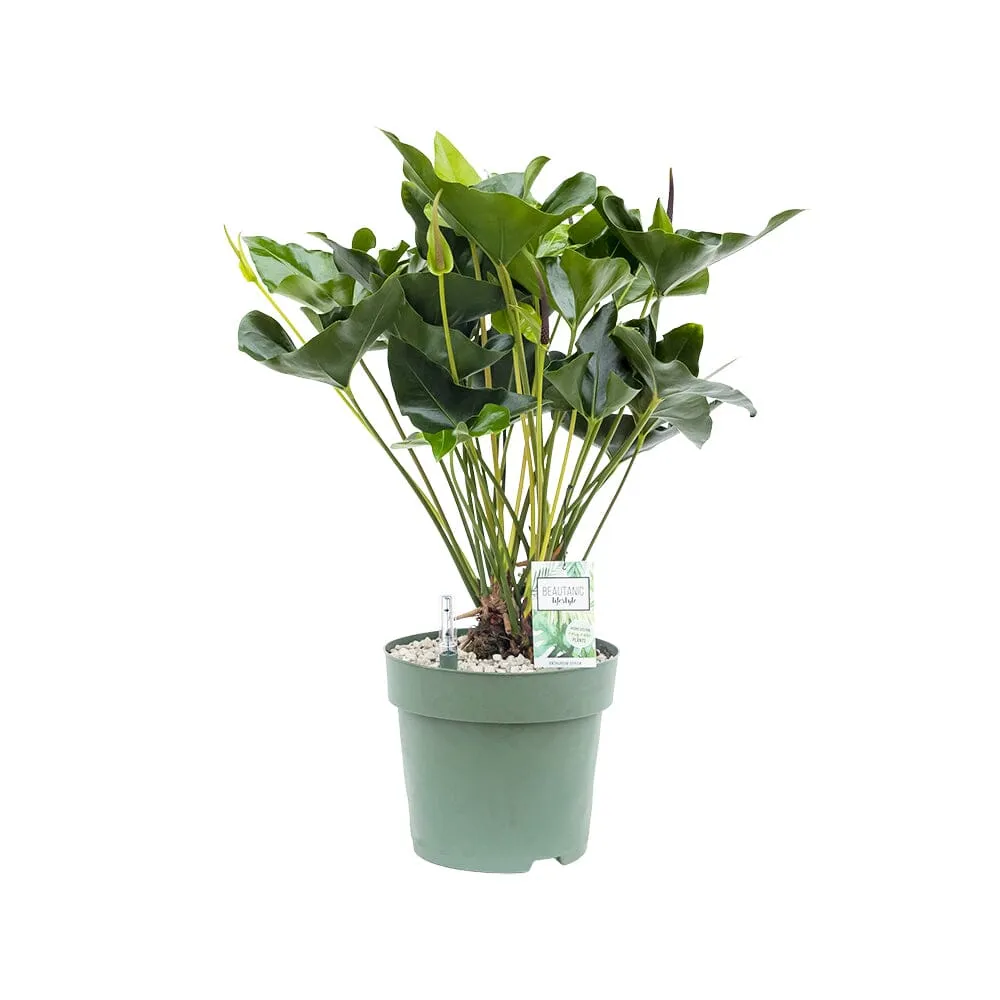

20 - 30cm Dischidia Oinantha Houseplant in Hanging 14cm Pot
Dischidia oiantha is a charming and less common species of Dischidia, a genus of epiphytic plants closely related to Hoyas (family Apocynaceae). Native to Southeast Asia, this trailing plant is grown primarily for its decorative foliage and easy-going nature.
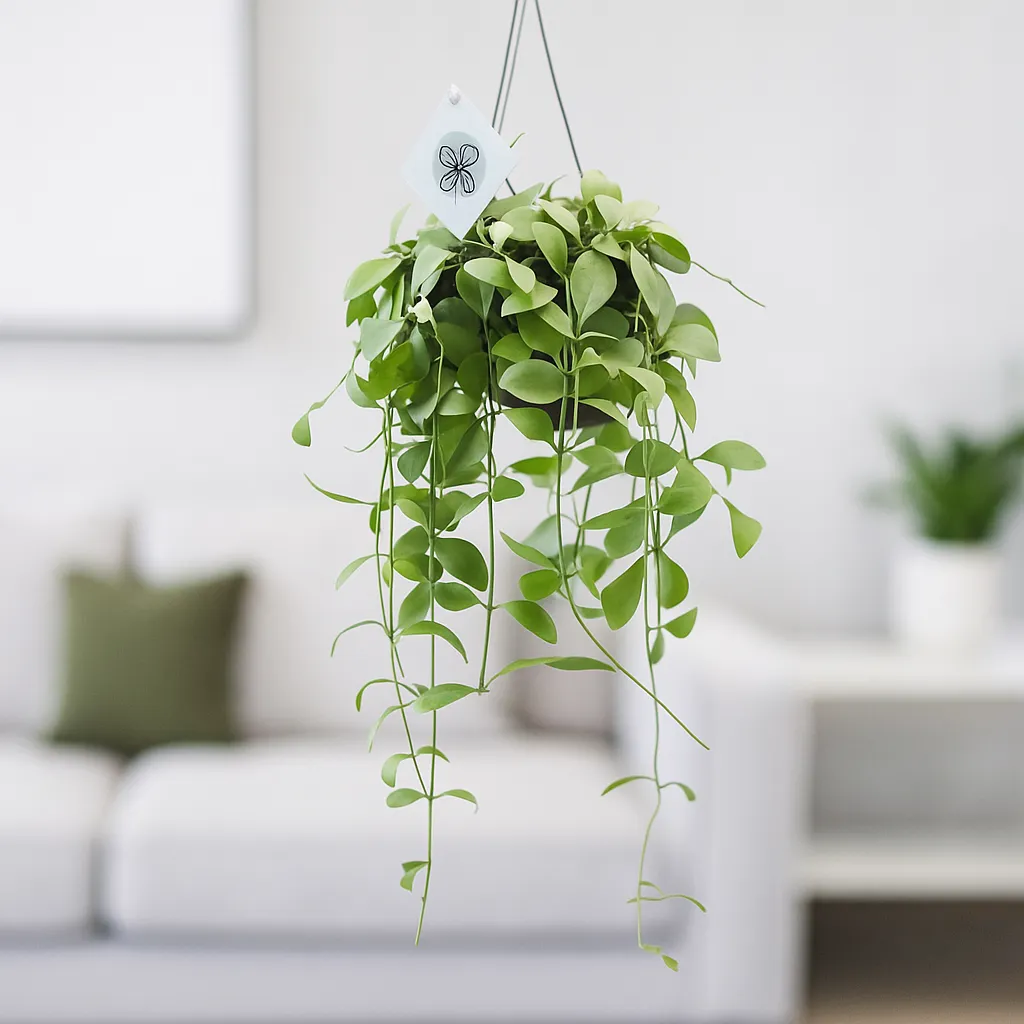
The plant produces slender, cascading vines lined with small, ovate leaves that are smooth, leathery, and often a fresh medium-green. Some cultivars and forms display subtle silver markings or variegation, adding extra ornamental appeal. Its trailing growth makes it ideal for hanging baskets, kokedama, or shelves, where its stems can spill gracefully.
Like other Dischidias, it may also develop small clusters of star-shaped flowers in cream or greenish-white, though these blooms are modest compared to its foliage.
Dischidia oiantha – Care Guide
Light
Enjoys bright, indirect light. Tolerates a few hours of gentle morning or late-afternoon sun. Avoid prolonged, harsh direct light, which may scorch the foliage.
Watering
Keep the soil or substrate lightly moist during the growing season, allowing the top layer to dry slightly before watering again. As an epiphyte, it dislikes soggy soil. Reduce watering in winter.
Temperature and Humidity
-
Temperature: Prefers 18–28°C. Protect from draughts and never allow it to drop below 15°C.
-
Humidity: Enjoys moderate to high humidity (50–70%). Thrives in greenhouse cabinets or bathrooms with bright light.
Soil and Potting
Use a free-draining, airy mix – such as orchid bark, perlite, and coco husk blended with a little peat-free compost. It can also be mounted on cork or grown in kokedama-style arrangements.
Feeding
Feed monthly in spring and summer with a diluted balanced fertiliser or orchid feed. No feeding is required in winter.
Pruning and Maintenance
Prune to manage length and encourage branching. Stems can be easily propagated through cuttings placed in moss, water, or soil.
Growth and Maturity
A relatively fast grower in good conditions, producing vines that can trail over a metre. Flowers may appear on mature plants, but it is mostly grown for its cascading foliage.
Common Issues
-
Shrivelling leaves: Underwatering or low humidity.
-
Yellowing leaves: Overwatering or poorly draining soil.
-
Leggy growth: Insufficient light.
-
Pests: Occasionally mealybugs or aphids.
Background and Benefits
Dischidia oiantha is one of the easier Dischidia species to grow, offering a trailing habit and compact leaves that make it versatile for both indoor plant styling and terrarium culture. Its similarity to Hoyas makes it a natural addition to collections of epiphytic or tropical vines.
✅ Quick Care Summary
-
Light: Bright, indirect; some gentle sun tolerated
-
Water: Keep lightly moist; avoid waterlogging
-
Temperature: 18–28°C; protect from cold
-
Humidity: Moderate to high (50–70%)
-
Soil: Airy epiphytic mix with bark and perlite
-
Feed: Monthly in spring/summer
-
Growth: Trailing epiphytic vine, 1 m+; small ovate leaves, occasional clusters of starry flowers
Original: $29.02
-70%$29.02
$8.71Product Information
Product Information
Shipping & Returns
Shipping & Returns
Description
Dischidia oiantha is a charming and less common species of Dischidia, a genus of epiphytic plants closely related to Hoyas (family Apocynaceae). Native to Southeast Asia, this trailing plant is grown primarily for its decorative foliage and easy-going nature.
The plant produces slender, cascading vines lined with small, ovate leaves that are smooth, leathery, and often a fresh medium-green. Some cultivars and forms display subtle silver markings or variegation, adding extra ornamental appeal. Its trailing growth makes it ideal for hanging baskets, kokedama, or shelves, where its stems can spill gracefully.
Like other Dischidias, it may also develop small clusters of star-shaped flowers in cream or greenish-white, though these blooms are modest compared to its foliage.
Dischidia oiantha – Care Guide
Light
Enjoys bright, indirect light. Tolerates a few hours of gentle morning or late-afternoon sun. Avoid prolonged, harsh direct light, which may scorch the foliage.
Watering
Keep the soil or substrate lightly moist during the growing season, allowing the top layer to dry slightly before watering again. As an epiphyte, it dislikes soggy soil. Reduce watering in winter.
Temperature and Humidity
-
Temperature: Prefers 18–28°C. Protect from draughts and never allow it to drop below 15°C.
-
Humidity: Enjoys moderate to high humidity (50–70%). Thrives in greenhouse cabinets or bathrooms with bright light.
Soil and Potting
Use a free-draining, airy mix – such as orchid bark, perlite, and coco husk blended with a little peat-free compost. It can also be mounted on cork or grown in kokedama-style arrangements.
Feeding
Feed monthly in spring and summer with a diluted balanced fertiliser or orchid feed. No feeding is required in winter.
Pruning and Maintenance
Prune to manage length and encourage branching. Stems can be easily propagated through cuttings placed in moss, water, or soil.
Growth and Maturity
A relatively fast grower in good conditions, producing vines that can trail over a metre. Flowers may appear on mature plants, but it is mostly grown for its cascading foliage.
Common Issues
-
Shrivelling leaves: Underwatering or low humidity.
-
Yellowing leaves: Overwatering or poorly draining soil.
-
Leggy growth: Insufficient light.
-
Pests: Occasionally mealybugs or aphids.
Background and Benefits
Dischidia oiantha is one of the easier Dischidia species to grow, offering a trailing habit and compact leaves that make it versatile for both indoor plant styling and terrarium culture. Its similarity to Hoyas makes it a natural addition to collections of epiphytic or tropical vines.
✅ Quick Care Summary
-
Light: Bright, indirect; some gentle sun tolerated
-
Water: Keep lightly moist; avoid waterlogging
-
Temperature: 18–28°C; protect from cold
-
Humidity: Moderate to high (50–70%)
-
Soil: Airy epiphytic mix with bark and perlite
-
Feed: Monthly in spring/summer
-
Growth: Trailing epiphytic vine, 1 m+; small ovate leaves, occasional clusters of starry flowers