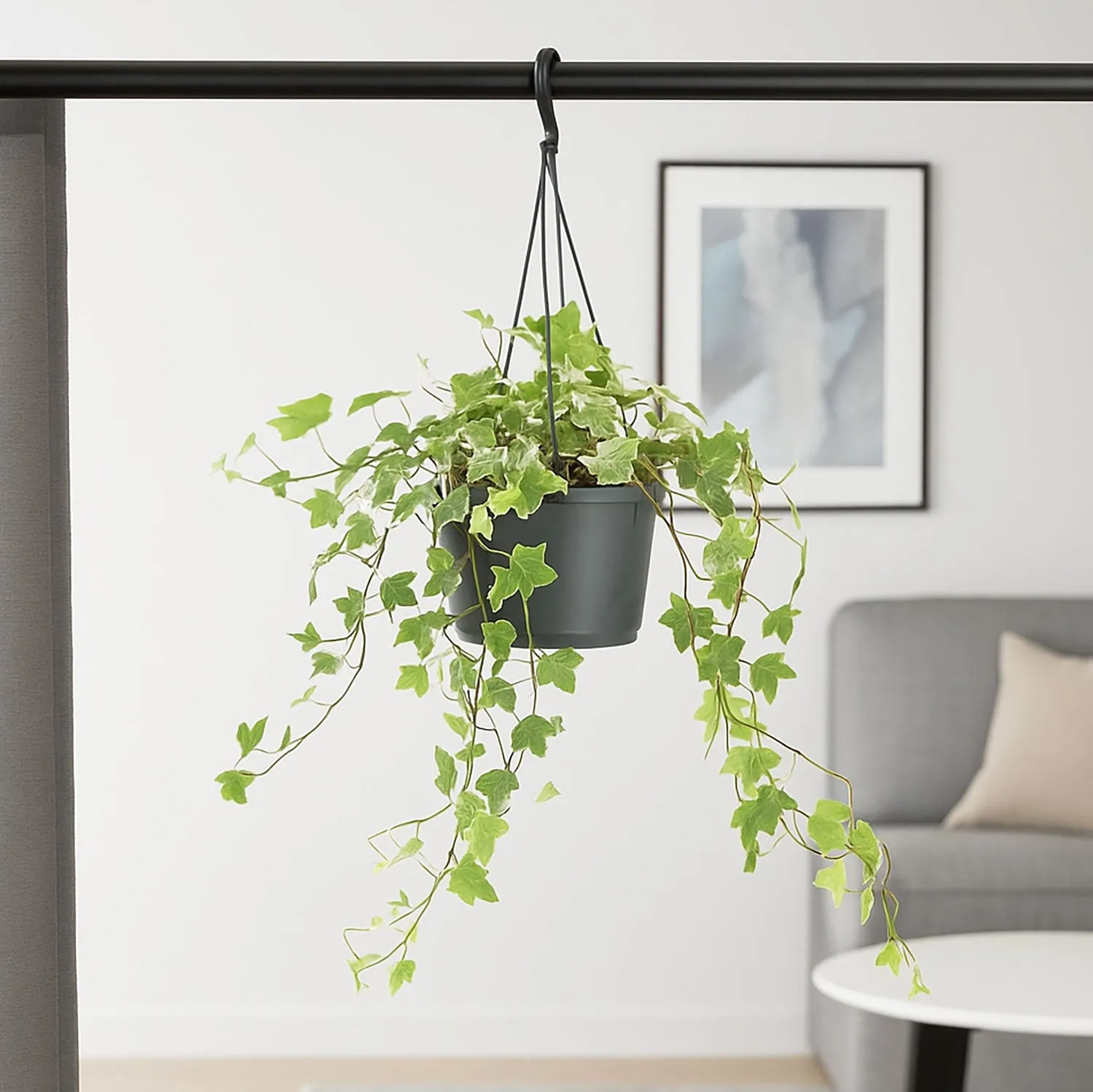
35 - 45cm Hedera Helix Variegated Ivy Houseplant 17cm Hanging Pot
Hedera helix ‘Variegata’, commonly known as the Variegated English Ivy, is a timeless trailing evergreen admired for its classic charm and creamy-white variegated leaves. A member of the Araliaceae family and native to Europe, this elegant ivy is a symbol of endurance and growth — a plant that has adorned homes, gardens, and architecture for centuries.
Each leaf is beautifully marbled in shades of green and ivory, with five distinct lobes and a glossy finish. The variegation patterns range from fine white edging to bold splashes of cream, giving every vine its own unique character. Compact and versatile, Hedera helix ‘Variegata’ is perfect for hanging planters, shelves, or as a trailing accent in mixed arrangements. Outdoors, it makes a lovely groundcover or wall climber, while indoors, it adds texture and a refined touch of greenery to any setting.
Hardy, classic, and endlessly adaptable, Variegated English Ivy brings a sense of timeless natural beauty wherever it grows.
Hedera helix ‘Variegata’ – Care Guide
Light
Thrives in bright, indirect light but can tolerate partial shade. Too little light may reduce variegation and cause leaves to revert to solid green. Avoid strong, direct sun, which can scorch the delicate white edges. A bright east- or north-facing window is ideal for indoor growth.
Watering
Keep the soil evenly moist but not waterlogged. Water when the top 2–3 cm of soil feels dry to the touch. Reduce watering in winter, allowing the soil to dry slightly more between waterings. Hedera helix prefers consistent moisture but dislikes soggy roots.
Temperature and Humidity
Temperature: Prefers cooler indoor conditions between 15–22 °C. It tolerates lower temperatures but should be protected from frost indoors.
Humidity: Average household humidity is fine. It benefits from occasional misting, especially during winter when indoor air tends to be dry.
Soil and Potting
Use a well-draining, fertile potting mix — compost combined with perlite and a little sand or bark ensures proper aeration. Repot every 2–3 years in spring to refresh the soil and prevent root compaction. When grown outdoors, ensure soil drains freely and is rich in organic matter.
Feeding
Feed every 4–6 weeks during spring and summer with a diluted, balanced liquid fertiliser. Over-fertilising may cause lush but leggy growth, so feed lightly. Stop feeding during autumn and winter when growth slows.
Pruning and Maintenance
Trim regularly to encourage fuller, bushier growth and control length. Pinch back long stems and remove any yellowing or damaged leaves. Indoors, prune to maintain shape; outdoors, it can be clipped into topiary or used as trailing groundcover. Wipe leaves occasionally to remove dust and enhance their variegation.
Growth and Maturity
A vigorous grower, Hedera helix ‘Variegata’ can trail 1–2 metres indoors or spread widely as a groundcover outdoors. Indoors, it forms a cascading, elegant vine that can be trained around frames, poles, or shelves.
Common Issues
-
Leggy growth: Insufficient light or lack of pruning.
-
Crispy leaves: Low humidity or underwatering.
-
Yellowing leaves: Overwatering or poor drainage.
-
Pests: Occasionally affected by spider mites or aphids — treat with neem oil or insecticidal soap.
Background and Benefits
Hedera helix is native to Europe, Western Asia, and North Africa, where it grows as a climbing vine or groundcover in forests and rocky habitats. The ‘Variegata’ cultivar was developed for its beautiful cream-edged leaves, offering a more decorative option for indoor and garden use.
This classic plant has long been associated with fidelity, resilience, and everlasting life — often used in traditional architecture and garden design. It’s also valued for its air-purifying qualities, helping to remove common indoor toxins such as formaldehyde and benzene.
Quick Care Summary
-
Light: Bright, indirect light; tolerates partial shade
-
Water: Keep soil evenly moist; allow top few cm to dry
-
Temperature: 15–22 °C; avoid frost
-
Humidity: Average; mist occasionally
-
Soil: Well-draining mix – compost, perlite, sand or bark
-
Feed: Every 4–6 weeks in spring/summer
-
Growth: 1–2 m trailing or climbing vine; green and cream variegated leaves
⚠️ Toxicity note: Mildly toxic to pets and humans if ingested; may cause mild skin irritation.
Styling Tip
Showcase Hedera helix ‘Variegata’ in a hanging basket, trailing from shelves, or climbing a decorative trellis for a soft, romantic touch. Its classic variegation pairs beautifully with plain green foliage such as Philodendron ‘Micans’ or Pothos ‘N’Joy’, adding texture and brightness to mixed plant displays. For a timeless look, place it in a terracotta or ceramic pot and let it trail elegantly down bookcases or window ledges. Indoors or out, this hardy ivy brings grace, greenery, and a hint of nostalgia to any space.
Original: $32.98
-70%$32.98
$9.89Product Information
Product Information
Shipping & Returns
Shipping & Returns
Description
Hedera helix ‘Variegata’, commonly known as the Variegated English Ivy, is a timeless trailing evergreen admired for its classic charm and creamy-white variegated leaves. A member of the Araliaceae family and native to Europe, this elegant ivy is a symbol of endurance and growth — a plant that has adorned homes, gardens, and architecture for centuries.
Each leaf is beautifully marbled in shades of green and ivory, with five distinct lobes and a glossy finish. The variegation patterns range from fine white edging to bold splashes of cream, giving every vine its own unique character. Compact and versatile, Hedera helix ‘Variegata’ is perfect for hanging planters, shelves, or as a trailing accent in mixed arrangements. Outdoors, it makes a lovely groundcover or wall climber, while indoors, it adds texture and a refined touch of greenery to any setting.
Hardy, classic, and endlessly adaptable, Variegated English Ivy brings a sense of timeless natural beauty wherever it grows.
Hedera helix ‘Variegata’ – Care Guide
Light
Thrives in bright, indirect light but can tolerate partial shade. Too little light may reduce variegation and cause leaves to revert to solid green. Avoid strong, direct sun, which can scorch the delicate white edges. A bright east- or north-facing window is ideal for indoor growth.
Watering
Keep the soil evenly moist but not waterlogged. Water when the top 2–3 cm of soil feels dry to the touch. Reduce watering in winter, allowing the soil to dry slightly more between waterings. Hedera helix prefers consistent moisture but dislikes soggy roots.
Temperature and Humidity
Temperature: Prefers cooler indoor conditions between 15–22 °C. It tolerates lower temperatures but should be protected from frost indoors.
Humidity: Average household humidity is fine. It benefits from occasional misting, especially during winter when indoor air tends to be dry.
Soil and Potting
Use a well-draining, fertile potting mix — compost combined with perlite and a little sand or bark ensures proper aeration. Repot every 2–3 years in spring to refresh the soil and prevent root compaction. When grown outdoors, ensure soil drains freely and is rich in organic matter.
Feeding
Feed every 4–6 weeks during spring and summer with a diluted, balanced liquid fertiliser. Over-fertilising may cause lush but leggy growth, so feed lightly. Stop feeding during autumn and winter when growth slows.
Pruning and Maintenance
Trim regularly to encourage fuller, bushier growth and control length. Pinch back long stems and remove any yellowing or damaged leaves. Indoors, prune to maintain shape; outdoors, it can be clipped into topiary or used as trailing groundcover. Wipe leaves occasionally to remove dust and enhance their variegation.
Growth and Maturity
A vigorous grower, Hedera helix ‘Variegata’ can trail 1–2 metres indoors or spread widely as a groundcover outdoors. Indoors, it forms a cascading, elegant vine that can be trained around frames, poles, or shelves.
Common Issues
-
Leggy growth: Insufficient light or lack of pruning.
-
Crispy leaves: Low humidity or underwatering.
-
Yellowing leaves: Overwatering or poor drainage.
-
Pests: Occasionally affected by spider mites or aphids — treat with neem oil or insecticidal soap.
Background and Benefits
Hedera helix is native to Europe, Western Asia, and North Africa, where it grows as a climbing vine or groundcover in forests and rocky habitats. The ‘Variegata’ cultivar was developed for its beautiful cream-edged leaves, offering a more decorative option for indoor and garden use.
This classic plant has long been associated with fidelity, resilience, and everlasting life — often used in traditional architecture and garden design. It’s also valued for its air-purifying qualities, helping to remove common indoor toxins such as formaldehyde and benzene.
Quick Care Summary
-
Light: Bright, indirect light; tolerates partial shade
-
Water: Keep soil evenly moist; allow top few cm to dry
-
Temperature: 15–22 °C; avoid frost
-
Humidity: Average; mist occasionally
-
Soil: Well-draining mix – compost, perlite, sand or bark
-
Feed: Every 4–6 weeks in spring/summer
-
Growth: 1–2 m trailing or climbing vine; green and cream variegated leaves
⚠️ Toxicity note: Mildly toxic to pets and humans if ingested; may cause mild skin irritation.
Styling Tip
Showcase Hedera helix ‘Variegata’ in a hanging basket, trailing from shelves, or climbing a decorative trellis for a soft, romantic touch. Its classic variegation pairs beautifully with plain green foliage such as Philodendron ‘Micans’ or Pothos ‘N’Joy’, adding texture and brightness to mixed plant displays. For a timeless look, place it in a terracotta or ceramic pot and let it trail elegantly down bookcases or window ledges. Indoors or out, this hardy ivy brings grace, greenery, and a hint of nostalgia to any space.