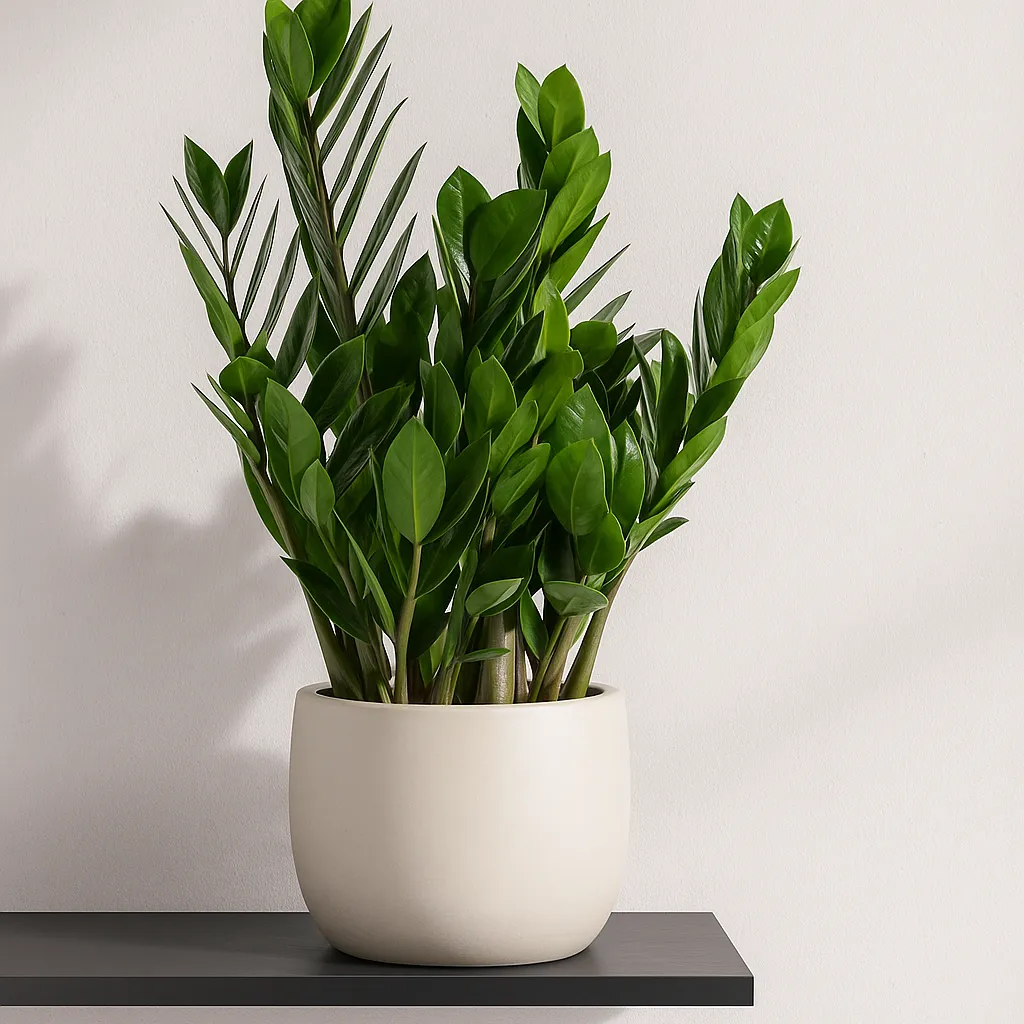
Zamioculcas Zamifolia ZZ Plant
Zamioculcas zamiifolia, commonly called the ZZ Plant, is one of the most resilient and low-maintenance houseplants available. Native to the arid regions of East Africa, it belongs to the Araceae family and is admired for its glossy, architectural foliage and exceptional tolerance to neglect.
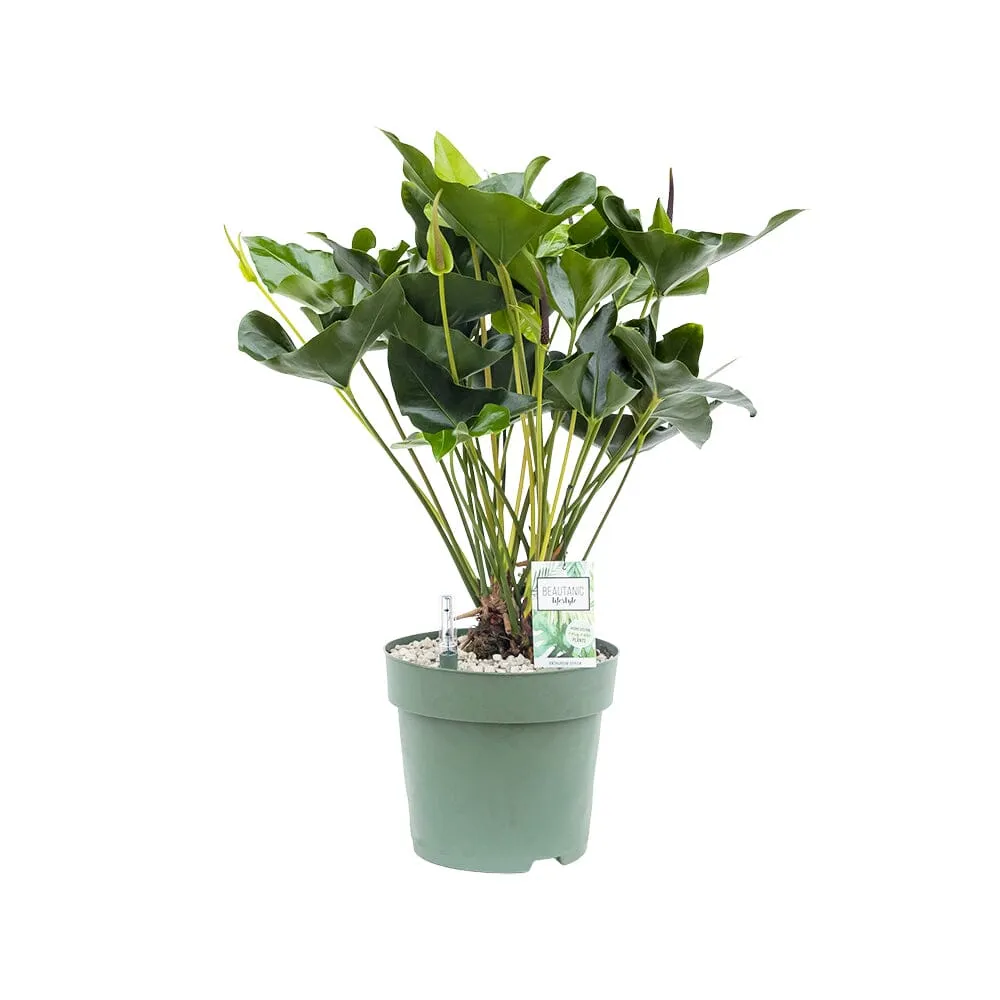
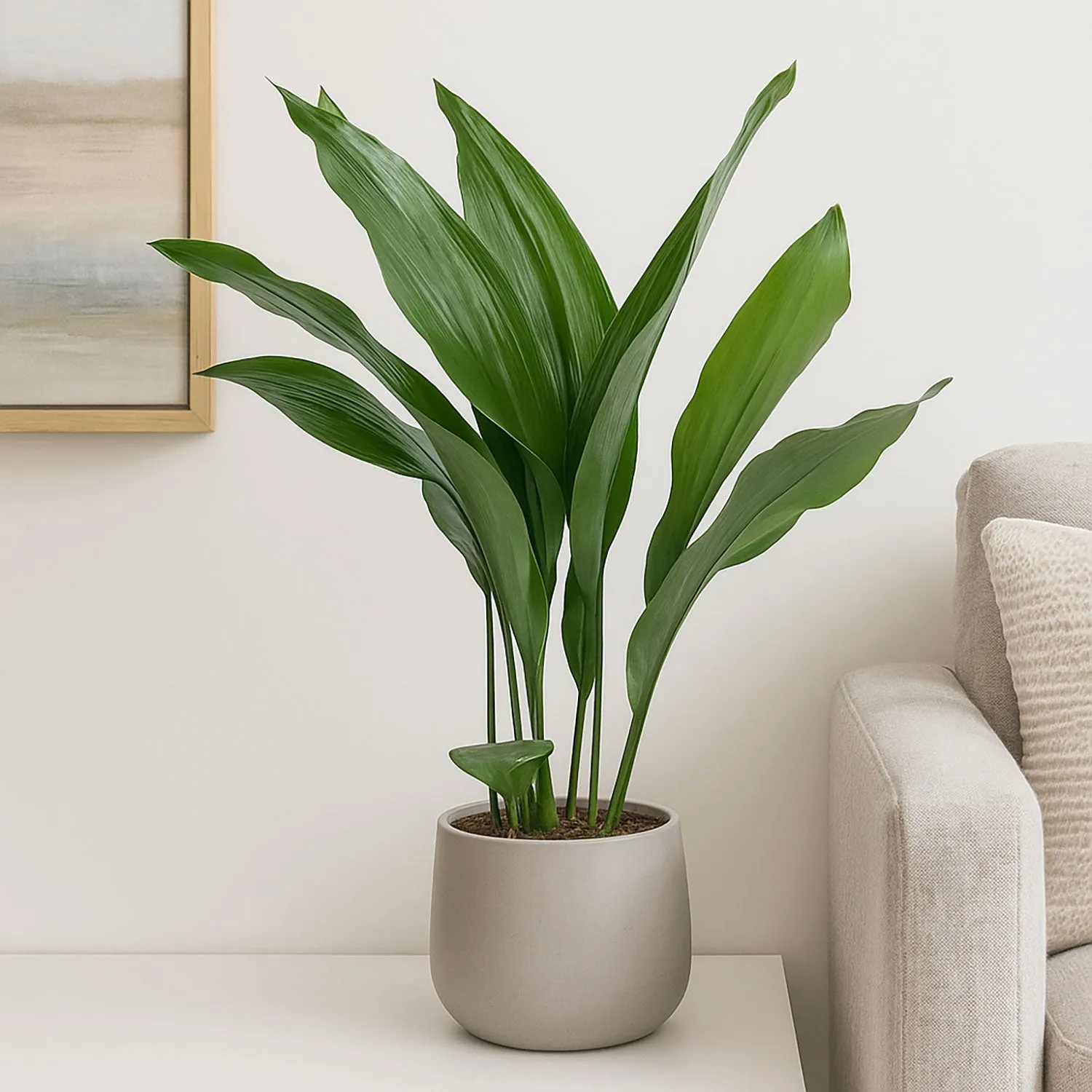
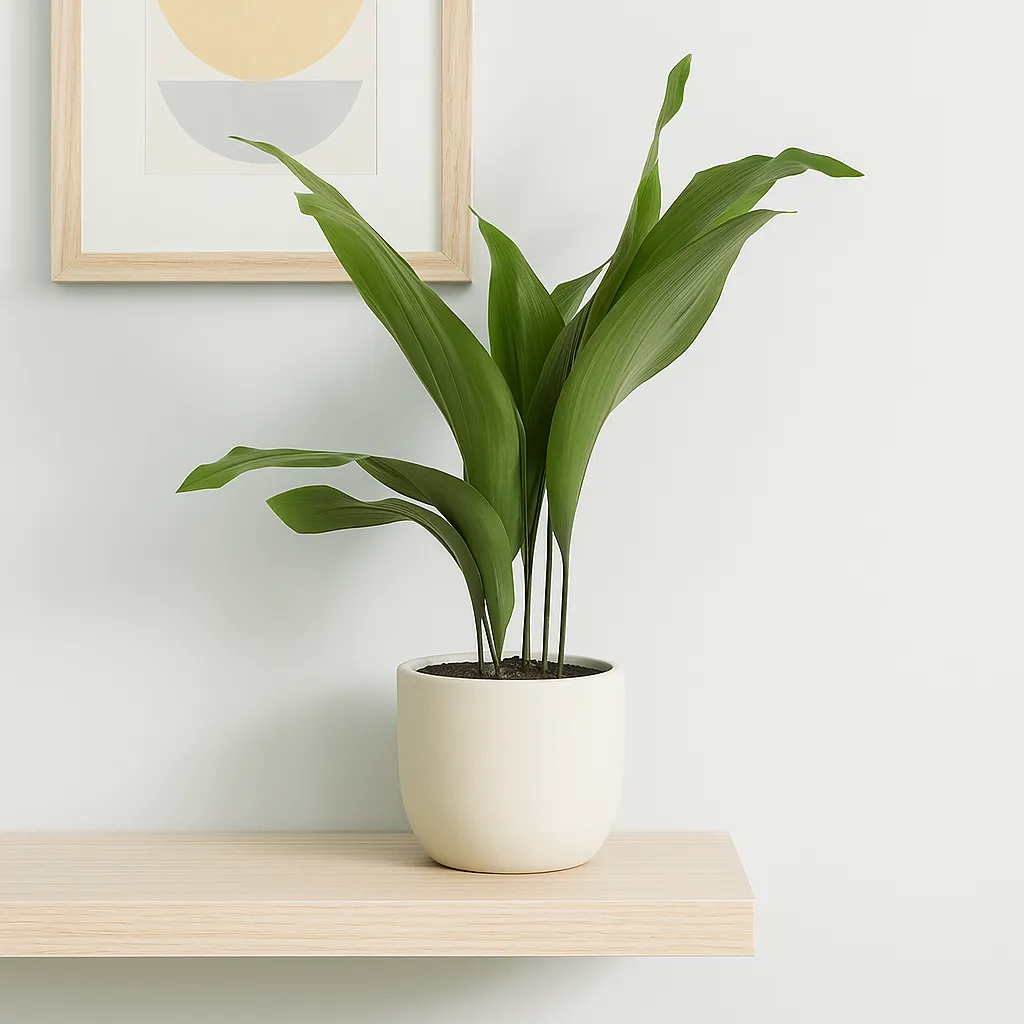
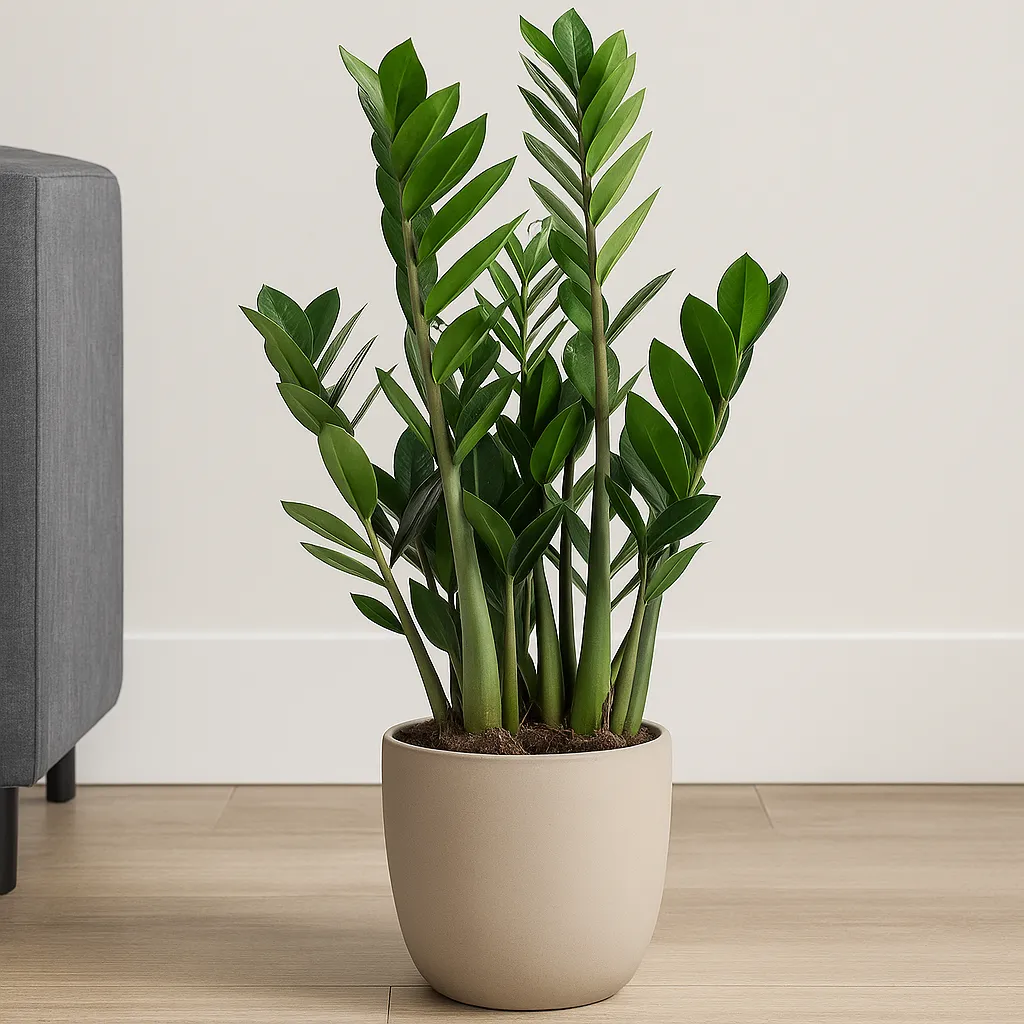
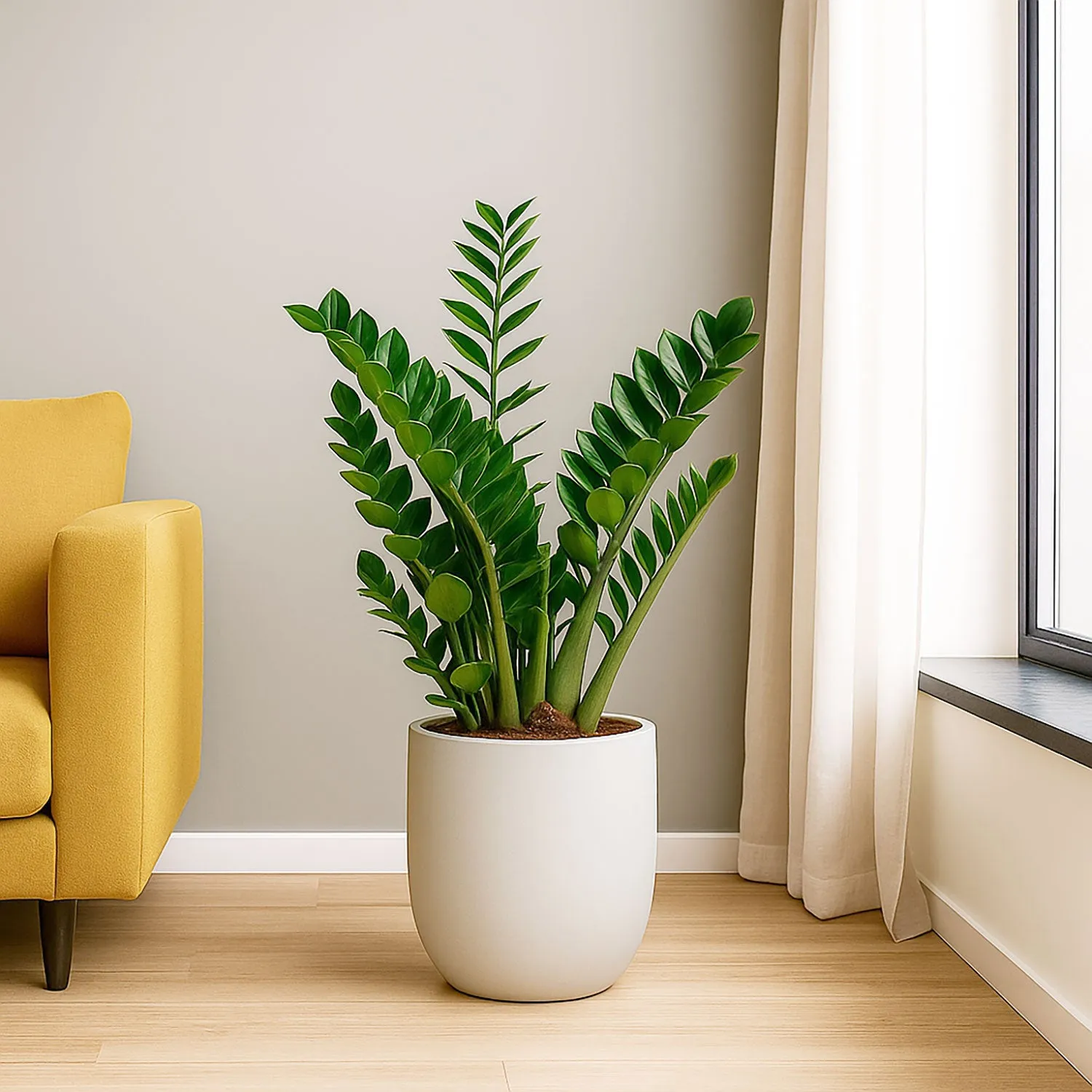
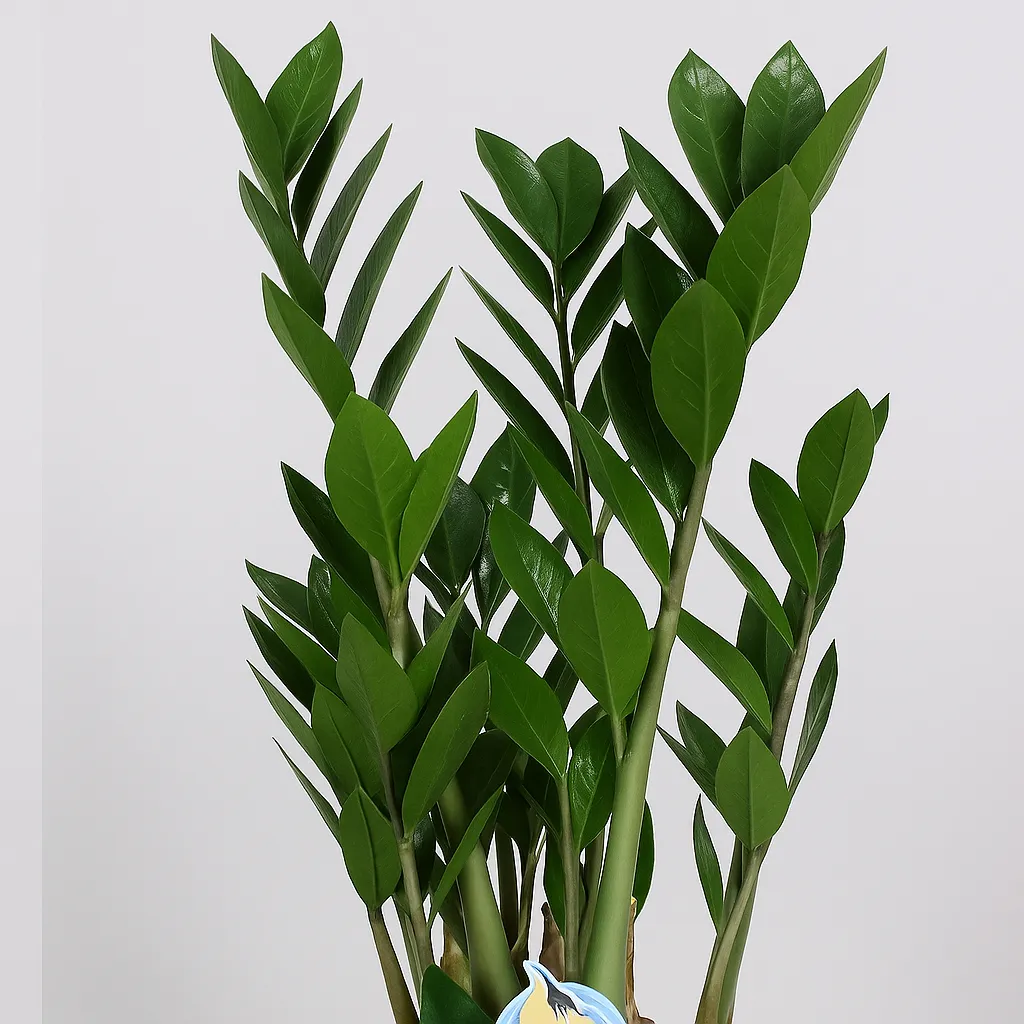
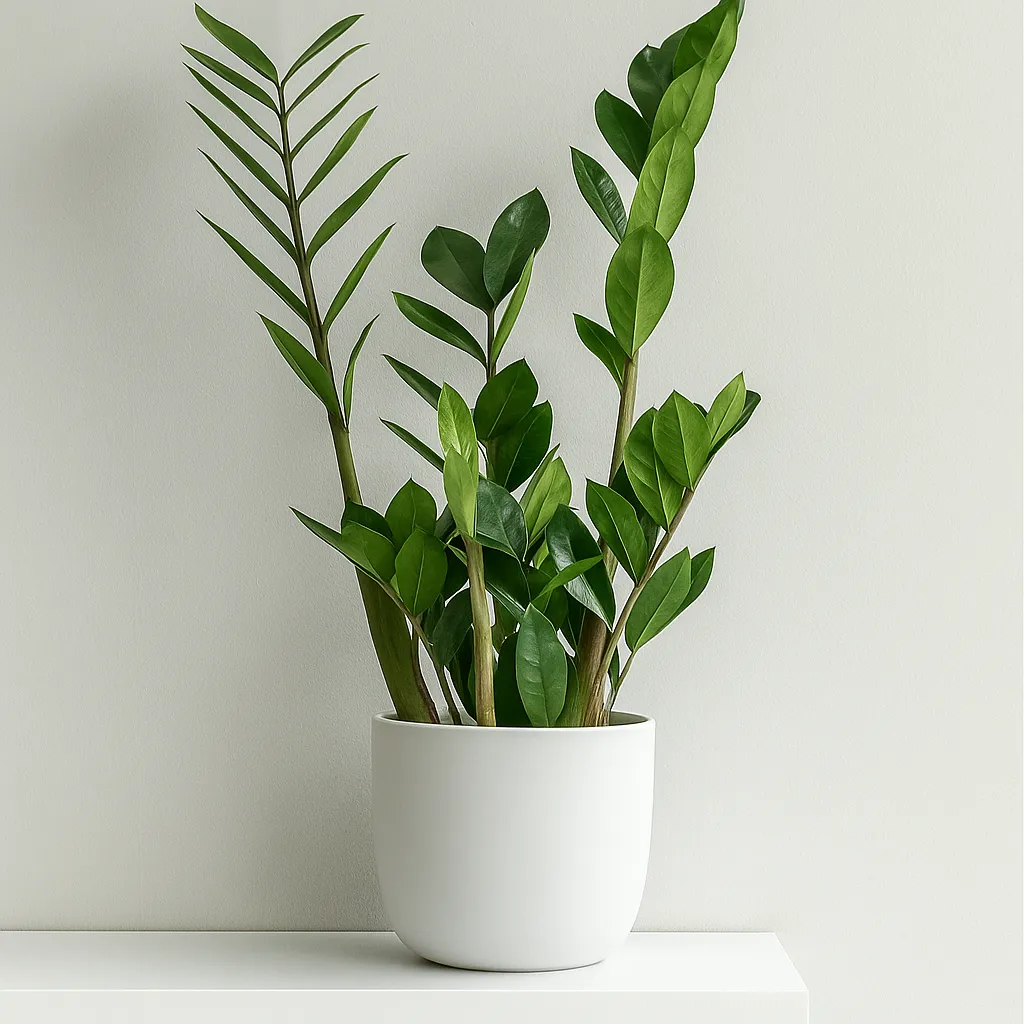
This plant forms clumps of upright stems lined with smooth, oval, dark green leaflets that shine like polished jade. Its leaves are thick and fleshy, storing water efficiently, while the underground rhizomes act as reservoirs, allowing the plant to survive long periods of drought. The ZZ Plant’s elegant structure and rich colour make it perfect for both contemporary and classic interiors.
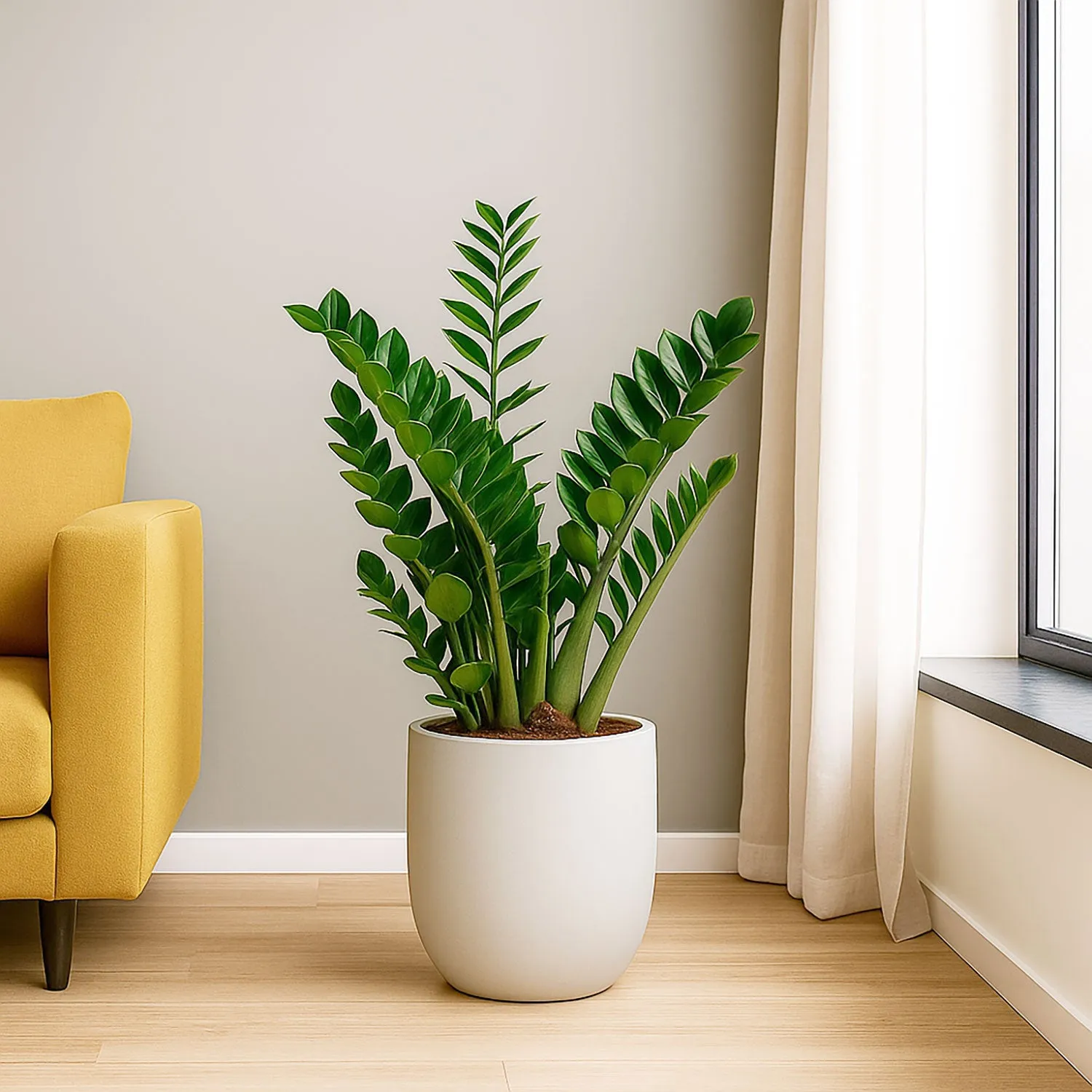
Compact, sculptural, and virtually indestructible, Zamioculcas zamiifolia is ideal for homes, offices, and commercial spaces — thriving in low-light corners where few other plants will grow.
Zamioculcas zamiifolia – Care Guide
Light
Adapts to a wide range of lighting conditions, from low to bright indirect light. Avoid strong, direct sunlight, which can scorch the glossy leaves.
Watering
Water sparingly, allowing the soil to dry completely between waterings. Overwatering is the most common cause of problems, as the rhizomes are prone to rot if kept too wet. In winter, water even less frequently.
Temperature and Humidity
-
Temperature: Prefers 18–28°C. Protect from draughts and avoid temperatures below 10°C.
-
Humidity: Tolerates dry indoor air and requires no misting.
Soil and Potting
Use a gritty, well-draining compost, such as a cactus or succulent mix. Ensure pots have drainage holes. Repot every 2–3 years in spring to refresh the soil, but ZZ plants are happiest when slightly root-bound.
Feeding
Feed lightly every 4–6 weeks in spring and summer with a diluted balanced fertiliser. Avoid overfeeding. No feeding is needed in winter.
Pruning and Maintenance
Remove any yellowing or damaged leaves at the base. Wipe leaves occasionally with a damp cloth to maintain their healthy sheen.
Growth and Maturity
A slow-growing plant that reaches 60–90 cm tall indoors. With time, it develops dense clusters of upright stems emerging from its rhizomatous base.
Common Issues
-
Yellowing leaves: Overwatering or poor drainage.
-
Wrinkled stems: Prolonged underwatering – water thoroughly, then allow to dry again.
-
Pests: Rare, but may occasionally attract mealybugs or spider mites.
Background and Benefits
Discovered in the late 19th century, the ZZ Plant gained global popularity in the 1990s for its near-indestructible nature. Its name derives from its genus Zamioculcas and species zamiifolia. It is known for its air-purifying qualities, filtering toxins such as xylene, toluene, and benzene from the air while releasing oxygen, even at night.
✅ Quick Care Summary
-
Light: Low to bright, indirect; avoid harsh sun
-
Water: Sparingly; allow soil to dry fully
-
Temperature: 18–28°C; protect below 10°C
-
Humidity: Dry air tolerant
-
Soil: Gritty, free-draining compost
-
Feed: Every 4–6 weeks in spring/summer
-
Growth: Upright, clumping succulent, 60–90 cm; glossy, dark green oval leaves
Original: $11.86
-70%$11.86
$3.56Product Information
Product Information
Shipping & Returns
Shipping & Returns
Description
Zamioculcas zamiifolia, commonly called the ZZ Plant, is one of the most resilient and low-maintenance houseplants available. Native to the arid regions of East Africa, it belongs to the Araceae family and is admired for its glossy, architectural foliage and exceptional tolerance to neglect.
This plant forms clumps of upright stems lined with smooth, oval, dark green leaflets that shine like polished jade. Its leaves are thick and fleshy, storing water efficiently, while the underground rhizomes act as reservoirs, allowing the plant to survive long periods of drought. The ZZ Plant’s elegant structure and rich colour make it perfect for both contemporary and classic interiors.
Compact, sculptural, and virtually indestructible, Zamioculcas zamiifolia is ideal for homes, offices, and commercial spaces — thriving in low-light corners where few other plants will grow.
Zamioculcas zamiifolia – Care Guide
Light
Adapts to a wide range of lighting conditions, from low to bright indirect light. Avoid strong, direct sunlight, which can scorch the glossy leaves.
Watering
Water sparingly, allowing the soil to dry completely between waterings. Overwatering is the most common cause of problems, as the rhizomes are prone to rot if kept too wet. In winter, water even less frequently.
Temperature and Humidity
-
Temperature: Prefers 18–28°C. Protect from draughts and avoid temperatures below 10°C.
-
Humidity: Tolerates dry indoor air and requires no misting.
Soil and Potting
Use a gritty, well-draining compost, such as a cactus or succulent mix. Ensure pots have drainage holes. Repot every 2–3 years in spring to refresh the soil, but ZZ plants are happiest when slightly root-bound.
Feeding
Feed lightly every 4–6 weeks in spring and summer with a diluted balanced fertiliser. Avoid overfeeding. No feeding is needed in winter.
Pruning and Maintenance
Remove any yellowing or damaged leaves at the base. Wipe leaves occasionally with a damp cloth to maintain their healthy sheen.
Growth and Maturity
A slow-growing plant that reaches 60–90 cm tall indoors. With time, it develops dense clusters of upright stems emerging from its rhizomatous base.
Common Issues
-
Yellowing leaves: Overwatering or poor drainage.
-
Wrinkled stems: Prolonged underwatering – water thoroughly, then allow to dry again.
-
Pests: Rare, but may occasionally attract mealybugs or spider mites.
Background and Benefits
Discovered in the late 19th century, the ZZ Plant gained global popularity in the 1990s for its near-indestructible nature. Its name derives from its genus Zamioculcas and species zamiifolia. It is known for its air-purifying qualities, filtering toxins such as xylene, toluene, and benzene from the air while releasing oxygen, even at night.
✅ Quick Care Summary
-
Light: Low to bright, indirect; avoid harsh sun
-
Water: Sparingly; allow soil to dry fully
-
Temperature: 18–28°C; protect below 10°C
-
Humidity: Dry air tolerant
-
Soil: Gritty, free-draining compost
-
Feed: Every 4–6 weeks in spring/summer
-
Growth: Upright, clumping succulent, 60–90 cm; glossy, dark green oval leaves