Beaucarnea recurvata 'Nolina' 60cm Pot 260cm Height Outdoor Tree
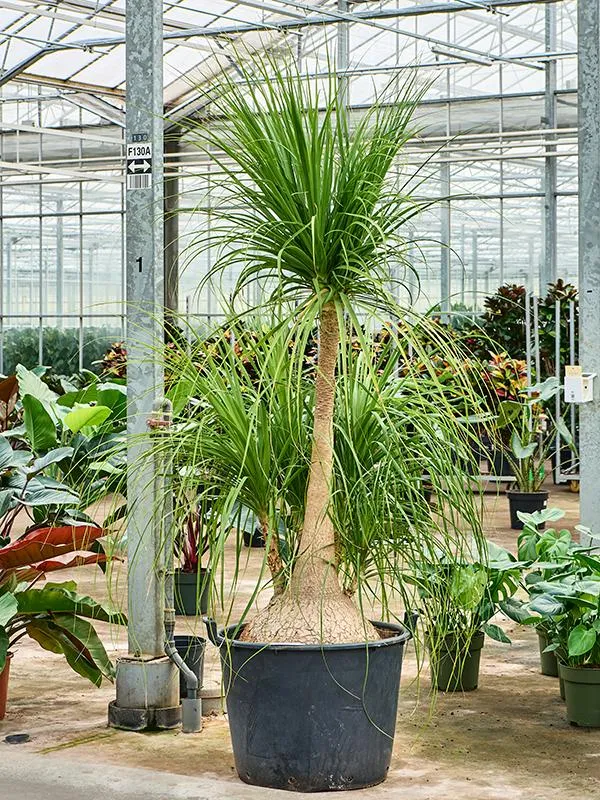
Beaucarnea recurvata, often called the Ponytail Palm or Elephant’s Foot, is an eye-catching houseplant (or patio plant in summer) native to semi-desert regions of Mexico. Despite its common name, it is not a true palm, but is related to agaves and yuccas.
🌳 Key Features:
-
Foliage: Long, narrow, ribbon-like leaves arch gracefully from the top of the stem in a fountain-like spray, resembling a ponytail. The leaves are tough, slightly leathery and bright green.
-
Trunk: Distinctive swollen base (caudex), which looks like an elephant’s foot and serves as a water reservoir, allowing it to withstand periods of drought. Over time it forms a sculptural, woody trunk, adding architectural interest.
-
Size: In containers, typically grows 1–2 metres high, though in its native habitat it can reach up to 8 metres. Very slow-growing, making it an excellent long-term houseplant.
Because of its unusual form and minimal maintenance needs, Beaucarnea recurvata is ideal for modern interiors, offices, conservatories, and even patios in summer.
🌱 Detailed Care Guide for Beaucarnea recurvata
📍 Position & Light
-
Thrives in bright, indirect light to full sun.
-
Can tolerate some light shade, but growth is slower and the stem may not swell as strongly.
-
A sunny windowsill or conservatory is perfect.
🌬️ Temperature & Shelter
-
Prefers warm conditions (ideal range 18–27°C).
-
Not frost hardy — should be kept above 10°C at all times.
-
Can be moved outside in summer but bring indoors before temperatures drop in autumn.
💧 Watering
-
Extremely drought-tolerant thanks to its swollen base.
-
Allow the compost to dry out almost completely between watering. In winter, water sparingly, perhaps once a month, to prevent rot.
-
Always empty saucers — never let it stand in water.
🪴 Soil
-
Requires free-draining soil. Use cactus or succulent compost, or a standard compost mixed 50:50 with horticultural grit or perlite.
🍽️ Feeding
-
Feed monthly during spring and summer with a balanced liquid fertiliser diluted to half strength.
-
Do not feed in autumn and winter.
✂️ Pruning & Maintenance
-
Remove any brown or damaged leaf tips by trimming with clean scissors.
-
Otherwise, pruning is not needed. Older lower leaves naturally brown and can be pulled off gently.
🪲 Pests & Problems
-
Generally pest-free and very robust.
-
Occasionally may be troubled by scale insects or mealybugs — wipe off with a damp cloth or use horticultural soap.
🚰 Container Growing & Repotting
-
Perfect for growing in pots.
-
Likes being slightly root-bound, so only repot every 3–4 years, moving to a pot just one size larger.
-
Ensure the container has drainage holes and raise on feet if kept outdoors in summer.
Original: $3,299.49
-70%$3,299.49
$989.85Product Information
Product Information
Shipping & Returns
Shipping & Returns
Description
Beaucarnea recurvata, often called the Ponytail Palm or Elephant’s Foot, is an eye-catching houseplant (or patio plant in summer) native to semi-desert regions of Mexico. Despite its common name, it is not a true palm, but is related to agaves and yuccas.
🌳 Key Features:
-
Foliage: Long, narrow, ribbon-like leaves arch gracefully from the top of the stem in a fountain-like spray, resembling a ponytail. The leaves are tough, slightly leathery and bright green.
-
Trunk: Distinctive swollen base (caudex), which looks like an elephant’s foot and serves as a water reservoir, allowing it to withstand periods of drought. Over time it forms a sculptural, woody trunk, adding architectural interest.
-
Size: In containers, typically grows 1–2 metres high, though in its native habitat it can reach up to 8 metres. Very slow-growing, making it an excellent long-term houseplant.
Because of its unusual form and minimal maintenance needs, Beaucarnea recurvata is ideal for modern interiors, offices, conservatories, and even patios in summer.
🌱 Detailed Care Guide for Beaucarnea recurvata
📍 Position & Light
-
Thrives in bright, indirect light to full sun.
-
Can tolerate some light shade, but growth is slower and the stem may not swell as strongly.
-
A sunny windowsill or conservatory is perfect.
🌬️ Temperature & Shelter
-
Prefers warm conditions (ideal range 18–27°C).
-
Not frost hardy — should be kept above 10°C at all times.
-
Can be moved outside in summer but bring indoors before temperatures drop in autumn.
💧 Watering
-
Extremely drought-tolerant thanks to its swollen base.
-
Allow the compost to dry out almost completely between watering. In winter, water sparingly, perhaps once a month, to prevent rot.
-
Always empty saucers — never let it stand in water.
🪴 Soil
-
Requires free-draining soil. Use cactus or succulent compost, or a standard compost mixed 50:50 with horticultural grit or perlite.
🍽️ Feeding
-
Feed monthly during spring and summer with a balanced liquid fertiliser diluted to half strength.
-
Do not feed in autumn and winter.
✂️ Pruning & Maintenance
-
Remove any brown or damaged leaf tips by trimming with clean scissors.
-
Otherwise, pruning is not needed. Older lower leaves naturally brown and can be pulled off gently.
🪲 Pests & Problems
-
Generally pest-free and very robust.
-
Occasionally may be troubled by scale insects or mealybugs — wipe off with a damp cloth or use horticultural soap.
🚰 Container Growing & Repotting
-
Perfect for growing in pots.
-
Likes being slightly root-bound, so only repot every 3–4 years, moving to a pot just one size larger.
-
Ensure the container has drainage holes and raise on feet if kept outdoors in summer.