Ficus microcarpa 'Compacta' 50cm Pot 220cm Height Outdoor Tree
Ficus microcarpa ‘Compacta’ is an attractive, compact cultivar of the Chinese banyan (Ficus microcarpa), known for its dense foliage and suitability as a decorative houseplant or bonsai subject. This form is more restrained in size and bushiness than the typical species, making it perfect for smaller spaces or interior greenery.
🌳 Key Features:
-
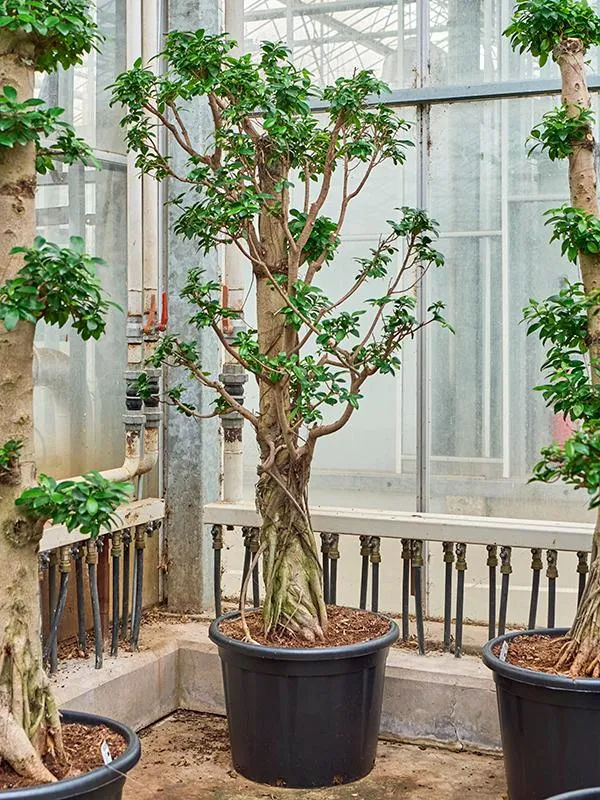
Foliage: Dense clusters of small, glossy, deep green oval leaves. The foliage is typically tighter and smaller than standard Ficus microcarpa, giving it a neat, manicured look. It naturally forms a rounded canopy and responds well to shaping.
-
Form: Usually grown as a small tree or large shrub in pots, reaching around 60–120 cm indoors, though in tropical climates or very large containers it can get taller. Its compact growth and tolerance for pruning make it excellent for topiary or bonsai training.
-
Roots: Like many Ficus, it can develop attractive surface roots (nebari) over time, adding character.
This plant’s neat structure, glossy leaves and ease of maintenance make it popular for brightening living rooms, offices, or patios in summer. It is also widely used in bonsai for its resilience and beautiful root flare.
🌱 Detailed Care Guide for Ficus microcarpa ‘Compacta’
📍 Position & Light
-
Thrives in bright, indirect light.
-
Will tolerate some direct sun, especially morning or late afternoon sun. Too much harsh direct light can scorch the leaves, while too little light leads to leggier growth and leaf drop.
🌬️ Temperature & Shelter
-
Prefers warm conditions (ideally 15–25°C).
-
Protect from cold drafts — avoid placing near doors or windows that open frequently in winter.
-
Not frost hardy. Keep above 12°C at all times.
💧 Watering
-
Keep soil evenly moist but never waterlogged.
-
Allow the top 2–3 cm of compost to dry before watering again. Overwatering (leading to soggy roots) is the most common problem.
-
Reduce watering in winter when growth slows.
💦 Humidity
-
Enjoys moderate to high humidity, though generally tolerant of average indoor levels.
-
Misting occasionally, or placing on a humidity tray, can help prevent leaf edges from browning.
🪴 Soil
-
Prefers a free-draining, fertile compost — use a good quality houseplant compost mixed with some grit or perlite for drainage.
🍽️ Feeding
-
Feed every 4–6 weeks in spring and summer with a balanced liquid fertiliser.
-
Stop feeding in late autumn and winter.
✂️ Pruning & Maintenance
-
Responds very well to pruning, which encourages dense, bushy growth.
-
Trim back leggy shoots as needed to maintain a compact shape.
-
Remove any yellowing or damaged leaves.
🪲 Pests & Problems
-
Generally robust.
-
May occasionally suffer from scale insects or spider mites if air is very dry — wipe leaves regularly with a damp cloth and inspect under leaves.
-
Leaf drop may occur from sudden changes in temperature, light, or overwatering.
🚰 Container Growing & Repotting
-
Perfect for pots. Repot every 2–3 years in spring, moving to a pot only slightly larger, to refresh the soil.
-
Likes to be slightly pot-bound, which also helps restrict size.
Original: $3,959.39
-70%$3,959.39
$1,187.82Product Information
Product Information
Shipping & Returns
Shipping & Returns
Description
Ficus microcarpa ‘Compacta’ is an attractive, compact cultivar of the Chinese banyan (Ficus microcarpa), known for its dense foliage and suitability as a decorative houseplant or bonsai subject. This form is more restrained in size and bushiness than the typical species, making it perfect for smaller spaces or interior greenery.
🌳 Key Features:
-
Foliage: Dense clusters of small, glossy, deep green oval leaves. The foliage is typically tighter and smaller than standard Ficus microcarpa, giving it a neat, manicured look. It naturally forms a rounded canopy and responds well to shaping.
-
Form: Usually grown as a small tree or large shrub in pots, reaching around 60–120 cm indoors, though in tropical climates or very large containers it can get taller. Its compact growth and tolerance for pruning make it excellent for topiary or bonsai training.
-
Roots: Like many Ficus, it can develop attractive surface roots (nebari) over time, adding character.
This plant’s neat structure, glossy leaves and ease of maintenance make it popular for brightening living rooms, offices, or patios in summer. It is also widely used in bonsai for its resilience and beautiful root flare.
🌱 Detailed Care Guide for Ficus microcarpa ‘Compacta’
📍 Position & Light
-
Thrives in bright, indirect light.
-
Will tolerate some direct sun, especially morning or late afternoon sun. Too much harsh direct light can scorch the leaves, while too little light leads to leggier growth and leaf drop.
🌬️ Temperature & Shelter
-
Prefers warm conditions (ideally 15–25°C).
-
Protect from cold drafts — avoid placing near doors or windows that open frequently in winter.
-
Not frost hardy. Keep above 12°C at all times.
💧 Watering
-
Keep soil evenly moist but never waterlogged.
-
Allow the top 2–3 cm of compost to dry before watering again. Overwatering (leading to soggy roots) is the most common problem.
-
Reduce watering in winter when growth slows.
💦 Humidity
-
Enjoys moderate to high humidity, though generally tolerant of average indoor levels.
-
Misting occasionally, or placing on a humidity tray, can help prevent leaf edges from browning.
🪴 Soil
-
Prefers a free-draining, fertile compost — use a good quality houseplant compost mixed with some grit or perlite for drainage.
🍽️ Feeding
-
Feed every 4–6 weeks in spring and summer with a balanced liquid fertiliser.
-
Stop feeding in late autumn and winter.
✂️ Pruning & Maintenance
-
Responds very well to pruning, which encourages dense, bushy growth.
-
Trim back leggy shoots as needed to maintain a compact shape.
-
Remove any yellowing or damaged leaves.
🪲 Pests & Problems
-
Generally robust.
-
May occasionally suffer from scale insects or spider mites if air is very dry — wipe leaves regularly with a damp cloth and inspect under leaves.
-
Leaf drop may occur from sudden changes in temperature, light, or overwatering.
🚰 Container Growing & Repotting
-
Perfect for pots. Repot every 2–3 years in spring, moving to a pot only slightly larger, to refresh the soil.
-
Likes to be slightly pot-bound, which also helps restrict size.