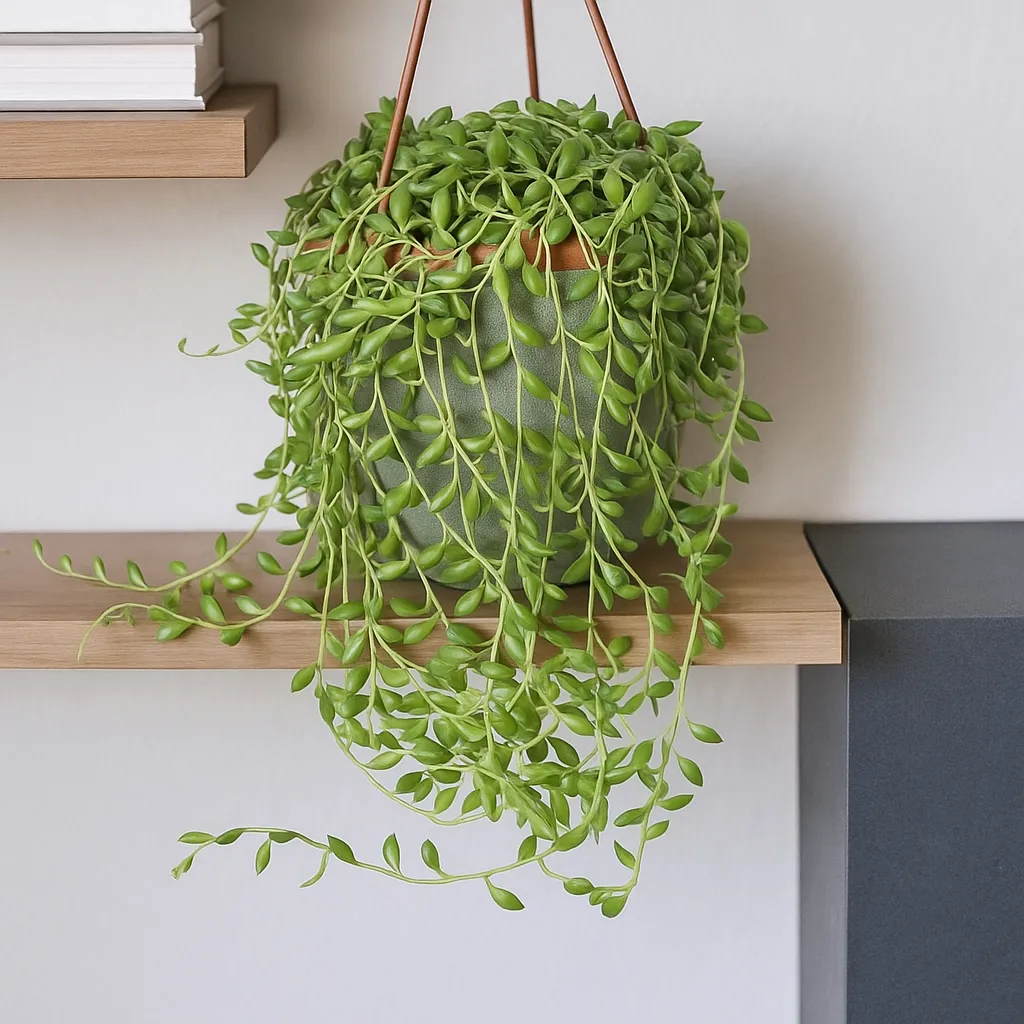

15 - 25cm Senecio Herreianus 12cm Hanging Pot House Plant
Senecio herreianus, often called the String of Watermelons or Gooseberry Plant, is a distinctive trailing succulent admired for its elongated, bead-like leaves and cascading growth habit. Native to South Africa, this rare species is part of the Asteraceae family and shares similarities with its cousins Senecio rowleyanus (String of Pearls) and Senecio radicans (String of Bananas), but stands out with its unique, striped, oval-shaped leaves.
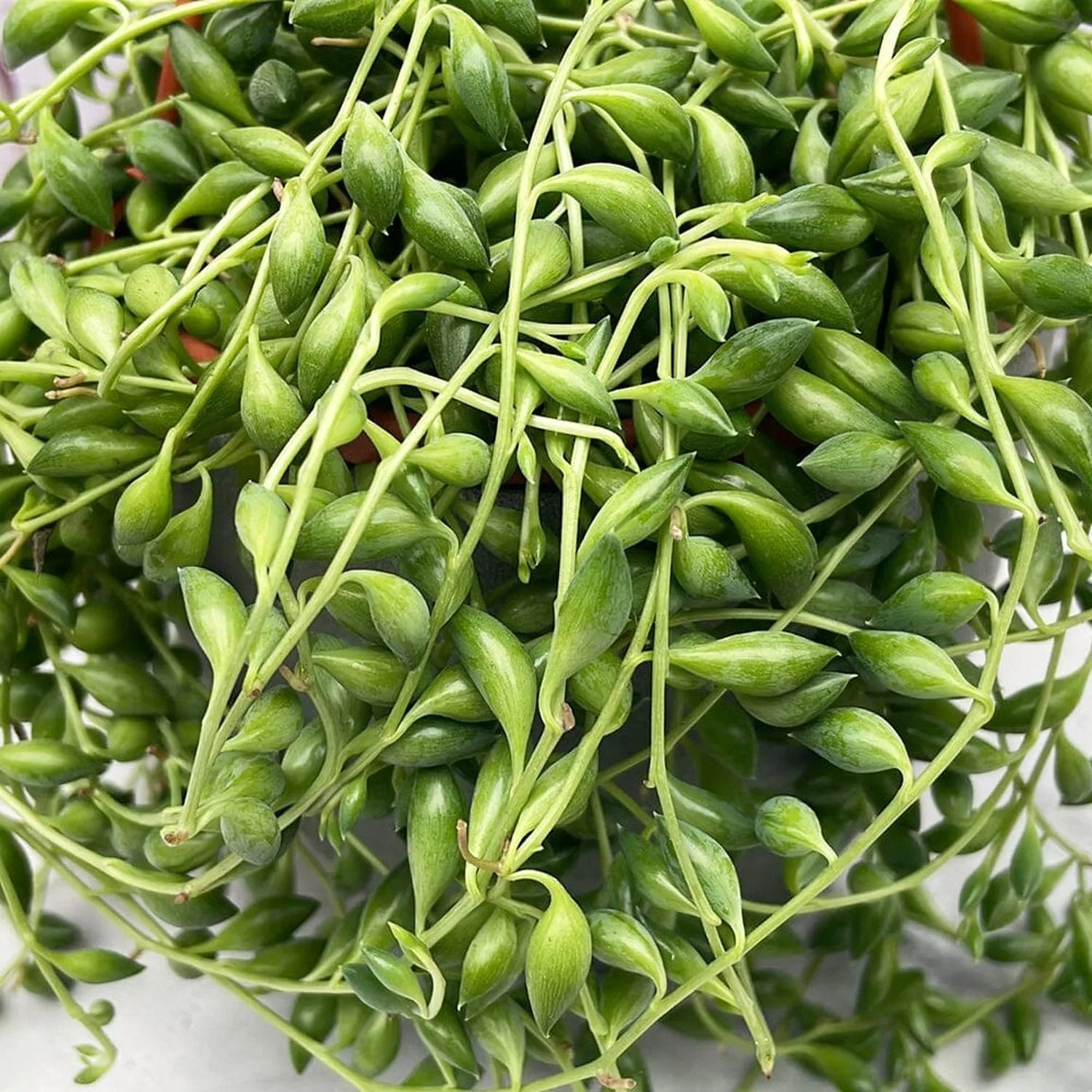
Each leaf is a smooth, translucent green capsule marked with fine, darker green stripes resembling tiny watermelons. These translucent “windows” allow sunlight to penetrate for photosynthesis, an adaptation for arid environments. As it matures, Senecio herreianus forms long, trailing stems that can exceed 50 cm in length, creating a lush, cascading curtain of glossy green foliage.
Delicate, fast-growing, and easy to care for, this species adds both charm and texture to modern plant collections, especially in hanging displays or trailing arrangements.
Senecio herreianus – Care Guide
Light
Thrives in bright, indirect light to partial sun. A few hours of gentle morning or late-afternoon sunlight will enhance the leaf colour and maintain compact growth. Too little light will cause leggy, stretched vines, while intense midday sun may scorch the leaves.
Watering
Allow the soil to dry out completely between waterings. Water deeply, then let excess moisture drain freely. Senecio herreianus is drought-tolerant and stores water in its fleshy leaves, so it’s better to underwater than overwater. In winter, water sparingly, only enough to prevent shrivelling.
Temperature and Humidity
-
Temperature: Prefers 18–26 °C; tolerates slightly cooler nights but avoid temperatures below 10 °C.
-
Humidity: Adapts well to average household humidity. High humidity combined with cool air can cause rot, so ensure good airflow around the plant.
Soil and Potting
Use a fast-draining, gritty succulent mix, such as cactus soil blended with perlite or pumice. Good drainage is essential to prevent root rot. Terracotta pots are ideal for natural evaporation. Repot every 2–3 years in spring to refresh the soil and check root health.
Feeding
Feed once every 6–8 weeks during the growing season (spring to early autumn) with a diluted cactus or succulent fertiliser. Avoid fertilising in winter when growth slows.
Pruning and Maintenance
Trim back long or leggy vines to encourage fuller growth. Cuttings can be easily propagated in soil or water, making it easy to expand your collection. Remove any shrivelled or damaged leaves to maintain a tidy, healthy appearance.
Growth and Maturity
A moderate to fast grower under bright conditions, Senecio herreianus trails up to 50–80 cm indoors. It may produce small, white, cinnamon-scented flowers in spring or summer, adding a delicate seasonal accent. Its compact form and unique leaf pattern make it ideal for hanging baskets, wall planters, or succulent arrangements.
Common Issues
-
Yellow or mushy leaves: Overwatering or poor drainage.
-
Stretched growth: Insufficient light.
-
Shrivelled leaves: Underwatering.
-
Pests: Occasionally mealybugs or aphids; treat with neem oil or insecticidal soap.
Background and Benefits
Native to the arid regions of Namibia and South Africa, Senecio herreianus evolved to survive long dry spells by storing water in its succulent leaves and reducing surface exposure through its cylindrical shape. The faint green stripes on each leaf act as “light windows,” allowing the plant to photosynthesise efficiently even in low light conditions beneath rocks and shrubs.
In cultivation, this trailing succulent has become a favourite for its decorative foliage, low maintenance, and sculptural appeal. It fits beautifully into modern interiors and xeriscape-style designs while being hardy enough for beginners. Like other Senecio species, it also contributes to air purification, subtly improving indoor air quality.
Quick Care Summary
Light: Bright, indirect light to partial sun; avoid harsh midday rays
Water: Let soil dry completely between watering; water deeply but infrequently
Temperature: 18–26 °C; avoid below 10 °C
Humidity: Average indoor humidity; ensure good airflow
Soil: Gritty, well-draining mix – cactus soil, perlite, pumice
Feed: Every 6–8 weeks in spring/summer with succulent fertiliser
Growth: Trailing habit, 50–80 cm; bead-like green leaves with watermelon stripes
⚠️ Toxicity note: Mildly toxic if ingested; keep away from pets and children.
Styling Tip
Display Senecio herreianus in a hanging planter or trailing from a shelf, allowing its stems to cascade gracefully. Its striped, bead-like leaves pair beautifully with contrasting textures such as Crassula ovata ‘Gollum’ or Hoya linearis. For a minimalist look, plant it in a matte ceramic pot to emphasise its sculptural geometry, or group it with other trailing succulents like String of Pearls and String of Bananas to create a layered, cascading display of green textures.
Product Information
Product Information
Shipping & Returns
Shipping & Returns
Description
Senecio herreianus, often called the String of Watermelons or Gooseberry Plant, is a distinctive trailing succulent admired for its elongated, bead-like leaves and cascading growth habit. Native to South Africa, this rare species is part of the Asteraceae family and shares similarities with its cousins Senecio rowleyanus (String of Pearls) and Senecio radicans (String of Bananas), but stands out with its unique, striped, oval-shaped leaves.
Each leaf is a smooth, translucent green capsule marked with fine, darker green stripes resembling tiny watermelons. These translucent “windows” allow sunlight to penetrate for photosynthesis, an adaptation for arid environments. As it matures, Senecio herreianus forms long, trailing stems that can exceed 50 cm in length, creating a lush, cascading curtain of glossy green foliage.
Delicate, fast-growing, and easy to care for, this species adds both charm and texture to modern plant collections, especially in hanging displays or trailing arrangements.
Senecio herreianus – Care Guide
Light
Thrives in bright, indirect light to partial sun. A few hours of gentle morning or late-afternoon sunlight will enhance the leaf colour and maintain compact growth. Too little light will cause leggy, stretched vines, while intense midday sun may scorch the leaves.
Watering
Allow the soil to dry out completely between waterings. Water deeply, then let excess moisture drain freely. Senecio herreianus is drought-tolerant and stores water in its fleshy leaves, so it’s better to underwater than overwater. In winter, water sparingly, only enough to prevent shrivelling.
Temperature and Humidity
-
Temperature: Prefers 18–26 °C; tolerates slightly cooler nights but avoid temperatures below 10 °C.
-
Humidity: Adapts well to average household humidity. High humidity combined with cool air can cause rot, so ensure good airflow around the plant.
Soil and Potting
Use a fast-draining, gritty succulent mix, such as cactus soil blended with perlite or pumice. Good drainage is essential to prevent root rot. Terracotta pots are ideal for natural evaporation. Repot every 2–3 years in spring to refresh the soil and check root health.
Feeding
Feed once every 6–8 weeks during the growing season (spring to early autumn) with a diluted cactus or succulent fertiliser. Avoid fertilising in winter when growth slows.
Pruning and Maintenance
Trim back long or leggy vines to encourage fuller growth. Cuttings can be easily propagated in soil or water, making it easy to expand your collection. Remove any shrivelled or damaged leaves to maintain a tidy, healthy appearance.
Growth and Maturity
A moderate to fast grower under bright conditions, Senecio herreianus trails up to 50–80 cm indoors. It may produce small, white, cinnamon-scented flowers in spring or summer, adding a delicate seasonal accent. Its compact form and unique leaf pattern make it ideal for hanging baskets, wall planters, or succulent arrangements.
Common Issues
-
Yellow or mushy leaves: Overwatering or poor drainage.
-
Stretched growth: Insufficient light.
-
Shrivelled leaves: Underwatering.
-
Pests: Occasionally mealybugs or aphids; treat with neem oil or insecticidal soap.
Background and Benefits
Native to the arid regions of Namibia and South Africa, Senecio herreianus evolved to survive long dry spells by storing water in its succulent leaves and reducing surface exposure through its cylindrical shape. The faint green stripes on each leaf act as “light windows,” allowing the plant to photosynthesise efficiently even in low light conditions beneath rocks and shrubs.
In cultivation, this trailing succulent has become a favourite for its decorative foliage, low maintenance, and sculptural appeal. It fits beautifully into modern interiors and xeriscape-style designs while being hardy enough for beginners. Like other Senecio species, it also contributes to air purification, subtly improving indoor air quality.
Quick Care Summary
Light: Bright, indirect light to partial sun; avoid harsh midday rays
Water: Let soil dry completely between watering; water deeply but infrequently
Temperature: 18–26 °C; avoid below 10 °C
Humidity: Average indoor humidity; ensure good airflow
Soil: Gritty, well-draining mix – cactus soil, perlite, pumice
Feed: Every 6–8 weeks in spring/summer with succulent fertiliser
Growth: Trailing habit, 50–80 cm; bead-like green leaves with watermelon stripes
⚠️ Toxicity note: Mildly toxic if ingested; keep away from pets and children.
Styling Tip
Display Senecio herreianus in a hanging planter or trailing from a shelf, allowing its stems to cascade gracefully. Its striped, bead-like leaves pair beautifully with contrasting textures such as Crassula ovata ‘Gollum’ or Hoya linearis. For a minimalist look, plant it in a matte ceramic pot to emphasise its sculptural geometry, or group it with other trailing succulents like String of Pearls and String of Bananas to create a layered, cascading display of green textures.