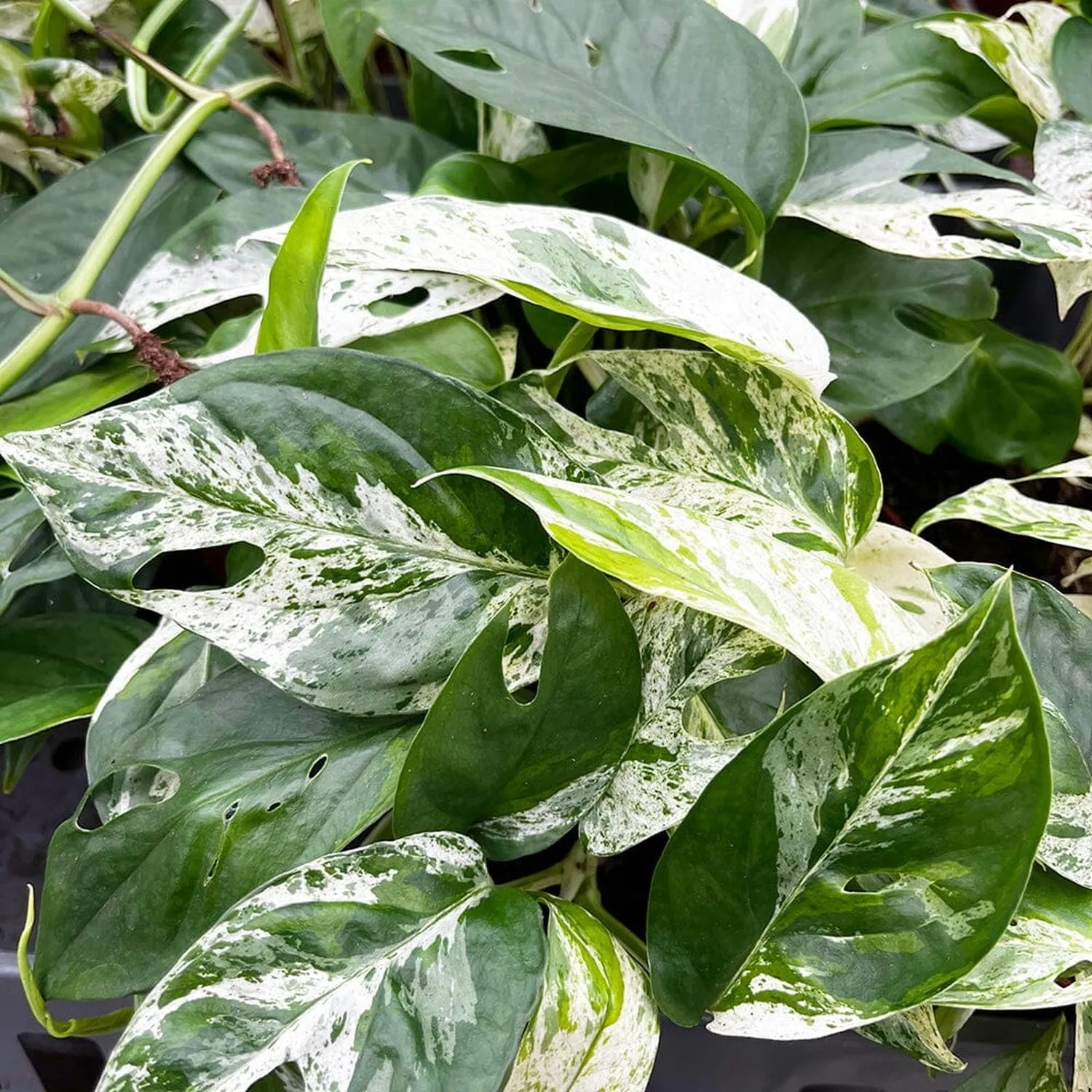
15 - 25cm Variegated Pinnatum Marble 12cm Pot House Plant
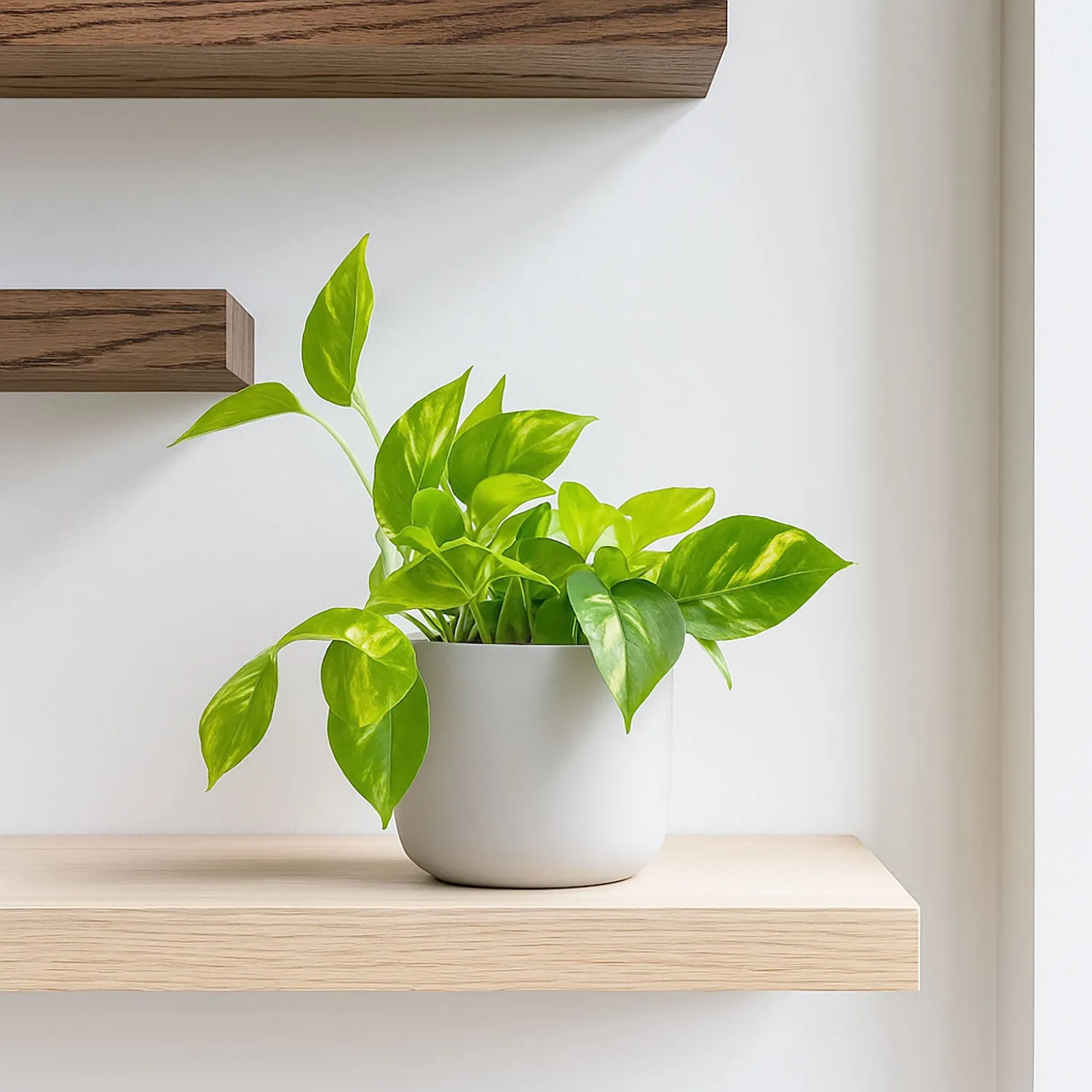
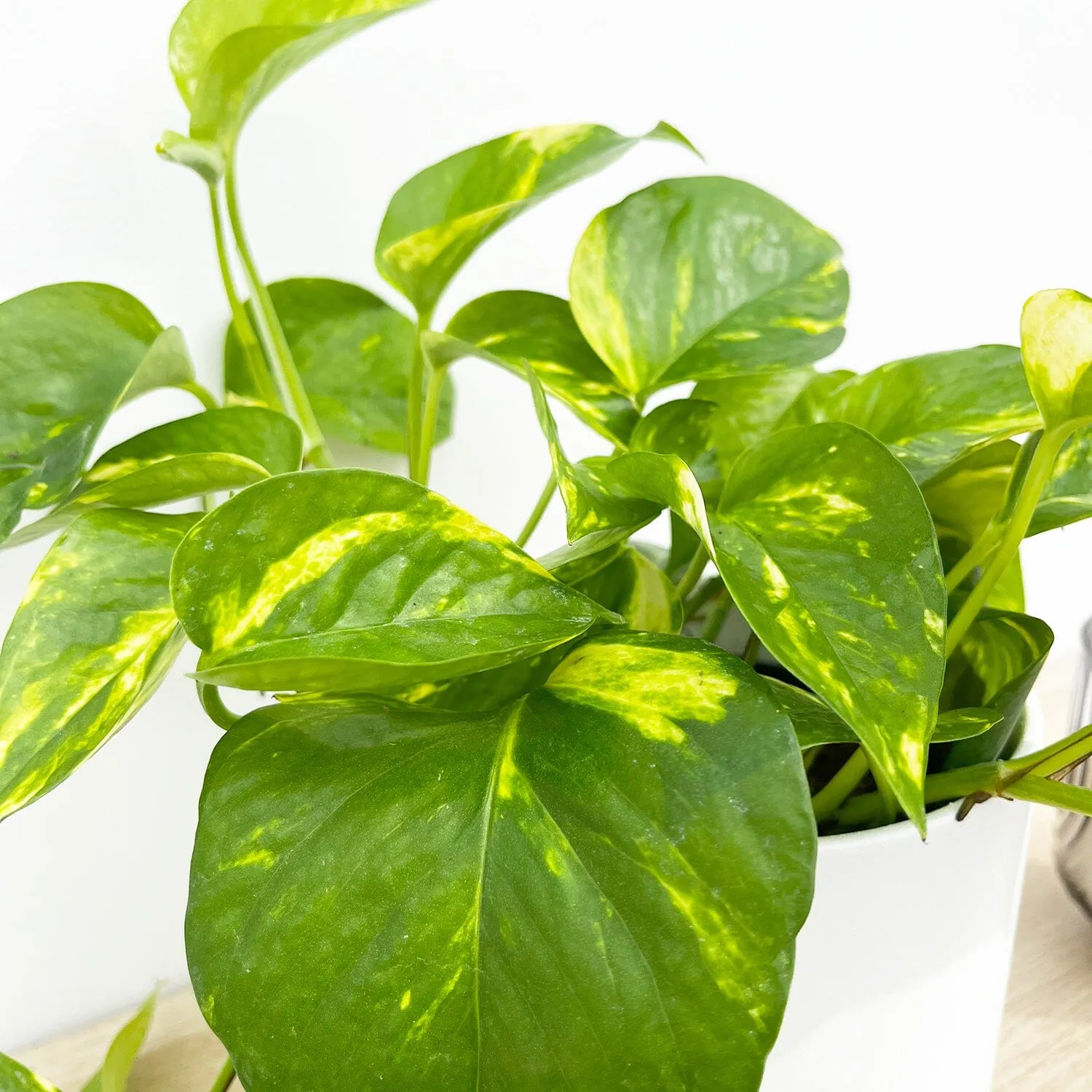
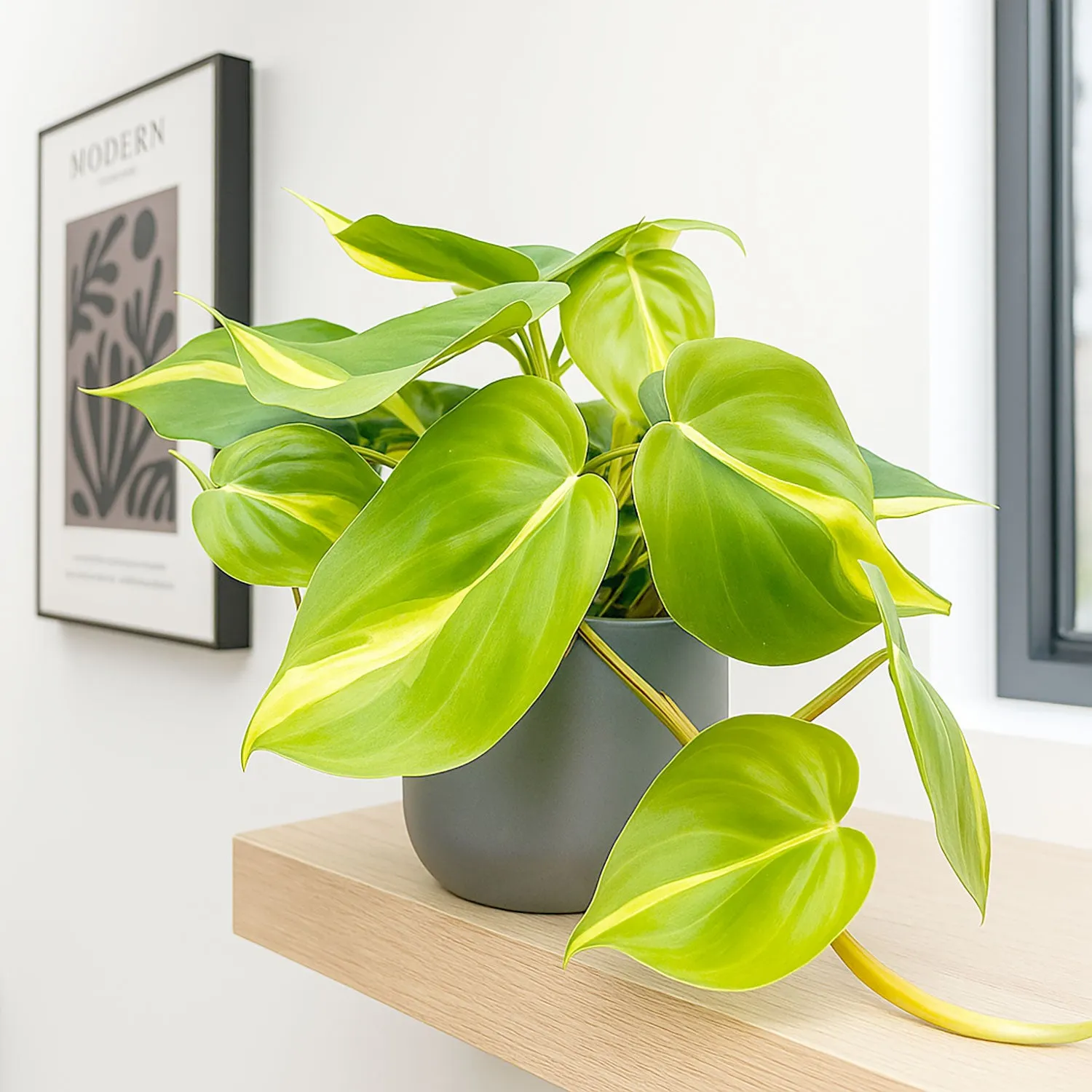
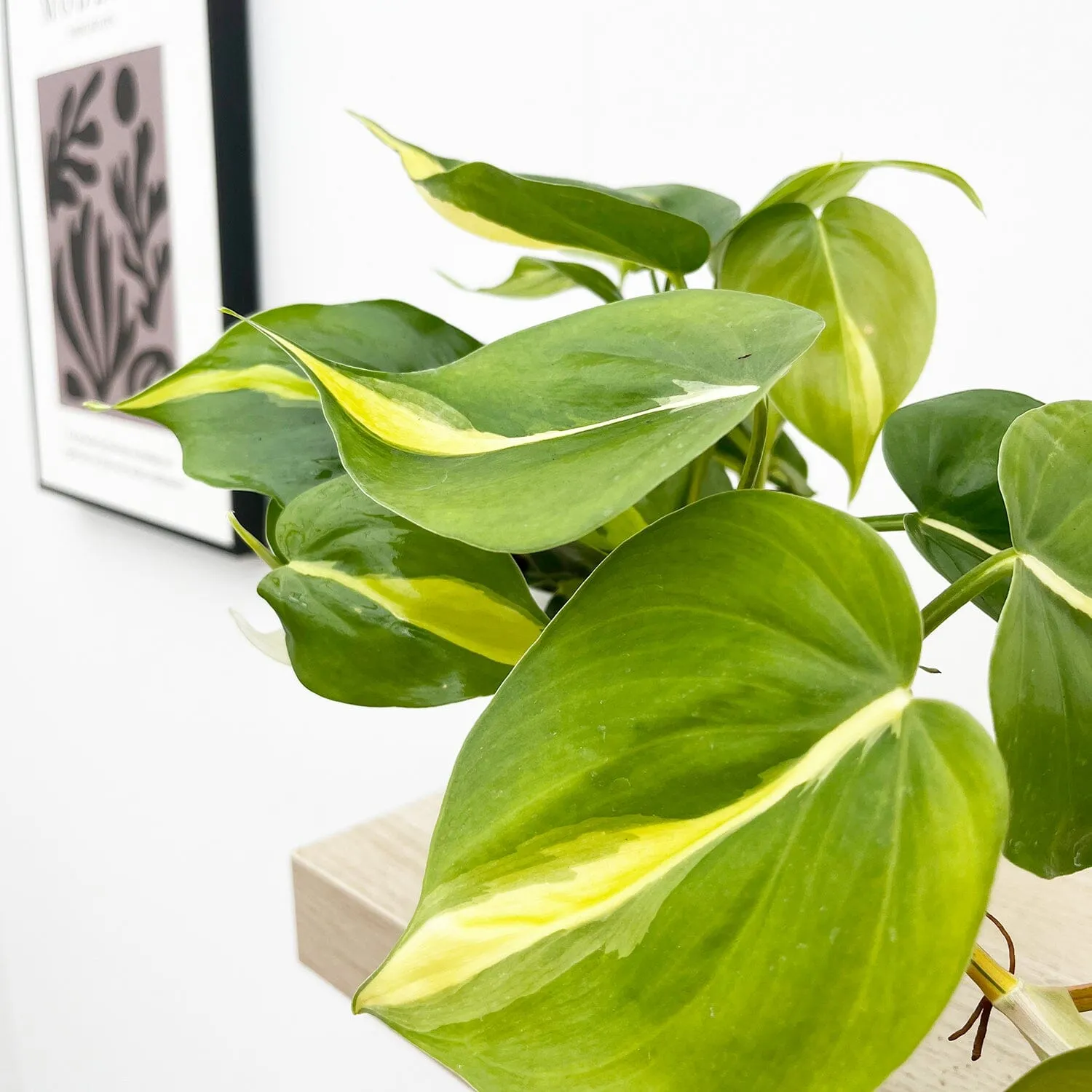
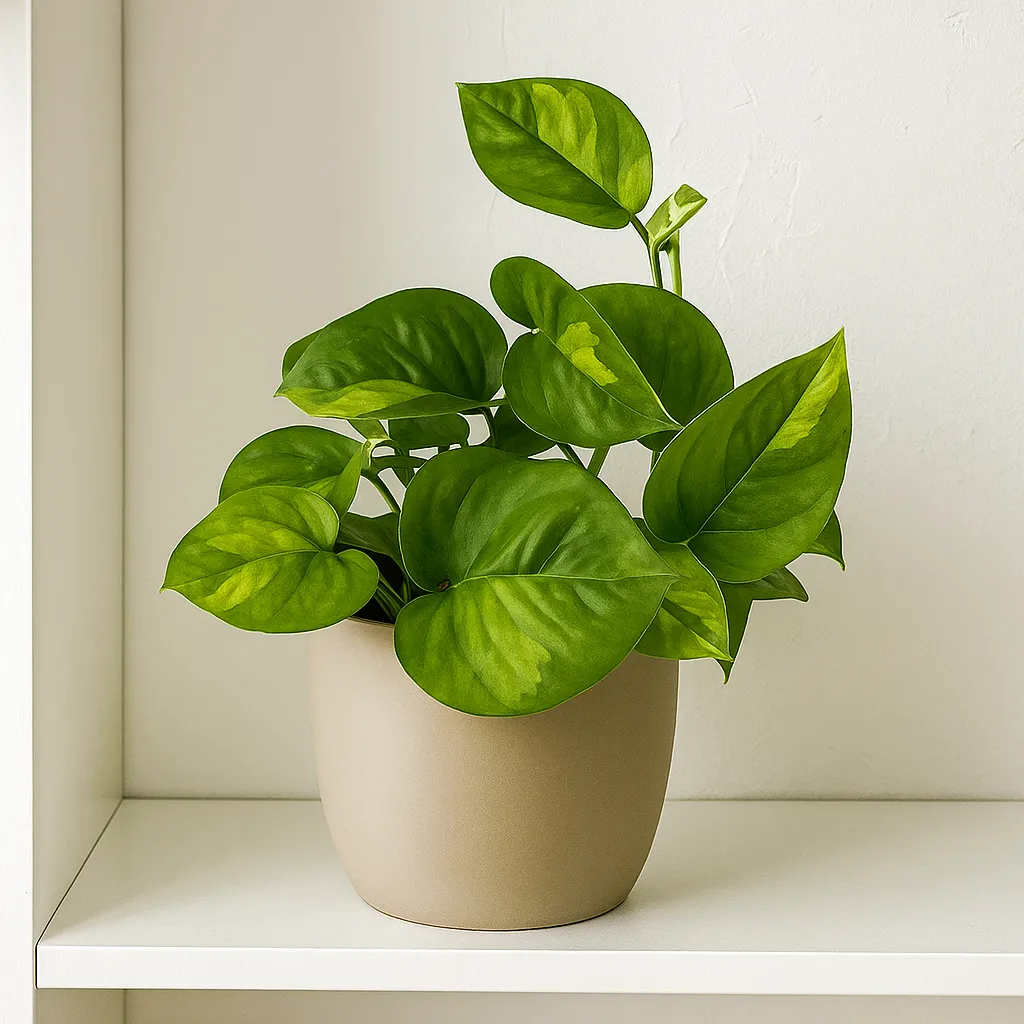
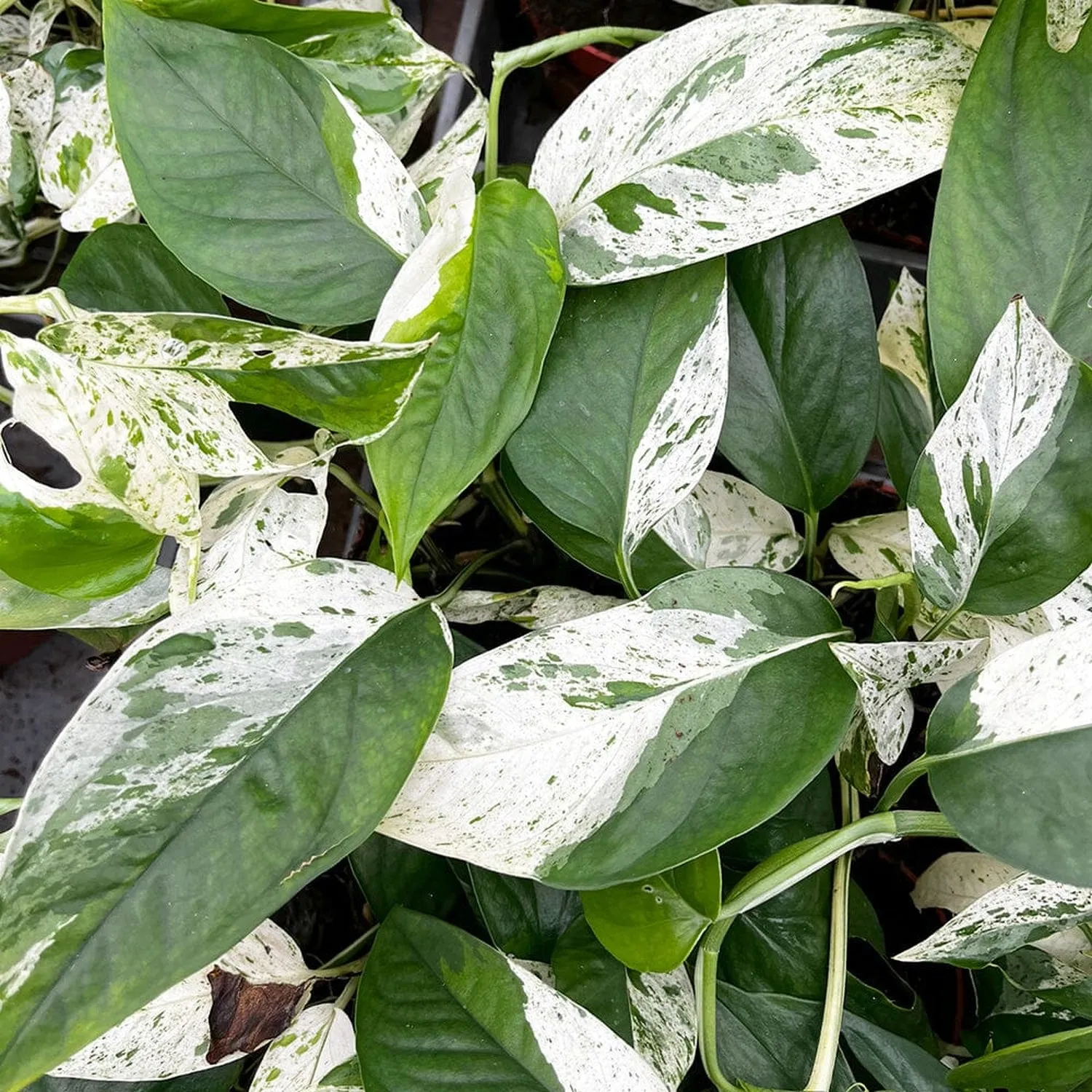
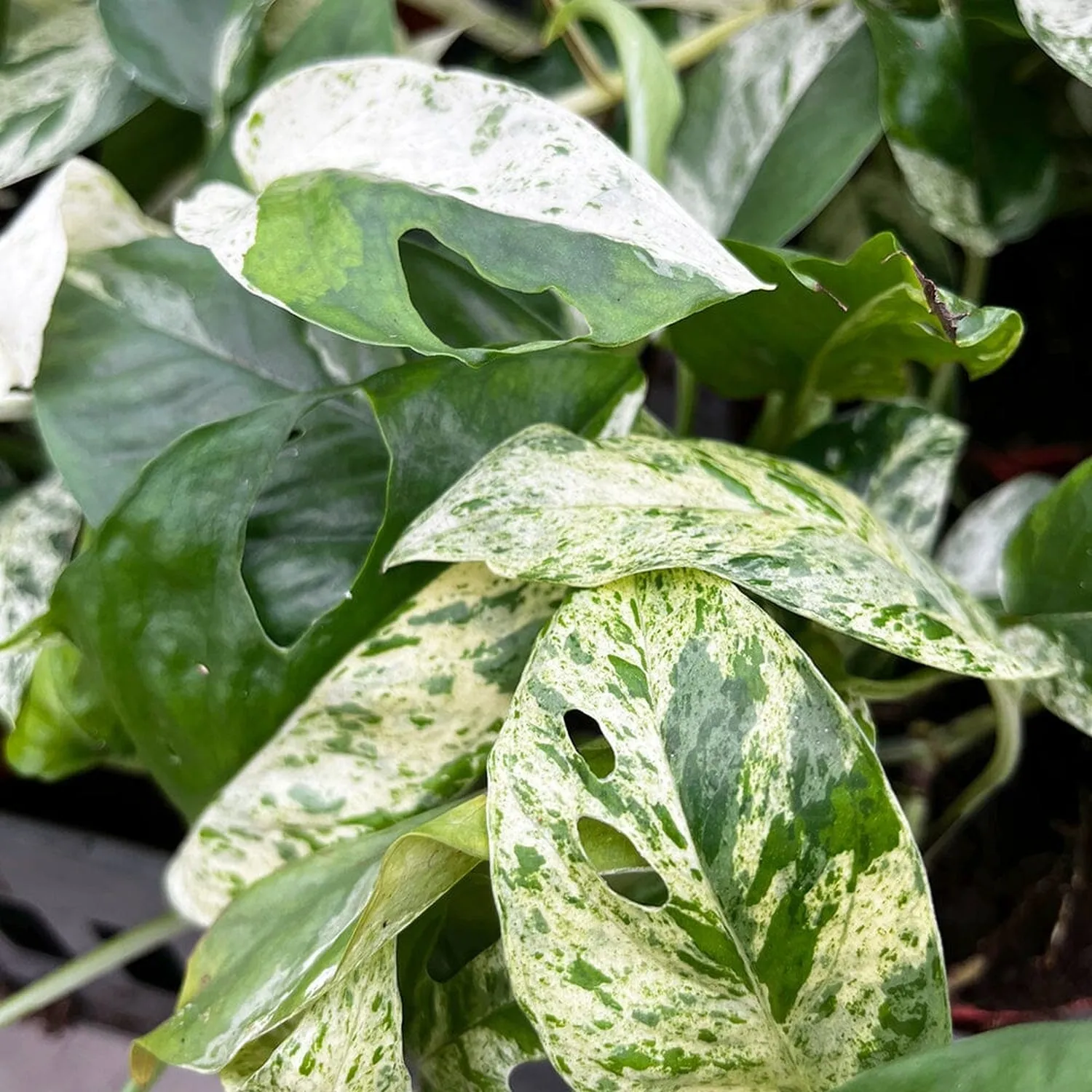
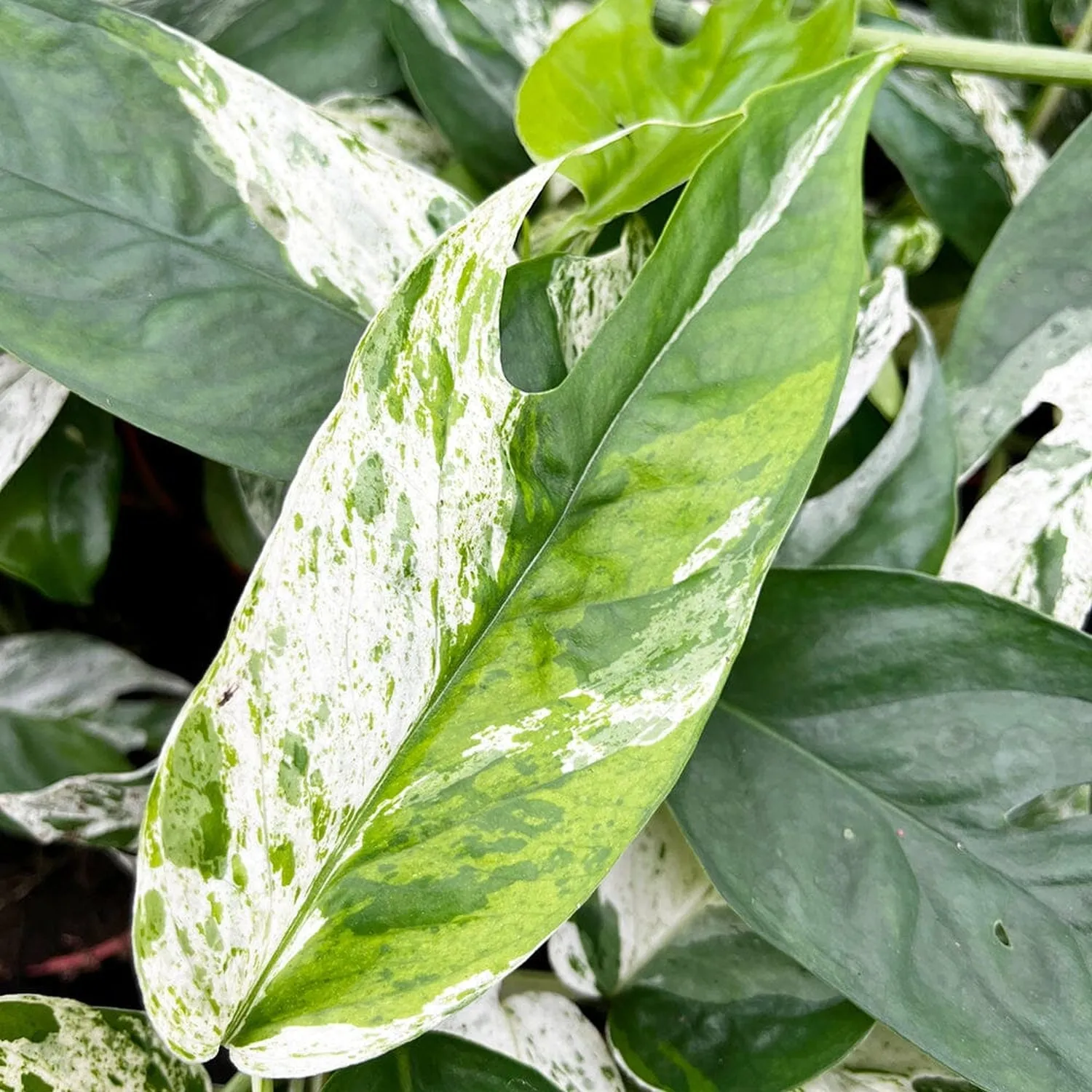
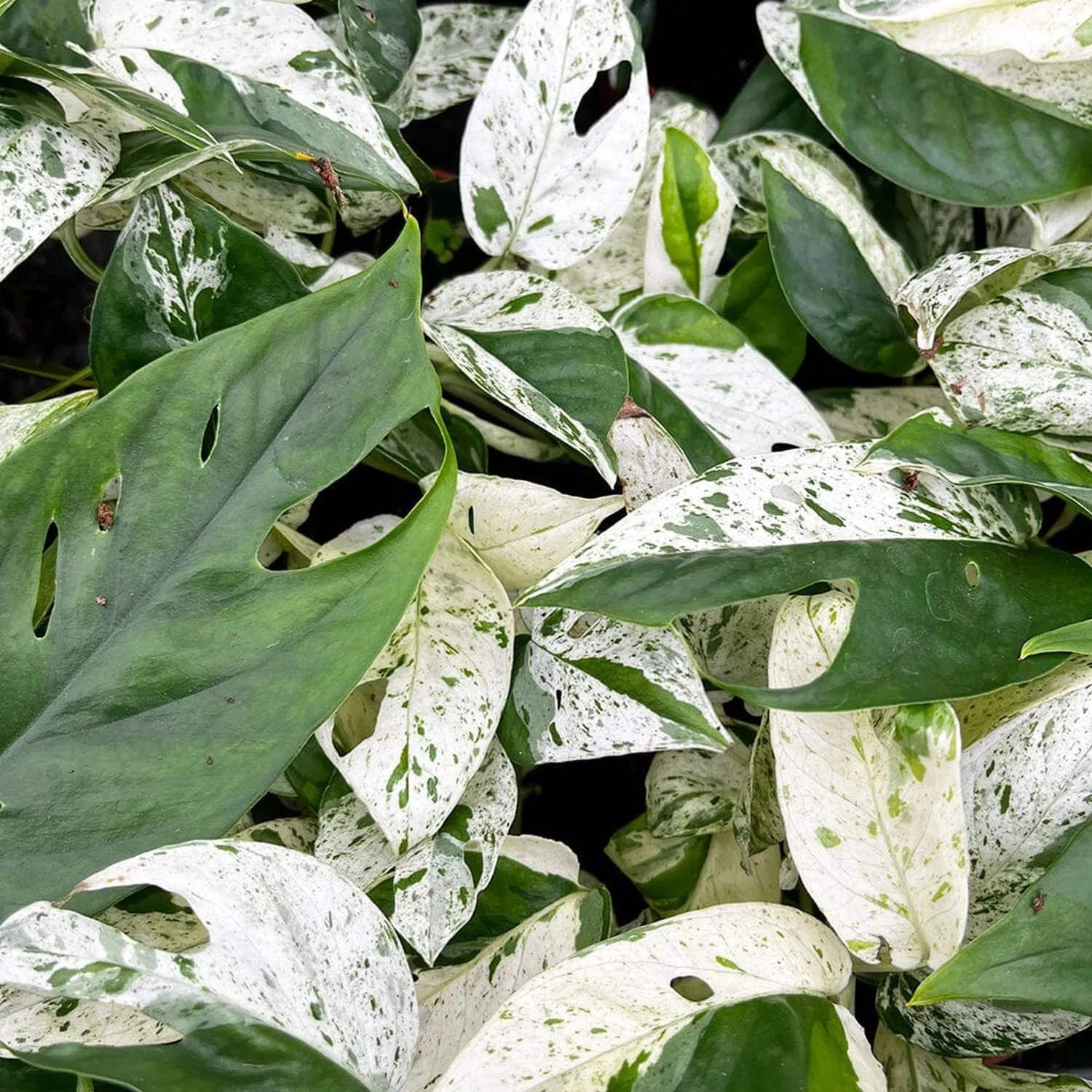
Epipremnum pinnatum ‘Marble Variegata’ is a rare and highly coveted tropical climbing plant from the Araceae family, admired for its striking white-and-green marbled foliage and fast-growing nature. Native to Southeast Asia and the Pacific Islands, this species is closely related to the classic Pothos but stands out for its elegant, elongated leaves and dramatic fenestrations as it matures.
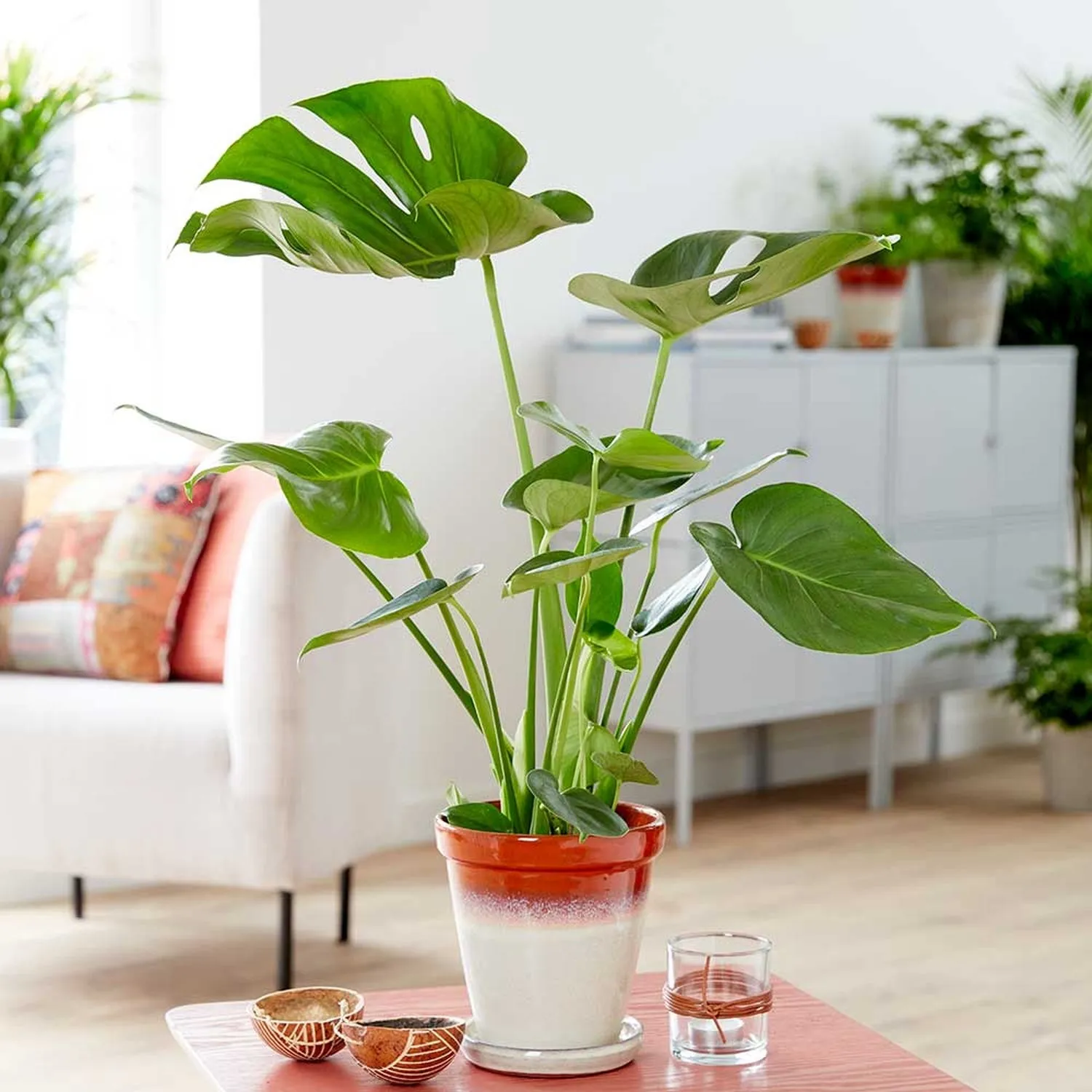
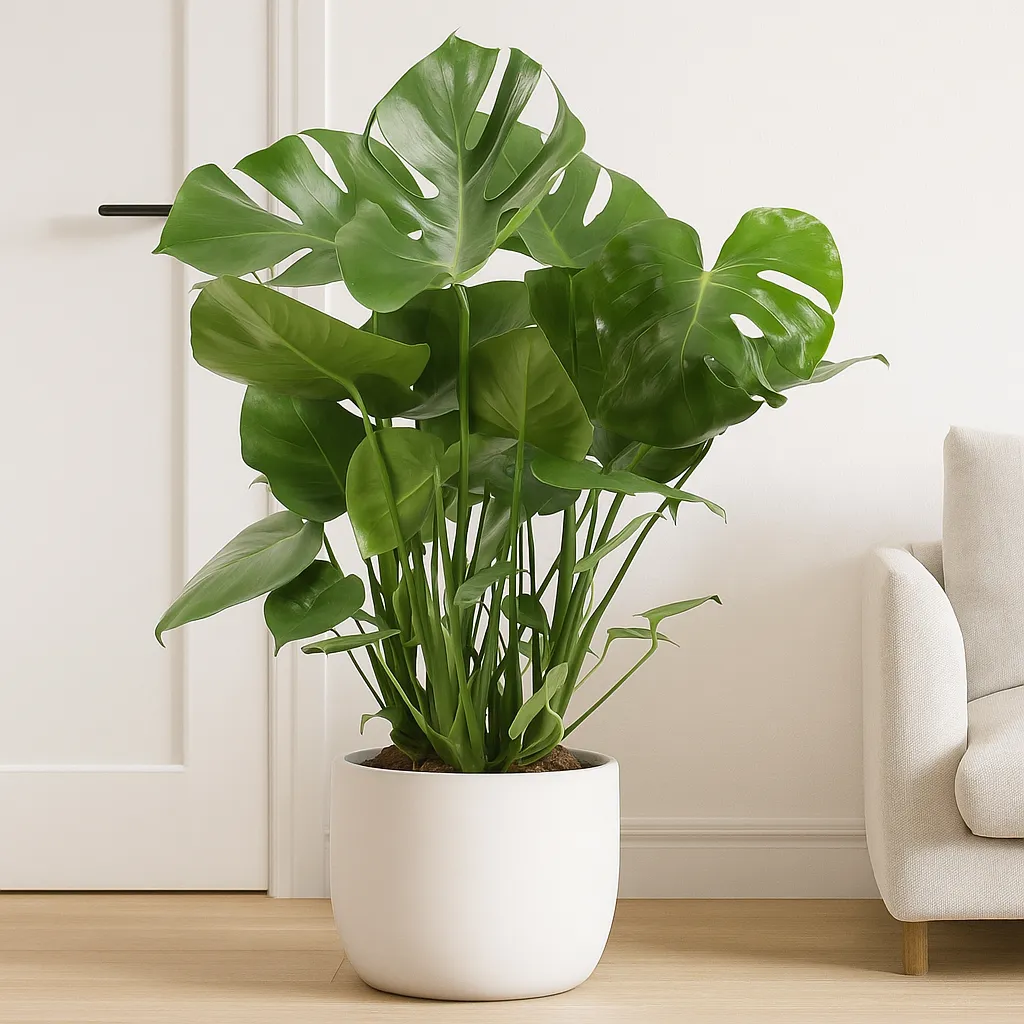
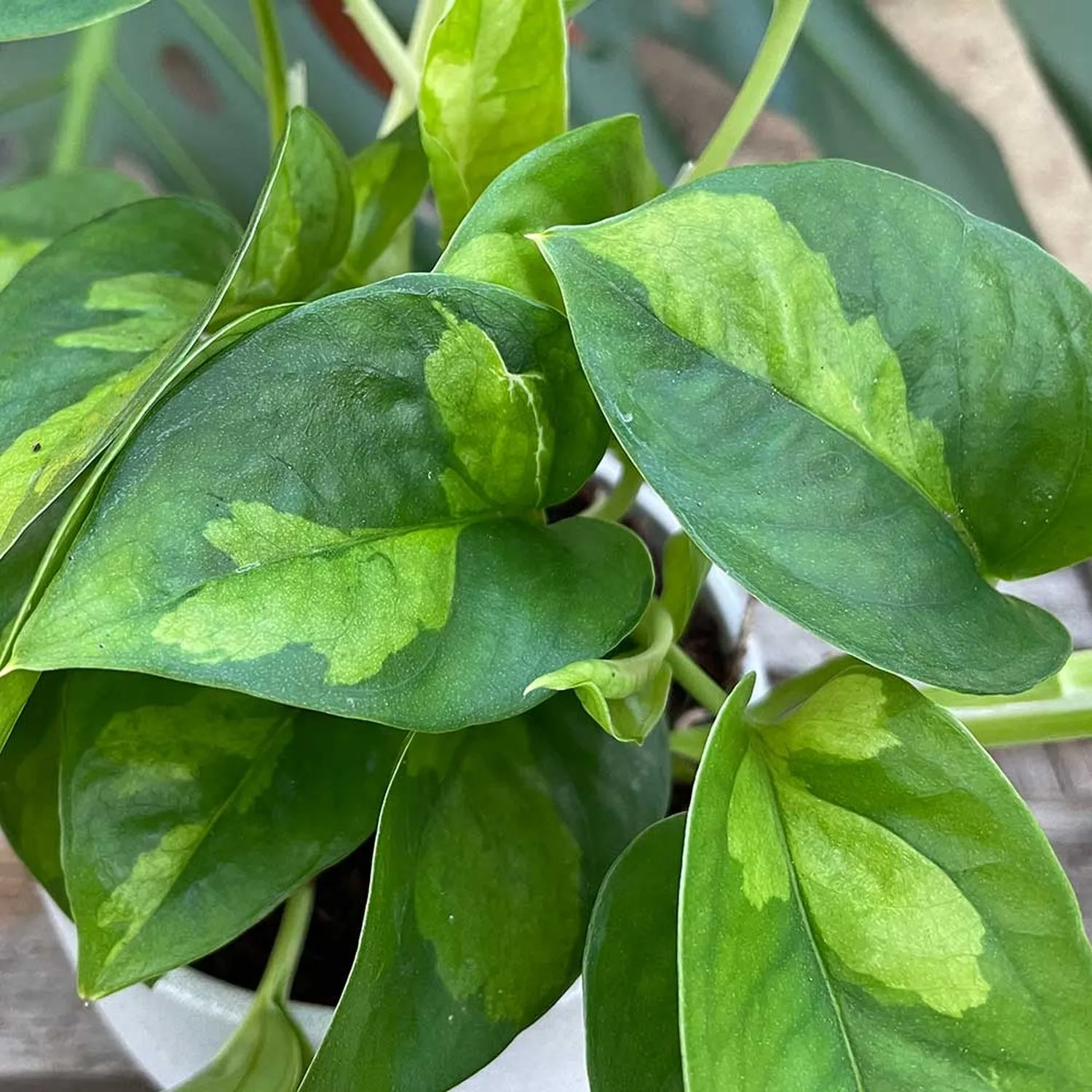
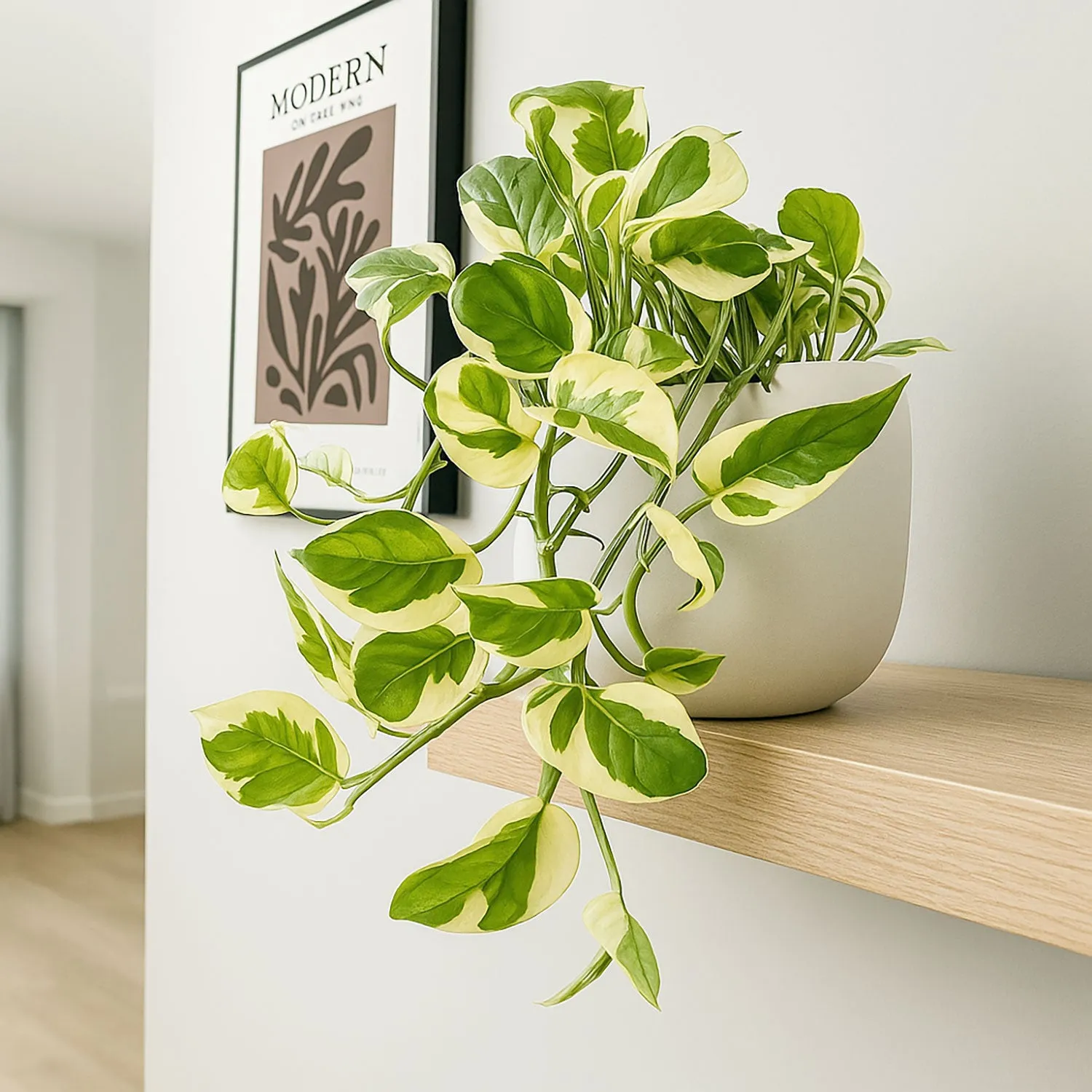
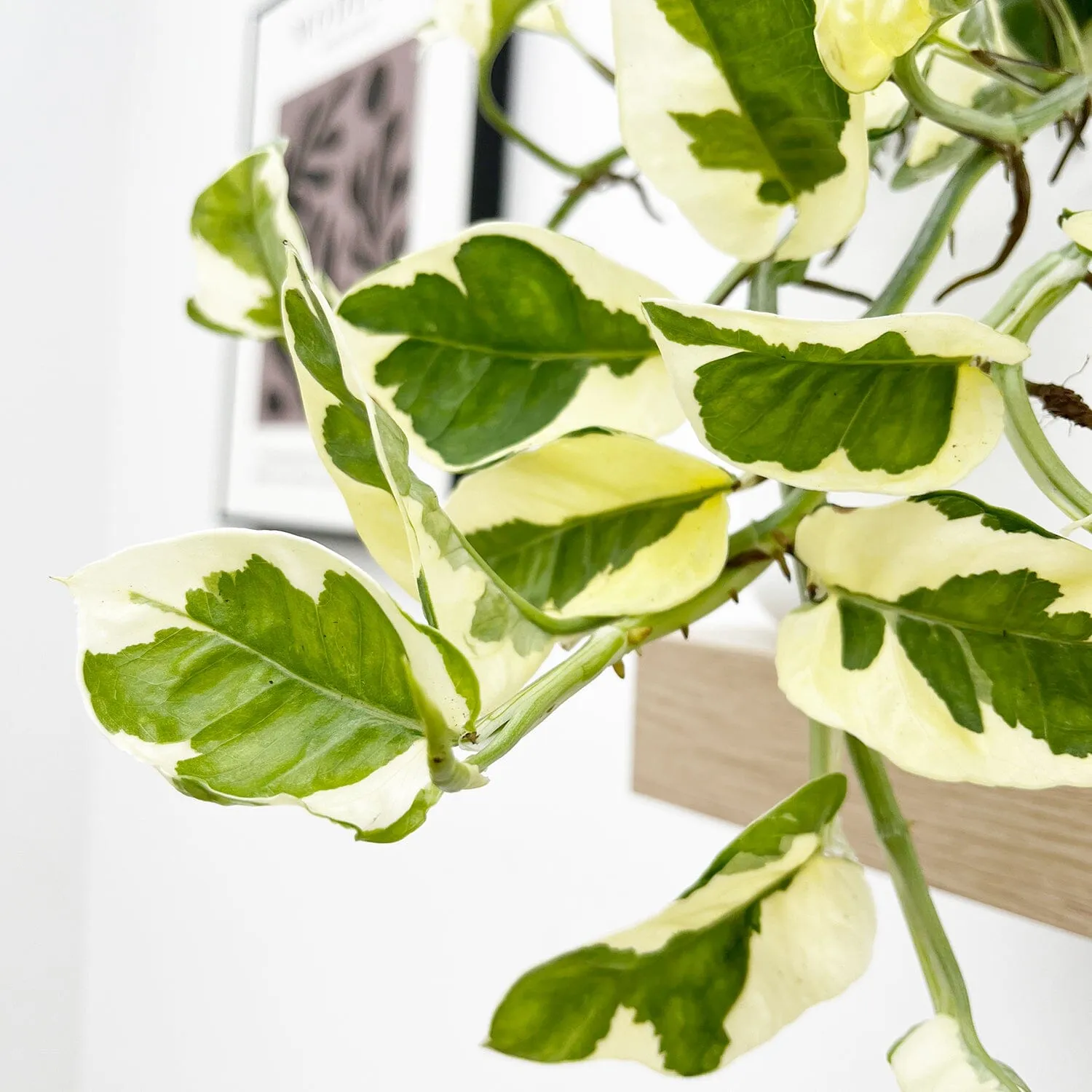
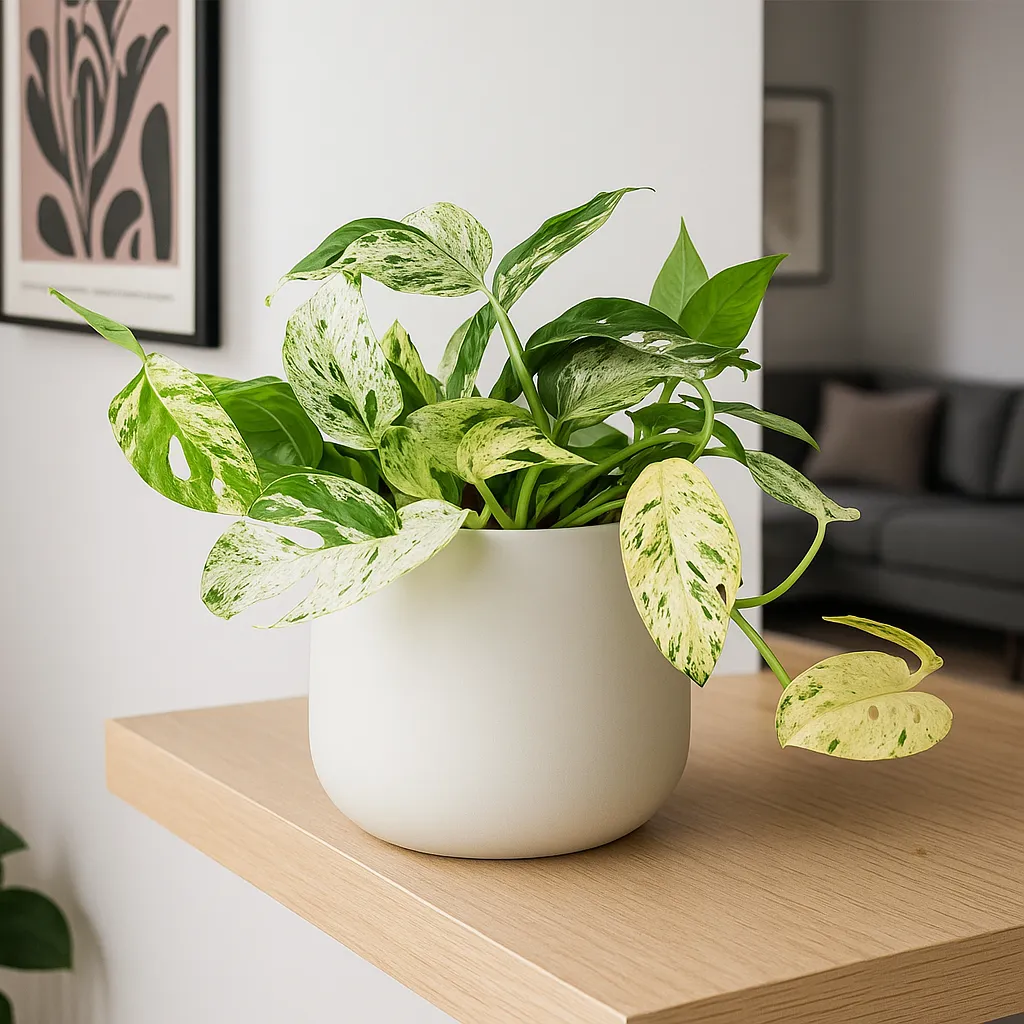
Each leaf is beautifully patterned with soft marbling — a delicate mix of creamy white, mint, and emerald tones, giving it the refined, marbled appearance that collectors adore. When allowed to climb, ‘Marble Variegata’ produces larger, more fenestrated (split) leaves similar in style to a Monstera, developing into a true showpiece of tropical beauty.
Graceful, adaptable, and endlessly decorative, this variegated form of Epipremnum pinnatum is perfect for plant lovers seeking something exotic yet easy to grow, bringing a bright and sophisticated flair to any interior.
Epipremnum pinnatum ‘Marble Variegata’ – Care Guide
Light
Thrives in bright, indirect light. Strong light enhances the marbling, while too little light can cause the white variegation to fade. Avoid direct sunlight, which can scorch the pale areas of the leaves.
Watering
Water when the top 2–3 cm of soil feels dry. Keep the soil lightly moist in the growing season but never waterlogged. Reduce watering in winter when growth slows. Consistency is key — overwatering or prolonged dryness can lead to leaf damage.
Temperature and Humidity
-
Temperature: Prefers warmth, 18–28°C. Protect from draughts and cold below 15°C.
-
Humidity: Prefers moderate to high humidity (50–70%). Mist occasionally or use a humidifier for optimal growth and leaf shine.
Soil and Potting
Use a chunky, free-draining aroid mix — peat-free compost combined with orchid bark, perlite, and coco coir works well. Repot every 1–2 years in spring to refresh the mix and promote strong root growth.
Feeding
Feed every 4–6 weeks in spring and summer with a balanced liquid fertiliser, diluted to half strength. Do not feed in winter when growth is slow.
Pruning and Maintenance
Trim long vines to encourage fuller, bushier growth and remove any yellow or damaged leaves. Stem cuttings can be easily propagated in water or soil to create new plants.
Growth and Maturity
A fast-growing climber capable of reaching 1–3 metres indoors with support. As it climbs, the leaves become larger and begin to develop dramatic splits and holes, showing off the plant’s full potential.
Common Issues
-
Loss of variegation: Insufficient light.
-
Yellow leaves: Overwatering or poor drainage.
-
Browning tips: Low humidity or inconsistent watering.
-
Pests: Occasionally thrips, spider mites, or mealybugs.
Background and Benefits
Epipremnum pinnatum is found throughout tropical Asia and the Pacific, where it grows as a vigorous climbing vine. The ‘Marble Variegata’ cultivar is particularly valued for its luminous, balanced variegation — less stark than Epipremnum ‘Albo Variegata’, but equally elegant and stable.
Like other Epipremnum species, it’s easy to care for and an excellent air purifier, filtering toxins and improving indoor air quality. Its bright marbling and climbing nature make it both a designer’s favourite and a collector’s delight.
✅ Quick Care Summary
-
Light: Bright, indirect; avoid strong direct sun
-
Water: Lightly moist; allow topsoil to dry slightly
-
Temperature: 18–28°C; avoid below 15°C
-
Humidity: Moderate to high (50–70%)
-
Soil: Chunky, well-draining aroid mix
-
Feed: Every 4–6 weeks in spring/summer
-
Growth: Fast-growing climbing vine, 1–3 m; marbled green and white leaves that develop fenestrations with age
⚠️ Toxicity Note: Like all aroids, Epipremnum pinnatum ‘Marble Variegata’ is toxic if ingested. Keep away from pets and children.
🌿 Styling Tip:
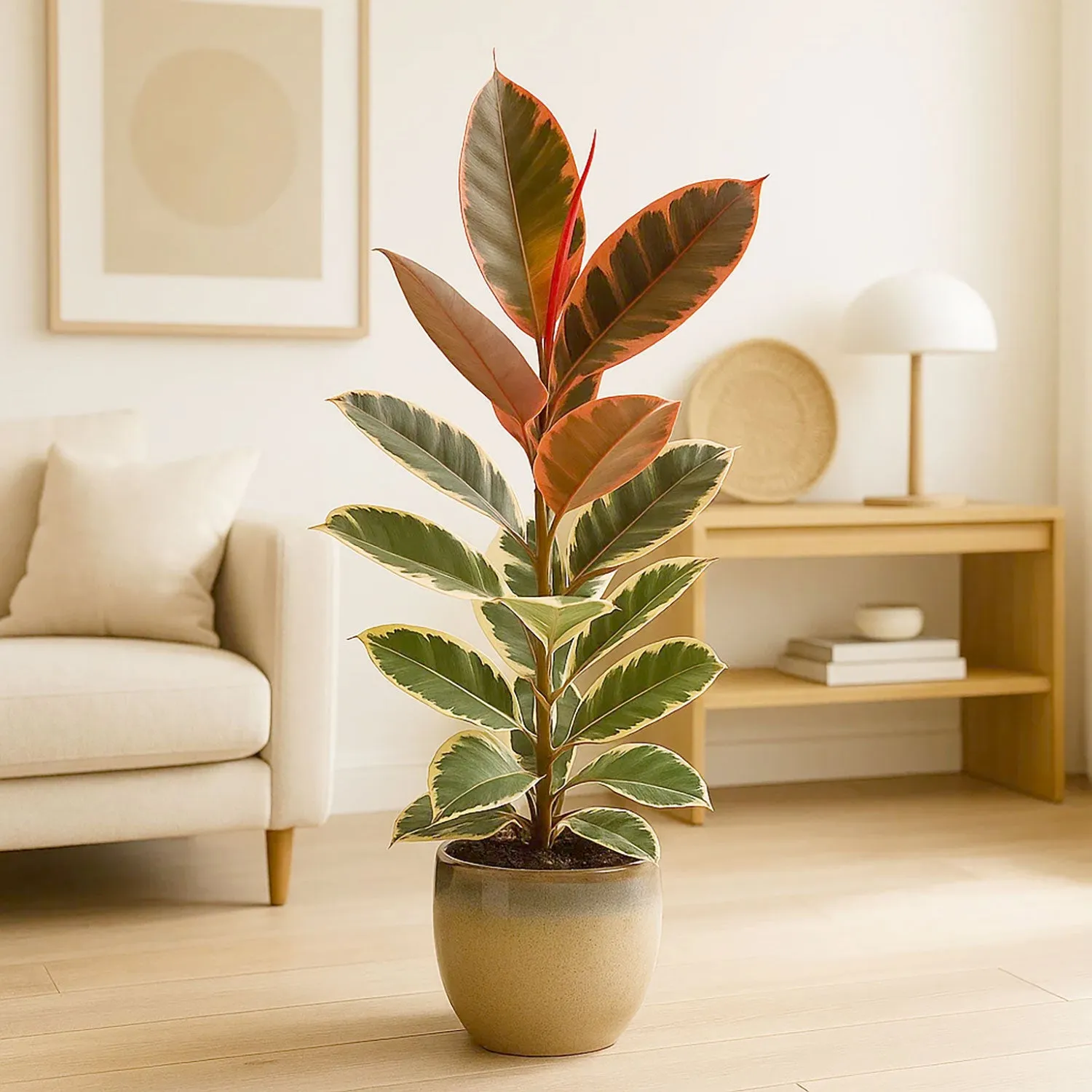
Train your Epipremnum ‘Marble Variegata’ up a moss pole or let it trail from a high shelf to showcase its marbled leaves. Pair with darker green plants for contrast, such as Philodendron ‘Micans’ or Ficus elastica ‘Tineke’.
Original: $19.78
-70%$19.78
$5.93Product Information
Product Information
Shipping & Returns
Shipping & Returns
Description
Epipremnum pinnatum ‘Marble Variegata’ is a rare and highly coveted tropical climbing plant from the Araceae family, admired for its striking white-and-green marbled foliage and fast-growing nature. Native to Southeast Asia and the Pacific Islands, this species is closely related to the classic Pothos but stands out for its elegant, elongated leaves and dramatic fenestrations as it matures.
Each leaf is beautifully patterned with soft marbling — a delicate mix of creamy white, mint, and emerald tones, giving it the refined, marbled appearance that collectors adore. When allowed to climb, ‘Marble Variegata’ produces larger, more fenestrated (split) leaves similar in style to a Monstera, developing into a true showpiece of tropical beauty.
Graceful, adaptable, and endlessly decorative, this variegated form of Epipremnum pinnatum is perfect for plant lovers seeking something exotic yet easy to grow, bringing a bright and sophisticated flair to any interior.
Epipremnum pinnatum ‘Marble Variegata’ – Care Guide
Light
Thrives in bright, indirect light. Strong light enhances the marbling, while too little light can cause the white variegation to fade. Avoid direct sunlight, which can scorch the pale areas of the leaves.
Watering
Water when the top 2–3 cm of soil feels dry. Keep the soil lightly moist in the growing season but never waterlogged. Reduce watering in winter when growth slows. Consistency is key — overwatering or prolonged dryness can lead to leaf damage.
Temperature and Humidity
-
Temperature: Prefers warmth, 18–28°C. Protect from draughts and cold below 15°C.
-
Humidity: Prefers moderate to high humidity (50–70%). Mist occasionally or use a humidifier for optimal growth and leaf shine.
Soil and Potting
Use a chunky, free-draining aroid mix — peat-free compost combined with orchid bark, perlite, and coco coir works well. Repot every 1–2 years in spring to refresh the mix and promote strong root growth.
Feeding
Feed every 4–6 weeks in spring and summer with a balanced liquid fertiliser, diluted to half strength. Do not feed in winter when growth is slow.
Pruning and Maintenance
Trim long vines to encourage fuller, bushier growth and remove any yellow or damaged leaves. Stem cuttings can be easily propagated in water or soil to create new plants.
Growth and Maturity
A fast-growing climber capable of reaching 1–3 metres indoors with support. As it climbs, the leaves become larger and begin to develop dramatic splits and holes, showing off the plant’s full potential.
Common Issues
-
Loss of variegation: Insufficient light.
-
Yellow leaves: Overwatering or poor drainage.
-
Browning tips: Low humidity or inconsistent watering.
-
Pests: Occasionally thrips, spider mites, or mealybugs.
Background and Benefits
Epipremnum pinnatum is found throughout tropical Asia and the Pacific, where it grows as a vigorous climbing vine. The ‘Marble Variegata’ cultivar is particularly valued for its luminous, balanced variegation — less stark than Epipremnum ‘Albo Variegata’, but equally elegant and stable.
Like other Epipremnum species, it’s easy to care for and an excellent air purifier, filtering toxins and improving indoor air quality. Its bright marbling and climbing nature make it both a designer’s favourite and a collector’s delight.
✅ Quick Care Summary
-
Light: Bright, indirect; avoid strong direct sun
-
Water: Lightly moist; allow topsoil to dry slightly
-
Temperature: 18–28°C; avoid below 15°C
-
Humidity: Moderate to high (50–70%)
-
Soil: Chunky, well-draining aroid mix
-
Feed: Every 4–6 weeks in spring/summer
-
Growth: Fast-growing climbing vine, 1–3 m; marbled green and white leaves that develop fenestrations with age
⚠️ Toxicity Note: Like all aroids, Epipremnum pinnatum ‘Marble Variegata’ is toxic if ingested. Keep away from pets and children.
🌿 Styling Tip:
Train your Epipremnum ‘Marble Variegata’ up a moss pole or let it trail from a high shelf to showcase its marbled leaves. Pair with darker green plants for contrast, such as Philodendron ‘Micans’ or Ficus elastica ‘Tineke’.