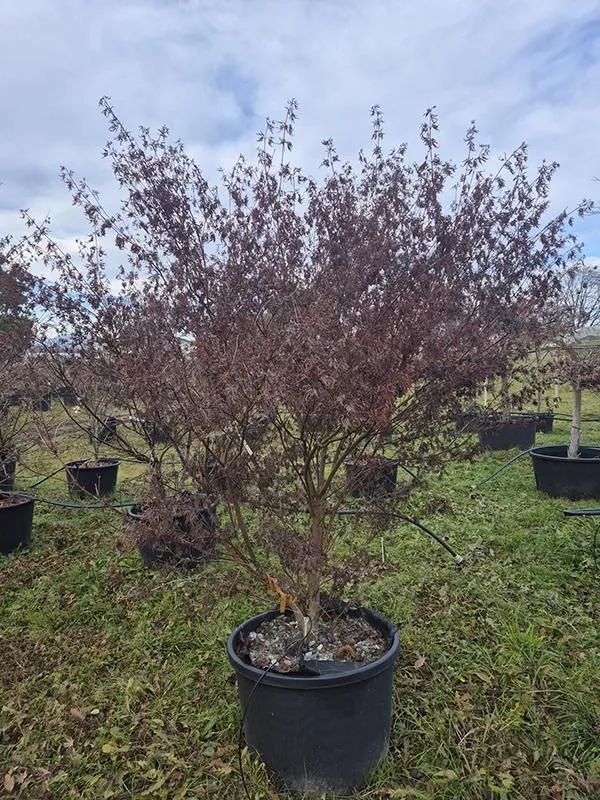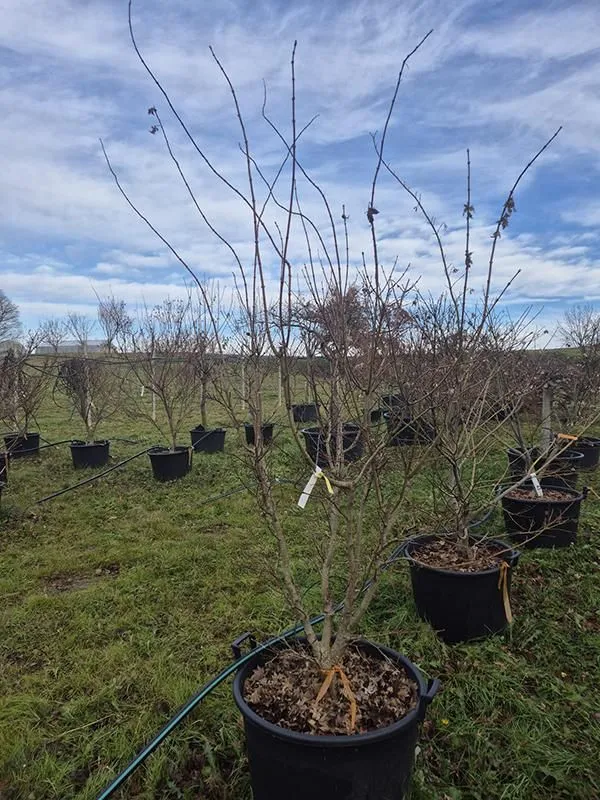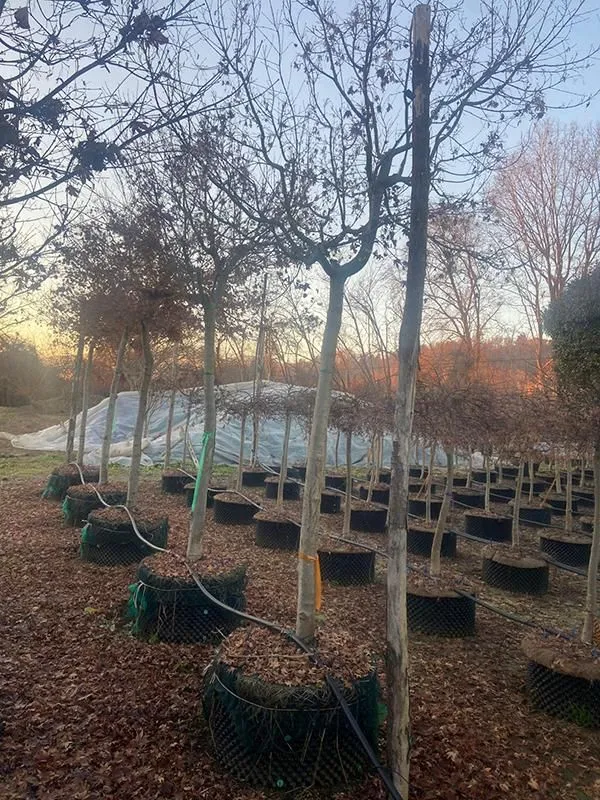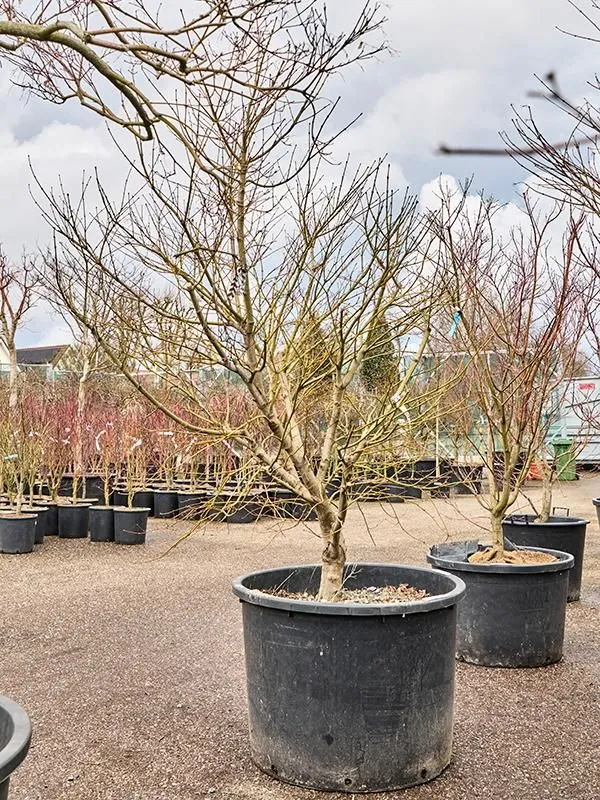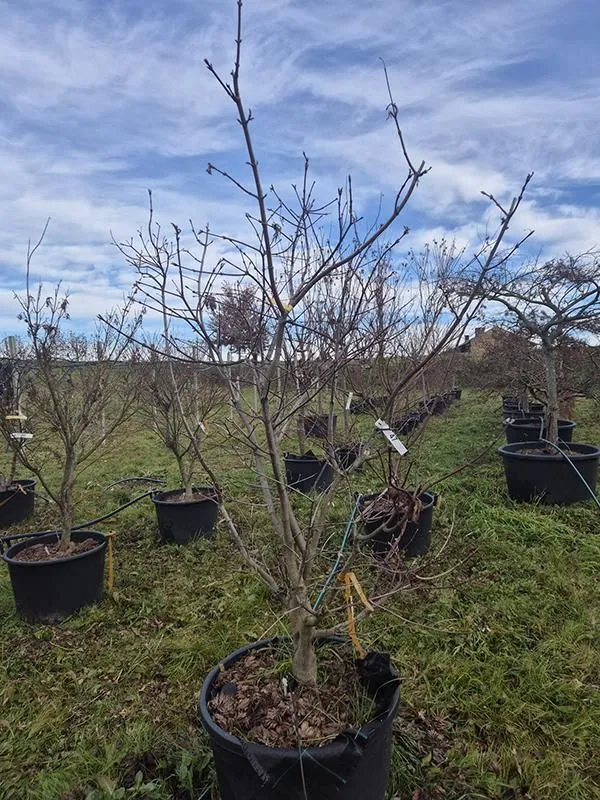
Acer Japonicum 'Aconitifolium' 70cm Pot 240cm Height Outdoor Tree
Acer japonicum ‘Aconitifolium’, commonly known as the Fern-leaved Full Moon Maple, is one of the most beautiful and sought-after Japanese maples, treasured for its deeply cut foliage and spectacular autumn colours. The name ‘Aconitifolium’ refers to the leaves’ resemblance to those of Aconitum (monkshood), with their elegant, finely dissected shape.
🌿 Key Features:
-
Foliage: Large, deeply lobed leaves (up to 12 cm across) are uniquely divided into narrow segments, giving them a fern-like or lacey appearance. In spring and summer, they are a fresh medium green. In autumn, they transform into a dazzling display of crimson, orange and fiery scarlet, often with multiple shades on the same tree.
-
Flowers: In spring, before or with the leaves, small but very pretty reddish-purple flowers hang beneath the branches, adding delicate interest.
-
Habit: Forms a broad, rounded small tree or large shrub, typically reaching 2.5–4 metres high with a similar spread, developing a graceful, layered canopy.
-
Bark: Smooth grey bark provides understated winter structure.
Its finely cut leaves and brilliant autumn colour make ‘Aconitifolium’ an outstanding specimen tree, perfect for planting where it can be admired up close.
🌱 Detailed Care Guide for Acer japonicum ‘Aconitifolium’
📍 Position & Light
-
Prefers partial shade or dappled sunlight, especially in areas with hot summers.
-
Some morning sun is beneficial and helps enhance autumn colour, but protect from harsh afternoon sun to prevent leaf scorch.
🌬️ Shelter
-
Plant in a sheltered position, away from strong winds, which can damage the delicate leaf lobes and cause browning.
💧 Watering
-
Likes soil to be consistently moist but well-drained.
-
Water thoroughly in dry spells, particularly in the first few years or if grown in containers.
-
A mulch of bark or compost in spring helps retain moisture and protect the shallow roots.
🪴 Soil
-
Prefers slightly acidic to neutral, fertile, humus-rich soil.
-
Avoid very alkaline or heavy clay soils. If necessary, plant in raised beds or large containers using ericaceous compost mixed with grit for drainage.
🍽️ Feeding
-
Feed lightly in spring with a balanced slow-release fertiliser or a specialist feed for acers.
-
Avoid high-nitrogen feeds which encourage lush, soft growth more prone to wind and frost damage.
✂️ Pruning & Maintenance
-
Requires minimal pruning.
-
Remove dead, damaged or crossing branches in late autumn or winter while dormant.
-
Avoid hard pruning, which spoils its elegant natural shape.
🪲 Pests & Problems
-
Generally very healthy and low maintenance.
-
May occasionally suffer aphids on new growth.
-
Leaf scorch (brown edges) is usually caused by drought, strong wind or intense sun exposure, rather than disease.
🚰 Container Growing
-
Well suited to large pots, making it ideal for patios or small gardens.
-
Use ericaceous compost with added grit, ensure pots drain freely and raise on feet.
-
Water consistently, and protect roots in harsh winters by wrapping or moving to a sheltered spot.
Original: $3,299.49
-70%$3,299.49
$989.85Product Information
Product Information
Shipping & Returns
Shipping & Returns
Description
Acer japonicum ‘Aconitifolium’, commonly known as the Fern-leaved Full Moon Maple, is one of the most beautiful and sought-after Japanese maples, treasured for its deeply cut foliage and spectacular autumn colours. The name ‘Aconitifolium’ refers to the leaves’ resemblance to those of Aconitum (monkshood), with their elegant, finely dissected shape.
🌿 Key Features:
-
Foliage: Large, deeply lobed leaves (up to 12 cm across) are uniquely divided into narrow segments, giving them a fern-like or lacey appearance. In spring and summer, they are a fresh medium green. In autumn, they transform into a dazzling display of crimson, orange and fiery scarlet, often with multiple shades on the same tree.
-
Flowers: In spring, before or with the leaves, small but very pretty reddish-purple flowers hang beneath the branches, adding delicate interest.
-
Habit: Forms a broad, rounded small tree or large shrub, typically reaching 2.5–4 metres high with a similar spread, developing a graceful, layered canopy.
-
Bark: Smooth grey bark provides understated winter structure.
Its finely cut leaves and brilliant autumn colour make ‘Aconitifolium’ an outstanding specimen tree, perfect for planting where it can be admired up close.
🌱 Detailed Care Guide for Acer japonicum ‘Aconitifolium’
📍 Position & Light
-
Prefers partial shade or dappled sunlight, especially in areas with hot summers.
-
Some morning sun is beneficial and helps enhance autumn colour, but protect from harsh afternoon sun to prevent leaf scorch.
🌬️ Shelter
-
Plant in a sheltered position, away from strong winds, which can damage the delicate leaf lobes and cause browning.
💧 Watering
-
Likes soil to be consistently moist but well-drained.
-
Water thoroughly in dry spells, particularly in the first few years or if grown in containers.
-
A mulch of bark or compost in spring helps retain moisture and protect the shallow roots.
🪴 Soil
-
Prefers slightly acidic to neutral, fertile, humus-rich soil.
-
Avoid very alkaline or heavy clay soils. If necessary, plant in raised beds or large containers using ericaceous compost mixed with grit for drainage.
🍽️ Feeding
-
Feed lightly in spring with a balanced slow-release fertiliser or a specialist feed for acers.
-
Avoid high-nitrogen feeds which encourage lush, soft growth more prone to wind and frost damage.
✂️ Pruning & Maintenance
-
Requires minimal pruning.
-
Remove dead, damaged or crossing branches in late autumn or winter while dormant.
-
Avoid hard pruning, which spoils its elegant natural shape.
🪲 Pests & Problems
-
Generally very healthy and low maintenance.
-
May occasionally suffer aphids on new growth.
-
Leaf scorch (brown edges) is usually caused by drought, strong wind or intense sun exposure, rather than disease.
🚰 Container Growing
-
Well suited to large pots, making it ideal for patios or small gardens.
-
Use ericaceous compost with added grit, ensure pots drain freely and raise on feet.
-
Water consistently, and protect roots in harsh winters by wrapping or moving to a sheltered spot.