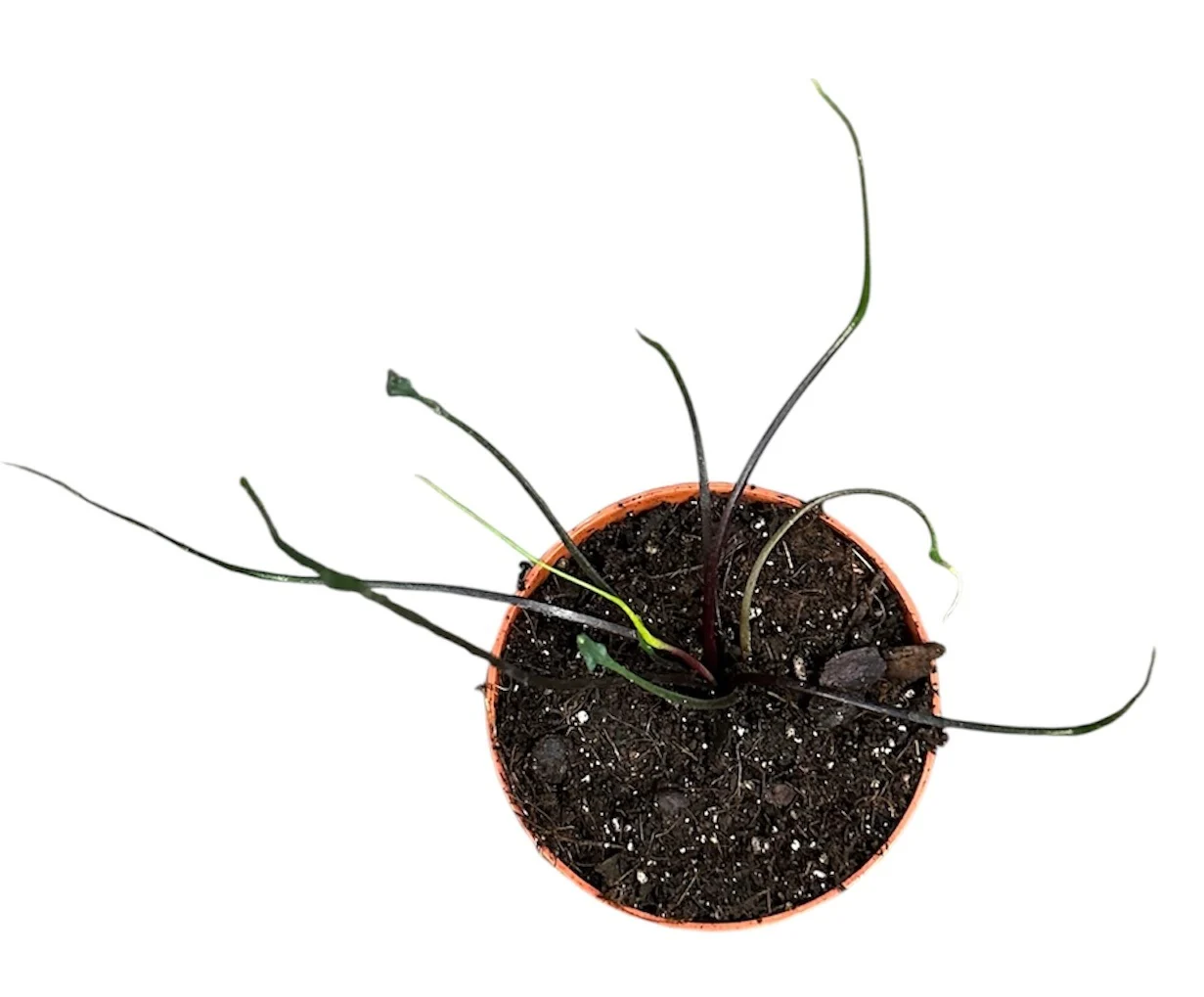
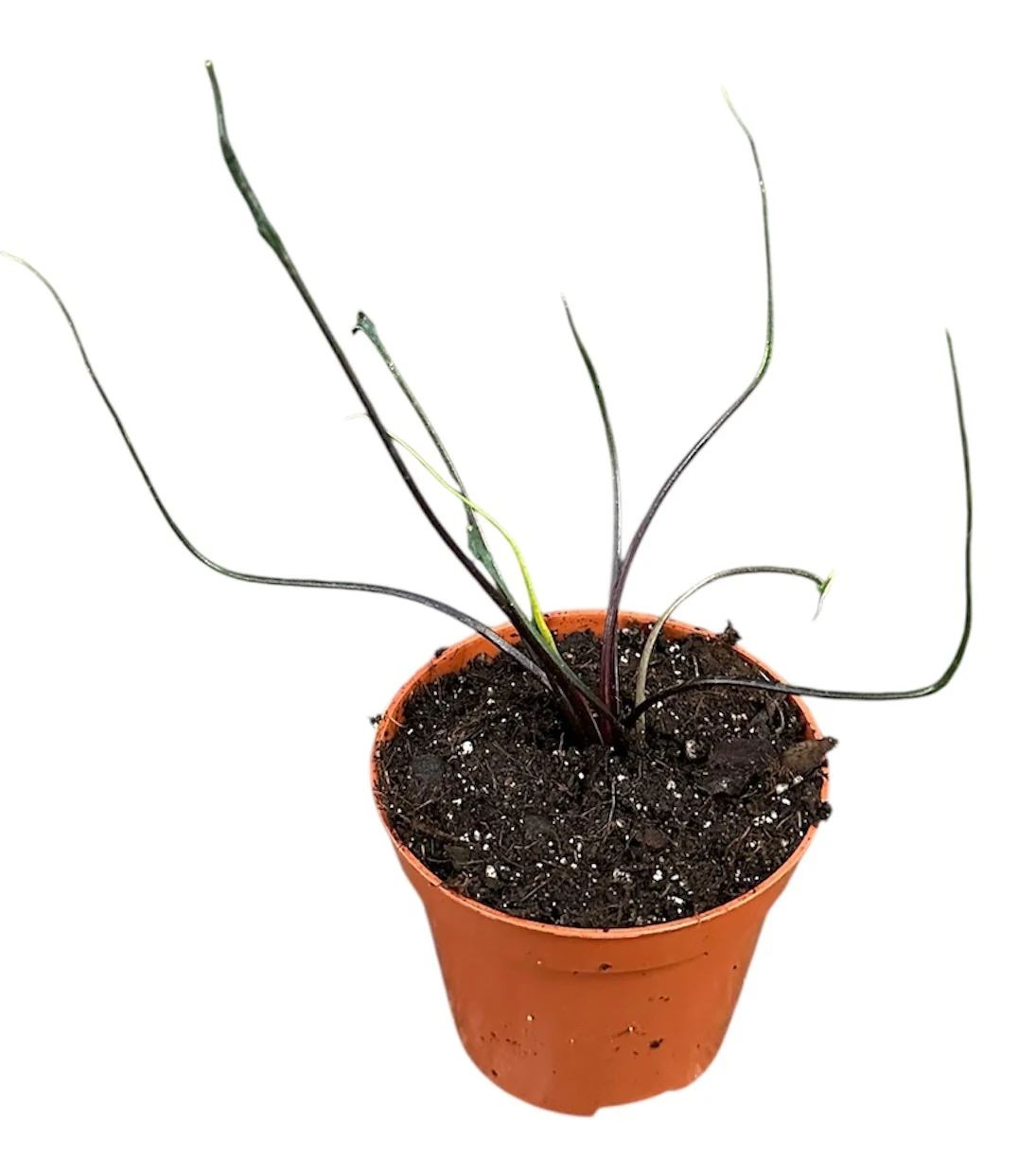
Alocasia Flying Squid 8cm Pot 10cm Height House Plant
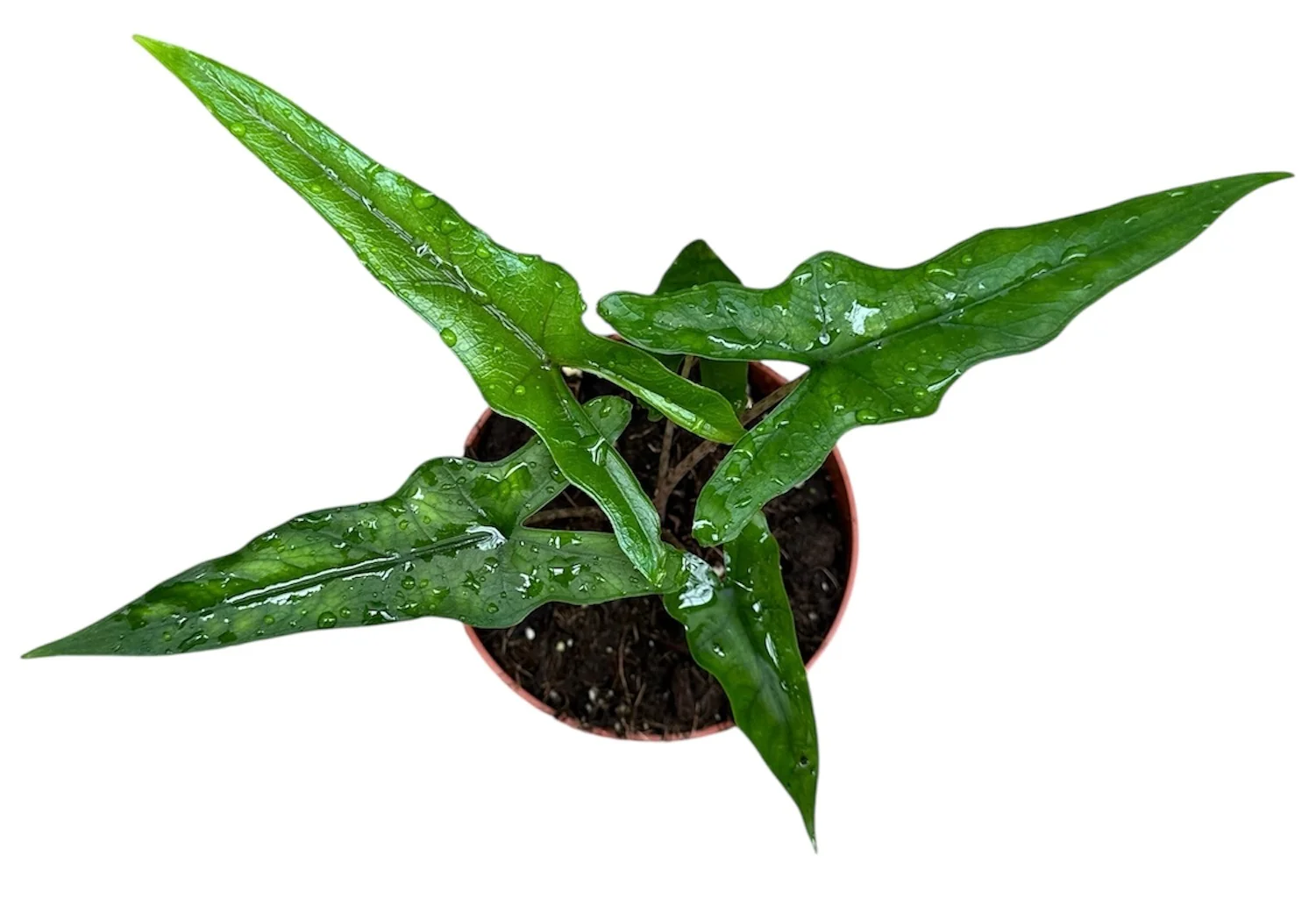
Alocasia ‘Flying Squid’ is a rare and visually dramatic Alocasia cultivar, instantly recognisable for its long, narrow, deeply sculptural leaves that twist and arch like flowing tentacles. It has a bold, almost alien appearance and is grown purely for foliage impact. Compared to broader-leaved Alocasias, this variety feels lighter, more architectural and highly contemporary, making it a standout choice for collectors.
Native to tropical rainforest conditions through its parentage, ‘Flying Squid’ thrives when warmth, humidity and consistency are prioritised.
Plant Description
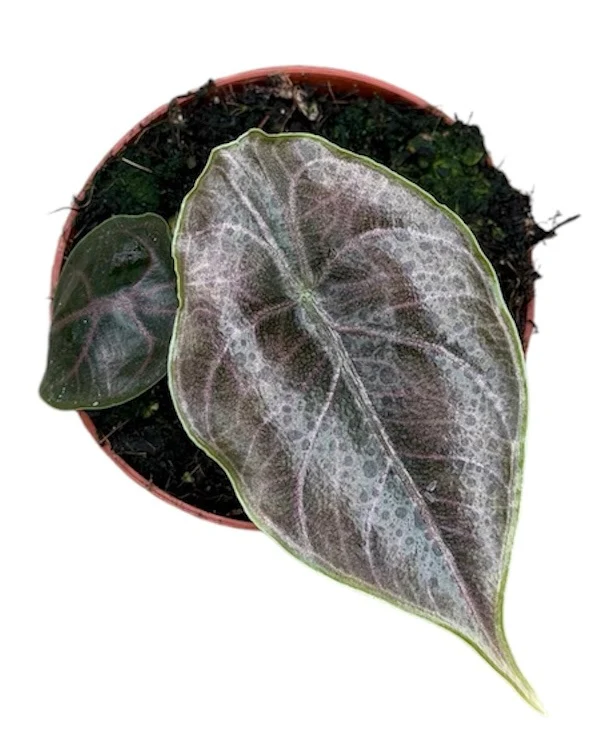
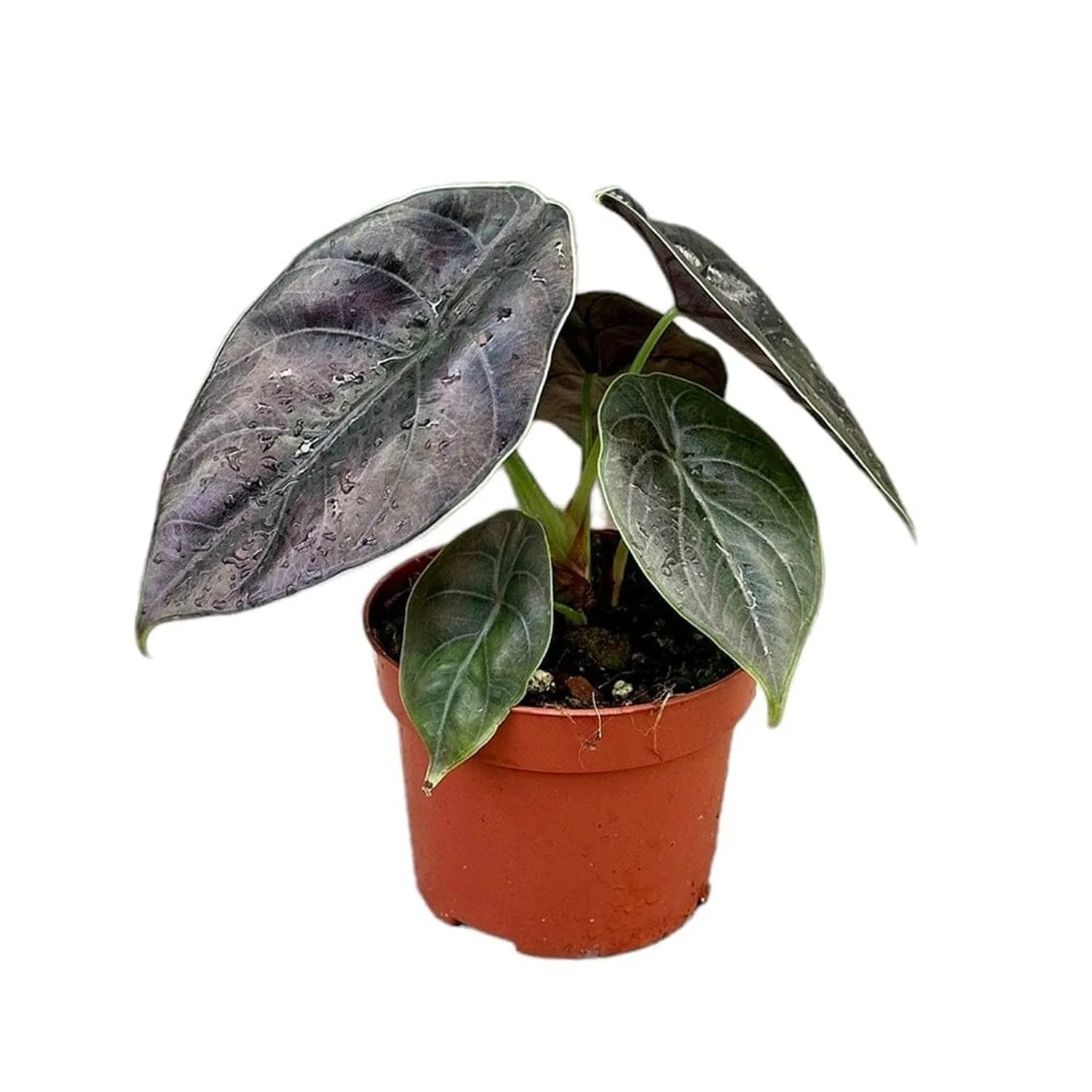
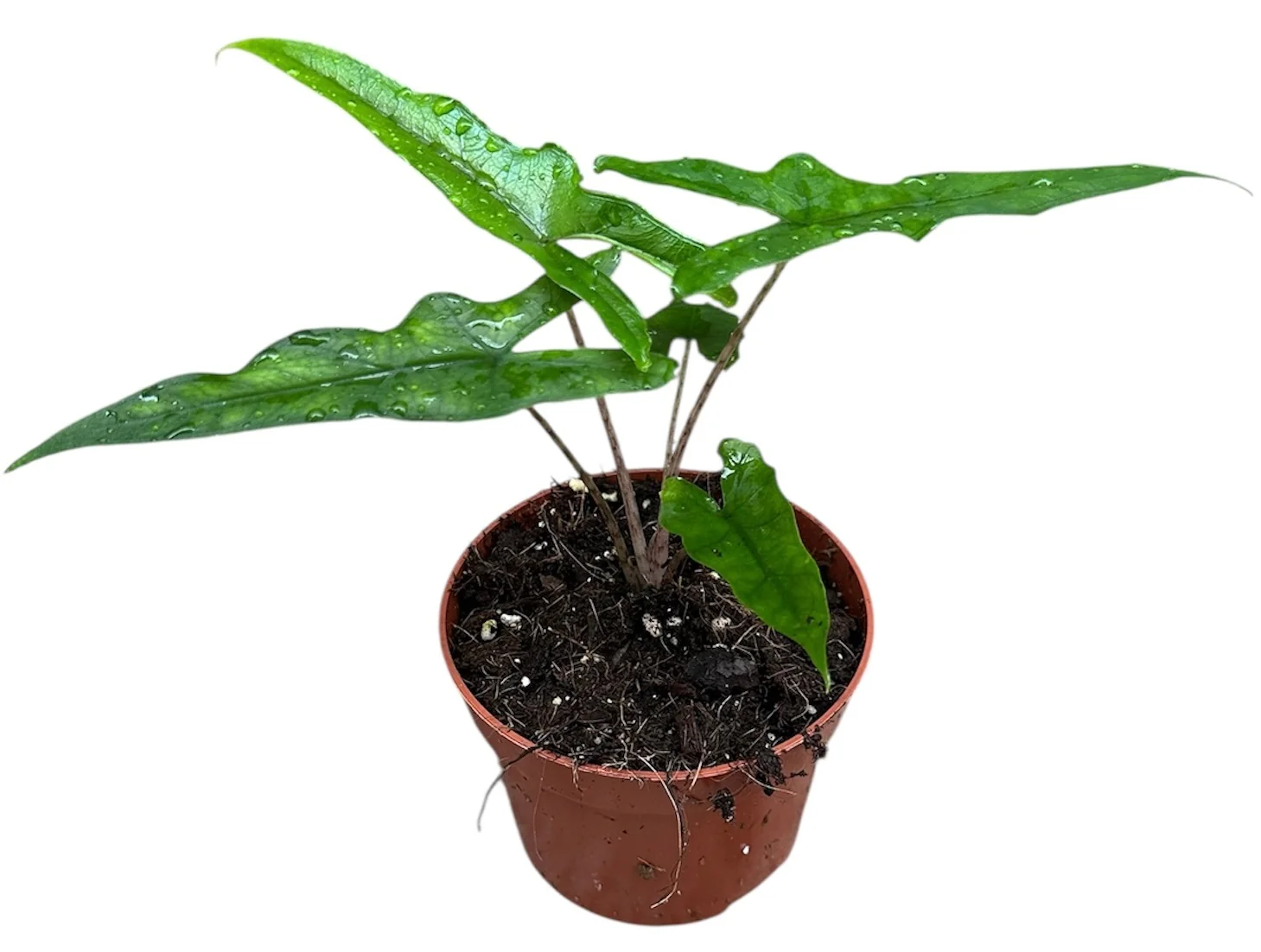
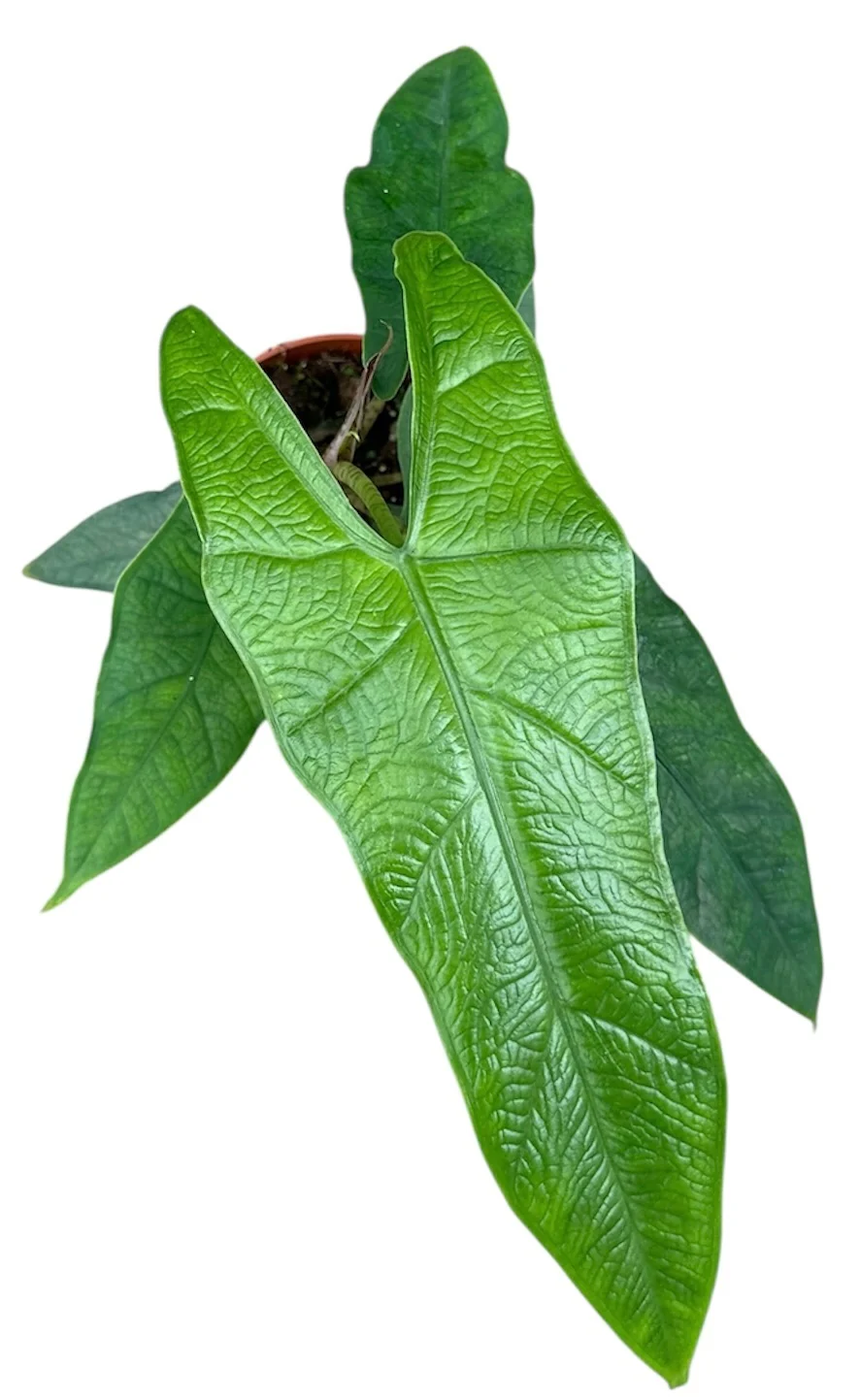
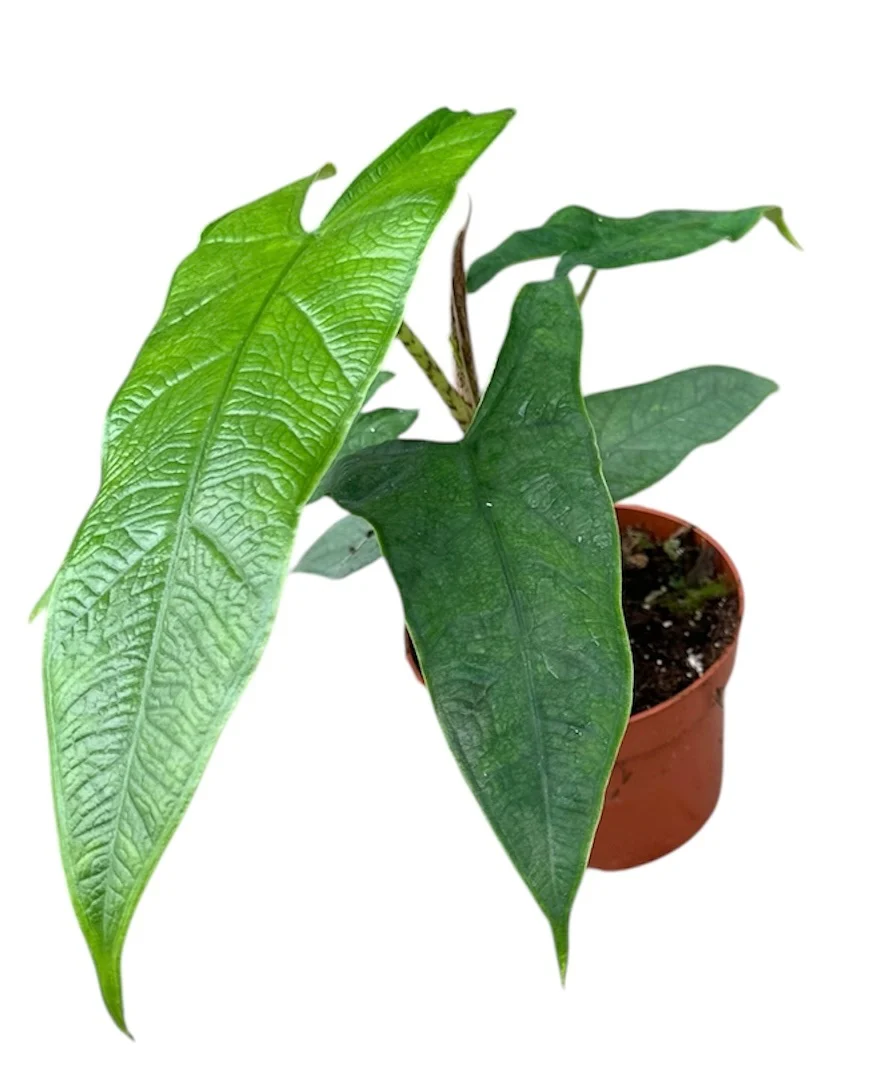
Alocasia ‘Flying Squid’ produces elongated, strap-like leaves that are significantly narrower than most Alocasias. The leaves often curl, ripple or twist along their length, giving the plant its distinctive “squid-like” movement. Foliage is typically deep green with a satin finish, and the strong midrib adds structure without overpowering the leaf shape.
Leaves emerge individually from a central rhizome on upright petioles, creating an open, sculptural form rather than a dense clump. Growth is moderate, and each new leaf is often more dramatic than the last when conditions are good.
This plant is not grown for flowers; any blooms that appear are usually removed to allow the plant to conserve energy for foliage growth.
Light Requirements
Bright, indirect light is essential for healthy growth and strong leaf form. A position near an east-facing window or set back from a bright south- or west-facing window works well.
Direct sunlight should be avoided, as it can scorch the leaves and cause stress. In low light, growth slows significantly, petioles may stretch, and new leaves may emerge smaller or less defined.
Watering
Alocasia ‘Flying Squid’ prefers evenly moist compost, but it must never sit in waterlogged soil. Allow the top few centimetres of the growing medium to dry slightly between waterings, then water thoroughly.
During spring and summer, watering will be more frequent as the plant actively grows. In autumn and winter, reduce watering and allow the compost to dry a little more between waterings. Overwatering in cooler conditions is the most common cause of root rot.
If the plant becomes too dry, leaves may droop or curl excessively. Persistent yellowing or soft stems usually indicate overwatering.
Temperature & Humidity
This Alocasia thrives in warm, stable temperatures, ideally between 20–28°C. It is very sensitive to cold and should be protected from draughts, cold windows and unheated rooms. Temperatures below 15°C can cause leaf loss or dormancy.
High humidity is extremely important. Alocasia ‘Flying Squid’ performs best when humidity remains above 60%. Low humidity often results in browning edges, distorted leaves and slow growth. A humidifier is strongly recommended, especially in winter.
Good airflow is important, but avoid placing the plant near heaters or air-conditioning vents.
Soil & Potting
A free-draining but moisture-retentive aroid mix is essential. The roots need oxygen as well as consistent moisture. A mix of peat-free compost or coco coir, perlite or pumice, and a small amount of bark works well.
Choose a pot with good drainage and avoid oversizing. Repot only when the plant becomes root-bound, ideally in spring or early summer. Alocasias dislike frequent root disturbance.
Feeding
Feed lightly but regularly during the growing season. From spring to late summer, apply a balanced houseplant fertiliser every three to four weeks at half strength. This supports strong leaf development without causing fertiliser burn.
Reduce feeding in autumn and stop entirely during winter if growth slows or the plant enters dormancy.
Pruning & Maintenance
Remove ageing or damaged leaves at the base using clean, sharp scissors. This encourages the plant to focus energy on new growth.
Wipe leaves gently with a damp cloth to remove dust and maintain healthy photosynthesis. Avoid leaf shine products, which can clog leaf pores and damage delicate foliage.
Dormancy Awareness
Like many Alocasias, ‘Flying Squid’ may enter partial dormancy in winter, especially if temperatures or light levels drop. Growth may slow or stop, and older leaves may die back. Reduce watering during this period and resume normal care when new growth appears in spring.
Propagation
Propagation is done by division of the rhizome or offsets, usually during repotting. Each division should have its own roots and growth point. This plant cannot be propagated from leaf or stem cuttings.
Overall Care Summary
Alocasia ‘Flying Squid’ is a statement plant best suited to growers who can provide warmth, high humidity and consistent care. It is more sensitive than common houseplants but rewards attentive care with extraordinary foliage and a truly unique silhouette. In the right environment, it becomes a centrepiece plant that feels both sculptural and alive.
Original: $26.38
-70%$26.38
$7.91Product Information
Product Information
Shipping & Returns
Shipping & Returns
Description
Alocasia ‘Flying Squid’ is a rare and visually dramatic Alocasia cultivar, instantly recognisable for its long, narrow, deeply sculptural leaves that twist and arch like flowing tentacles. It has a bold, almost alien appearance and is grown purely for foliage impact. Compared to broader-leaved Alocasias, this variety feels lighter, more architectural and highly contemporary, making it a standout choice for collectors.
Native to tropical rainforest conditions through its parentage, ‘Flying Squid’ thrives when warmth, humidity and consistency are prioritised.
Plant Description
Alocasia ‘Flying Squid’ produces elongated, strap-like leaves that are significantly narrower than most Alocasias. The leaves often curl, ripple or twist along their length, giving the plant its distinctive “squid-like” movement. Foliage is typically deep green with a satin finish, and the strong midrib adds structure without overpowering the leaf shape.
Leaves emerge individually from a central rhizome on upright petioles, creating an open, sculptural form rather than a dense clump. Growth is moderate, and each new leaf is often more dramatic than the last when conditions are good.
This plant is not grown for flowers; any blooms that appear are usually removed to allow the plant to conserve energy for foliage growth.
Light Requirements
Bright, indirect light is essential for healthy growth and strong leaf form. A position near an east-facing window or set back from a bright south- or west-facing window works well.
Direct sunlight should be avoided, as it can scorch the leaves and cause stress. In low light, growth slows significantly, petioles may stretch, and new leaves may emerge smaller or less defined.
Watering
Alocasia ‘Flying Squid’ prefers evenly moist compost, but it must never sit in waterlogged soil. Allow the top few centimetres of the growing medium to dry slightly between waterings, then water thoroughly.
During spring and summer, watering will be more frequent as the plant actively grows. In autumn and winter, reduce watering and allow the compost to dry a little more between waterings. Overwatering in cooler conditions is the most common cause of root rot.
If the plant becomes too dry, leaves may droop or curl excessively. Persistent yellowing or soft stems usually indicate overwatering.
Temperature & Humidity
This Alocasia thrives in warm, stable temperatures, ideally between 20–28°C. It is very sensitive to cold and should be protected from draughts, cold windows and unheated rooms. Temperatures below 15°C can cause leaf loss or dormancy.
High humidity is extremely important. Alocasia ‘Flying Squid’ performs best when humidity remains above 60%. Low humidity often results in browning edges, distorted leaves and slow growth. A humidifier is strongly recommended, especially in winter.
Good airflow is important, but avoid placing the plant near heaters or air-conditioning vents.
Soil & Potting
A free-draining but moisture-retentive aroid mix is essential. The roots need oxygen as well as consistent moisture. A mix of peat-free compost or coco coir, perlite or pumice, and a small amount of bark works well.
Choose a pot with good drainage and avoid oversizing. Repot only when the plant becomes root-bound, ideally in spring or early summer. Alocasias dislike frequent root disturbance.
Feeding
Feed lightly but regularly during the growing season. From spring to late summer, apply a balanced houseplant fertiliser every three to four weeks at half strength. This supports strong leaf development without causing fertiliser burn.
Reduce feeding in autumn and stop entirely during winter if growth slows or the plant enters dormancy.
Pruning & Maintenance
Remove ageing or damaged leaves at the base using clean, sharp scissors. This encourages the plant to focus energy on new growth.
Wipe leaves gently with a damp cloth to remove dust and maintain healthy photosynthesis. Avoid leaf shine products, which can clog leaf pores and damage delicate foliage.
Dormancy Awareness
Like many Alocasias, ‘Flying Squid’ may enter partial dormancy in winter, especially if temperatures or light levels drop. Growth may slow or stop, and older leaves may die back. Reduce watering during this period and resume normal care when new growth appears in spring.
Propagation
Propagation is done by division of the rhizome or offsets, usually during repotting. Each division should have its own roots and growth point. This plant cannot be propagated from leaf or stem cuttings.
Overall Care Summary
Alocasia ‘Flying Squid’ is a statement plant best suited to growers who can provide warmth, high humidity and consistent care. It is more sensitive than common houseplants but rewards attentive care with extraordinary foliage and a truly unique silhouette. In the right environment, it becomes a centrepiece plant that feels both sculptural and alive.