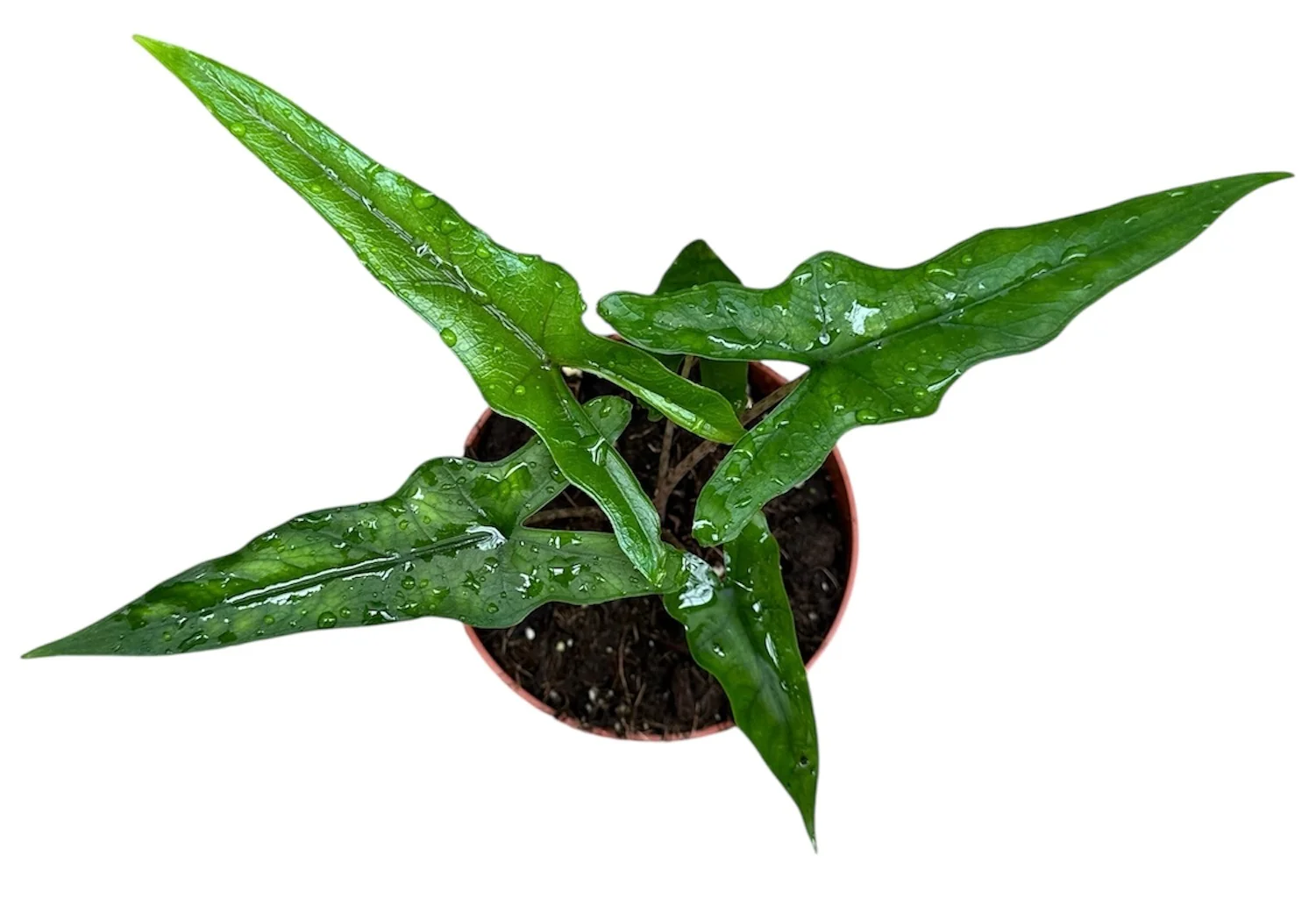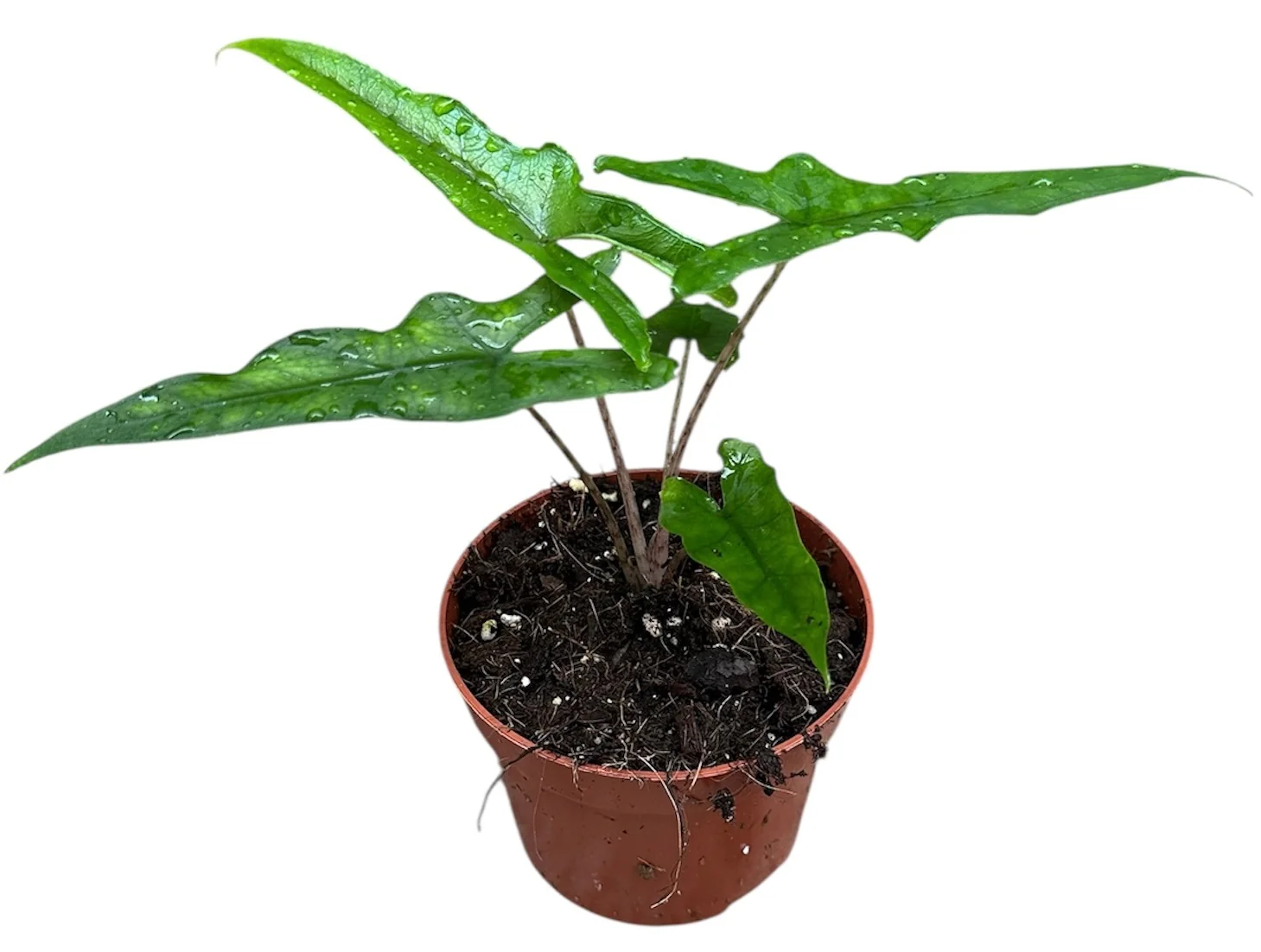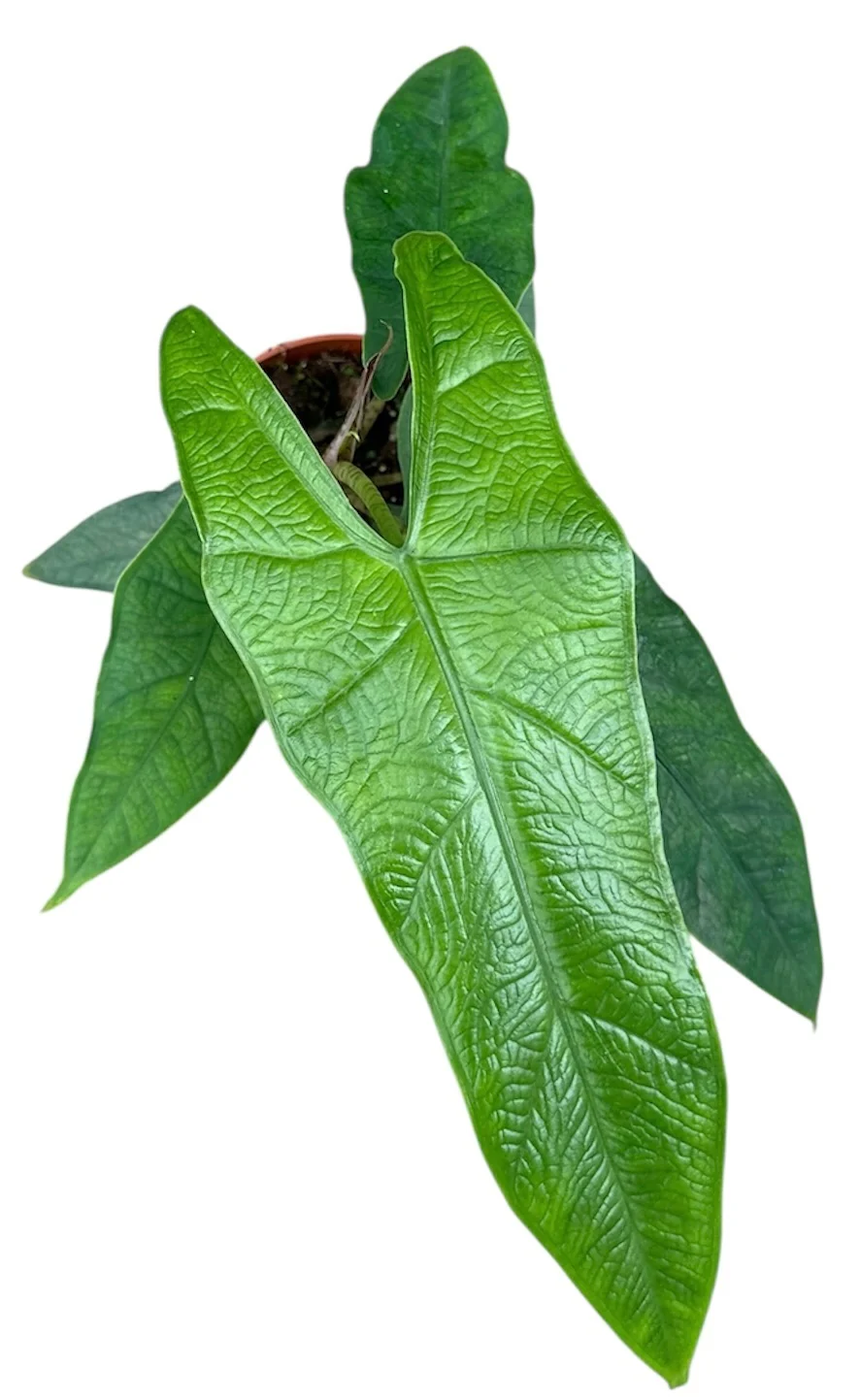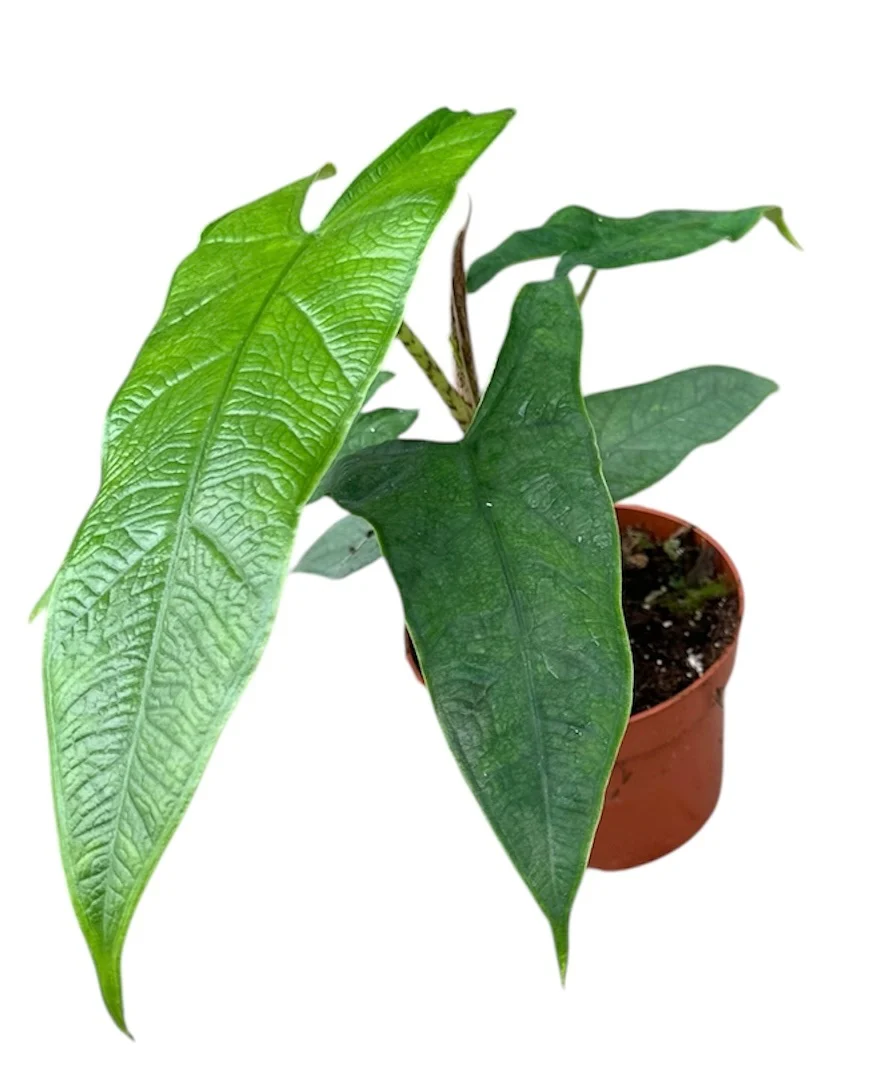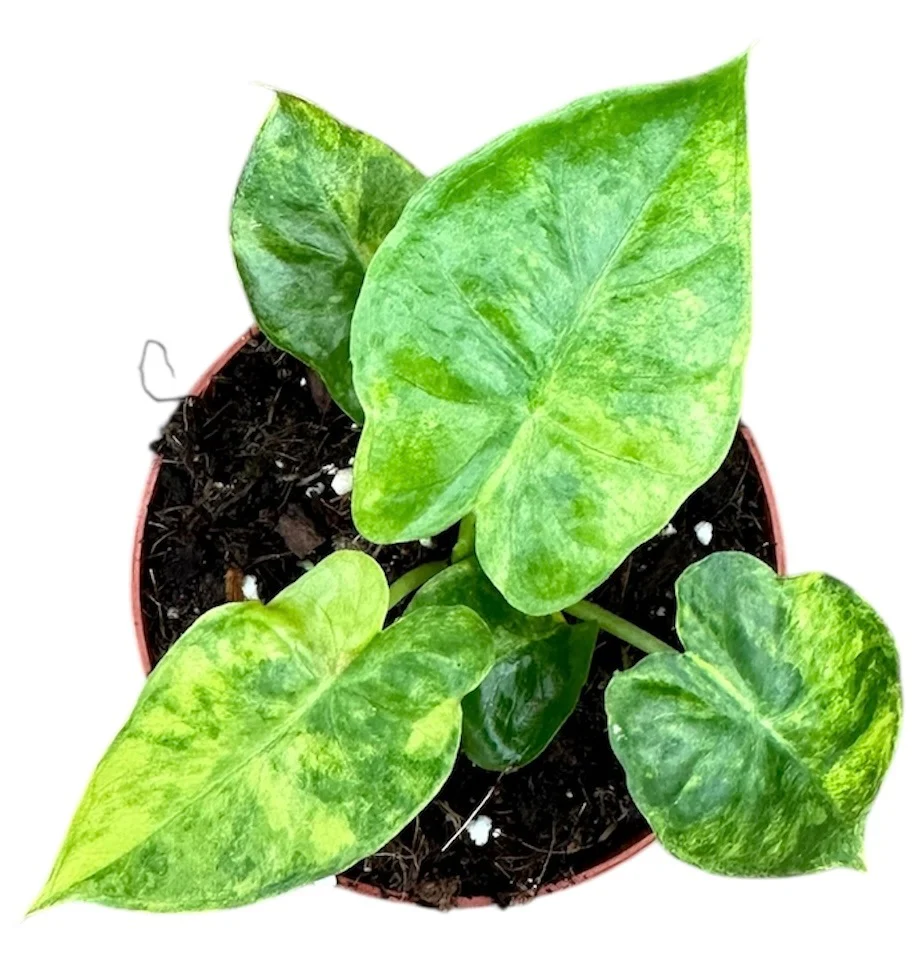
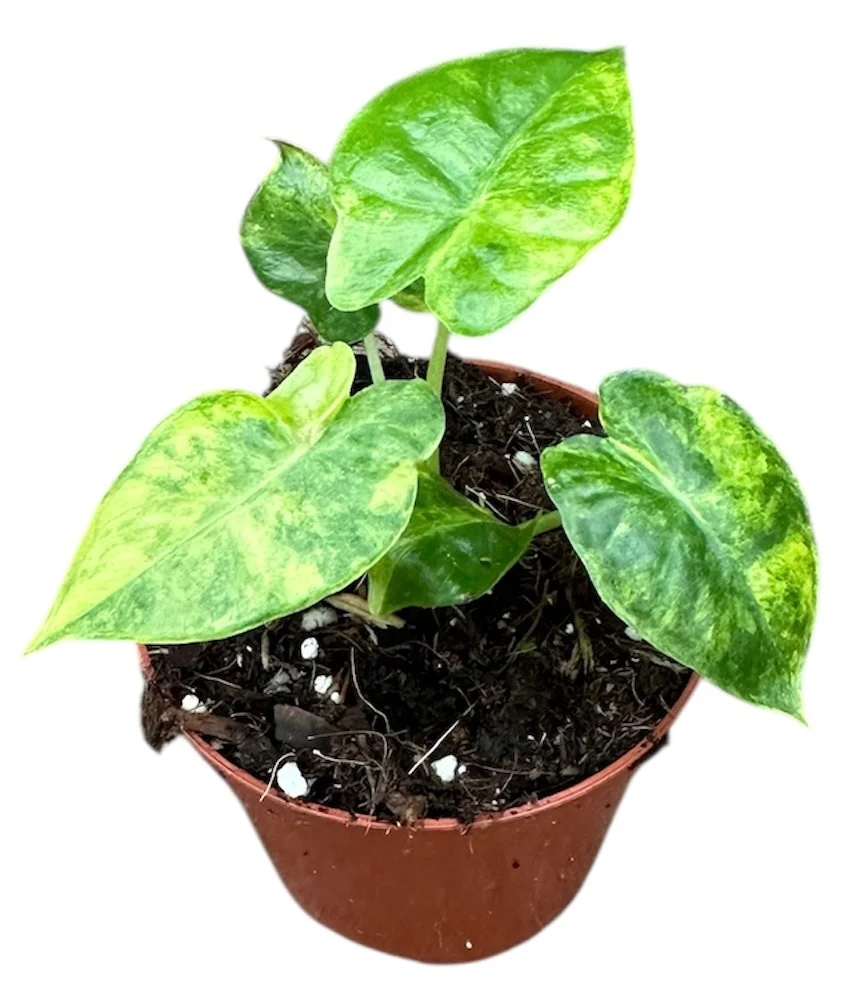
Alocasia Gageana Aurea 8cm Pot 10cm Height House Plant
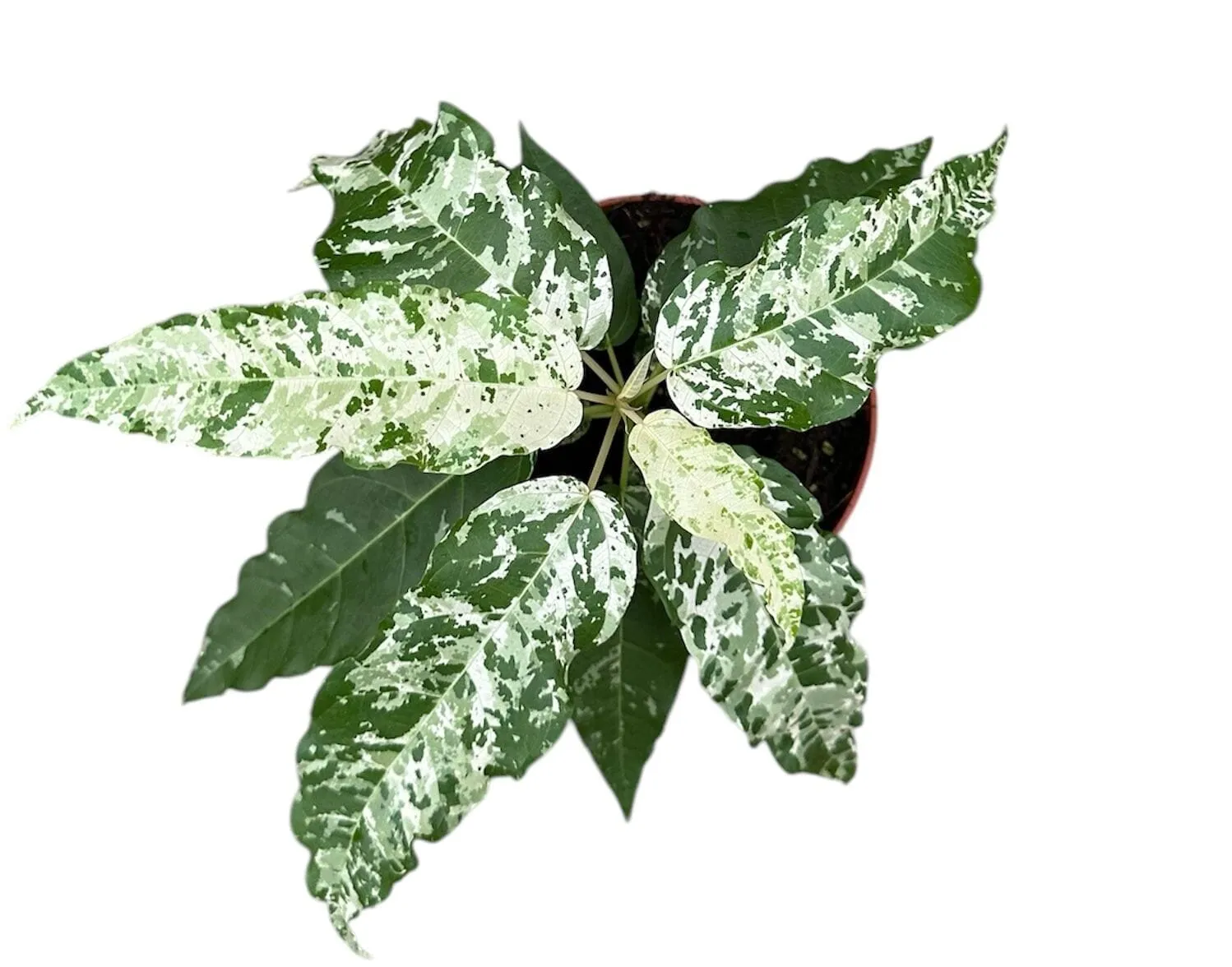
Alocasia gageana ‘Aurea’ is a bold, architectural alocasia prized for its golden-yellow variegation splashed across large, paddle-shaped leaves. A more robust relative of Alocasia ‘California’, this cultivar combines dramatic size with vibrant colour, making it a true statement plant for bright indoor spaces.
Appearance & Growth Habit
This plant produces large, upright leaves with a thick, sturdy texture. The aurea variegation ranges from soft lemon washes to intense golden sectors, often becoming more pronounced on newer growth. Mature plants can reach 1–1.5 m indoors with proper care, forming a strong, clumping base rather than long runners.
Light
Bright indirect light is essential to maintain strong variegation and healthy growth. Too little light can cause greener leaves and slower growth; too much direct sun can scorch the yellow areas. A bright room with filtered light is ideal.
Watering
Keep the compost evenly moist but never waterlogged. Water when the top few centimetres of compost feel dry, then allow excess to drain fully. Alocasias dislike drying out completely, but soggy soil will quickly lead to root problems.
Humidity
High humidity is key. Aim for 60–80% if possible. Low humidity often causes crispy edges, especially on the variegated areas. A humidifier or grouping with other plants works very well for this species.
Temperature
Prefers warm conditions between 18–28°C. Avoid cold draughts and temperatures below 15°C, which can cause leaf drop or dormancy.
Compost & Potting
Use a rich but free-draining aroid mix. A blend of houseplant compost, orchid bark, perlite, and a little coco coir provides both moisture retention and airflow. Repot in spring when root-bound, going up one pot size only.
Feeding
Feed every 2–4 weeks during spring and summer with a balanced or foliage-focused fertiliser at a reduced strength. Variegated plants are more sensitive to overfeeding, so keep feeds light. Stop feeding in autumn and winter.
Dormancy
Like many alocasias, A. gageana ‘Aurea’ may slow down or partially die back in winter. Reduce watering, keep it warm, and growth should resume in spring.
Common Issues
-
Browning edges: Low humidity or inconsistent watering
-
Yellowing leaves: Overwatering or poor drainage
-
Loss of variegation: Insufficient light
-
Drooping leaves: Cold stress or underwatering
Pet Safety
⚠️ Toxic to pets and humans if ingested. Keep out of reach of cats, dogs, and children.
Original: $26.38
-70%$26.38
$7.91Product Information
Product Information
Shipping & Returns
Shipping & Returns
Description
Alocasia gageana ‘Aurea’ is a bold, architectural alocasia prized for its golden-yellow variegation splashed across large, paddle-shaped leaves. A more robust relative of Alocasia ‘California’, this cultivar combines dramatic size with vibrant colour, making it a true statement plant for bright indoor spaces.
Appearance & Growth Habit
This plant produces large, upright leaves with a thick, sturdy texture. The aurea variegation ranges from soft lemon washes to intense golden sectors, often becoming more pronounced on newer growth. Mature plants can reach 1–1.5 m indoors with proper care, forming a strong, clumping base rather than long runners.
Light
Bright indirect light is essential to maintain strong variegation and healthy growth. Too little light can cause greener leaves and slower growth; too much direct sun can scorch the yellow areas. A bright room with filtered light is ideal.
Watering
Keep the compost evenly moist but never waterlogged. Water when the top few centimetres of compost feel dry, then allow excess to drain fully. Alocasias dislike drying out completely, but soggy soil will quickly lead to root problems.
Humidity
High humidity is key. Aim for 60–80% if possible. Low humidity often causes crispy edges, especially on the variegated areas. A humidifier or grouping with other plants works very well for this species.
Temperature
Prefers warm conditions between 18–28°C. Avoid cold draughts and temperatures below 15°C, which can cause leaf drop or dormancy.
Compost & Potting
Use a rich but free-draining aroid mix. A blend of houseplant compost, orchid bark, perlite, and a little coco coir provides both moisture retention and airflow. Repot in spring when root-bound, going up one pot size only.
Feeding
Feed every 2–4 weeks during spring and summer with a balanced or foliage-focused fertiliser at a reduced strength. Variegated plants are more sensitive to overfeeding, so keep feeds light. Stop feeding in autumn and winter.
Dormancy
Like many alocasias, A. gageana ‘Aurea’ may slow down or partially die back in winter. Reduce watering, keep it warm, and growth should resume in spring.
Common Issues
-
Browning edges: Low humidity or inconsistent watering
-
Yellowing leaves: Overwatering or poor drainage
-
Loss of variegation: Insufficient light
-
Drooping leaves: Cold stress or underwatering
Pet Safety
⚠️ Toxic to pets and humans if ingested. Keep out of reach of cats, dogs, and children.