Alocasia Jacklyn Elephant Ear House Plant 6cm Pot
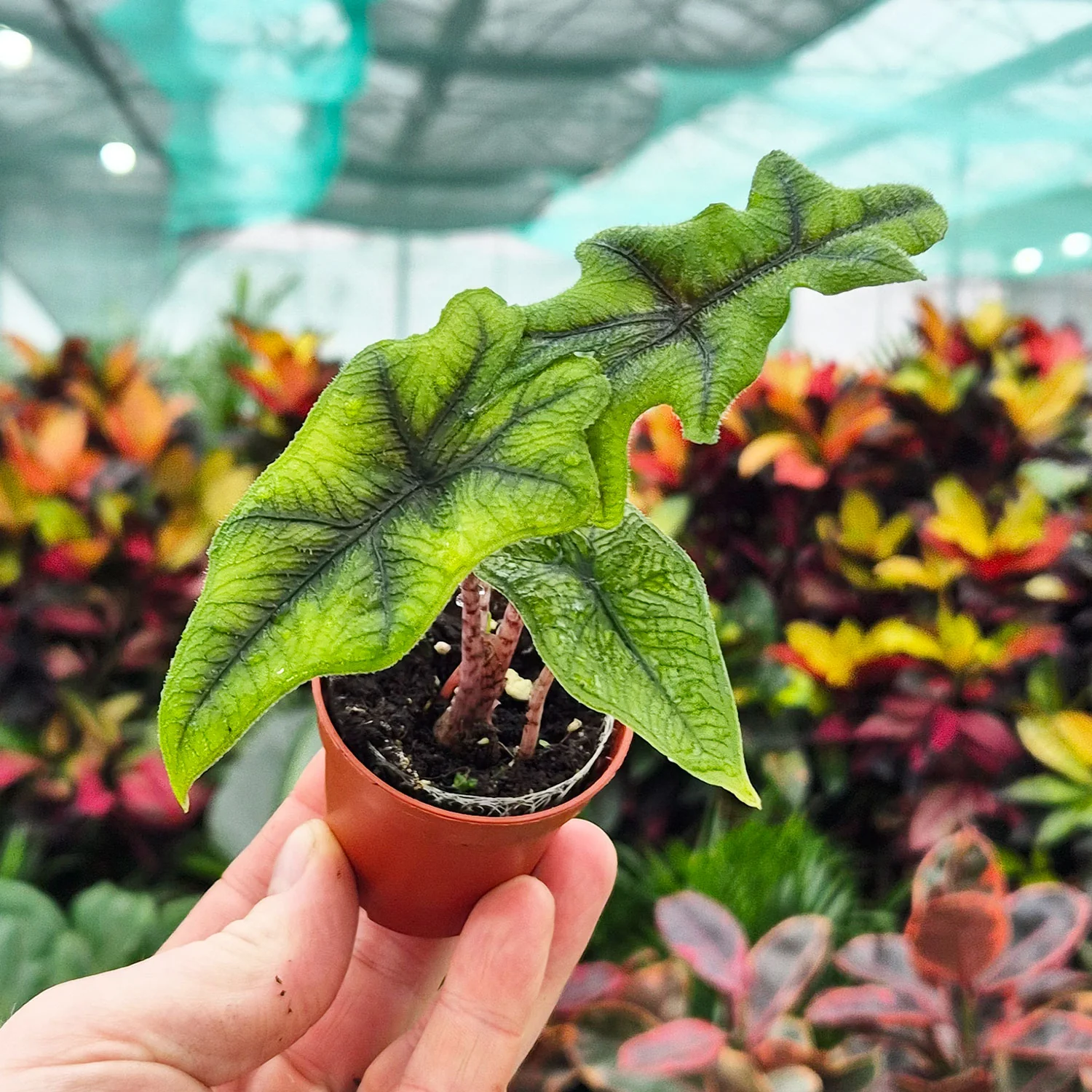
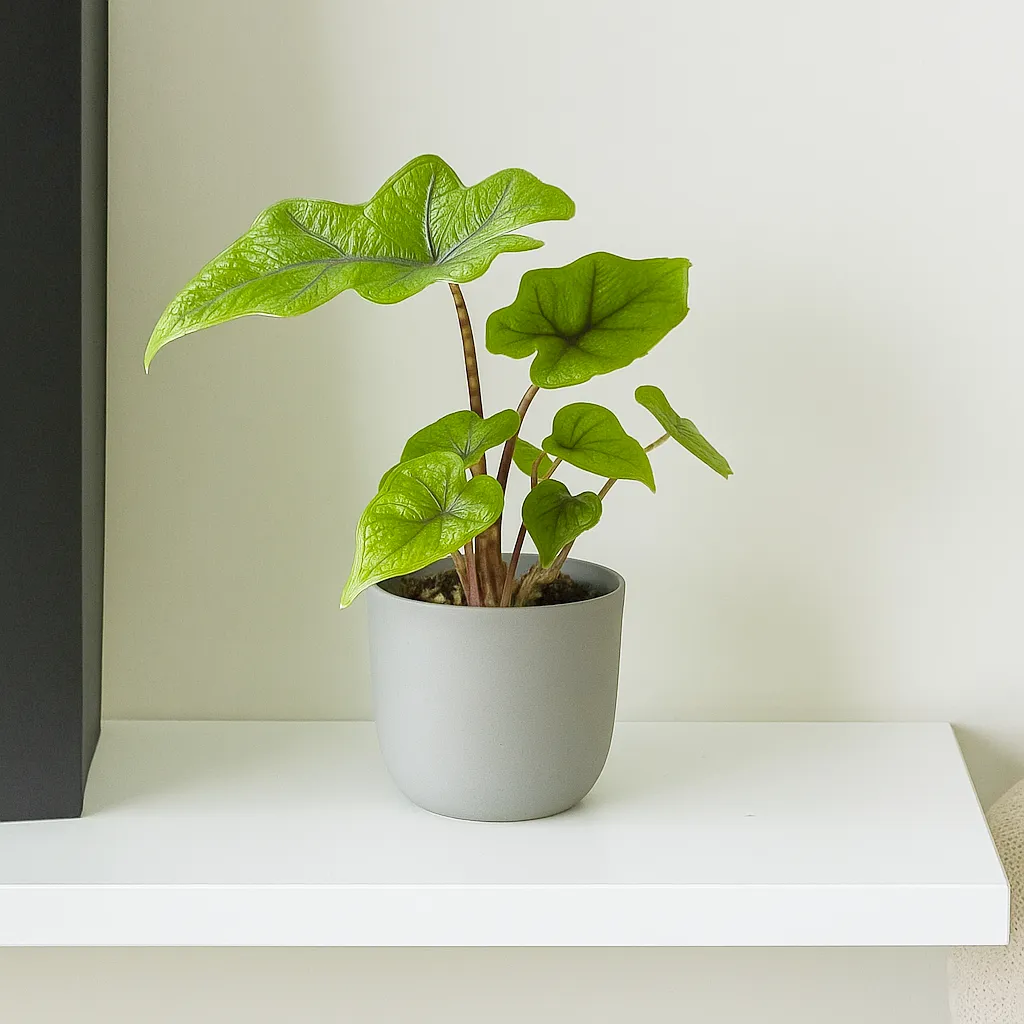
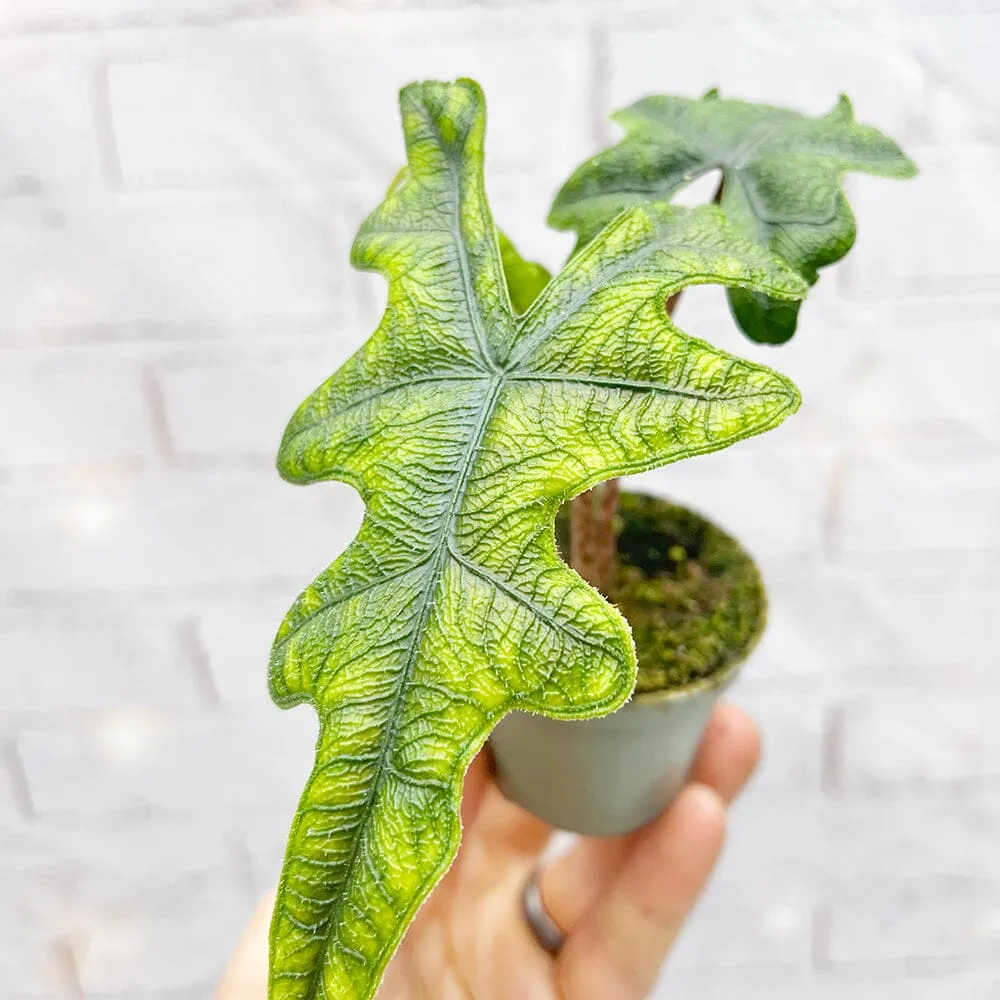
Alocasia ‘Jacklyn’, sometimes referred to as Alocasia tigrina ‘Jacklyn’, is a rare and extraordinary tropical plant that has quickly become a collector’s favourite. A native of Indonesia and a member of the Araceae family, this striking species is prized for its deeply lobed, arrow-shaped leaves and unique, textured veins that create an exotic, sculptural presence.
The large leaves are a rich emerald green with prominent dark, almost black venation, giving them a dramatic, contrasting appearance. The surface is slightly matte and textured, with a velvety feel that enhances its tropical allure. The petioles (stems) are just as fascinating — patterned with tiger-like markings in green and brown tones, adding an extra layer of visual intrigue.
Alocasia ‘Jacklyn’ perfectly balances elegance and wild beauty, making it one of the most distinctive statement plants for indoor spaces, terrariums, or warm conservatories.
Alocasia ‘Jacklyn’ – Care Guide
Light
Thrives in bright, indirect light. Too little light may lead to slower growth and smaller leaves, while harsh direct sunlight can burn the leaf surface. East- or north-facing rooms are ideal, or use sheer curtains to diffuse light.
Watering
Keep the soil consistently moist but not soggy. Water when the top 2–3 cm feels dry, allowing excess water to drain freely. Like most Alocasias, ‘Jacklyn’ dislikes standing water. In winter, reduce watering and allow the soil to dry slightly more between waterings.
Temperature and Humidity
-
Temperature: Prefers warmth, ideally 20–28°C. Avoid draughts and temperatures below 16°C.
-
Humidity: Requires high humidity (60–80%). Mist regularly, use a pebble tray, or run a humidifier to prevent leaf crisping and to encourage lush growth.
Soil and Potting
Use a chunky, well-draining aroid mix — peat-free compost blended with orchid bark, perlite, and coco coir works best. Repot every 1–2 years in spring to refresh the soil and allow root expansion.
Feeding
Feed every 4–6 weeks during spring and summer with a balanced, diluted liquid fertiliser. Avoid overfeeding, as this can cause root burn and reduce the intensity of the foliage’s colour contrast.
Pruning and Maintenance
Remove any yellowing or older leaves at the base to keep the plant healthy and encourage new growth. Clean the leaves gently with a soft, damp cloth to remove dust and highlight their beautiful texture and pattern.
Growth and Maturity
A moderate grower, typically reaching 60–90 cm tall indoors. Mature plants develop larger, more dramatically lobed leaves and thicker, tiger-striped petioles. When happy, it will produce new leaves regularly during the growing season.
Common Issues
-
Yellow leaves: Overwatering or poor drainage.
-
Brown leaf edges: Low humidity or irregular watering.
-
Drooping leaves: Temporary stress from repotting or environmental changes.
-
Pests: Occasionally thrips, spider mites, or mealybugs — wipe leaves regularly and maintain humidity to deter them.
Background and Benefits
Alocasia ‘Jacklyn’ was first discovered in Sulawesi, Indonesia, and is believed to be a naturally occurring mutation of Alocasia portei. Its wild aesthetic and bold venation have made it one of the most recognisable Alocasias among plant collectors.
Beyond its stunning appearance, it also contributes to a sense of tranquillity and nature in interior spaces. With proper warmth, humidity, and care, it rewards growers with large, sculptural foliage that exudes pure tropical drama.
✅ Quick Care Summary
-
Light: Bright, indirect; avoid direct sun
-
Water: Keep evenly moist; allow topsoil to dry slightly
-
Temperature: 20–28°C; protect below 16°C
-
Humidity: High (60–80%)
-
Soil: Chunky, well-draining aroid mix
-
Feed: Every 4–6 weeks in spring/summer
-
Growth: Upright, 60–90 cm; deeply lobed green leaves with dark veins and tiger-striped stems
⚠️ Toxicity Note: Like all Alocasias, ‘Jacklyn’ is toxic if ingested and may irritate the skin. Keep out of reach of pets and children.
🌿 Styling Tip:
Showcase Alocasia ‘Jacklyn’ as a statement plant in a bright corner or conservatory where its patterned petioles and textured leaves can be admired up close. Pair with soft green ferns or variegated Philodendrons to create a lush, layered tropical display.
Original: $7.91
-70%$7.91
$2.37Product Information
Product Information
Shipping & Returns
Shipping & Returns
Description
Alocasia ‘Jacklyn’, sometimes referred to as Alocasia tigrina ‘Jacklyn’, is a rare and extraordinary tropical plant that has quickly become a collector’s favourite. A native of Indonesia and a member of the Araceae family, this striking species is prized for its deeply lobed, arrow-shaped leaves and unique, textured veins that create an exotic, sculptural presence.
The large leaves are a rich emerald green with prominent dark, almost black venation, giving them a dramatic, contrasting appearance. The surface is slightly matte and textured, with a velvety feel that enhances its tropical allure. The petioles (stems) are just as fascinating — patterned with tiger-like markings in green and brown tones, adding an extra layer of visual intrigue.
Alocasia ‘Jacklyn’ perfectly balances elegance and wild beauty, making it one of the most distinctive statement plants for indoor spaces, terrariums, or warm conservatories.
Alocasia ‘Jacklyn’ – Care Guide
Light
Thrives in bright, indirect light. Too little light may lead to slower growth and smaller leaves, while harsh direct sunlight can burn the leaf surface. East- or north-facing rooms are ideal, or use sheer curtains to diffuse light.
Watering
Keep the soil consistently moist but not soggy. Water when the top 2–3 cm feels dry, allowing excess water to drain freely. Like most Alocasias, ‘Jacklyn’ dislikes standing water. In winter, reduce watering and allow the soil to dry slightly more between waterings.
Temperature and Humidity
-
Temperature: Prefers warmth, ideally 20–28°C. Avoid draughts and temperatures below 16°C.
-
Humidity: Requires high humidity (60–80%). Mist regularly, use a pebble tray, or run a humidifier to prevent leaf crisping and to encourage lush growth.
Soil and Potting
Use a chunky, well-draining aroid mix — peat-free compost blended with orchid bark, perlite, and coco coir works best. Repot every 1–2 years in spring to refresh the soil and allow root expansion.
Feeding
Feed every 4–6 weeks during spring and summer with a balanced, diluted liquid fertiliser. Avoid overfeeding, as this can cause root burn and reduce the intensity of the foliage’s colour contrast.
Pruning and Maintenance
Remove any yellowing or older leaves at the base to keep the plant healthy and encourage new growth. Clean the leaves gently with a soft, damp cloth to remove dust and highlight their beautiful texture and pattern.
Growth and Maturity
A moderate grower, typically reaching 60–90 cm tall indoors. Mature plants develop larger, more dramatically lobed leaves and thicker, tiger-striped petioles. When happy, it will produce new leaves regularly during the growing season.
Common Issues
-
Yellow leaves: Overwatering or poor drainage.
-
Brown leaf edges: Low humidity or irregular watering.
-
Drooping leaves: Temporary stress from repotting or environmental changes.
-
Pests: Occasionally thrips, spider mites, or mealybugs — wipe leaves regularly and maintain humidity to deter them.
Background and Benefits
Alocasia ‘Jacklyn’ was first discovered in Sulawesi, Indonesia, and is believed to be a naturally occurring mutation of Alocasia portei. Its wild aesthetic and bold venation have made it one of the most recognisable Alocasias among plant collectors.
Beyond its stunning appearance, it also contributes to a sense of tranquillity and nature in interior spaces. With proper warmth, humidity, and care, it rewards growers with large, sculptural foliage that exudes pure tropical drama.
✅ Quick Care Summary
-
Light: Bright, indirect; avoid direct sun
-
Water: Keep evenly moist; allow topsoil to dry slightly
-
Temperature: 20–28°C; protect below 16°C
-
Humidity: High (60–80%)
-
Soil: Chunky, well-draining aroid mix
-
Feed: Every 4–6 weeks in spring/summer
-
Growth: Upright, 60–90 cm; deeply lobed green leaves with dark veins and tiger-striped stems
⚠️ Toxicity Note: Like all Alocasias, ‘Jacklyn’ is toxic if ingested and may irritate the skin. Keep out of reach of pets and children.
🌿 Styling Tip:
Showcase Alocasia ‘Jacklyn’ as a statement plant in a bright corner or conservatory where its patterned petioles and textured leaves can be admired up close. Pair with soft green ferns or variegated Philodendrons to create a lush, layered tropical display.