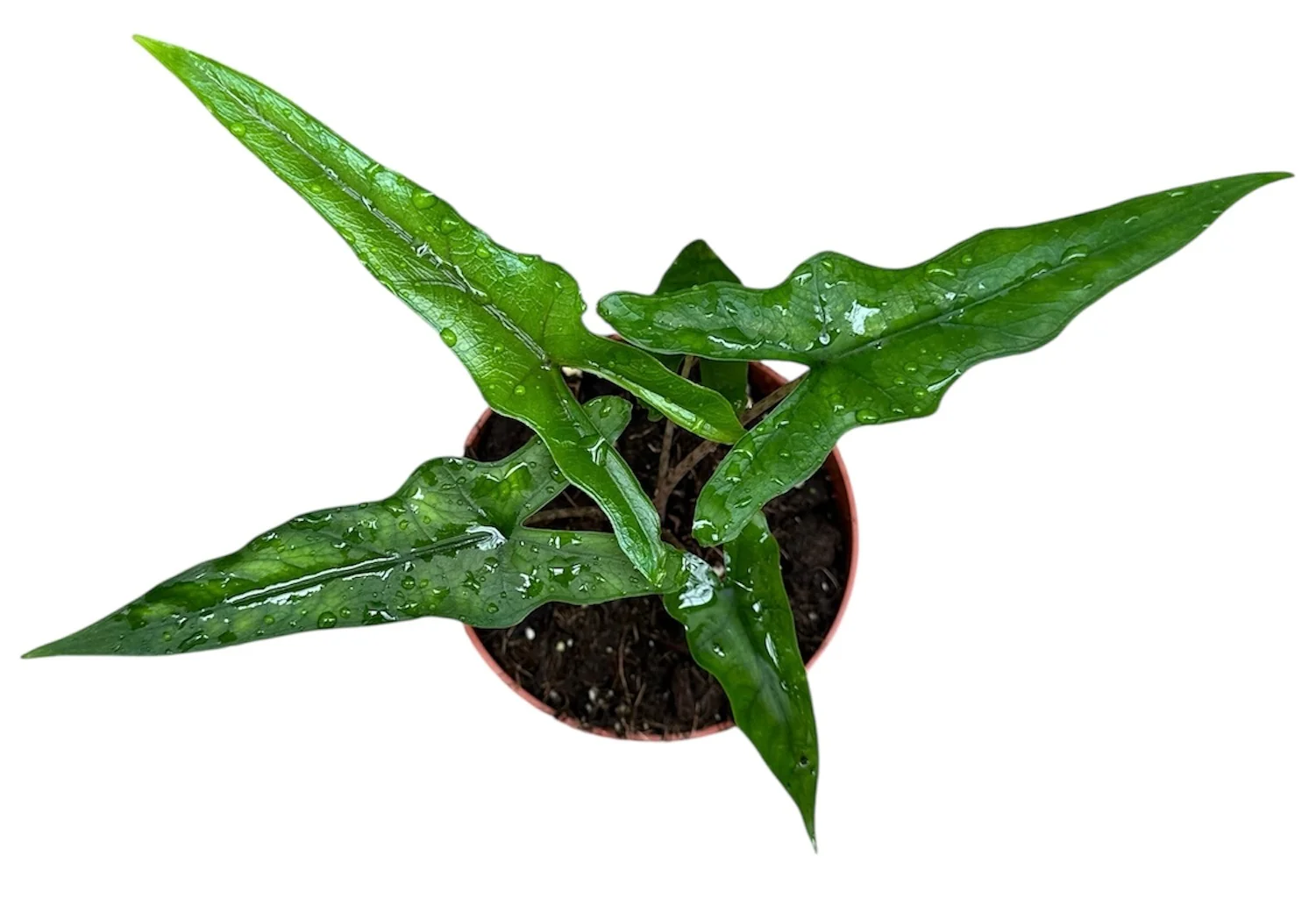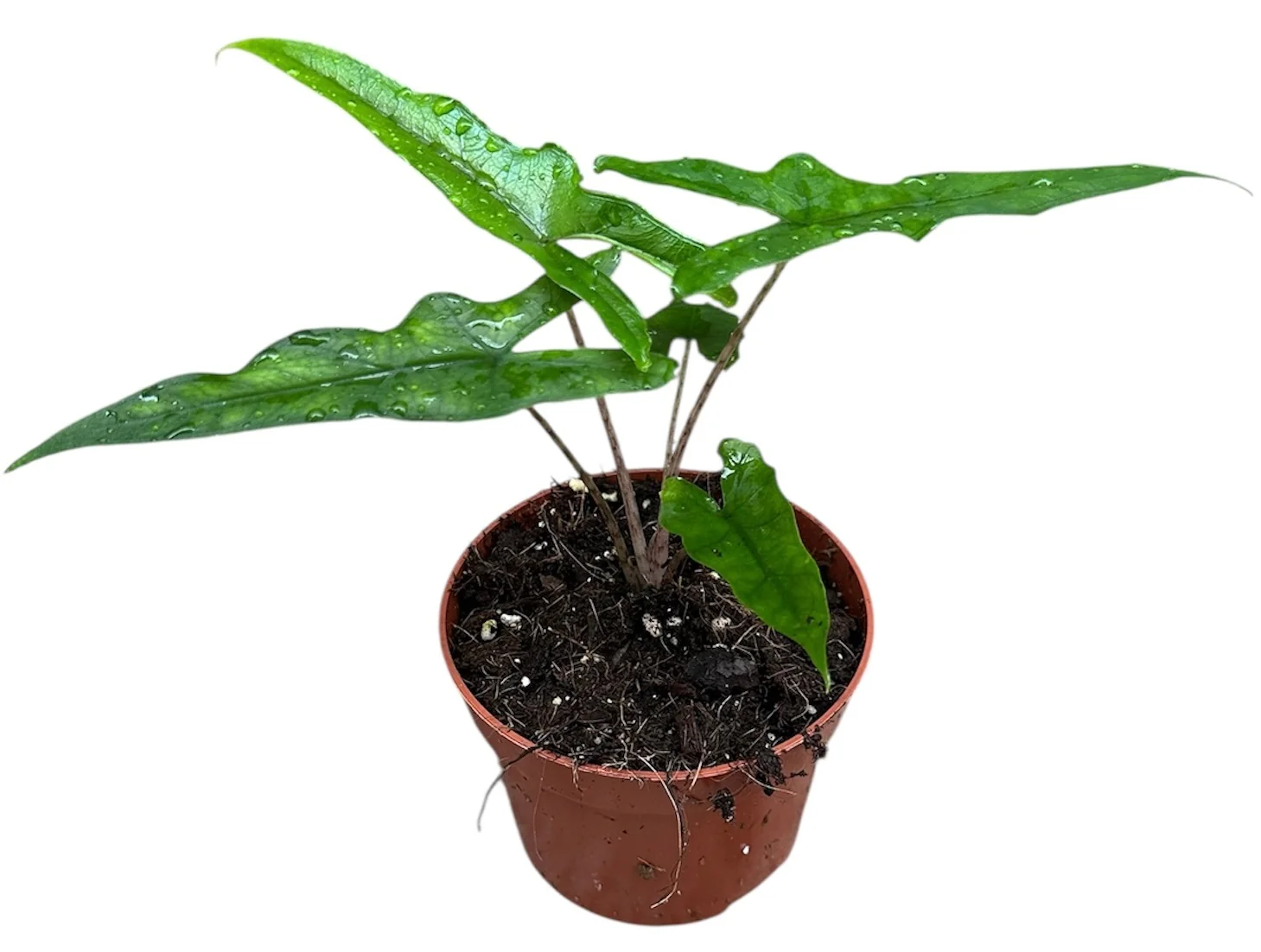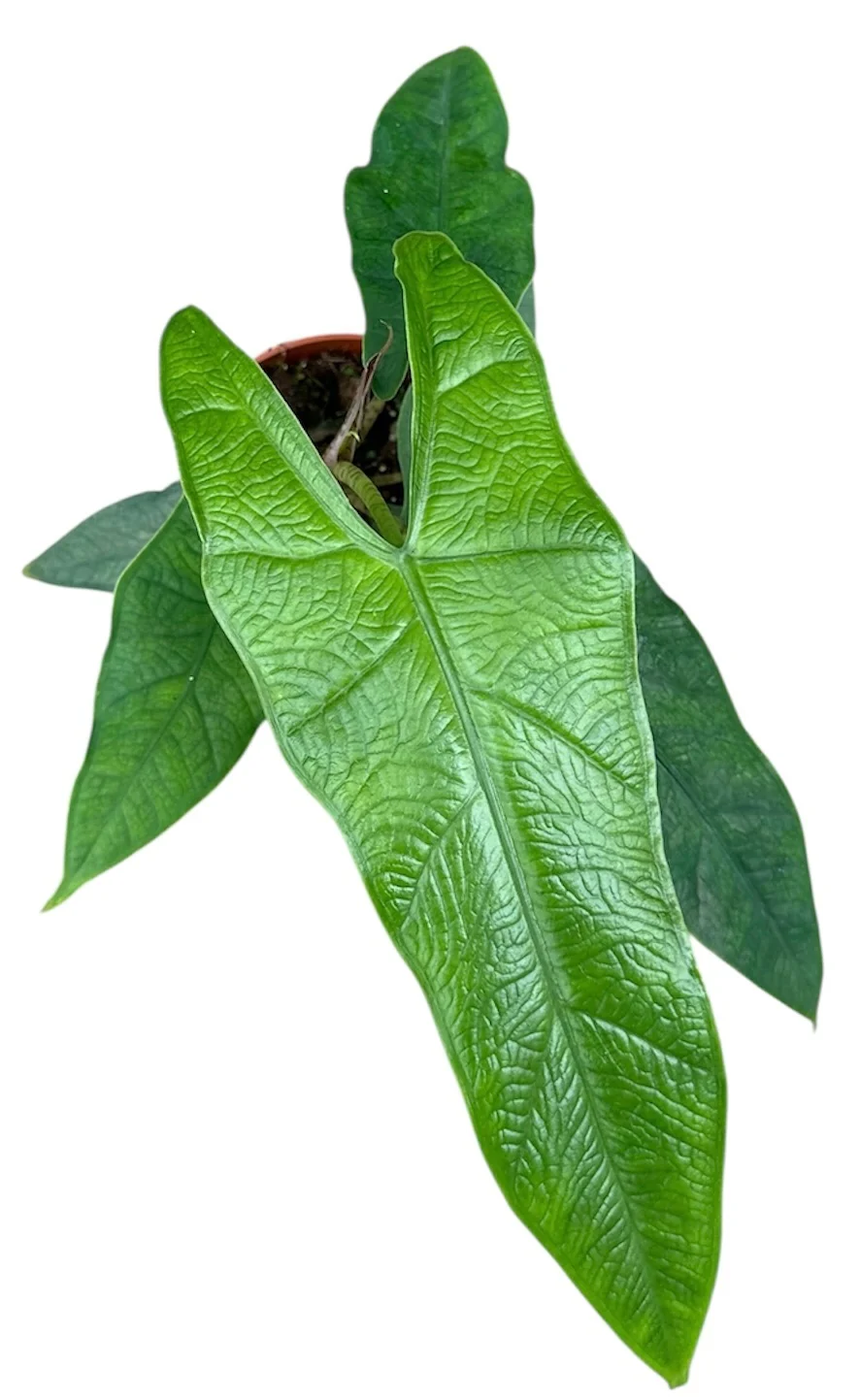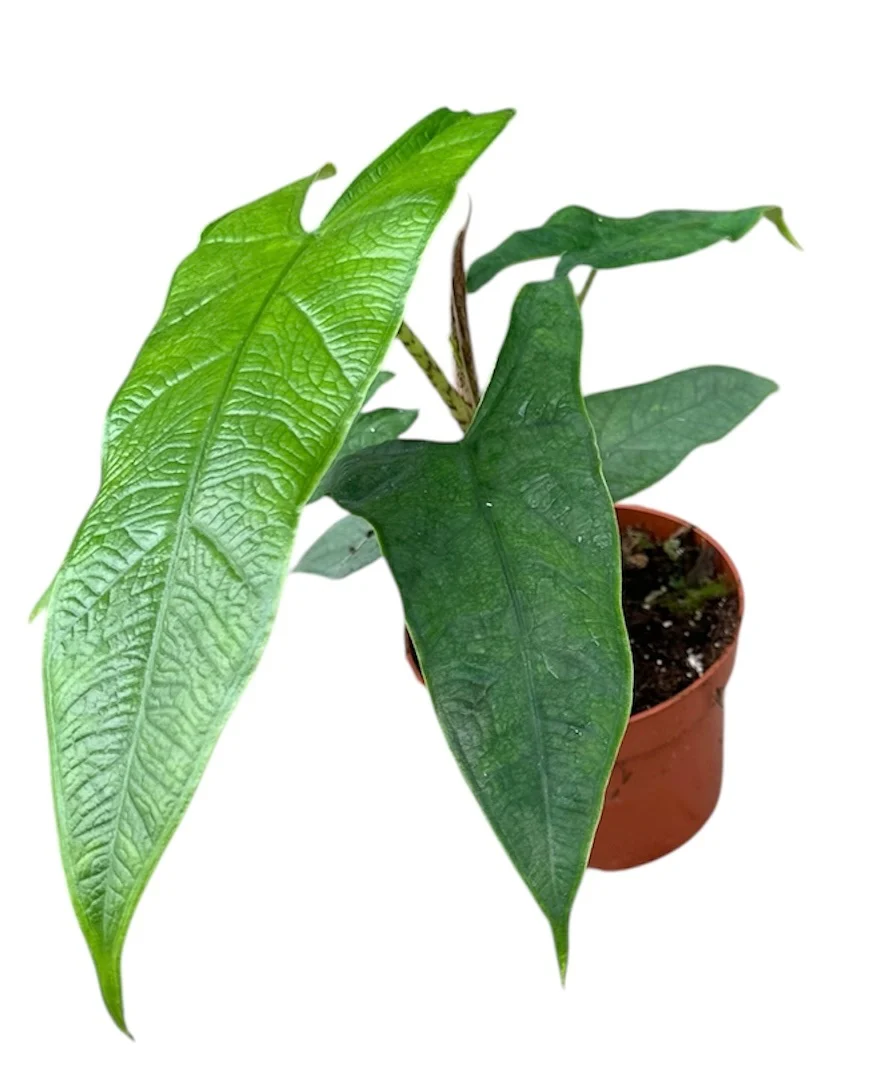
Alocasia Nobilis 10.5cm Pot 20cm Height House Plant
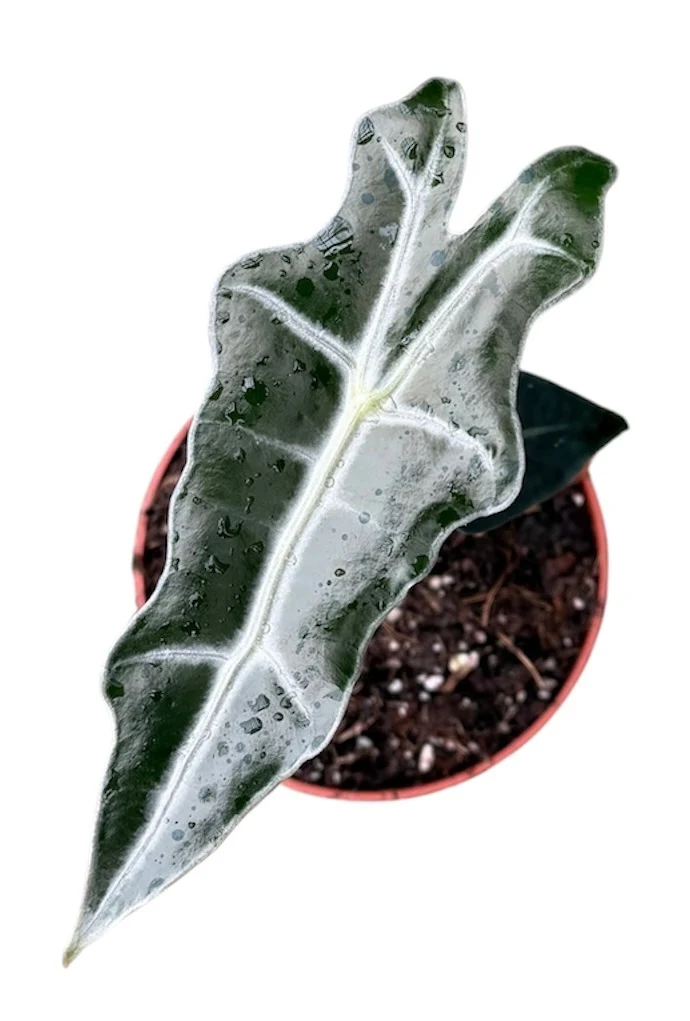
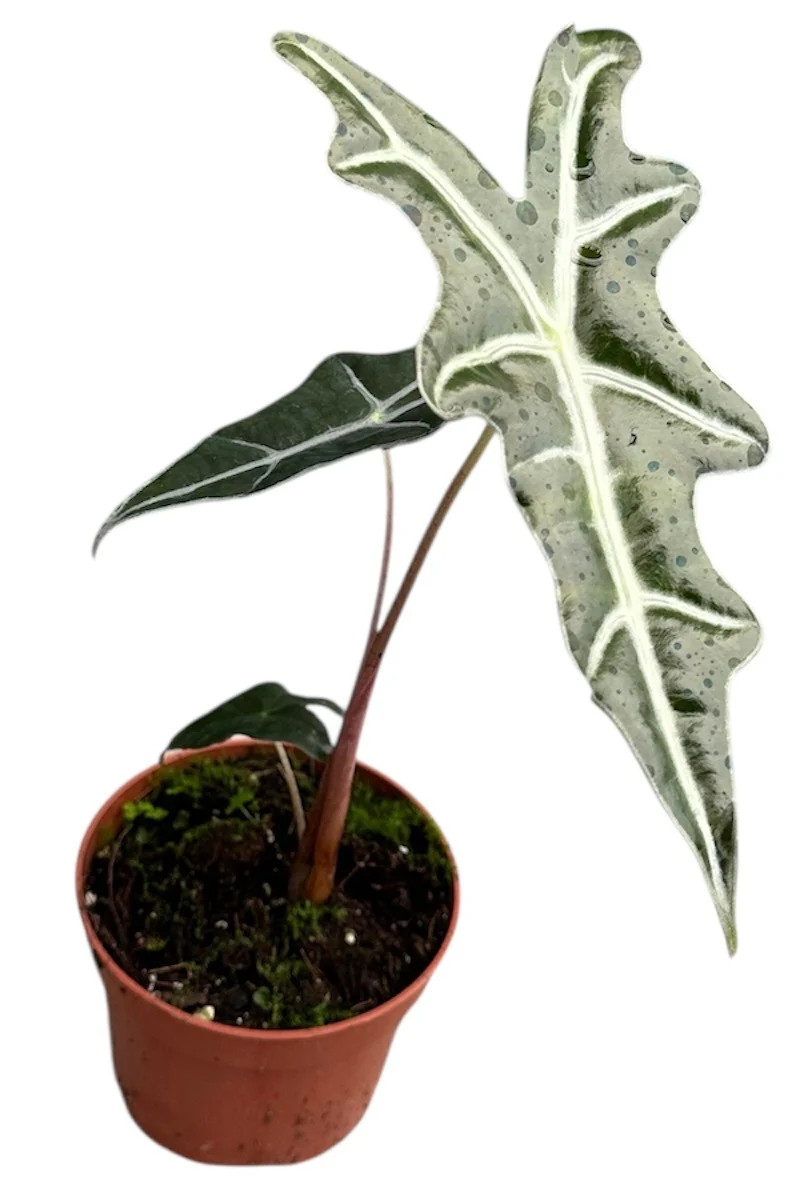
Alocasia nobilis is a striking and highly sculptural aroid prized for its dramatic foliage, pronounced venation, and bold, upright presence. Belonging to the Araceae family and thought to originate from Southeast Asian tropical forest regions, this species is admired for its stately, elongated leaves and its regal, commanding silhouette — well deserving of the name nobilis, meaning “noble.”
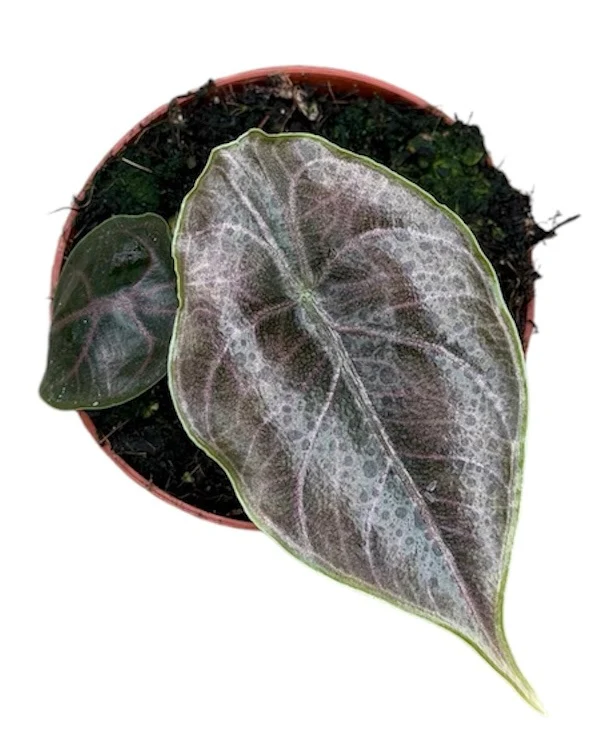
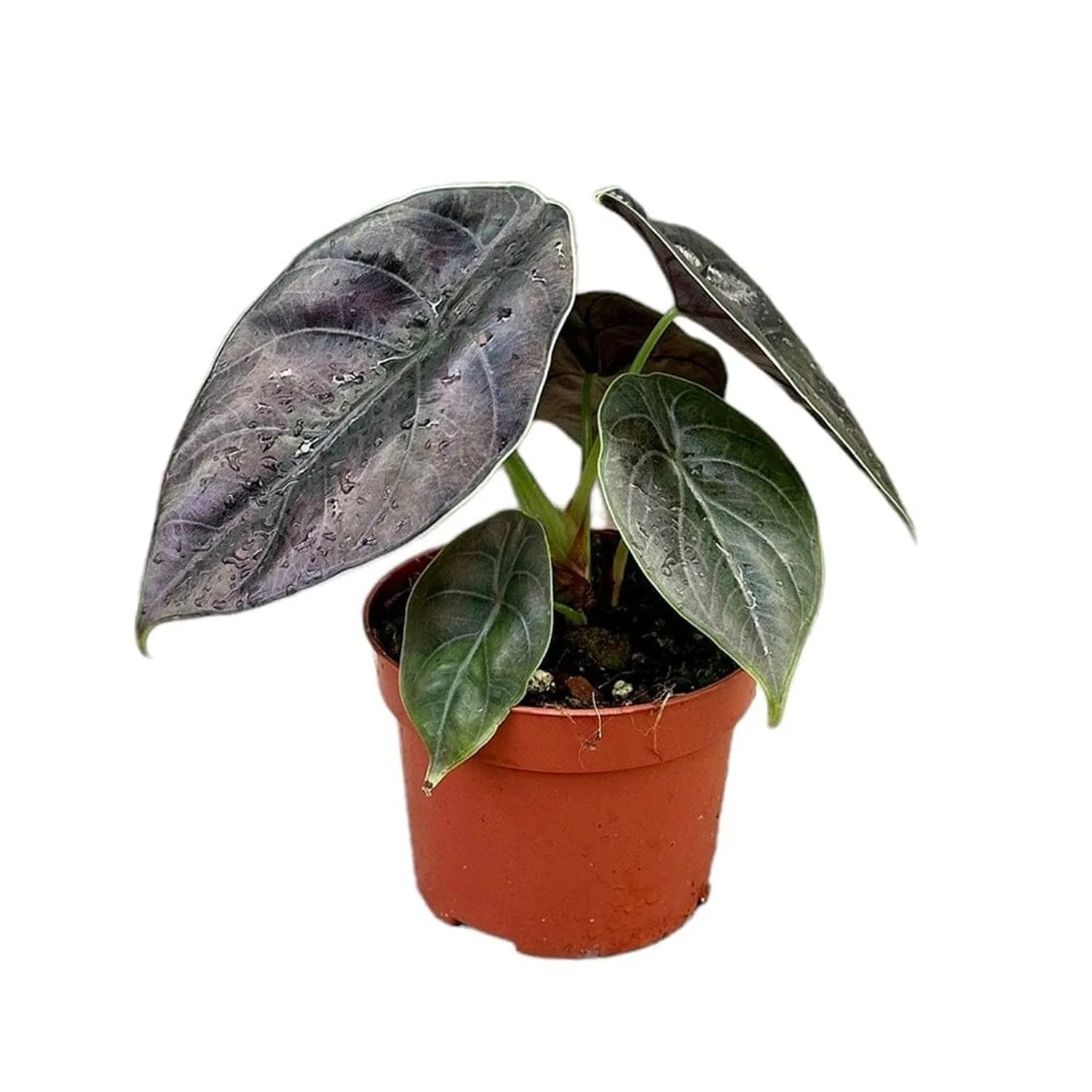
The leaves are long, lance-shaped to sagittate, with a deep green surface and strong, sharply recessed veins that give the plant a powerful architectural texture. The foliage has a subtle satin sheen that catches light beautifully, emphasising each curve and ridge. Petioles are sturdy, often mottled or lightly patterned, supporting the large leaves in a poised, upright display.
Mature specimens take on an elegant, almost gladiatorial form, making Alocasia nobilis a favourite among collectors seeking plants with structure, height, and presence. This species brings dramatic vertical movement and a distinctly tropical feel to any indoor plant collection.
Alocasia nobilis – Care Guide
Light
Thrives in bright, indirect light. Medium light is tolerated, but leaves may grow longer and less textured. Avoid direct midday sunlight which can scorch the leaf surface.
Watering
Keep the soil lightly and consistently moist. Allow the top 2–3 cm to dry between waterings, but never allow full dryness or standing water. Reduce watering in winter when the plant grows more slowly.
Temperature and Humidity
-
Temperature: Prefers 18–28 °C. Growth slows below 15 °C. Protect from cold draughts.
-
Humidity: Requires high humidity (60–80%) to maintain its firm leaf structure and prevent crisping. A humidifier or grouping with other plants is beneficial.
Soil and Potting
Use a rich, airy aroid mix — ideally houseplant compost blended with perlite, orchid bark, and coco coir. Excellent drainage is essential. Repot every 1–2 years in spring, increasing pot size only slightly.
Feeding
Feed every 2–3 weeks during spring and summer with a balanced liquid fertiliser. Reduce feeding during the cooler months.
Pruning and Maintenance
Remove older or damaged leaves from the base to maintain shape. Wipe leaves occasionally to highlight their natural sheen and strong venation. Provide support if stems become tall and arching.
Growth and Maturity
A moderate grower that typically reaches 50–90 cm indoors. Mature plants produce more defined leaves, thicker petioles, and a fuller, upright rosette. Growth slows in lower light or cooler conditions.
Common Issues
-
Yellowing leaves: Overwatering or poor drainage.
-
Crispy edges: Low humidity or underwatering.
-
Drooping: Cold temperatures or insufficient light.
-
Pests: Watch for spider mites and thrips on tender new leaves.
Background and Benefits
Alocasia nobilis is admired for its clean, sculptural form and strong venation — traits that give it a noble, commanding presence. Unlike heavily patterned or variegated Alocasias, this species shines through its structure, symmetry, and texture. Its upright stance makes it an ideal centrepiece plant for shelves, plant stands, or living rooms where height and drama are desired.
Collectors love it for its contemporary feel: bold, architectural, and elegant without being overly demanding.
Quick Care Summary
Light: Bright, indirect; medium tolerated
Water: Keep lightly moist; allow top 2–3 cm to dry
Temperature: 18–28 °C
Humidity: 60–80%
Soil: Airy, well-draining aroid mix
Feed: Every 2–3 weeks in growing season
Growth: 50–90 cm; upright, textured leaves
Toxicity: Toxic if ingested; keep away from pets and children
Styling Tip
Pair Alocasia nobilis with modern, minimalist planters — matte black, stone grey, or deep green ceramics work beautifully. Place it where its strong silhouette can be appreciated, such as beside a sofa, in a bright hallway, or on a decorative plant stand.
Product Information
Product Information
Shipping & Returns
Shipping & Returns
Description
Alocasia nobilis is a striking and highly sculptural aroid prized for its dramatic foliage, pronounced venation, and bold, upright presence. Belonging to the Araceae family and thought to originate from Southeast Asian tropical forest regions, this species is admired for its stately, elongated leaves and its regal, commanding silhouette — well deserving of the name nobilis, meaning “noble.”
The leaves are long, lance-shaped to sagittate, with a deep green surface and strong, sharply recessed veins that give the plant a powerful architectural texture. The foliage has a subtle satin sheen that catches light beautifully, emphasising each curve and ridge. Petioles are sturdy, often mottled or lightly patterned, supporting the large leaves in a poised, upright display.
Mature specimens take on an elegant, almost gladiatorial form, making Alocasia nobilis a favourite among collectors seeking plants with structure, height, and presence. This species brings dramatic vertical movement and a distinctly tropical feel to any indoor plant collection.
Alocasia nobilis – Care Guide
Light
Thrives in bright, indirect light. Medium light is tolerated, but leaves may grow longer and less textured. Avoid direct midday sunlight which can scorch the leaf surface.
Watering
Keep the soil lightly and consistently moist. Allow the top 2–3 cm to dry between waterings, but never allow full dryness or standing water. Reduce watering in winter when the plant grows more slowly.
Temperature and Humidity
-
Temperature: Prefers 18–28 °C. Growth slows below 15 °C. Protect from cold draughts.
-
Humidity: Requires high humidity (60–80%) to maintain its firm leaf structure and prevent crisping. A humidifier or grouping with other plants is beneficial.
Soil and Potting
Use a rich, airy aroid mix — ideally houseplant compost blended with perlite, orchid bark, and coco coir. Excellent drainage is essential. Repot every 1–2 years in spring, increasing pot size only slightly.
Feeding
Feed every 2–3 weeks during spring and summer with a balanced liquid fertiliser. Reduce feeding during the cooler months.
Pruning and Maintenance
Remove older or damaged leaves from the base to maintain shape. Wipe leaves occasionally to highlight their natural sheen and strong venation. Provide support if stems become tall and arching.
Growth and Maturity
A moderate grower that typically reaches 50–90 cm indoors. Mature plants produce more defined leaves, thicker petioles, and a fuller, upright rosette. Growth slows in lower light or cooler conditions.
Common Issues
-
Yellowing leaves: Overwatering or poor drainage.
-
Crispy edges: Low humidity or underwatering.
-
Drooping: Cold temperatures or insufficient light.
-
Pests: Watch for spider mites and thrips on tender new leaves.
Background and Benefits
Alocasia nobilis is admired for its clean, sculptural form and strong venation — traits that give it a noble, commanding presence. Unlike heavily patterned or variegated Alocasias, this species shines through its structure, symmetry, and texture. Its upright stance makes it an ideal centrepiece plant for shelves, plant stands, or living rooms where height and drama are desired.
Collectors love it for its contemporary feel: bold, architectural, and elegant without being overly demanding.
Quick Care Summary
Light: Bright, indirect; medium tolerated
Water: Keep lightly moist; allow top 2–3 cm to dry
Temperature: 18–28 °C
Humidity: 60–80%
Soil: Airy, well-draining aroid mix
Feed: Every 2–3 weeks in growing season
Growth: 50–90 cm; upright, textured leaves
Toxicity: Toxic if ingested; keep away from pets and children
Styling Tip
Pair Alocasia nobilis with modern, minimalist planters — matte black, stone grey, or deep green ceramics work beautifully. Place it where its strong silhouette can be appreciated, such as beside a sofa, in a bright hallway, or on a decorative plant stand.