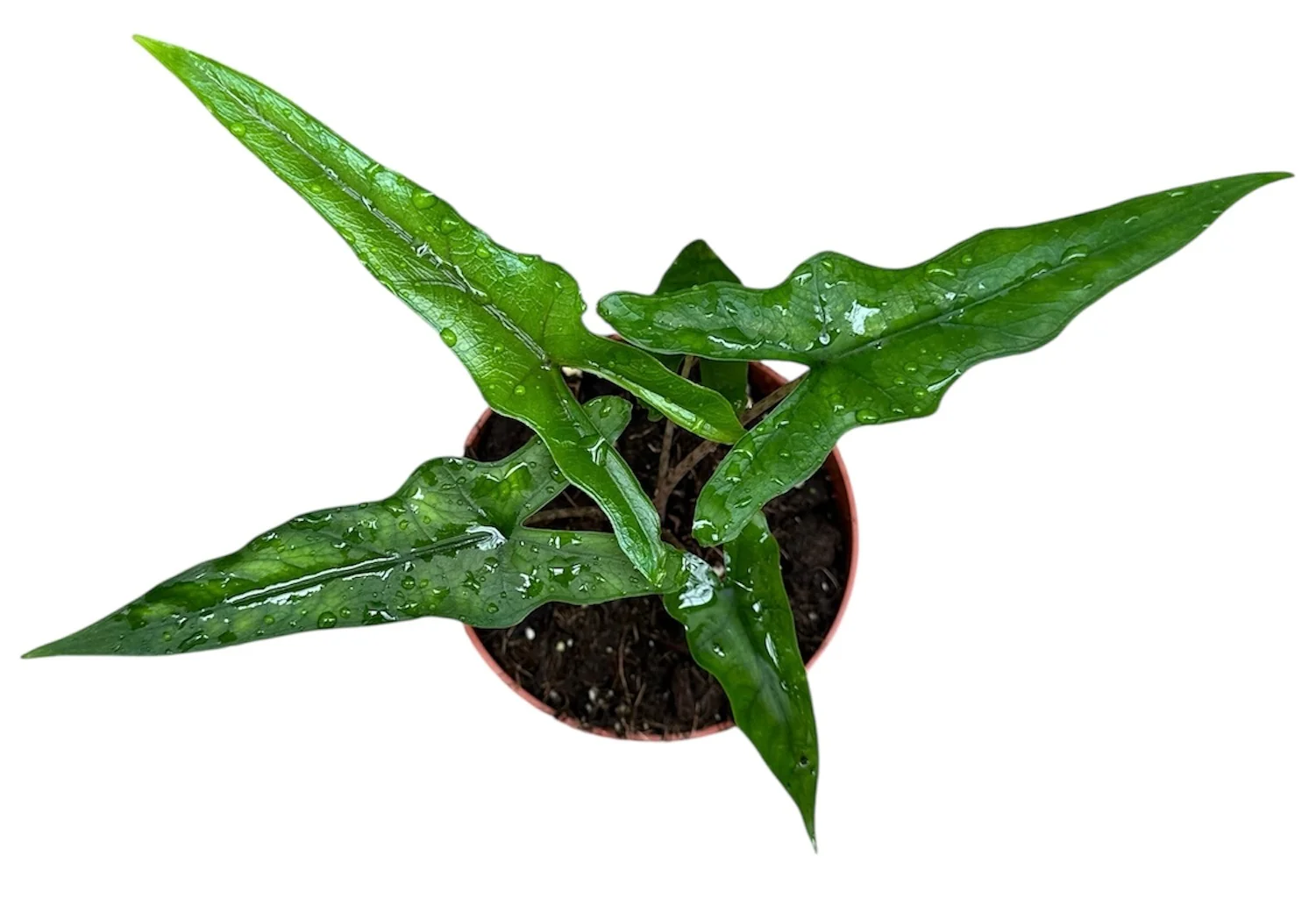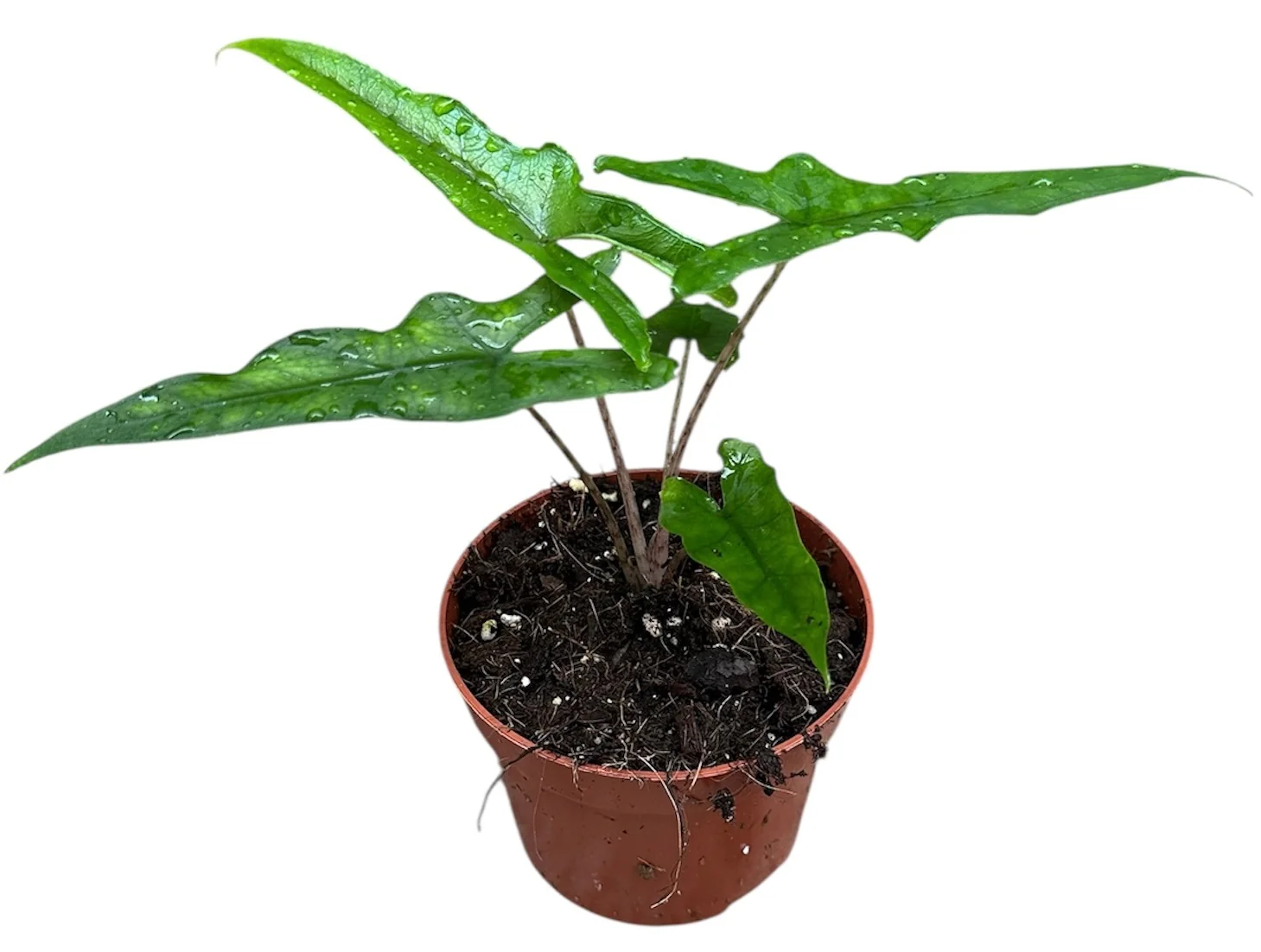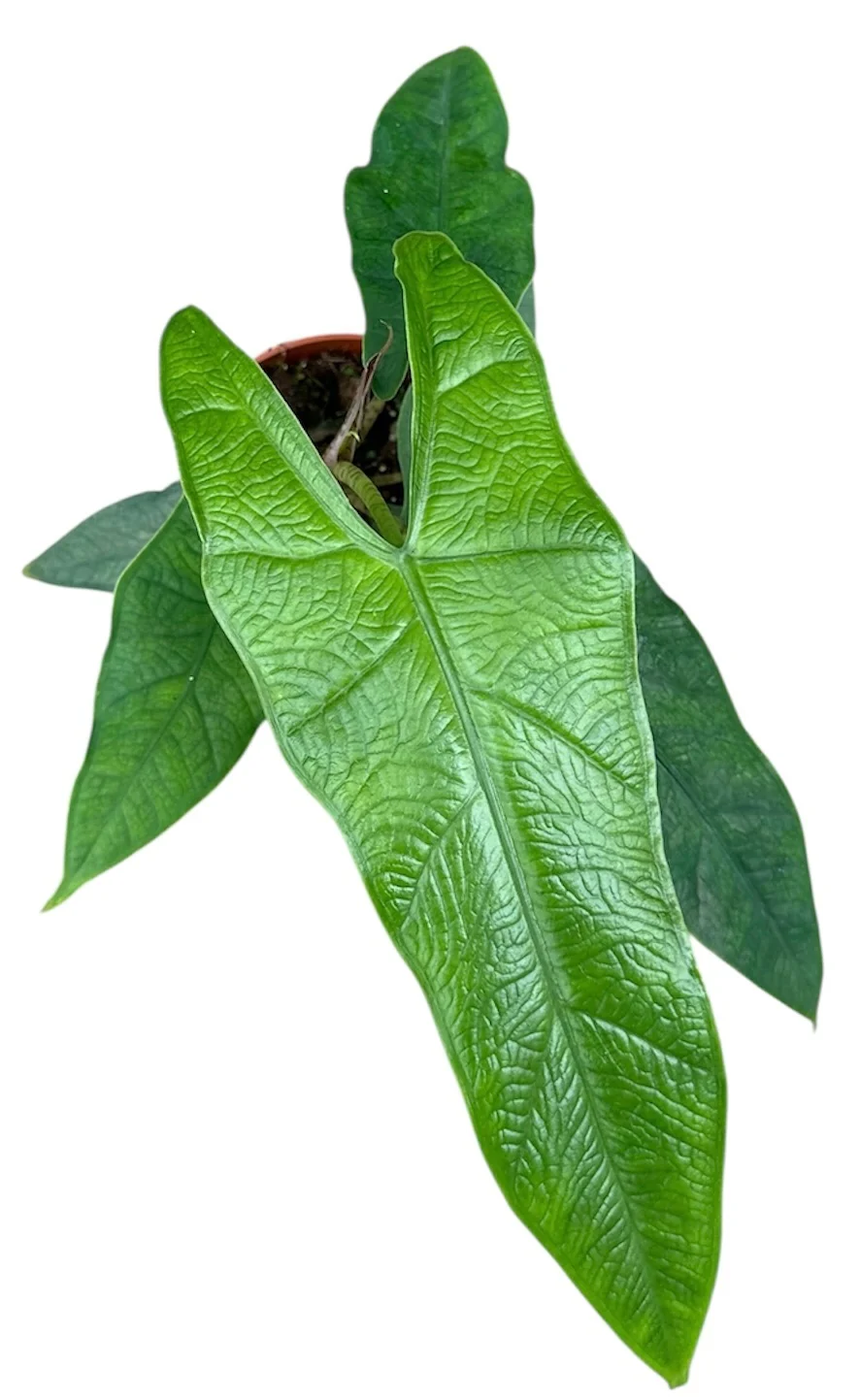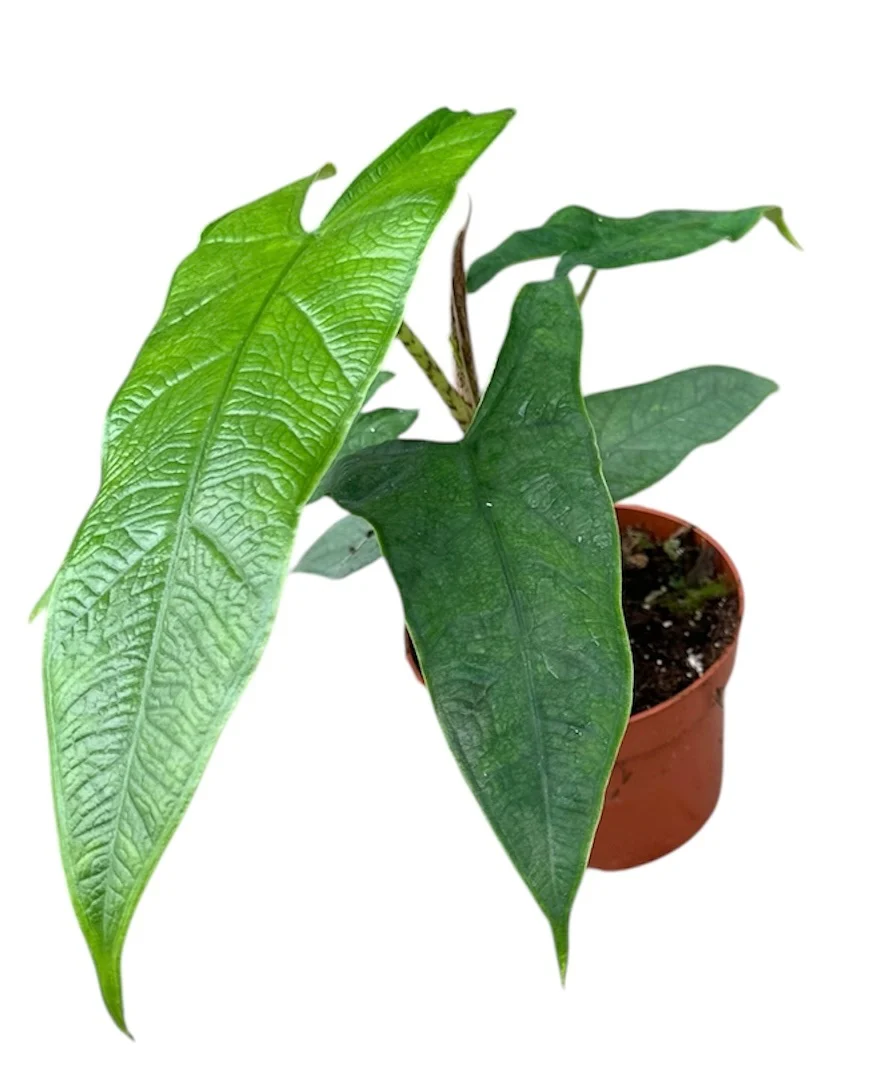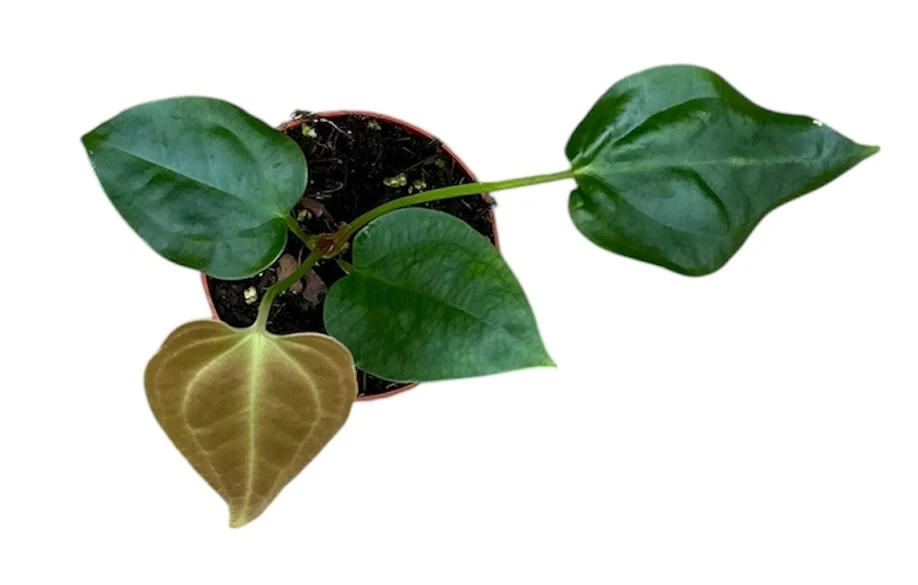

Anthurium Napo 8cm Pot 10cm Height House Plant
Anthurium ‘Napo’ is a highly desirable velvet-leaf Anthurium, valued for its large, elongated leaves, rich dark colouring and refined, collector-grade presence. Often associated with plants originating from the Napo region of Ecuador, this form reflects classic cloud-forest Anthurium traits: slow, deliberate growth; dramatic foliage; and a strong preference for stable, humid conditions. It is grown almost entirely for its leaves rather than its flowers.
Plant Description
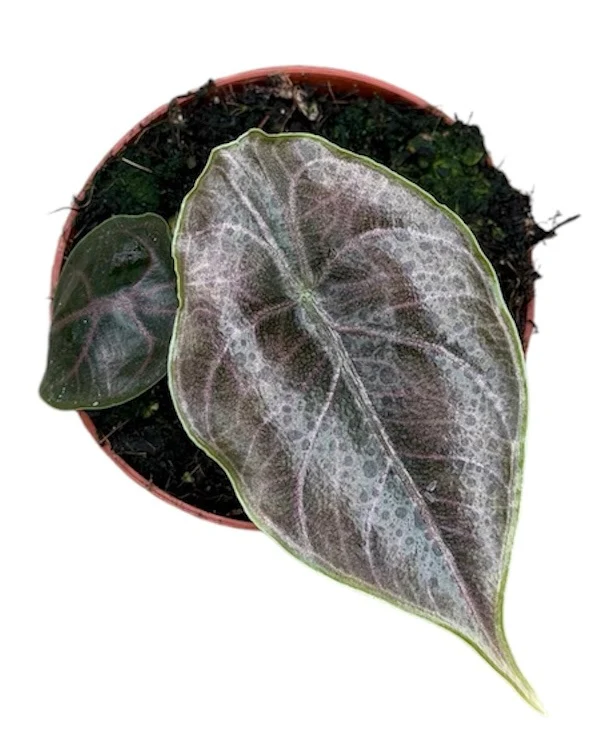
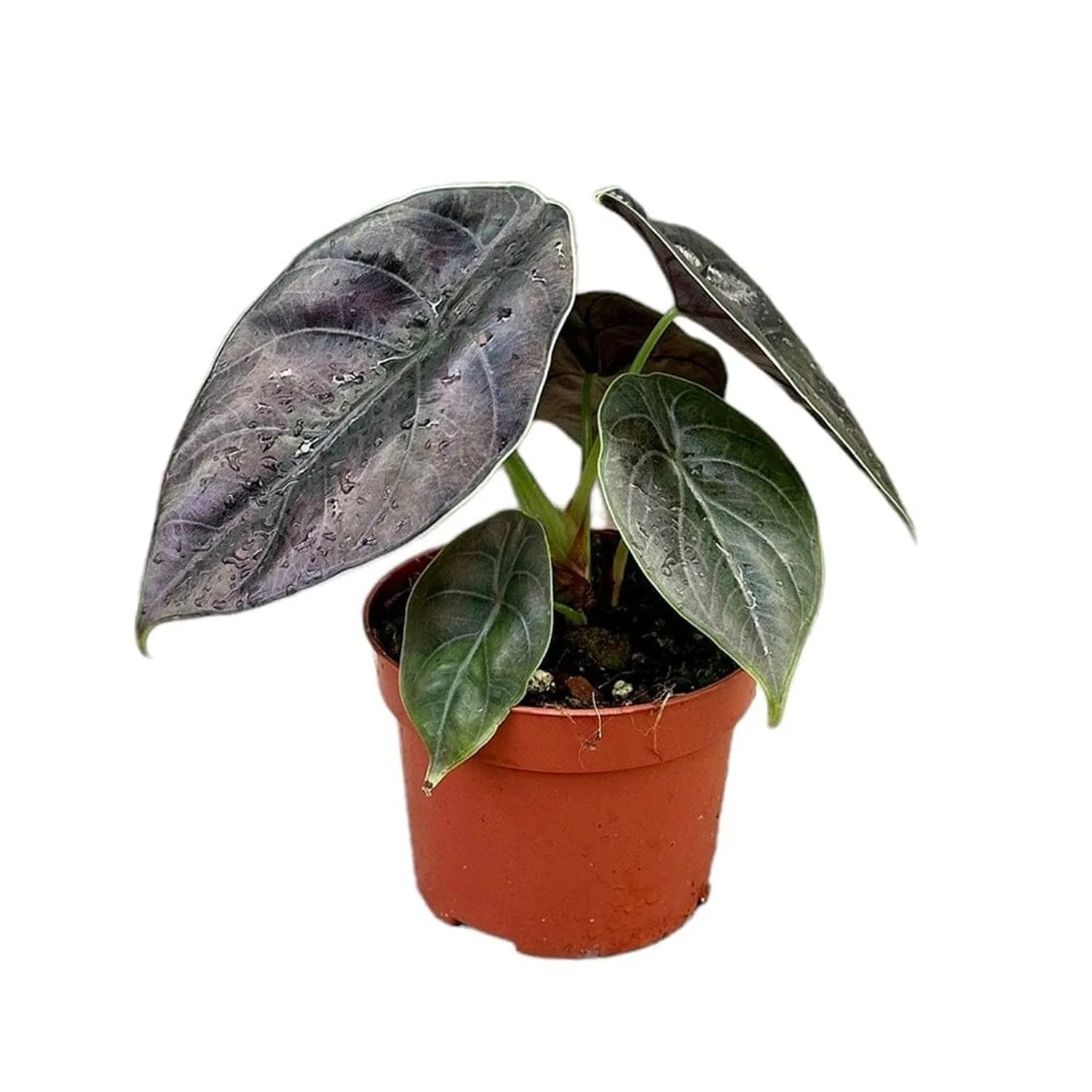
Anthurium ‘Napo’ produces long, heart-to arrow-shaped leaves with a pronounced drip tip and a luxurious, velvety texture. The foliage is typically deep green to near-black, with lighter, softly contrasting veins that become more defined as the leaf matures. Juvenile leaves emerge lighter and gradually darken and thicken as they harden off.
Leaves are held on upright petioles from a self-heading (non-climbing) growth form, giving the plant a statuesque, grounded appearance. Each new leaf is produced slowly, but when conditions are correct, successive leaves increase noticeably in size and presence.
Flowers are not a focal point. While the plant may occasionally produce a spathe and spadix, these are understated and are often removed to conserve energy for foliage development.
Light Requirements
Bright, indirect light is essential. Anthurium ‘Napo’ performs best in strong, filtered light, similar to what it would receive beneath a rainforest canopy. An east-facing window or a bright position set back from a south- or west-facing window is ideal.
Direct sunlight must be avoided, as it can scorch and permanently mark the velvety leaves. In low light, growth slows significantly, leaves remain smaller, and the plant may stall for long periods.
Watering
This Anthurium prefers even moisture with excellent root aeration. Allow the top layer of the growing medium to dry slightly between waterings, but never allow the root zone to dry out completely.
Water thoroughly and ensure excess moisture drains freely. Sitting in wet or compacted soil will quickly lead to root rot, while prolonged dryness can cause stalled growth and poor leaf development. Rainwater, distilled or filtered water is strongly recommended to avoid mineral build-up.
Temperature & Humidity
Anthurium ‘Napo’ thrives in warm, stable temperatures, ideally between 20–28°C. It is highly sensitive to cold, draughts and sudden temperature changes. Temperatures below 16°C can cause stress, slowed growth or leaf damage.
High humidity is critical. This plant performs best with humidity consistently above 65–70%. Lower humidity often results in smaller leaves, poor expansion and browning edges. A humidifier is strongly recommended for long-term success.
Good airflow is important, but avoid positioning the plant near radiators, heaters or air-conditioning units.
Soil & Potting
A very airy, chunky aroid mix is essential. The roots require constant access to oxygen while remaining lightly moist. A suitable mix includes orchid bark, perlite or pumice, sphagnum moss, and a small amount of peat-free compost or coco coir.
Many growers prefer semi-hydro or extremely coarse mixes for velvet Anthuriums to maximise airflow. Whatever the setup, drainage must be excellent.
Repot only when clearly necessary, ideally in spring or early summer. Anthurium ‘Napo’ dislikes frequent root disturbance and may pause growth after repotting.
Feeding
Feed lightly but consistently during the growing season. From spring through late summer, apply a diluted, balanced fertiliser every four to six weeks. Avoid high-salt feeds, as velvet Anthuriums are sensitive to mineral build-up.
Do not feed during winter or periods of slowed growth.
Pruning & Maintenance
Minimal pruning is required. Remove only damaged or ageing leaves at the base using clean, sharp tools. Leaves take time to develop, so unnecessary removal can significantly slow progress.
Avoid handling new leaves while they are soft, as immature velvet foliage is easily marked.
Common Issues & Sensitivities
Small or misshapen leaves usually indicate insufficient humidity or light. Yellowing leaves often point to overwatering or poor root aeration. Brown edges can be caused by low humidity or mineral-heavy water.
Spider mites may appear if humidity drops too low, making environmental stability especially important.
Propagation
Propagation is done by division, usually during repotting. Each division must have its own healthy root system and growth point. Anthurium ‘Napo’ cannot be propagated from leaf cuttings.
Overall Care Summary
Anthurium ‘Napo’ is a true collector Anthurium, best suited to growers who can provide high humidity, warmth, excellent airflow and patience. It is slow and deliberate, but when grown well it produces breathtaking, velvet foliage with real presence. For those able to meet its needs, it becomes a long-term centrepiece plant and a highlight of any serious Anthurium collection.
Product Information
Product Information
Shipping & Returns
Shipping & Returns
Description
Anthurium ‘Napo’ is a highly desirable velvet-leaf Anthurium, valued for its large, elongated leaves, rich dark colouring and refined, collector-grade presence. Often associated with plants originating from the Napo region of Ecuador, this form reflects classic cloud-forest Anthurium traits: slow, deliberate growth; dramatic foliage; and a strong preference for stable, humid conditions. It is grown almost entirely for its leaves rather than its flowers.
Plant Description
Anthurium ‘Napo’ produces long, heart-to arrow-shaped leaves with a pronounced drip tip and a luxurious, velvety texture. The foliage is typically deep green to near-black, with lighter, softly contrasting veins that become more defined as the leaf matures. Juvenile leaves emerge lighter and gradually darken and thicken as they harden off.
Leaves are held on upright petioles from a self-heading (non-climbing) growth form, giving the plant a statuesque, grounded appearance. Each new leaf is produced slowly, but when conditions are correct, successive leaves increase noticeably in size and presence.
Flowers are not a focal point. While the plant may occasionally produce a spathe and spadix, these are understated and are often removed to conserve energy for foliage development.
Light Requirements
Bright, indirect light is essential. Anthurium ‘Napo’ performs best in strong, filtered light, similar to what it would receive beneath a rainforest canopy. An east-facing window or a bright position set back from a south- or west-facing window is ideal.
Direct sunlight must be avoided, as it can scorch and permanently mark the velvety leaves. In low light, growth slows significantly, leaves remain smaller, and the plant may stall for long periods.
Watering
This Anthurium prefers even moisture with excellent root aeration. Allow the top layer of the growing medium to dry slightly between waterings, but never allow the root zone to dry out completely.
Water thoroughly and ensure excess moisture drains freely. Sitting in wet or compacted soil will quickly lead to root rot, while prolonged dryness can cause stalled growth and poor leaf development. Rainwater, distilled or filtered water is strongly recommended to avoid mineral build-up.
Temperature & Humidity
Anthurium ‘Napo’ thrives in warm, stable temperatures, ideally between 20–28°C. It is highly sensitive to cold, draughts and sudden temperature changes. Temperatures below 16°C can cause stress, slowed growth or leaf damage.
High humidity is critical. This plant performs best with humidity consistently above 65–70%. Lower humidity often results in smaller leaves, poor expansion and browning edges. A humidifier is strongly recommended for long-term success.
Good airflow is important, but avoid positioning the plant near radiators, heaters or air-conditioning units.
Soil & Potting
A very airy, chunky aroid mix is essential. The roots require constant access to oxygen while remaining lightly moist. A suitable mix includes orchid bark, perlite or pumice, sphagnum moss, and a small amount of peat-free compost or coco coir.
Many growers prefer semi-hydro or extremely coarse mixes for velvet Anthuriums to maximise airflow. Whatever the setup, drainage must be excellent.
Repot only when clearly necessary, ideally in spring or early summer. Anthurium ‘Napo’ dislikes frequent root disturbance and may pause growth after repotting.
Feeding
Feed lightly but consistently during the growing season. From spring through late summer, apply a diluted, balanced fertiliser every four to six weeks. Avoid high-salt feeds, as velvet Anthuriums are sensitive to mineral build-up.
Do not feed during winter or periods of slowed growth.
Pruning & Maintenance
Minimal pruning is required. Remove only damaged or ageing leaves at the base using clean, sharp tools. Leaves take time to develop, so unnecessary removal can significantly slow progress.
Avoid handling new leaves while they are soft, as immature velvet foliage is easily marked.
Common Issues & Sensitivities
Small or misshapen leaves usually indicate insufficient humidity or light. Yellowing leaves often point to overwatering or poor root aeration. Brown edges can be caused by low humidity or mineral-heavy water.
Spider mites may appear if humidity drops too low, making environmental stability especially important.
Propagation
Propagation is done by division, usually during repotting. Each division must have its own healthy root system and growth point. Anthurium ‘Napo’ cannot be propagated from leaf cuttings.
Overall Care Summary
Anthurium ‘Napo’ is a true collector Anthurium, best suited to growers who can provide high humidity, warmth, excellent airflow and patience. It is slow and deliberate, but when grown well it produces breathtaking, velvet foliage with real presence. For those able to meet its needs, it becomes a long-term centrepiece plant and a highlight of any serious Anthurium collection.