Ficus Ginseng Bonsai S Type House Plant
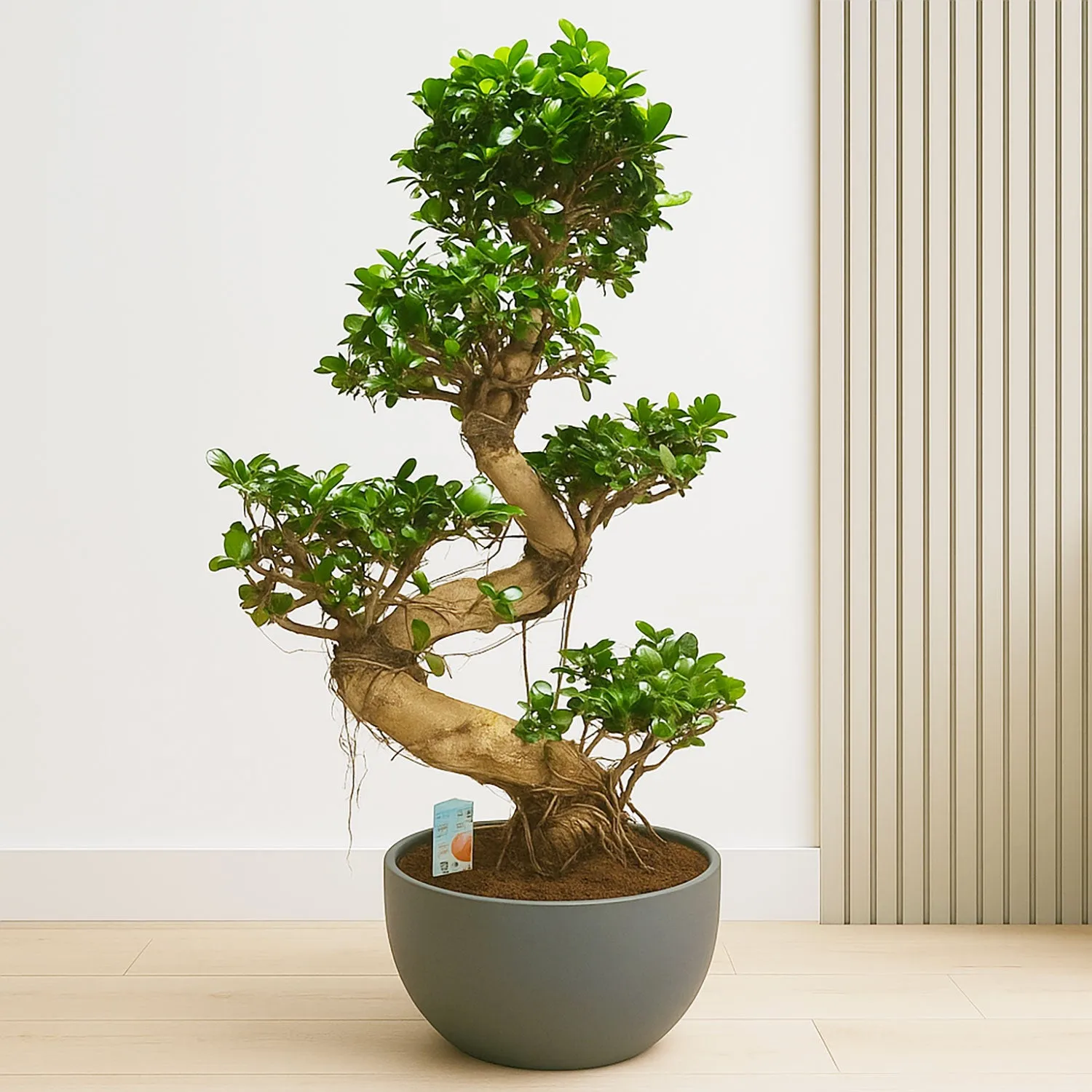
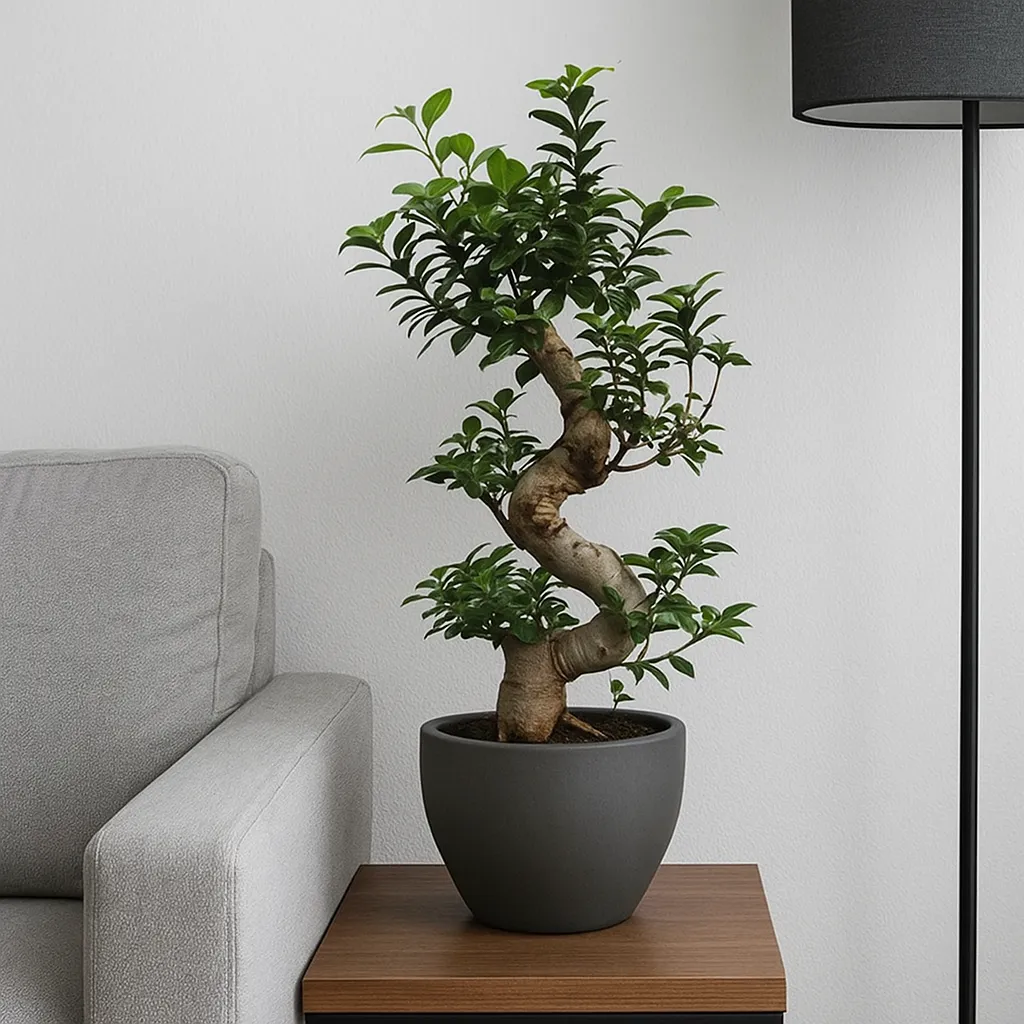
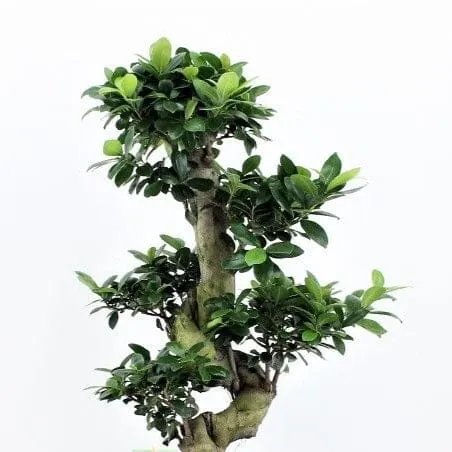
Ficus microcarpa ‘Ginseng’ (S-Type) is a striking and sculptural indoor bonsai tree, admired for its curved S-shaped trunk, glossy green canopy, and strong architectural form. A tropical evergreen native to Southeast Asia, India, and Malaysia, this variety has become a favourite among bonsai enthusiasts and interior stylists for its balance of natural artistry and effortless care.
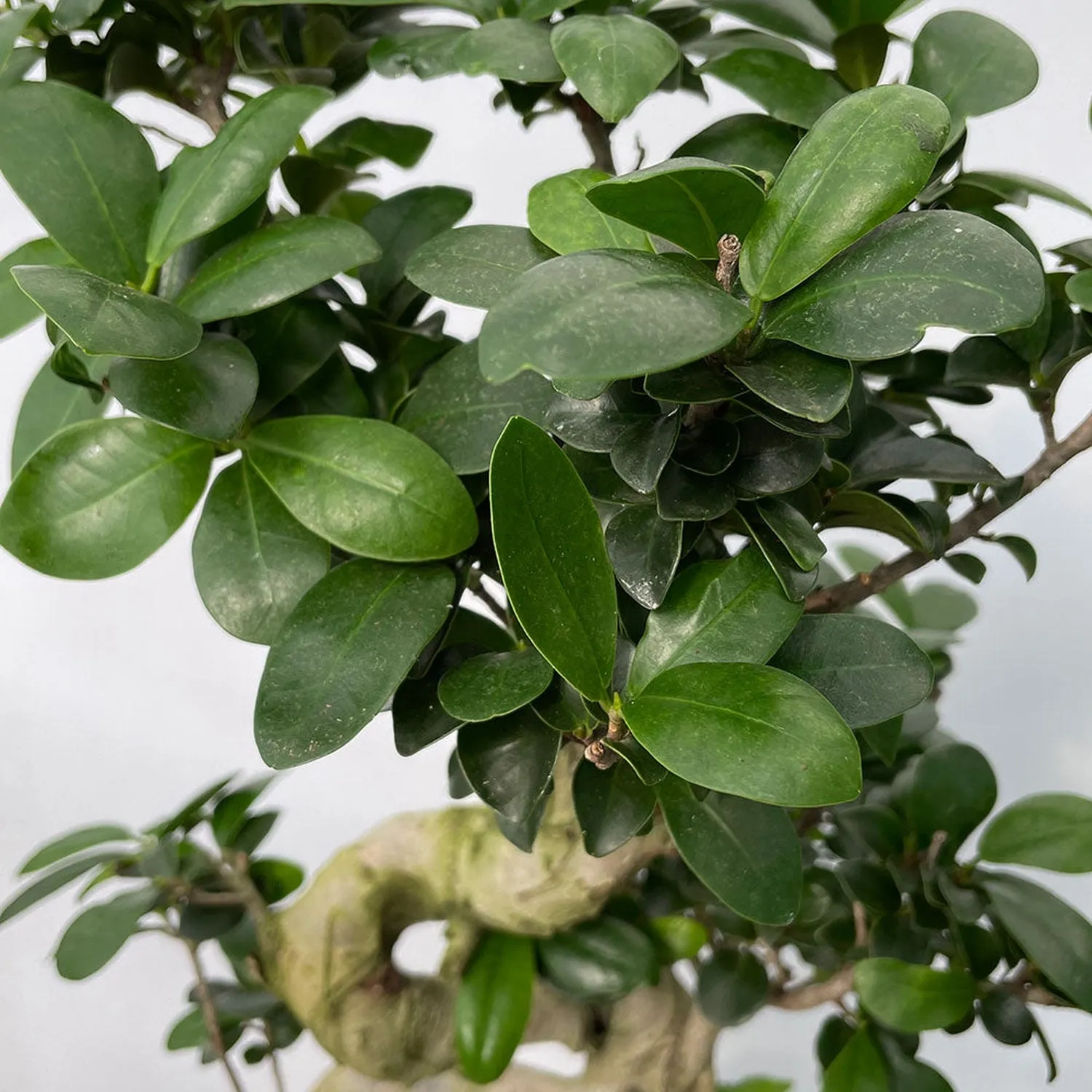
The plant’s thick, bulbous trunk — known as the ginseng root — is a defining feature, symbolising strength, stability, and endurance. The S-Type bonsai form enhances this aesthetic by introducing a graceful serpentine curve to the main trunk, creating a sense of flow and movement. Above the sturdy base, a dense canopy of oval, glossy green leaves forms a lush crown that contrasts beautifully with the rugged, textured trunk below.
Perfectly proportioned and full of character, Ficus ‘Ginseng’ (S-Type) represents harmony between nature and design — a living sculpture that embodies calm, balance, and refined elegance.
Ficus microcarpa ‘Ginseng’ (S-Type Bonsai) – Care Guide
Light
Thrives in bright, indirect light, though it can tolerate moderate light conditions. For the healthiest growth and compact canopy, provide several hours of filtered sunlight each day. Avoid prolonged exposure to harsh direct sun, which can scorch the leaves, or deep shade, which may lead to sparse foliage.
Watering
Keep the soil lightly moist but not waterlogged. Water thoroughly when the top 2–3 cm of soil feels dry to the touch, allowing excess water to drain freely. Avoid letting the roots sit in standing water. In winter, reduce watering frequency but never allow the soil to dry completely, as this may cause leaf drop.
Temperature and Humidity
-
Temperature: Prefers warmth between 20–28 °C; avoid exposure below 15 °C and protect from cold draughts.
-
Humidity: Enjoys moderate humidity (40–70%). Mist occasionally or place near a humidifier if the air is very dry, especially in centrally heated environments.
Soil and Potting
Use a well-draining bonsai soil mix, typically composed of akadama, pumice, lava rock, or coarse sand. This ensures good aeration and prevents root rot. Repot every 2–3 years in early spring to refresh the soil and prune the roots as needed to maintain the plant’s compact shape.
Feeding
Feed every 4–6 weeks from spring through early autumn with a balanced bonsai fertiliser or a diluted, all-purpose plant food. During the cooler months, reduce feeding frequency as the plant’s growth slows. Consistent feeding supports strong roots and a healthy canopy.
Pruning and Maintenance
Regular pruning helps maintain the desired shape and proportion. Trim new shoots after 6–8 leaves have formed, cutting back to 2–4 leaves to encourage branching and canopy density. Always use sterilised tools. Wipe leaves gently with a damp cloth to remove dust and highlight their glossy texture.
Growth and Maturity
A slow to moderate grower, Ficus ‘Ginseng’ (S-Type) typically reaches 40–60 cm in height when maintained as a bonsai. With proper care, it can live for decades, developing an increasingly intricate trunk and refined branch structure. Mature specimens exude an ancient, timeless character that makes them focal pieces in both contemporary and traditional interiors.
Common Issues
-
Yellow leaves: Overwatering or sudden environmental change.
-
Leaf drop: Low humidity, cold drafts, or inconsistent watering.
-
Dull leaves: Insufficient light or lack of feeding.
-
Pests: Occasionally scale or mealybugs; remove manually and treat with neem oil or insecticidal soap if needed.
Background and Benefits
Ficus microcarpa originates from tropical regions of Asia, where it grows as a large canopy tree. In bonsai form, it symbolises strength, wisdom, and endurance, often associated with stability and peace in Eastern philosophy. The ‘Ginseng’ name refers to the thickened roots and base that resemble the shape of ginseng roots, while the S-Type training adds a fluid, artistic curve to the trunk.
Beyond its aesthetic appeal, this species is also an excellent air-purifying plant, filtering indoor toxins while enriching air quality. Resilient and forgiving, it’s ideal for bonsai beginners and seasoned enthusiasts alike, blending natural tranquillity with a sculptural, contemporary style.
Quick Care Summary
Light: Bright, indirect light; tolerates moderate light
Water: Keep soil lightly moist; allow top 2–3 cm to dry between watering
Temperature: 20–28 °C; avoid below 15 °C
Humidity: Moderate (40–70%)
Soil: Well-draining bonsai mix – akadama, pumice, lava rock
Feed: Every 4–6 weeks in spring/summer
Growth: Compact bonsai form, 40–60 cm; thick S-shaped trunk with dense, glossy green canopy
⚠️ Toxicity note: Contains latex sap that may irritate skin and is toxic if ingested. Keep away from pets and children.
Styling Tip
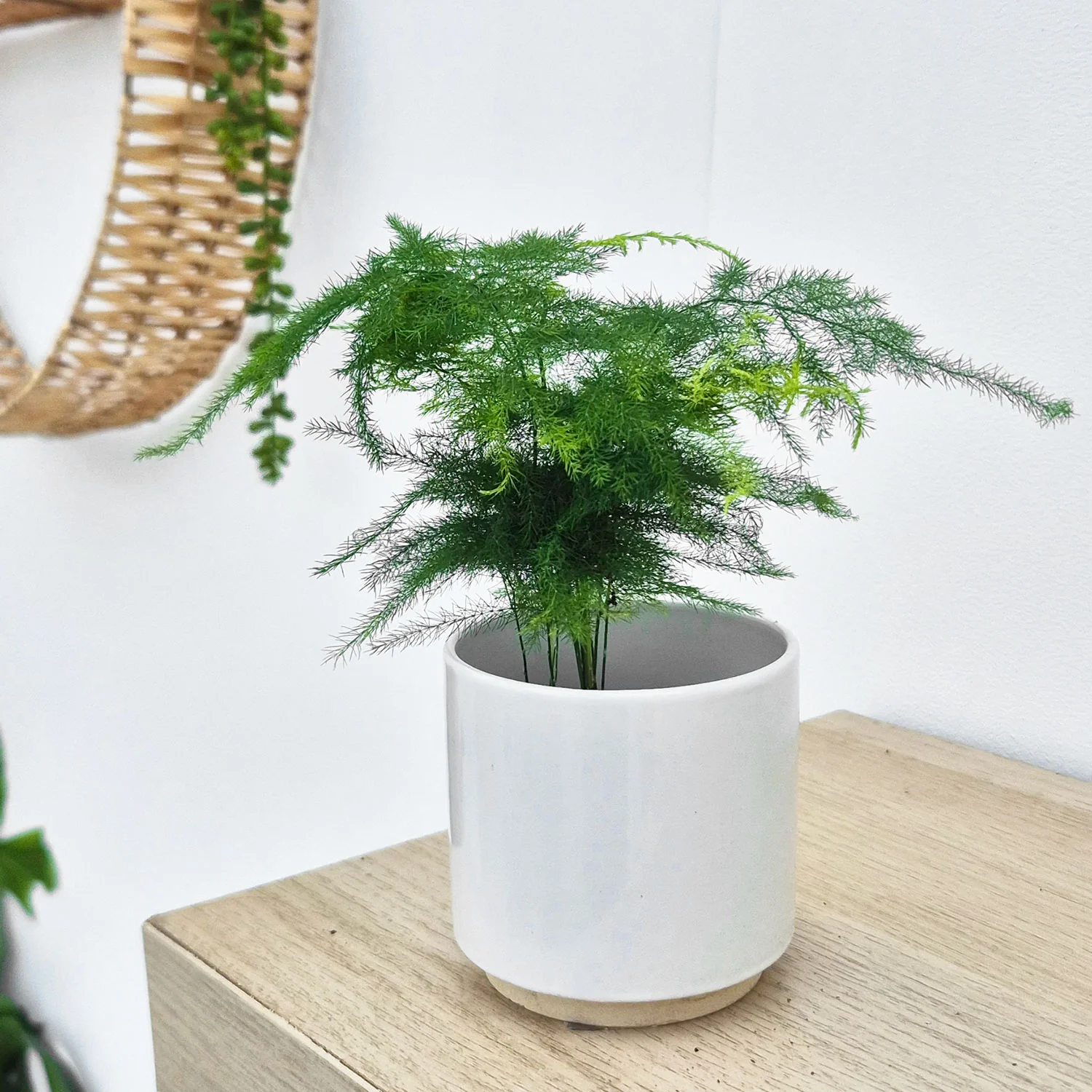
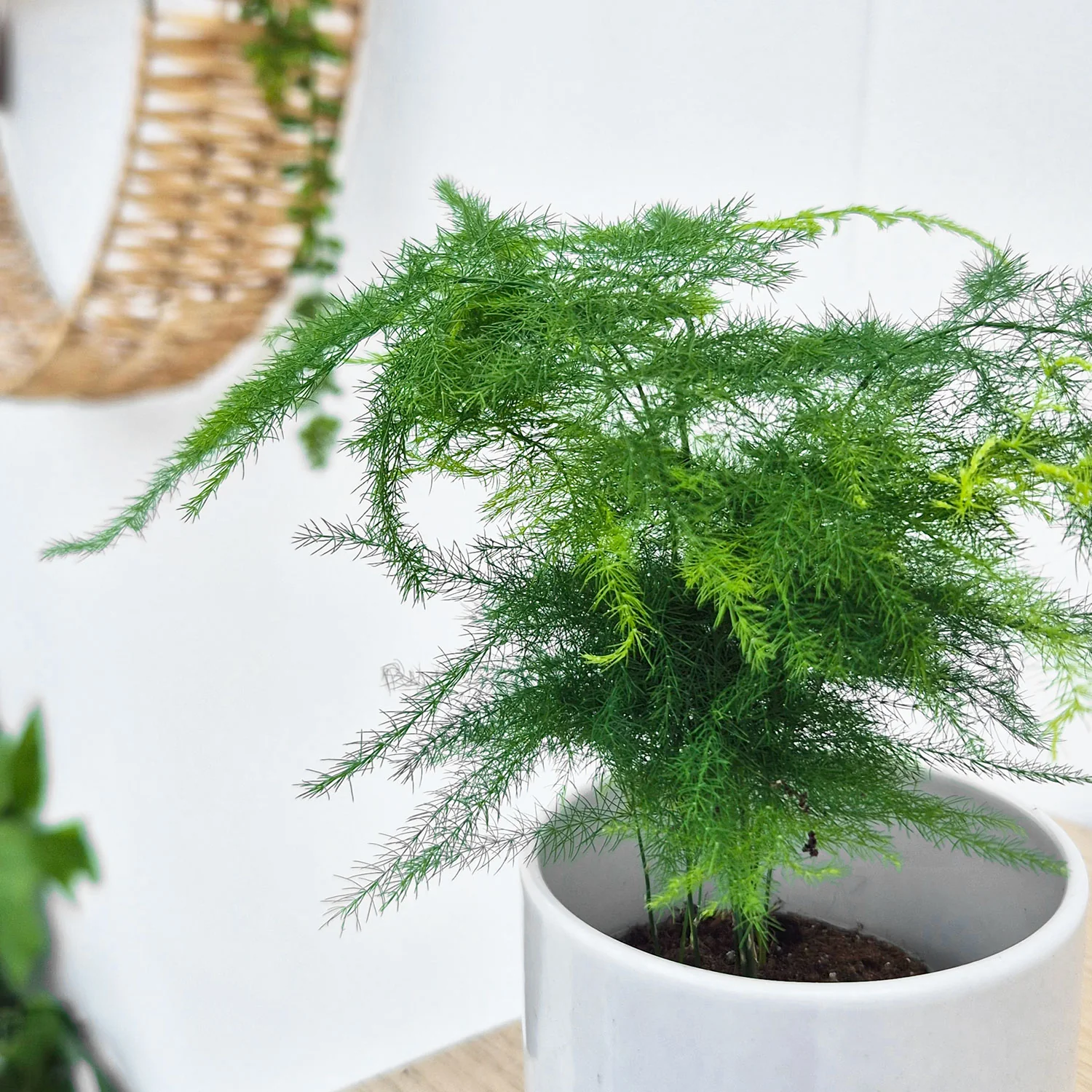
Display Ficus microcarpa ‘Ginseng’ (S-Type) in a shallow ceramic bonsai pot to accentuate its sculptural form and curved trunk. Place it on a wooden stand or minimalist tray to highlight its balance of texture and structure. It pairs beautifully with smooth stones, moss, or small companion plants like Asparagus plumosus or Ficus retusa for a zen-inspired aesthetic. Ideal for bright living rooms, offices, or meditation spaces, this living sculpture adds calm, focus, and refined artistry to your surroundings.
Original: $91.07
-70%$91.07
$27.32Product Information
Product Information
Shipping & Returns
Shipping & Returns
Description
Ficus microcarpa ‘Ginseng’ (S-Type) is a striking and sculptural indoor bonsai tree, admired for its curved S-shaped trunk, glossy green canopy, and strong architectural form. A tropical evergreen native to Southeast Asia, India, and Malaysia, this variety has become a favourite among bonsai enthusiasts and interior stylists for its balance of natural artistry and effortless care.
The plant’s thick, bulbous trunk — known as the ginseng root — is a defining feature, symbolising strength, stability, and endurance. The S-Type bonsai form enhances this aesthetic by introducing a graceful serpentine curve to the main trunk, creating a sense of flow and movement. Above the sturdy base, a dense canopy of oval, glossy green leaves forms a lush crown that contrasts beautifully with the rugged, textured trunk below.
Perfectly proportioned and full of character, Ficus ‘Ginseng’ (S-Type) represents harmony between nature and design — a living sculpture that embodies calm, balance, and refined elegance.
Ficus microcarpa ‘Ginseng’ (S-Type Bonsai) – Care Guide
Light
Thrives in bright, indirect light, though it can tolerate moderate light conditions. For the healthiest growth and compact canopy, provide several hours of filtered sunlight each day. Avoid prolonged exposure to harsh direct sun, which can scorch the leaves, or deep shade, which may lead to sparse foliage.
Watering
Keep the soil lightly moist but not waterlogged. Water thoroughly when the top 2–3 cm of soil feels dry to the touch, allowing excess water to drain freely. Avoid letting the roots sit in standing water. In winter, reduce watering frequency but never allow the soil to dry completely, as this may cause leaf drop.
Temperature and Humidity
-
Temperature: Prefers warmth between 20–28 °C; avoid exposure below 15 °C and protect from cold draughts.
-
Humidity: Enjoys moderate humidity (40–70%). Mist occasionally or place near a humidifier if the air is very dry, especially in centrally heated environments.
Soil and Potting
Use a well-draining bonsai soil mix, typically composed of akadama, pumice, lava rock, or coarse sand. This ensures good aeration and prevents root rot. Repot every 2–3 years in early spring to refresh the soil and prune the roots as needed to maintain the plant’s compact shape.
Feeding
Feed every 4–6 weeks from spring through early autumn with a balanced bonsai fertiliser or a diluted, all-purpose plant food. During the cooler months, reduce feeding frequency as the plant’s growth slows. Consistent feeding supports strong roots and a healthy canopy.
Pruning and Maintenance
Regular pruning helps maintain the desired shape and proportion. Trim new shoots after 6–8 leaves have formed, cutting back to 2–4 leaves to encourage branching and canopy density. Always use sterilised tools. Wipe leaves gently with a damp cloth to remove dust and highlight their glossy texture.
Growth and Maturity
A slow to moderate grower, Ficus ‘Ginseng’ (S-Type) typically reaches 40–60 cm in height when maintained as a bonsai. With proper care, it can live for decades, developing an increasingly intricate trunk and refined branch structure. Mature specimens exude an ancient, timeless character that makes them focal pieces in both contemporary and traditional interiors.
Common Issues
-
Yellow leaves: Overwatering or sudden environmental change.
-
Leaf drop: Low humidity, cold drafts, or inconsistent watering.
-
Dull leaves: Insufficient light or lack of feeding.
-
Pests: Occasionally scale or mealybugs; remove manually and treat with neem oil or insecticidal soap if needed.
Background and Benefits
Ficus microcarpa originates from tropical regions of Asia, where it grows as a large canopy tree. In bonsai form, it symbolises strength, wisdom, and endurance, often associated with stability and peace in Eastern philosophy. The ‘Ginseng’ name refers to the thickened roots and base that resemble the shape of ginseng roots, while the S-Type training adds a fluid, artistic curve to the trunk.
Beyond its aesthetic appeal, this species is also an excellent air-purifying plant, filtering indoor toxins while enriching air quality. Resilient and forgiving, it’s ideal for bonsai beginners and seasoned enthusiasts alike, blending natural tranquillity with a sculptural, contemporary style.
Quick Care Summary
Light: Bright, indirect light; tolerates moderate light
Water: Keep soil lightly moist; allow top 2–3 cm to dry between watering
Temperature: 20–28 °C; avoid below 15 °C
Humidity: Moderate (40–70%)
Soil: Well-draining bonsai mix – akadama, pumice, lava rock
Feed: Every 4–6 weeks in spring/summer
Growth: Compact bonsai form, 40–60 cm; thick S-shaped trunk with dense, glossy green canopy
⚠️ Toxicity note: Contains latex sap that may irritate skin and is toxic if ingested. Keep away from pets and children.
Styling Tip
Display Ficus microcarpa ‘Ginseng’ (S-Type) in a shallow ceramic bonsai pot to accentuate its sculptural form and curved trunk. Place it on a wooden stand or minimalist tray to highlight its balance of texture and structure. It pairs beautifully with smooth stones, moss, or small companion plants like Asparagus plumosus or Ficus retusa for a zen-inspired aesthetic. Ideal for bright living rooms, offices, or meditation spaces, this living sculpture adds calm, focus, and refined artistry to your surroundings.