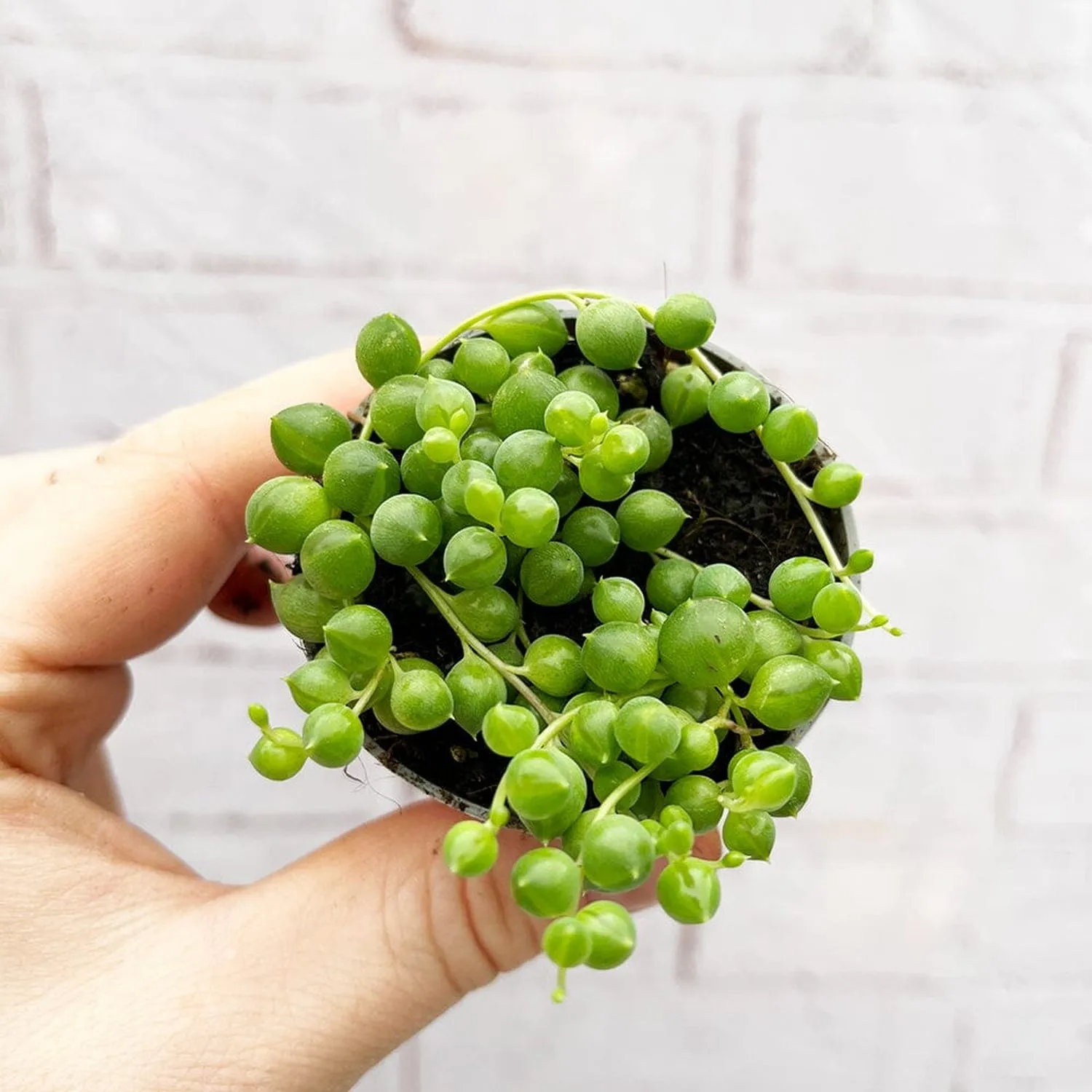


String of Pearls Senecio Succulent House Plant 6cm Pot
String of Pearls is the common name for Curio rowleyanus (formerly known as Senecio rowleyanus). This eye-catching trailing succulent is loved for its cascading strands of round, bead-like leaves that resemble a string of green pearls.
Native to arid regions of southwest Africa, it is adapted to bright light and well-draining soil. Its unique texture makes it one of the most recognisable trailing houseplants and a favourite for hanging baskets and high shelves.
Despite its delicate look, it’s relatively easy to care for once you understand its preference for bright light and minimal watering.
Key Features
-
🌿 Round, bead-like succulent leaves
-
🌿 Long trailing stems
-
🌿 Drought tolerant
-
🌿 Ideal for hanging planters
-
🌿 Architectural, modern look
Care Guide
Light
Bright light is essential.
-
Thrives in bright, indirect light
-
Can tolerate gentle morning sun
-
Avoid prolonged harsh midday sun
-
Too little light causes thinning and stretched stems
A bright south- or west-facing window (with slight protection) works well in UK homes.
Watering
Less is more with String of Pearls.
-
Allow soil to dry out almost completely between waterings
-
Water thoroughly, then let excess drain
-
Reduce watering significantly in winter
Signs to watch:
-
Shrivelled pearls = underwatered
-
Soft, mushy pearls = overwatered
Overwatering is the most common cause of failure.
Humidity
Prefers average to low humidity.
-
No need for misting
-
Avoid very humid environments
-
Ensure good airflow
As a succulent, it prefers drier air compared to tropical houseplants.
Temperature
-
Ideal: 18–24°C
-
Avoid temperatures below 10–12°C
-
Keep away from cold draughts
Stable warmth supports steady growth.
Soil & Potting Mix
Use a free-draining cactus or succulent mix:
-
Cactus compost
-
Added perlite or grit
-
Terracotta pots are ideal for airflow
Good drainage is crucial to prevent root rot.
Feeding
Feed lightly during spring and summer:
-
Cactus fertiliser every 4–6 weeks
-
Do not feed during winter
Too much fertiliser can cause weak, stretched growth.
Growth Habit
-
Trailing stems can reach 60cm+
-
Grows faster in bright light
-
Flowers occasionally with small white, cinnamon-scented blooms
Trim back long strands to encourage fuller growth.
Propagation
Very easy to propagate:
-
Lay a strand across moist soil and lightly press nodes down
-
Or take cuttings and root directly in soil
-
Keep lightly moist until roots establish
New roots often form within 2–3 weeks.
Common Problems
Pearls turning soft and translucent
-
Overwatering
Shrivelled pearls
-
Underwatering
Leggy growth with large gaps
-
Insufficient light
Sudden die-off at soil line
-
Root rot
Styling Ideas
-
Perfect for hanging baskets
-
Ideal for high shelves to allow trailing
-
Pairs beautifully with other succulents
-
Works well in minimalist interiors
Its cascading form makes it a strong visual feature in bright rooms.
Toxicity
String of Pearls is toxic if ingested by pets or humans. Keep out of reach of cats and dogs.
Product Information
Product Information
Shipping & Returns
Shipping & Returns
Description
String of Pearls is the common name for Curio rowleyanus (formerly known as Senecio rowleyanus). This eye-catching trailing succulent is loved for its cascading strands of round, bead-like leaves that resemble a string of green pearls.
Native to arid regions of southwest Africa, it is adapted to bright light and well-draining soil. Its unique texture makes it one of the most recognisable trailing houseplants and a favourite for hanging baskets and high shelves.
Despite its delicate look, it’s relatively easy to care for once you understand its preference for bright light and minimal watering.
Key Features
-
🌿 Round, bead-like succulent leaves
-
🌿 Long trailing stems
-
🌿 Drought tolerant
-
🌿 Ideal for hanging planters
-
🌿 Architectural, modern look
Care Guide
Light
Bright light is essential.
-
Thrives in bright, indirect light
-
Can tolerate gentle morning sun
-
Avoid prolonged harsh midday sun
-
Too little light causes thinning and stretched stems
A bright south- or west-facing window (with slight protection) works well in UK homes.
Watering
Less is more with String of Pearls.
-
Allow soil to dry out almost completely between waterings
-
Water thoroughly, then let excess drain
-
Reduce watering significantly in winter
Signs to watch:
-
Shrivelled pearls = underwatered
-
Soft, mushy pearls = overwatered
Overwatering is the most common cause of failure.
Humidity
Prefers average to low humidity.
-
No need for misting
-
Avoid very humid environments
-
Ensure good airflow
As a succulent, it prefers drier air compared to tropical houseplants.
Temperature
-
Ideal: 18–24°C
-
Avoid temperatures below 10–12°C
-
Keep away from cold draughts
Stable warmth supports steady growth.
Soil & Potting Mix
Use a free-draining cactus or succulent mix:
-
Cactus compost
-
Added perlite or grit
-
Terracotta pots are ideal for airflow
Good drainage is crucial to prevent root rot.
Feeding
Feed lightly during spring and summer:
-
Cactus fertiliser every 4–6 weeks
-
Do not feed during winter
Too much fertiliser can cause weak, stretched growth.
Growth Habit
-
Trailing stems can reach 60cm+
-
Grows faster in bright light
-
Flowers occasionally with small white, cinnamon-scented blooms
Trim back long strands to encourage fuller growth.
Propagation
Very easy to propagate:
-
Lay a strand across moist soil and lightly press nodes down
-
Or take cuttings and root directly in soil
-
Keep lightly moist until roots establish
New roots often form within 2–3 weeks.
Common Problems
Pearls turning soft and translucent
-
Overwatering
Shrivelled pearls
-
Underwatering
Leggy growth with large gaps
-
Insufficient light
Sudden die-off at soil line
-
Root rot
Styling Ideas
-
Perfect for hanging baskets
-
Ideal for high shelves to allow trailing
-
Pairs beautifully with other succulents
-
Works well in minimalist interiors
Its cascading form makes it a strong visual feature in bright rooms.
Toxicity
String of Pearls is toxic if ingested by pets or humans. Keep out of reach of cats and dogs.