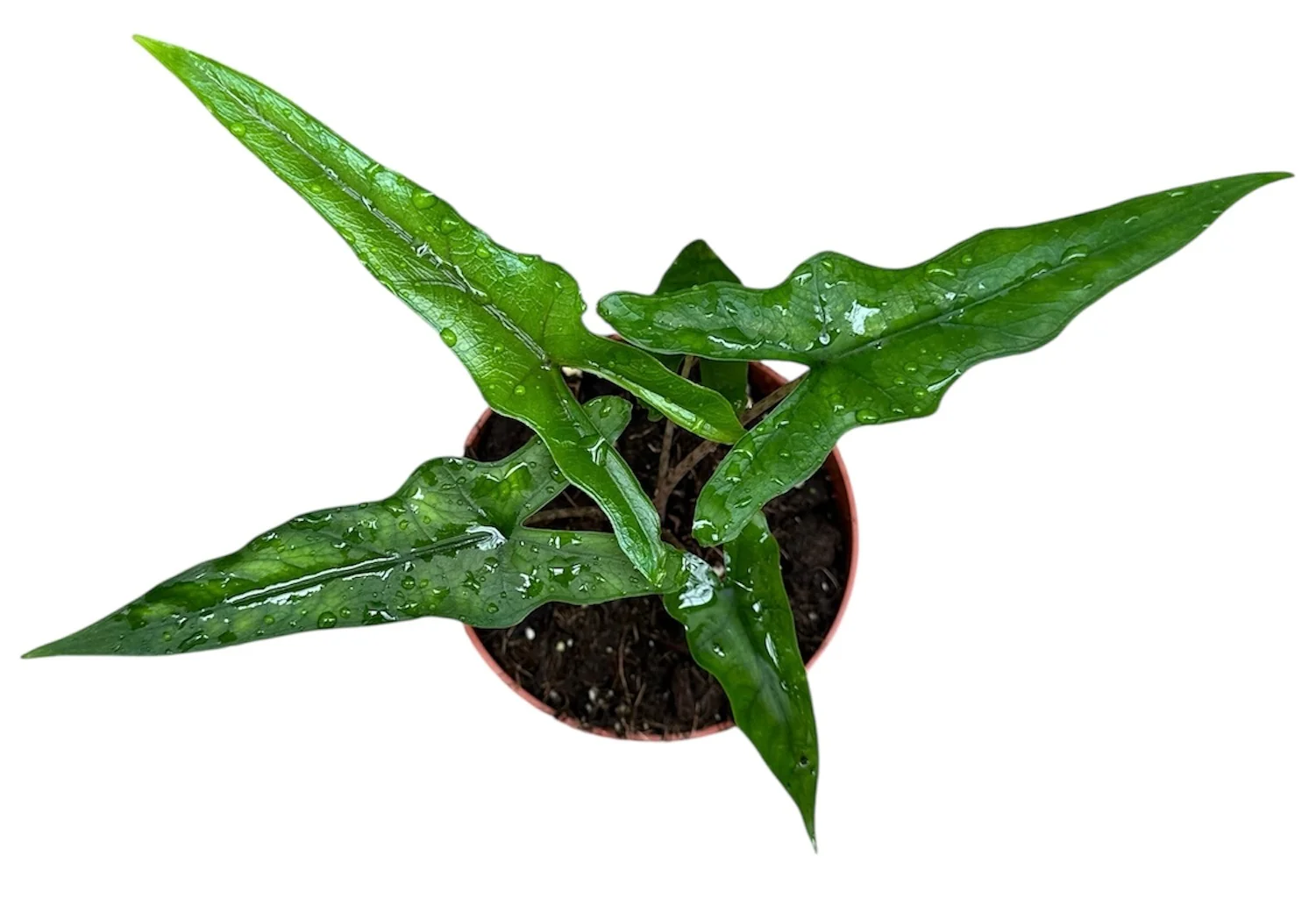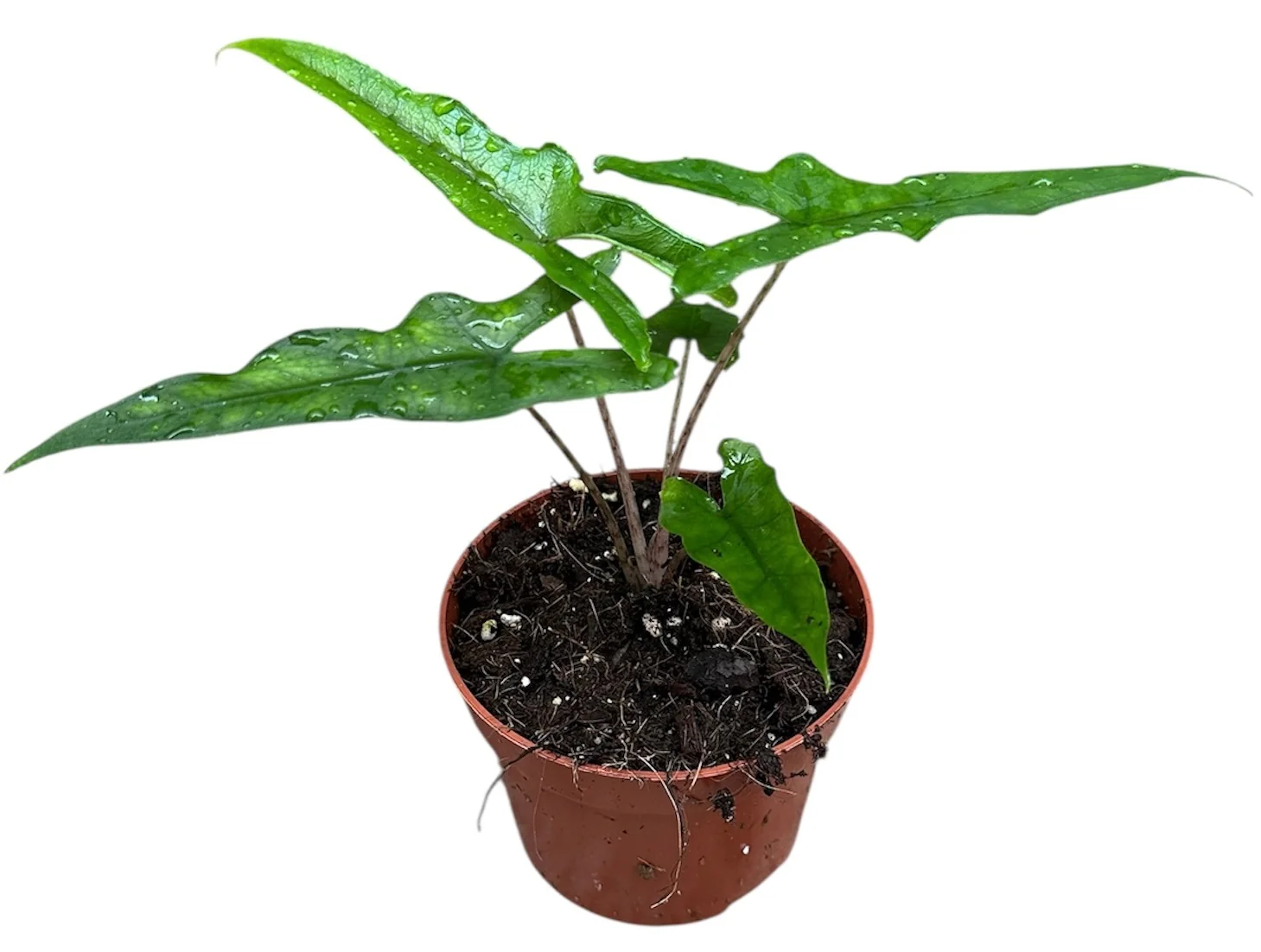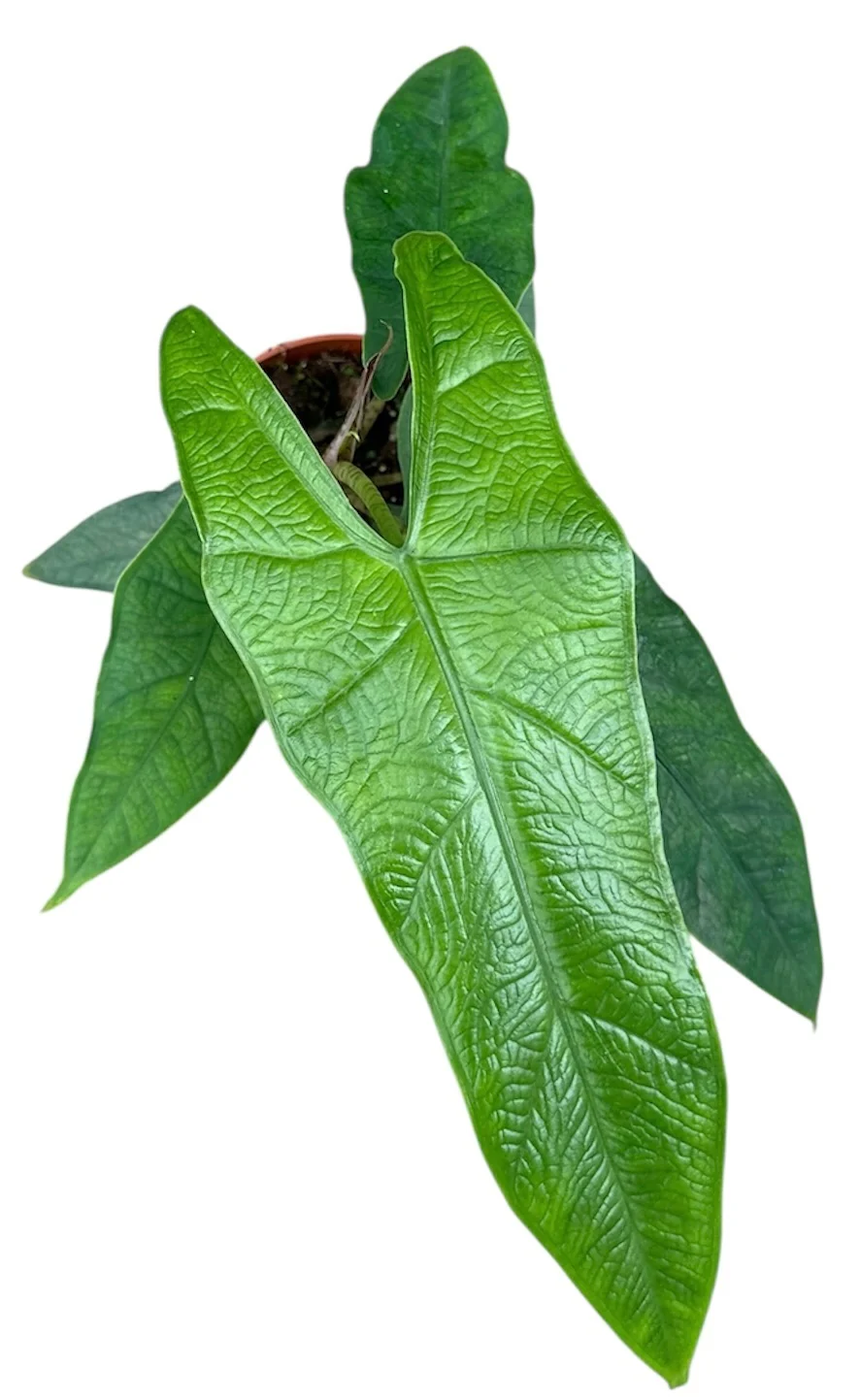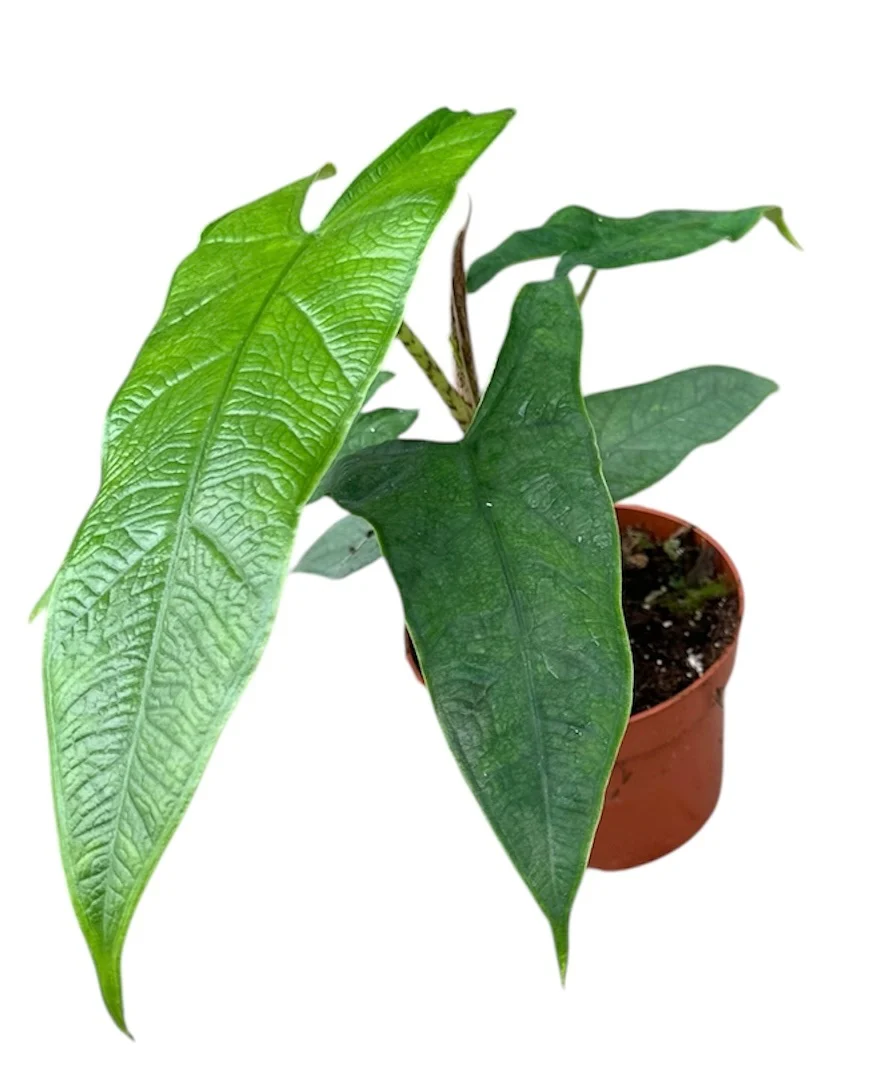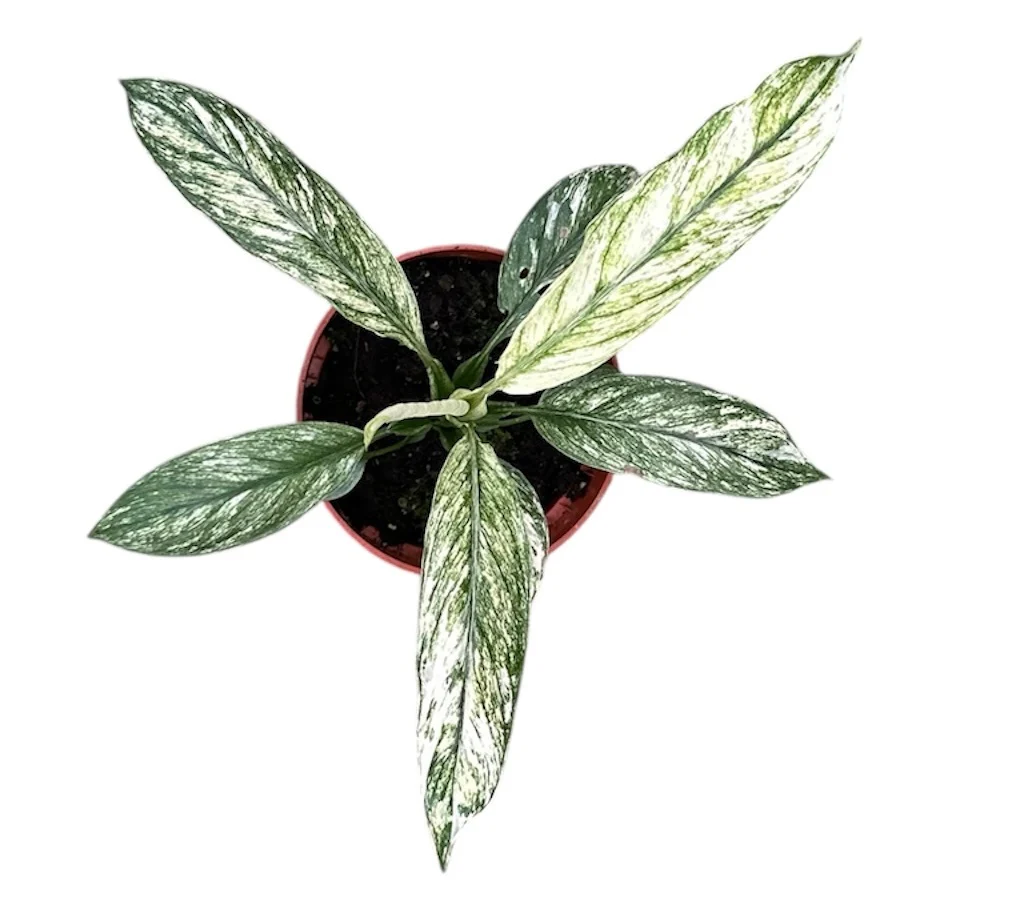
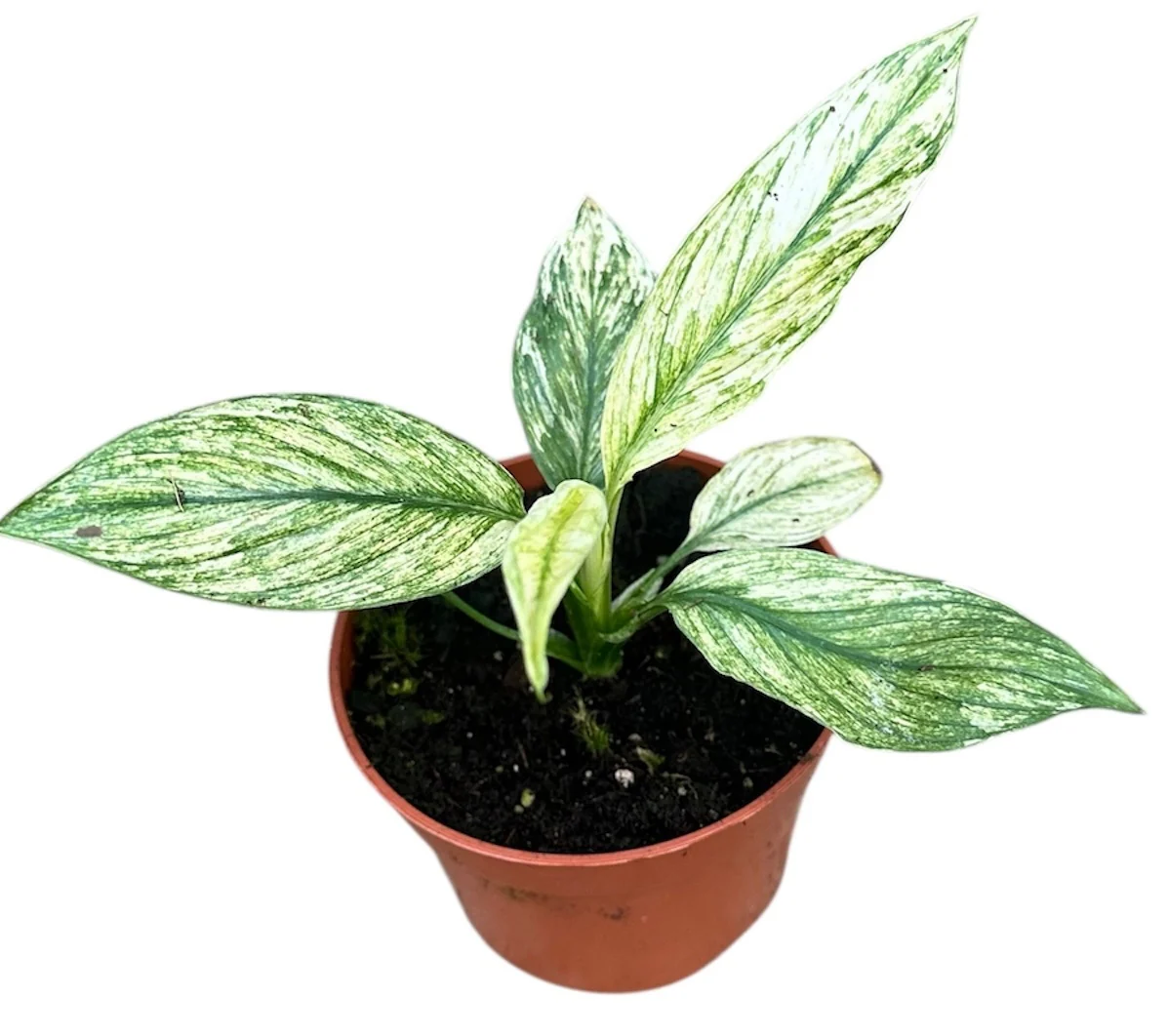
Spathiphyllum Sensation Variegata 10.5cm Pot 15cm Height House Plant
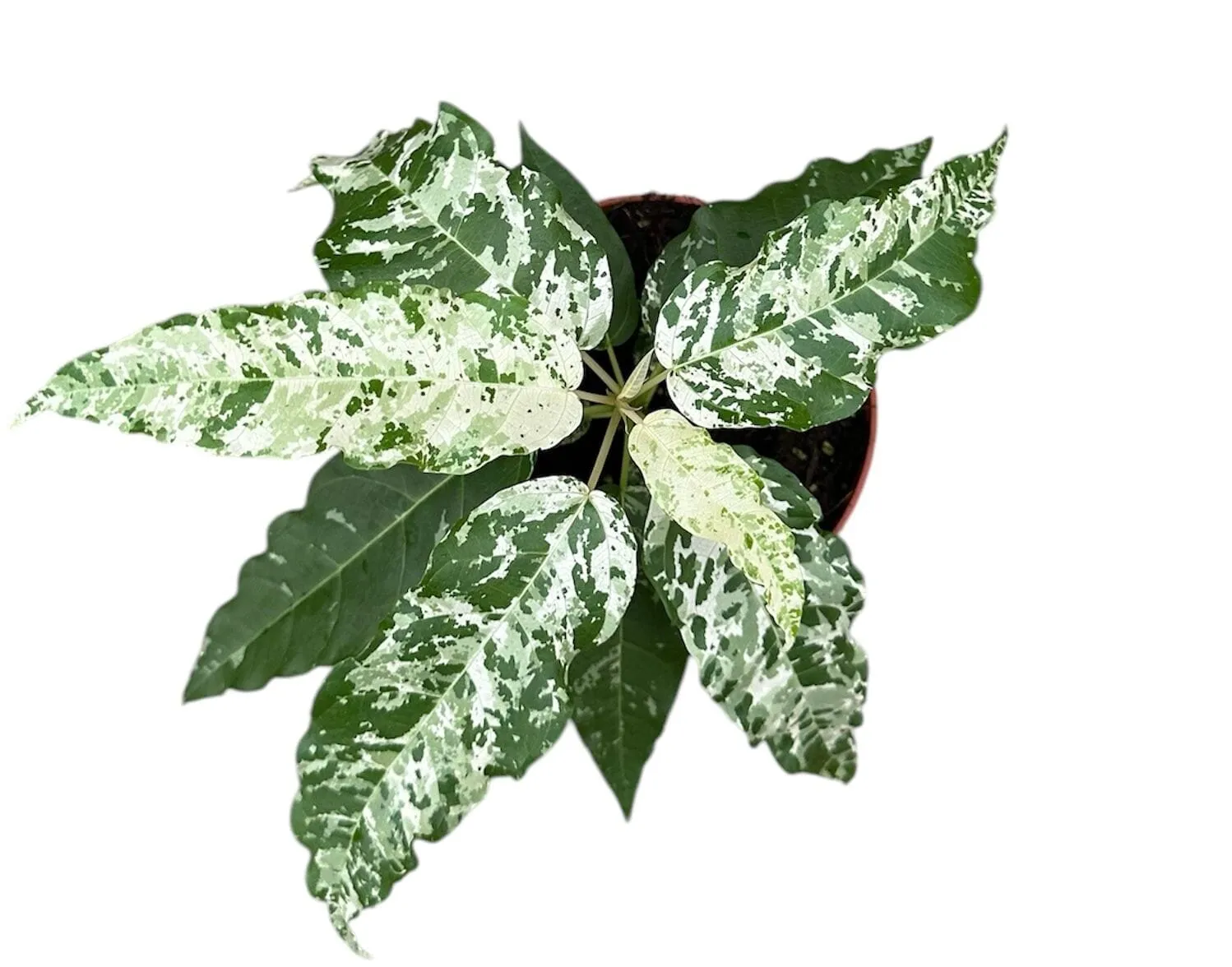
Spathiphyllum ‘Sensation Variegata’ is a rare, dramatic form of the giant peace lily, grown for its huge, deeply ribbed leaves marbled with creamy white and soft green variegation. It combines the bold scale of the classic ‘Sensation’ with striking variegation, creating a true statement foliage plant. While it can produce flowers, this variety is primarily prized for its architectural leaves and lush, tropical presence.
Plant Description
This plant produces very large, lance-shaped leaves with pronounced ribbing that gives the foliage a pleated, almost sculptural texture. The variegation appears as irregular splashes, streaks and sectors of cream to pale yellow across a deep green base. Each leaf is unique, and the patterning can vary from subtle to bold.
Leaves emerge on sturdy, upright petioles from a clump-forming base. As the plant matures, it develops a tall, fountain-like form, making it ideal as a floor plant or focal point in a bright room. Compared to standard peace lilies, growth is slower due to the variegation, but the overall impact is far greater.
Flowering, when it occurs, follows the classic peace lily form: a white spathe surrounding a pale spadix. Blooms are usually secondary to foliage and may be fewer than on non-variegated plants.
Light Requirements
Bright, indirect light is essential to maintain healthy growth and strong variegation. A position near an east-facing window or a bright spot set back from a south- or west-facing window works well.
Direct sunlight should be avoided, as the pale variegated areas scorch easily. In lower light, the plant will survive but grow more slowly, and variegation may fade, becoming greener over time.
Watering
Spathiphyllum ‘Sensation Variegata’ prefers consistently moist compost, but it must never sit in waterlogged soil. Allow the top few centimetres of the growing medium to dry slightly between waterings, then water thoroughly.
Peace lilies are known for signalling thirst by drooping slightly. While this variety is a little more sensitive, brief wilting is usually reversible if watered promptly. Prolonged dryness, however, can cause leaf browning and stress. Overwatering, especially in cooler conditions, can quickly lead to root problems.
Using rainwater, filtered or distilled water is recommended where possible, as peace lilies can be sensitive to salts and chemicals in tap water, which may cause brown leaf tips.
Temperature & Humidity
This plant thrives in warm, stable indoor temperatures, ideally between 18–27°C. It is sensitive to cold draughts, sudden temperature changes and chilly windows. Temperatures below 15°C can cause stress and slowed growth.
Moderate to high humidity supports larger leaves and healthier growth. While it can adapt to average household humidity, higher humidity helps prevent brown edges and improves overall leaf quality. Avoid placing the plant near radiators, heaters or air-conditioning vents.
Soil & Potting
A moisture-retentive yet well-draining growing medium is ideal. A mix of peat-free compost or coco coir with added perlite and a small amount of bark works well, allowing roots to stay evenly moist while still receiving oxygen.
Choose a pot with good drainage and enough weight to support the plant’s size. Repot only when clearly root-bound, ideally in spring. Frequent repotting is unnecessary and can slow growth.
Feeding
Feed lightly during the growing season. From spring through early autumn, apply a balanced houseplant fertiliser every four to six weeks at half strength. Overfeeding can cause leaf burn, particularly on variegated areas.
Do not feed during winter, when growth slows naturally.
Pruning & Maintenance
Remove yellowing or damaged leaves at the base using clean, sharp scissors. This keeps the plant tidy and encourages energy to be directed into healthy new growth.
Leaves can be gently wiped with a damp cloth to remove dust and enhance their natural sheen. Avoid leaf shine products, which can block pores and damage foliage.
Common Issues & Sensitivities
Brown leaf tips are most often caused by low humidity, inconsistent watering or poor water quality. Yellowing leaves can indicate overwatering or cold stress. Reduced variegation usually points to insufficient light.
Pests are uncommon, but spider mites can appear in dry conditions, making humidity management important.
Propagation
Propagation is done by division, usually at repotting time. Each division should have a healthy root system and several leaves. This plant cannot be propagated from leaf cuttings.
Overall Care Summary
Spathiphyllum ‘Sensation Variegata’ is a bold, premium foliage plant that brings scale, texture and rare variegation into indoor spaces. It is easier than many collector plants but still benefits from consistent moisture, bright indirect light and stable warmth. Given the right conditions, it becomes a long-lived, impressive centrepiece that elevates any interior.
Product Information
Product Information
Shipping & Returns
Shipping & Returns
Description
Spathiphyllum ‘Sensation Variegata’ is a rare, dramatic form of the giant peace lily, grown for its huge, deeply ribbed leaves marbled with creamy white and soft green variegation. It combines the bold scale of the classic ‘Sensation’ with striking variegation, creating a true statement foliage plant. While it can produce flowers, this variety is primarily prized for its architectural leaves and lush, tropical presence.
Plant Description
This plant produces very large, lance-shaped leaves with pronounced ribbing that gives the foliage a pleated, almost sculptural texture. The variegation appears as irregular splashes, streaks and sectors of cream to pale yellow across a deep green base. Each leaf is unique, and the patterning can vary from subtle to bold.
Leaves emerge on sturdy, upright petioles from a clump-forming base. As the plant matures, it develops a tall, fountain-like form, making it ideal as a floor plant or focal point in a bright room. Compared to standard peace lilies, growth is slower due to the variegation, but the overall impact is far greater.
Flowering, when it occurs, follows the classic peace lily form: a white spathe surrounding a pale spadix. Blooms are usually secondary to foliage and may be fewer than on non-variegated plants.
Light Requirements
Bright, indirect light is essential to maintain healthy growth and strong variegation. A position near an east-facing window or a bright spot set back from a south- or west-facing window works well.
Direct sunlight should be avoided, as the pale variegated areas scorch easily. In lower light, the plant will survive but grow more slowly, and variegation may fade, becoming greener over time.
Watering
Spathiphyllum ‘Sensation Variegata’ prefers consistently moist compost, but it must never sit in waterlogged soil. Allow the top few centimetres of the growing medium to dry slightly between waterings, then water thoroughly.
Peace lilies are known for signalling thirst by drooping slightly. While this variety is a little more sensitive, brief wilting is usually reversible if watered promptly. Prolonged dryness, however, can cause leaf browning and stress. Overwatering, especially in cooler conditions, can quickly lead to root problems.
Using rainwater, filtered or distilled water is recommended where possible, as peace lilies can be sensitive to salts and chemicals in tap water, which may cause brown leaf tips.
Temperature & Humidity
This plant thrives in warm, stable indoor temperatures, ideally between 18–27°C. It is sensitive to cold draughts, sudden temperature changes and chilly windows. Temperatures below 15°C can cause stress and slowed growth.
Moderate to high humidity supports larger leaves and healthier growth. While it can adapt to average household humidity, higher humidity helps prevent brown edges and improves overall leaf quality. Avoid placing the plant near radiators, heaters or air-conditioning vents.
Soil & Potting
A moisture-retentive yet well-draining growing medium is ideal. A mix of peat-free compost or coco coir with added perlite and a small amount of bark works well, allowing roots to stay evenly moist while still receiving oxygen.
Choose a pot with good drainage and enough weight to support the plant’s size. Repot only when clearly root-bound, ideally in spring. Frequent repotting is unnecessary and can slow growth.
Feeding
Feed lightly during the growing season. From spring through early autumn, apply a balanced houseplant fertiliser every four to six weeks at half strength. Overfeeding can cause leaf burn, particularly on variegated areas.
Do not feed during winter, when growth slows naturally.
Pruning & Maintenance
Remove yellowing or damaged leaves at the base using clean, sharp scissors. This keeps the plant tidy and encourages energy to be directed into healthy new growth.
Leaves can be gently wiped with a damp cloth to remove dust and enhance their natural sheen. Avoid leaf shine products, which can block pores and damage foliage.
Common Issues & Sensitivities
Brown leaf tips are most often caused by low humidity, inconsistent watering or poor water quality. Yellowing leaves can indicate overwatering or cold stress. Reduced variegation usually points to insufficient light.
Pests are uncommon, but spider mites can appear in dry conditions, making humidity management important.
Propagation
Propagation is done by division, usually at repotting time. Each division should have a healthy root system and several leaves. This plant cannot be propagated from leaf cuttings.
Overall Care Summary
Spathiphyllum ‘Sensation Variegata’ is a bold, premium foliage plant that brings scale, texture and rare variegation into indoor spaces. It is easier than many collector plants but still benefits from consistent moisture, bright indirect light and stable warmth. Given the right conditions, it becomes a long-lived, impressive centrepiece that elevates any interior.