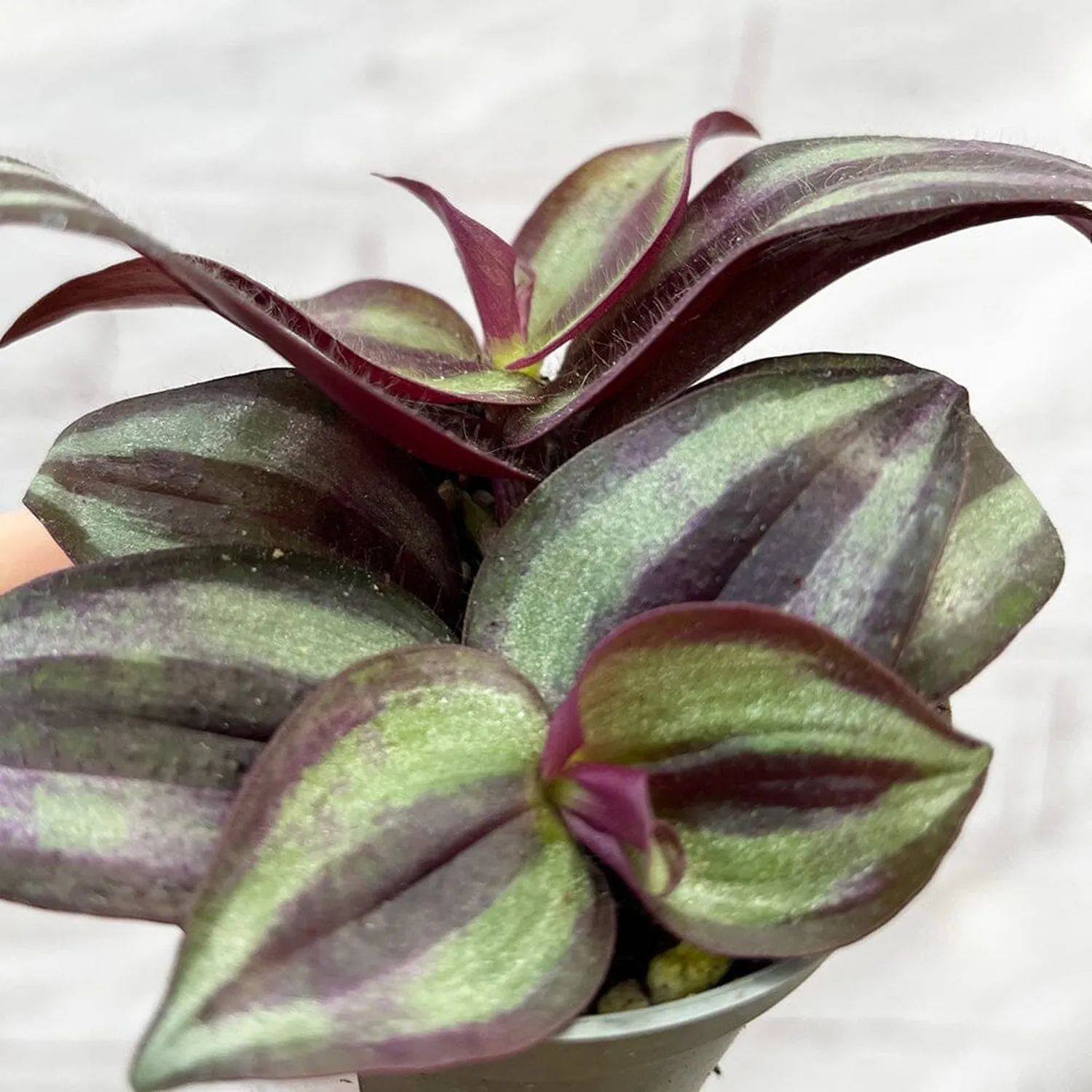
Tradescantia Zebrina House Plant 6cm Pot
Tradescantia zebrina, commonly known as the Wandering Jew, Inch Plant, or Zebra Plant, is a vibrant tropical perennial admired for its boldly striped foliage and cascading growth habit. A native of Mexico and Central America, this fast-growing species from the Commelinaceae family has become a houseplant favourite for its stunning colouration and forgiving nature.
The trailing stems are adorned with elliptical leaves that shimmer with iridescent stripes of silver, green, and purple, giving the plant its signature zebra-like pattern. The undersides of the leaves are a deep magenta, creating a striking contrast when viewed from below. As it grows, Tradescantia zebrina forms dense, trailing mats of foliage that spill elegantly from hanging baskets or creep along surfaces, adding instant tropical vibrancy to any space.
Colourful, hardy, and effortlessly decorative, Tradescantia zebrina is the perfect choice for plant lovers seeking dramatic texture and colour in an easy-care package.
Tradescantia zebrina – Care Guide
Light
Thrives in bright, indirect light. Ample brightness keeps the foliage vibrant and maintains the purple and silver striping. In lower light, the colours may fade, and the plant may become leggy. Avoid direct midday sun, which can scorch the leaves, though gentle morning or late-afternoon sun enhances the iridescence.
Watering
Keep the soil lightly moist but not soggy. Water when the top 2–3 cm of soil feels dry to the touch. Overwatering may cause root rot, while underwatering can lead to dry, crispy leaves. During winter, reduce watering and allow the soil to dry slightly more between waterings.
Temperature and Humidity
-
Temperature: Prefers warmth between 18–28 °C; avoid temperatures below 12 °C.
-
Humidity: Tolerates average indoor humidity (40–60%) but appreciates slightly higher levels. Misting or using a humidifier helps maintain lush foliage, especially in heated homes.
Soil and Potting
Use a well-draining, lightweight potting mix, such as a blend of standard compost, perlite, and coco coir. This provides aeration while retaining gentle moisture. Repot annually or every 1–2 years in spring to refresh the substrate and encourage new growth.
Feeding
Feed every 4–6 weeks in spring and summer with a diluted, balanced fertiliser to maintain strong growth and vibrant colours. Over-fertilising can cause salt build-up and leaf burn, so use sparingly. Stop feeding in autumn and winter when growth slows.
Pruning and Maintenance
Prune regularly to maintain a compact, bushy shape and encourage branching. Pinch back long vines to promote fuller growth and propagate easily from cuttings. Remove older or leggy stems as needed. Wipe leaves occasionally to maintain their glossy finish and prevent dust accumulation.
Growth and Maturity
A fast grower, Tradescantia zebrina can trail up to 1 metre or more indoors. It’s ideal for hanging baskets, wall planters, or as a ground cover in warm climates. With consistent care, it produces small, three-petaled pink to lavender flowers in spring and summer — a subtle complement to its striking foliage.
Common Issues
-
Faded colour: Insufficient light.
-
Leggy stems: Lack of pruning or low light.
-
Yellow leaves: Overwatering or poor drainage.
-
Pests: Occasionally spider mites or aphids; treat with neem oil or insecticidal soap.
Background and Benefits
Tradescantia zebrina originates from the tropical rainforests of Mexico and Guatemala, where it grows as a creeping groundcover in bright, humid environments. The genus name Tradescantia honours English botanist John Tradescant, while “zebrina” refers to its distinctive zebra-like striping.
In cultivation, it has become a beloved ornamental plant due to its resilience, vivid colouration, and ease of propagation. It’s a perfect choice for beginners and seasoned collectors alike, thriving both indoors and outdoors in warm, frost-free conditions. Like many tropical foliage plants, it also contributes to air purification, improving indoor air quality while providing a splash of vibrant colour.
Quick Care Summary
Light: Bright, indirect light; tolerates some gentle sun
Water: Keep soil lightly moist; allow top 2–3 cm to dry before watering
Temperature: 18–28 °C; avoid below 12 °C
Humidity: Moderate (40–60%)
Soil: Well-draining, lightweight mix – compost, perlite, coco coir
Feed: Every 4–6 weeks in spring/summer
Growth: Trailing habit, up to 1 m; purple, green, and silver-striped leaves with magenta undersides
⚠️ Toxicity note: Mildly toxic if ingested and may cause skin irritation. Keep away from pets and children.
Styling Tip
Display Tradescantia zebrina in a hanging planter, wall-mounted pot, or trailing over a tall shelf to showcase its cascading, colourful vines. It pairs beautifully with soft green tropicals such as Philodendron hederaceum ‘Scandens’ or pale-toned species like Syngonium ‘White Butterfly’. For a dramatic statement, plant it in a contrasting pot — black, white, or gold — to highlight its purple undertones. Whether styled as a single specimen or part of a mixed foliage arrangement, it brings a lively, dynamic texture to any indoor space.
Product Information
Product Information
Shipping & Returns
Shipping & Returns
Description
Tradescantia zebrina, commonly known as the Wandering Jew, Inch Plant, or Zebra Plant, is a vibrant tropical perennial admired for its boldly striped foliage and cascading growth habit. A native of Mexico and Central America, this fast-growing species from the Commelinaceae family has become a houseplant favourite for its stunning colouration and forgiving nature.
The trailing stems are adorned with elliptical leaves that shimmer with iridescent stripes of silver, green, and purple, giving the plant its signature zebra-like pattern. The undersides of the leaves are a deep magenta, creating a striking contrast when viewed from below. As it grows, Tradescantia zebrina forms dense, trailing mats of foliage that spill elegantly from hanging baskets or creep along surfaces, adding instant tropical vibrancy to any space.
Colourful, hardy, and effortlessly decorative, Tradescantia zebrina is the perfect choice for plant lovers seeking dramatic texture and colour in an easy-care package.
Tradescantia zebrina – Care Guide
Light
Thrives in bright, indirect light. Ample brightness keeps the foliage vibrant and maintains the purple and silver striping. In lower light, the colours may fade, and the plant may become leggy. Avoid direct midday sun, which can scorch the leaves, though gentle morning or late-afternoon sun enhances the iridescence.
Watering
Keep the soil lightly moist but not soggy. Water when the top 2–3 cm of soil feels dry to the touch. Overwatering may cause root rot, while underwatering can lead to dry, crispy leaves. During winter, reduce watering and allow the soil to dry slightly more between waterings.
Temperature and Humidity
-
Temperature: Prefers warmth between 18–28 °C; avoid temperatures below 12 °C.
-
Humidity: Tolerates average indoor humidity (40–60%) but appreciates slightly higher levels. Misting or using a humidifier helps maintain lush foliage, especially in heated homes.
Soil and Potting
Use a well-draining, lightweight potting mix, such as a blend of standard compost, perlite, and coco coir. This provides aeration while retaining gentle moisture. Repot annually or every 1–2 years in spring to refresh the substrate and encourage new growth.
Feeding
Feed every 4–6 weeks in spring and summer with a diluted, balanced fertiliser to maintain strong growth and vibrant colours. Over-fertilising can cause salt build-up and leaf burn, so use sparingly. Stop feeding in autumn and winter when growth slows.
Pruning and Maintenance
Prune regularly to maintain a compact, bushy shape and encourage branching. Pinch back long vines to promote fuller growth and propagate easily from cuttings. Remove older or leggy stems as needed. Wipe leaves occasionally to maintain their glossy finish and prevent dust accumulation.
Growth and Maturity
A fast grower, Tradescantia zebrina can trail up to 1 metre or more indoors. It’s ideal for hanging baskets, wall planters, or as a ground cover in warm climates. With consistent care, it produces small, three-petaled pink to lavender flowers in spring and summer — a subtle complement to its striking foliage.
Common Issues
-
Faded colour: Insufficient light.
-
Leggy stems: Lack of pruning or low light.
-
Yellow leaves: Overwatering or poor drainage.
-
Pests: Occasionally spider mites or aphids; treat with neem oil or insecticidal soap.
Background and Benefits
Tradescantia zebrina originates from the tropical rainforests of Mexico and Guatemala, where it grows as a creeping groundcover in bright, humid environments. The genus name Tradescantia honours English botanist John Tradescant, while “zebrina” refers to its distinctive zebra-like striping.
In cultivation, it has become a beloved ornamental plant due to its resilience, vivid colouration, and ease of propagation. It’s a perfect choice for beginners and seasoned collectors alike, thriving both indoors and outdoors in warm, frost-free conditions. Like many tropical foliage plants, it also contributes to air purification, improving indoor air quality while providing a splash of vibrant colour.
Quick Care Summary
Light: Bright, indirect light; tolerates some gentle sun
Water: Keep soil lightly moist; allow top 2–3 cm to dry before watering
Temperature: 18–28 °C; avoid below 12 °C
Humidity: Moderate (40–60%)
Soil: Well-draining, lightweight mix – compost, perlite, coco coir
Feed: Every 4–6 weeks in spring/summer
Growth: Trailing habit, up to 1 m; purple, green, and silver-striped leaves with magenta undersides
⚠️ Toxicity note: Mildly toxic if ingested and may cause skin irritation. Keep away from pets and children.
Styling Tip
Display Tradescantia zebrina in a hanging planter, wall-mounted pot, or trailing over a tall shelf to showcase its cascading, colourful vines. It pairs beautifully with soft green tropicals such as Philodendron hederaceum ‘Scandens’ or pale-toned species like Syngonium ‘White Butterfly’. For a dramatic statement, plant it in a contrasting pot — black, white, or gold — to highlight its purple undertones. Whether styled as a single specimen or part of a mixed foliage arrangement, it brings a lively, dynamic texture to any indoor space.