

Variegated Ceropegia Woodii String of Hearts House Plant 6cm Pot
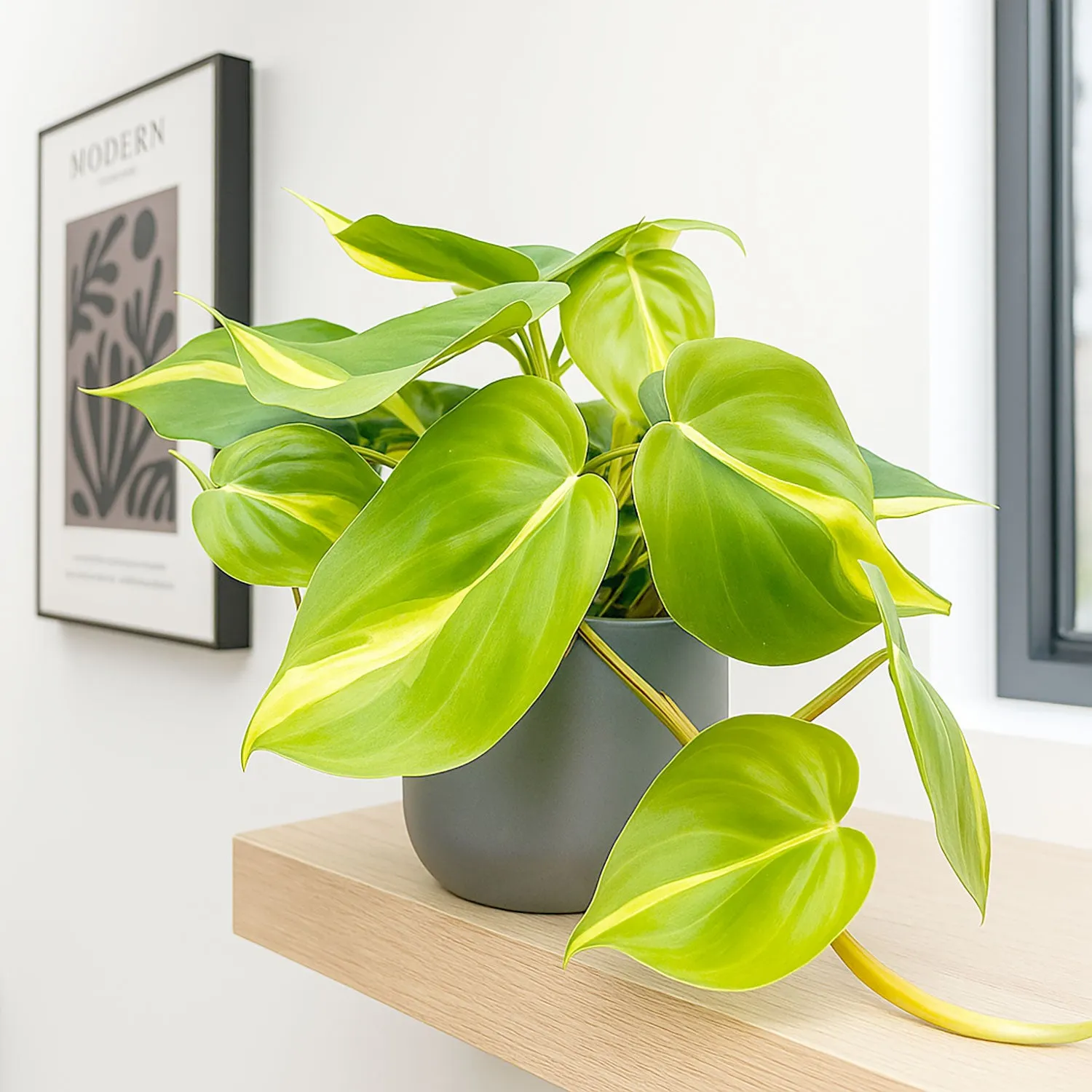
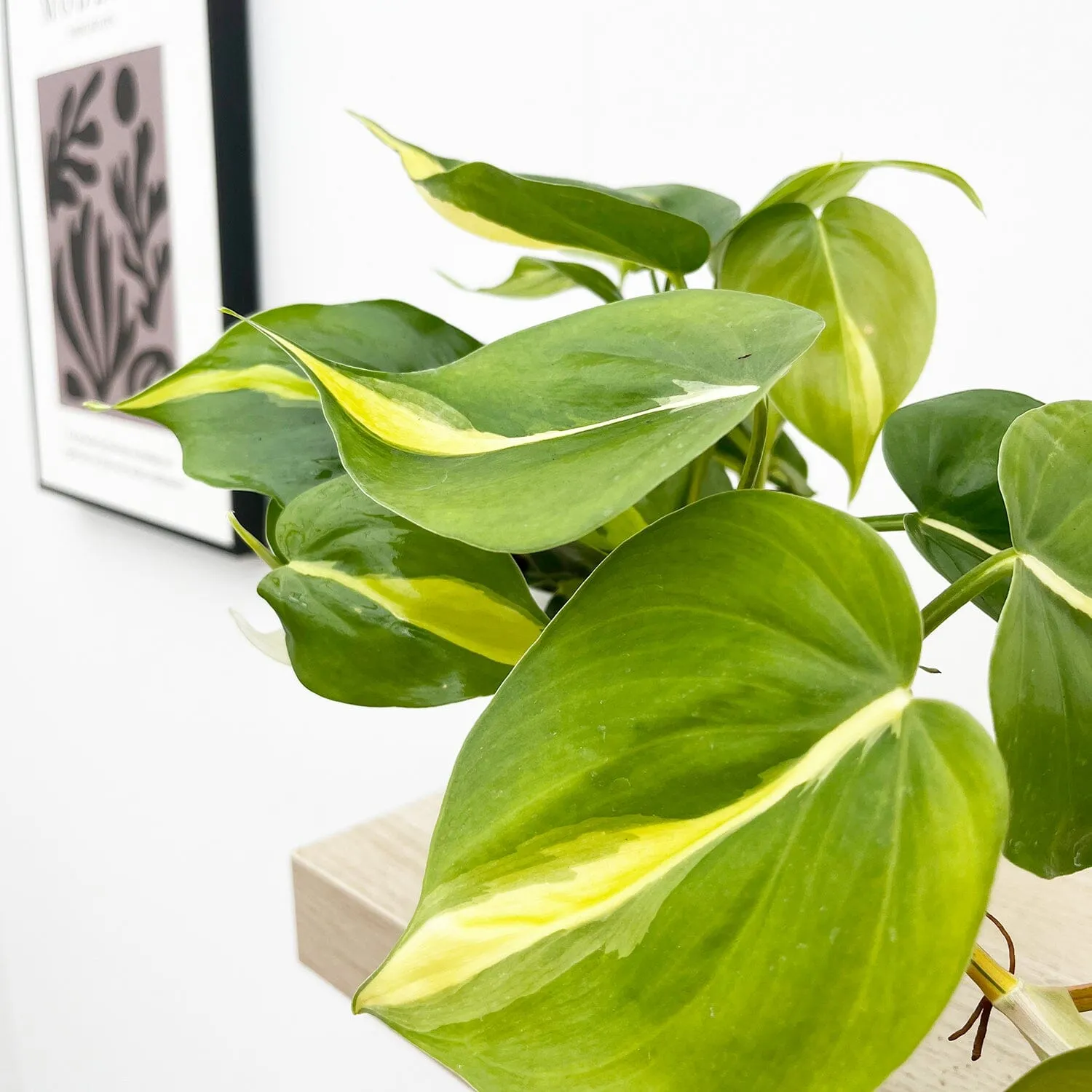
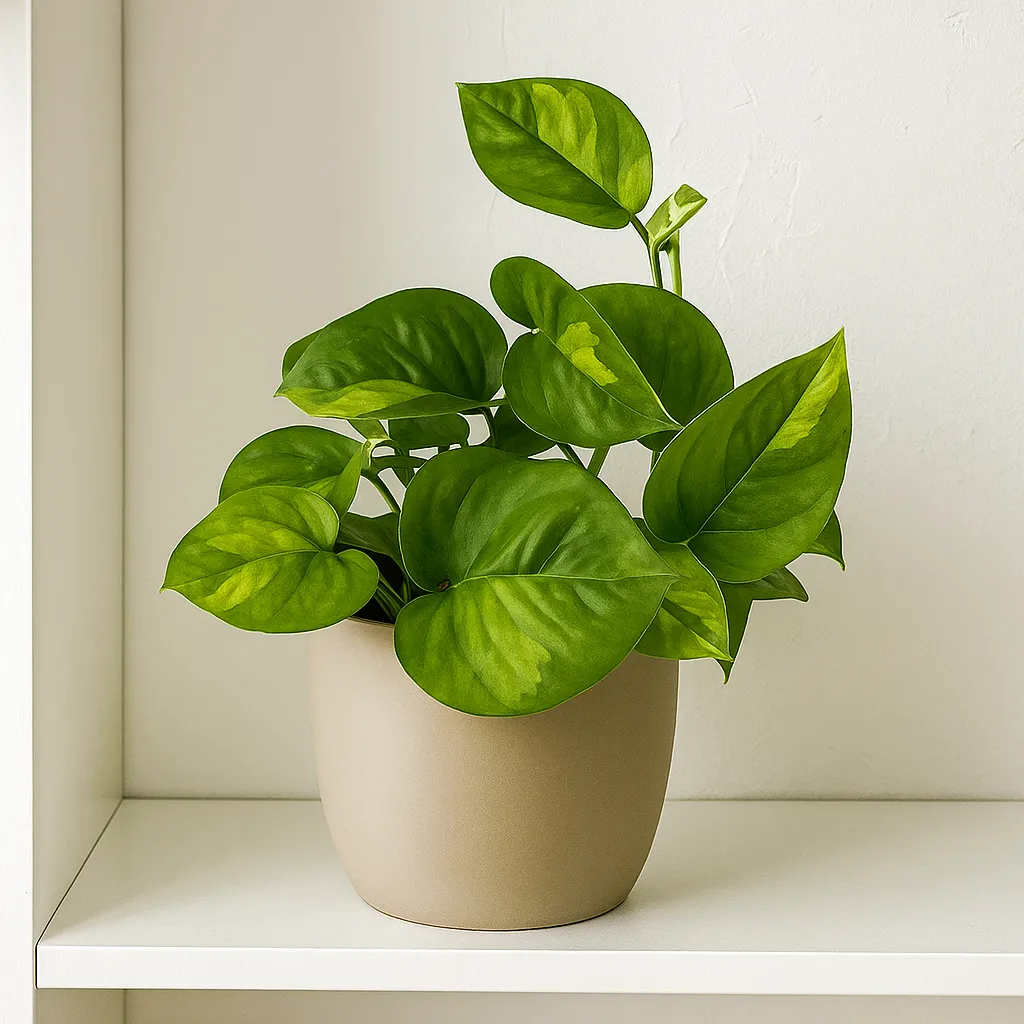
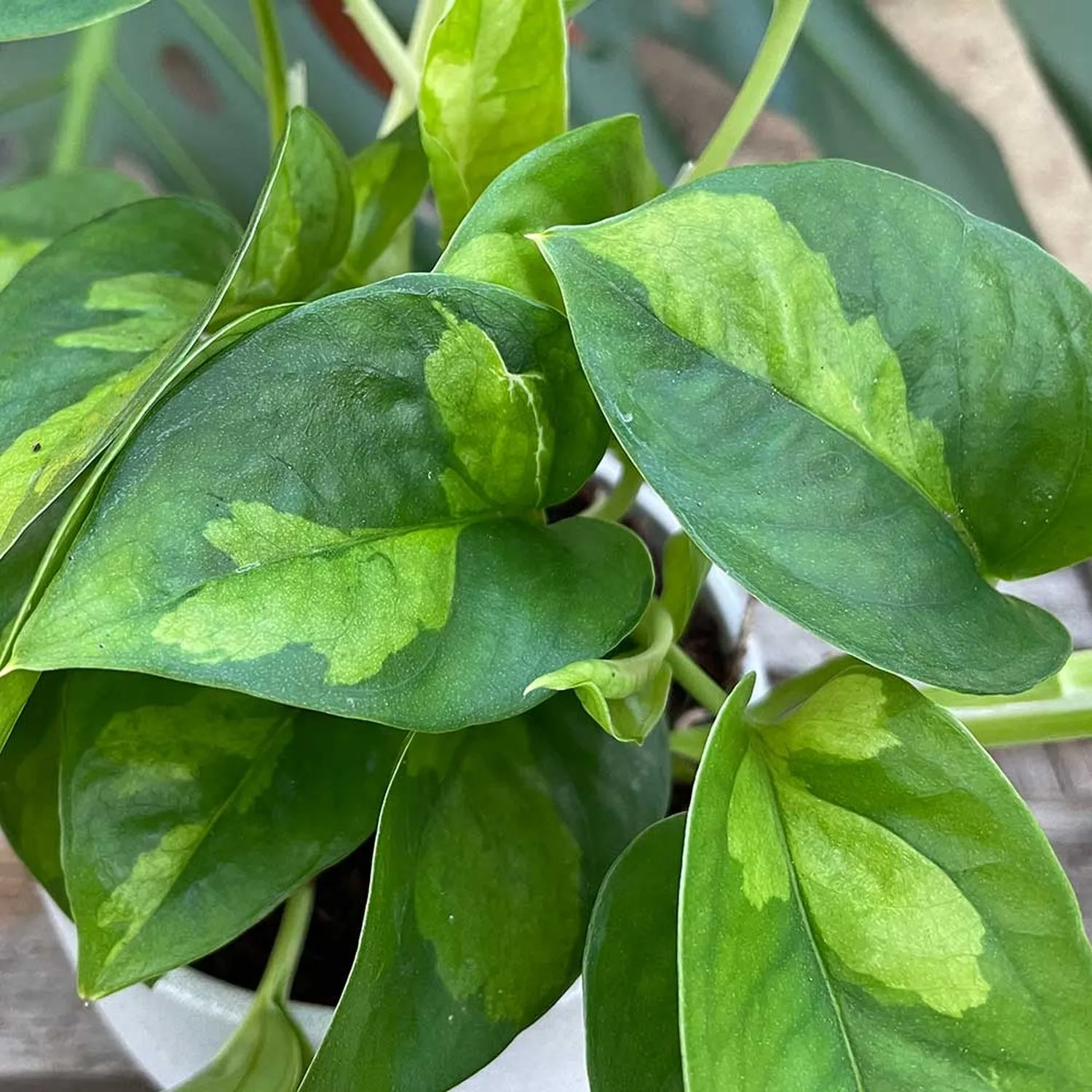
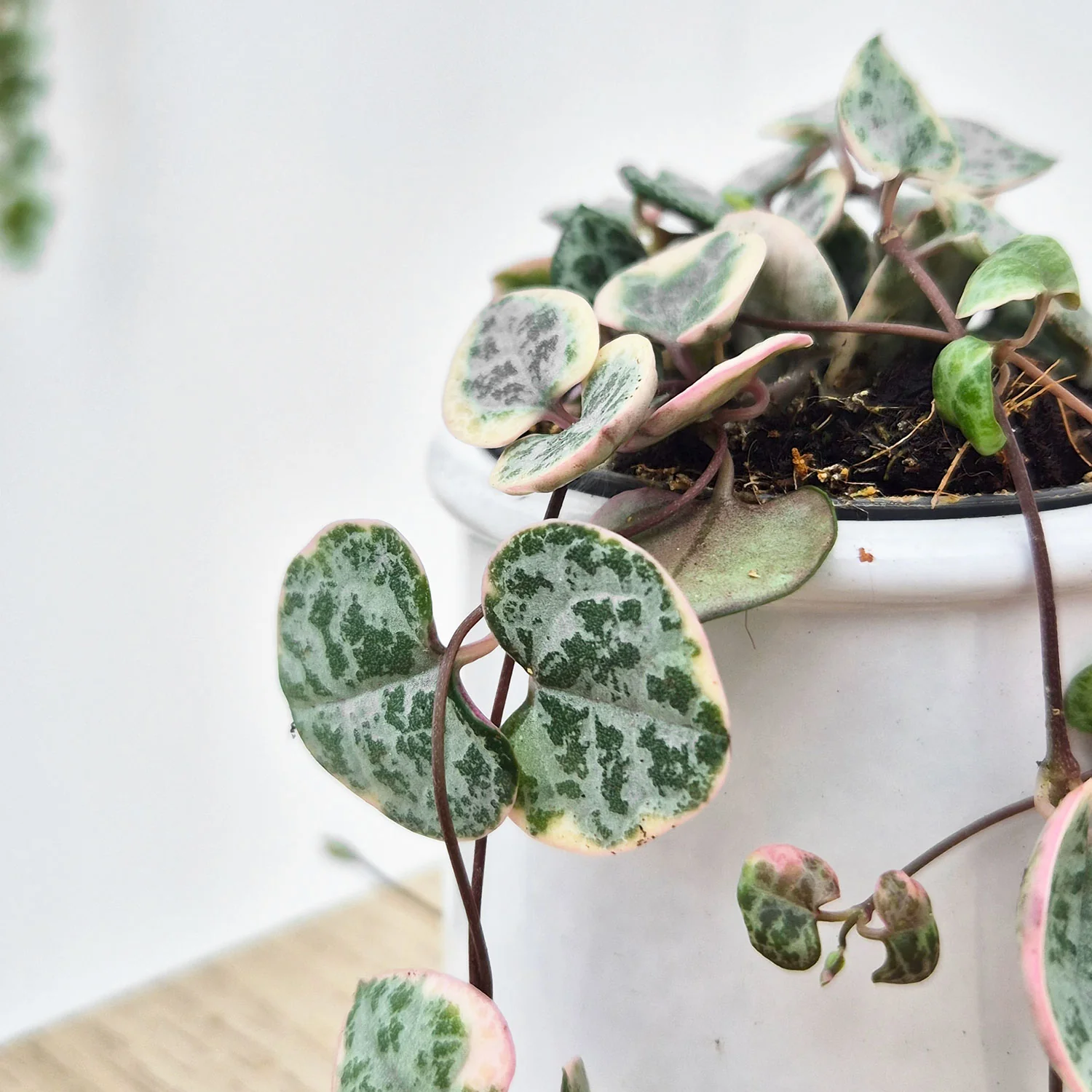
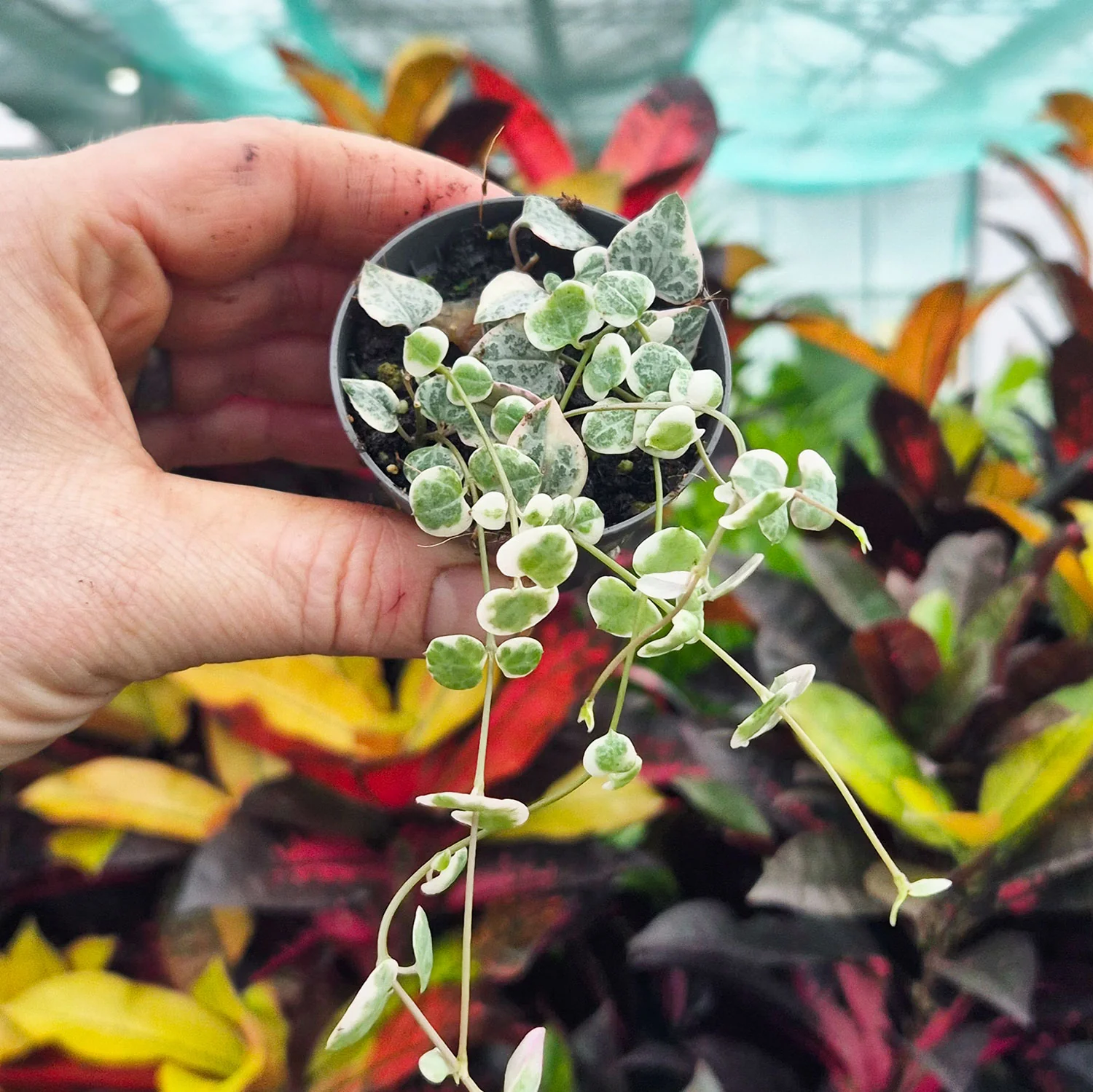
Ceropegia woodii ‘Variegata’, often called the Variegated String of Hearts, is a beloved trailing succulent prized for its delicate heart-shaped leaves, pastel variegation, and cascading form. Native to the rocky hills of southern Africa, this rare cultivar of Ceropegia woodii combines the species’ elegant, vining habit with beautifully marbled foliage in shades of green, cream, pink, and silver.
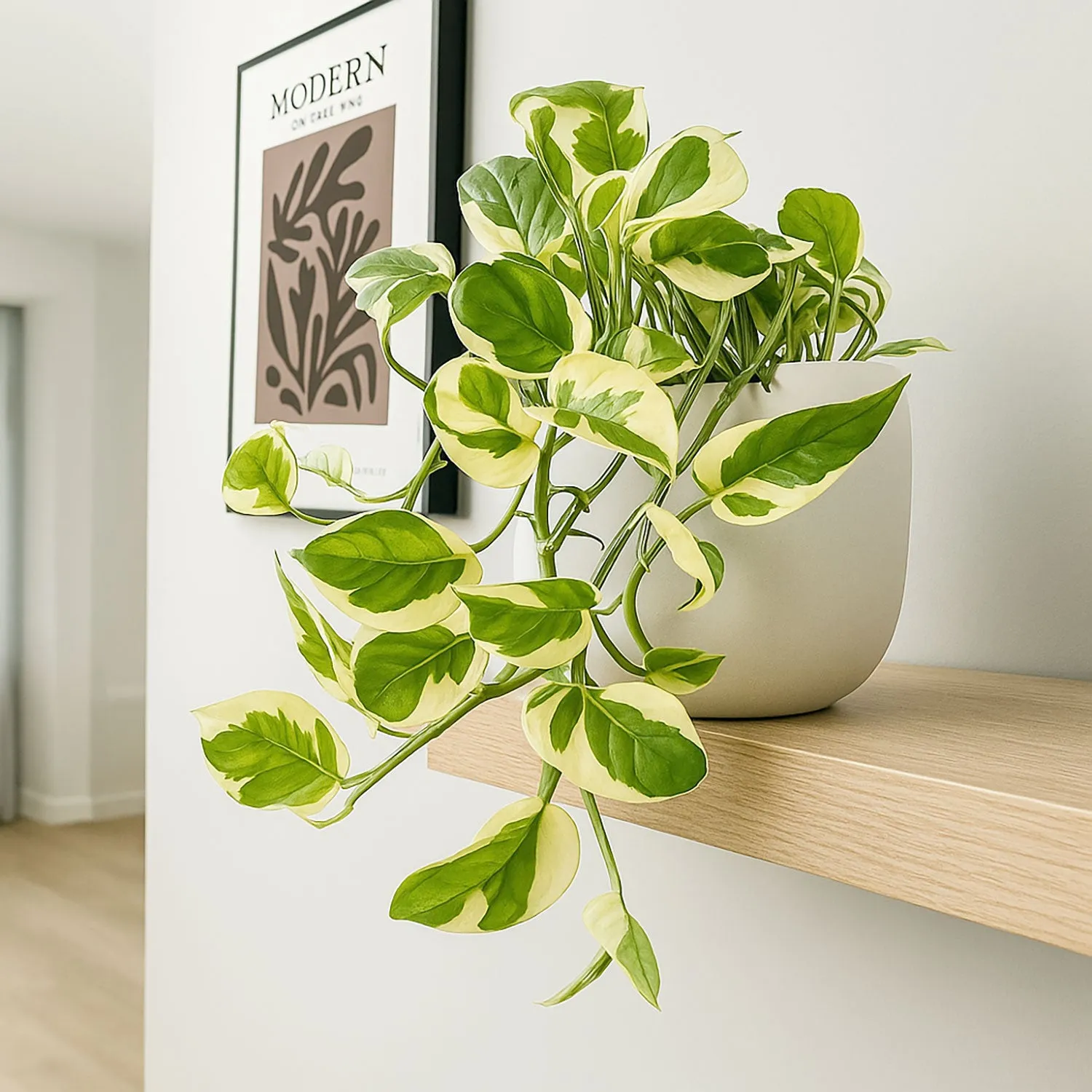
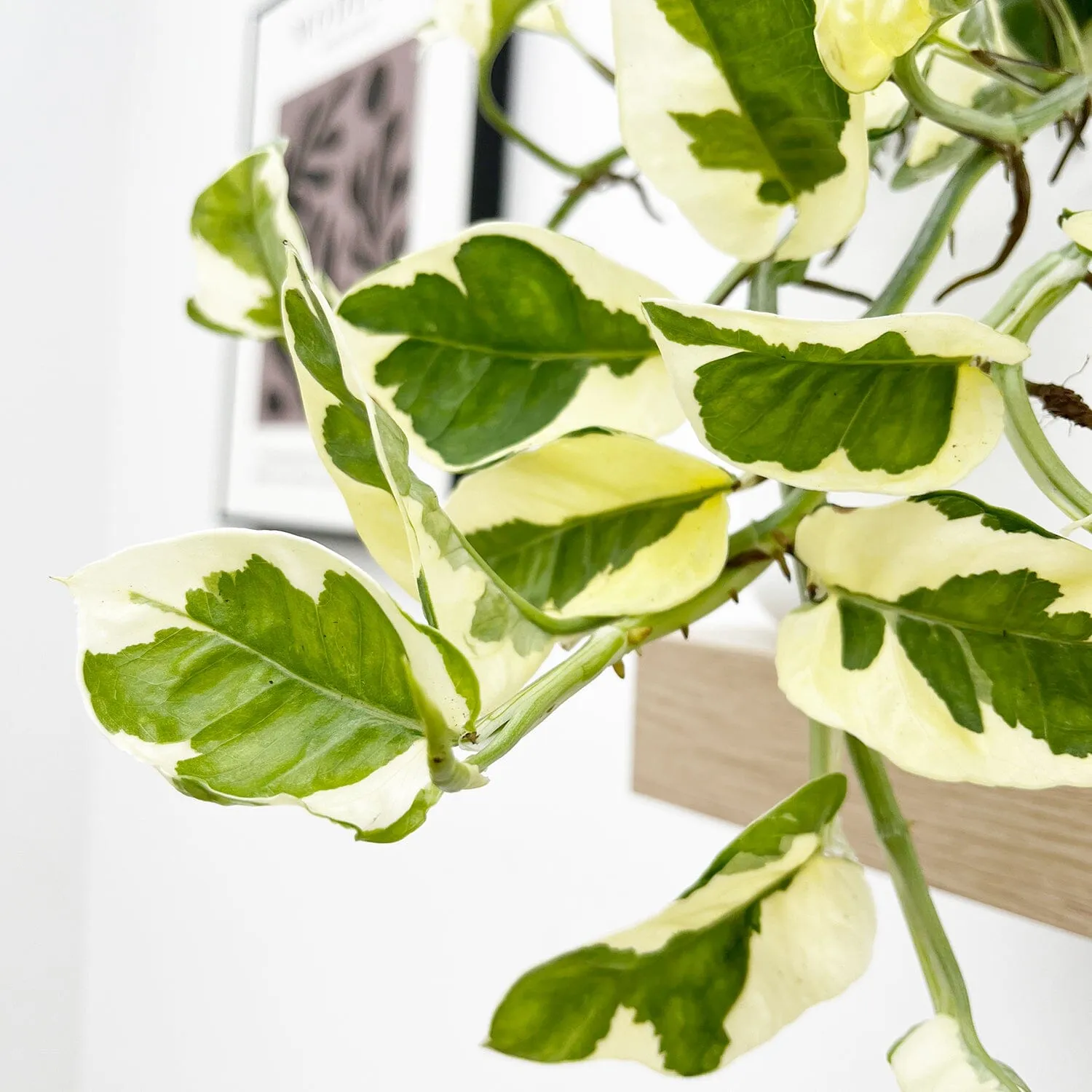
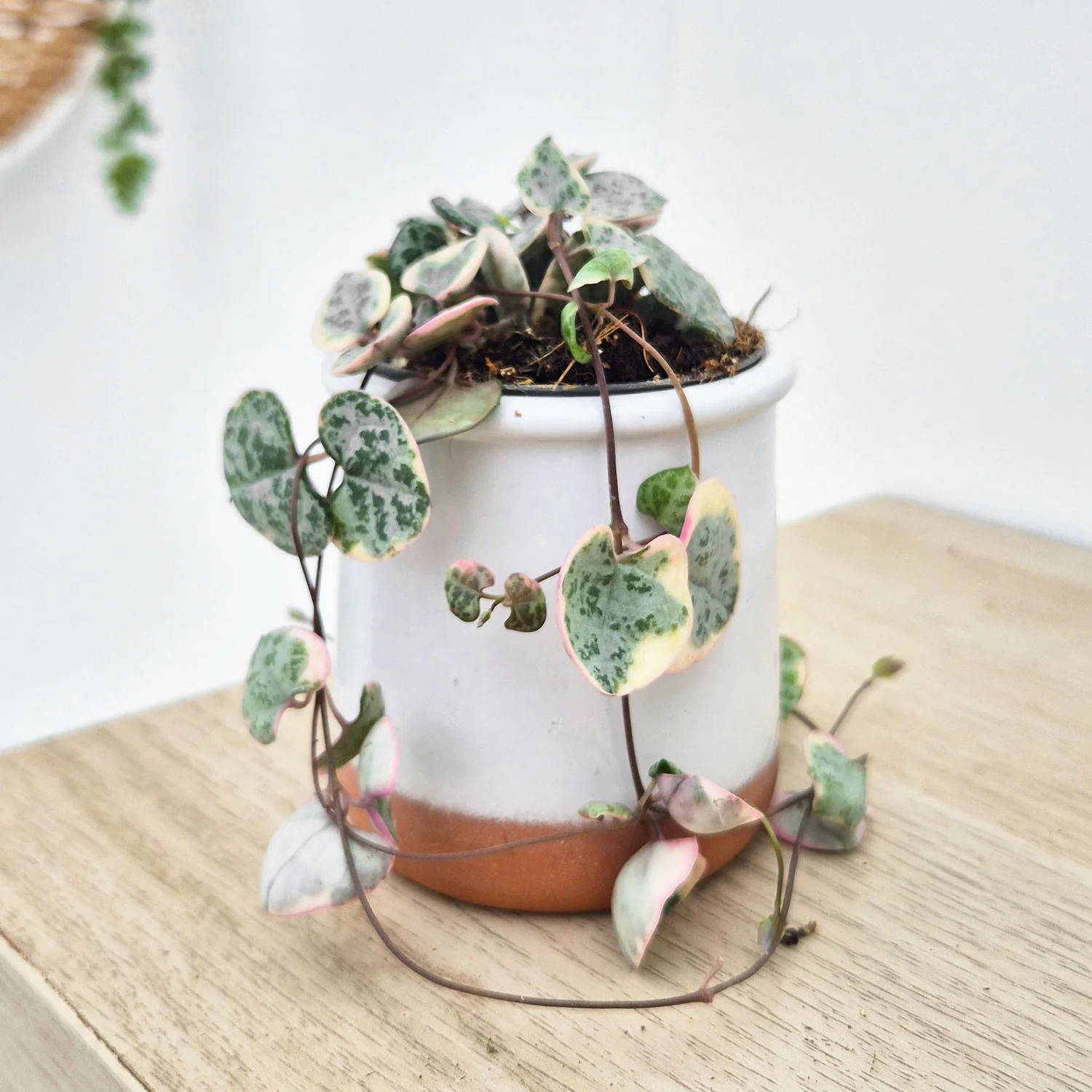
The small, heart-shaped leaves feature a soft, mottled pattern on the upper surface and deep mauve or purple undersides. When exposed to bright light, the creamy margins develop a blush of rosy pink, giving the plant a whimsical, romantic quality. Its fine, wiry vines can grow over a metre long, creating an ethereal curtain of foliage perfect for hanging planters or shelves.
Graceful, resilient, and irresistibly pretty, Ceropegia woodii ‘Variegata’ is a collector’s favourite — an exquisite blend of subtle colour and cascading form that adds charm to any space.
Ceropegia woodii ‘Variegata’ – Care Guide
Light
Thrives in bright, indirect light or gentle morning sun. The variegation develops best with strong but filtered light. Too little light can cause loss of colour and leggy growth, while too much direct sun may scorch the pale leaf margins.
Watering
Allow the soil to dry out almost completely between waterings. Water thoroughly and let all excess moisture drain away. Ceropegia woodii ‘Variegata’ stores water in its leaves and tuberous roots, so overwatering is the most common cause of decline. In winter, reduce watering frequency significantly.
Temperature and Humidity
-
Temperature: Prefers warm, stable conditions between 18–28 °C; protect from cold draughts and avoid below 12 °C.
-
Humidity: Tolerates average indoor humidity but appreciates occasional misting in very dry environments. Ensure good airflow to prevent fungal issues.
Soil and Potting
Use a fast-draining, gritty succulent mix — cactus soil blended with perlite or pumice works perfectly. Good drainage is essential to prevent rot. Terracotta pots are ideal for natural moisture regulation. Repot every 2–3 years in spring to refresh the soil and check root health.
Feeding
Feed every 6–8 weeks during the growing season (spring to early autumn) with a diluted cactus or succulent fertiliser. Do not fertilise in winter when the plant is resting.
Pruning and Maintenance
Trim long or tangled vines to encourage fuller growth and to control the plant’s cascading length. The cuttings root easily in water or directly in soil, making propagation simple. Remove any shrivelled or yellow leaves to keep the plant looking neat.
Growth and Maturity
A moderate to fast grower, Ceropegia woodii ‘Variegata’ can produce vines up to 1–1.5 metres long in ideal conditions. With age, it forms small tubers along the vines and at the base, which can be divided for propagation. It may also produce curious, tubular pink-purple flowers that resemble tiny lanterns, adding another layer of charm.
Common Issues
-
Yellow, mushy leaves: Overwatering.
-
Faded variegation: Insufficient light.
-
Wrinkled leaves: Underwatering or very dry air.
-
Pests: Occasionally mealybugs or aphids; treat with neem oil or insecticidal soap.
Background and Benefits
*Ceropegia woodii*, first described in 1881, is native to the rocky slopes and cliffs of southern Africa, where it trails and drapes over stones or climbs through surrounding vegetation. The ‘Variegata’ form, discovered through cultivation, has become one of the most coveted trailing succulents thanks to its cream-pink marbling and compact habit.
As a semi-succulent, it is both durable and forgiving, making it suitable for beginners while still holding a place of honour in serious collections. In addition to its beauty, it helps purify the air and brings a sense of calm, organic movement to modern interiors.
Quick Care Summary
Light: Bright, indirect light; some gentle morning sun ideal
Water: Let soil dry almost completely between watering
Temperature: 18–28 °C; avoid below 12 °C
Humidity: Average indoor humidity; ensure good airflow
Soil: Gritty, well-draining mix – cactus soil, perlite, pumice
Feed: Every 6–8 weeks in spring/summer with diluted fertiliser
Growth: Trailing vine, 1–1.5 m; heart-shaped leaves in green, cream, and pink variegation
⚠️ Toxicity note: Mildly toxic if ingested; keep out of reach of pets and children.
Styling Tip
Display Ceropegia woodii ‘Variegata’ in a hanging planter or trailing from a tall shelf, allowing the vines to cascade freely. Its pastel tones pair beautifully with darker green or silver-leaved plants such as Scindapsus pictus ‘Silver Hero’ or Hoya krohniana ‘Black Leaves’. For a modern tropical look, place it in a minimalist ceramic or glass planter and let its delicate, heart-shaped foliage soften the space with cascading colour and movement.
Product Information
Product Information
Shipping & Returns
Shipping & Returns
Description
Ceropegia woodii ‘Variegata’, often called the Variegated String of Hearts, is a beloved trailing succulent prized for its delicate heart-shaped leaves, pastel variegation, and cascading form. Native to the rocky hills of southern Africa, this rare cultivar of Ceropegia woodii combines the species’ elegant, vining habit with beautifully marbled foliage in shades of green, cream, pink, and silver.
The small, heart-shaped leaves feature a soft, mottled pattern on the upper surface and deep mauve or purple undersides. When exposed to bright light, the creamy margins develop a blush of rosy pink, giving the plant a whimsical, romantic quality. Its fine, wiry vines can grow over a metre long, creating an ethereal curtain of foliage perfect for hanging planters or shelves.
Graceful, resilient, and irresistibly pretty, Ceropegia woodii ‘Variegata’ is a collector’s favourite — an exquisite blend of subtle colour and cascading form that adds charm to any space.
Ceropegia woodii ‘Variegata’ – Care Guide
Light
Thrives in bright, indirect light or gentle morning sun. The variegation develops best with strong but filtered light. Too little light can cause loss of colour and leggy growth, while too much direct sun may scorch the pale leaf margins.
Watering
Allow the soil to dry out almost completely between waterings. Water thoroughly and let all excess moisture drain away. Ceropegia woodii ‘Variegata’ stores water in its leaves and tuberous roots, so overwatering is the most common cause of decline. In winter, reduce watering frequency significantly.
Temperature and Humidity
-
Temperature: Prefers warm, stable conditions between 18–28 °C; protect from cold draughts and avoid below 12 °C.
-
Humidity: Tolerates average indoor humidity but appreciates occasional misting in very dry environments. Ensure good airflow to prevent fungal issues.
Soil and Potting
Use a fast-draining, gritty succulent mix — cactus soil blended with perlite or pumice works perfectly. Good drainage is essential to prevent rot. Terracotta pots are ideal for natural moisture regulation. Repot every 2–3 years in spring to refresh the soil and check root health.
Feeding
Feed every 6–8 weeks during the growing season (spring to early autumn) with a diluted cactus or succulent fertiliser. Do not fertilise in winter when the plant is resting.
Pruning and Maintenance
Trim long or tangled vines to encourage fuller growth and to control the plant’s cascading length. The cuttings root easily in water or directly in soil, making propagation simple. Remove any shrivelled or yellow leaves to keep the plant looking neat.
Growth and Maturity
A moderate to fast grower, Ceropegia woodii ‘Variegata’ can produce vines up to 1–1.5 metres long in ideal conditions. With age, it forms small tubers along the vines and at the base, which can be divided for propagation. It may also produce curious, tubular pink-purple flowers that resemble tiny lanterns, adding another layer of charm.
Common Issues
-
Yellow, mushy leaves: Overwatering.
-
Faded variegation: Insufficient light.
-
Wrinkled leaves: Underwatering or very dry air.
-
Pests: Occasionally mealybugs or aphids; treat with neem oil or insecticidal soap.
Background and Benefits
*Ceropegia woodii*, first described in 1881, is native to the rocky slopes and cliffs of southern Africa, where it trails and drapes over stones or climbs through surrounding vegetation. The ‘Variegata’ form, discovered through cultivation, has become one of the most coveted trailing succulents thanks to its cream-pink marbling and compact habit.
As a semi-succulent, it is both durable and forgiving, making it suitable for beginners while still holding a place of honour in serious collections. In addition to its beauty, it helps purify the air and brings a sense of calm, organic movement to modern interiors.
Quick Care Summary
Light: Bright, indirect light; some gentle morning sun ideal
Water: Let soil dry almost completely between watering
Temperature: 18–28 °C; avoid below 12 °C
Humidity: Average indoor humidity; ensure good airflow
Soil: Gritty, well-draining mix – cactus soil, perlite, pumice
Feed: Every 6–8 weeks in spring/summer with diluted fertiliser
Growth: Trailing vine, 1–1.5 m; heart-shaped leaves in green, cream, and pink variegation
⚠️ Toxicity note: Mildly toxic if ingested; keep out of reach of pets and children.
Styling Tip
Display Ceropegia woodii ‘Variegata’ in a hanging planter or trailing from a tall shelf, allowing the vines to cascade freely. Its pastel tones pair beautifully with darker green or silver-leaved plants such as Scindapsus pictus ‘Silver Hero’ or Hoya krohniana ‘Black Leaves’. For a modern tropical look, place it in a minimalist ceramic or glass planter and let its delicate, heart-shaped foliage soften the space with cascading colour and movement.