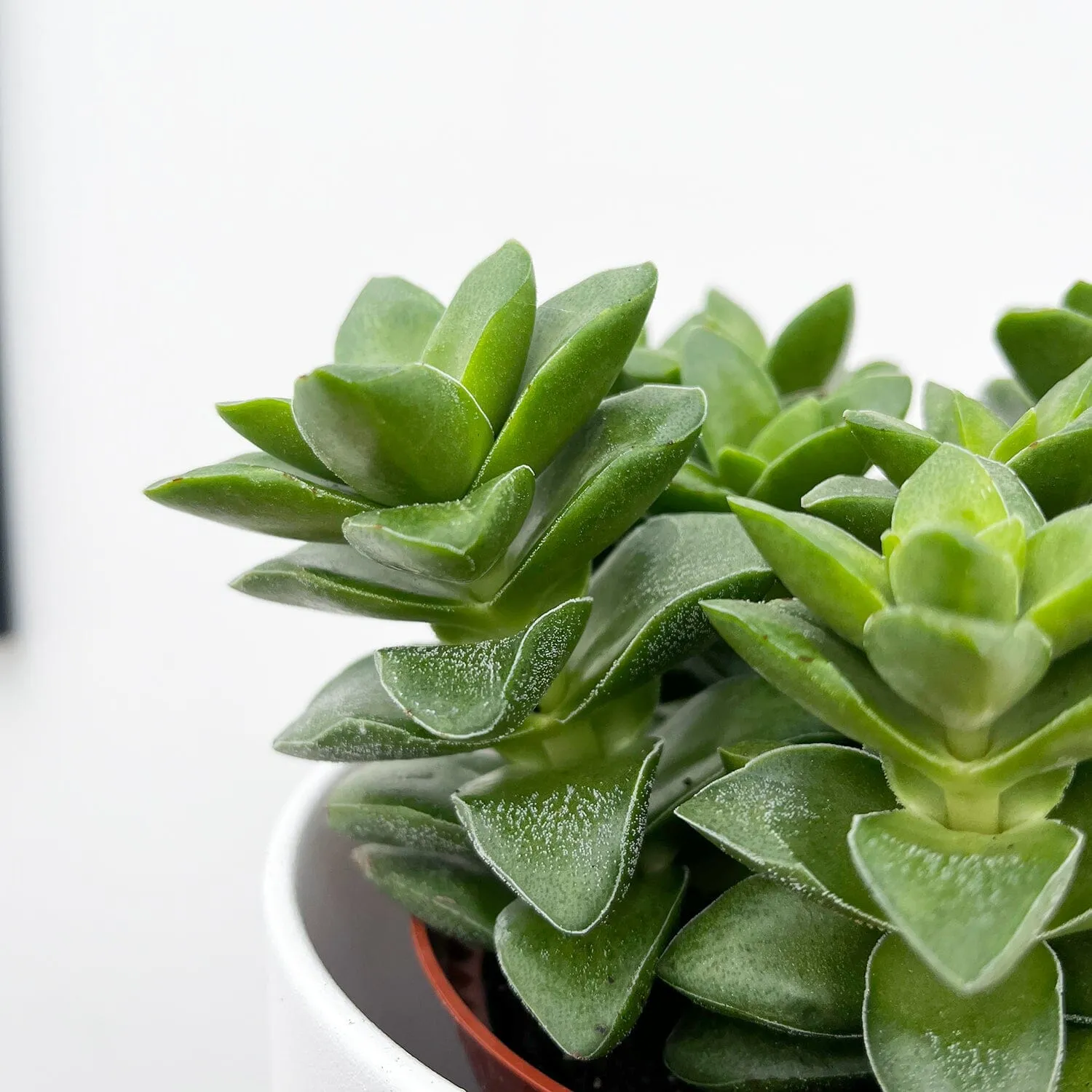
10 - 15cm Crassula Springtime House Plant 9cm Pot
Crassula ‘Springtime’ is a compact, charming succulent hybrid (a cross between Crassula rupestris and Crassula perfoliata var. falcata), celebrated for its dense clusters of pink, fragrant flowers and neat, geometric foliage. A member of the Crassulaceae family, this South African native is perfect for adding texture, colour, and cheer to sunny indoor windowsills, rockeries, or succulent collections.
The plant forms tight rosettes of thick, grey-green, triangular leaves that grow opposite each other along short stems, giving it a tidy, symmetrical shape. In late winter through to spring, it produces clusters of star-shaped blooms in soft pink to rose tones, filling the air with a delicate, sweet fragrance.
Compact, slow-growing, and incredibly easy to care for, Crassula ‘Springtime’ is an ideal succulent for beginners and collectors alike, offering both structural foliage and seasonal floral beauty.
Crassula ‘Springtime’ – Care Guide
Light
Thrives in bright light to full sun. Indoors, place near a sunny south- or west-facing window to encourage flowering and maintain compact growth. Gradually acclimatise to intense sunlight to avoid leaf scorch.
Watering
Water sparingly, allowing the soil to dry out completely between waterings. During the growing season (spring and summer), water every 2–3 weeks depending on temperature. In winter, reduce watering to once a month or less. Overwatering is the most common cause of problems.
Temperature and Humidity
-
Temperature: Prefers warmth, 18–28°C, but can tolerate cooler temperatures down to 10°C. Protect from frost.
-
Humidity: Prefers dry air; no misting required.
Soil and Potting
Use a gritty, well-draining cactus or succulent mix. Add sand, perlite, or pumice to improve drainage. Repot every 2–3 years in spring, using a slightly larger pot if the plant becomes root-bound.
Feeding
Feed once a month in spring and summer with a diluted cactus fertiliser. Do not fertilise during winter dormancy.
Pruning and Maintenance
Remove spent flower stalks after blooming and any dried or damaged leaves at the base. Handle carefully, as the fleshy leaves can detach easily.
Growth and Maturity
A slow-growing succulent, reaching 15–20 cm tall and wide. With time, it may form small clumps of rosettes, producing a fuller and more impressive display.
Common Issues
-
Soft or mushy leaves: Overwatering or poor drainage.
-
Wrinkled leaves: Underwatering or extended drought.
-
Elongated (leggy) growth: Insufficient light.
-
Pests: Occasionally mealybugs or aphids — treat with neem oil or insecticidal soap.
Background and Benefits
Developed as a hybrid in cultivation, Crassula ‘Springtime’ combines the compact structure of Crassula rupestris with the striking floral display of Crassula falcata. Its name reflects its habit of blooming in late winter and spring, signalling the arrival of warmer days.
This plant’s sculptural rosettes and pastel blooms make it a delightful addition to succulent arrangements, alpine troughs, or windowsill gardens. Its low-water needs and high tolerance for neglect make it perfect for busy plant owners or those new to succulents.
✅ Quick Care Summary
-
Light: Bright light to full sun
-
Water: Sparingly; let soil dry completely
-
Temperature: 18–28°C; protect below 10°C
-
Humidity: Low; thrives in dry air
-
Soil: Gritty, free-draining succulent compost
-
Feed: Monthly in spring/summer
-
Growth: Compact rosette, 15–20 cm; grey-green leaves and clusters of pink, fragrant flowers in spring
🌿 Pet-Friendly Note:
Crassula ‘Springtime’ is mildly toxic if ingested, so keep out of reach of pets and children.
🌸 Styling Tip:
Display Crassula ‘Springtime’ in a shallow terracotta pot or alongside other sun-loving succulents like Sedum burrito and Echeveria elegans. Its springtime blooms add a cheerful burst of colour to minimal, modern, or rustic plant displays.
Product Information
Product Information
Shipping & Returns
Shipping & Returns
Description
Crassula ‘Springtime’ is a compact, charming succulent hybrid (a cross between Crassula rupestris and Crassula perfoliata var. falcata), celebrated for its dense clusters of pink, fragrant flowers and neat, geometric foliage. A member of the Crassulaceae family, this South African native is perfect for adding texture, colour, and cheer to sunny indoor windowsills, rockeries, or succulent collections.
The plant forms tight rosettes of thick, grey-green, triangular leaves that grow opposite each other along short stems, giving it a tidy, symmetrical shape. In late winter through to spring, it produces clusters of star-shaped blooms in soft pink to rose tones, filling the air with a delicate, sweet fragrance.
Compact, slow-growing, and incredibly easy to care for, Crassula ‘Springtime’ is an ideal succulent for beginners and collectors alike, offering both structural foliage and seasonal floral beauty.
Crassula ‘Springtime’ – Care Guide
Light
Thrives in bright light to full sun. Indoors, place near a sunny south- or west-facing window to encourage flowering and maintain compact growth. Gradually acclimatise to intense sunlight to avoid leaf scorch.
Watering
Water sparingly, allowing the soil to dry out completely between waterings. During the growing season (spring and summer), water every 2–3 weeks depending on temperature. In winter, reduce watering to once a month or less. Overwatering is the most common cause of problems.
Temperature and Humidity
-
Temperature: Prefers warmth, 18–28°C, but can tolerate cooler temperatures down to 10°C. Protect from frost.
-
Humidity: Prefers dry air; no misting required.
Soil and Potting
Use a gritty, well-draining cactus or succulent mix. Add sand, perlite, or pumice to improve drainage. Repot every 2–3 years in spring, using a slightly larger pot if the plant becomes root-bound.
Feeding
Feed once a month in spring and summer with a diluted cactus fertiliser. Do not fertilise during winter dormancy.
Pruning and Maintenance
Remove spent flower stalks after blooming and any dried or damaged leaves at the base. Handle carefully, as the fleshy leaves can detach easily.
Growth and Maturity
A slow-growing succulent, reaching 15–20 cm tall and wide. With time, it may form small clumps of rosettes, producing a fuller and more impressive display.
Common Issues
-
Soft or mushy leaves: Overwatering or poor drainage.
-
Wrinkled leaves: Underwatering or extended drought.
-
Elongated (leggy) growth: Insufficient light.
-
Pests: Occasionally mealybugs or aphids — treat with neem oil or insecticidal soap.
Background and Benefits
Developed as a hybrid in cultivation, Crassula ‘Springtime’ combines the compact structure of Crassula rupestris with the striking floral display of Crassula falcata. Its name reflects its habit of blooming in late winter and spring, signalling the arrival of warmer days.
This plant’s sculptural rosettes and pastel blooms make it a delightful addition to succulent arrangements, alpine troughs, or windowsill gardens. Its low-water needs and high tolerance for neglect make it perfect for busy plant owners or those new to succulents.
✅ Quick Care Summary
-
Light: Bright light to full sun
-
Water: Sparingly; let soil dry completely
-
Temperature: 18–28°C; protect below 10°C
-
Humidity: Low; thrives in dry air
-
Soil: Gritty, free-draining succulent compost
-
Feed: Monthly in spring/summer
-
Growth: Compact rosette, 15–20 cm; grey-green leaves and clusters of pink, fragrant flowers in spring
🌿 Pet-Friendly Note:
Crassula ‘Springtime’ is mildly toxic if ingested, so keep out of reach of pets and children.
🌸 Styling Tip:
Display Crassula ‘Springtime’ in a shallow terracotta pot or alongside other sun-loving succulents like Sedum burrito and Echeveria elegans. Its springtime blooms add a cheerful burst of colour to minimal, modern, or rustic plant displays.