
Labisia Vietnam 10.5cm Pot House Plant
Labisia sp. ‘Vietnam’ is a rare and exotic jewel plant belonging to the Primulaceae family, native to the humid tropical forests of Southeast Asia. While the genus Labisia is perhaps best known for Labisia pumila, valued in traditional medicine, several ornamental forms are highly prized by collectors for their spectacular foliage.
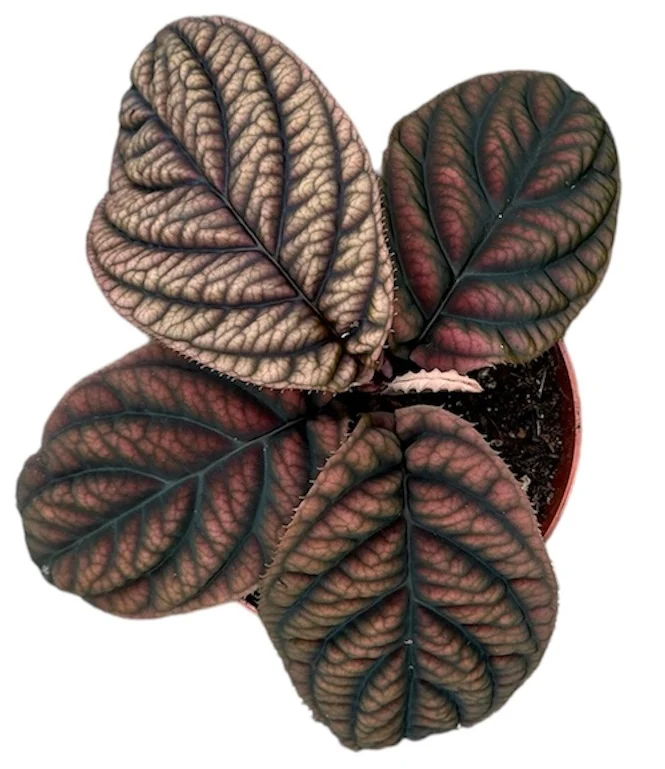
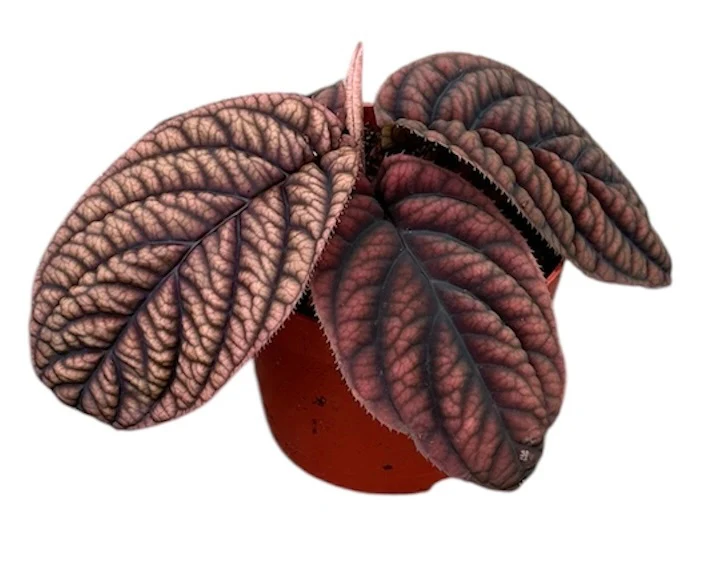
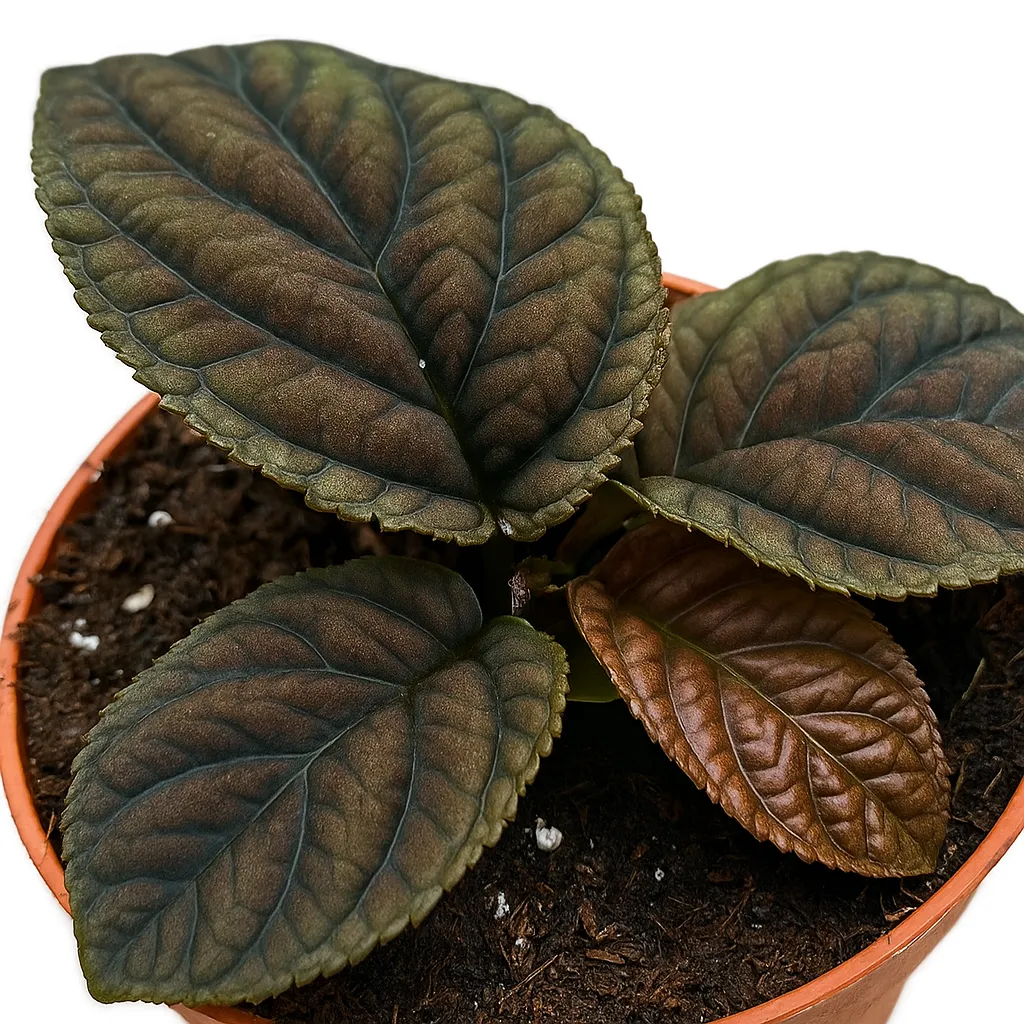
The ‘Vietnam’ form is particularly admired for its bold, velvety leaves, which are typically deep green to almost black, with striking contrasting venation. Depending on the individual specimen, the veins may appear in pale green, cream, or sometimes reddish tones, creating a dramatic pattern against the dark background. The leaves are thick, ovate to elliptic in shape, with a glossy yet slightly textured surface.
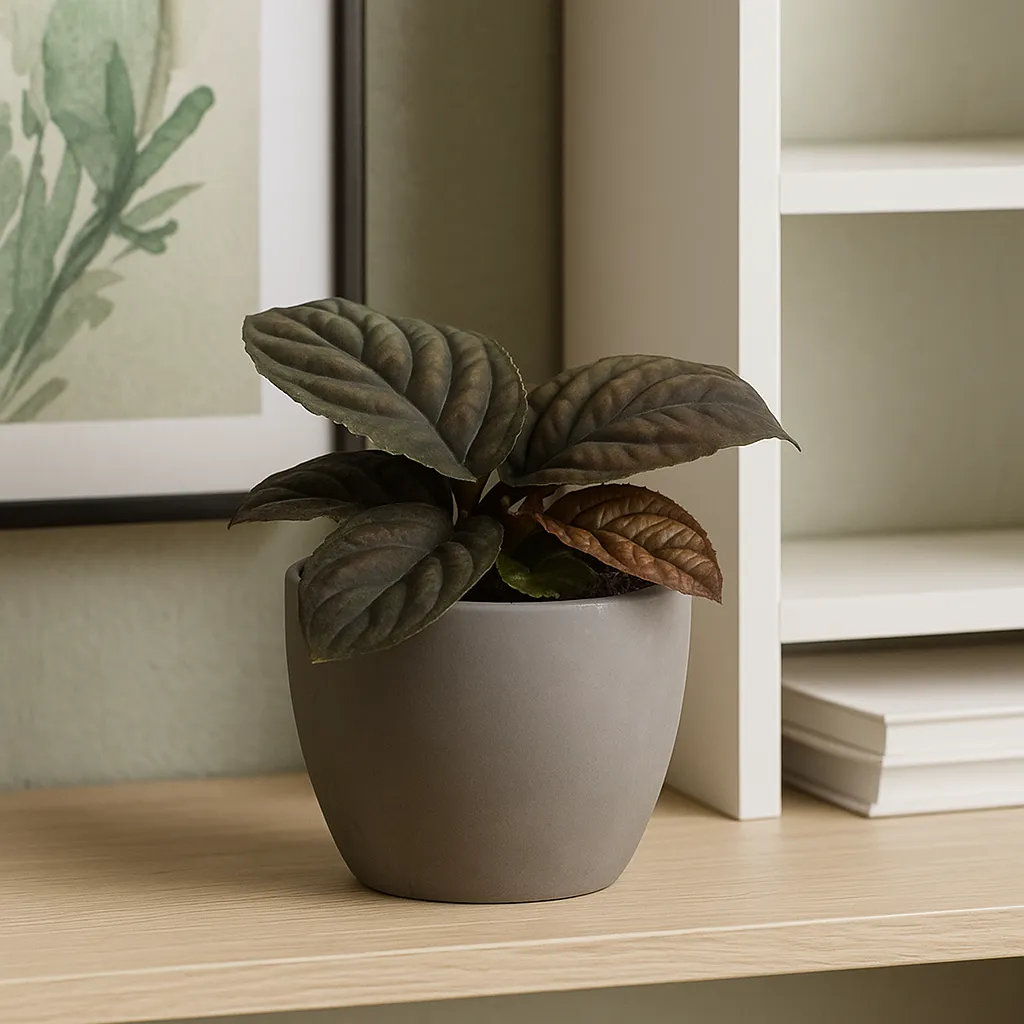
Compact and slow-growing, Labisia sp. ‘Vietnam’ is a jewel plant well suited to terrariums, vivariums, or carefully maintained indoor conditions. Its combination of rare origin, velvety foliage, and striking venation makes it highly desirable among collectors of unusual tropical plants.
Labisia sp. ‘Vietnam’ – Care Guide
Light
Prefers bright, indirect light. Direct sun can scorch its velvety foliage, while low light may dull the venation and slow its already modest growth.
Watering
Keep soil evenly moist but never waterlogged. Water when the top 2–3 cm of substrate feels just slightly dry. Use soft, filtered, or rainwater if possible, as this plant can be sensitive to hard tap water.
Temperature and Humidity
-
Temperature: Thrives in 20–28°C. Avoid exposure below 16°C.
-
Humidity: Requires very high humidity (70–90%). Best grown in a terrarium, greenhouse, or under humidity domes. Low humidity will quickly cause leaf crisping.
Soil and Potting
Grow in a light, free-draining but moisture-retentive substrate – a mix of fine orchid bark, peat-free compost, sphagnum moss, and perlite works well. Ensure excellent aeration around the roots.
Feeding
Feed lightly every 4–6 weeks in spring and summer with a diluted balanced liquid fertiliser. Do not overfeed, as roots are delicate.
Pruning and Maintenance
Remove any old or damaged leaves at the base. Being a slow grower, it requires minimal pruning, though patience is key to appreciating its gradual growth.
Growth and Maturity
Compact, rarely exceeding 15–20 cm in height. Growth is slow but steady under optimal conditions, with new leaves unfurling gradually.
Common Issues
-
Crispy leaf edges: Almost always due to insufficient humidity.
-
Yellowing leaves: Usually caused by overwatering or water quality issues.
-
Pests: Rare, but may attract thrips or spider mites if grown outside a terrarium.
Background and Benefits
Jewel plants like Labisia sp. ‘Vietnam’ are prized primarily for their foliage rather than flowers. Their rarity and the difficulty of cultivating them outside controlled environments make them true collector’s specimens. This particular form, with its velvety, veined leaves, is an outstanding addition to terrarium collections, where it thrives in stable, humid conditions.
✅ Quick Care Summary
-
Light: Bright, indirect; avoid direct sun
-
Water: Keep lightly moist; sensitive to water quality
-
Temperature: 20–28°C; avoid below 16°C
-
Humidity: Very high (70–90%); best in terrariums
-
Soil: Moisture-retentive but airy mix
-
Feed: Light feeding every 4–6 weeks in growth season
-
Growth: Compact, 15–20 cm; velvety green leaves with striking venation
Product Information
Product Information
Shipping & Returns
Shipping & Returns
Description
Labisia sp. ‘Vietnam’ is a rare and exotic jewel plant belonging to the Primulaceae family, native to the humid tropical forests of Southeast Asia. While the genus Labisia is perhaps best known for Labisia pumila, valued in traditional medicine, several ornamental forms are highly prized by collectors for their spectacular foliage.
The ‘Vietnam’ form is particularly admired for its bold, velvety leaves, which are typically deep green to almost black, with striking contrasting venation. Depending on the individual specimen, the veins may appear in pale green, cream, or sometimes reddish tones, creating a dramatic pattern against the dark background. The leaves are thick, ovate to elliptic in shape, with a glossy yet slightly textured surface.
Compact and slow-growing, Labisia sp. ‘Vietnam’ is a jewel plant well suited to terrariums, vivariums, or carefully maintained indoor conditions. Its combination of rare origin, velvety foliage, and striking venation makes it highly desirable among collectors of unusual tropical plants.
Labisia sp. ‘Vietnam’ – Care Guide
Light
Prefers bright, indirect light. Direct sun can scorch its velvety foliage, while low light may dull the venation and slow its already modest growth.
Watering
Keep soil evenly moist but never waterlogged. Water when the top 2–3 cm of substrate feels just slightly dry. Use soft, filtered, or rainwater if possible, as this plant can be sensitive to hard tap water.
Temperature and Humidity
-
Temperature: Thrives in 20–28°C. Avoid exposure below 16°C.
-
Humidity: Requires very high humidity (70–90%). Best grown in a terrarium, greenhouse, or under humidity domes. Low humidity will quickly cause leaf crisping.
Soil and Potting
Grow in a light, free-draining but moisture-retentive substrate – a mix of fine orchid bark, peat-free compost, sphagnum moss, and perlite works well. Ensure excellent aeration around the roots.
Feeding
Feed lightly every 4–6 weeks in spring and summer with a diluted balanced liquid fertiliser. Do not overfeed, as roots are delicate.
Pruning and Maintenance
Remove any old or damaged leaves at the base. Being a slow grower, it requires minimal pruning, though patience is key to appreciating its gradual growth.
Growth and Maturity
Compact, rarely exceeding 15–20 cm in height. Growth is slow but steady under optimal conditions, with new leaves unfurling gradually.
Common Issues
-
Crispy leaf edges: Almost always due to insufficient humidity.
-
Yellowing leaves: Usually caused by overwatering or water quality issues.
-
Pests: Rare, but may attract thrips or spider mites if grown outside a terrarium.
Background and Benefits
Jewel plants like Labisia sp. ‘Vietnam’ are prized primarily for their foliage rather than flowers. Their rarity and the difficulty of cultivating them outside controlled environments make them true collector’s specimens. This particular form, with its velvety, veined leaves, is an outstanding addition to terrarium collections, where it thrives in stable, humid conditions.
✅ Quick Care Summary
-
Light: Bright, indirect; avoid direct sun
-
Water: Keep lightly moist; sensitive to water quality
-
Temperature: 20–28°C; avoid below 16°C
-
Humidity: Very high (70–90%); best in terrariums
-
Soil: Moisture-retentive but airy mix
-
Feed: Light feeding every 4–6 weeks in growth season
-
Growth: Compact, 15–20 cm; velvety green leaves with striking venation