Licuala Grandis Fan Palm House Plant
Licuala grandis, also known as the Ruffled Fan Palm or Vanuatu Fan Palm, is an extraordinary tropical species prized for its unique architectural foliage. Native to Vanuatu and parts of the South Pacific, this slow-growing palm belongs to the Arecaceae family and is admired for its elegance and exotic charm.
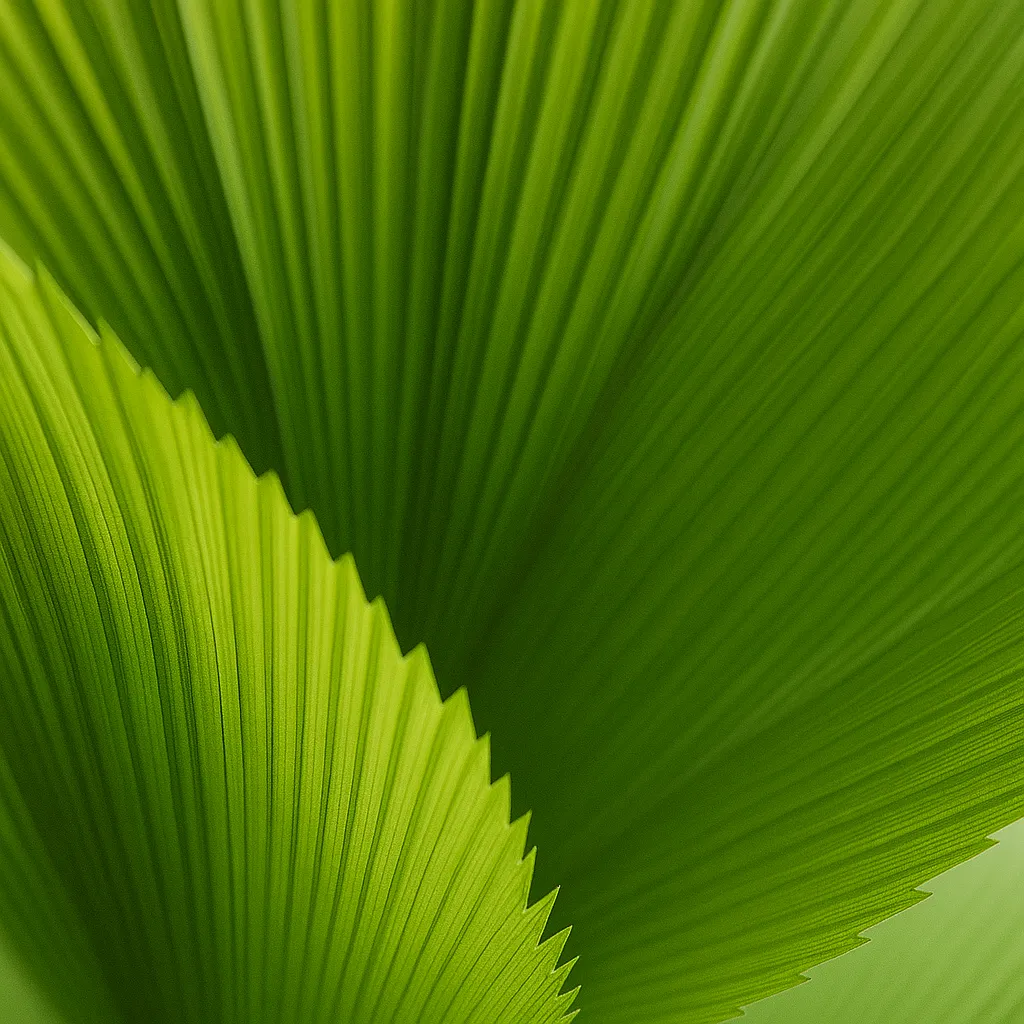
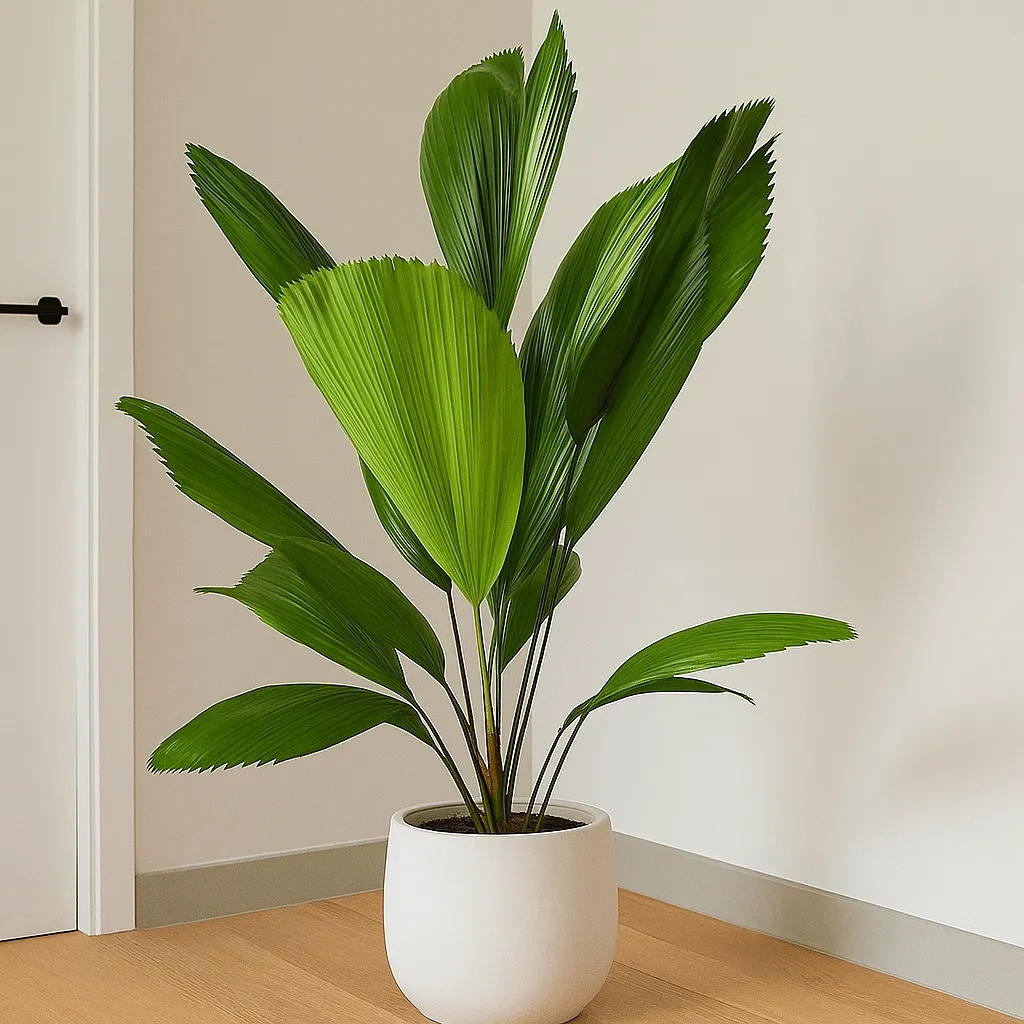
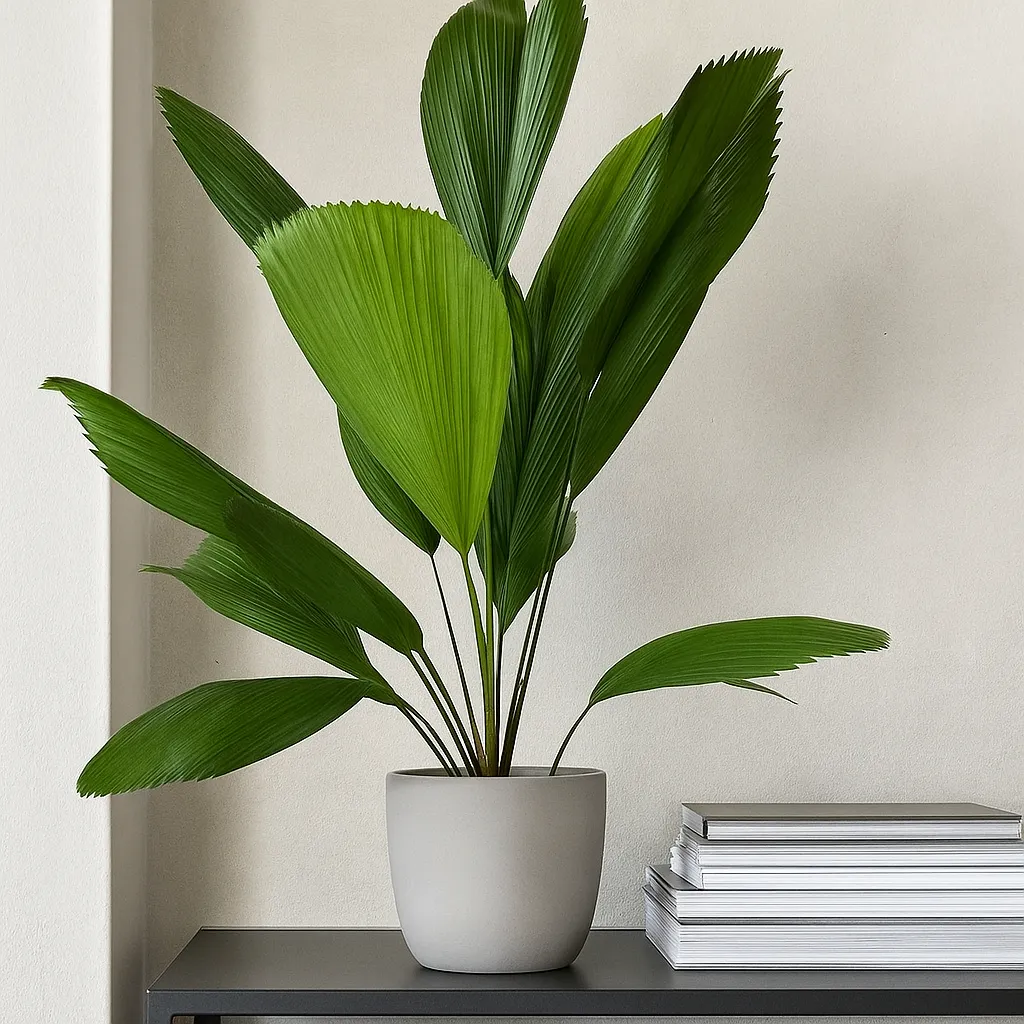
Its most striking feature is its large, perfectly rounded leaves, which resemble hand-held fans. Each glossy leaf is deeply pleated and slightly ruffled at the edges, creating a dramatic, almost sculptural form. Unlike many other palms, Licuala grandis produces entire, circular leaves rather than fronds split into segments, making it instantly recognisable and highly sought after for interior design and landscaping.
In its native environment, this palm can grow up to 3 metres tall, forming a solitary trunk topped with a crown of magnificent leaves. Indoors or in containers, it is generally much smaller, making it a manageable yet statement-making houseplant. Its slow growth and graceful structure allow it to blend seamlessly into living spaces, atriums, and shaded conservatories, where its lush foliage adds a refined tropical atmosphere.
Licuala grandis – Care Guide
Light
Licuala grandis prefers bright, indirect light but is more tolerant of shade than many palms. Direct sun can scorch the delicate leaves, especially indoors. Outdoors in mild climates, it should be planted in dappled or partial shade.
Watering
This palm thrives with consistently moist soil. Water thoroughly when the top 2–3 cm of soil feels dry, ensuring even moisture without allowing the plant to sit in water. It is less tolerant of drought, so avoid letting the soil dry out completely. Reduce watering slightly in winter when growth slows.
Temperature and Humidity
-
Temperature: Optimal range is 20–28°C. It does not tolerate cold well and should never be exposed to temperatures below 12°C.
-
Humidity: High humidity is essential. A humidifier, pebble tray, or regular misting will prevent leaf tips from browning. It is ideal for bathrooms, warm conservatories, or tropical-style rooms with elevated humidity.
Soil and Potting
A rich, well-draining soil mix is best. Use peat-free houseplant compost blended with sand or perlite to improve drainage, while still retaining some moisture. Repot only when the plant has clearly outgrown its pot, as it dislikes being disturbed.
Feeding
Apply a balanced liquid fertiliser every 3–4 weeks during the growing season (spring and summer). Use a diluted solution to avoid overfeeding, which can damage roots. Stop feeding in autumn and winter.
Pruning and Maintenance
Remove old or damaged leaves by cutting them at the base of the stem with clean, sharp scissors. Avoid excessive pruning, as the palm produces leaves slowly. Wipe leaves gently with a damp cloth to maintain their shine and prevent dust build-up.
Growth and Maturity
Licuala grandis grows slowly, producing only a few new leaves each year. Indoors, it typically reaches 1–1.5 metres over many years, forming a striking focal point. Outdoors in tropical climates, it can mature into a tall, single-stemmed palm with a dramatic crown.
Common Issues
-
Brown leaf tips: Caused by low humidity, inconsistent watering, or exposure to draughts.
-
Yellowing leaves: Usually linked to overwatering or poor drainage.
-
Pests: Occasionally attracts spider mites or scale insects; regular inspections and wiping can help prevent infestations.
Background and Benefits
Licuala grandis is revered for its beauty and is often used in luxury tropical landscapes. In its native Vanuatu, it grows in humid lowland forests, forming part of the understorey where filtered light reaches through the canopy. As a houseplant, it brings a piece of this exotic heritage indoors, offering both decorative impact and a calming, natural atmosphere.
✅ Quick Care Summary
-
Light: Bright, indirect to partial shade
-
Water: Keep soil evenly moist, never dry out completely
-
Temperature: 20–28°C, avoid below 12°C
-
Humidity: High humidity essential
-
Soil: Rich, free-draining mix
-
Feed: Monthly in growing season
-
Growth: Slow-growing, compact indoors
Original: $39.59
-70%$39.59
$11.88Product Information
Product Information
Shipping & Returns
Shipping & Returns
Description
Licuala grandis, also known as the Ruffled Fan Palm or Vanuatu Fan Palm, is an extraordinary tropical species prized for its unique architectural foliage. Native to Vanuatu and parts of the South Pacific, this slow-growing palm belongs to the Arecaceae family and is admired for its elegance and exotic charm.
Its most striking feature is its large, perfectly rounded leaves, which resemble hand-held fans. Each glossy leaf is deeply pleated and slightly ruffled at the edges, creating a dramatic, almost sculptural form. Unlike many other palms, Licuala grandis produces entire, circular leaves rather than fronds split into segments, making it instantly recognisable and highly sought after for interior design and landscaping.
In its native environment, this palm can grow up to 3 metres tall, forming a solitary trunk topped with a crown of magnificent leaves. Indoors or in containers, it is generally much smaller, making it a manageable yet statement-making houseplant. Its slow growth and graceful structure allow it to blend seamlessly into living spaces, atriums, and shaded conservatories, where its lush foliage adds a refined tropical atmosphere.
Licuala grandis – Care Guide
Light
Licuala grandis prefers bright, indirect light but is more tolerant of shade than many palms. Direct sun can scorch the delicate leaves, especially indoors. Outdoors in mild climates, it should be planted in dappled or partial shade.
Watering
This palm thrives with consistently moist soil. Water thoroughly when the top 2–3 cm of soil feels dry, ensuring even moisture without allowing the plant to sit in water. It is less tolerant of drought, so avoid letting the soil dry out completely. Reduce watering slightly in winter when growth slows.
Temperature and Humidity
-
Temperature: Optimal range is 20–28°C. It does not tolerate cold well and should never be exposed to temperatures below 12°C.
-
Humidity: High humidity is essential. A humidifier, pebble tray, or regular misting will prevent leaf tips from browning. It is ideal for bathrooms, warm conservatories, or tropical-style rooms with elevated humidity.
Soil and Potting
A rich, well-draining soil mix is best. Use peat-free houseplant compost blended with sand or perlite to improve drainage, while still retaining some moisture. Repot only when the plant has clearly outgrown its pot, as it dislikes being disturbed.
Feeding
Apply a balanced liquid fertiliser every 3–4 weeks during the growing season (spring and summer). Use a diluted solution to avoid overfeeding, which can damage roots. Stop feeding in autumn and winter.
Pruning and Maintenance
Remove old or damaged leaves by cutting them at the base of the stem with clean, sharp scissors. Avoid excessive pruning, as the palm produces leaves slowly. Wipe leaves gently with a damp cloth to maintain their shine and prevent dust build-up.
Growth and Maturity
Licuala grandis grows slowly, producing only a few new leaves each year. Indoors, it typically reaches 1–1.5 metres over many years, forming a striking focal point. Outdoors in tropical climates, it can mature into a tall, single-stemmed palm with a dramatic crown.
Common Issues
-
Brown leaf tips: Caused by low humidity, inconsistent watering, or exposure to draughts.
-
Yellowing leaves: Usually linked to overwatering or poor drainage.
-
Pests: Occasionally attracts spider mites or scale insects; regular inspections and wiping can help prevent infestations.
Background and Benefits
Licuala grandis is revered for its beauty and is often used in luxury tropical landscapes. In its native Vanuatu, it grows in humid lowland forests, forming part of the understorey where filtered light reaches through the canopy. As a houseplant, it brings a piece of this exotic heritage indoors, offering both decorative impact and a calming, natural atmosphere.
✅ Quick Care Summary
-
Light: Bright, indirect to partial shade
-
Water: Keep soil evenly moist, never dry out completely
-
Temperature: 20–28°C, avoid below 12°C
-
Humidity: High humidity essential
-
Soil: Rich, free-draining mix
-
Feed: Monthly in growing season
-
Growth: Slow-growing, compact indoors