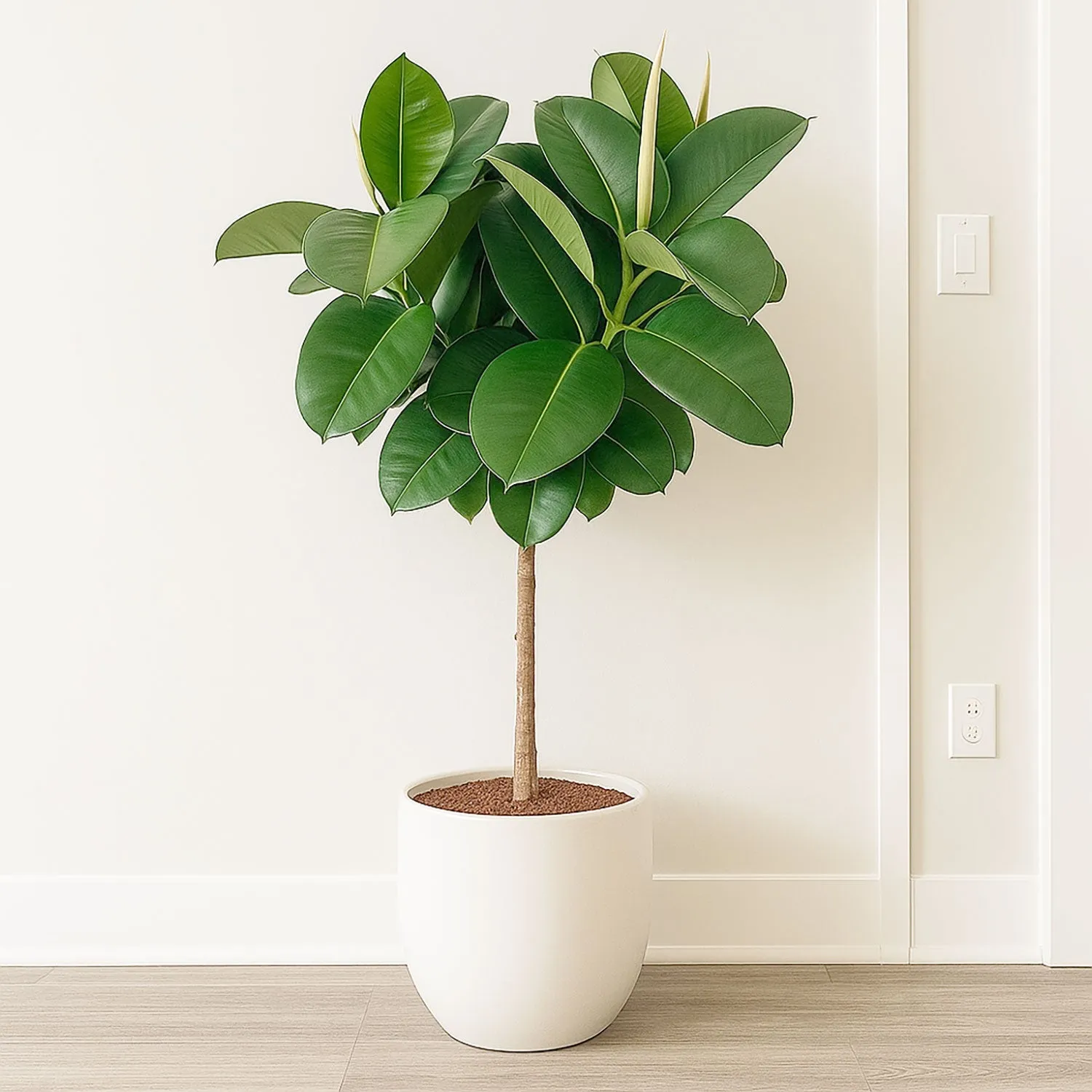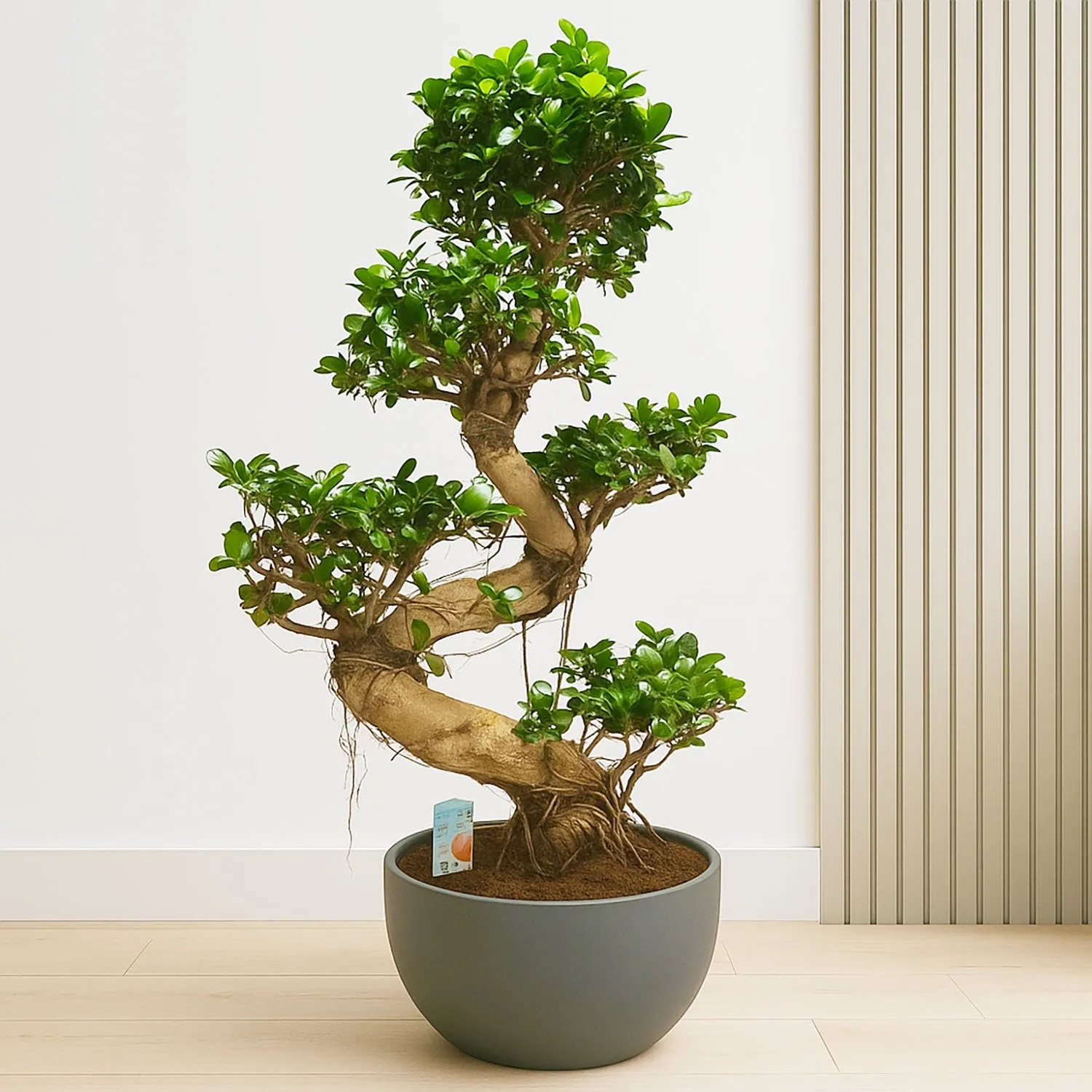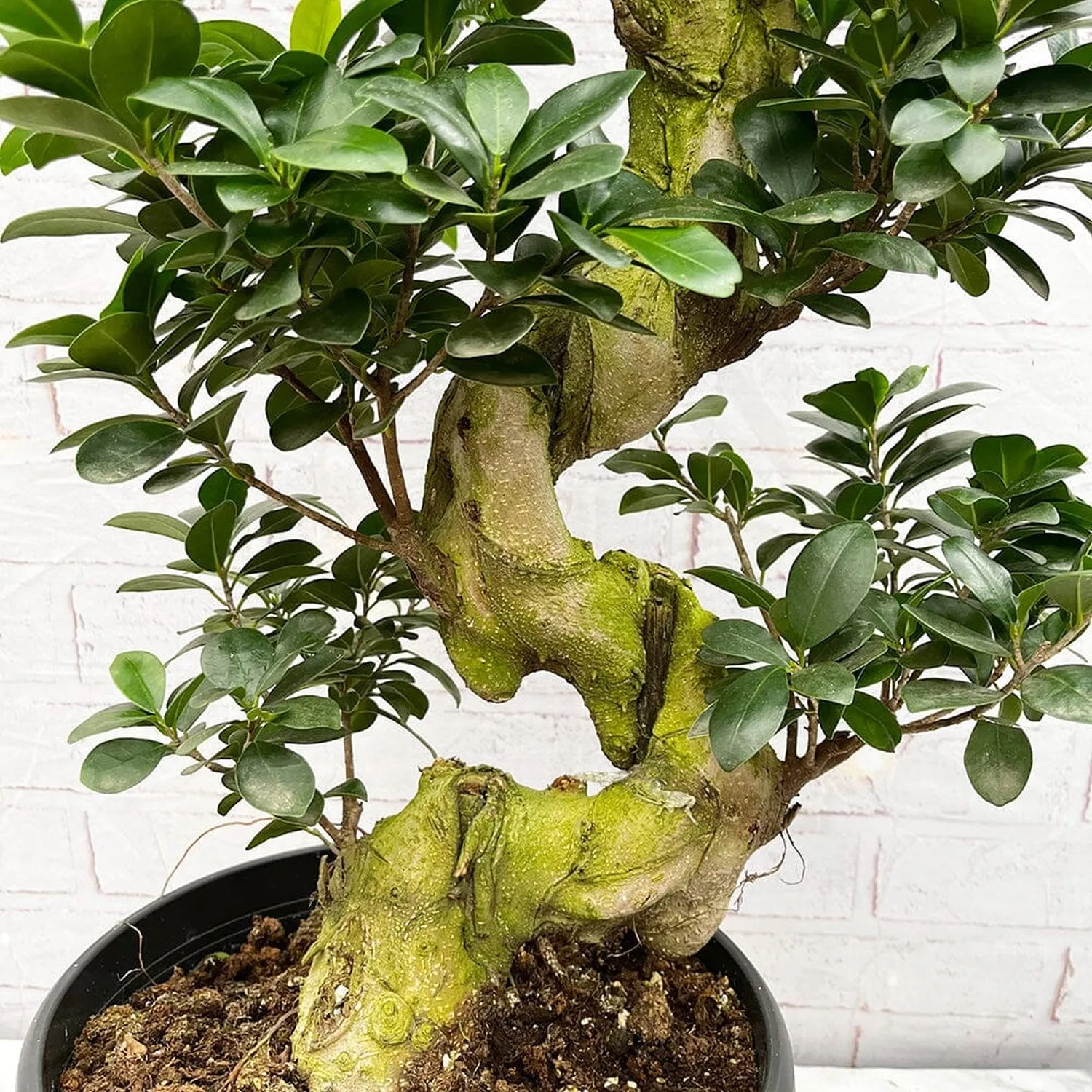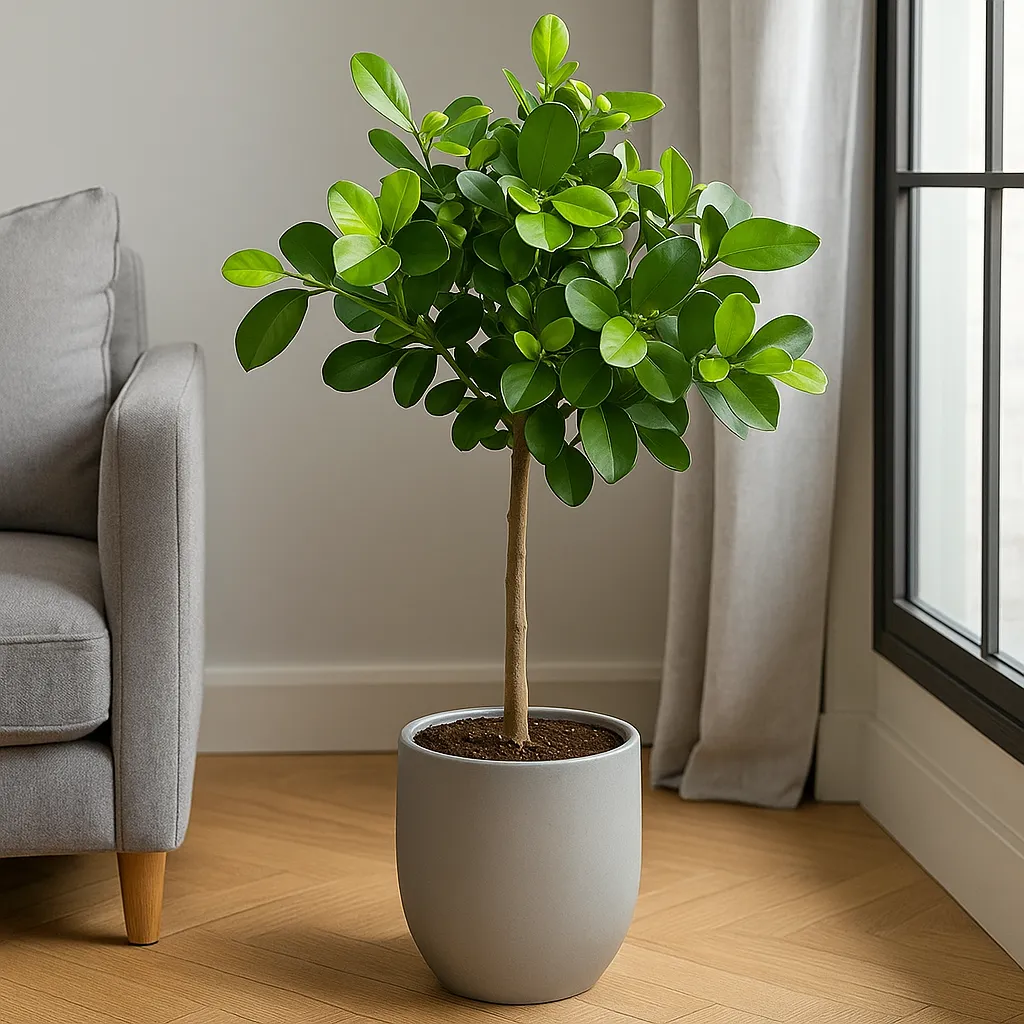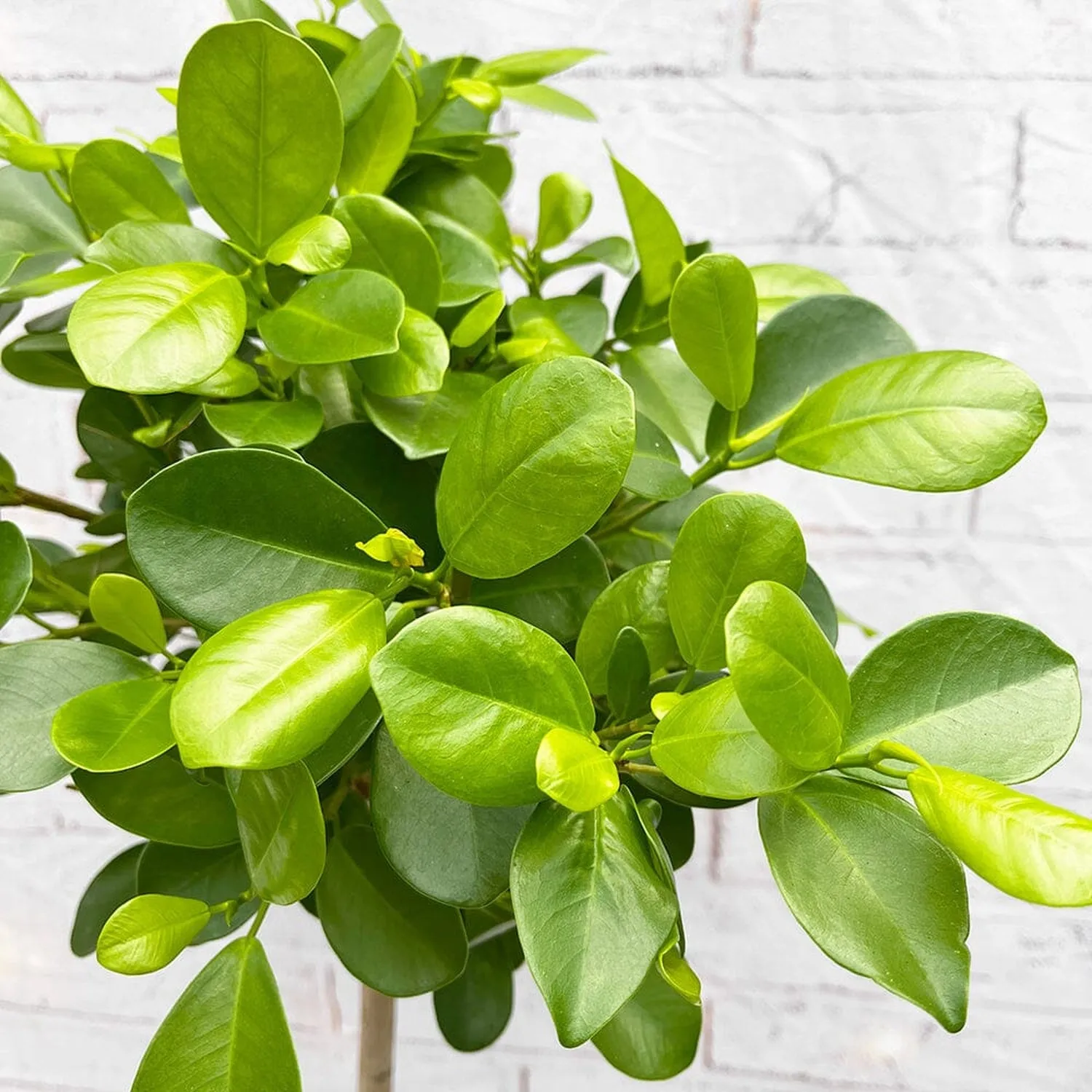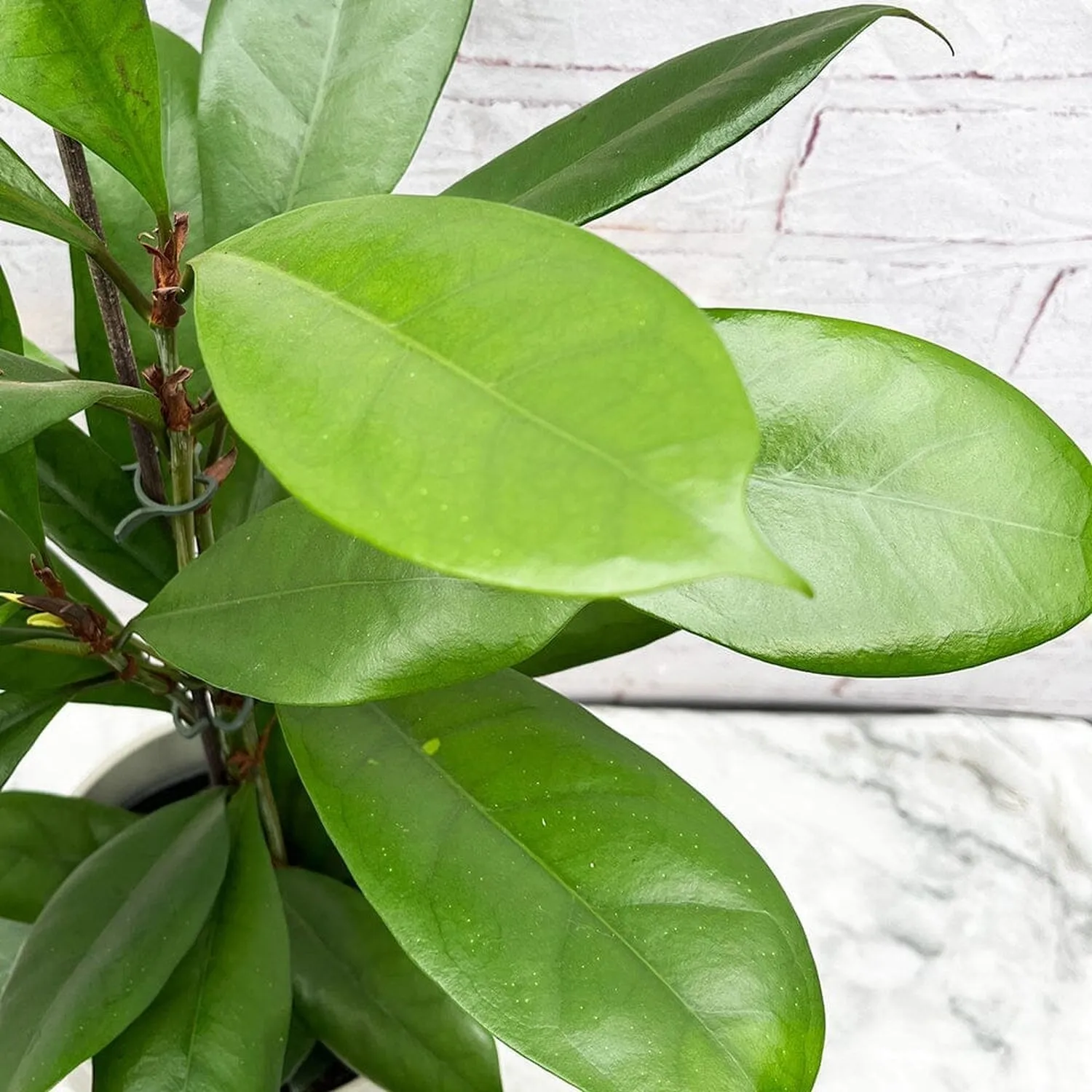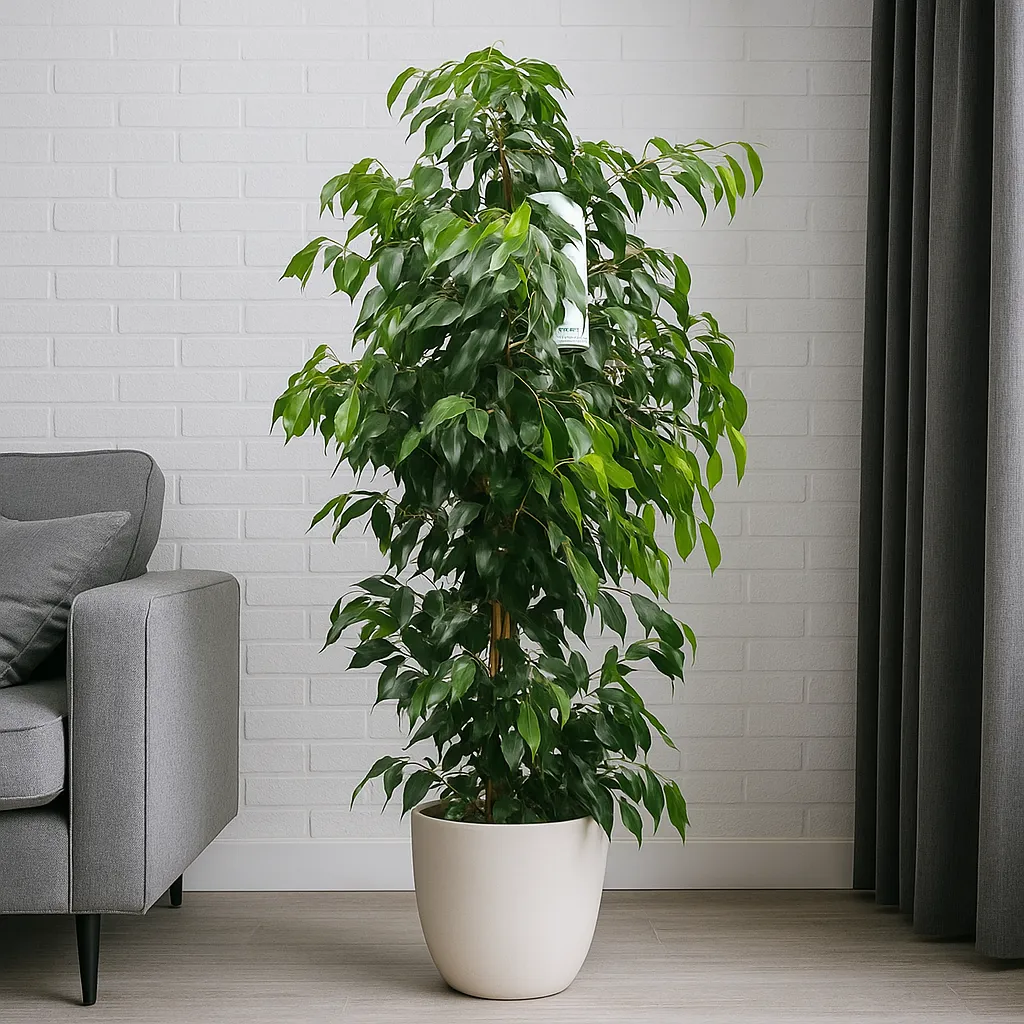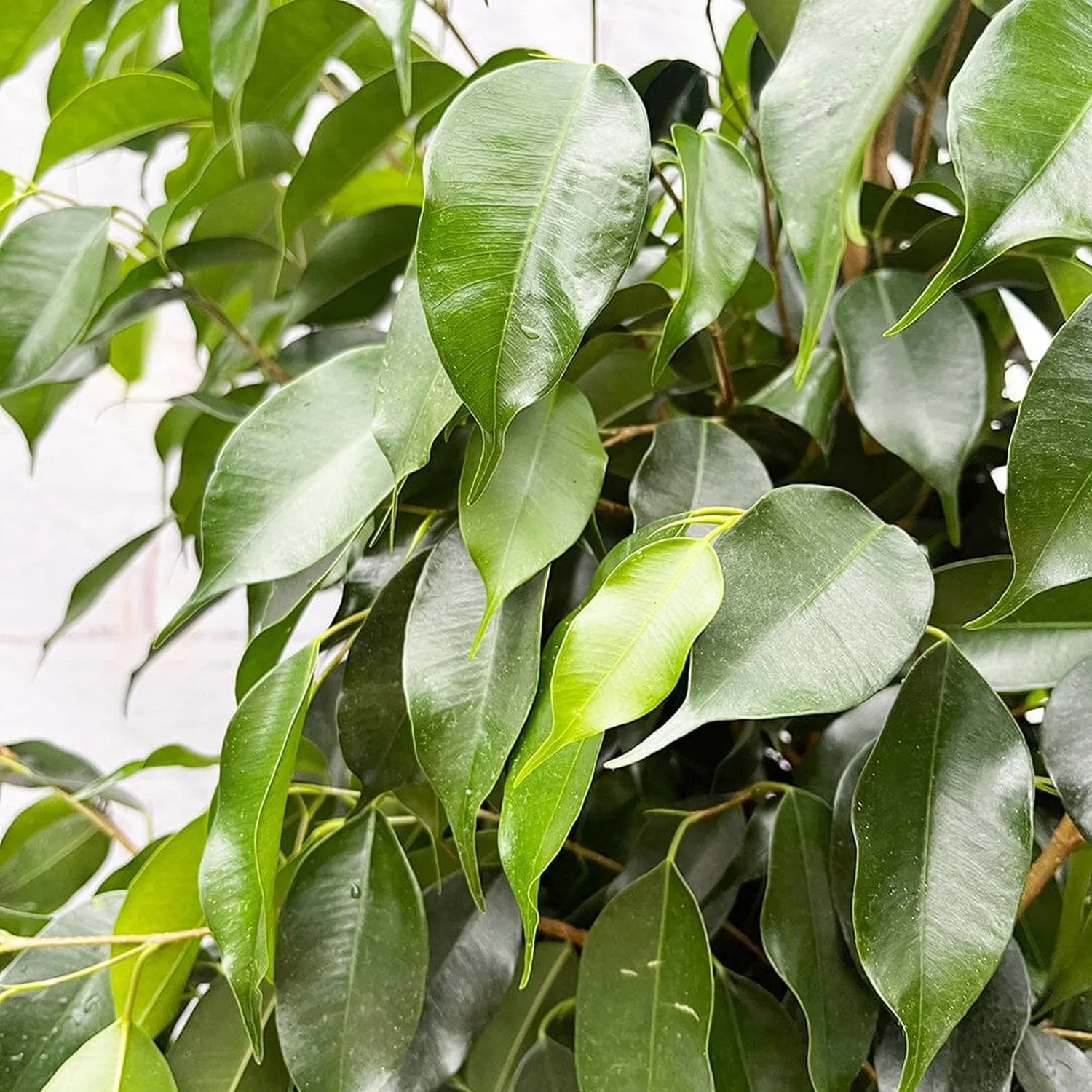
135 - 150cm Ficus Twilight Rubber Plant 27cm Pot House Plant
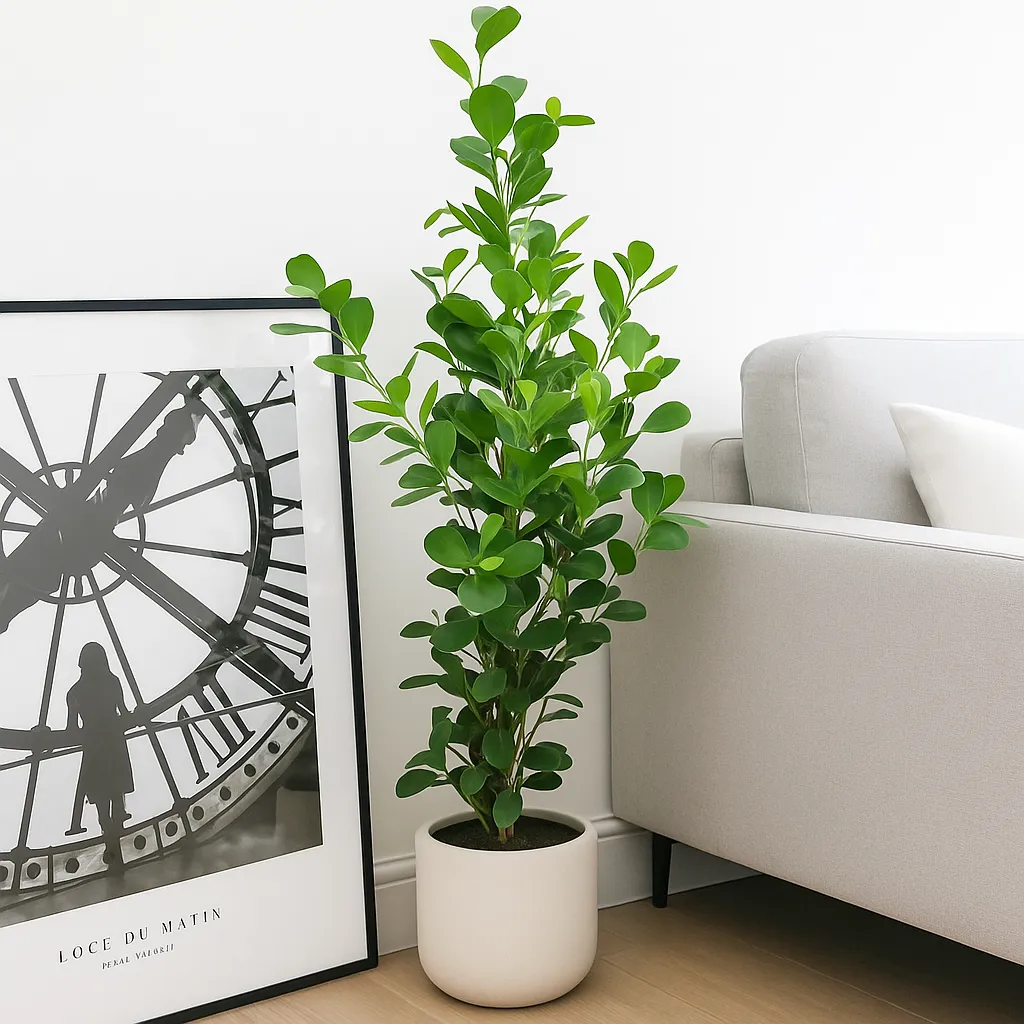
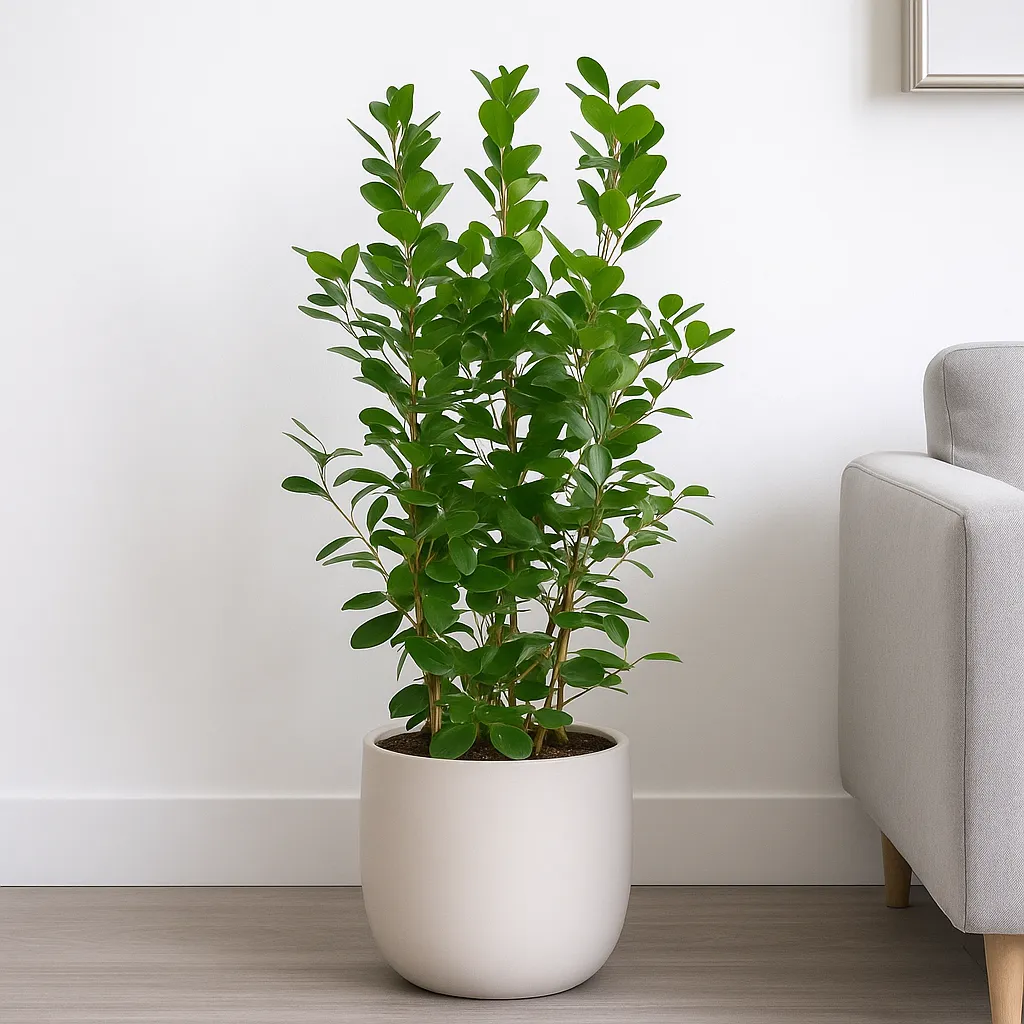
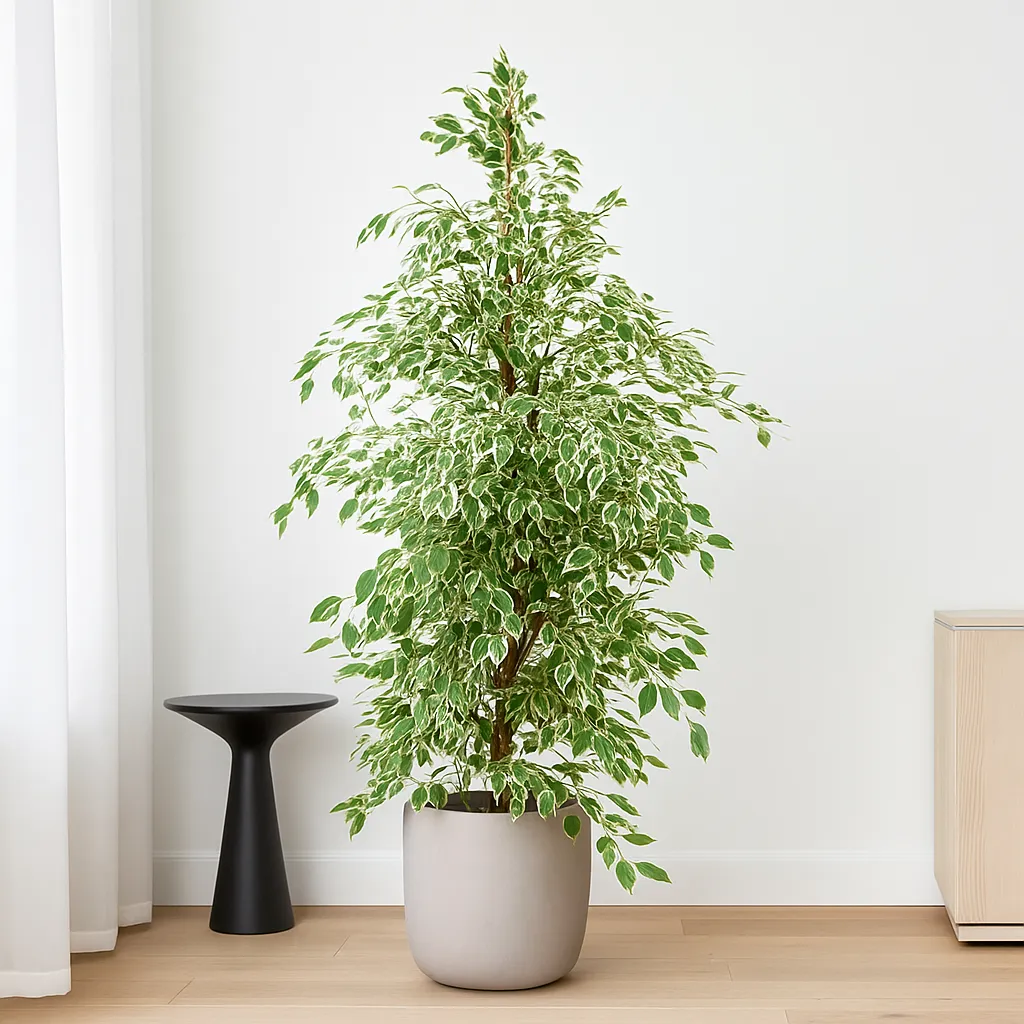
Ficus benjamina ‘Twilight’, also known as the Variegated Weeping Fig, is an elegant and highly decorative indoor tree, admired for its softly variegated foliage and graceful, arching growth habit. A member of the Moraceae family and native to Southeast Asia and northern Australia, this cultivar brings a bright, refined tropical feel to any interior.
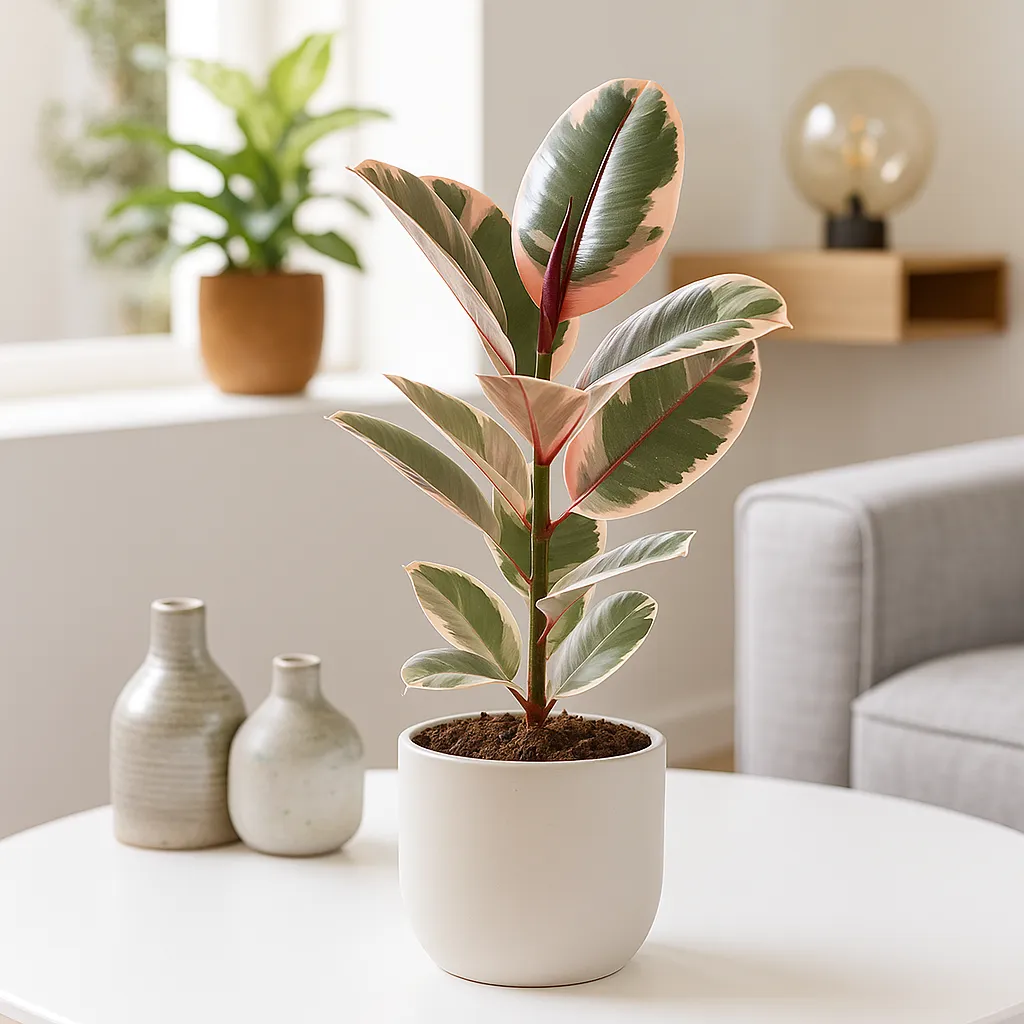
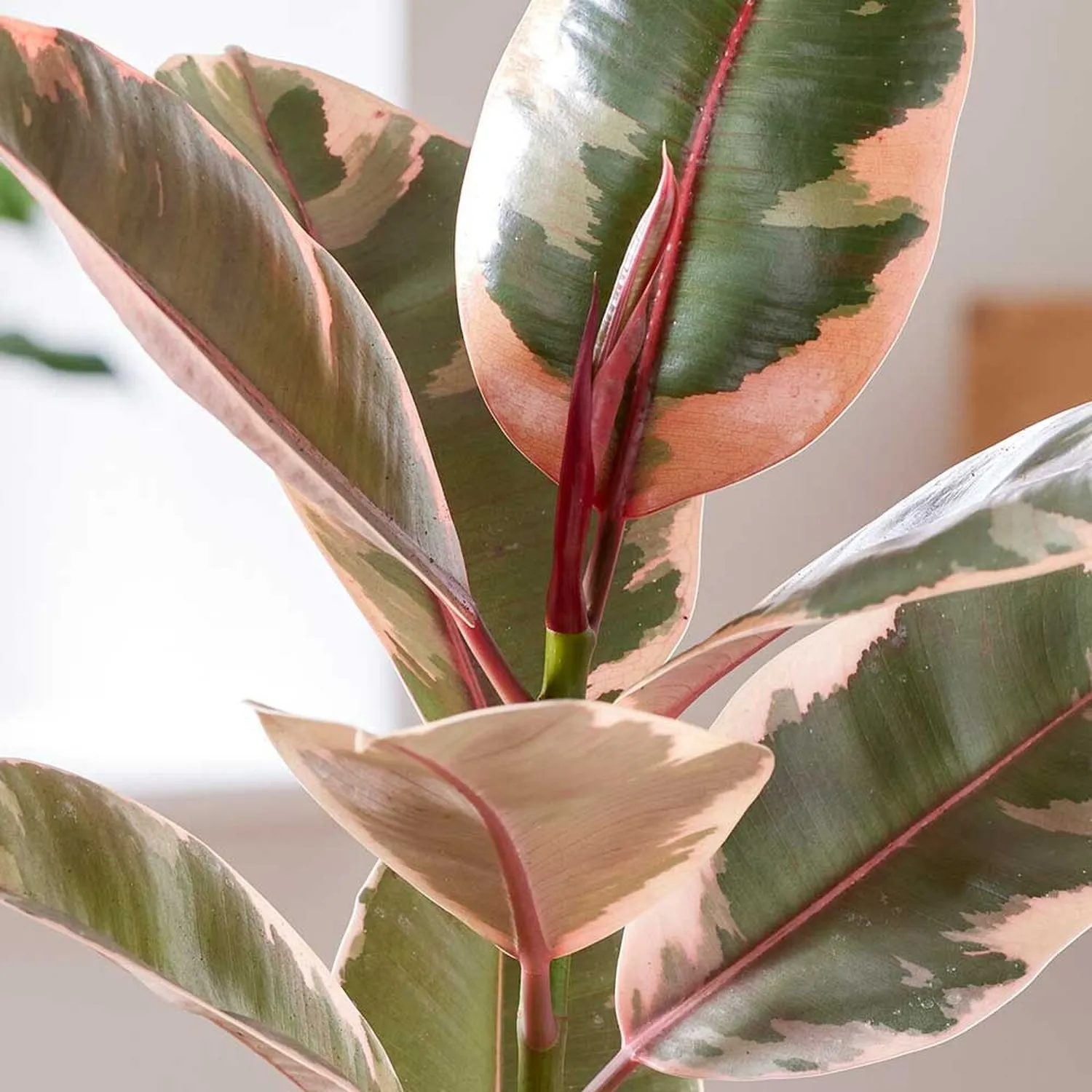
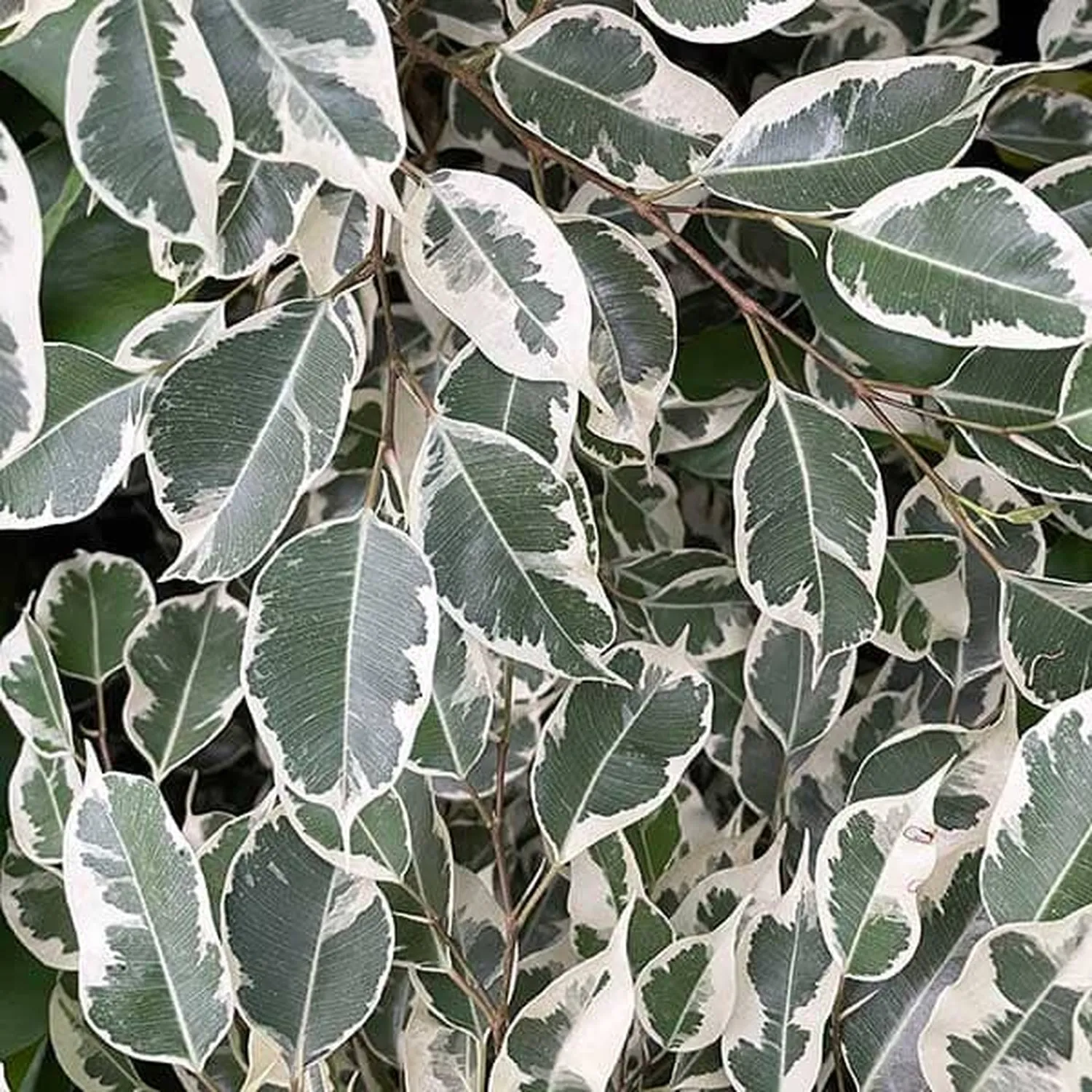
The slender, pendulous branches are covered in small, glossy leaves marked with creamy-white margins and mid-green centres. The fresh variegation adds lightness and texture, making ‘Twilight’ a beautiful choice for modern interiors, conservatories, and offices. Its upright yet softly cascading form makes it perfect as a statement plant in corners or open living spaces.
Resilient and timeless, Ficus ‘Twilight’ offers the classic look of a tropical tree while remaining easy to maintain — a living piece of natural sculpture that grows more characterful over time.
Ficus benjamina ‘Twilight’ – Care Guide
Light
Thrives in bright, indirect light, which enhances its creamy variegation. Avoid harsh, direct sunlight that can scorch the pale leaf edges. Too little light may cause leaf drop or dull colour. A bright, well-lit spot near a window is ideal.
Watering
Water when the top 3–5 cm of soil feels dry. Keep the soil lightly moist but not soggy, and allow excess water to drain freely. Overwatering or inconsistent watering can cause temporary leaf drop. In winter, reduce watering slightly.
Temperature and Humidity
-
Temperature: Prefers warmth, 18–26°C. Avoid cold draughts and sudden temperature fluctuations.
-
Humidity: Tolerates average household humidity but benefits from occasional misting to prevent dry leaf edges.
Soil and Potting
Use a rich, free-draining, peat-free compost mixed with perlite or grit for aeration. Repot every 2–3 years in spring, refreshing the top layer of soil annually to maintain nutrients and root health.
Feeding
Feed every 4–6 weeks during spring and summer with a balanced liquid fertiliser. Do not feed in winter when growth slows.
Pruning and Maintenance
Prune in spring or early summer to shape the canopy and control height. Remove any yellow or damaged leaves. Rotate occasionally for even light exposure. Wipe leaves with a damp cloth to remove dust and showcase their glossy finish.
Growth and Maturity
A moderate to fast grower that can reach 1–2 metres indoors. With time, it develops an elegant, tree-like trunk and a gently weeping canopy.
Common Issues
-
Leaf drop: Common when moved, or due to changes in light, temperature, or watering. Usually temporary.
-
Yellowing leaves: Overwatering or poor drainage.
-
Brown tips: Low humidity or inconsistent watering.
-
Pests: Occasionally mealybugs, scale insects, or spider mites.
Background and Benefits
The Weeping Fig (Ficus benjamina) is one of the world’s most recognisable indoor trees, valued for its elegant shape and long lifespan. The ‘Twilight’ cultivar, with its luminous variegation, brings a modern twist to this classic species. Its light-toned foliage makes it especially good for brightening darker spaces or balancing rooms dominated by deeper green plants.
Like other Ficus species, it’s also an effective air purifier, helping to remove toxins such as formaldehyde and benzene from indoor air.
✅ Quick Care Summary
-
Light: Bright, indirect; avoid direct sun
-
Water: Lightly moist; allow topsoil to dry slightly
-
Temperature: 18–26°C; avoid cold draughts
-
Humidity: Average indoor; mist occasionally
-
Soil: Rich, well-draining compost
-
Feed: Every 4–6 weeks in spring/summer
-
Growth: Upright tree, 1–2 m; arching branches with variegated cream-and-green leaves
⚠️ Toxicity Note: Like all Ficus species, ‘Twilight’ contains a milky sap that can irritate the skin and is toxic if ingested. Keep out of reach of pets and children.
🌿 Styling Tip:
Use Ficus benjamina ‘Twilight’ as a bright focal point in living rooms or offices. Pair it with neutral décor or darker tropicals like Philodendron ‘Congo Green’ to highlight its luminous variegation. It looks especially elegant in tall ceramic planters or woven baskets.
Original: $112.17
-70%$112.17
$33.65Product Information
Product Information
Shipping & Returns
Shipping & Returns
Description
Ficus benjamina ‘Twilight’, also known as the Variegated Weeping Fig, is an elegant and highly decorative indoor tree, admired for its softly variegated foliage and graceful, arching growth habit. A member of the Moraceae family and native to Southeast Asia and northern Australia, this cultivar brings a bright, refined tropical feel to any interior.
The slender, pendulous branches are covered in small, glossy leaves marked with creamy-white margins and mid-green centres. The fresh variegation adds lightness and texture, making ‘Twilight’ a beautiful choice for modern interiors, conservatories, and offices. Its upright yet softly cascading form makes it perfect as a statement plant in corners or open living spaces.
Resilient and timeless, Ficus ‘Twilight’ offers the classic look of a tropical tree while remaining easy to maintain — a living piece of natural sculpture that grows more characterful over time.
Ficus benjamina ‘Twilight’ – Care Guide
Light
Thrives in bright, indirect light, which enhances its creamy variegation. Avoid harsh, direct sunlight that can scorch the pale leaf edges. Too little light may cause leaf drop or dull colour. A bright, well-lit spot near a window is ideal.
Watering
Water when the top 3–5 cm of soil feels dry. Keep the soil lightly moist but not soggy, and allow excess water to drain freely. Overwatering or inconsistent watering can cause temporary leaf drop. In winter, reduce watering slightly.
Temperature and Humidity
-
Temperature: Prefers warmth, 18–26°C. Avoid cold draughts and sudden temperature fluctuations.
-
Humidity: Tolerates average household humidity but benefits from occasional misting to prevent dry leaf edges.
Soil and Potting
Use a rich, free-draining, peat-free compost mixed with perlite or grit for aeration. Repot every 2–3 years in spring, refreshing the top layer of soil annually to maintain nutrients and root health.
Feeding
Feed every 4–6 weeks during spring and summer with a balanced liquid fertiliser. Do not feed in winter when growth slows.
Pruning and Maintenance
Prune in spring or early summer to shape the canopy and control height. Remove any yellow or damaged leaves. Rotate occasionally for even light exposure. Wipe leaves with a damp cloth to remove dust and showcase their glossy finish.
Growth and Maturity
A moderate to fast grower that can reach 1–2 metres indoors. With time, it develops an elegant, tree-like trunk and a gently weeping canopy.
Common Issues
-
Leaf drop: Common when moved, or due to changes in light, temperature, or watering. Usually temporary.
-
Yellowing leaves: Overwatering or poor drainage.
-
Brown tips: Low humidity or inconsistent watering.
-
Pests: Occasionally mealybugs, scale insects, or spider mites.
Background and Benefits
The Weeping Fig (Ficus benjamina) is one of the world’s most recognisable indoor trees, valued for its elegant shape and long lifespan. The ‘Twilight’ cultivar, with its luminous variegation, brings a modern twist to this classic species. Its light-toned foliage makes it especially good for brightening darker spaces or balancing rooms dominated by deeper green plants.
Like other Ficus species, it’s also an effective air purifier, helping to remove toxins such as formaldehyde and benzene from indoor air.
✅ Quick Care Summary
-
Light: Bright, indirect; avoid direct sun
-
Water: Lightly moist; allow topsoil to dry slightly
-
Temperature: 18–26°C; avoid cold draughts
-
Humidity: Average indoor; mist occasionally
-
Soil: Rich, well-draining compost
-
Feed: Every 4–6 weeks in spring/summer
-
Growth: Upright tree, 1–2 m; arching branches with variegated cream-and-green leaves
⚠️ Toxicity Note: Like all Ficus species, ‘Twilight’ contains a milky sap that can irritate the skin and is toxic if ingested. Keep out of reach of pets and children.
🌿 Styling Tip:
Use Ficus benjamina ‘Twilight’ as a bright focal point in living rooms or offices. Pair it with neutral décor or darker tropicals like Philodendron ‘Congo Green’ to highlight its luminous variegation. It looks especially elegant in tall ceramic planters or woven baskets.