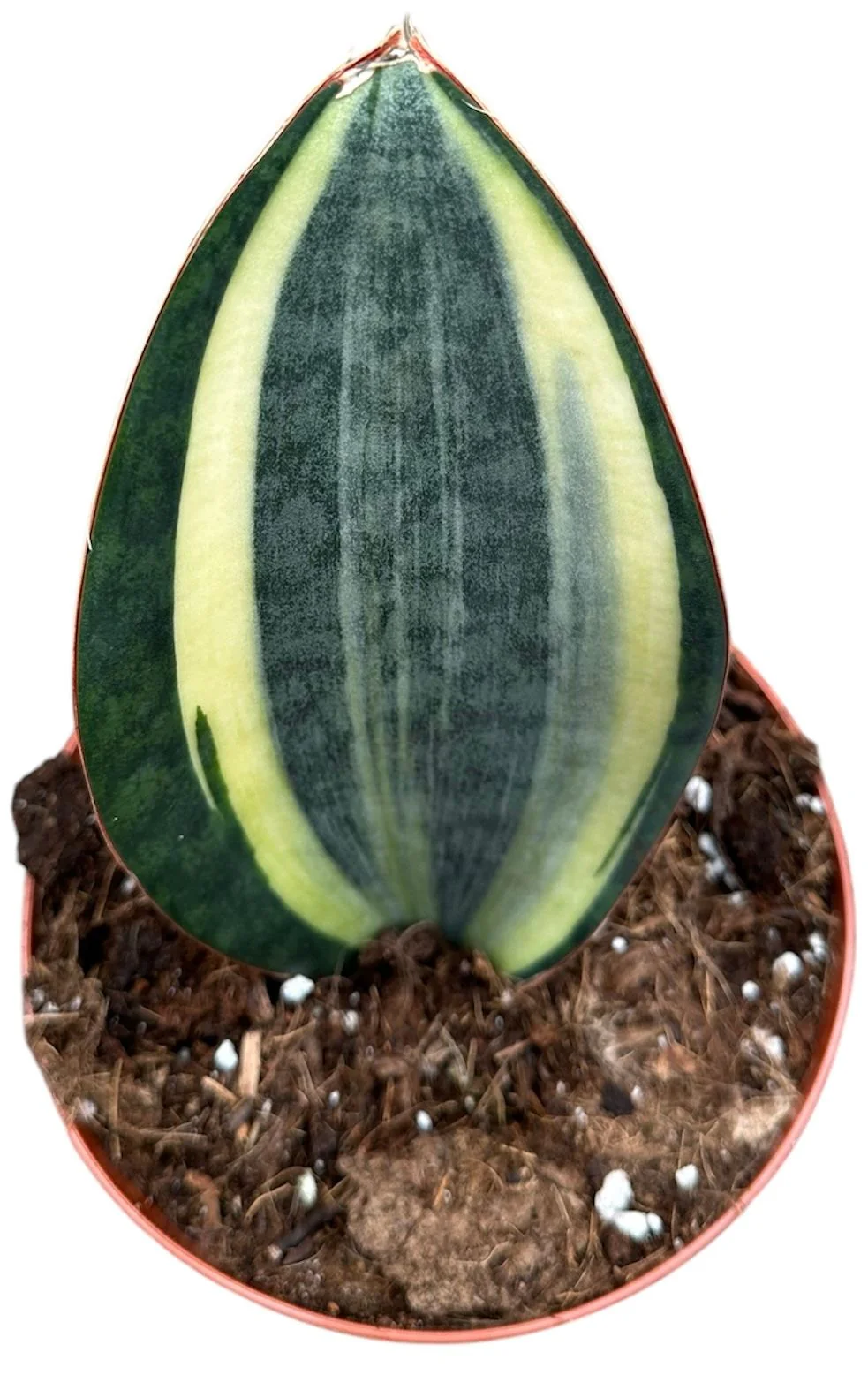
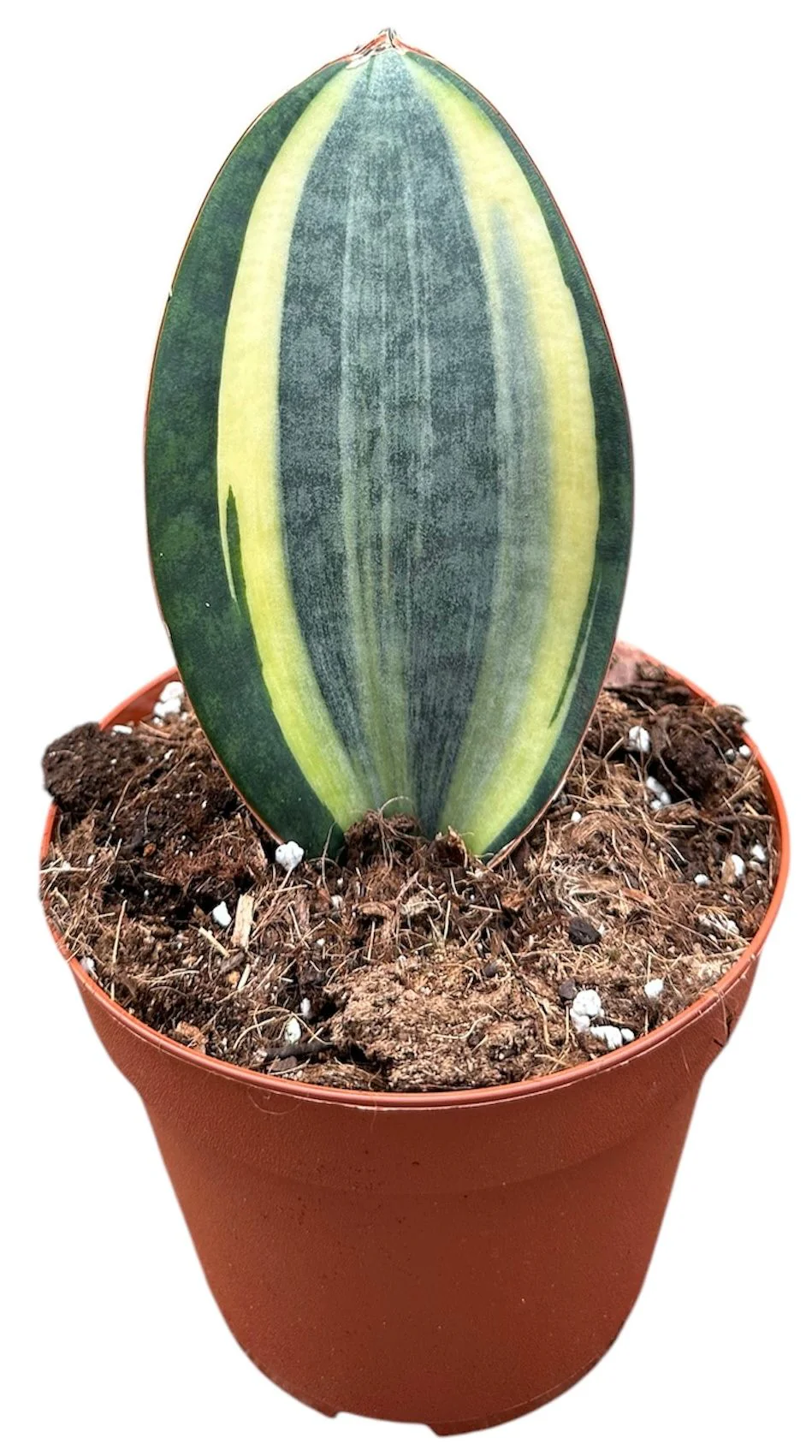
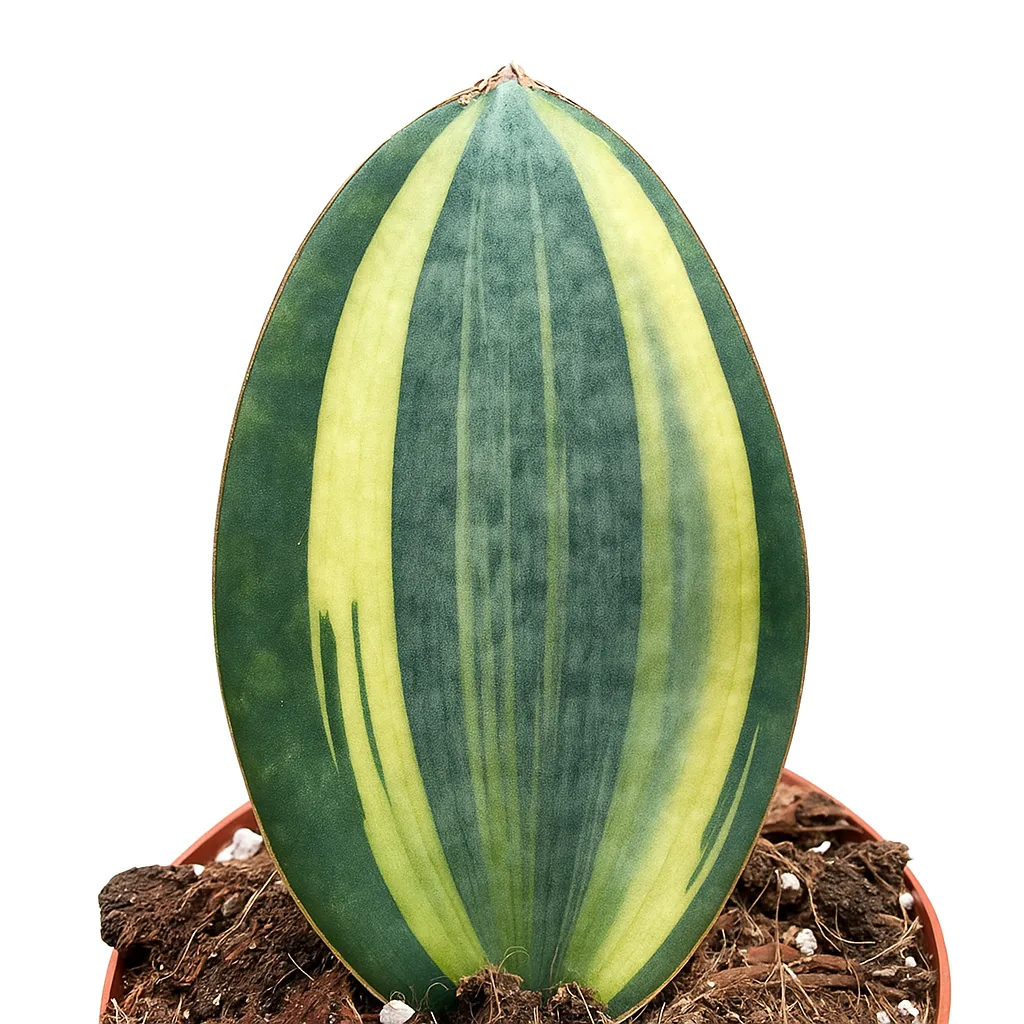
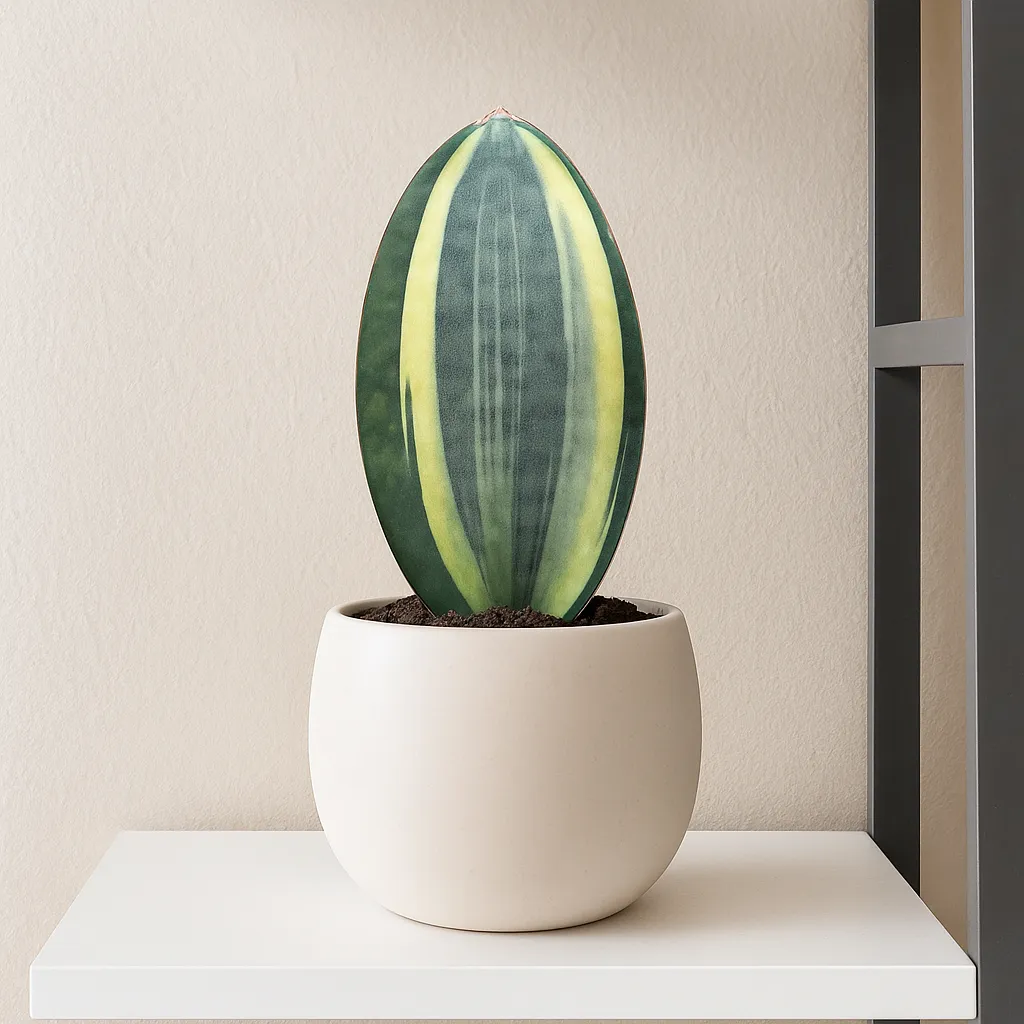
Sansevieria Masoniana Aurea House Plant 14 cm Pot
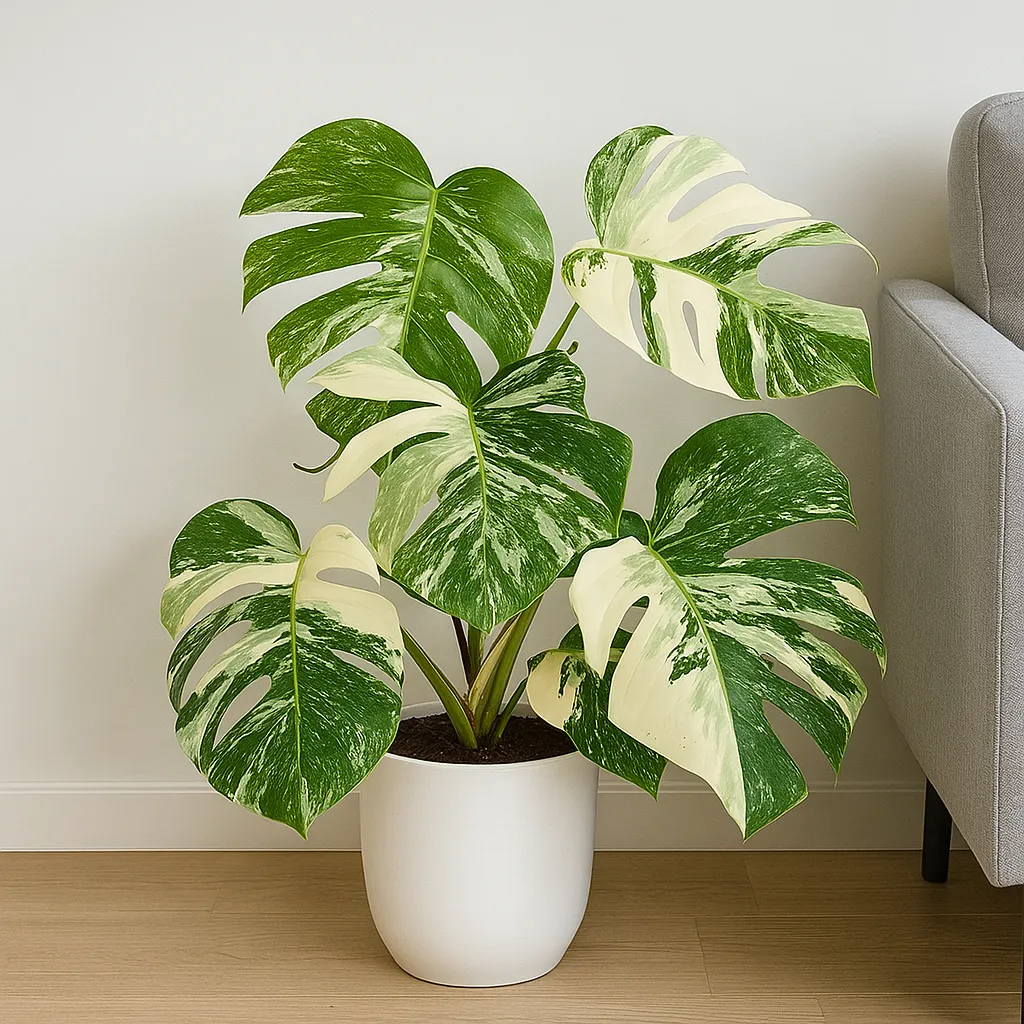
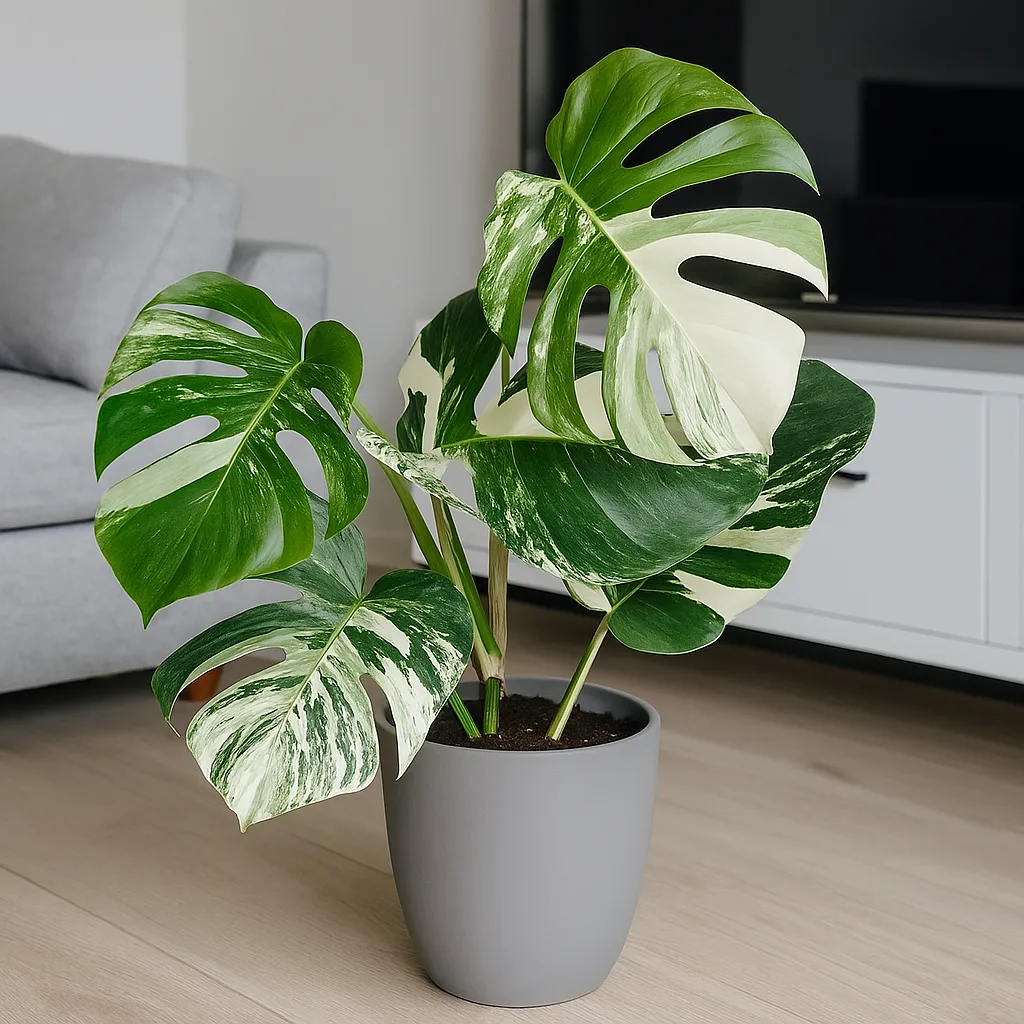
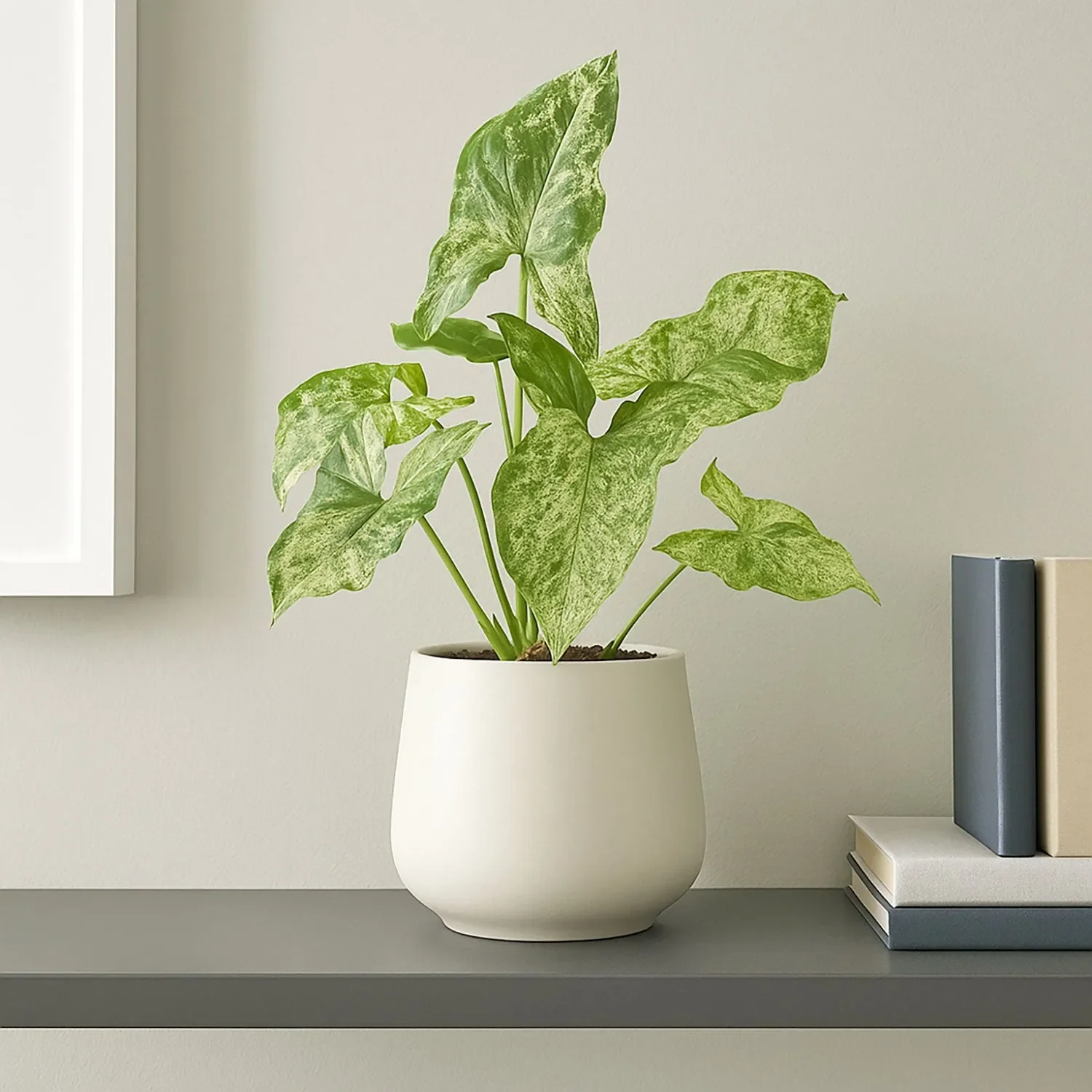
Sansevieria masoniana ‘Aurea’, commonly known as the Variegated Whale Fin Snake Plant, is a rare and highly prized cultivar of Sansevieria masoniana (now classified under Dracaena). Native to Central Africa, this species is admired for its massive, paddle-shaped leaves, which are among the largest of any Sansevieria.
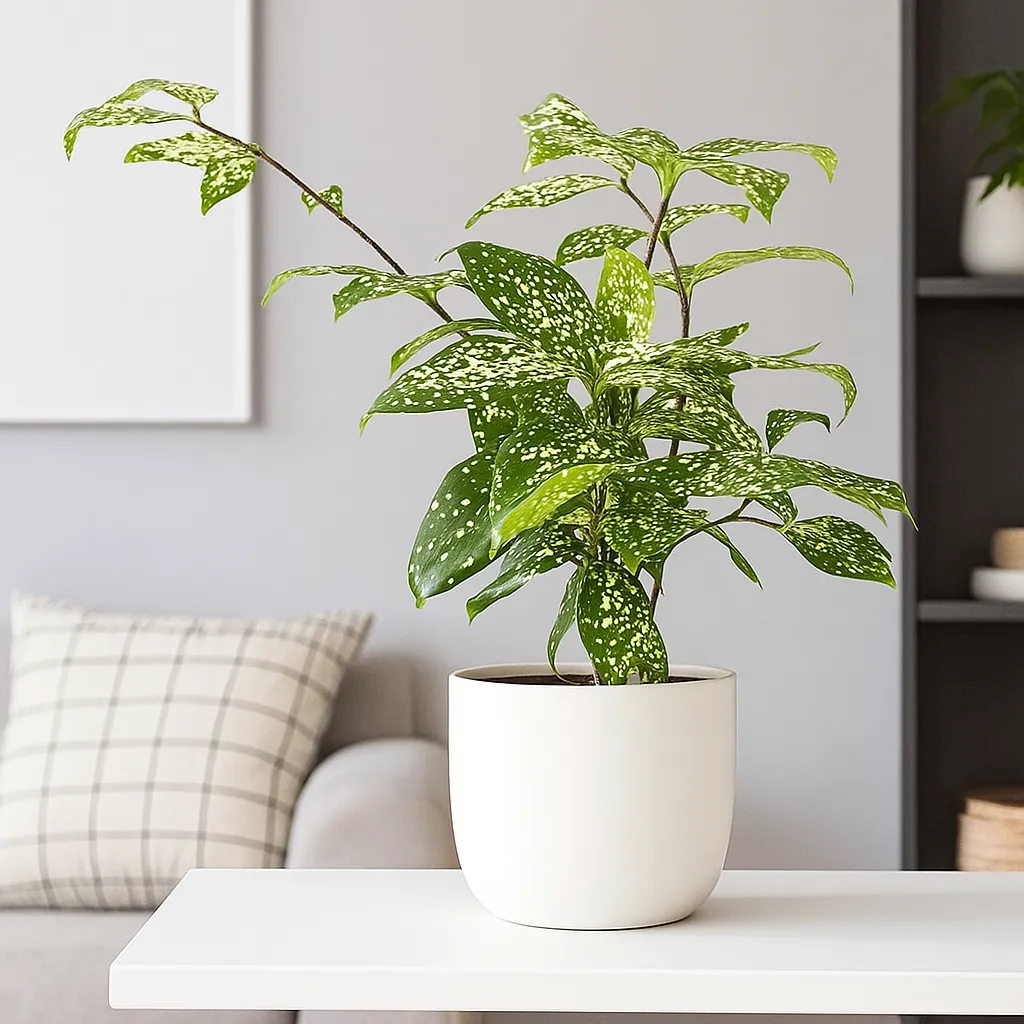
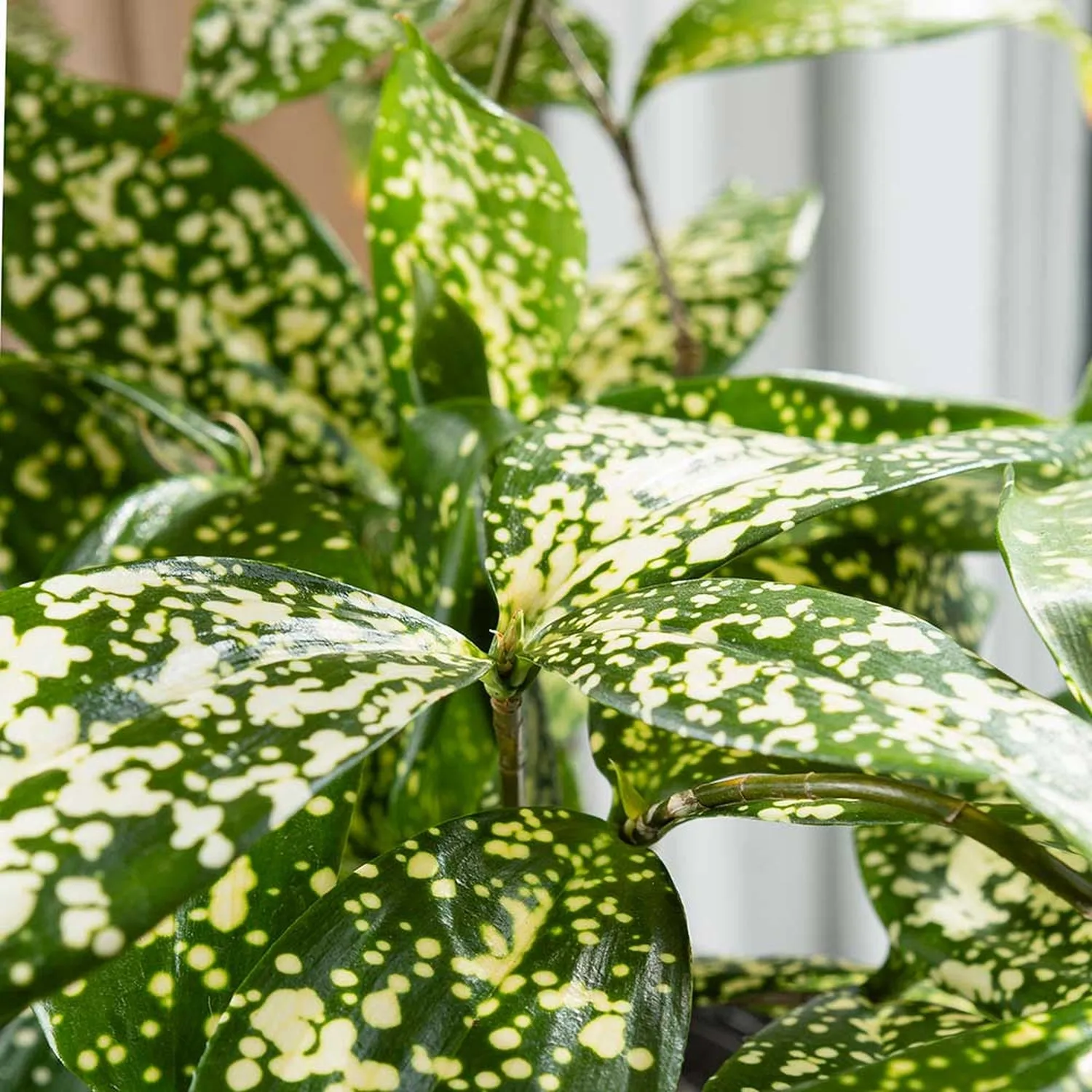
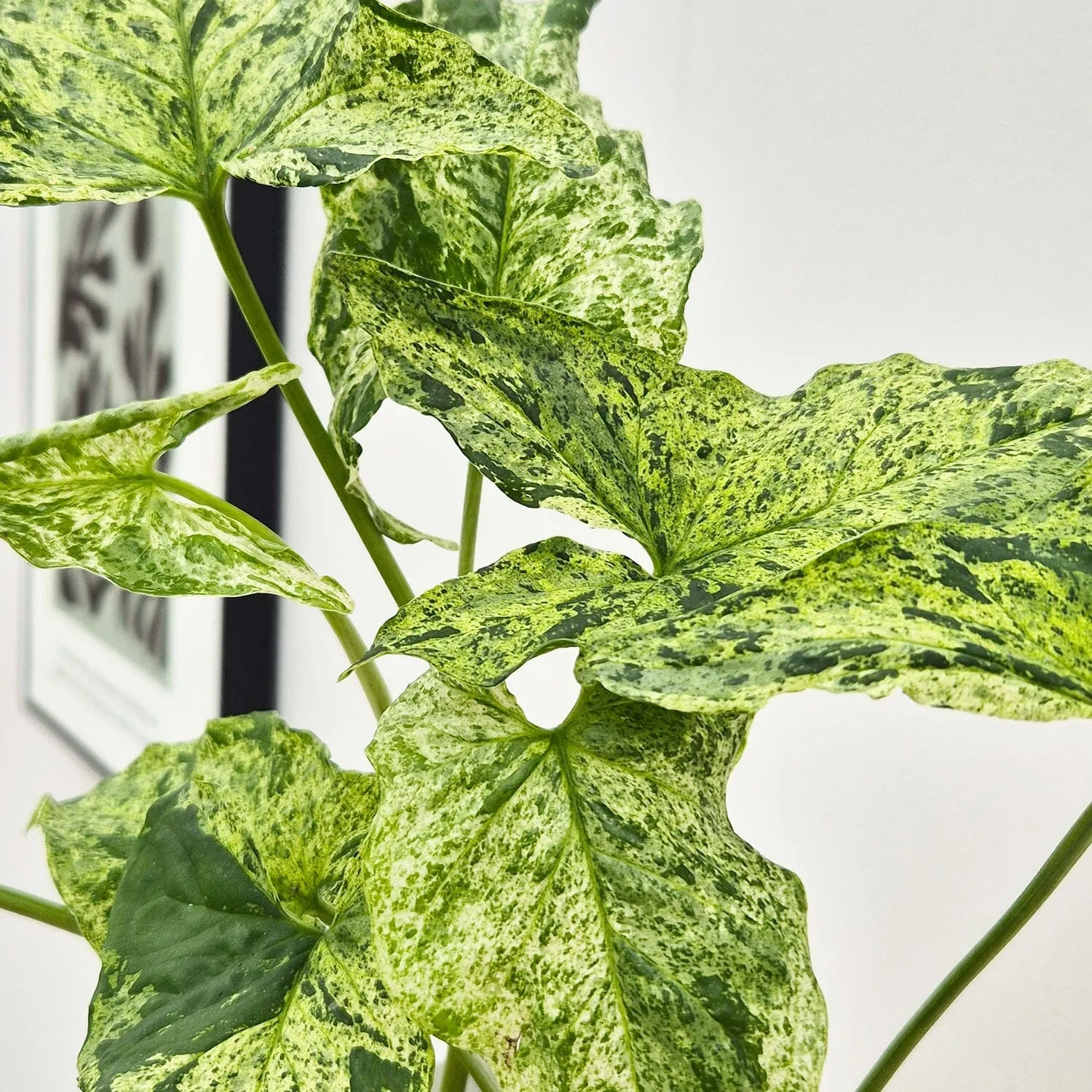
The ‘Aurea’ form is especially collectable due to its spectacular golden variegation. Each broad leaf can reach 25–60 cm tall and up to 25 cm wide, marbled or streaked with irregular splashes of yellow, cream, lime, and green. Some leaves display bold sectoral patterns, while others show softer marbling. The thick, leathery texture makes them extremely durable, giving the plant its “whale fin” nickname.
Unlike many rosette-forming Sansevierias, masoniana produces single leaves from underground rhizomes, gradually forming clumps over time. The bold, upright leaves and golden streaks make Sansevieria masoniana ‘Aurea’ a living sculpture and a centrepiece for collectors.
Sansevieria masoniana ‘Aurea’ – Care Guide
Light
Thrives in bright, indirect light to bring out the strongest variegation. Tolerates medium and low-light areas but with slower growth and reduced colouring. Avoid prolonged harsh direct sun which can scorch pale sections.
Watering
Extremely drought tolerant. Water sparingly, allowing the soil to dry out completely between waterings. In summer, every 2–3 weeks may be enough; in winter, once a month or less. Overwatering is the most common cause of problems.
Temperature and Humidity
-
Temperature: Prefers 18–28°C. Protect from prolonged exposure below 10°C.
-
Humidity: Perfectly adapted to dry indoor air; no additional humidity is required.
Soil and Potting
Use a gritty, well-draining cactus or succulent compost. Heavy pots are recommended to balance the weight of the broad leaves. Repot every 2–3 years in spring, or when rhizomes outgrow the container.
Feeding
Apply a diluted cactus or succulent fertiliser monthly in spring and summer. Do not feed in autumn and winter.
Pruning and Maintenance
Minimal maintenance required. Remove old or damaged leaves at the base. Wipe foliage with a soft, damp cloth to enhance its natural shine.
Growth and Maturity
A very slow-growing species. Individual leaves may reach 60 cm tall and 25 cm wide. Over time, rhizomes produce offsets that form clumps. Mature plants may occasionally flower, producing spikes of small, fragrant, white-green blossoms.
Common Issues
-
Yellow or mushy leaves: Caused by overwatering.
-
Wrinkling: Indicates prolonged drought – water thoroughly, then allow to dry out again.
-
Pests: Rare, but may occasionally attract mealybugs or spider mites.
Background and Benefits
Sansevieria masoniana is one of the most dramatic snake plants, known for its huge paddle-shaped leaves. The ‘Aurea’ variegated form is even rarer and highly sought after by collectors for its unpredictable golden streaks. Like all Sansevierias, it also acts as an air purifier, filtering indoor toxins and releasing oxygen at night.
✅ Quick Care Summary
-
Light: Bright, indirect; tolerates low light
-
Water: Sparingly; let soil dry fully
-
Temperature: 18–28°C; protect below 10°C
-
Humidity: Dry air tolerant
-
Soil: Gritty, free-draining succulent compost
-
Feed: Monthly in spring/summer
-
Growth: Very slow-growing; broad whale-fin leaves with golden variegation, up to 60 cm tall
Original: $79.17
-70%$79.17
$23.75Product Information
Product Information
Shipping & Returns
Shipping & Returns
Description
Sansevieria masoniana ‘Aurea’, commonly known as the Variegated Whale Fin Snake Plant, is a rare and highly prized cultivar of Sansevieria masoniana (now classified under Dracaena). Native to Central Africa, this species is admired for its massive, paddle-shaped leaves, which are among the largest of any Sansevieria.
The ‘Aurea’ form is especially collectable due to its spectacular golden variegation. Each broad leaf can reach 25–60 cm tall and up to 25 cm wide, marbled or streaked with irregular splashes of yellow, cream, lime, and green. Some leaves display bold sectoral patterns, while others show softer marbling. The thick, leathery texture makes them extremely durable, giving the plant its “whale fin” nickname.
Unlike many rosette-forming Sansevierias, masoniana produces single leaves from underground rhizomes, gradually forming clumps over time. The bold, upright leaves and golden streaks make Sansevieria masoniana ‘Aurea’ a living sculpture and a centrepiece for collectors.
Sansevieria masoniana ‘Aurea’ – Care Guide
Light
Thrives in bright, indirect light to bring out the strongest variegation. Tolerates medium and low-light areas but with slower growth and reduced colouring. Avoid prolonged harsh direct sun which can scorch pale sections.
Watering
Extremely drought tolerant. Water sparingly, allowing the soil to dry out completely between waterings. In summer, every 2–3 weeks may be enough; in winter, once a month or less. Overwatering is the most common cause of problems.
Temperature and Humidity
-
Temperature: Prefers 18–28°C. Protect from prolonged exposure below 10°C.
-
Humidity: Perfectly adapted to dry indoor air; no additional humidity is required.
Soil and Potting
Use a gritty, well-draining cactus or succulent compost. Heavy pots are recommended to balance the weight of the broad leaves. Repot every 2–3 years in spring, or when rhizomes outgrow the container.
Feeding
Apply a diluted cactus or succulent fertiliser monthly in spring and summer. Do not feed in autumn and winter.
Pruning and Maintenance
Minimal maintenance required. Remove old or damaged leaves at the base. Wipe foliage with a soft, damp cloth to enhance its natural shine.
Growth and Maturity
A very slow-growing species. Individual leaves may reach 60 cm tall and 25 cm wide. Over time, rhizomes produce offsets that form clumps. Mature plants may occasionally flower, producing spikes of small, fragrant, white-green blossoms.
Common Issues
-
Yellow or mushy leaves: Caused by overwatering.
-
Wrinkling: Indicates prolonged drought – water thoroughly, then allow to dry out again.
-
Pests: Rare, but may occasionally attract mealybugs or spider mites.
Background and Benefits
Sansevieria masoniana is one of the most dramatic snake plants, known for its huge paddle-shaped leaves. The ‘Aurea’ variegated form is even rarer and highly sought after by collectors for its unpredictable golden streaks. Like all Sansevierias, it also acts as an air purifier, filtering indoor toxins and releasing oxygen at night.
✅ Quick Care Summary
-
Light: Bright, indirect; tolerates low light
-
Water: Sparingly; let soil dry fully
-
Temperature: 18–28°C; protect below 10°C
-
Humidity: Dry air tolerant
-
Soil: Gritty, free-draining succulent compost
-
Feed: Monthly in spring/summer
-
Growth: Very slow-growing; broad whale-fin leaves with golden variegation, up to 60 cm tall