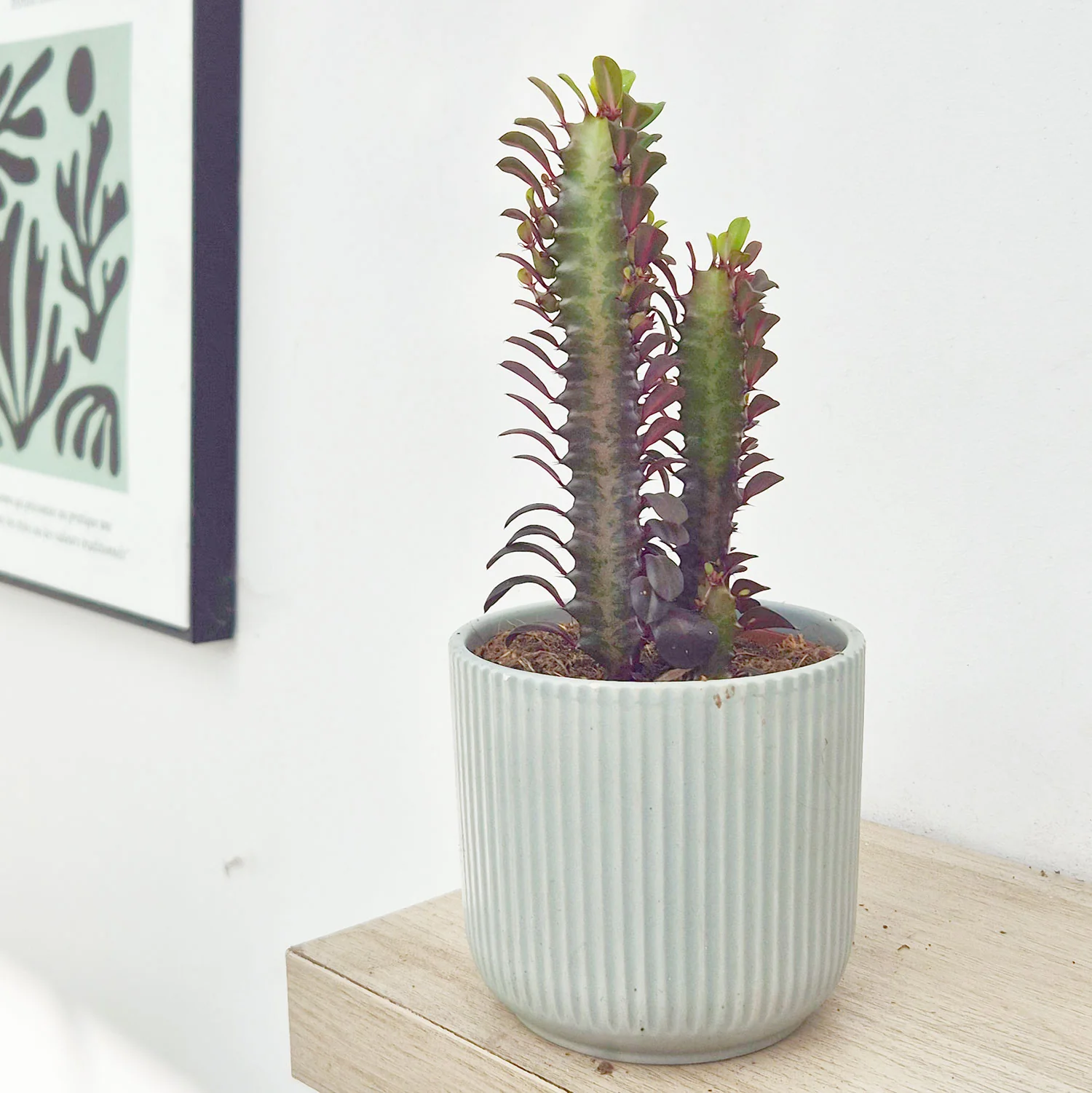
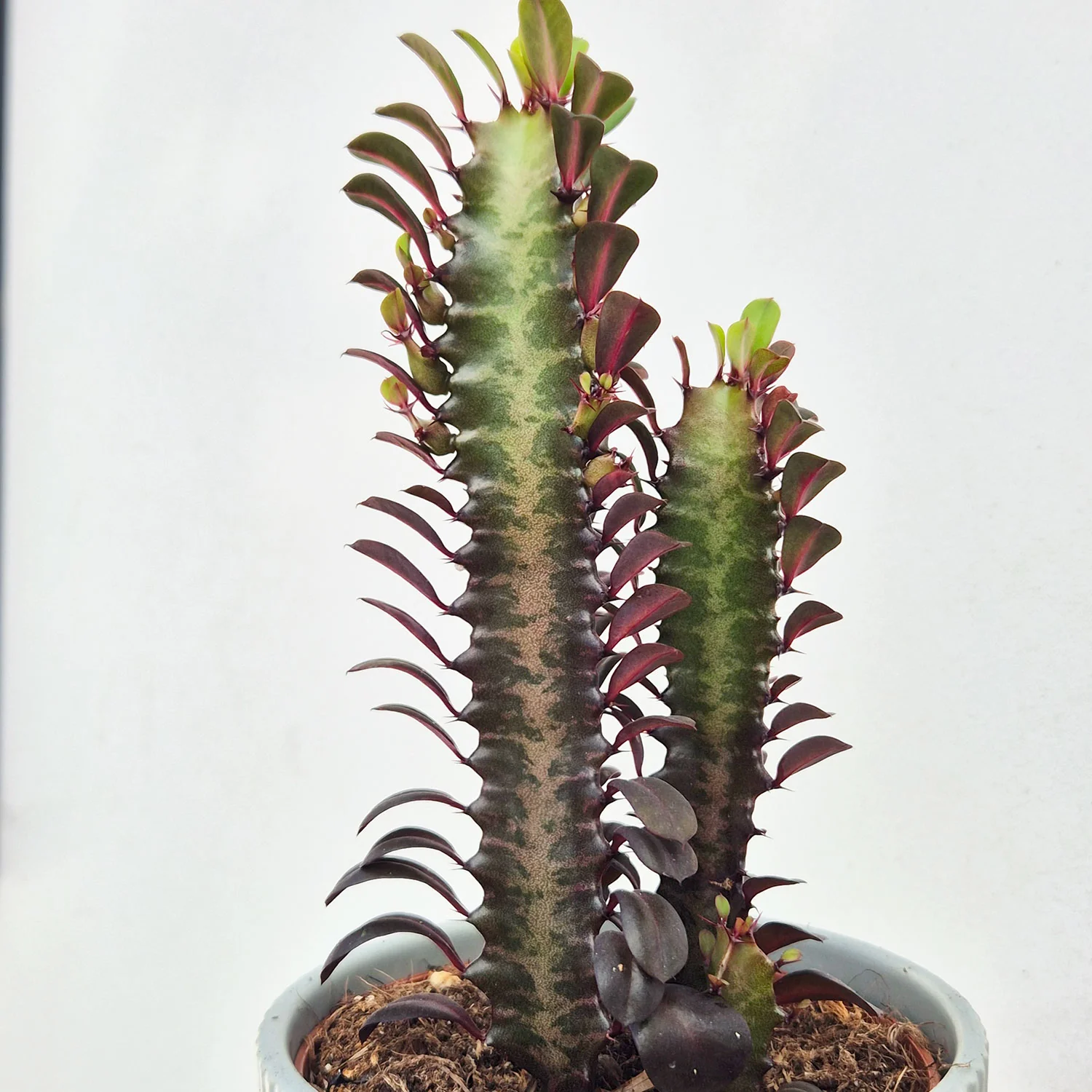
20 - 25cm Red Euphorbia Trigona Cactus 12cm Pot House Plant
Euphorbia trigona, commonly known as the African Milk Tree or Cathedral Cactus, is a striking succulent species prized for its geometric form, vertical growth, and rich green texture. Native to Central Africa, this dramatic species has become a favourite among collectors and designers for its bold silhouette and ease of care.
Despite its cactus-like appearance, Euphorbia trigona belongs to the spurge family (Euphorbiaceae), not the cactus family. Its tall, upright stems are triangular in cross-section, with prominent ridges lined by small, paired thorns and tear-shaped leaves that emerge from each ridge. Mature specimens branch symmetrically, forming an architectural, tree-like shape.
Available in both classic green and rubra (red) varieties, Euphorbia trigona adds height, structure, and contemporary tropical flair to any plant collection — a living sculpture that combines resilience with refined beauty.
Euphorbia trigona – Care Guide
Light
Thrives in bright, indirect light to full sun. Provide at least 6 hours of bright light daily to maintain compact growth and vibrant colouring. Indoors, a south- or west-facing window is ideal. Too little light will cause stretching and reduced leaf production.
Watering
Water sparingly. Allow the soil to dry out completely between waterings. During the growing season (spring to early autumn), water every 2–3 weeks, depending on temperature and humidity. In winter, water only once every 4–6 weeks or when the soil is fully dry. Overwatering is the most common cause of decline.
Temperature and Humidity
-
Temperature: Prefers warmth between 20–30 °C; avoid temperatures below 12 °C.
-
Humidity: Tolerates average indoor humidity and dry air extremely well. Keep away from cold drafts or sudden temperature changes.
Soil and Potting
Use a fast-draining cactus or succulent mix — a blend of sandy soil, perlite, and pumice works best. Terracotta pots are ideal for moisture control, allowing excess water to evaporate. Repot every 2–3 years in spring to refresh the mix and promote healthy root growth.
Feeding
Feed once every 6–8 weeks during the growing season with a diluted cactus or succulent fertiliser. Avoid feeding in winter when the plant is dormant. Over-fertilising can cause soft, weak growth.
Pruning and Maintenance
Prune in spring to control size or shape, using clean, sharp shears. Be cautious of the milky white sap (latex) released when cut — it is toxic and can irritate skin or eyes. Always wear gloves when handling or pruning. Remove any damaged or dead leaves to maintain a tidy appearance.
Growth and Maturity
A moderate to fast grower, Euphorbia trigona can reach up to 1.5–2 metres indoors, forming multiple upright stems that branch near the base. Over time, it develops a majestic, columnar silhouette with subtle ridges and clusters of small leaves near the stem tips. In ideal outdoor conditions, mature plants may even produce small, inconspicuous yellow-green flowers.
Common Issues
-
Yellowing or soft stems: Overwatering or poor drainage.
-
Leaning stems: Insufficient light or uneven growth.
-
Leaf drop: Seasonal adjustment or low humidity (normal if minimal).
-
Pests: Occasionally mealybugs or scale; remove manually and treat with neem oil or insecticidal soap.
Background and Benefits
Native to Central Africa, Euphorbia trigona thrives in arid and semi-arid climates where it stores water in its thick, fleshy stems to survive drought. It has become a staple of modern plant collections for its architectural aesthetic, adaptability, and structural elegance.
Unlike true cacti, Euphorbia trigona exudes a milky latex sap when cut — a natural adaptation that deters pests and helps the plant seal wounds. It symbolises endurance and stability, making it a popular choice for contemporary interiors and minimalist landscapes. The plant also contributes to air purification, absorbing carbon dioxide and releasing oxygen efficiently even in dry environments.
Quick Care Summary
Light: Bright, indirect light to full sun
Water: Allow soil to dry completely between watering; water sparingly
Temperature: 20–30 °C; avoid below 12 °C
Humidity: Low to moderate; prefers dry air
Soil: Gritty, well-draining mix – cactus soil, sand, perlite, pumice
Feed: Every 6–8 weeks in spring/summer
Growth: Upright, columnar habit, 1.5–2 m; triangular stems with small thorns and tear-shaped leaves
⚠️ Toxicity note: The milky sap (latex) is toxic and can irritate skin and eyes. Always wear gloves when handling. Keep away from pets and children.
Styling Tip
Display Euphorbia trigona in a tall terracotta or concrete planter to complement its vertical, sculptural shape. Its striking form pairs beautifully with minimalist interiors, desert-themed arrangements, or modern tropical compositions. Combine it with textural companions such as Sansevieria ‘Moonshine’, Aloe vera, or Crassula ovata for a balanced, architectural display. Whether as a stand-alone statement or part of a curated succulent collection, it brings drama, structure, and refined resilience to any setting.
Original: $11.86
-70%$11.86
$3.56Product Information
Product Information
Shipping & Returns
Shipping & Returns
Description
Euphorbia trigona, commonly known as the African Milk Tree or Cathedral Cactus, is a striking succulent species prized for its geometric form, vertical growth, and rich green texture. Native to Central Africa, this dramatic species has become a favourite among collectors and designers for its bold silhouette and ease of care.
Despite its cactus-like appearance, Euphorbia trigona belongs to the spurge family (Euphorbiaceae), not the cactus family. Its tall, upright stems are triangular in cross-section, with prominent ridges lined by small, paired thorns and tear-shaped leaves that emerge from each ridge. Mature specimens branch symmetrically, forming an architectural, tree-like shape.
Available in both classic green and rubra (red) varieties, Euphorbia trigona adds height, structure, and contemporary tropical flair to any plant collection — a living sculpture that combines resilience with refined beauty.
Euphorbia trigona – Care Guide
Light
Thrives in bright, indirect light to full sun. Provide at least 6 hours of bright light daily to maintain compact growth and vibrant colouring. Indoors, a south- or west-facing window is ideal. Too little light will cause stretching and reduced leaf production.
Watering
Water sparingly. Allow the soil to dry out completely between waterings. During the growing season (spring to early autumn), water every 2–3 weeks, depending on temperature and humidity. In winter, water only once every 4–6 weeks or when the soil is fully dry. Overwatering is the most common cause of decline.
Temperature and Humidity
-
Temperature: Prefers warmth between 20–30 °C; avoid temperatures below 12 °C.
-
Humidity: Tolerates average indoor humidity and dry air extremely well. Keep away from cold drafts or sudden temperature changes.
Soil and Potting
Use a fast-draining cactus or succulent mix — a blend of sandy soil, perlite, and pumice works best. Terracotta pots are ideal for moisture control, allowing excess water to evaporate. Repot every 2–3 years in spring to refresh the mix and promote healthy root growth.
Feeding
Feed once every 6–8 weeks during the growing season with a diluted cactus or succulent fertiliser. Avoid feeding in winter when the plant is dormant. Over-fertilising can cause soft, weak growth.
Pruning and Maintenance
Prune in spring to control size or shape, using clean, sharp shears. Be cautious of the milky white sap (latex) released when cut — it is toxic and can irritate skin or eyes. Always wear gloves when handling or pruning. Remove any damaged or dead leaves to maintain a tidy appearance.
Growth and Maturity
A moderate to fast grower, Euphorbia trigona can reach up to 1.5–2 metres indoors, forming multiple upright stems that branch near the base. Over time, it develops a majestic, columnar silhouette with subtle ridges and clusters of small leaves near the stem tips. In ideal outdoor conditions, mature plants may even produce small, inconspicuous yellow-green flowers.
Common Issues
-
Yellowing or soft stems: Overwatering or poor drainage.
-
Leaning stems: Insufficient light or uneven growth.
-
Leaf drop: Seasonal adjustment or low humidity (normal if minimal).
-
Pests: Occasionally mealybugs or scale; remove manually and treat with neem oil or insecticidal soap.
Background and Benefits
Native to Central Africa, Euphorbia trigona thrives in arid and semi-arid climates where it stores water in its thick, fleshy stems to survive drought. It has become a staple of modern plant collections for its architectural aesthetic, adaptability, and structural elegance.
Unlike true cacti, Euphorbia trigona exudes a milky latex sap when cut — a natural adaptation that deters pests and helps the plant seal wounds. It symbolises endurance and stability, making it a popular choice for contemporary interiors and minimalist landscapes. The plant also contributes to air purification, absorbing carbon dioxide and releasing oxygen efficiently even in dry environments.
Quick Care Summary
Light: Bright, indirect light to full sun
Water: Allow soil to dry completely between watering; water sparingly
Temperature: 20–30 °C; avoid below 12 °C
Humidity: Low to moderate; prefers dry air
Soil: Gritty, well-draining mix – cactus soil, sand, perlite, pumice
Feed: Every 6–8 weeks in spring/summer
Growth: Upright, columnar habit, 1.5–2 m; triangular stems with small thorns and tear-shaped leaves
⚠️ Toxicity note: The milky sap (latex) is toxic and can irritate skin and eyes. Always wear gloves when handling. Keep away from pets and children.
Styling Tip
Display Euphorbia trigona in a tall terracotta or concrete planter to complement its vertical, sculptural shape. Its striking form pairs beautifully with minimalist interiors, desert-themed arrangements, or modern tropical compositions. Combine it with textural companions such as Sansevieria ‘Moonshine’, Aloe vera, or Crassula ovata for a balanced, architectural display. Whether as a stand-alone statement or part of a curated succulent collection, it brings drama, structure, and refined resilience to any setting.