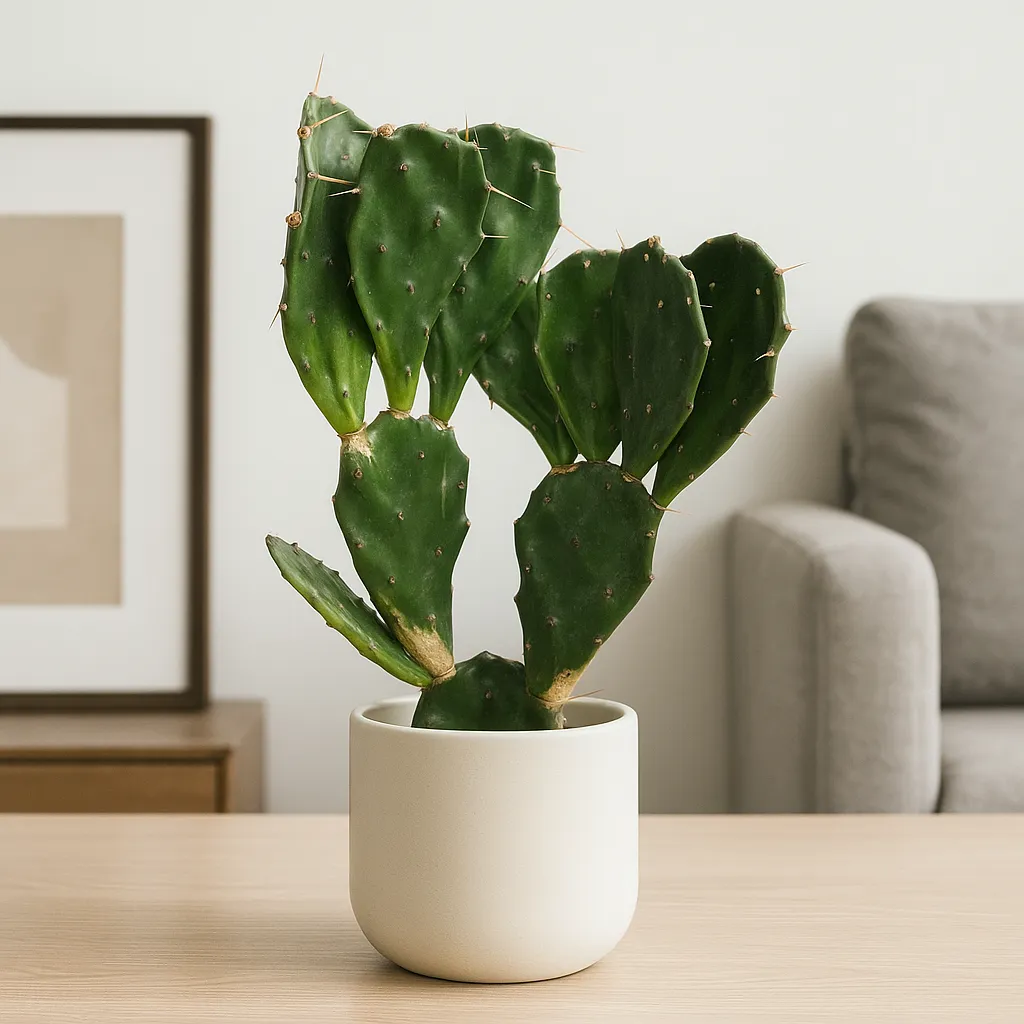
20 - 30cm Opuntia Jamaicensis 11cm Pot House Plant
Opuntia jamaicensis is a striking and unusual member of the prickly pear cactus group, native to the Caribbean, particularly Jamaica as its name suggests. Like many opuntias, it belongs to the Cactaceae family and is admired for its bold growth habit, distinctive pads, and seasonal flowers and fruits.
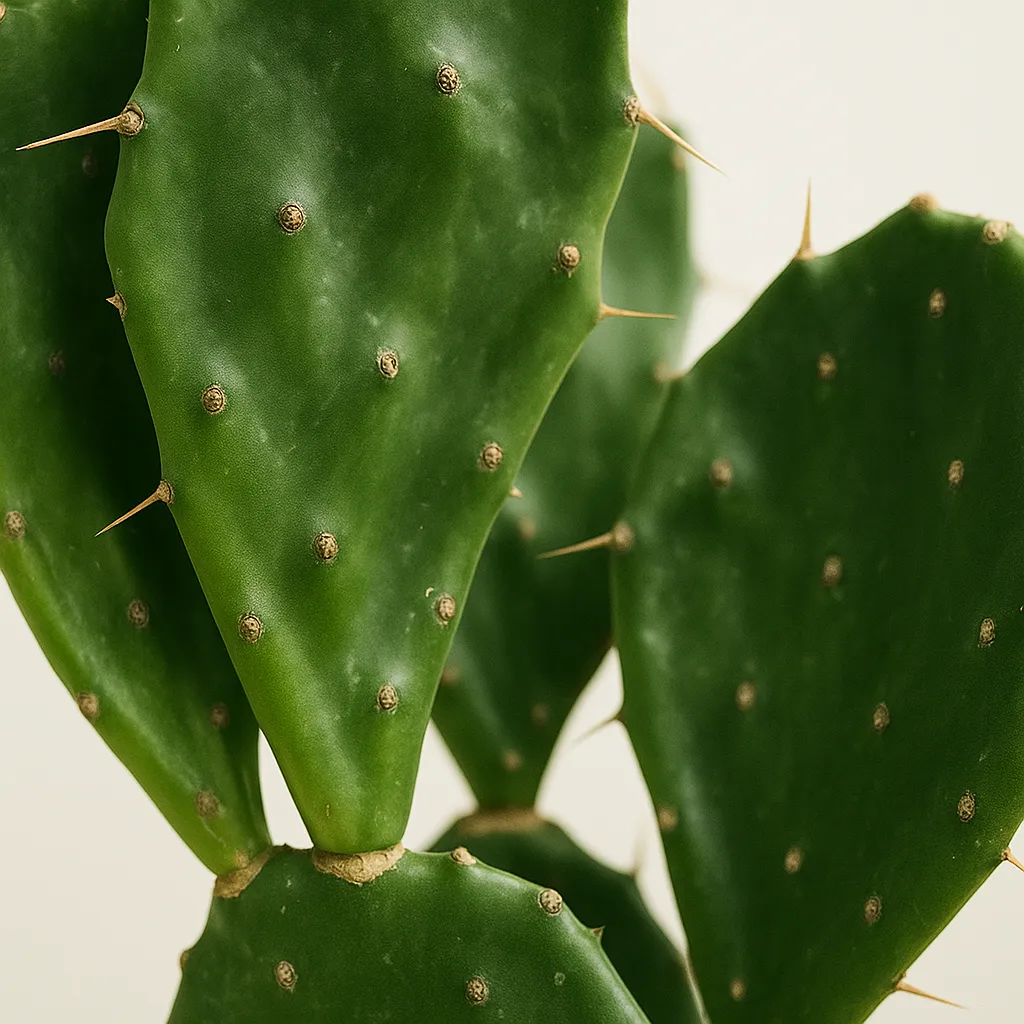
The plant develops flat, rounded pads (cladodes) that are bright green when young, maturing into a deeper green as they thicken. Each pad is dotted with clusters of small spines and glochids (tiny, hair-like barbed bristles), which can easily detach and irritate the skin, so handling with care is essential. The pads grow in a branching, sculptural manner, often stacked one atop another to form an upright, bushy plant with great architectural appeal.
In the right conditions, Opuntia jamaicensis produces vibrant yellow flowers, which are followed by small, edible fruits often referred to as prickly pears. The contrast between the fleshy pads, delicate flowers, and jewel-like fruits makes this cactus highly decorative and rewarding to grow.
In its native habitat, it thrives in arid and semi-arid landscapes, tolerating high heat and periods of drought. As a houseplant or greenhouse specimen in the UK, it is valued for its resilience, low-maintenance needs, and bold, sculptural beauty.
Opuntia jamaicensis – Care Guide
Light
Requires full sun to thrive. Indoors, place it in the brightest location available, such as a south-facing window. Outdoors in summer, it will appreciate direct sunlight. Without adequate light, pads may become elongated and weak.
Watering
Water sparingly. During the growing season (spring and summer), allow the soil to dry out almost completely before watering again. In winter, water only enough to prevent the pads from shrivelling, as the plant naturally rests. Overwatering is the most common cause of problems and can quickly lead to root rot.
Temperature and Humidity
-
Temperature: Prefers warmth, ideally 18–30°C in summer. It can tolerate brief drops to around 5–7°C if kept dry, but prolonged cold will damage it.
-
Humidity: Naturally adapted to dry air; no extra humidity is required. Ensure good airflow around the plant to prevent fungal issues.
Soil and Potting
Use a gritty, free-draining cactus compost. Adding sand, pumice, or perlite improves aeration and prevents excess moisture from lingering around the roots. Plant in a pot with drainage holes to avoid waterlogging. Repot only every few years, as Opuntia dislikes frequent disturbance.
Feeding
Feed monthly during the growing season with a diluted cactus fertiliser, preferably one with low nitrogen but higher phosphorus and potassium to encourage flowering and fruiting. Do not feed in winter.
Pruning and Maintenance
Prune with care to shape the plant or remove damaged pads. Pads can be carefully detached and, if desired, propagated by letting them callous for a few days before planting into dry cactus soil. Always wear gloves or use tongs to avoid contact with glochids.
Flowering and Fruiting
When mature and grown in strong light, Opuntia jamaicensis may produce large yellow blooms in summer, followed by small prickly pear fruits. The fruits are edible once the spines and glochids are removed, though they are smaller and less fleshy than commercial varieties.
Common Issues
-
Shrivelling pads: A sign of prolonged drought; give a thorough watering.
-
Soft, mushy pads: Indicates overwatering or rot; remove affected parts and adjust watering.
-
Pests: Occasionally affected by scale insects or mealybugs. Wipe pads regularly and treat infestations promptly.
Background and Benefits
This species has evolved to withstand harsh sun and long dry spells, making it an ideal choice for cactus enthusiasts who enjoy low-maintenance but visually impactful plants. It adds a bold, architectural presence to collections and is often used in xeriscaping in warmer climates. In cooler regions like the UK, it thrives in containers, conservatories, or bright indoor spaces.
✅ Quick Care Summary
-
Light: Full sun indoors or outdoors
-
Water: Allow soil to dry completely between waterings
-
Temperature: 18–30°C ideal; minimum 5–7°C if dry
-
Soil: Gritty, well-draining cactus mix
-
Feed: Monthly in growing season
-
Growth: Upright pads, yellow flowers, edible fruits
Original: $26.38
-70%$26.38
$7.91Product Information
Product Information
Shipping & Returns
Shipping & Returns
Description
Opuntia jamaicensis is a striking and unusual member of the prickly pear cactus group, native to the Caribbean, particularly Jamaica as its name suggests. Like many opuntias, it belongs to the Cactaceae family and is admired for its bold growth habit, distinctive pads, and seasonal flowers and fruits.
The plant develops flat, rounded pads (cladodes) that are bright green when young, maturing into a deeper green as they thicken. Each pad is dotted with clusters of small spines and glochids (tiny, hair-like barbed bristles), which can easily detach and irritate the skin, so handling with care is essential. The pads grow in a branching, sculptural manner, often stacked one atop another to form an upright, bushy plant with great architectural appeal.
In the right conditions, Opuntia jamaicensis produces vibrant yellow flowers, which are followed by small, edible fruits often referred to as prickly pears. The contrast between the fleshy pads, delicate flowers, and jewel-like fruits makes this cactus highly decorative and rewarding to grow.
In its native habitat, it thrives in arid and semi-arid landscapes, tolerating high heat and periods of drought. As a houseplant or greenhouse specimen in the UK, it is valued for its resilience, low-maintenance needs, and bold, sculptural beauty.
Opuntia jamaicensis – Care Guide
Light
Requires full sun to thrive. Indoors, place it in the brightest location available, such as a south-facing window. Outdoors in summer, it will appreciate direct sunlight. Without adequate light, pads may become elongated and weak.
Watering
Water sparingly. During the growing season (spring and summer), allow the soil to dry out almost completely before watering again. In winter, water only enough to prevent the pads from shrivelling, as the plant naturally rests. Overwatering is the most common cause of problems and can quickly lead to root rot.
Temperature and Humidity
-
Temperature: Prefers warmth, ideally 18–30°C in summer. It can tolerate brief drops to around 5–7°C if kept dry, but prolonged cold will damage it.
-
Humidity: Naturally adapted to dry air; no extra humidity is required. Ensure good airflow around the plant to prevent fungal issues.
Soil and Potting
Use a gritty, free-draining cactus compost. Adding sand, pumice, or perlite improves aeration and prevents excess moisture from lingering around the roots. Plant in a pot with drainage holes to avoid waterlogging. Repot only every few years, as Opuntia dislikes frequent disturbance.
Feeding
Feed monthly during the growing season with a diluted cactus fertiliser, preferably one with low nitrogen but higher phosphorus and potassium to encourage flowering and fruiting. Do not feed in winter.
Pruning and Maintenance
Prune with care to shape the plant or remove damaged pads. Pads can be carefully detached and, if desired, propagated by letting them callous for a few days before planting into dry cactus soil. Always wear gloves or use tongs to avoid contact with glochids.
Flowering and Fruiting
When mature and grown in strong light, Opuntia jamaicensis may produce large yellow blooms in summer, followed by small prickly pear fruits. The fruits are edible once the spines and glochids are removed, though they are smaller and less fleshy than commercial varieties.
Common Issues
-
Shrivelling pads: A sign of prolonged drought; give a thorough watering.
-
Soft, mushy pads: Indicates overwatering or rot; remove affected parts and adjust watering.
-
Pests: Occasionally affected by scale insects or mealybugs. Wipe pads regularly and treat infestations promptly.
Background and Benefits
This species has evolved to withstand harsh sun and long dry spells, making it an ideal choice for cactus enthusiasts who enjoy low-maintenance but visually impactful plants. It adds a bold, architectural presence to collections and is often used in xeriscaping in warmer climates. In cooler regions like the UK, it thrives in containers, conservatories, or bright indoor spaces.
✅ Quick Care Summary
-
Light: Full sun indoors or outdoors
-
Water: Allow soil to dry completely between waterings
-
Temperature: 18–30°C ideal; minimum 5–7°C if dry
-
Soil: Gritty, well-draining cactus mix
-
Feed: Monthly in growing season
-
Growth: Upright pads, yellow flowers, edible fruits