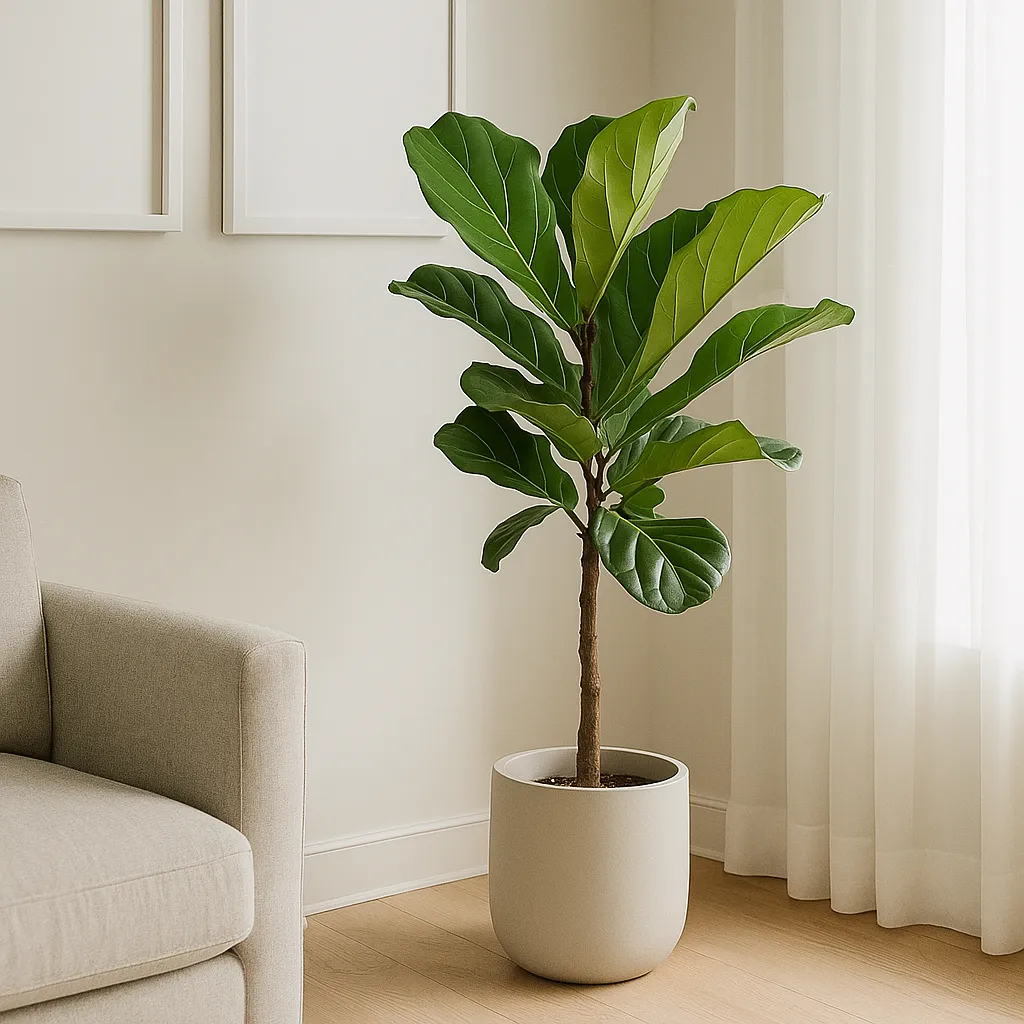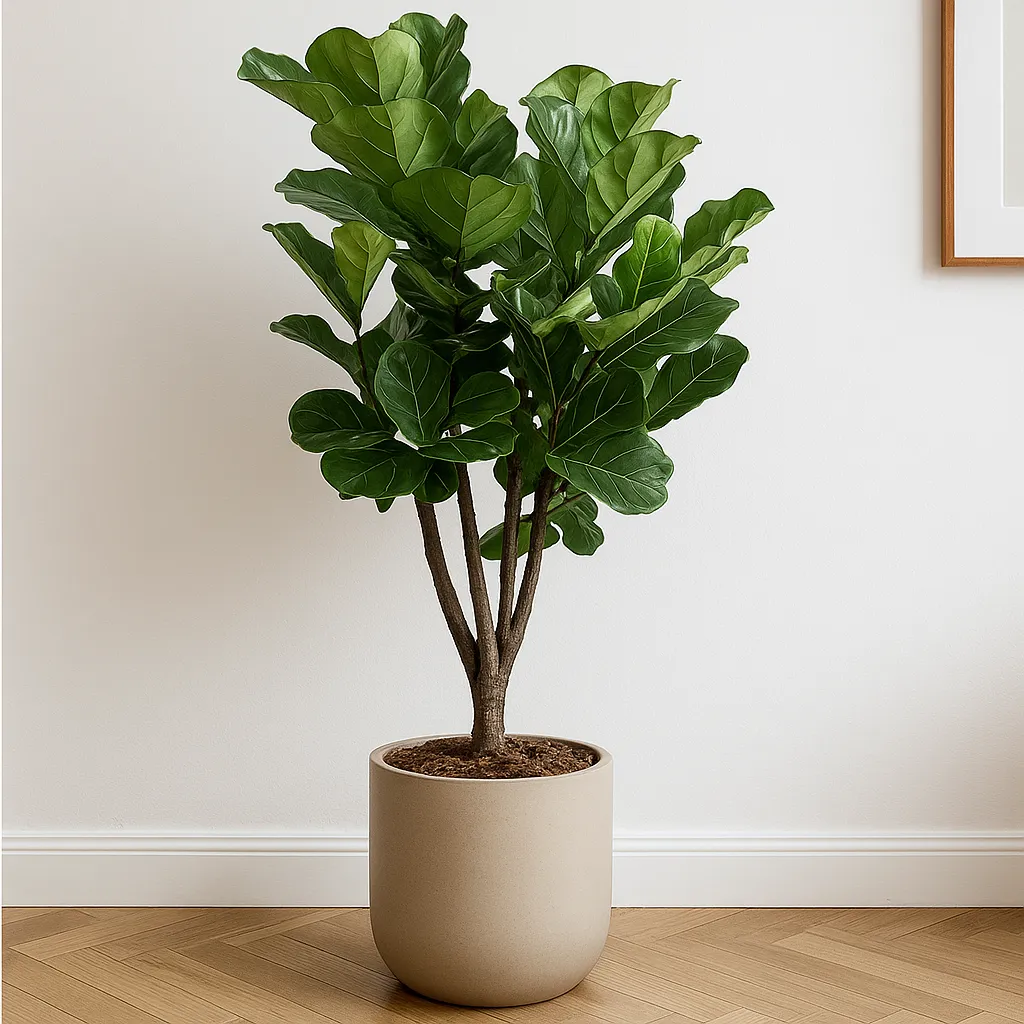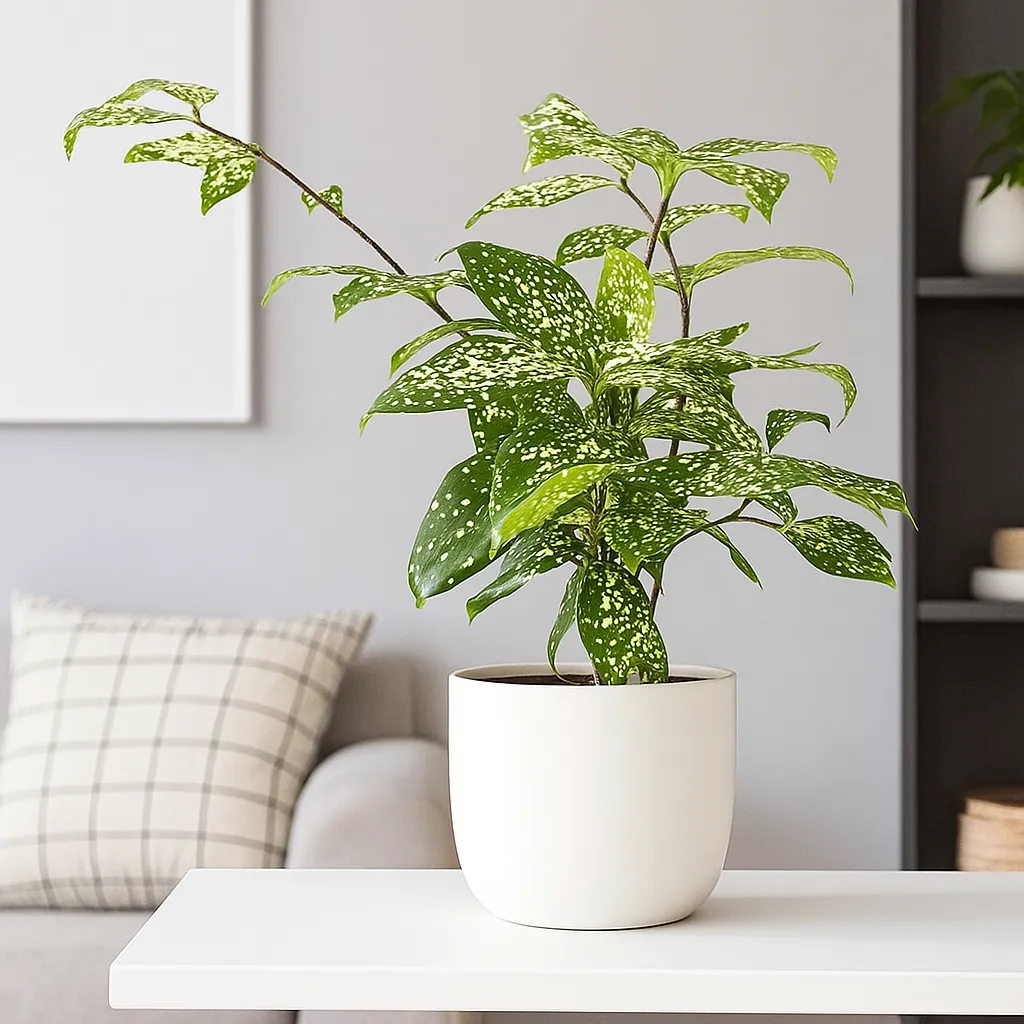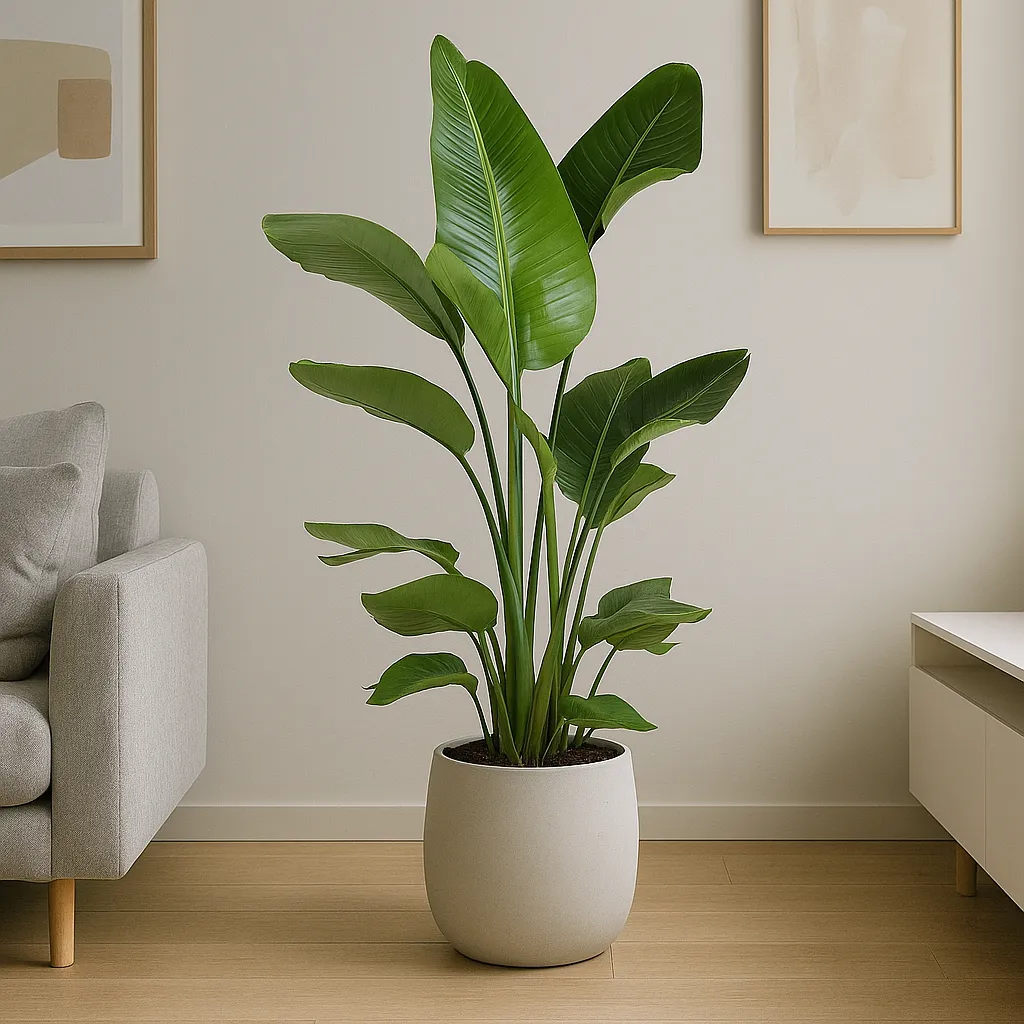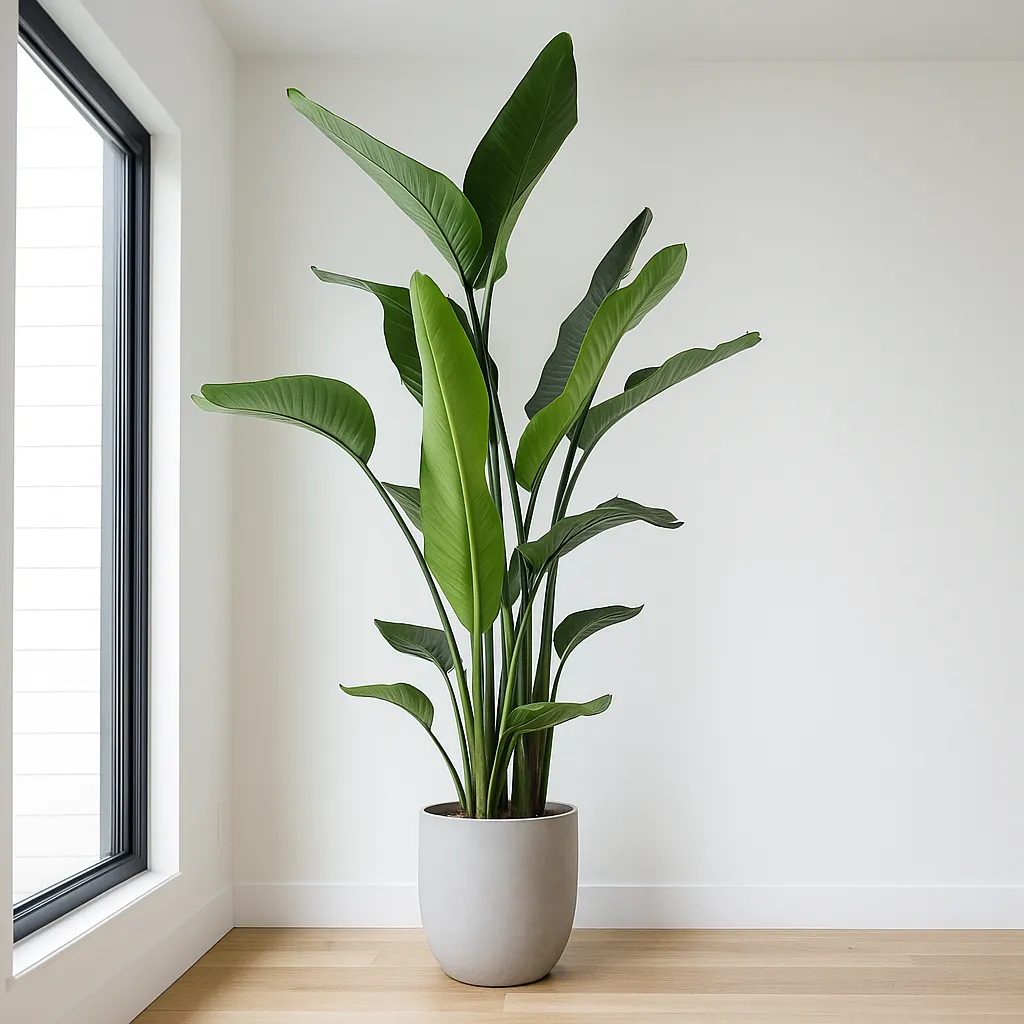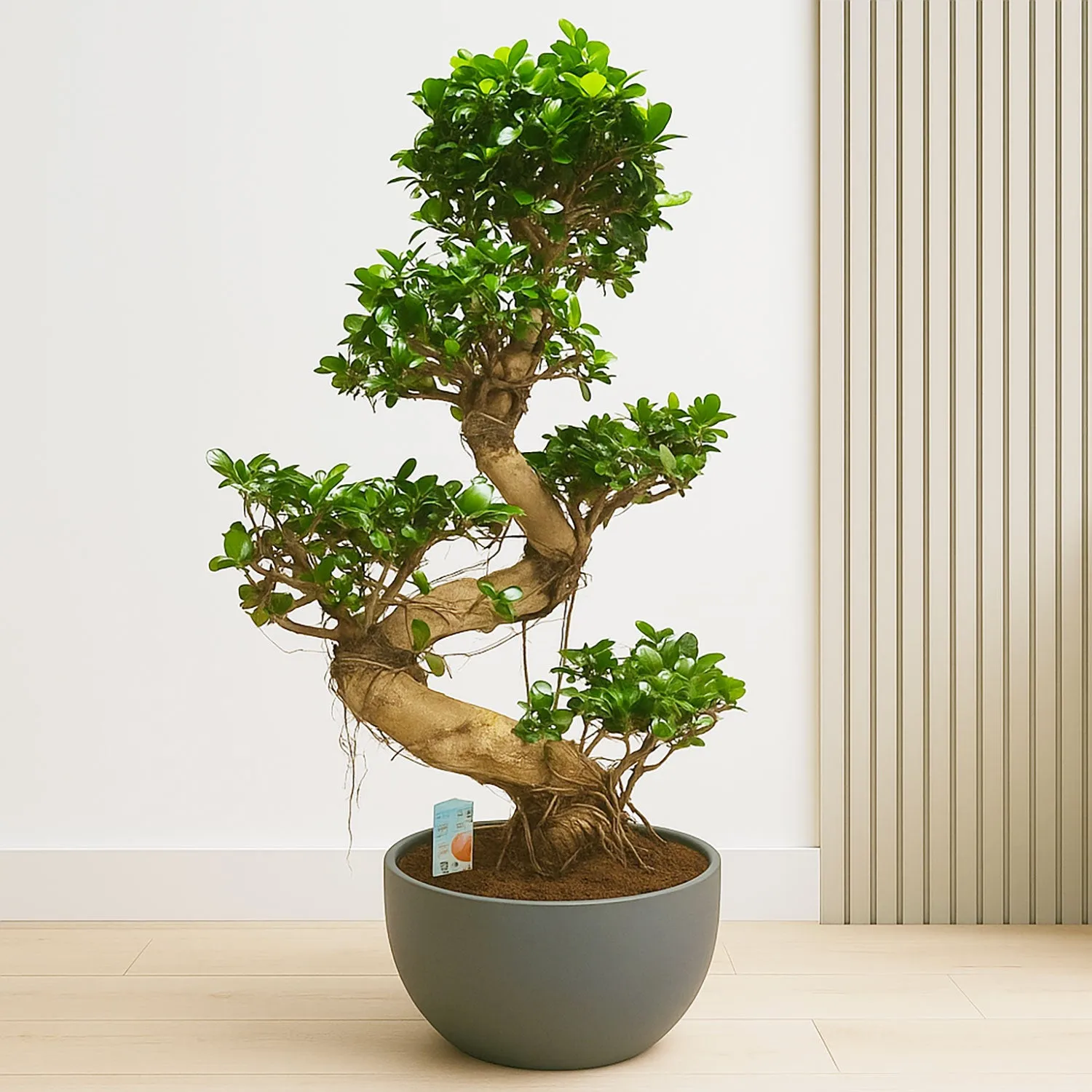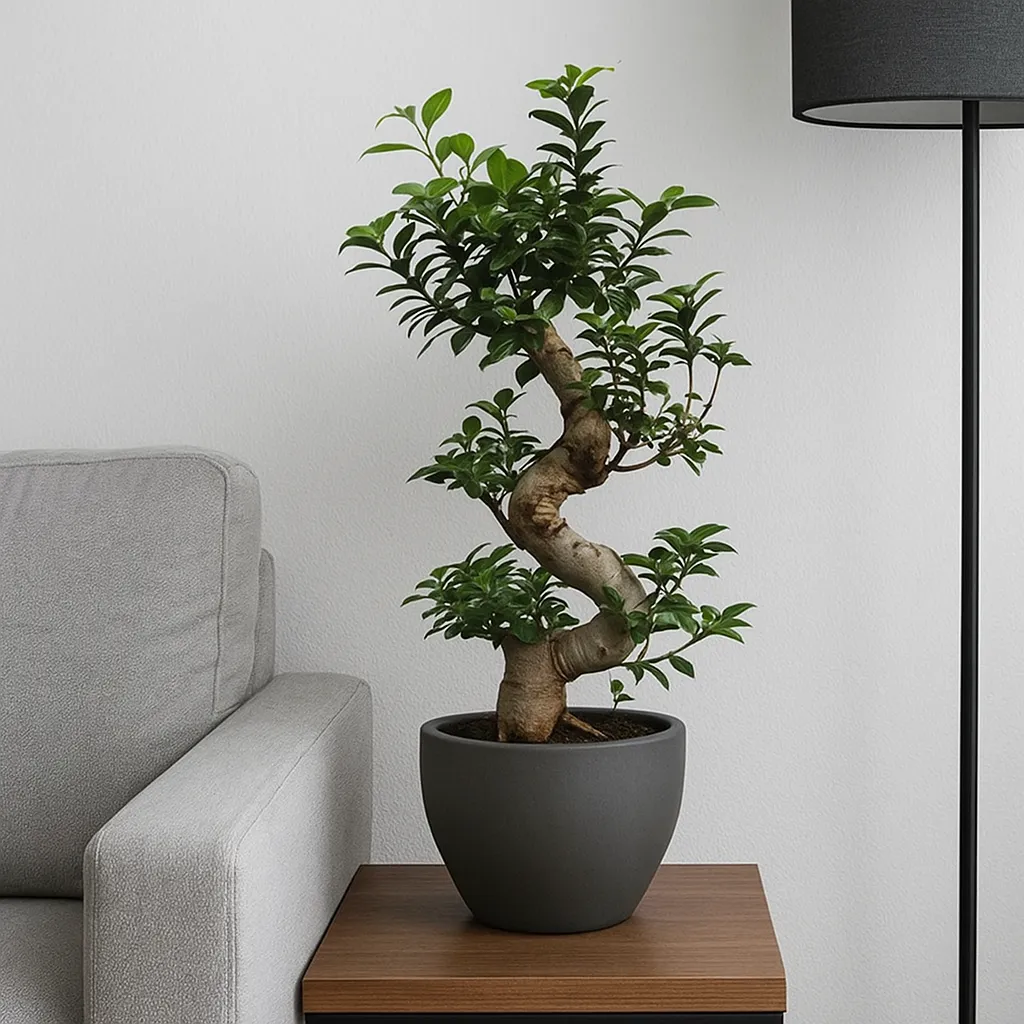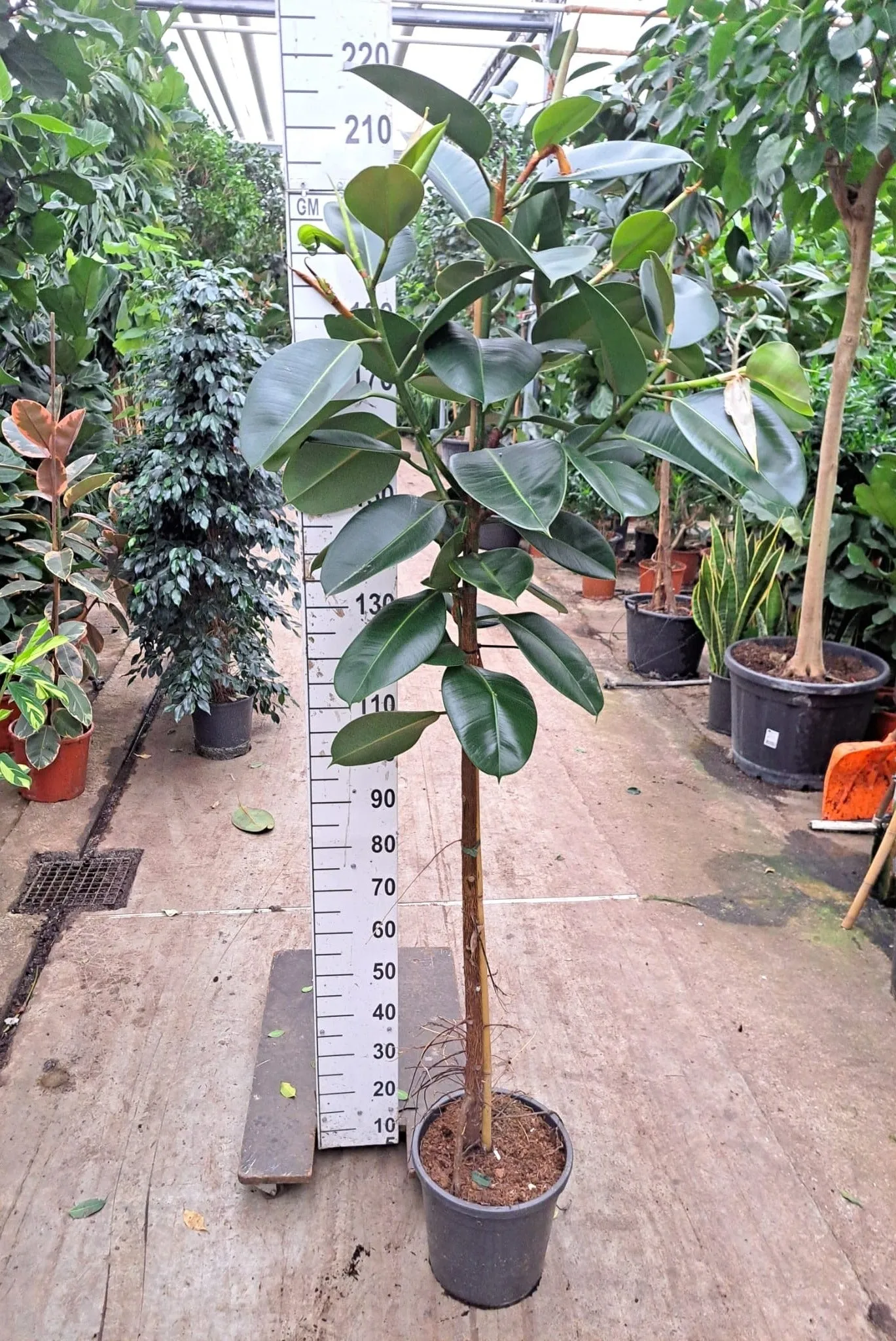
200 - 220cm XXL Ficus Elastica Robusta 30cm Pot House Plant
🌿 Ficus elastica ‘Robusta’ — Rubber Plant
Ficus elastica ‘Robusta’ is a classic and robust cultivar of the well-known Rubber Plant, celebrated for its large, deep green, glossy leaves and strong, upright growth. Native to the tropical forests of Southeast Asia, this evergreen species has long been a favourite in interior plant design due to its tough, low-maintenance nature, air-purifying qualities, and striking, sculptural form. The ‘Robusta’ variety is known for its broader, more leathery leaves compared to other cultivars, giving it a fuller, lusher appearance and making it one of the best choices for both beginner plant owners and seasoned collectors. It is extremely adaptable, tolerates a wide range of indoor conditions, and can be grown as a compact shrub or trained into a tall indoor tree. Whether used as a solo feature plant or part of a curated foliage display, Ficus ‘Robusta’ brings timeless elegance to any space.
☀️ Light Requirements
-
Indoors: Thrives in bright, indirect light. Can tolerate moderate light and occasional direct sun if acclimatised.
-
Too much sun: Intense, direct sunlight may scorch the leaves.
-
Too little light: Leads to slower growth and more spaced-out leaves.
🌡️ Temperature & Humidity
-
Ideal temperature: 18–26°C (65–79°F)
-
Minimum temperature: Keep above 13°C (55°F); protect from cold draughts.
-
Humidity: Tolerates typical indoor humidity but appreciates the occasional misting in dry environments.
💧 Watering Needs
-
Watering frequency: Water when the top 5–7 cm of soil feels dry. Allow excess water to drain freely.
-
Winter: Reduce watering frequency slightly as growth slows.
-
Tip: Overwatering is the most common issue — let soil dry out between waterings.
🪴 Soil & Repotting
-
Soil type: Well-draining houseplant compost with added perlite or orchid bark for improved aeration.
-
pH: Slightly acidic to neutral (6.0–7.0)
-
Repotting: Every 1–2 years, or when rootbound. Spring is the ideal time to repot.
🌱 Feeding
-
Growing season (spring–summer): Feed once a month with a balanced liquid fertiliser.
-
Autumn–winter: Feeding can be reduced or paused depending on light and growth rate.
✂️ Pruning & Maintenance
-
Pruning: Responds well to pruning to maintain size or encourage bushier growth. Use gloves when cutting, as the sap can irritate.
-
Leaf care: Wipe with a damp cloth to remove dust and maintain shine.
-
Growth habit: Upright and columnar — can grow into a tall specimen or kept compact with regular shaping.
🌾 Propagation
-
Stem cuttings: Take a cutting with at least one node and leaf, and root in water or moist compost.
-
Air layering: A successful method for larger or older plants.
🐛 Pests & Problems
-
Common pests: Mealybugs, spider mites, aphids, and scale insects.
-
Symptoms: Sticky leaves, yellowing, or pest visibility on the underside of foliage.
-
Treatment: Wipe down leaves and treat with neem oil or insecticidal soap.
-
Common issues:
-
Leaf drop: Often caused by overwatering, sudden temperature shifts, or poor light.
-
Brown leaf edges: Typically due to dry air or inconsistent watering.
-
🧤 Toxicity & Safety
-
Toxicity: Toxic to pets and humans if ingested. The sap may irritate skin or eyes.
-
Precaution: Wear gloves when handling and keep out of reach of pets and children.
🏡 Indoor Care Highlights
-
A timeless, ultra-reliable indoor plant ideal for homes, offices, and commercial spaces.
-
Great for adding vertical greenery and structure to modern interiors.
-
Works well as a stand-alone statement piece or grouped with lighter variegated foliage for contrast.
-
Incredibly resilient and forgiving — perfect for busy plant owners or first-time indoor gardeners.
-
A versatile classic that blends beautifully with any interior style, from minimalist to jungle-inspired.
Product Information
Product Information
Shipping & Returns
Shipping & Returns
Description
🌿 Ficus elastica ‘Robusta’ — Rubber Plant
Ficus elastica ‘Robusta’ is a classic and robust cultivar of the well-known Rubber Plant, celebrated for its large, deep green, glossy leaves and strong, upright growth. Native to the tropical forests of Southeast Asia, this evergreen species has long been a favourite in interior plant design due to its tough, low-maintenance nature, air-purifying qualities, and striking, sculptural form. The ‘Robusta’ variety is known for its broader, more leathery leaves compared to other cultivars, giving it a fuller, lusher appearance and making it one of the best choices for both beginner plant owners and seasoned collectors. It is extremely adaptable, tolerates a wide range of indoor conditions, and can be grown as a compact shrub or trained into a tall indoor tree. Whether used as a solo feature plant or part of a curated foliage display, Ficus ‘Robusta’ brings timeless elegance to any space.
☀️ Light Requirements
-
Indoors: Thrives in bright, indirect light. Can tolerate moderate light and occasional direct sun if acclimatised.
-
Too much sun: Intense, direct sunlight may scorch the leaves.
-
Too little light: Leads to slower growth and more spaced-out leaves.
🌡️ Temperature & Humidity
-
Ideal temperature: 18–26°C (65–79°F)
-
Minimum temperature: Keep above 13°C (55°F); protect from cold draughts.
-
Humidity: Tolerates typical indoor humidity but appreciates the occasional misting in dry environments.
💧 Watering Needs
-
Watering frequency: Water when the top 5–7 cm of soil feels dry. Allow excess water to drain freely.
-
Winter: Reduce watering frequency slightly as growth slows.
-
Tip: Overwatering is the most common issue — let soil dry out between waterings.
🪴 Soil & Repotting
-
Soil type: Well-draining houseplant compost with added perlite or orchid bark for improved aeration.
-
pH: Slightly acidic to neutral (6.0–7.0)
-
Repotting: Every 1–2 years, or when rootbound. Spring is the ideal time to repot.
🌱 Feeding
-
Growing season (spring–summer): Feed once a month with a balanced liquid fertiliser.
-
Autumn–winter: Feeding can be reduced or paused depending on light and growth rate.
✂️ Pruning & Maintenance
-
Pruning: Responds well to pruning to maintain size or encourage bushier growth. Use gloves when cutting, as the sap can irritate.
-
Leaf care: Wipe with a damp cloth to remove dust and maintain shine.
-
Growth habit: Upright and columnar — can grow into a tall specimen or kept compact with regular shaping.
🌾 Propagation
-
Stem cuttings: Take a cutting with at least one node and leaf, and root in water or moist compost.
-
Air layering: A successful method for larger or older plants.
🐛 Pests & Problems
-
Common pests: Mealybugs, spider mites, aphids, and scale insects.
-
Symptoms: Sticky leaves, yellowing, or pest visibility on the underside of foliage.
-
Treatment: Wipe down leaves and treat with neem oil or insecticidal soap.
-
Common issues:
-
Leaf drop: Often caused by overwatering, sudden temperature shifts, or poor light.
-
Brown leaf edges: Typically due to dry air or inconsistent watering.
-
🧤 Toxicity & Safety
-
Toxicity: Toxic to pets and humans if ingested. The sap may irritate skin or eyes.
-
Precaution: Wear gloves when handling and keep out of reach of pets and children.
🏡 Indoor Care Highlights
-
A timeless, ultra-reliable indoor plant ideal for homes, offices, and commercial spaces.
-
Great for adding vertical greenery and structure to modern interiors.
-
Works well as a stand-alone statement piece or grouped with lighter variegated foliage for contrast.
-
Incredibly resilient and forgiving — perfect for busy plant owners or first-time indoor gardeners.
-
A versatile classic that blends beautifully with any interior style, from minimalist to jungle-inspired.