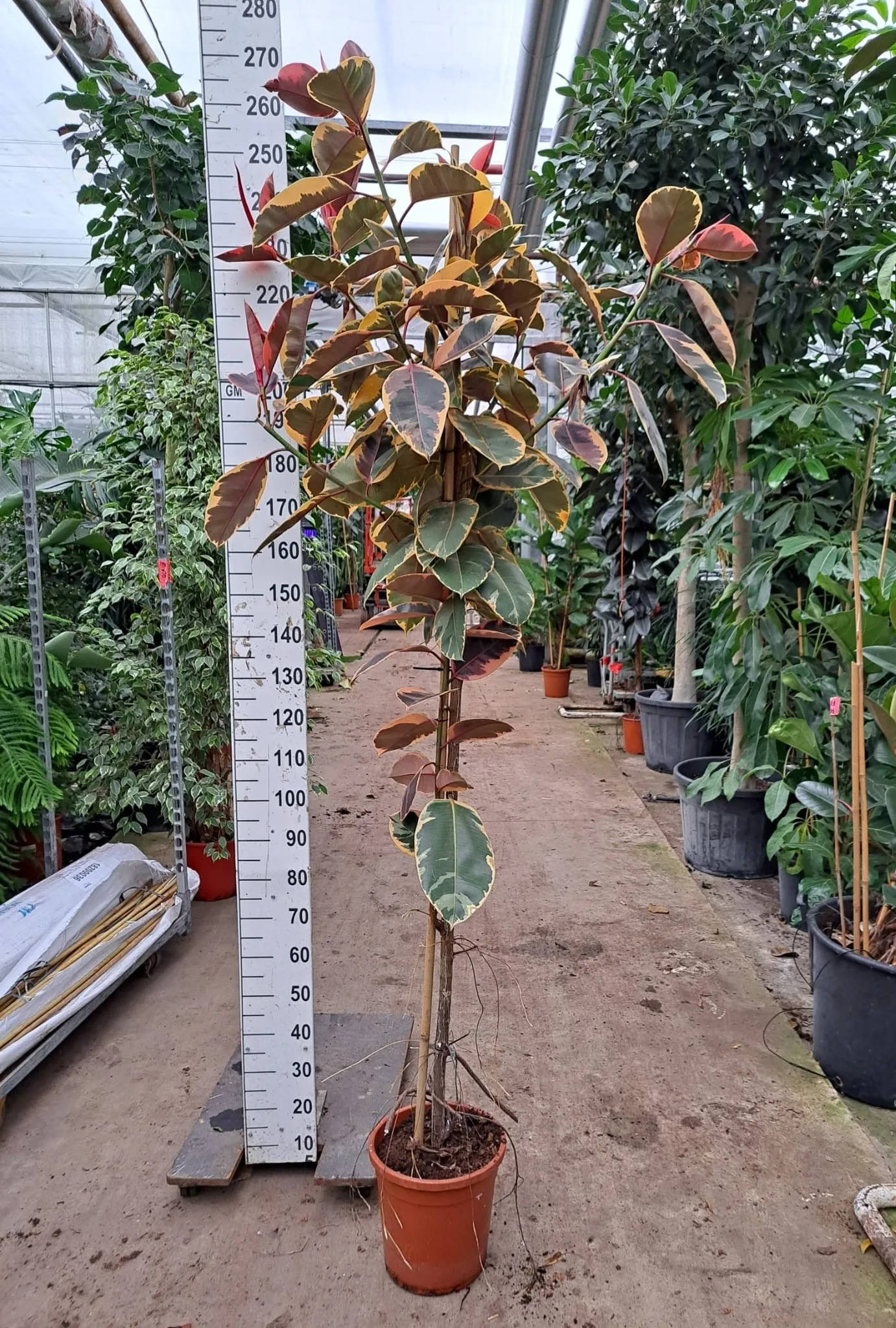
240 - 260cm XXL Ficus Elastica Belize 30cm Pot House Plant
🌿 Ficus elastica ‘Belize’ — Belize Rubber Plant
Ficus elastica ‘Belize’, also known as the Belize Rubber Plant, is a bold and eye-catching cultivar of the classic Ficus elastica, known for its stunning tricolour variegation and thick, glossy leaves. Each leaf features a marbled blend of dusky green, creamy white, and warm pink or coral hues, with new growth often emerging in rich shades of rose or blush. This tropical evergreen, native to Southeast Asia, grows upright with a strong central stem and broad foliage, giving it a structural, tree-like presence over time. Ficus ‘Belize’ thrives in bright indoor spaces, where its vibrant colours can truly shine. With minimal maintenance and patience, it matures into a show-stopping houseplant that adds colour, drama, and tropical elegance to any room or plant display.
☀️ Light Requirements
-
Indoors: Prefers bright, indirect light to maintain its vivid variegation and leaf colour.
-
Direct sun: Tolerates some gentle morning sun, but avoid harsh midday rays which may scorch the pink and white areas.
-
Low light: May result in slower growth and fading of the variegation.
🌡️ Temperature & Humidity
-
Ideal temperature: 18–26°C (65–79°F)
-
Minimum temperature: Keep above 13°C (55°F); protect from draughts and temperature fluctuations.
-
Humidity: Tolerant of average indoor humidity, but appreciates occasional misting in dry rooms.
💧 Watering Needs
-
Watering frequency: Water when the top 5–7 cm of soil feels dry. Allow excess water to drain and avoid leaving the plant sitting in water.
-
Winter: Water less frequently, ensuring soil is dry between waterings.
-
Tip: Use room-temperature, filtered water to prevent spotting on the lighter foliage.
🪴 Soil & Repotting
-
Soil type: Well-draining potting mix. A blend of standard compost with added perlite or bark is ideal.
-
pH: Slightly acidic to neutral (6.0–7.0)
-
Repotting: Every 1–2 years, or when rootbound. Spring is the best time to repot and refresh the soil.
🌱 Feeding
-
Growing season (spring–summer): Feed once a month with a balanced houseplant fertiliser.
-
Autumn–winter: Reduce or pause feeding if growth slows.
✂️ Pruning & Maintenance
-
Pruning: Can be pruned to shape or encourage branching. Use clean, sharp secateurs and wear gloves to avoid contact with sap.
-
Leaf care: Wipe leaves regularly with a damp cloth to remove dust and reveal the colour contrast.
-
Growth habit: Upright and bushy; can be shaped into a small indoor tree with proper support and pruning.
🌾 Propagation
-
Stem cuttings: Take semi-hardwood cuttings with a node and leaf. Root in water or a moist, well-draining substrate.
-
Air layering: A reliable method for propagating more mature plants.
🐛 Pests & Problems
-
Common pests: Mealybugs, scale, aphids, and spider mites.
-
Symptoms: Sticky residue, yellowing leaves, or visible pests on stems and foliage.
-
Treatment: Wipe affected areas and treat with neem oil or insecticidal soap.
-
Common issues:
-
Leaf drop: Often caused by overwatering or sudden environmental change.
-
Loss of variegation: Usually due to inadequate light — move to a brighter location.
-
🧤 Toxicity & Safety
-
Toxicity: Toxic to pets and humans if ingested. Contains latex sap which may irritate the skin.
-
Precaution: Keep out of reach of pets and children, and wear gloves when pruning.
🏡 Indoor Care Highlights
-
A colourful, low-maintenance plant ideal for modern interiors, plant styling, and statement pots.
-
Adds a pop of pink and tropical flair to bright living spaces, conservatories, or workspaces.
-
Pairs well with neutral décor, ceramic pots, and dark-foliage companions like Calathea or Philodendron.
-
A stylish choice for beginners and collectors alike — beautiful, tough, and easy-going.
Product Information
Product Information
Shipping & Returns
Shipping & Returns
Description
🌿 Ficus elastica ‘Belize’ — Belize Rubber Plant
Ficus elastica ‘Belize’, also known as the Belize Rubber Plant, is a bold and eye-catching cultivar of the classic Ficus elastica, known for its stunning tricolour variegation and thick, glossy leaves. Each leaf features a marbled blend of dusky green, creamy white, and warm pink or coral hues, with new growth often emerging in rich shades of rose or blush. This tropical evergreen, native to Southeast Asia, grows upright with a strong central stem and broad foliage, giving it a structural, tree-like presence over time. Ficus ‘Belize’ thrives in bright indoor spaces, where its vibrant colours can truly shine. With minimal maintenance and patience, it matures into a show-stopping houseplant that adds colour, drama, and tropical elegance to any room or plant display.
☀️ Light Requirements
-
Indoors: Prefers bright, indirect light to maintain its vivid variegation and leaf colour.
-
Direct sun: Tolerates some gentle morning sun, but avoid harsh midday rays which may scorch the pink and white areas.
-
Low light: May result in slower growth and fading of the variegation.
🌡️ Temperature & Humidity
-
Ideal temperature: 18–26°C (65–79°F)
-
Minimum temperature: Keep above 13°C (55°F); protect from draughts and temperature fluctuations.
-
Humidity: Tolerant of average indoor humidity, but appreciates occasional misting in dry rooms.
💧 Watering Needs
-
Watering frequency: Water when the top 5–7 cm of soil feels dry. Allow excess water to drain and avoid leaving the plant sitting in water.
-
Winter: Water less frequently, ensuring soil is dry between waterings.
-
Tip: Use room-temperature, filtered water to prevent spotting on the lighter foliage.
🪴 Soil & Repotting
-
Soil type: Well-draining potting mix. A blend of standard compost with added perlite or bark is ideal.
-
pH: Slightly acidic to neutral (6.0–7.0)
-
Repotting: Every 1–2 years, or when rootbound. Spring is the best time to repot and refresh the soil.
🌱 Feeding
-
Growing season (spring–summer): Feed once a month with a balanced houseplant fertiliser.
-
Autumn–winter: Reduce or pause feeding if growth slows.
✂️ Pruning & Maintenance
-
Pruning: Can be pruned to shape or encourage branching. Use clean, sharp secateurs and wear gloves to avoid contact with sap.
-
Leaf care: Wipe leaves regularly with a damp cloth to remove dust and reveal the colour contrast.
-
Growth habit: Upright and bushy; can be shaped into a small indoor tree with proper support and pruning.
🌾 Propagation
-
Stem cuttings: Take semi-hardwood cuttings with a node and leaf. Root in water or a moist, well-draining substrate.
-
Air layering: A reliable method for propagating more mature plants.
🐛 Pests & Problems
-
Common pests: Mealybugs, scale, aphids, and spider mites.
-
Symptoms: Sticky residue, yellowing leaves, or visible pests on stems and foliage.
-
Treatment: Wipe affected areas and treat with neem oil or insecticidal soap.
-
Common issues:
-
Leaf drop: Often caused by overwatering or sudden environmental change.
-
Loss of variegation: Usually due to inadequate light — move to a brighter location.
-
🧤 Toxicity & Safety
-
Toxicity: Toxic to pets and humans if ingested. Contains latex sap which may irritate the skin.
-
Precaution: Keep out of reach of pets and children, and wear gloves when pruning.
🏡 Indoor Care Highlights
-
A colourful, low-maintenance plant ideal for modern interiors, plant styling, and statement pots.
-
Adds a pop of pink and tropical flair to bright living spaces, conservatories, or workspaces.
-
Pairs well with neutral décor, ceramic pots, and dark-foliage companions like Calathea or Philodendron.
-
A stylish choice for beginners and collectors alike — beautiful, tough, and easy-going.