25 - 35cm Ficus Ginseng Bonsai Tree in 18cm Pot House Plant
Ficus Ginseng (botanically Ficus microcarpa ‘Ginseng’) is one of the most popular bonsai trees for beginners and enthusiasts alike, admired for its thick, swollen roots and glossy foliage. Originating from Southeast Asia, it belongs to the Moraceae family and is closely related to the rubber plant and fig tree.
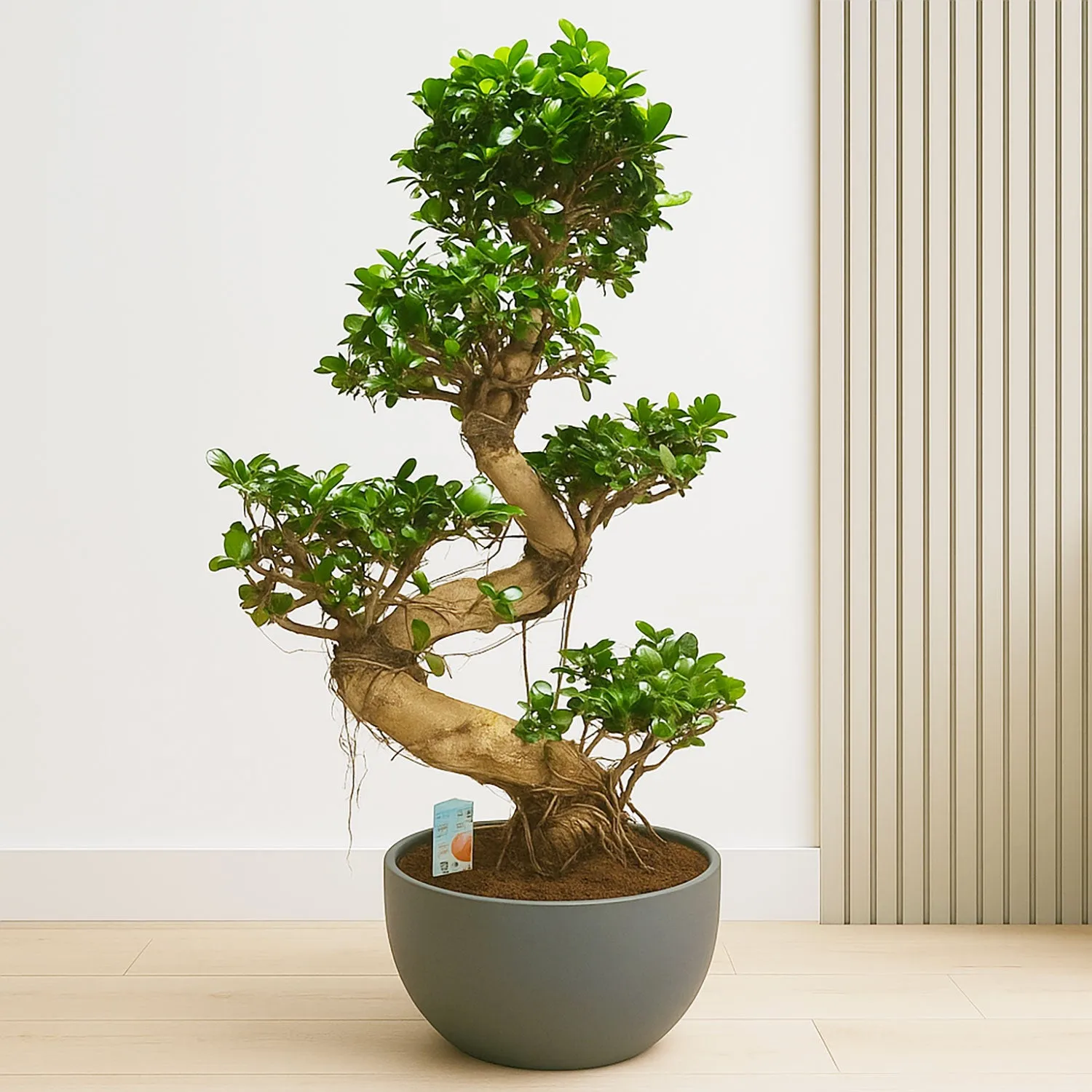
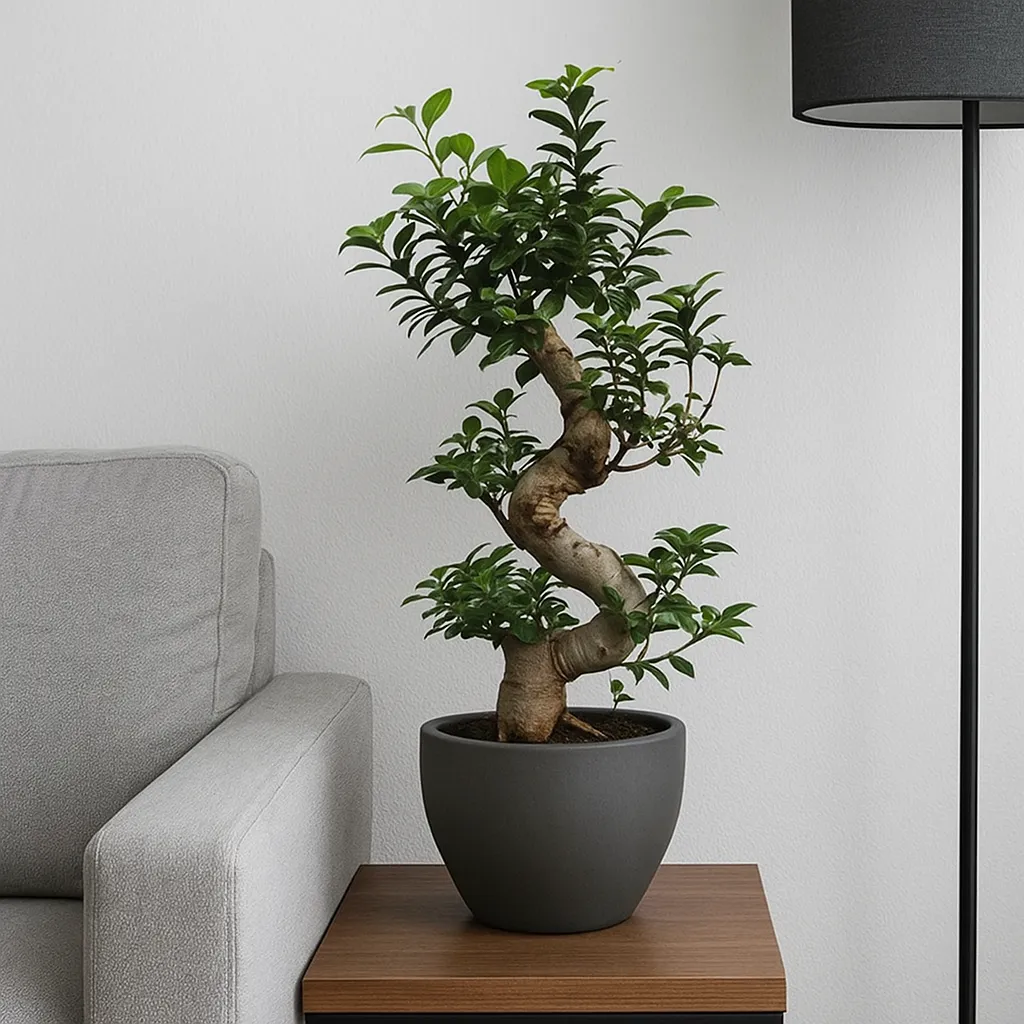
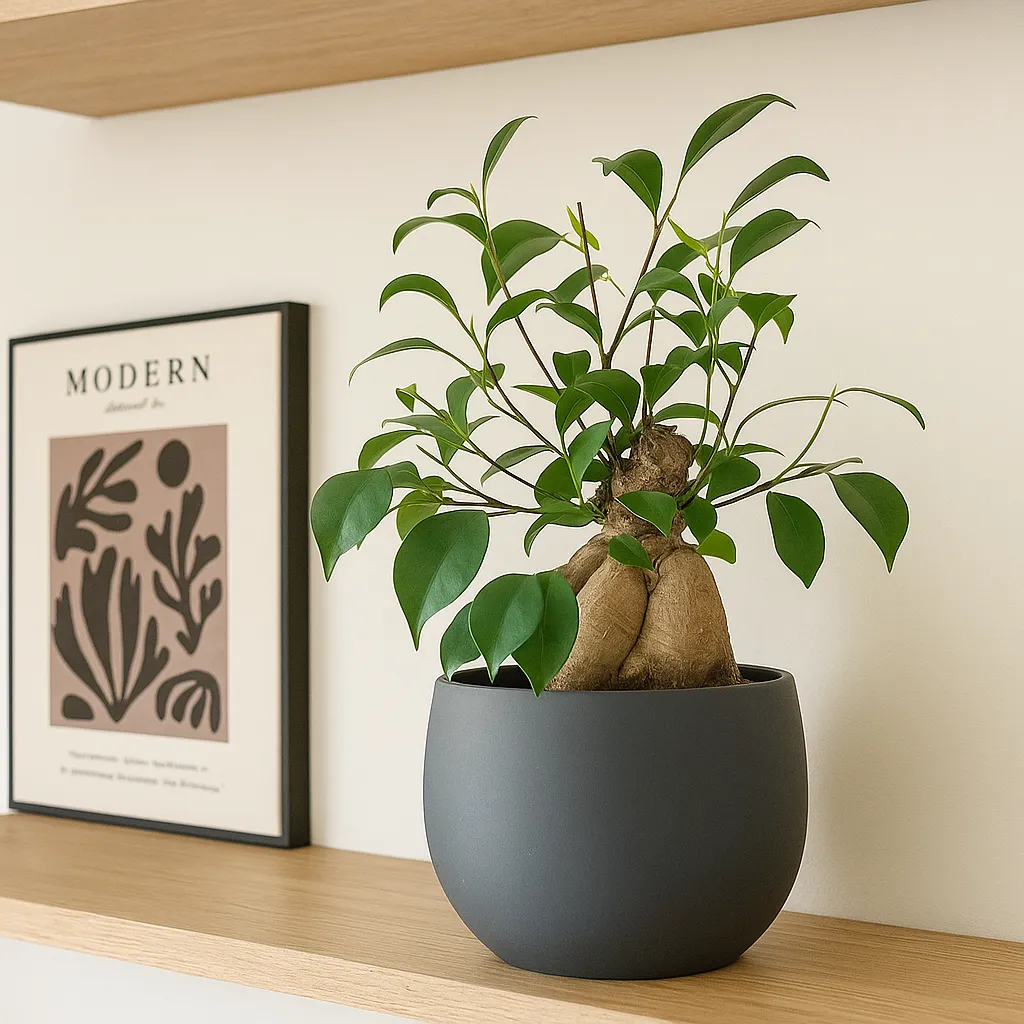
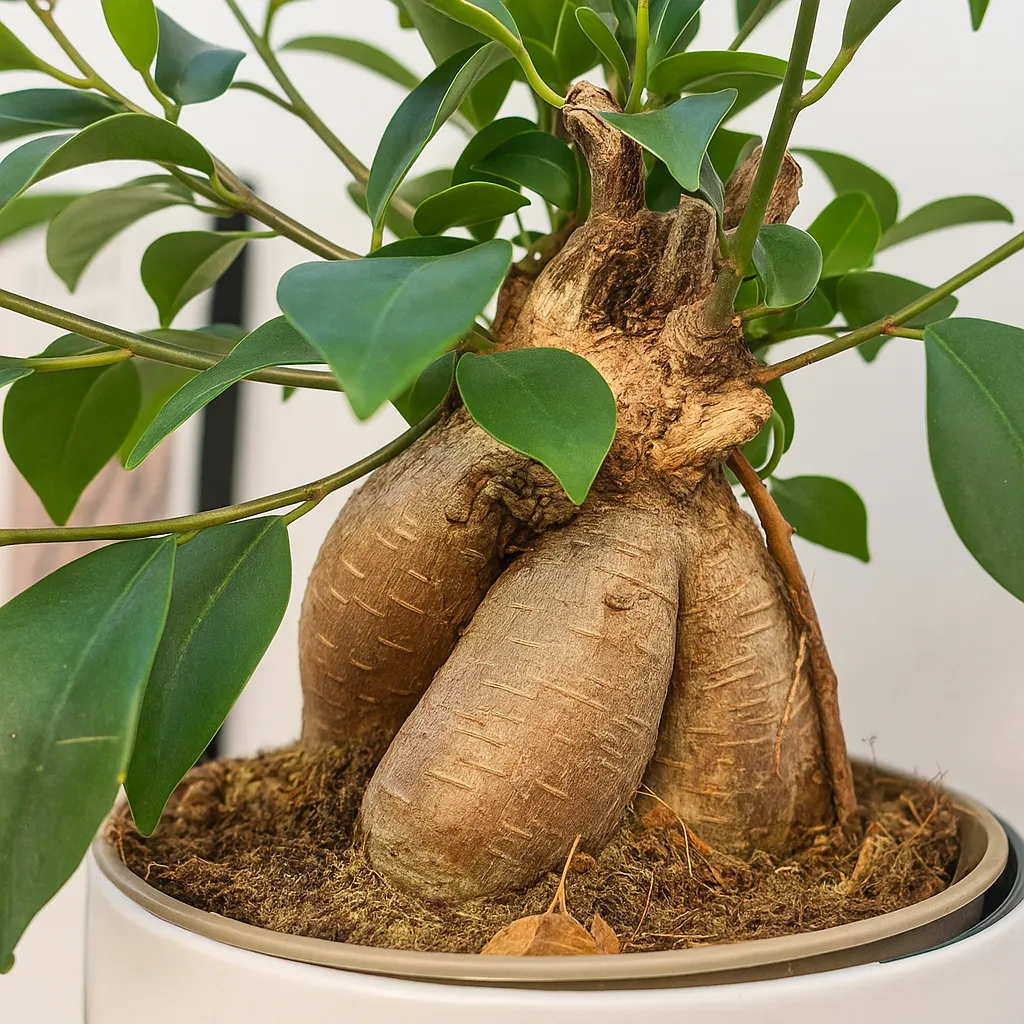
The plant is instantly recognisable by its bulbous, pot-bellied roots, which resemble ginseng roots – hence the name. These exposed roots often twist and curve dramatically, forming natural sculptures that make each specimen unique. From the base rises a dense canopy of small, oval-shaped, glossy green leaves that are easily pruned into elegant bonsai shapes.
Unlike traditional bonsai species, which can take years to train, Ficus Ginseng is relatively easy to style and maintain. It symbolises strength and resilience, making it a popular gift and decorative plant.
Ficus Ginseng Bonsai – Care Guide
Light
Thrives in bright, indirect light. It tolerates medium light but prefers a sunny windowsill. Can be placed outdoors in summer but should be protected from strong midday sun and frost.
Watering
Water when the top 2–3 cm of soil feels dry. Keep soil evenly moist during the growing season but never waterlogged. In winter, reduce watering slightly as growth slows. Mist occasionally to provide extra humidity.
Temperature and Humidity
-
Temperature: Prefers 16–28°C. Protect from draughts and avoid cold below 12°C.
-
Humidity: Adapts to normal household humidity but appreciates occasional misting.
Soil and Potting
Plant in a free-draining bonsai mix with added sand or perlite. Repot every 2–3 years in spring, pruning back roots to maintain compact growth.
Feeding
Feed every 2–3 weeks during spring and summer with a diluted bonsai fertiliser. Reduce feeding in autumn and stop during winter dormancy.
Pruning and Training
Prune regularly to maintain shape. New shoots can be trimmed back to 2–3 leaves once they have grown 6–8 leaves. Wiring can be used to train branches, but the natural twisted roots often form the plant’s main feature.
Growth and Maturity
A moderate grower, reaching 30–60 cm indoors as a bonsai. With good care, it can live for decades.
Common Issues
-
Leaf drop: Often caused by sudden temperature or light changes.
-
Yellow leaves: Overwatering or poor drainage.
-
Pests: Occasionally affected by scale insects, aphids, or spider mites.
Background and Benefits
Ficus Ginseng Bonsai is popular worldwide due to its sculptural roots, easy care, and adaptability to indoor conditions. It is often given as a living symbol of harmony, peace, and resilience, making it both a meaningful and decorative choice.
✅ Quick Care Summary
-
Light: Bright, indirect; tolerates medium
-
Water: Keep soil lightly moist; reduce in winter
-
Temperature: 16–28°C; protect below 12°C
-
Humidity: Average household; mist occasionally
-
Soil: Free-draining bonsai mix
-
Feed: Every 2–3 weeks in spring/summer
-
Growth: Compact bonsai, 30–60 cm; swollen ginseng-like roots with dense green canopy
Original: $32.98
-70%$32.98
$9.89Product Information
Product Information
Shipping & Returns
Shipping & Returns
Description
Ficus Ginseng (botanically Ficus microcarpa ‘Ginseng’) is one of the most popular bonsai trees for beginners and enthusiasts alike, admired for its thick, swollen roots and glossy foliage. Originating from Southeast Asia, it belongs to the Moraceae family and is closely related to the rubber plant and fig tree.
The plant is instantly recognisable by its bulbous, pot-bellied roots, which resemble ginseng roots – hence the name. These exposed roots often twist and curve dramatically, forming natural sculptures that make each specimen unique. From the base rises a dense canopy of small, oval-shaped, glossy green leaves that are easily pruned into elegant bonsai shapes.
Unlike traditional bonsai species, which can take years to train, Ficus Ginseng is relatively easy to style and maintain. It symbolises strength and resilience, making it a popular gift and decorative plant.
Ficus Ginseng Bonsai – Care Guide
Light
Thrives in bright, indirect light. It tolerates medium light but prefers a sunny windowsill. Can be placed outdoors in summer but should be protected from strong midday sun and frost.
Watering
Water when the top 2–3 cm of soil feels dry. Keep soil evenly moist during the growing season but never waterlogged. In winter, reduce watering slightly as growth slows. Mist occasionally to provide extra humidity.
Temperature and Humidity
-
Temperature: Prefers 16–28°C. Protect from draughts and avoid cold below 12°C.
-
Humidity: Adapts to normal household humidity but appreciates occasional misting.
Soil and Potting
Plant in a free-draining bonsai mix with added sand or perlite. Repot every 2–3 years in spring, pruning back roots to maintain compact growth.
Feeding
Feed every 2–3 weeks during spring and summer with a diluted bonsai fertiliser. Reduce feeding in autumn and stop during winter dormancy.
Pruning and Training
Prune regularly to maintain shape. New shoots can be trimmed back to 2–3 leaves once they have grown 6–8 leaves. Wiring can be used to train branches, but the natural twisted roots often form the plant’s main feature.
Growth and Maturity
A moderate grower, reaching 30–60 cm indoors as a bonsai. With good care, it can live for decades.
Common Issues
-
Leaf drop: Often caused by sudden temperature or light changes.
-
Yellow leaves: Overwatering or poor drainage.
-
Pests: Occasionally affected by scale insects, aphids, or spider mites.
Background and Benefits
Ficus Ginseng Bonsai is popular worldwide due to its sculptural roots, easy care, and adaptability to indoor conditions. It is often given as a living symbol of harmony, peace, and resilience, making it both a meaningful and decorative choice.
✅ Quick Care Summary
-
Light: Bright, indirect; tolerates medium
-
Water: Keep soil lightly moist; reduce in winter
-
Temperature: 16–28°C; protect below 12°C
-
Humidity: Average household; mist occasionally
-
Soil: Free-draining bonsai mix
-
Feed: Every 2–3 weeks in spring/summer
-
Growth: Compact bonsai, 30–60 cm; swollen ginseng-like roots with dense green canopy