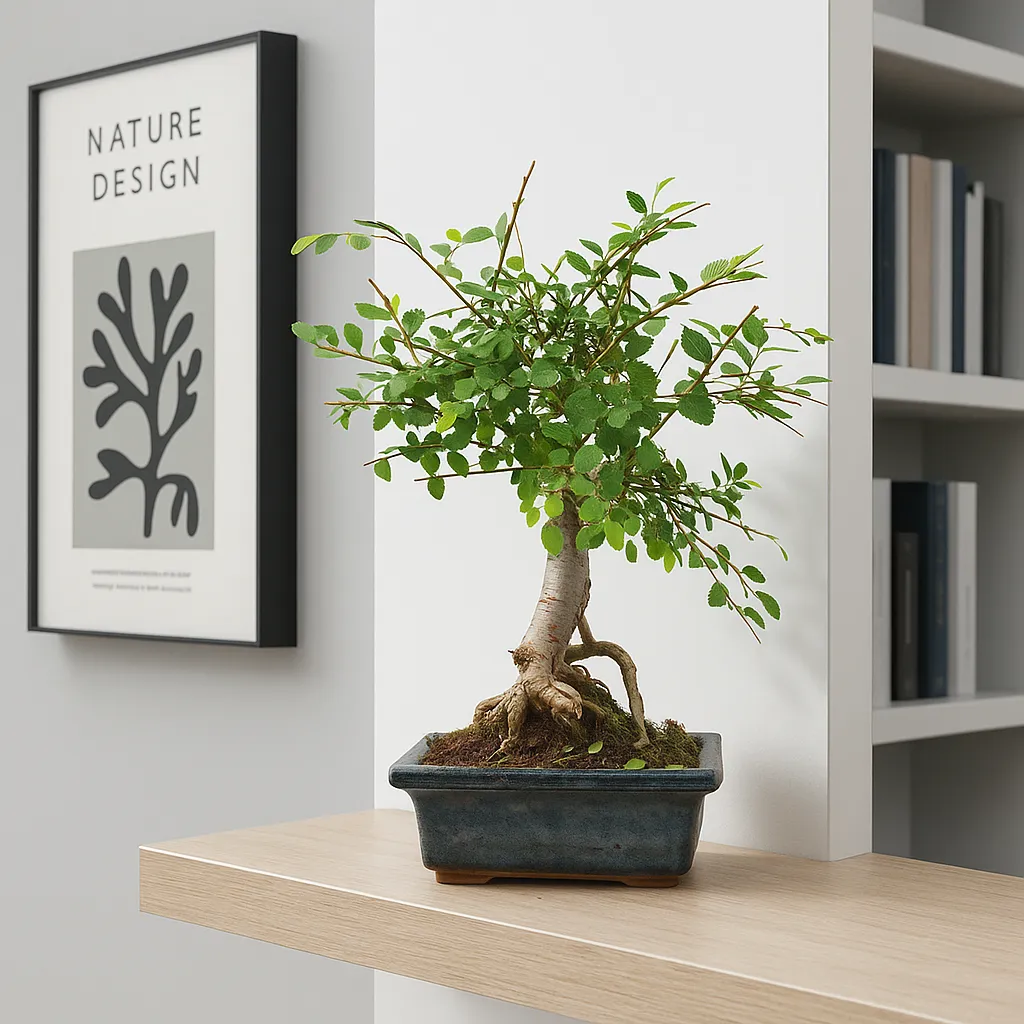
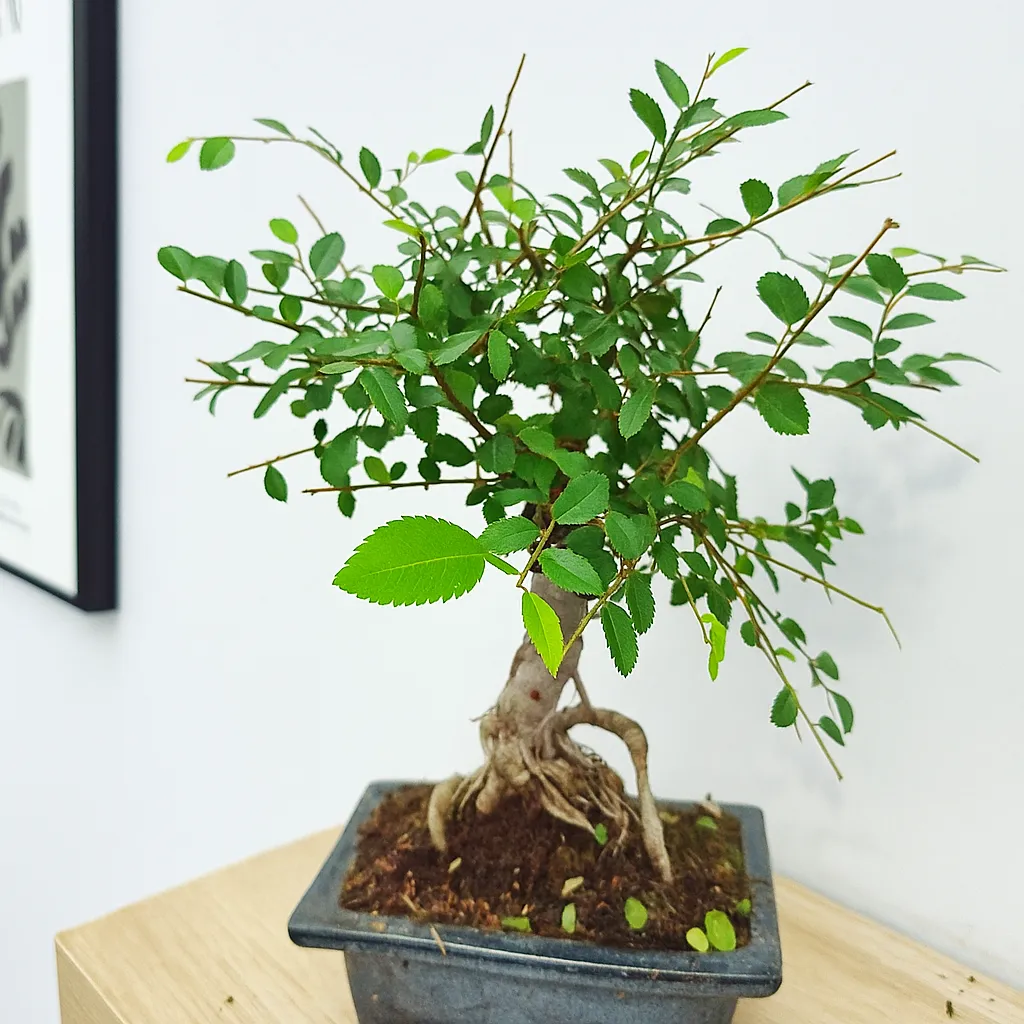
25 - 35cm Ficus Zelkova Bonsai Tree in pot 15cm Ceramic Pot House Plant
The Ficus ‘Zelkova’ Bonsai is not a separate species but a styling technique of Ficus microcarpa (also called Indian Laurel Fig or Banyan Fig), trained in the manner of the Japanese Zelkova (Zelkova serrata). The Japanese Zelkova is a highly regarded deciduous tree in bonsai culture, admired for its broom-style form and fine branching. By contrast, the Ficus Zelkova bonsai replicates this style while using the tropical, evergreen Ficus microcarpa, allowing the “Zelkova look” to be enjoyed indoors year-round.
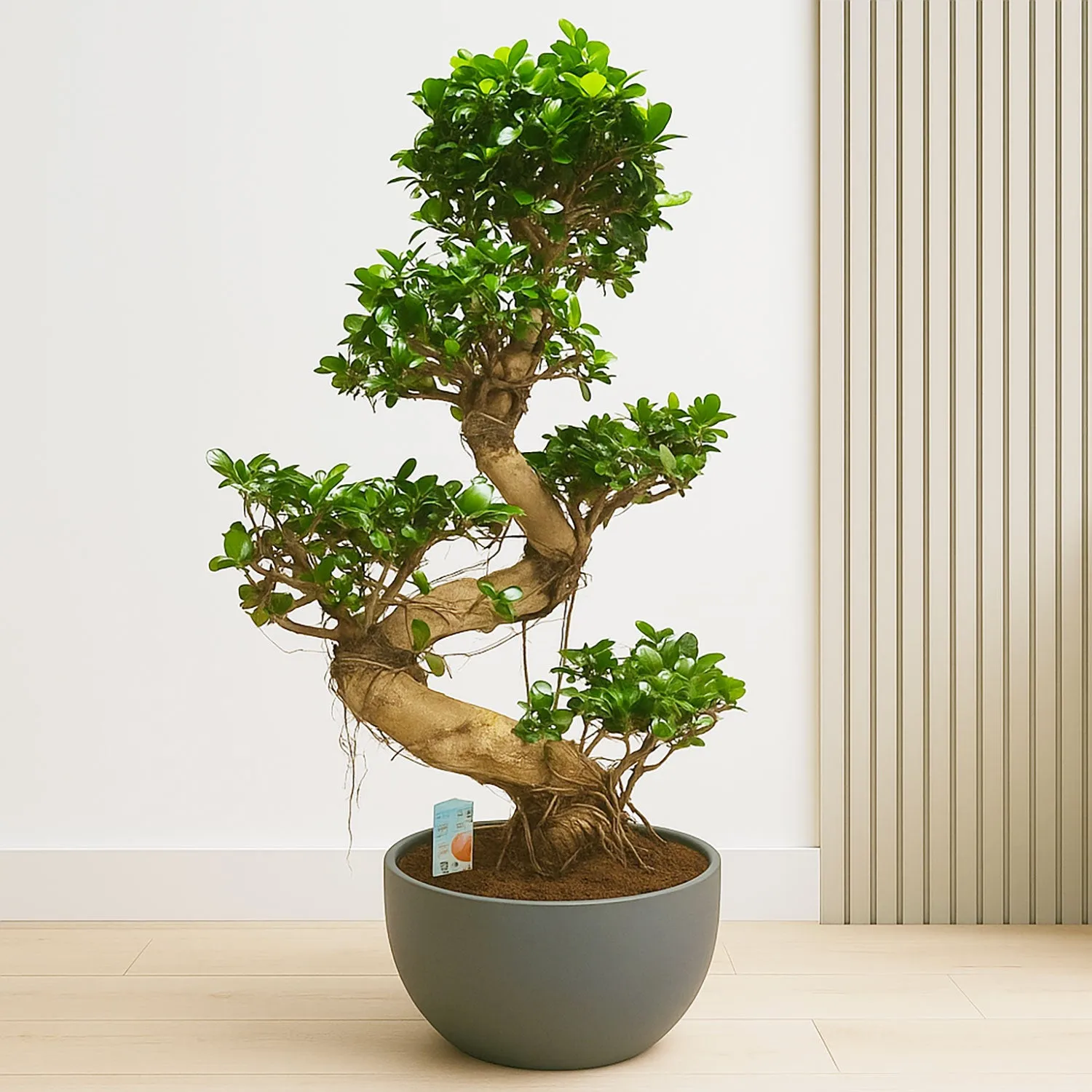
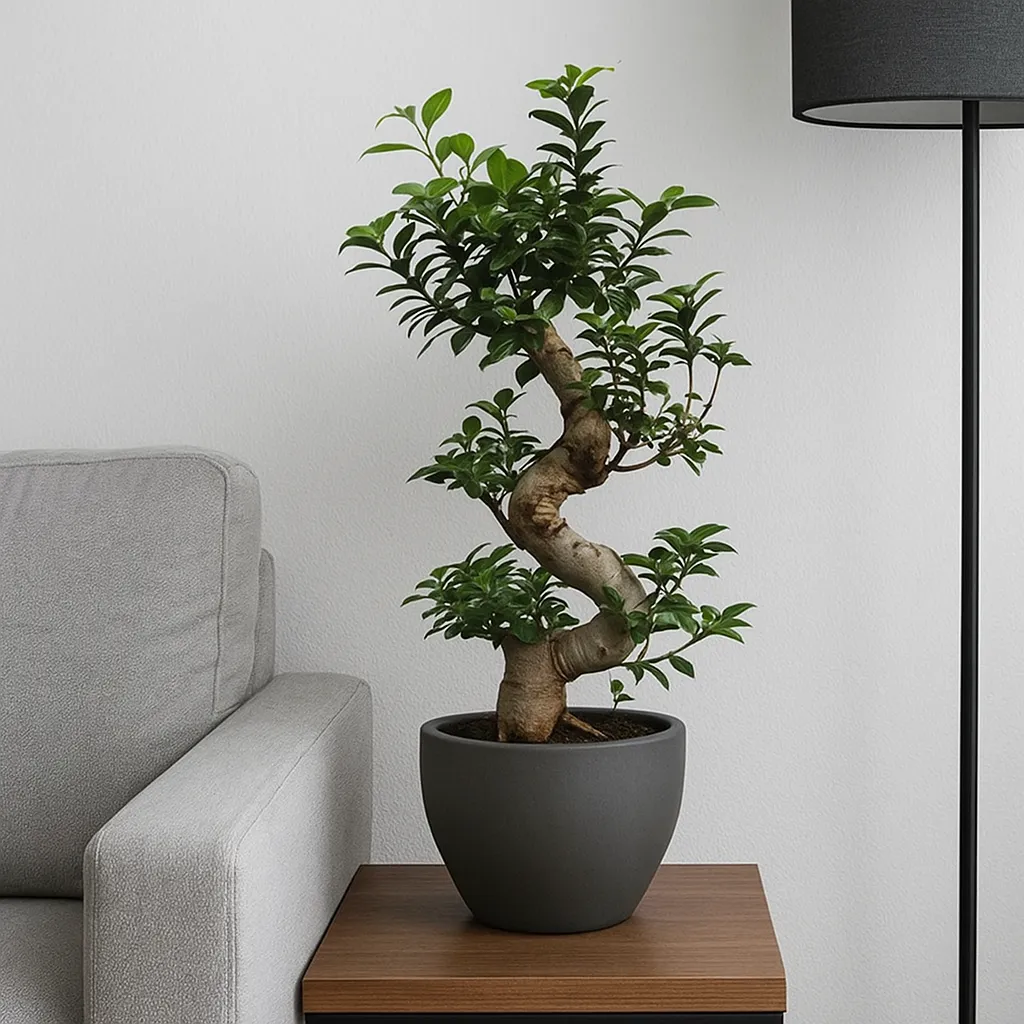
This bonsai is characterised by its sweeping trunk line, elegant nebari (surface roots), and a rounded, umbrella-like canopy created by dense twigging and careful pruning. Its glossy, oval leaves are naturally small and respond well to defoliation, enabling refinement and leaf reduction. The tree retains its foliage year-round indoors, unlike true Zelkova bonsai which are deciduous and outdoor-grown.
The Ficus Zelkova Bonsai is particularly popular with beginners and indoor growers because it combines the beauty of the Zelkova form with the forgiving nature of ficus trees.
Ficus ‘Zelkova’ Bonsai – Care Guide
Light
Thrives in bright, indirect light. Place near a sunny south- or west-facing window indoors. In summer, it can be placed outdoors in light shade. Avoid draughts and cold windowsills.
Watering
Water thoroughly when the top 2–3 cm of soil feels dry. Ensure free drainage and do not let the roots sit in water. Reduce watering slightly in winter but never allow the rootball to dry out completely.
Temperature and Humidity
-
Temperature: Prefers 18–28°C. Keep above 12°C at all times.
-
Humidity: Average indoor humidity is tolerated, but occasional misting or humidity trays will benefit the foliage.
Soil and Potting
Use a free-draining bonsai mix containing akadama, pumice, and lava rock, or peat-free compost blended with perlite. Repot every 2–3 years in spring to refresh the soil and prune roots.
Feeding
Feed every 2–3 weeks in spring and summer with a balanced bonsai fertiliser. Reduce to monthly in autumn and stop in winter.
Pruning and Training
-
Pruning: Regularly pinch back new shoots to 2–3 leaves to maintain the rounded Zelkova-style canopy.
-
Defoliation: Partial or full defoliation in summer can be used to reduce leaf size and increase ramification.
-
Wiring: Responds well to wiring, but monitor carefully as wires can scar the smooth bark quickly.
Growth and Maturity
A vigorous grower, allowing rapid shaping and canopy refinement. Over time, the trunk thickens and develops attractive roots and character.
Common Issues
-
Leaf drop: Often caused by stress from relocation, underwatering, or draughts. Usually temporary.
-
Yellowing leaves: Typically overwatering.
-
Pests: May attract scale insects, mealybugs, or spider mites indoors.
Background and Benefits
This bonsai style takes inspiration from Zelkova serrata, a classic species in Japanese bonsai, but substitutes tropical Ficus microcarpa for year-round evergreen beauty indoors. It symbolises strength, resilience, and harmony. With its umbrella-shaped canopy and graceful trunk, the Ficus Zelkova Bonsai is both a beautiful display tree and an excellent introduction to bonsai practice.
✅ Quick Care Summary
-
Light: Bright, indirect; some summer outdoor placement possible
-
Water: When topsoil dries; never let fully dry out
-
Temperature: 18–28°C; keep above 12°C
-
Humidity: Average indoor; mist occasionally
-
Soil: Free-draining bonsai mix
-
Feed: Every 2–3 weeks in spring/summer
-
Growth: Indoor tropical bonsai; broom-style form with umbrella canopy
Original: $32.98
-70%$32.98
$9.89Product Information
Product Information
Shipping & Returns
Shipping & Returns
Description
The Ficus ‘Zelkova’ Bonsai is not a separate species but a styling technique of Ficus microcarpa (also called Indian Laurel Fig or Banyan Fig), trained in the manner of the Japanese Zelkova (Zelkova serrata). The Japanese Zelkova is a highly regarded deciduous tree in bonsai culture, admired for its broom-style form and fine branching. By contrast, the Ficus Zelkova bonsai replicates this style while using the tropical, evergreen Ficus microcarpa, allowing the “Zelkova look” to be enjoyed indoors year-round.
This bonsai is characterised by its sweeping trunk line, elegant nebari (surface roots), and a rounded, umbrella-like canopy created by dense twigging and careful pruning. Its glossy, oval leaves are naturally small and respond well to defoliation, enabling refinement and leaf reduction. The tree retains its foliage year-round indoors, unlike true Zelkova bonsai which are deciduous and outdoor-grown.
The Ficus Zelkova Bonsai is particularly popular with beginners and indoor growers because it combines the beauty of the Zelkova form with the forgiving nature of ficus trees.
Ficus ‘Zelkova’ Bonsai – Care Guide
Light
Thrives in bright, indirect light. Place near a sunny south- or west-facing window indoors. In summer, it can be placed outdoors in light shade. Avoid draughts and cold windowsills.
Watering
Water thoroughly when the top 2–3 cm of soil feels dry. Ensure free drainage and do not let the roots sit in water. Reduce watering slightly in winter but never allow the rootball to dry out completely.
Temperature and Humidity
-
Temperature: Prefers 18–28°C. Keep above 12°C at all times.
-
Humidity: Average indoor humidity is tolerated, but occasional misting or humidity trays will benefit the foliage.
Soil and Potting
Use a free-draining bonsai mix containing akadama, pumice, and lava rock, or peat-free compost blended with perlite. Repot every 2–3 years in spring to refresh the soil and prune roots.
Feeding
Feed every 2–3 weeks in spring and summer with a balanced bonsai fertiliser. Reduce to monthly in autumn and stop in winter.
Pruning and Training
-
Pruning: Regularly pinch back new shoots to 2–3 leaves to maintain the rounded Zelkova-style canopy.
-
Defoliation: Partial or full defoliation in summer can be used to reduce leaf size and increase ramification.
-
Wiring: Responds well to wiring, but monitor carefully as wires can scar the smooth bark quickly.
Growth and Maturity
A vigorous grower, allowing rapid shaping and canopy refinement. Over time, the trunk thickens and develops attractive roots and character.
Common Issues
-
Leaf drop: Often caused by stress from relocation, underwatering, or draughts. Usually temporary.
-
Yellowing leaves: Typically overwatering.
-
Pests: May attract scale insects, mealybugs, or spider mites indoors.
Background and Benefits
This bonsai style takes inspiration from Zelkova serrata, a classic species in Japanese bonsai, but substitutes tropical Ficus microcarpa for year-round evergreen beauty indoors. It symbolises strength, resilience, and harmony. With its umbrella-shaped canopy and graceful trunk, the Ficus Zelkova Bonsai is both a beautiful display tree and an excellent introduction to bonsai practice.
✅ Quick Care Summary
-
Light: Bright, indirect; some summer outdoor placement possible
-
Water: When topsoil dries; never let fully dry out
-
Temperature: 18–28°C; keep above 12°C
-
Humidity: Average indoor; mist occasionally
-
Soil: Free-draining bonsai mix
-
Feed: Every 2–3 weeks in spring/summer
-
Growth: Indoor tropical bonsai; broom-style form with umbrella canopy