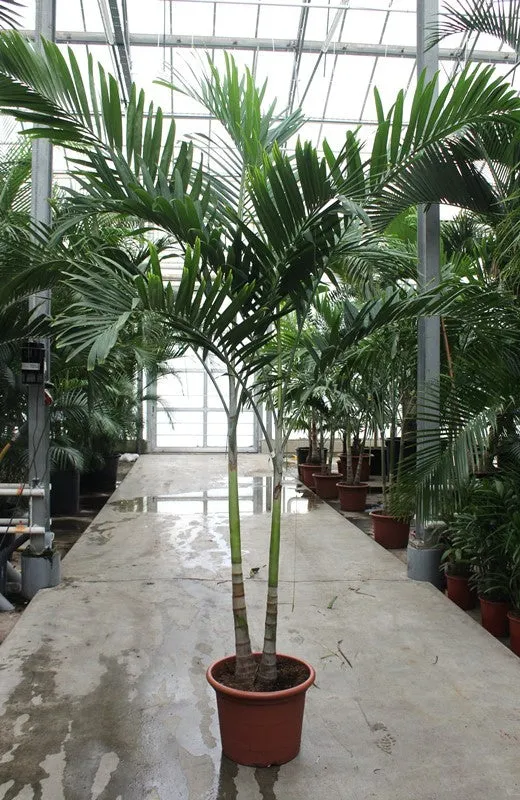
310 - 340cm XXL Veitchia Merrillii 50cm Pot House Plant
🌴 Veitchia merrillii — Christmas Palm / Adonidia Palm
Veitchia merrillii, commonly known as the Christmas Palm or Adonidia Palm, is a compact, elegant palm tree native to the Philippines. Its name comes from the clusters of bright red fruit it produces in winter, resembling festive decorations — hence the name “Christmas Palm.” This palm is admired for its smooth, slender grey trunk, neatly ringed with leaf scars, and its crown of arching, feathery fronds that create a classic, tropical silhouette. Unlike many tall-growing palms, Veitchia merrillii remains relatively compact, making it a popular choice for small tropical gardens, patios, and large indoor spaces. Often grown as a single-stemmed tree or in clumps of three for added visual impact, this palm is both ornamental and tidy in habit. Its manageable size, low-maintenance requirements, and tropical charm make it a superb specimen plant for containers or sunny indoor settings. Outdoors, it thrives in warm climates, while indoors it adds a luxurious, resort-like aesthetic to bright rooms and conservatories.
☀️ Light Requirements
-
Outdoors: Thrives in full sun; best frond colour and form achieved with plenty of direct light.
-
Indoors: Requires bright, indirect light or a few hours of direct sun daily. A south-facing window or bright conservatory is ideal.
-
Low light: Causes poor growth and weak fronds — not suitable for dim rooms.
🌡️ Temperature & Hardiness
-
Ideal temperature: 20–30°C (68–86°F)
-
Minimum temperature: Not frost-hardy — protect from temperatures below 10°C (50°F)
-
Hardiness rating: RHS H1b (minimum 10–15°C); best grown as a houseplant or patio plant in the UK
-
Humidity: Prefers moderate to high humidity; misting is beneficial in dry indoor environments.
💧 Watering Needs
-
Watering frequency: Water when the top 3–5 cm of soil feels dry. Maintain even moisture, but avoid waterlogging.
-
Tip: Reduce watering slightly during cooler months, especially indoors.
-
Container care: Ensure good drainage and never let the plant sit in water.
🪴 Soil & Repotting
-
Soil type: Well-draining palm mix or a blend of compost, sand, and perlite.
-
pH: Slightly acidic to neutral (6.0–7.0)
-
Repotting: Every 2–3 years or when rootbound. Use a heavy container to stabilise the plant as it matures.
🌱 Feeding
-
Growing season (spring–summer): Feed every 4–6 weeks with a palm-specific fertiliser, ideally one that includes magnesium and trace elements.
-
Autumn–winter: Feeding can be reduced or paused unless under grow lights or in a heated conservatory.
✂️ Pruning & Maintenance
-
Pruning: Minimal — only remove yellowing or dead fronds at the base. Never cut green fronds, as this weakens the palm.
-
Self-cleaning: Fronds fall away naturally as they age, keeping the trunk tidy with little effort.
-
Frond care: Wipe occasionally to remove dust and keep the foliage vibrant.
🌾 Propagation
-
By seed: The primary method of propagation. Seeds should be fresh and kept warm and moist during germination.
-
Clump-forming: In group plantings, each palm grows independently; they are not propagated by division.
🐛 Pests & Problems
-
Common pests: Scale insects, spider mites, mealybugs — more common indoors.
-
Symptoms: Sticky residue, yellowing fronds, or webbing.
-
Treatment: Treat with neem oil or insecticidal soap. Maintain humidity and airflow to prevent infestations.
-
Common issues:
-
Brown tips or frond edges: Usually caused by low humidity, over-fertilisation, or inconsistent watering.
-
Nutrient deficiencies: May result in pale leaves — use a balanced fertiliser with micronutrients.
-
🧤 Toxicity & Safety
-
Toxicity: Non-toxic to humans and pets.
-
Pet-friendly: Safe to grow around cats and dogs — no known risks of ingestion.
🏡 Indoor & Outdoor Care Highlights
-
Perfect for patios, balconies, and poolside planting in warm weather.
-
Indoors, it makes an excellent specimen for bright living rooms, sunrooms, or conservatories.
-
A great alternative to taller, more demanding palms — offers tropical appeal in a smaller footprint.
-
Often planted in clusters of three for a dramatic, designer look.
-
Combines beautifully with broad-leaved tropicals, ferns, and other palms in mixed displays.
Original: $2,111.67
-70%$2,111.67
$633.50Product Information
Product Information
Shipping & Returns
Shipping & Returns
Description
🌴 Veitchia merrillii — Christmas Palm / Adonidia Palm
Veitchia merrillii, commonly known as the Christmas Palm or Adonidia Palm, is a compact, elegant palm tree native to the Philippines. Its name comes from the clusters of bright red fruit it produces in winter, resembling festive decorations — hence the name “Christmas Palm.” This palm is admired for its smooth, slender grey trunk, neatly ringed with leaf scars, and its crown of arching, feathery fronds that create a classic, tropical silhouette. Unlike many tall-growing palms, Veitchia merrillii remains relatively compact, making it a popular choice for small tropical gardens, patios, and large indoor spaces. Often grown as a single-stemmed tree or in clumps of three for added visual impact, this palm is both ornamental and tidy in habit. Its manageable size, low-maintenance requirements, and tropical charm make it a superb specimen plant for containers or sunny indoor settings. Outdoors, it thrives in warm climates, while indoors it adds a luxurious, resort-like aesthetic to bright rooms and conservatories.
☀️ Light Requirements
-
Outdoors: Thrives in full sun; best frond colour and form achieved with plenty of direct light.
-
Indoors: Requires bright, indirect light or a few hours of direct sun daily. A south-facing window or bright conservatory is ideal.
-
Low light: Causes poor growth and weak fronds — not suitable for dim rooms.
🌡️ Temperature & Hardiness
-
Ideal temperature: 20–30°C (68–86°F)
-
Minimum temperature: Not frost-hardy — protect from temperatures below 10°C (50°F)
-
Hardiness rating: RHS H1b (minimum 10–15°C); best grown as a houseplant or patio plant in the UK
-
Humidity: Prefers moderate to high humidity; misting is beneficial in dry indoor environments.
💧 Watering Needs
-
Watering frequency: Water when the top 3–5 cm of soil feels dry. Maintain even moisture, but avoid waterlogging.
-
Tip: Reduce watering slightly during cooler months, especially indoors.
-
Container care: Ensure good drainage and never let the plant sit in water.
🪴 Soil & Repotting
-
Soil type: Well-draining palm mix or a blend of compost, sand, and perlite.
-
pH: Slightly acidic to neutral (6.0–7.0)
-
Repotting: Every 2–3 years or when rootbound. Use a heavy container to stabilise the plant as it matures.
🌱 Feeding
-
Growing season (spring–summer): Feed every 4–6 weeks with a palm-specific fertiliser, ideally one that includes magnesium and trace elements.
-
Autumn–winter: Feeding can be reduced or paused unless under grow lights or in a heated conservatory.
✂️ Pruning & Maintenance
-
Pruning: Minimal — only remove yellowing or dead fronds at the base. Never cut green fronds, as this weakens the palm.
-
Self-cleaning: Fronds fall away naturally as they age, keeping the trunk tidy with little effort.
-
Frond care: Wipe occasionally to remove dust and keep the foliage vibrant.
🌾 Propagation
-
By seed: The primary method of propagation. Seeds should be fresh and kept warm and moist during germination.
-
Clump-forming: In group plantings, each palm grows independently; they are not propagated by division.
🐛 Pests & Problems
-
Common pests: Scale insects, spider mites, mealybugs — more common indoors.
-
Symptoms: Sticky residue, yellowing fronds, or webbing.
-
Treatment: Treat with neem oil or insecticidal soap. Maintain humidity and airflow to prevent infestations.
-
Common issues:
-
Brown tips or frond edges: Usually caused by low humidity, over-fertilisation, or inconsistent watering.
-
Nutrient deficiencies: May result in pale leaves — use a balanced fertiliser with micronutrients.
-
🧤 Toxicity & Safety
-
Toxicity: Non-toxic to humans and pets.
-
Pet-friendly: Safe to grow around cats and dogs — no known risks of ingestion.
🏡 Indoor & Outdoor Care Highlights
-
Perfect for patios, balconies, and poolside planting in warm weather.
-
Indoors, it makes an excellent specimen for bright living rooms, sunrooms, or conservatories.
-
A great alternative to taller, more demanding palms — offers tropical appeal in a smaller footprint.
-
Often planted in clusters of three for a dramatic, designer look.
-
Combines beautifully with broad-leaved tropicals, ferns, and other palms in mixed displays.