
Sansevieria Rookie 8cm Pot House Plant
Sansevieria ‘Rookie’ is a compact and decorative cultivar of the snake plant group (Dracaena), admired for its tidy rosette form and strong variegation. Like other Sansevierias, it originates from the drier regions of Africa and Asia, where these hardy succulents thrive in tough, arid conditions.
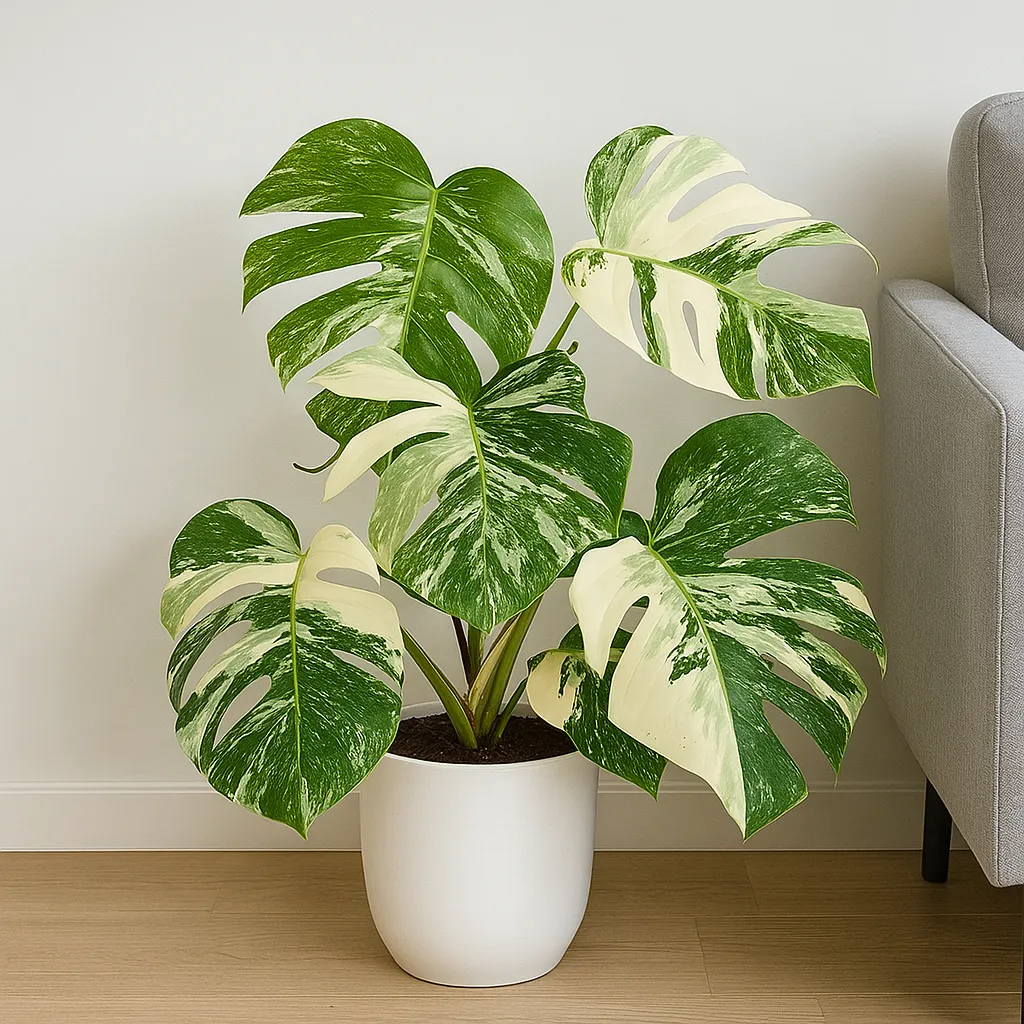
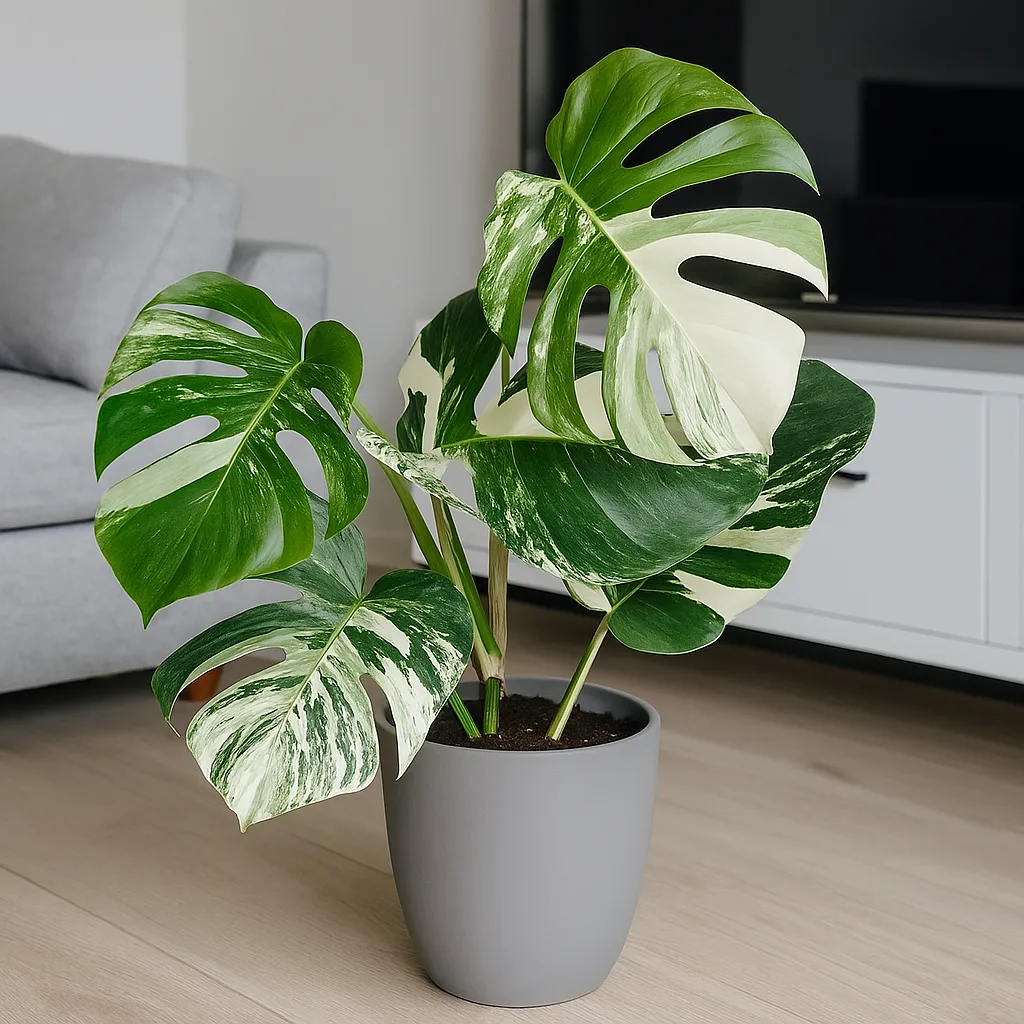
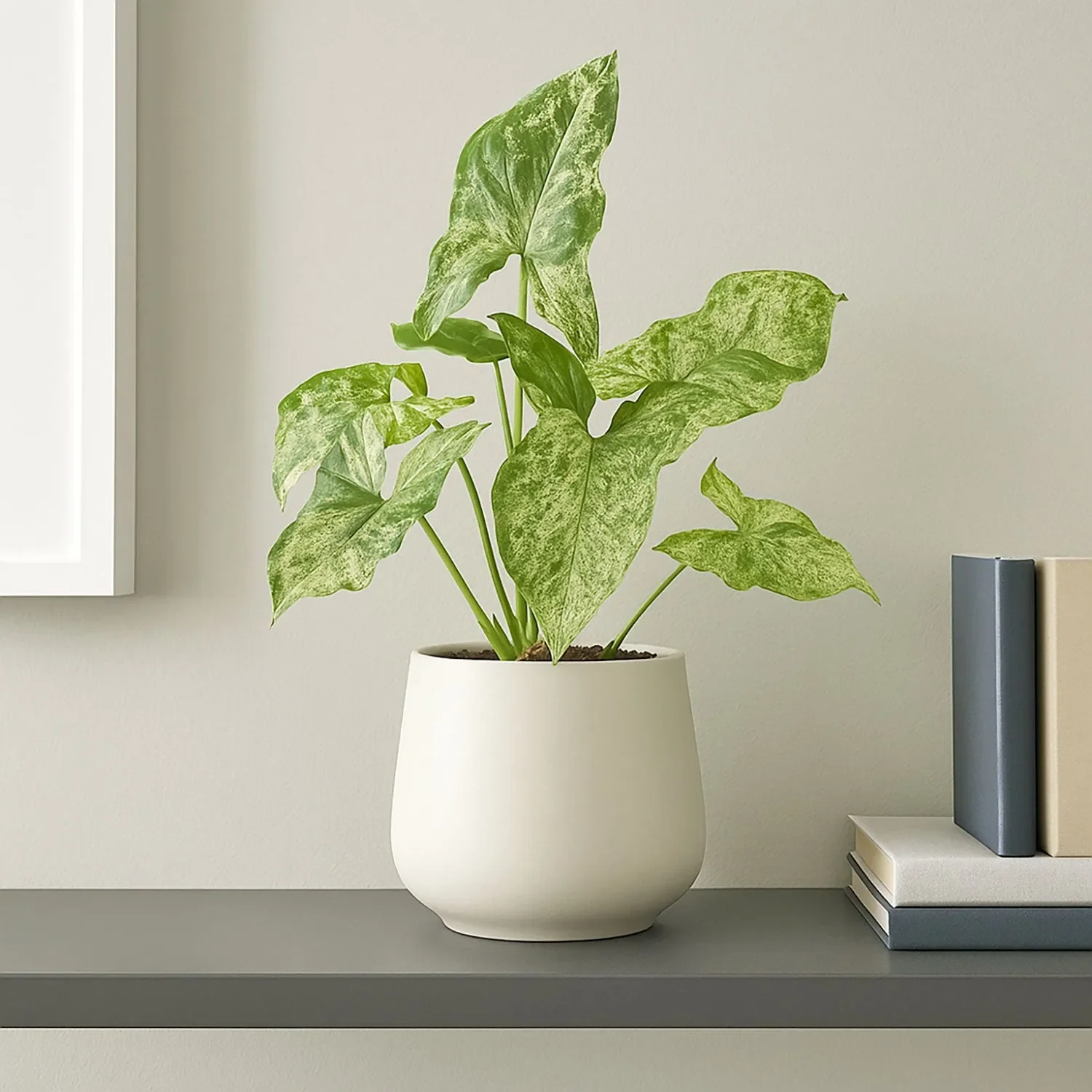
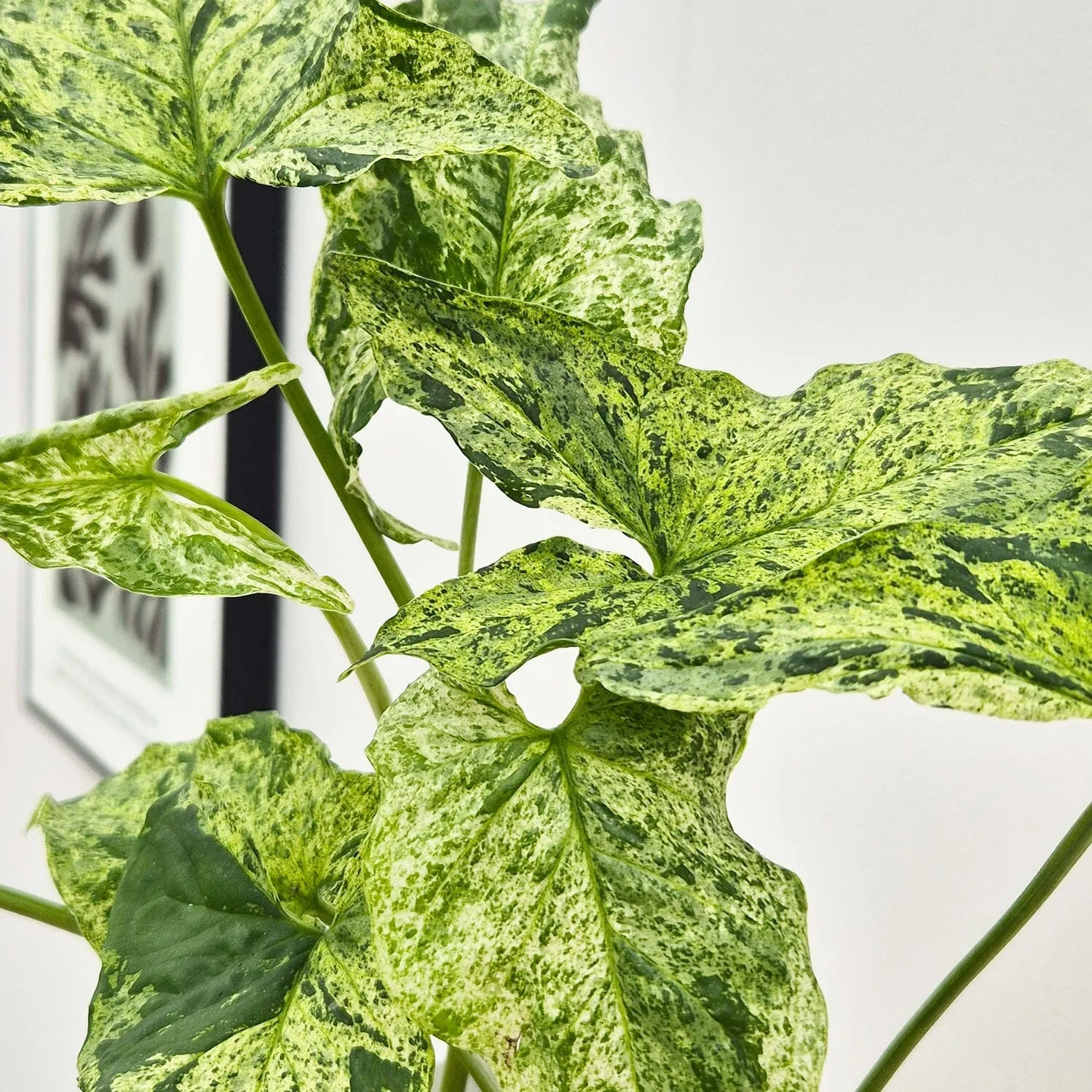
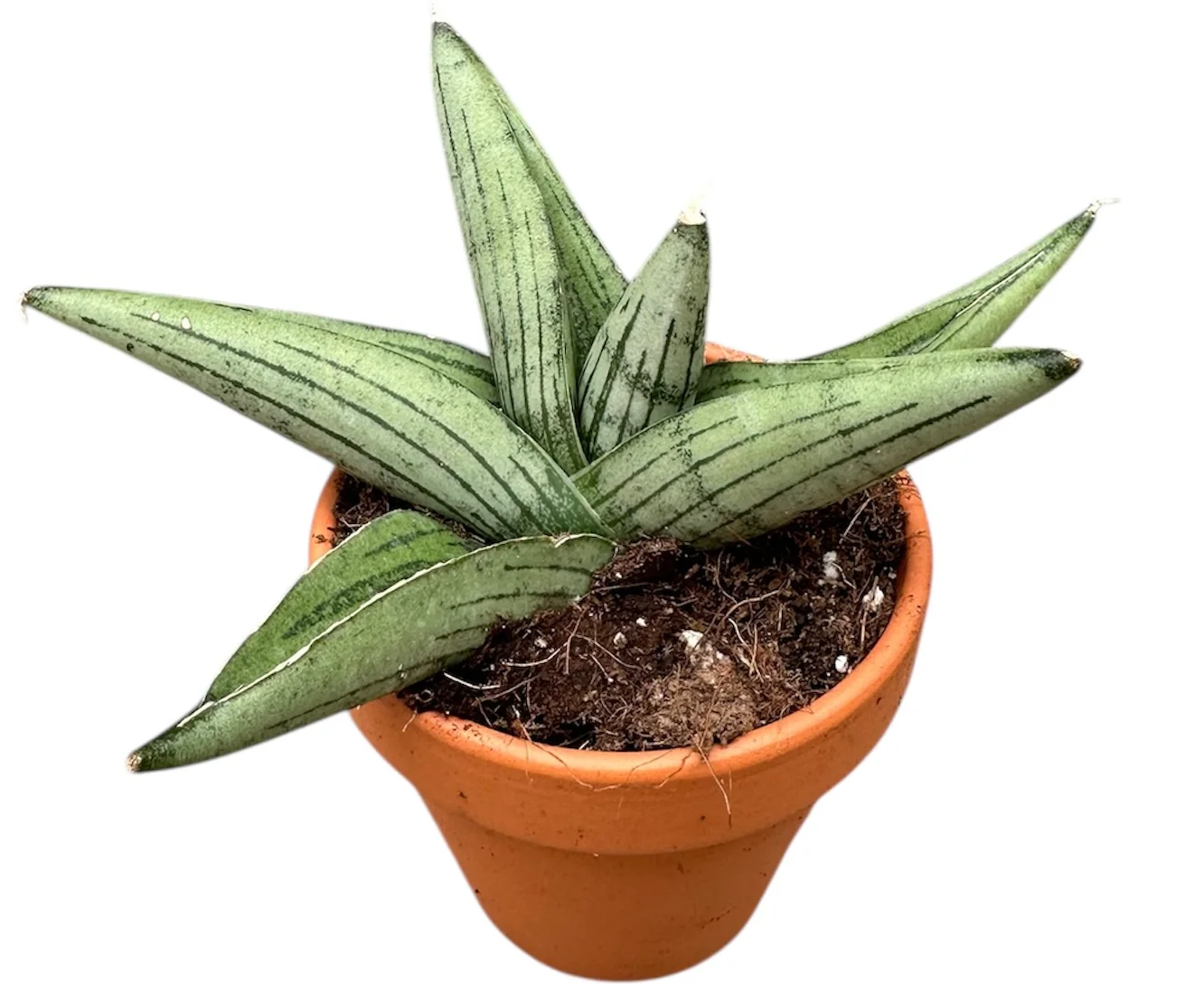
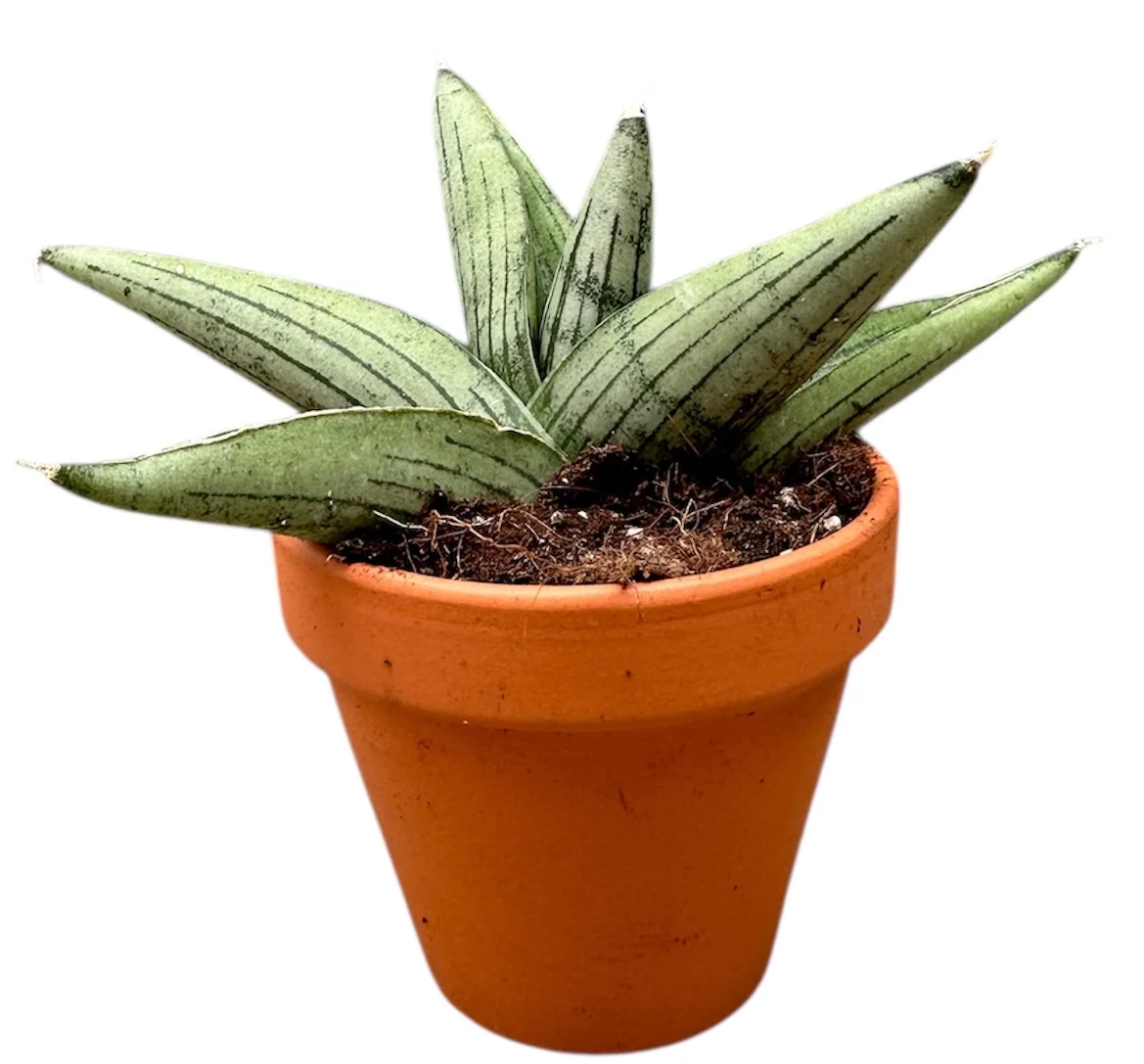
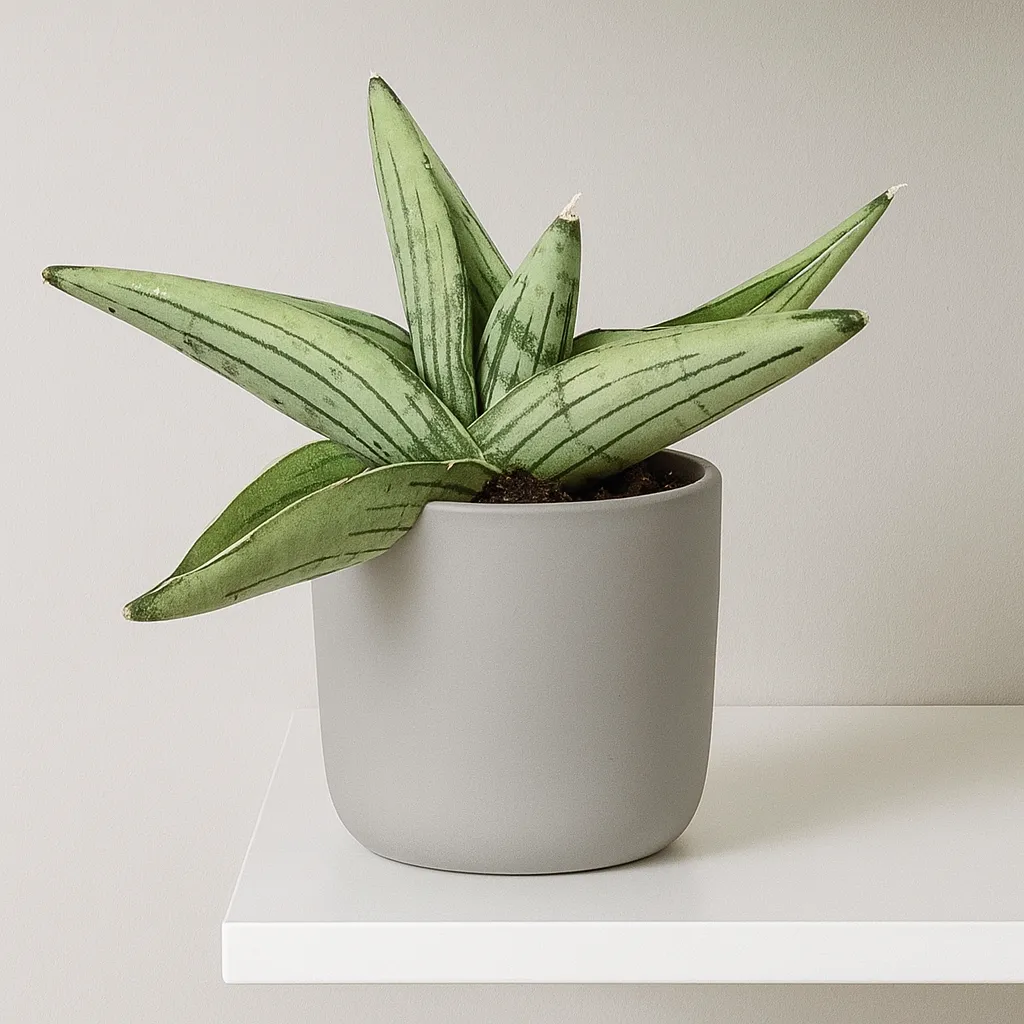
The ‘Rookie’ variety forms dense rosettes of short, broad, upright leaves with a grey-green base, patterned with darker horizontal striping. Each leaf is edged with creamy-yellow variegation, giving the plant a luminous quality. Its compact habit and symmetry make it especially popular as a tabletop or shelf specimen, where its neat form can be fully appreciated.
Reaching just 15–25 cm in height, Sansevieria ‘Rookie’ is smaller than tall-growing varieties such as Laurentii, but clumps readily over time, forming striking clusters that resemble living sculptures.
Sansevieria ‘Rookie’ – Care Guide
Light
Very adaptable. Best in bright, indirect light to maintain vivid variegation, though it will tolerate medium and even low-light conditions. Avoid prolonged direct sun which may scorch pale leaf margins.
Watering
Highly drought tolerant. Water sparingly, allowing the soil to dry completely between waterings. In summer, this usually means watering every 2–3 weeks; in winter, monthly or less. Overwatering is the most common cause of problems.
Temperature and Humidity
-
Temperature: Thrives in 18–28°C. Protect from cold draughts and avoid temperatures below 10°C.
-
Humidity: Suited to dry indoor air; perfect for centrally heated homes.
Soil and Potting
Use a gritty, free-draining cactus or succulent compost. Repot every 2–3 years in spring or when clumps outgrow their pot. Sansevierias prefer to be slightly root-bound.
Feeding
Feed once a month in spring and summer with a diluted cactus or succulent fertiliser. Stop feeding in autumn and winter.
Pruning and Maintenance
Minimal maintenance required – simply remove old or damaged leaves at the base. Wipe leaves occasionally with a damp cloth to highlight their markings.
Growth and Maturity
A slow-growing variety, usually 15–25 cm tall. Produces offsets (pups) which can be divided to create new plants. Mature specimens may occasionally bloom, producing clusters of fragrant greenish-white flowers.
Common Issues
-
Yellow/mushy leaves: Caused by overwatering or poorly draining soil.
-
Wrinkled foliage: Underwatering – revive with a thorough soak.
-
Pests: Rare, but may occasionally attract mealybugs or spider mites.
Background and Benefits
Sansevierias are among the most resilient houseplants available, known for their ability to thrive with minimal care. NASA research also highlights their air-purifying qualities, filtering toxins and releasing oxygen at night. The compact and symmetrical ‘Rookie’ cultivar is particularly valued for smaller living spaces and contemporary décor.
✅ Quick Care Summary
-
Light: Bright, indirect to low light
-
Water: Sparingly; allow soil to dry fully
-
Temperature: 18–28°C; avoid below 10°C
-
Humidity: Dry air tolerant
-
Soil: Free-draining succulent compost
-
Feed: Monthly in spring/summer
-
Growth: Compact rosette, 15–25 cm; striped green leaves edged in creamy yellow
Original: $30.34
-70%$30.34
$9.10Product Information
Product Information
Shipping & Returns
Shipping & Returns
Description
Sansevieria ‘Rookie’ is a compact and decorative cultivar of the snake plant group (Dracaena), admired for its tidy rosette form and strong variegation. Like other Sansevierias, it originates from the drier regions of Africa and Asia, where these hardy succulents thrive in tough, arid conditions.
The ‘Rookie’ variety forms dense rosettes of short, broad, upright leaves with a grey-green base, patterned with darker horizontal striping. Each leaf is edged with creamy-yellow variegation, giving the plant a luminous quality. Its compact habit and symmetry make it especially popular as a tabletop or shelf specimen, where its neat form can be fully appreciated.
Reaching just 15–25 cm in height, Sansevieria ‘Rookie’ is smaller than tall-growing varieties such as Laurentii, but clumps readily over time, forming striking clusters that resemble living sculptures.
Sansevieria ‘Rookie’ – Care Guide
Light
Very adaptable. Best in bright, indirect light to maintain vivid variegation, though it will tolerate medium and even low-light conditions. Avoid prolonged direct sun which may scorch pale leaf margins.
Watering
Highly drought tolerant. Water sparingly, allowing the soil to dry completely between waterings. In summer, this usually means watering every 2–3 weeks; in winter, monthly or less. Overwatering is the most common cause of problems.
Temperature and Humidity
-
Temperature: Thrives in 18–28°C. Protect from cold draughts and avoid temperatures below 10°C.
-
Humidity: Suited to dry indoor air; perfect for centrally heated homes.
Soil and Potting
Use a gritty, free-draining cactus or succulent compost. Repot every 2–3 years in spring or when clumps outgrow their pot. Sansevierias prefer to be slightly root-bound.
Feeding
Feed once a month in spring and summer with a diluted cactus or succulent fertiliser. Stop feeding in autumn and winter.
Pruning and Maintenance
Minimal maintenance required – simply remove old or damaged leaves at the base. Wipe leaves occasionally with a damp cloth to highlight their markings.
Growth and Maturity
A slow-growing variety, usually 15–25 cm tall. Produces offsets (pups) which can be divided to create new plants. Mature specimens may occasionally bloom, producing clusters of fragrant greenish-white flowers.
Common Issues
-
Yellow/mushy leaves: Caused by overwatering or poorly draining soil.
-
Wrinkled foliage: Underwatering – revive with a thorough soak.
-
Pests: Rare, but may occasionally attract mealybugs or spider mites.
Background and Benefits
Sansevierias are among the most resilient houseplants available, known for their ability to thrive with minimal care. NASA research also highlights their air-purifying qualities, filtering toxins and releasing oxygen at night. The compact and symmetrical ‘Rookie’ cultivar is particularly valued for smaller living spaces and contemporary décor.
✅ Quick Care Summary
-
Light: Bright, indirect to low light
-
Water: Sparingly; allow soil to dry fully
-
Temperature: 18–28°C; avoid below 10°C
-
Humidity: Dry air tolerant
-
Soil: Free-draining succulent compost
-
Feed: Monthly in spring/summer
-
Growth: Compact rosette, 15–25 cm; striped green leaves edged in creamy yellow