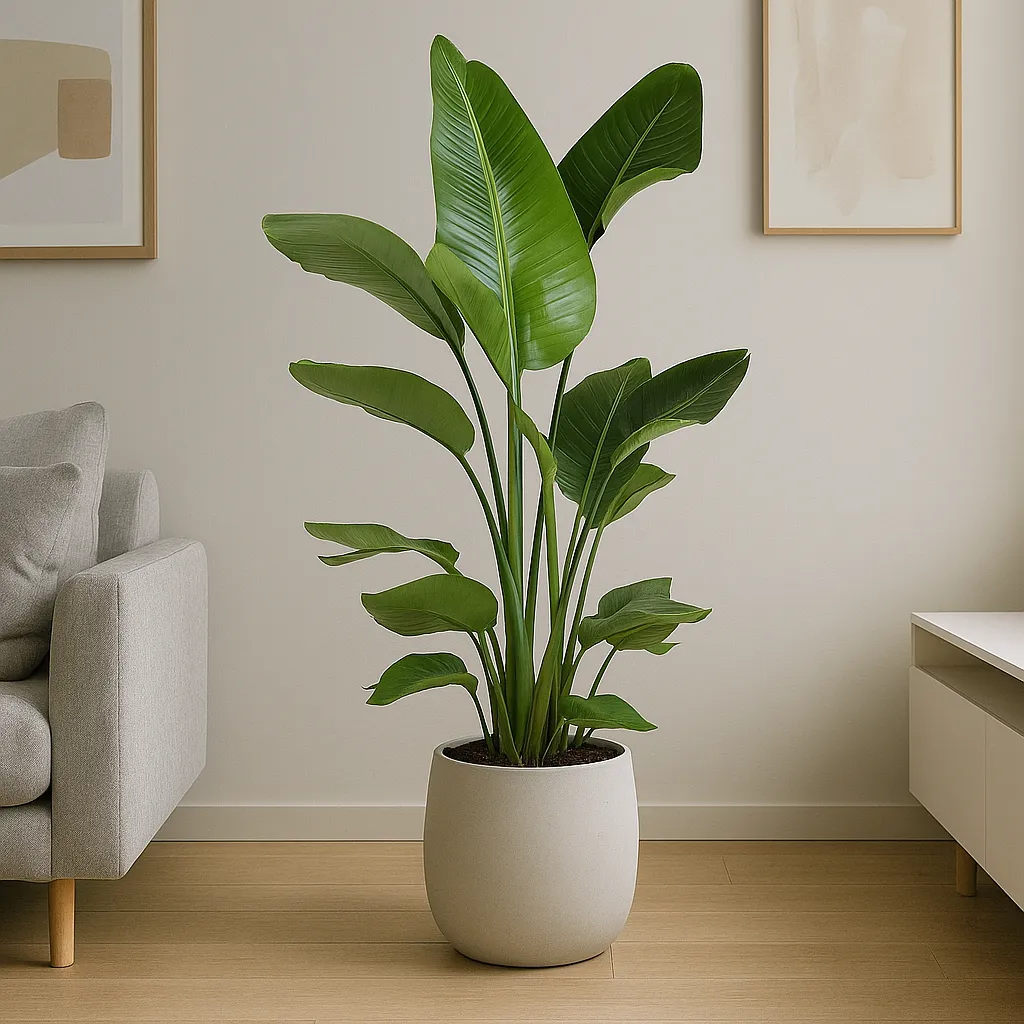
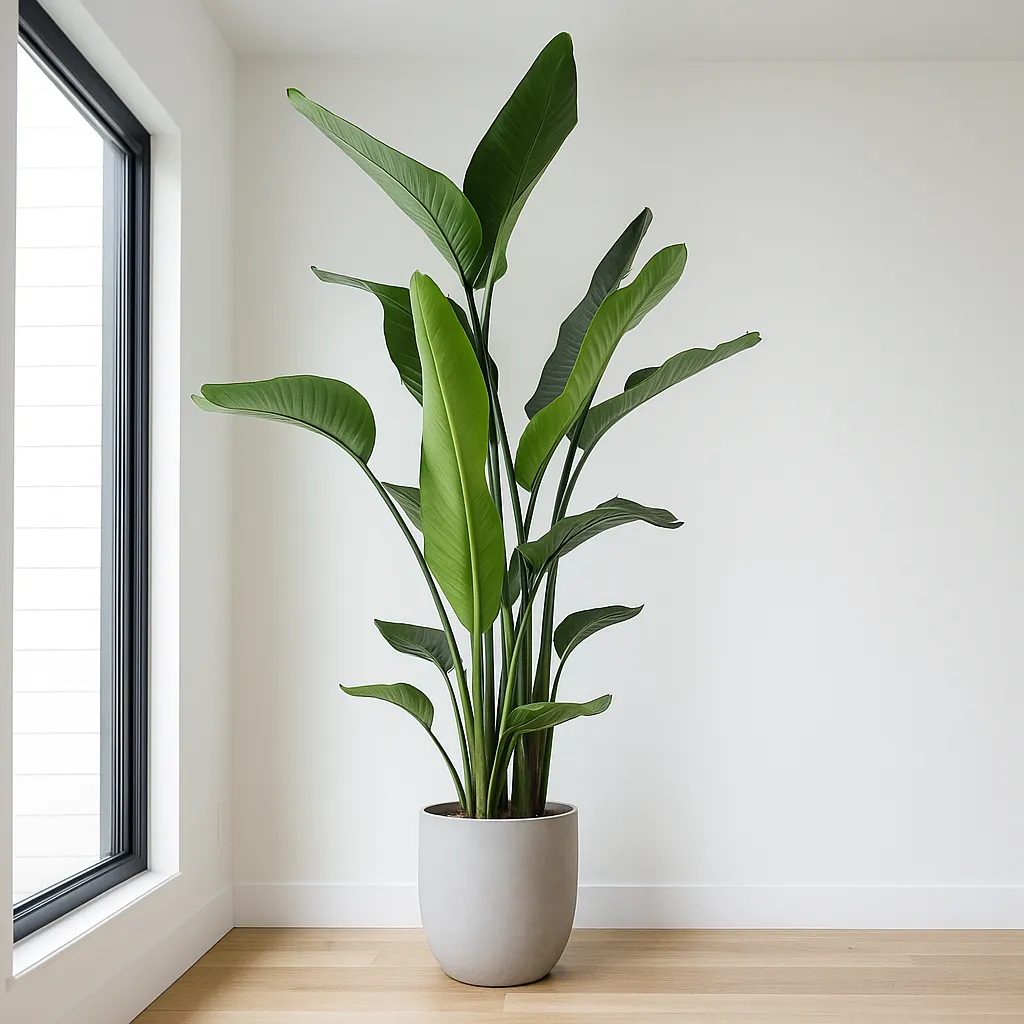
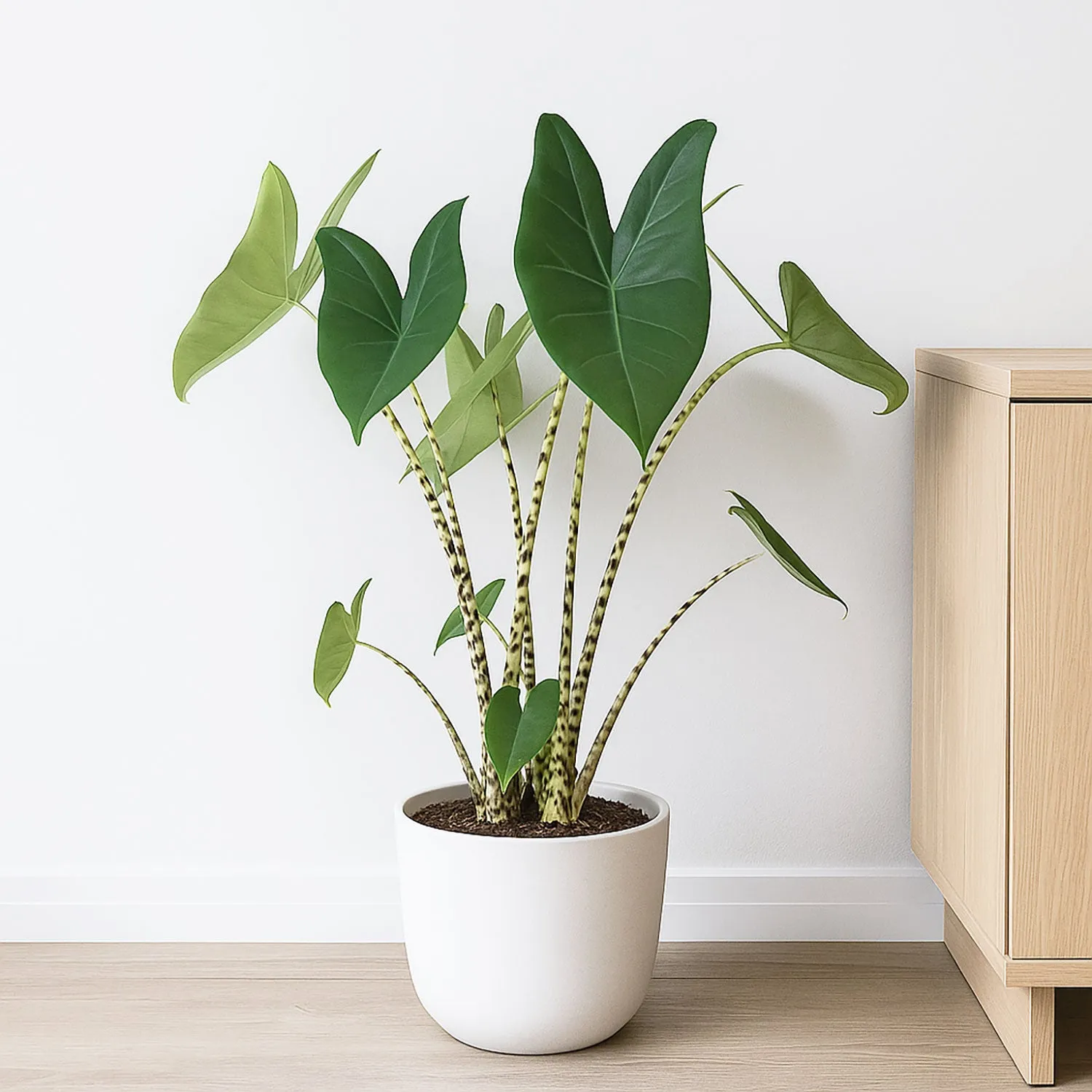
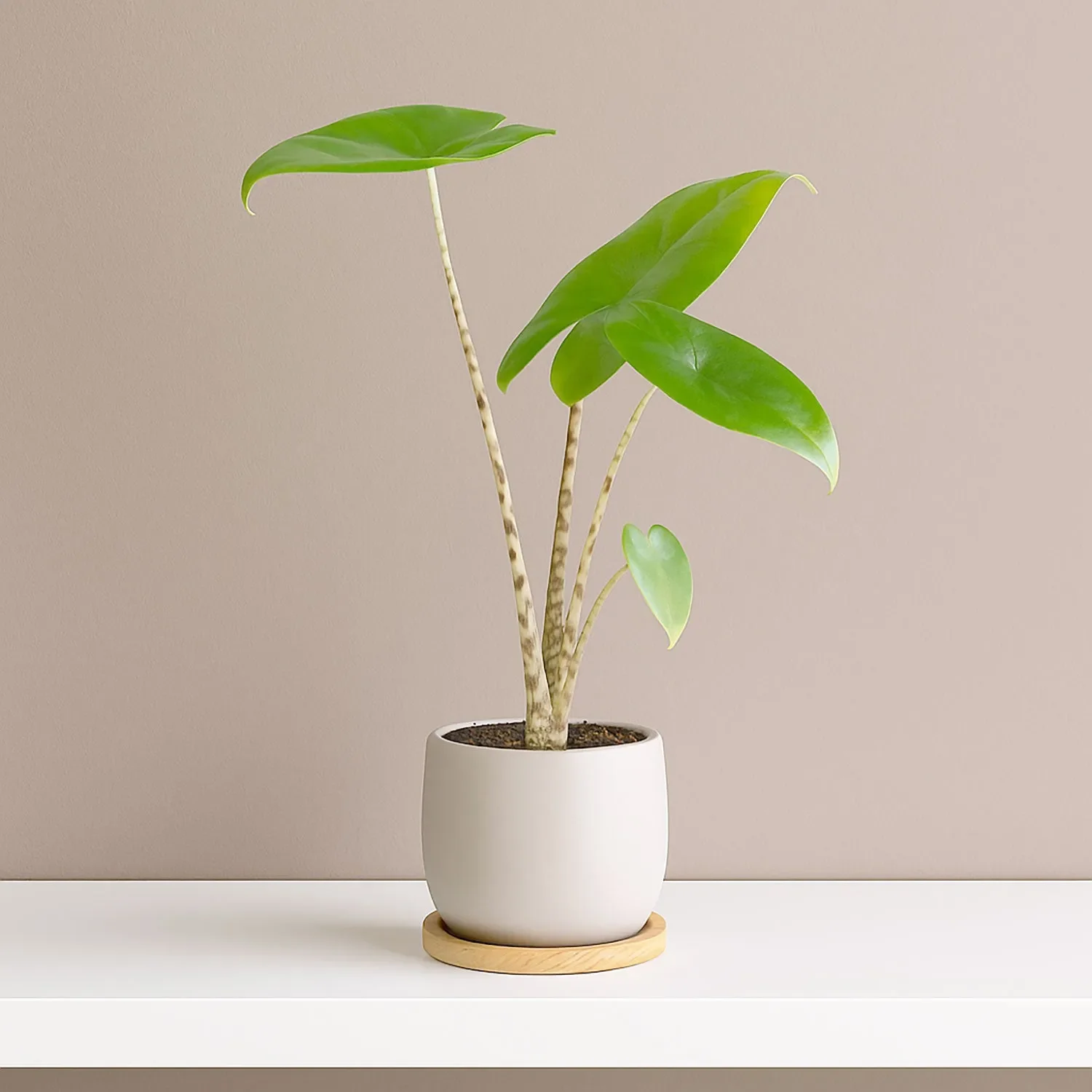
500 - 550cm Hyophorbe lagenicaulis XXL 120cm Pot House Plant
🌴 Hyophorbe lagenicaulis
Hyophorbe lagenicaulis, commonly known as the Bottle Palm, is an extraordinary tropical palm from Mauritius, celebrated for its distinctive bulbous, bottle-shaped trunk and elegantly arching fronds. The thickened base acts as a water reservoir, giving the plant its iconic silhouette and excellent drought tolerance once mature.
It is a slow-growing palm, typically forming a single grey trunk that swells near the base and narrows towards the crown. The foliage consists of 4–6 long, feather-like fronds with leaflets that curve gracefully downwards, creating a poised and tropical look. In its native climate, the Bottle Palm may reach 3–4 metres, but in containers or cooler climates it remains much smaller and compact – perfect for conservatories, heated greenhouses, or tropical-themed interiors.
This rare and striking species makes a bold architectural statement, valued both for its sculptural form and exotic appeal.
🛠️ Hyophorbe lagenicaulis – Comprehensive Care Guide
🌞 Light Requirements
-
Requires bright, indirect light to full sun.
-
Indoors: best placed in a sunny conservatory or near a south- or west-facing window.
-
Outdoors in summer: can be placed in a sunny, sheltered patio.
-
Avoid deep shade – inadequate light will reduce frond production and slow growth.
💧 Watering
-
Keep soil moderately moist, especially during the growing season (spring and summer).
-
Water when the top 3–5cm of soil feels dry.
-
In winter, reduce watering to every 2–3 weeks, ensuring the plant never sits in soggy soil.
-
The swollen trunk provides some water storage – overwatering is a greater risk than underwatering.
🌫️ Humidity
-
Prefers moderate to high humidity (50–70%).
-
In dry indoor air (especially in winter), increase humidity by:
-
Using a humidifier,
-
Placing a pebble tray with water beneath the pot,
-
Light misting around the foliage – avoid wetting the crown directly.
-
🌡️ Temperature
-
Thrives in warm temperatures: 18–30°C ideal.
-
Very frost-sensitive – never expose to temperatures below 10°C.
-
Must be overwintered indoors in the UK – a heated greenhouse or conservatory is best.
-
Protect from cold draughts and sudden temperature drops.
🌱 Soil
-
Requires free-draining, sandy or gritty soil.
-
Best in a mix of:
-
2 parts loam-based houseplant compost,
-
1 part coarse sand or perlite,
-
1 part orchid bark or horticultural grit.
-
-
Drainage holes are essential to prevent root rot.
🍽️ Feeding
-
Feed every 4–6 weeks in spring and summer with a balanced palm fertiliser.
-
Reduce feeding in autumn and do not feed in winter.
-
A trace element-rich feed (with magnesium and manganese) will help maintain leaf colour and prevent frond yellowing.
✂️ Pruning & Maintenance
-
Minimal pruning required.
-
Remove fully dead or damaged fronds at the base using clean secateurs.
-
Never prune green fronds or the central spear – damage here can be fatal, as palms grow from a single terminal bud.
🪴 Repotting
-
Repot every 2–3 years, or when rootbound.
-
Use a deep pot with a wide base to accommodate the swollen caudex.
-
Repot in spring for best results.
🐛 Pests & Problems
-
Generally pest-resistant, but may occasionally attract:
-
Spider mites or mealybugs in dry indoor conditions,
-
Scale insects on undersides of fronds.
-
-
Frond yellowing can indicate:
-
Overwatering,
-
Nutrient deficiency (especially magnesium),
-
Cold exposure.
-
☠️ Toxicity
-
Not known to be toxic to humans or pets.
-
Always supervise pets around rare or valuable tropical specimens.
🌟 Top Tips for Success
-
Perfect for indoor palm lovers who want something unusual and sculptural.
-
Grow in a large, decorative container to highlight its elegant form.
-
Combine with ferns, Alocasias, and other warm-climate tropicals for a lush display.
Original: $13,197.96
-70%$13,197.96
$3,959.39Product Information
Product Information
Shipping & Returns
Shipping & Returns
Description
🌴 Hyophorbe lagenicaulis
Hyophorbe lagenicaulis, commonly known as the Bottle Palm, is an extraordinary tropical palm from Mauritius, celebrated for its distinctive bulbous, bottle-shaped trunk and elegantly arching fronds. The thickened base acts as a water reservoir, giving the plant its iconic silhouette and excellent drought tolerance once mature.
It is a slow-growing palm, typically forming a single grey trunk that swells near the base and narrows towards the crown. The foliage consists of 4–6 long, feather-like fronds with leaflets that curve gracefully downwards, creating a poised and tropical look. In its native climate, the Bottle Palm may reach 3–4 metres, but in containers or cooler climates it remains much smaller and compact – perfect for conservatories, heated greenhouses, or tropical-themed interiors.
This rare and striking species makes a bold architectural statement, valued both for its sculptural form and exotic appeal.
🛠️ Hyophorbe lagenicaulis – Comprehensive Care Guide
🌞 Light Requirements
-
Requires bright, indirect light to full sun.
-
Indoors: best placed in a sunny conservatory or near a south- or west-facing window.
-
Outdoors in summer: can be placed in a sunny, sheltered patio.
-
Avoid deep shade – inadequate light will reduce frond production and slow growth.
💧 Watering
-
Keep soil moderately moist, especially during the growing season (spring and summer).
-
Water when the top 3–5cm of soil feels dry.
-
In winter, reduce watering to every 2–3 weeks, ensuring the plant never sits in soggy soil.
-
The swollen trunk provides some water storage – overwatering is a greater risk than underwatering.
🌫️ Humidity
-
Prefers moderate to high humidity (50–70%).
-
In dry indoor air (especially in winter), increase humidity by:
-
Using a humidifier,
-
Placing a pebble tray with water beneath the pot,
-
Light misting around the foliage – avoid wetting the crown directly.
-
🌡️ Temperature
-
Thrives in warm temperatures: 18–30°C ideal.
-
Very frost-sensitive – never expose to temperatures below 10°C.
-
Must be overwintered indoors in the UK – a heated greenhouse or conservatory is best.
-
Protect from cold draughts and sudden temperature drops.
🌱 Soil
-
Requires free-draining, sandy or gritty soil.
-
Best in a mix of:
-
2 parts loam-based houseplant compost,
-
1 part coarse sand or perlite,
-
1 part orchid bark or horticultural grit.
-
-
Drainage holes are essential to prevent root rot.
🍽️ Feeding
-
Feed every 4–6 weeks in spring and summer with a balanced palm fertiliser.
-
Reduce feeding in autumn and do not feed in winter.
-
A trace element-rich feed (with magnesium and manganese) will help maintain leaf colour and prevent frond yellowing.
✂️ Pruning & Maintenance
-
Minimal pruning required.
-
Remove fully dead or damaged fronds at the base using clean secateurs.
-
Never prune green fronds or the central spear – damage here can be fatal, as palms grow from a single terminal bud.
🪴 Repotting
-
Repot every 2–3 years, or when rootbound.
-
Use a deep pot with a wide base to accommodate the swollen caudex.
-
Repot in spring for best results.
🐛 Pests & Problems
-
Generally pest-resistant, but may occasionally attract:
-
Spider mites or mealybugs in dry indoor conditions,
-
Scale insects on undersides of fronds.
-
-
Frond yellowing can indicate:
-
Overwatering,
-
Nutrient deficiency (especially magnesium),
-
Cold exposure.
-
☠️ Toxicity
-
Not known to be toxic to humans or pets.
-
Always supervise pets around rare or valuable tropical specimens.
🌟 Top Tips for Success
-
Perfect for indoor palm lovers who want something unusual and sculptural.
-
Grow in a large, decorative container to highlight its elegant form.
-
Combine with ferns, Alocasias, and other warm-climate tropicals for a lush display.