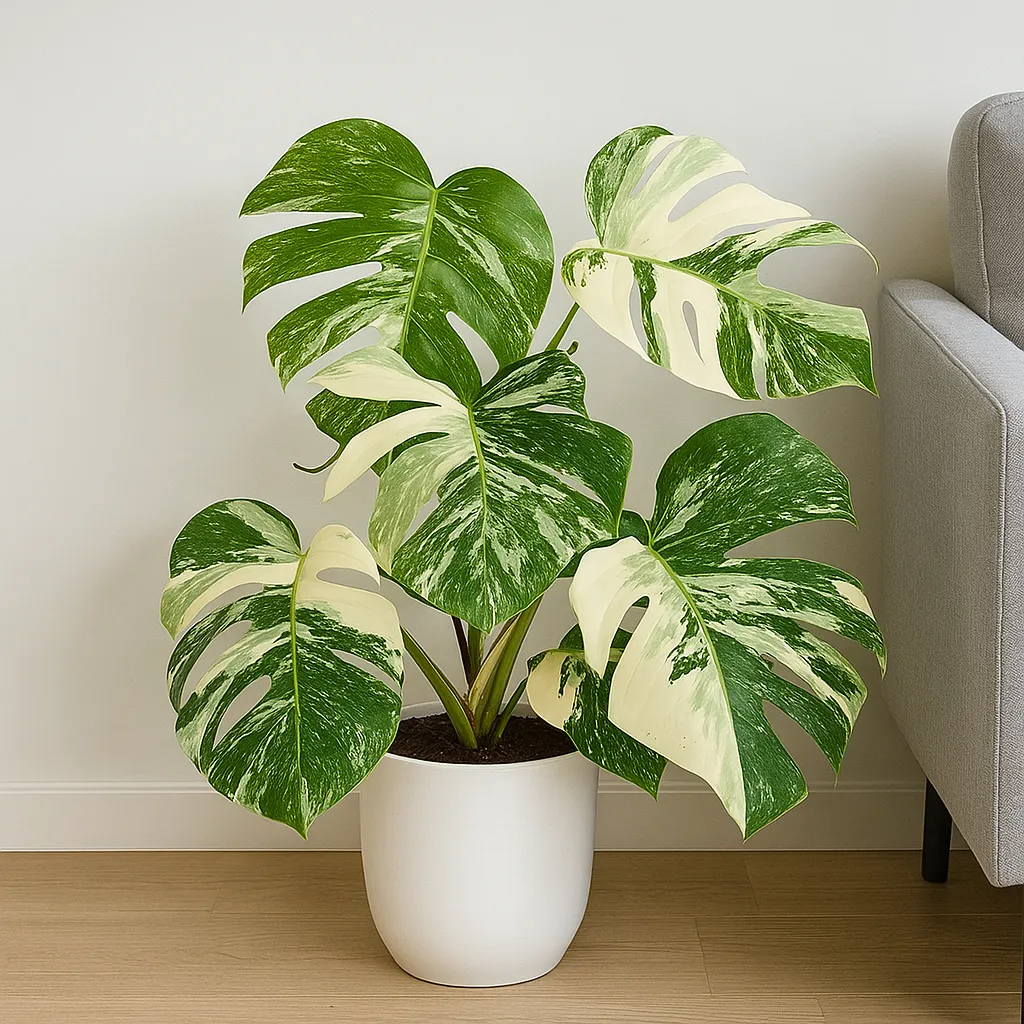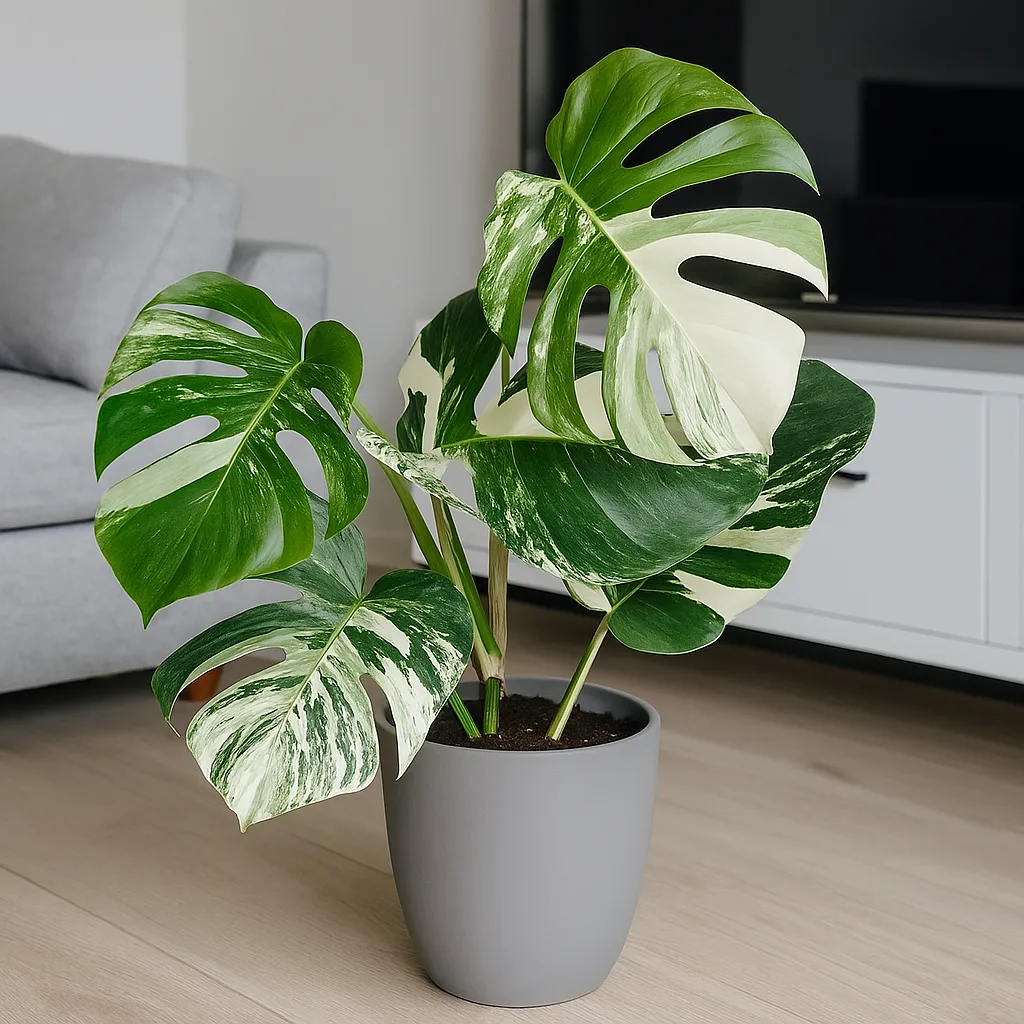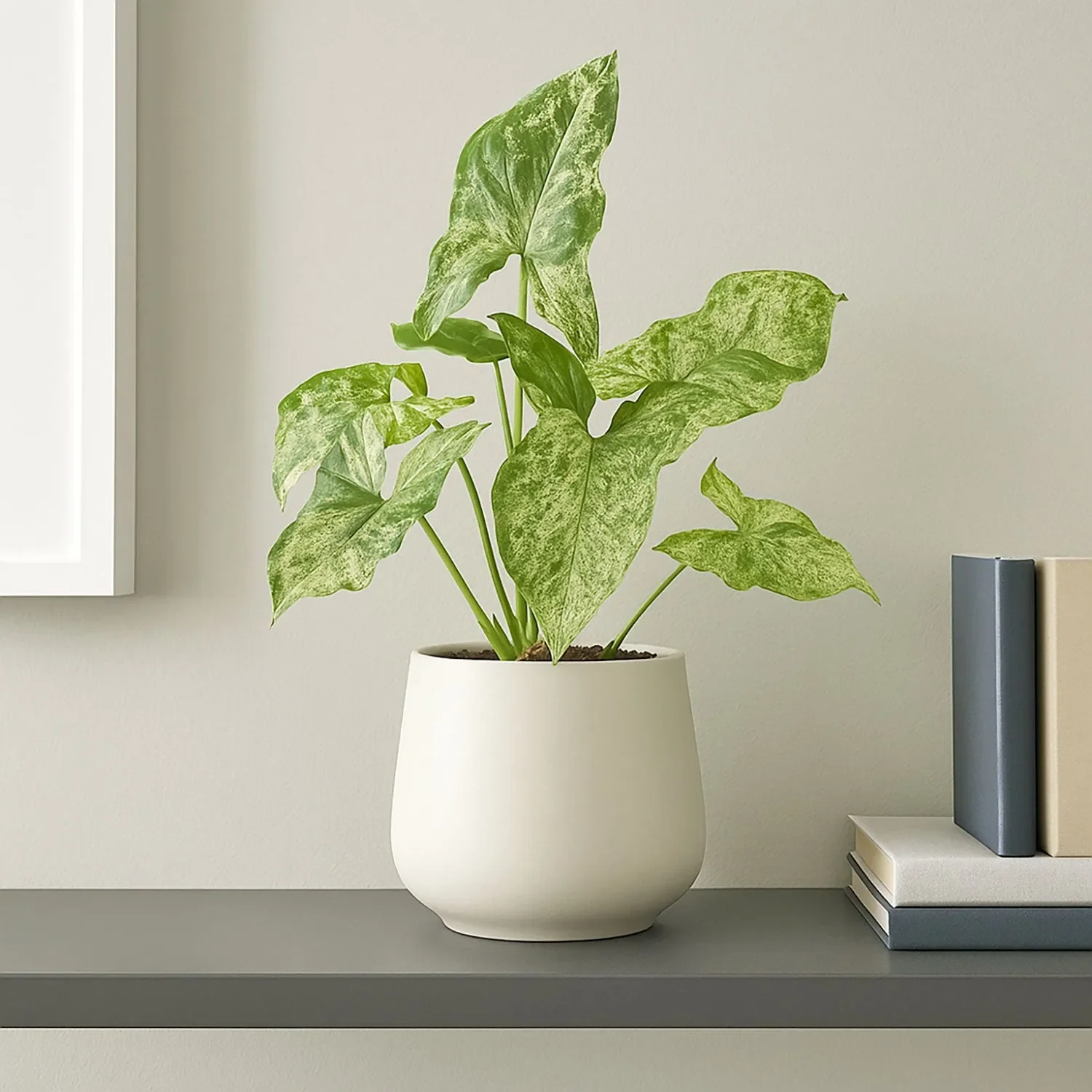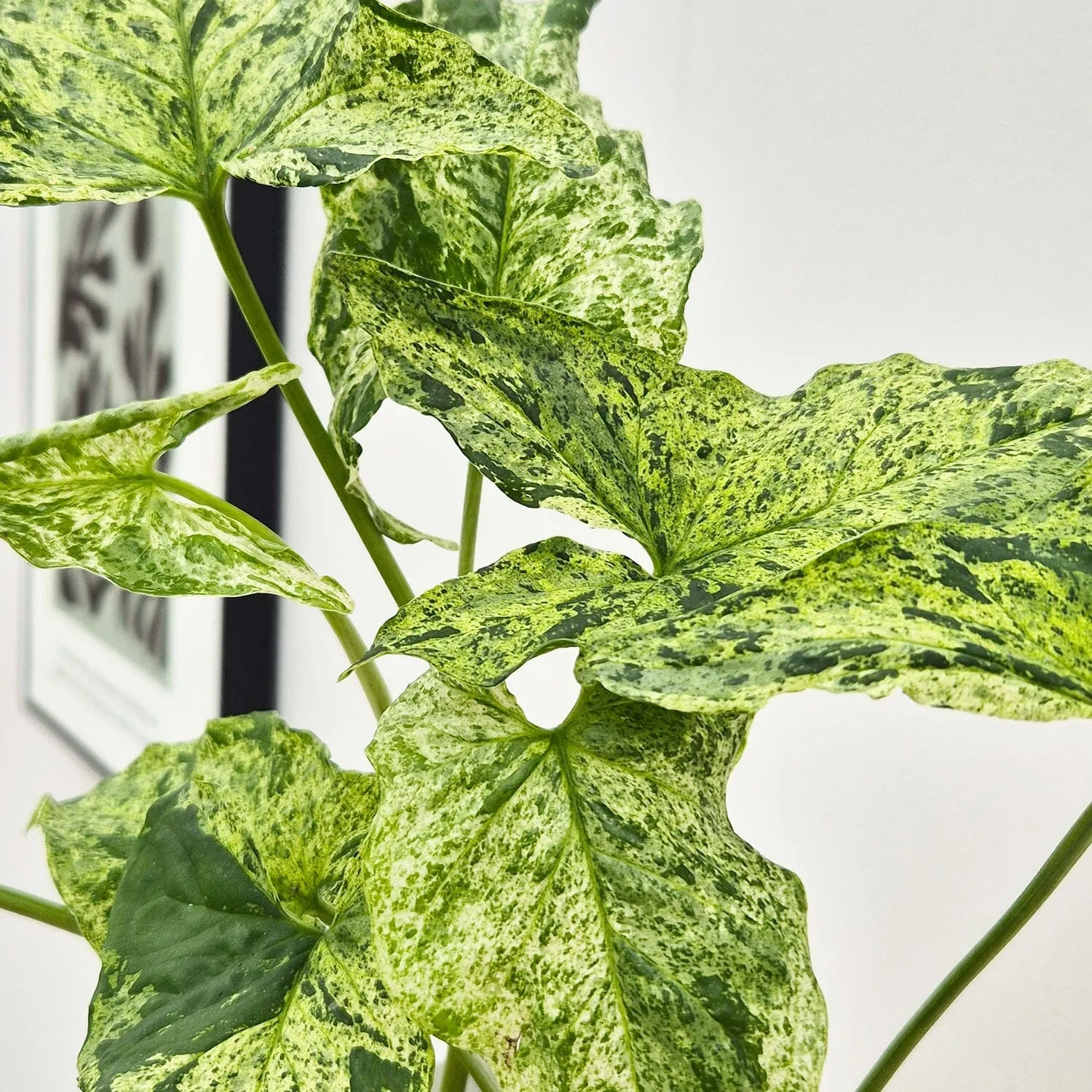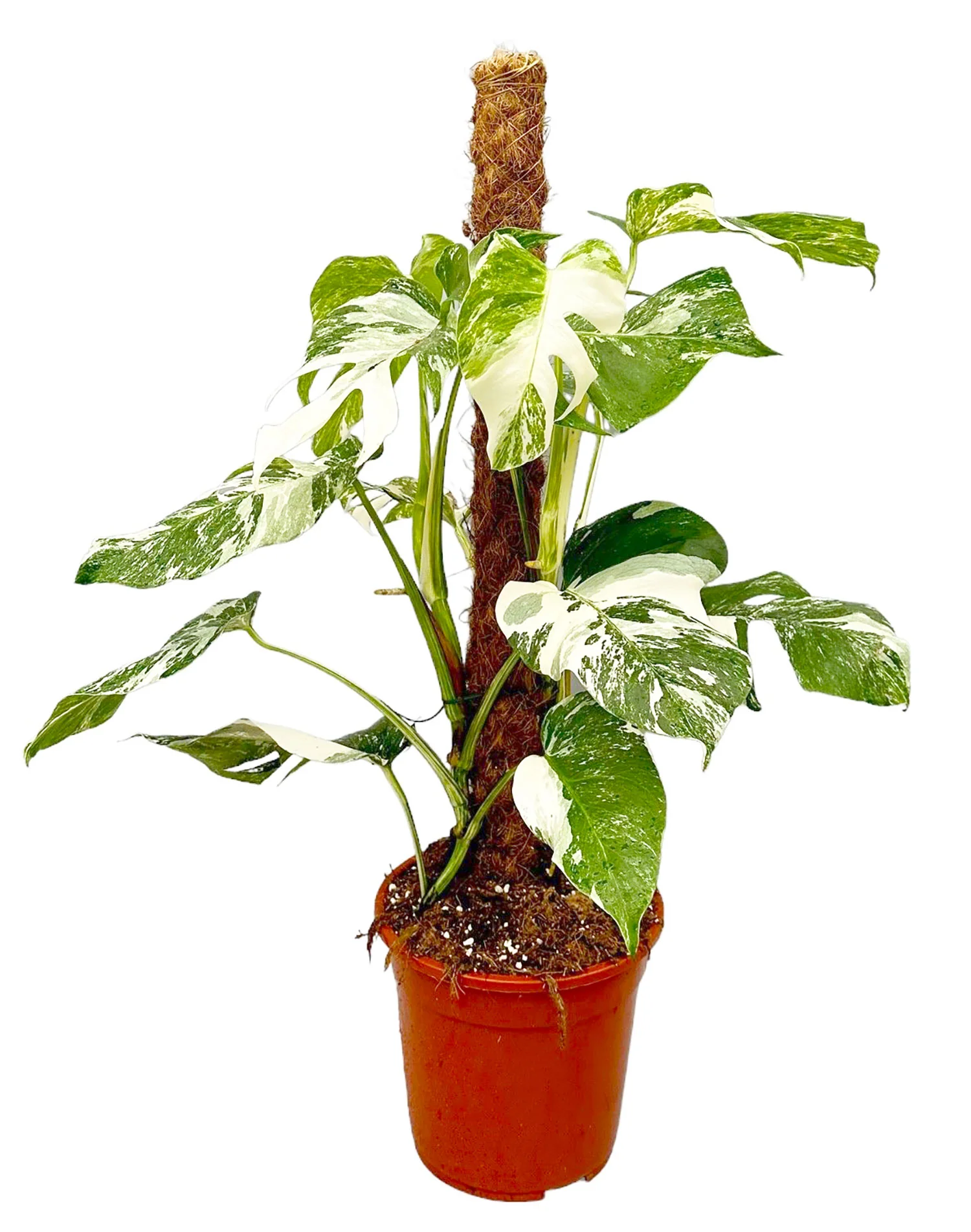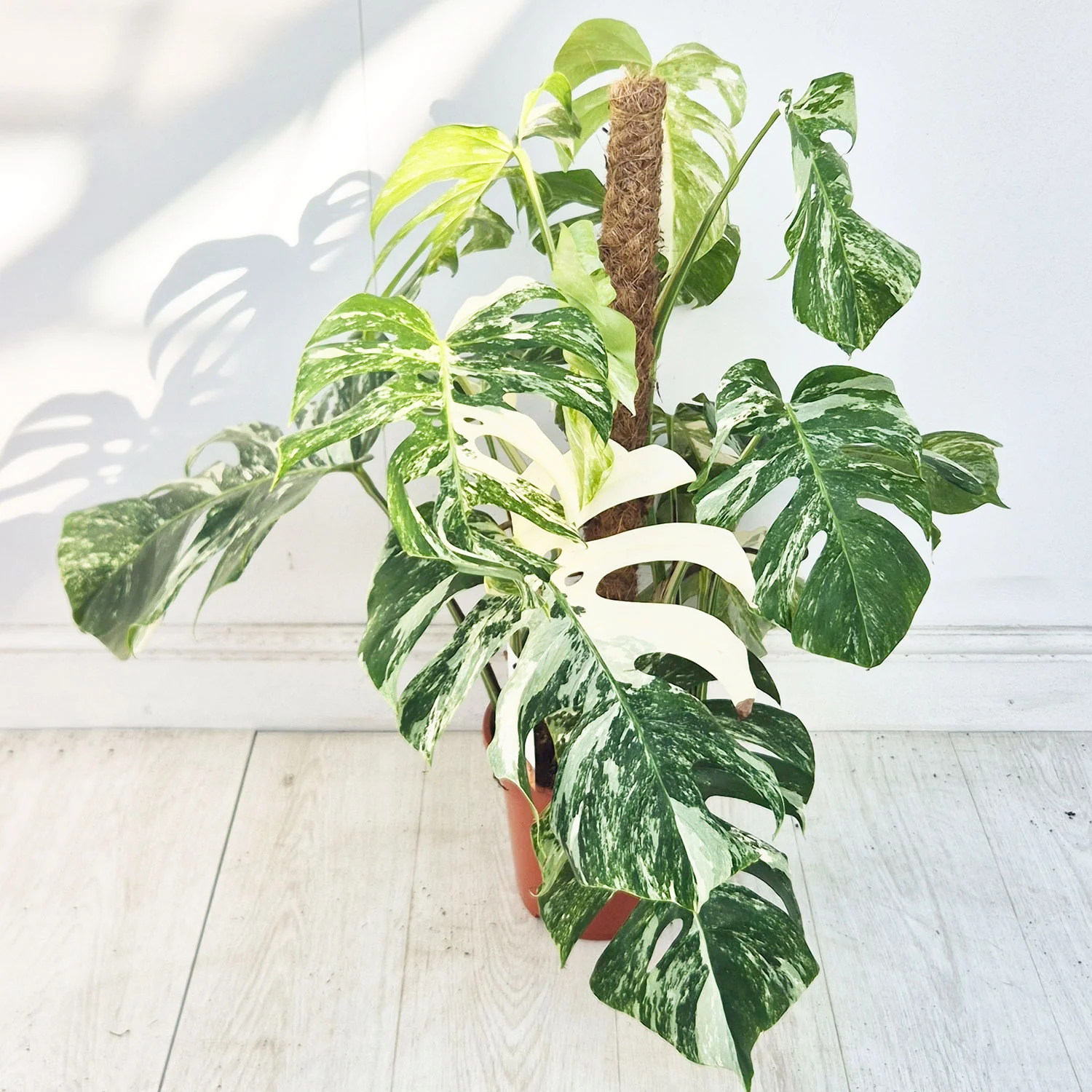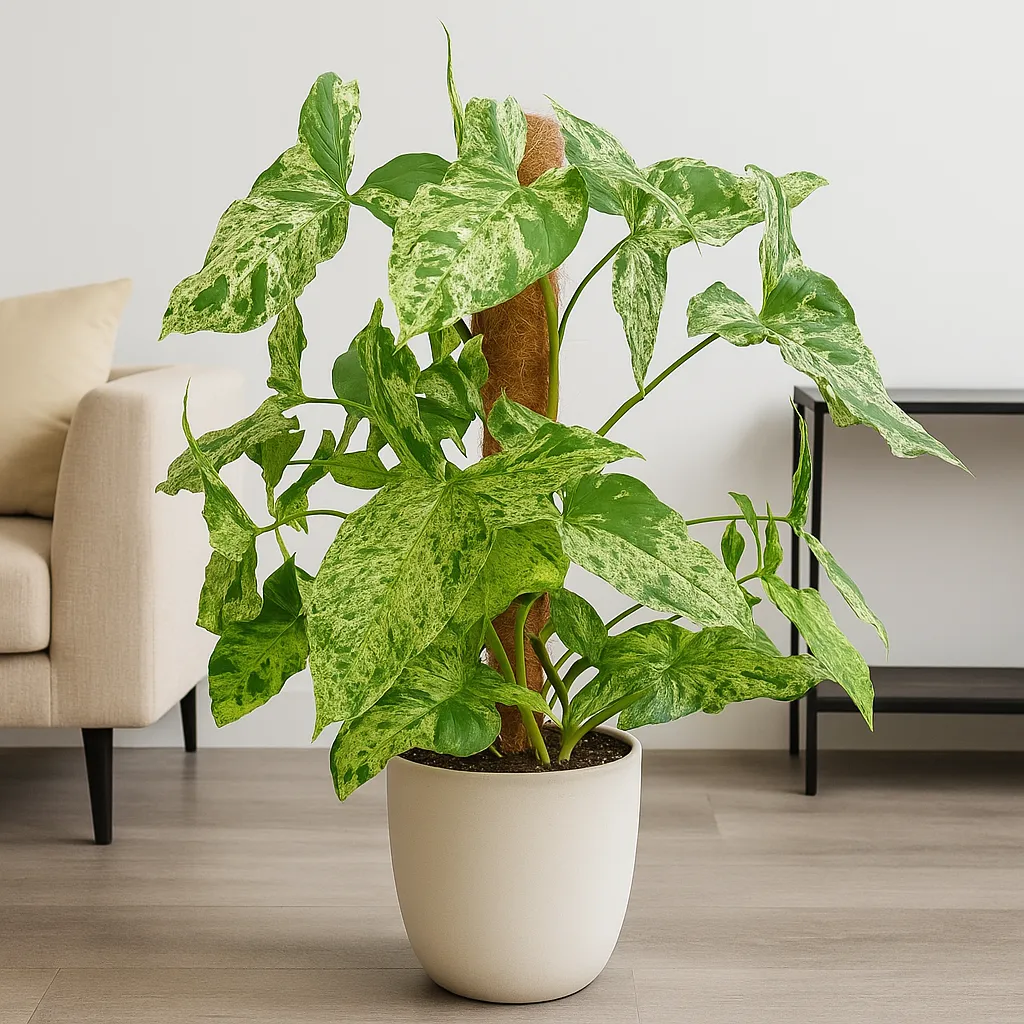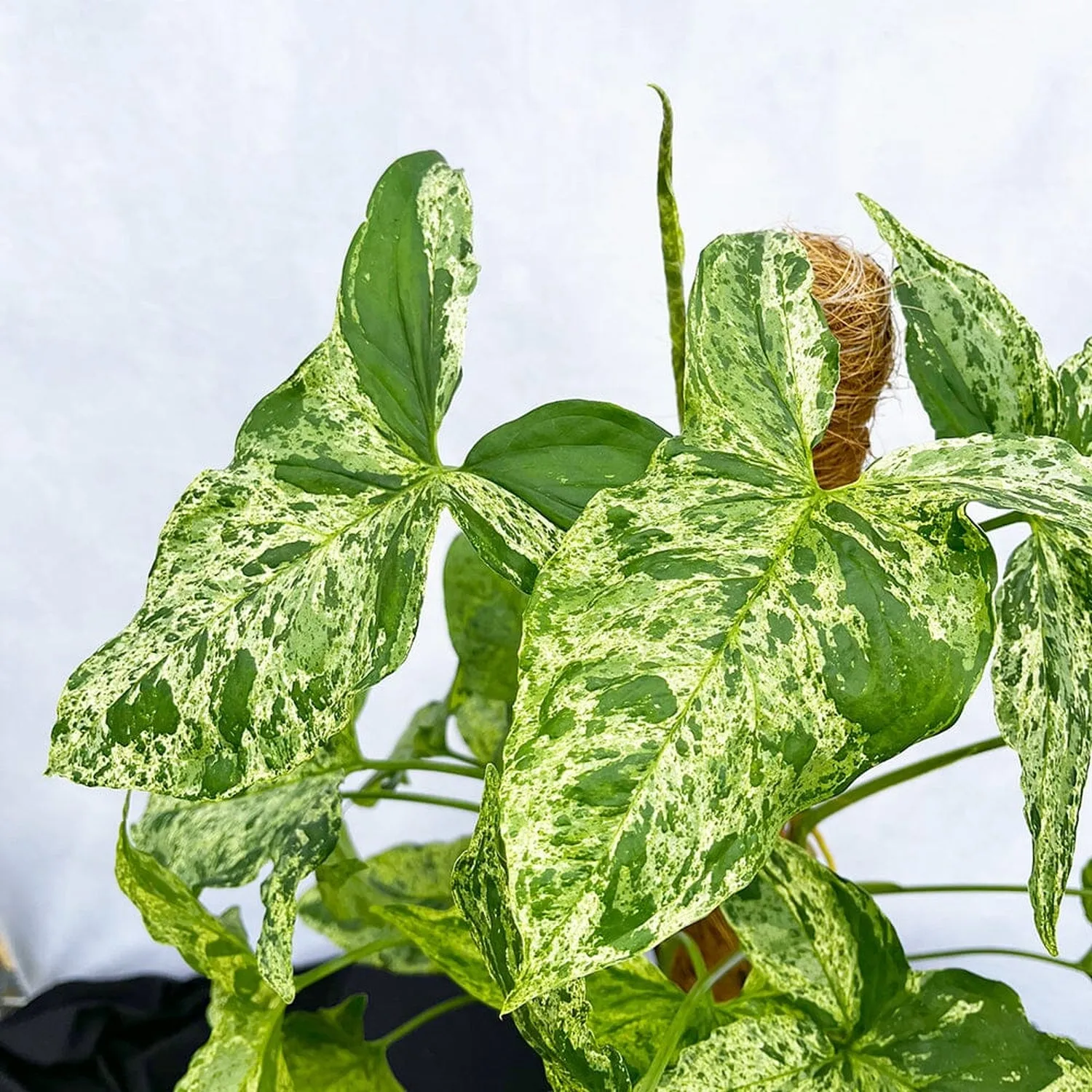
55 - 70cm Alocasia Platinum XL House Plant 19cm Pot
Alocasia ‘Platinum’ is a rare and exquisite tropical aroid treasured for its silvery, metallic foliage and sculptural elegance. A hybrid member of the Araceae family, this cultivar is thought to derive from Alocasia reginula (the Black Velvet) or closely related jewel Alocasias, combining compact growth with a cool, shimmering tone that truly lives up to its name.
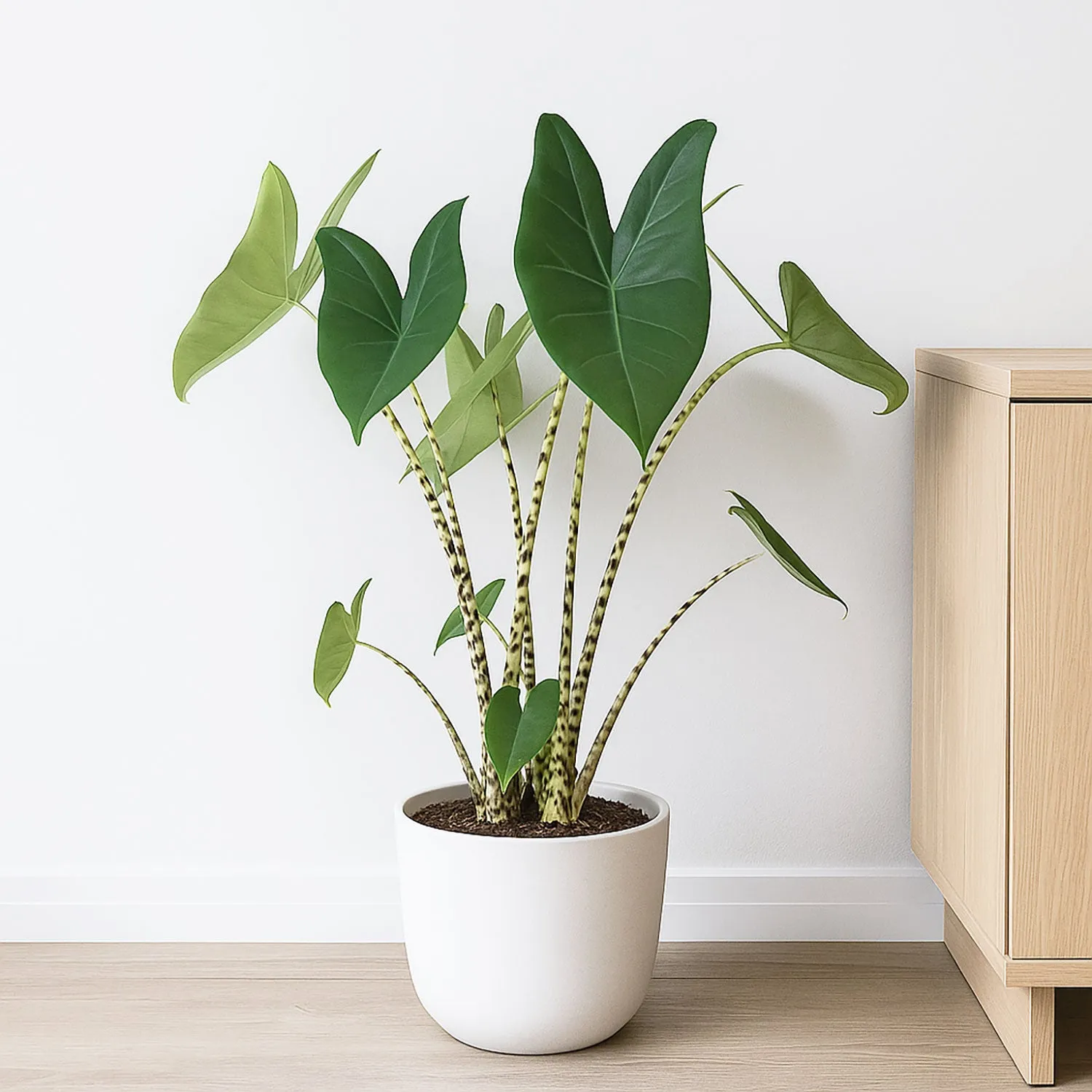
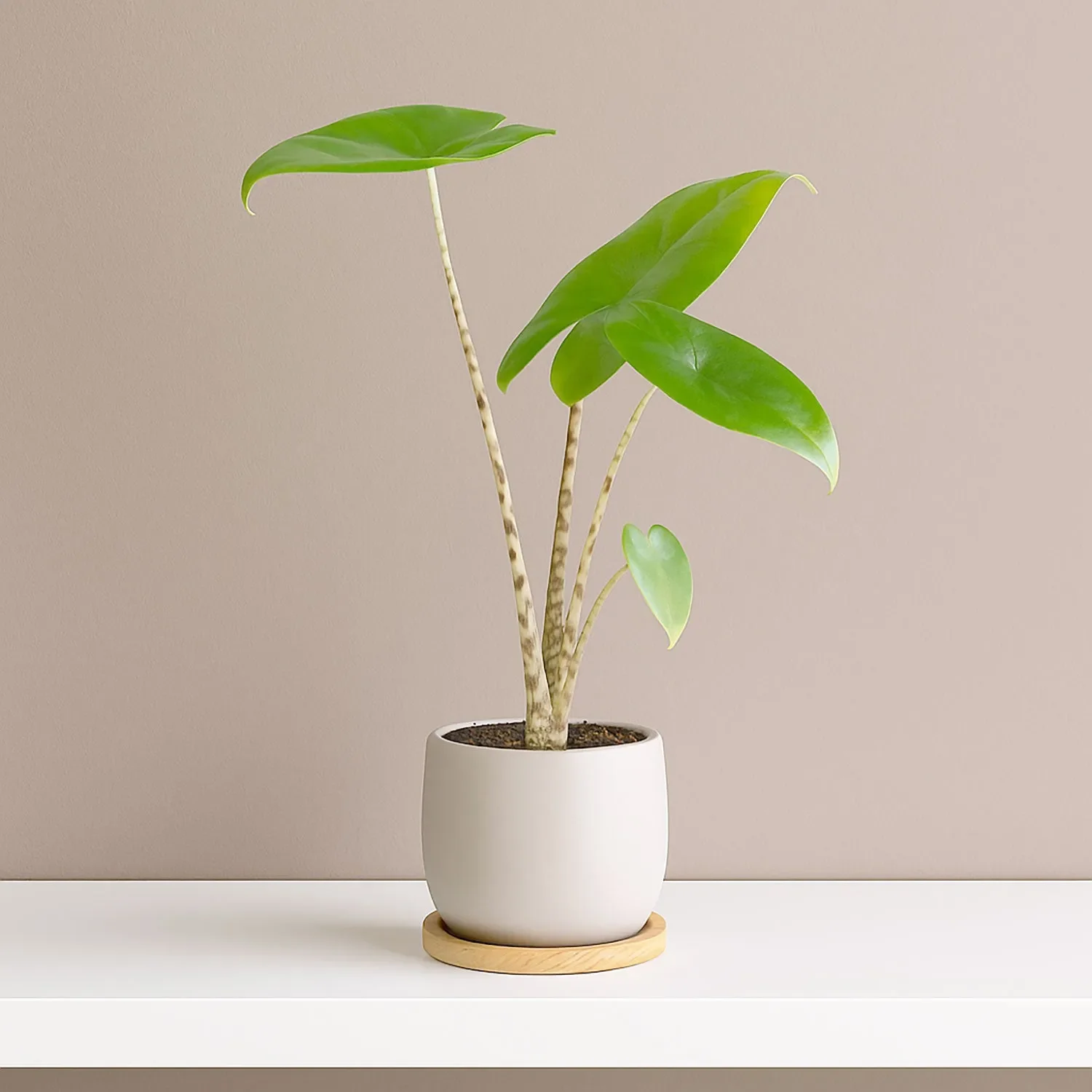
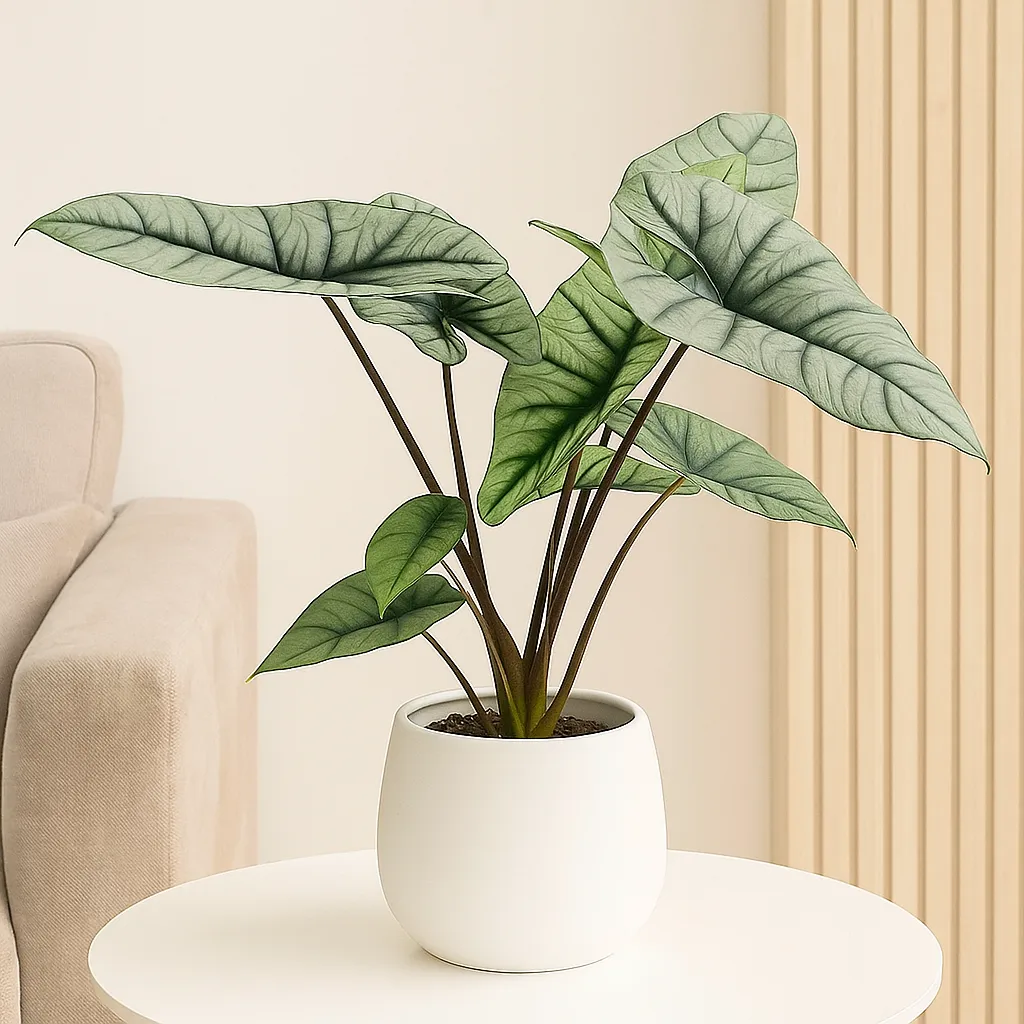
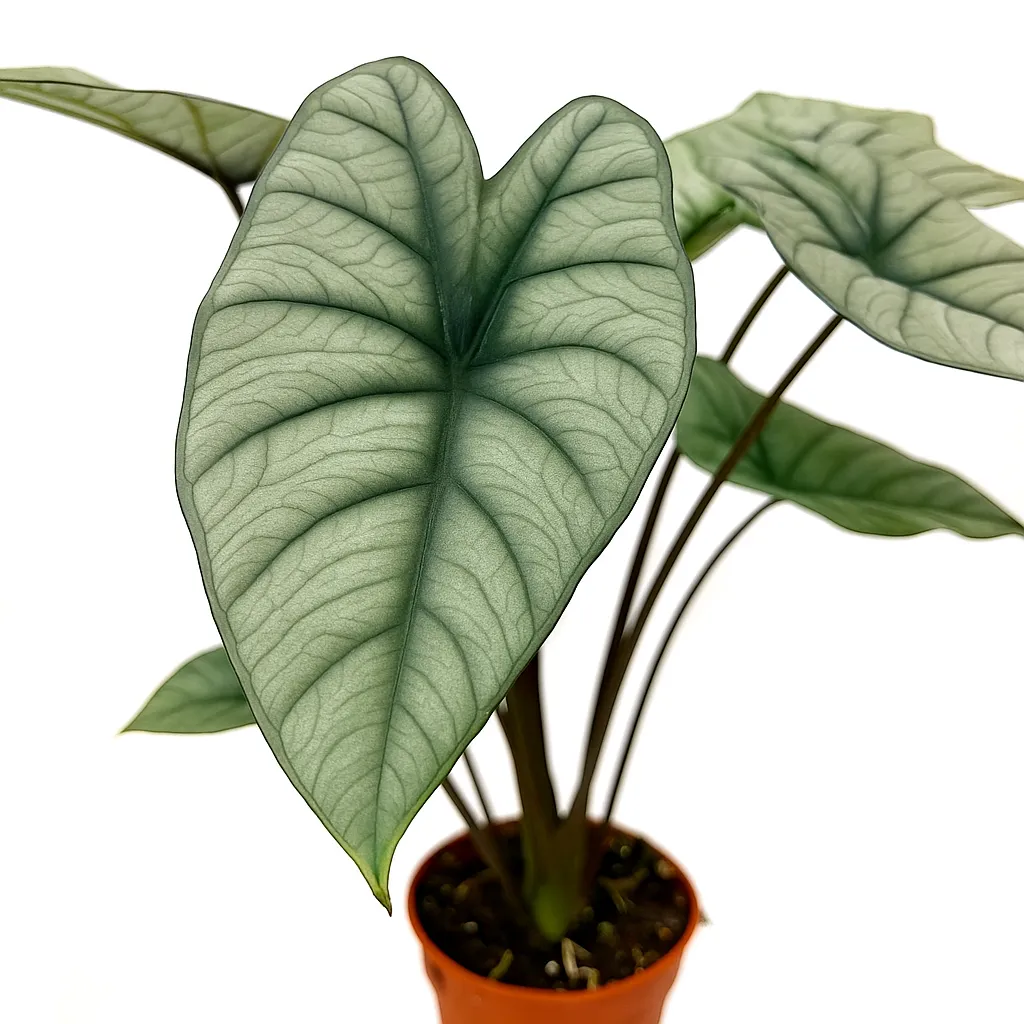
The leaves are thick, velvety, and distinctly heart-shaped, with a silvery-grey surface that reflects light like brushed metal. Deep green to charcoal veins carve through each leaf, enhancing the metallic contrast and creating a textured, three-dimensional appearance. New leaves often unfurl with a subtle blue-green tint before settling into their platinum finish.
Compact, sculptural, and deeply luxurious, Alocasia ‘Platinum’ is a statement species for collectors who value refined, jewel-like foliage. It brings an instant sense of depth and calm to modern interiors, pairing especially well with darker or variegated tropicals.
Alocasia ‘Platinum’ – Care Guide
Light
Thrives in bright, indirect light. Too much direct sun may scorch or fade the delicate silver tones, while too little light can dull the metallic sheen and slow growth. A position near an east- or north-facing window is ideal, or filtered light through sheer curtains.
Watering
Keep the soil consistently moist but never waterlogged. Water when the top 2–3 cm feels dry. Alocasias are sensitive to both drought and overwatering — aim for steady, moderate moisture. During dormancy or cooler months, reduce watering frequency but never allow the soil to dry completely.
Temperature and Humidity
-
Temperature: Prefers 20–28°C. Protect from cold draughts and temperatures below 16°C, which can trigger dormancy.
-
Humidity: Enjoys high humidity (60–80%). Use a humidifier, pebble tray, or group with other tropical plants to keep the air moist. Regular misting also helps maintain lush, blemish-free leaves.
Soil and Potting
Use a light, free-draining aroid mix — equal parts compost, orchid bark, perlite, and coco coir. The roots appreciate a balance of airflow and consistent moisture. Repot every 1–2 years in spring, using a pot only slightly larger than the root ball.
Feeding
Feed every 4–6 weeks during the active growing season (spring to late summer) with a diluted, balanced fertiliser formulated for foliage plants. Avoid over-fertilising; excess nutrients can damage the sensitive root system and dull the silvery colour.
Pruning and Maintenance
Remove yellowing or damaged leaves at the base to maintain plant health and appearance. Wipe the leaves gently with a soft, damp cloth to remove dust and highlight their metallic texture. Rotate the pot every few weeks for even growth.
Growth and Maturity
A slow to moderate grower, typically reaching 30–50 cm in height and spread. New leaves emerge regularly during the warm season, each more striking than the last. Like other jewel Alocasias, it may enter a brief dormancy in winter — simply reduce watering and resume regular care when new growth appears.
Common Issues
-
Yellowing leaves: Overwatering or poor drainage.
-
Brown tips: Low humidity or mineral build-up.
-
Drooping: Cold shock or underwatering.
-
Pests: Can attract spider mites, thrips, or fungus gnats; treat with neem oil or insecticidal soap if necessary.
Background and Benefits
Alocasia ‘Platinum’ belongs to the growing family of “jewel Alocasias” — compact, slow-growing species and hybrids admired for their luxurious foliage and intricate surface textures. Its unique metallic tone and velvety finish set it apart from other Alocasias, earning it a reputation as one of the most elegant and photogenic varieties in modern plant collections.
Beyond its ornamental value, Alocasia ‘Platinum’ contributes to air purification, helping to improve indoor air quality while adding serenity and refinement to any room. Its manageable size and sculptural form make it ideal for display on desks, side tables, or plant pedestals.
Quick Care Summary
Light: Bright, indirect; avoid harsh direct sun
Water: Keep soil lightly moist; never soggy
Temperature: 20–28°C; avoid below 16°C
Humidity: High (60–80%)
Soil: Airy aroid mix – compost, bark, perlite, coco coir
Feed: Every 4–6 weeks in spring/summer
Growth: Compact plant, 30–50 cm; silvery, metallic, heart-shaped leaves
⚠️ Toxicity note: Like all Alocasias, ‘Platinum’ contains calcium oxalate crystals and is toxic if ingested. Keep out of reach of pets and children.
Styling Tip
Display Alocasia ‘Platinum’ in a matte black, charcoal, or brushed silver planter to complement its metallic foliage. It pairs beautifully with contrasting textures such as Philodendron micans, Anthurium crystallinum, or Alocasia ‘Watsonia Red Vein’ for a sophisticated, high-contrast tropical arrangement.
Original: $65.98
-70%$65.98
$19.79Product Information
Product Information
Shipping & Returns
Shipping & Returns
Description
Alocasia ‘Platinum’ is a rare and exquisite tropical aroid treasured for its silvery, metallic foliage and sculptural elegance. A hybrid member of the Araceae family, this cultivar is thought to derive from Alocasia reginula (the Black Velvet) or closely related jewel Alocasias, combining compact growth with a cool, shimmering tone that truly lives up to its name.
The leaves are thick, velvety, and distinctly heart-shaped, with a silvery-grey surface that reflects light like brushed metal. Deep green to charcoal veins carve through each leaf, enhancing the metallic contrast and creating a textured, three-dimensional appearance. New leaves often unfurl with a subtle blue-green tint before settling into their platinum finish.
Compact, sculptural, and deeply luxurious, Alocasia ‘Platinum’ is a statement species for collectors who value refined, jewel-like foliage. It brings an instant sense of depth and calm to modern interiors, pairing especially well with darker or variegated tropicals.
Alocasia ‘Platinum’ – Care Guide
Light
Thrives in bright, indirect light. Too much direct sun may scorch or fade the delicate silver tones, while too little light can dull the metallic sheen and slow growth. A position near an east- or north-facing window is ideal, or filtered light through sheer curtains.
Watering
Keep the soil consistently moist but never waterlogged. Water when the top 2–3 cm feels dry. Alocasias are sensitive to both drought and overwatering — aim for steady, moderate moisture. During dormancy or cooler months, reduce watering frequency but never allow the soil to dry completely.
Temperature and Humidity
-
Temperature: Prefers 20–28°C. Protect from cold draughts and temperatures below 16°C, which can trigger dormancy.
-
Humidity: Enjoys high humidity (60–80%). Use a humidifier, pebble tray, or group with other tropical plants to keep the air moist. Regular misting also helps maintain lush, blemish-free leaves.
Soil and Potting
Use a light, free-draining aroid mix — equal parts compost, orchid bark, perlite, and coco coir. The roots appreciate a balance of airflow and consistent moisture. Repot every 1–2 years in spring, using a pot only slightly larger than the root ball.
Feeding
Feed every 4–6 weeks during the active growing season (spring to late summer) with a diluted, balanced fertiliser formulated for foliage plants. Avoid over-fertilising; excess nutrients can damage the sensitive root system and dull the silvery colour.
Pruning and Maintenance
Remove yellowing or damaged leaves at the base to maintain plant health and appearance. Wipe the leaves gently with a soft, damp cloth to remove dust and highlight their metallic texture. Rotate the pot every few weeks for even growth.
Growth and Maturity
A slow to moderate grower, typically reaching 30–50 cm in height and spread. New leaves emerge regularly during the warm season, each more striking than the last. Like other jewel Alocasias, it may enter a brief dormancy in winter — simply reduce watering and resume regular care when new growth appears.
Common Issues
-
Yellowing leaves: Overwatering or poor drainage.
-
Brown tips: Low humidity or mineral build-up.
-
Drooping: Cold shock or underwatering.
-
Pests: Can attract spider mites, thrips, or fungus gnats; treat with neem oil or insecticidal soap if necessary.
Background and Benefits
Alocasia ‘Platinum’ belongs to the growing family of “jewel Alocasias” — compact, slow-growing species and hybrids admired for their luxurious foliage and intricate surface textures. Its unique metallic tone and velvety finish set it apart from other Alocasias, earning it a reputation as one of the most elegant and photogenic varieties in modern plant collections.
Beyond its ornamental value, Alocasia ‘Platinum’ contributes to air purification, helping to improve indoor air quality while adding serenity and refinement to any room. Its manageable size and sculptural form make it ideal for display on desks, side tables, or plant pedestals.
Quick Care Summary
Light: Bright, indirect; avoid harsh direct sun
Water: Keep soil lightly moist; never soggy
Temperature: 20–28°C; avoid below 16°C
Humidity: High (60–80%)
Soil: Airy aroid mix – compost, bark, perlite, coco coir
Feed: Every 4–6 weeks in spring/summer
Growth: Compact plant, 30–50 cm; silvery, metallic, heart-shaped leaves
⚠️ Toxicity note: Like all Alocasias, ‘Platinum’ contains calcium oxalate crystals and is toxic if ingested. Keep out of reach of pets and children.
Styling Tip
Display Alocasia ‘Platinum’ in a matte black, charcoal, or brushed silver planter to complement its metallic foliage. It pairs beautifully with contrasting textures such as Philodendron micans, Anthurium crystallinum, or Alocasia ‘Watsonia Red Vein’ for a sophisticated, high-contrast tropical arrangement.