60 - 70cm Calathea Lancifolia Prayer Plant 17cm Pot House Plant
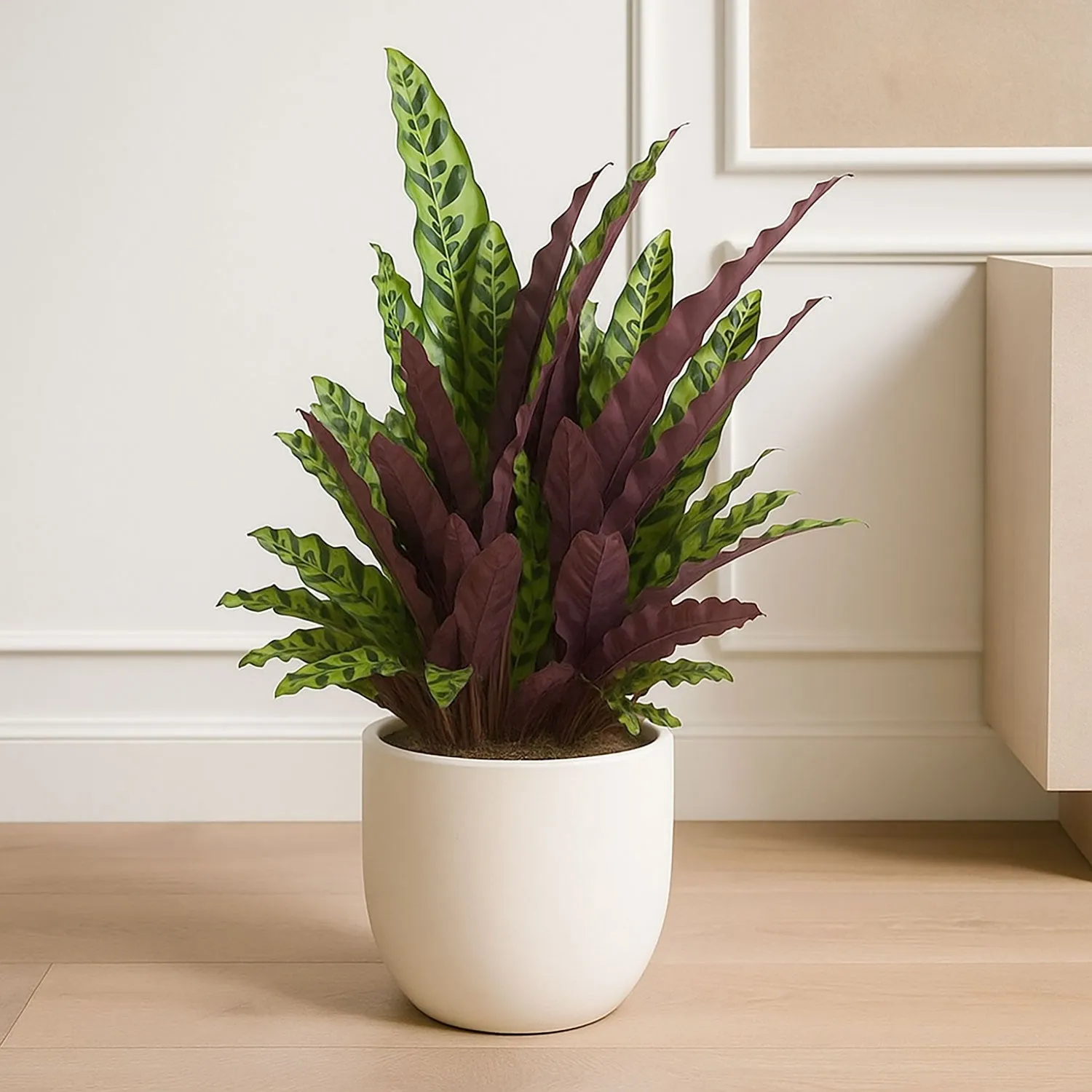
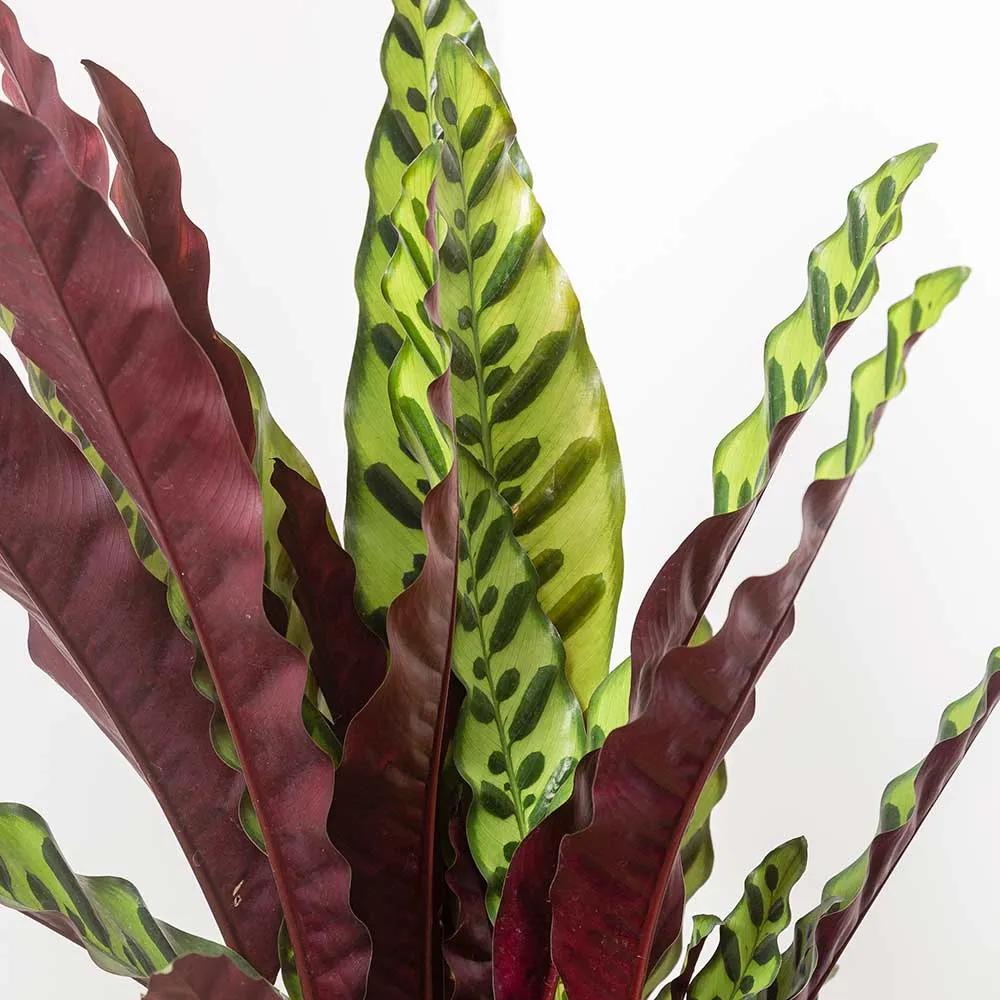
Calathea lancifolia, commonly known as the Rattlesnake Plant, is one of the most distinctive and vibrant members of the Marantaceae family. Native to the tropical rainforests of Brazil, it is loved for its bold, lance-shaped leaves decorated with dark green, brushstroke-like markings and rich purple undersides.
The elongated foliage can reach up to 45 cm long, featuring bright lime-green tops patterned with deep forest-green spots — reminiscent of a rattlesnake’s scales. The undersides of the leaves contrast dramatically in deep maroon-purple, revealed as the leaves fold upward each evening in their characteristic “prayer” motion. Elegant, lively, and full of personality, Calathea lancifolia brings an unmistakable touch of tropical artistry to interiors.
Non-toxic and pet-safe, this species is ideal for households seeking a statement plant that’s as gentle as it is beautiful.
Calathea lancifolia – Care Guide
Light
Thrives in bright, indirect light, which enhances its vivid colouring. Avoid direct sunlight, as it can scorch or fade the delicate leaves. It can tolerate moderate light conditions but will maintain sharper markings with consistent brightness. East- or north-facing windows are ideal.
Watering
Keep the soil evenly moist but not soggy. Water when the top 2–3 cm of soil feels slightly dry. Use filtered or rainwater, as Calathea lancifolia is sensitive to fluoride and chlorine, which can cause leaf browning. During winter, reduce watering frequency slightly but do not allow the plant to dry out completely.
Temperature and Humidity
Temperature: Prefers warmth between 18–28 °C. Avoid drafts, cold air, or sudden temperature fluctuations.
Humidity: High humidity (60–80%) is essential for lush, vibrant foliage. Mist regularly, use a humidifier, or place on a pebble tray. Bathrooms and kitchens with good light make excellent locations.
Soil and Potting
Use a moisture-retentive but well-draining mix — compost combined with perlite and coco coir works beautifully. This ensures consistent moisture without waterlogging. Repot every 1–2 years in spring to refresh nutrients and support healthy root development.
Feeding
Feed every 4–6 weeks in spring and summer with a diluted, balanced liquid fertiliser. Avoid over-fertilising, as the sensitive roots can suffer from salt build-up. Suspend feeding in autumn and winter when growth slows.
Pruning and Maintenance
Trim any yellow, brown, or damaged leaves near the base to keep the plant tidy and encourage fresh growth. Wipe the leaves gently with a damp cloth to remove dust and highlight their striking pattern. Rotate occasionally for even light exposure and symmetrical growth.
Growth and Maturity
A moderate grower, Calathea lancifolia typically reaches 60–70 cm in height and 40–50 cm in spread. Over time, it forms a dense clump of upright, patterned leaves. Mature plants may produce small, delicate yellow flowers close to the soil line, though they’re rarely seen indoors.
Common Issues
-
Brown tips: Low humidity or tap water sensitivity.
-
Curling leaves: Underwatering or dry air.
-
Faded pattern: Insufficient light.
-
Pests: Occasionally susceptible to spider mites or thrips — treat with neem oil and maintain humidity.
Background and Benefits
Native to the Brazilian rainforest floor, Calathea lancifolia thrives in humid, shaded environments where it receives filtered light through the tree canopy. Its common name, the Rattlesnake Plant, refers to its dramatic, scale-like markings and rippled leaf edges.
As with other Calatheas, it exhibits nyctinasty — the movement of leaves in response to light cycles — symbolising renewal, energy, and harmony. It’s completely non-toxic, making it a safe and pet-friendly choice for households seeking a vibrant, eye-catching tropical.
Quick Care Summary
-
Light: Bright, indirect light; avoid direct sun
-
Water: Keep soil evenly moist; use filtered or rainwater
-
Temperature: 18–28 °C; avoid below 15 °C
-
Humidity: High (60–80%)
-
Soil: Moisture-retentive, well-draining mix – compost, perlite, coco coir
-
Feed: Every 4–6 weeks in spring/summer
-
Growth: 60–70 cm tall; lime-green leaves with dark markings and purple undersides
⚠️ Toxicity note: Non-toxic to humans and pets.
Styling Tip
Showcase Calathea lancifolia as a bold accent in bright but shaded areas such as living rooms, hallways, or bathrooms. Its rippled leaves and dramatic patterning look beautiful in neutral or terracotta planters that contrast with its vibrant greens. Pair it with companion plants like Maranta ‘Lemon Lime’ or Phlebodium ‘Blue Star’ for a lush, rainforest-inspired display. With its tall, upright form and dynamic leaf movement, this Calathea adds rhythm, colour, and life to any interior space.
Original: $29.02
-70%$29.02
$8.71Product Information
Product Information
Shipping & Returns
Shipping & Returns
Description
Calathea lancifolia, commonly known as the Rattlesnake Plant, is one of the most distinctive and vibrant members of the Marantaceae family. Native to the tropical rainforests of Brazil, it is loved for its bold, lance-shaped leaves decorated with dark green, brushstroke-like markings and rich purple undersides.
The elongated foliage can reach up to 45 cm long, featuring bright lime-green tops patterned with deep forest-green spots — reminiscent of a rattlesnake’s scales. The undersides of the leaves contrast dramatically in deep maroon-purple, revealed as the leaves fold upward each evening in their characteristic “prayer” motion. Elegant, lively, and full of personality, Calathea lancifolia brings an unmistakable touch of tropical artistry to interiors.
Non-toxic and pet-safe, this species is ideal for households seeking a statement plant that’s as gentle as it is beautiful.
Calathea lancifolia – Care Guide
Light
Thrives in bright, indirect light, which enhances its vivid colouring. Avoid direct sunlight, as it can scorch or fade the delicate leaves. It can tolerate moderate light conditions but will maintain sharper markings with consistent brightness. East- or north-facing windows are ideal.
Watering
Keep the soil evenly moist but not soggy. Water when the top 2–3 cm of soil feels slightly dry. Use filtered or rainwater, as Calathea lancifolia is sensitive to fluoride and chlorine, which can cause leaf browning. During winter, reduce watering frequency slightly but do not allow the plant to dry out completely.
Temperature and Humidity
Temperature: Prefers warmth between 18–28 °C. Avoid drafts, cold air, or sudden temperature fluctuations.
Humidity: High humidity (60–80%) is essential for lush, vibrant foliage. Mist regularly, use a humidifier, or place on a pebble tray. Bathrooms and kitchens with good light make excellent locations.
Soil and Potting
Use a moisture-retentive but well-draining mix — compost combined with perlite and coco coir works beautifully. This ensures consistent moisture without waterlogging. Repot every 1–2 years in spring to refresh nutrients and support healthy root development.
Feeding
Feed every 4–6 weeks in spring and summer with a diluted, balanced liquid fertiliser. Avoid over-fertilising, as the sensitive roots can suffer from salt build-up. Suspend feeding in autumn and winter when growth slows.
Pruning and Maintenance
Trim any yellow, brown, or damaged leaves near the base to keep the plant tidy and encourage fresh growth. Wipe the leaves gently with a damp cloth to remove dust and highlight their striking pattern. Rotate occasionally for even light exposure and symmetrical growth.
Growth and Maturity
A moderate grower, Calathea lancifolia typically reaches 60–70 cm in height and 40–50 cm in spread. Over time, it forms a dense clump of upright, patterned leaves. Mature plants may produce small, delicate yellow flowers close to the soil line, though they’re rarely seen indoors.
Common Issues
-
Brown tips: Low humidity or tap water sensitivity.
-
Curling leaves: Underwatering or dry air.
-
Faded pattern: Insufficient light.
-
Pests: Occasionally susceptible to spider mites or thrips — treat with neem oil and maintain humidity.
Background and Benefits
Native to the Brazilian rainforest floor, Calathea lancifolia thrives in humid, shaded environments where it receives filtered light through the tree canopy. Its common name, the Rattlesnake Plant, refers to its dramatic, scale-like markings and rippled leaf edges.
As with other Calatheas, it exhibits nyctinasty — the movement of leaves in response to light cycles — symbolising renewal, energy, and harmony. It’s completely non-toxic, making it a safe and pet-friendly choice for households seeking a vibrant, eye-catching tropical.
Quick Care Summary
-
Light: Bright, indirect light; avoid direct sun
-
Water: Keep soil evenly moist; use filtered or rainwater
-
Temperature: 18–28 °C; avoid below 15 °C
-
Humidity: High (60–80%)
-
Soil: Moisture-retentive, well-draining mix – compost, perlite, coco coir
-
Feed: Every 4–6 weeks in spring/summer
-
Growth: 60–70 cm tall; lime-green leaves with dark markings and purple undersides
⚠️ Toxicity note: Non-toxic to humans and pets.
Styling Tip
Showcase Calathea lancifolia as a bold accent in bright but shaded areas such as living rooms, hallways, or bathrooms. Its rippled leaves and dramatic patterning look beautiful in neutral or terracotta planters that contrast with its vibrant greens. Pair it with companion plants like Maranta ‘Lemon Lime’ or Phlebodium ‘Blue Star’ for a lush, rainforest-inspired display. With its tall, upright form and dynamic leaf movement, this Calathea adds rhythm, colour, and life to any interior space.