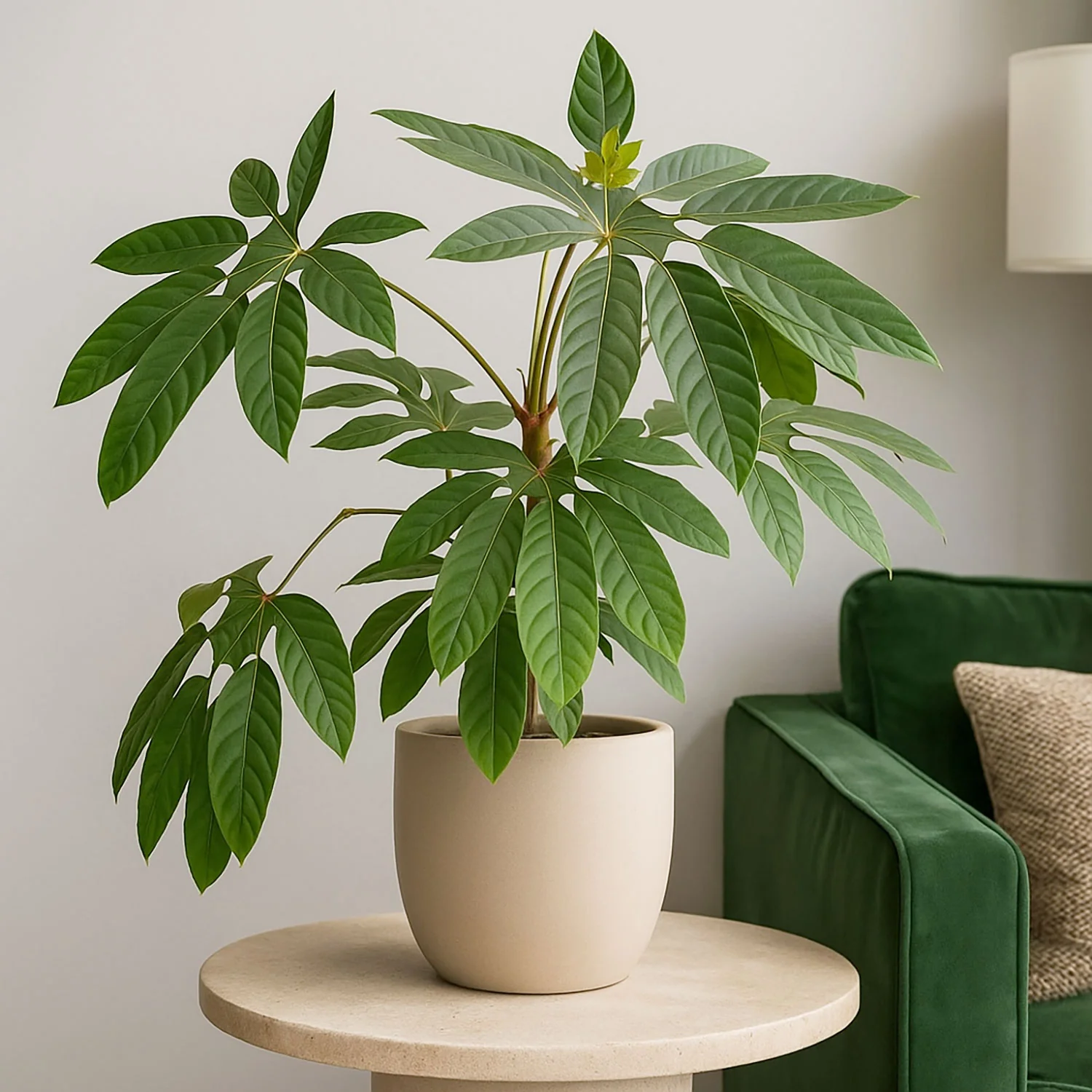
40 - 60cm Trevesia Burckii Ghost Foot 14cm Pot House Plant
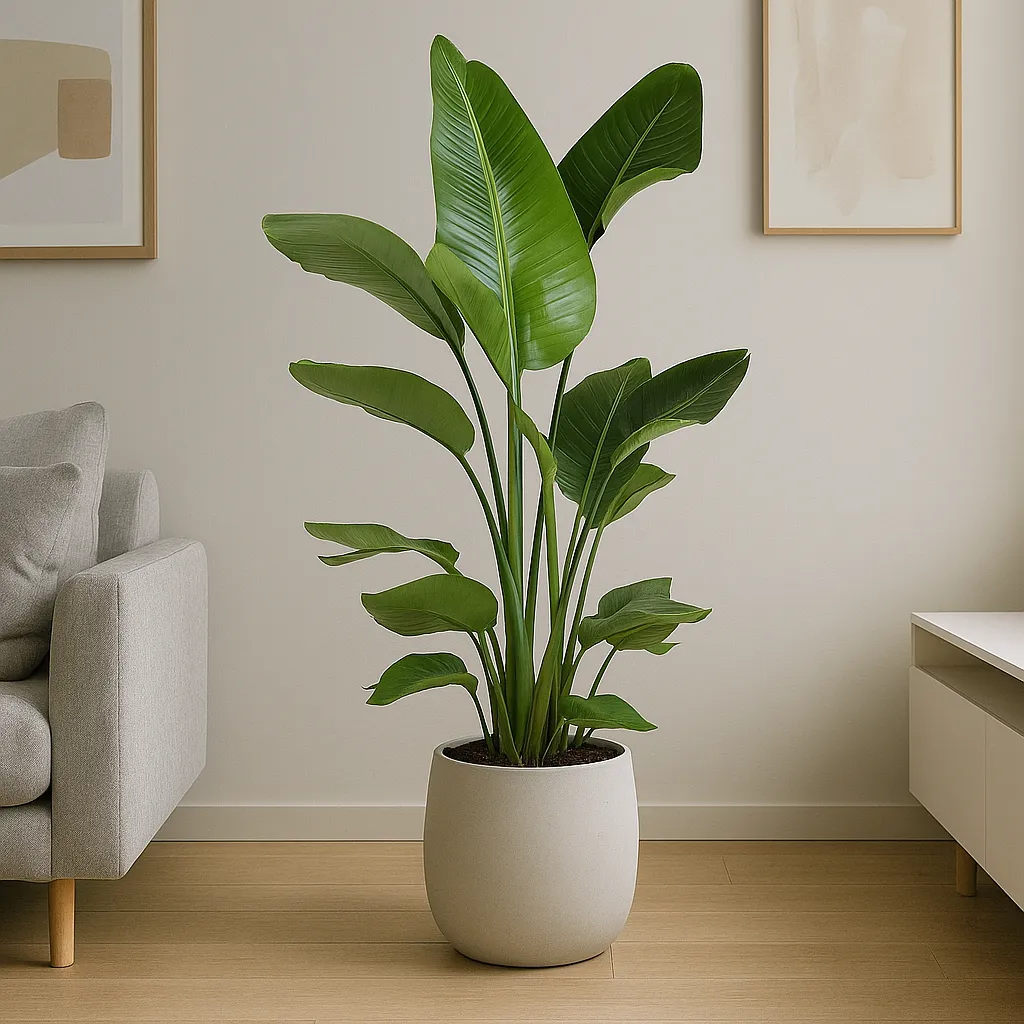
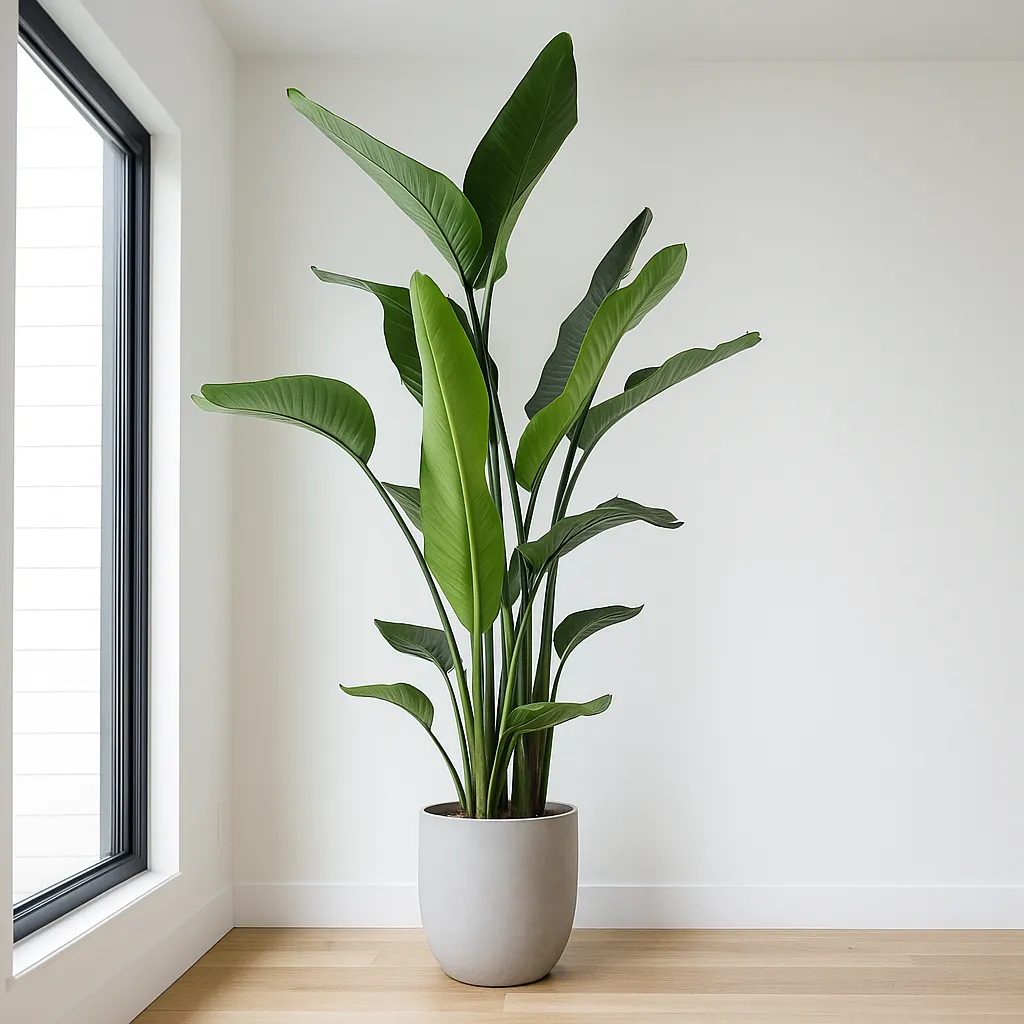
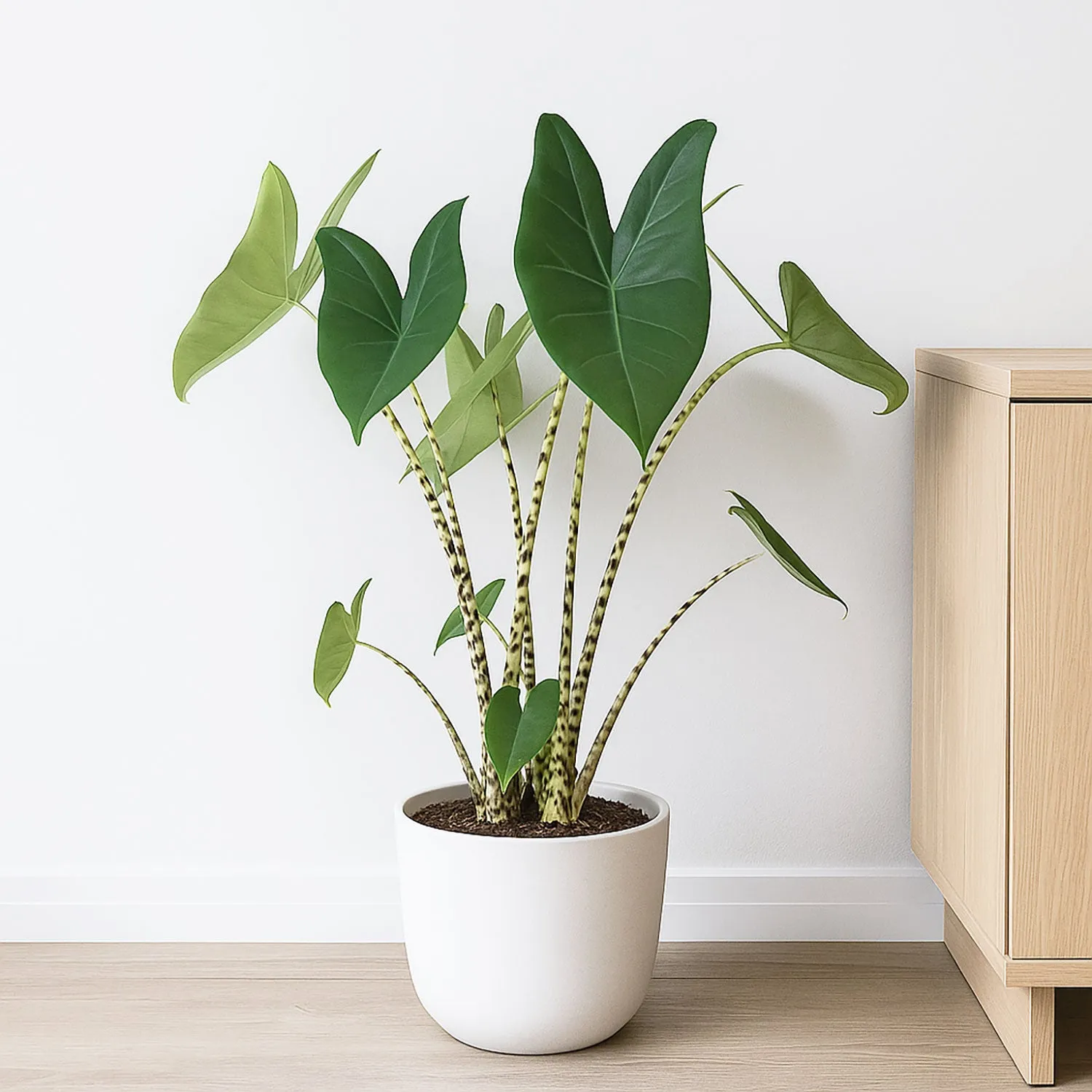
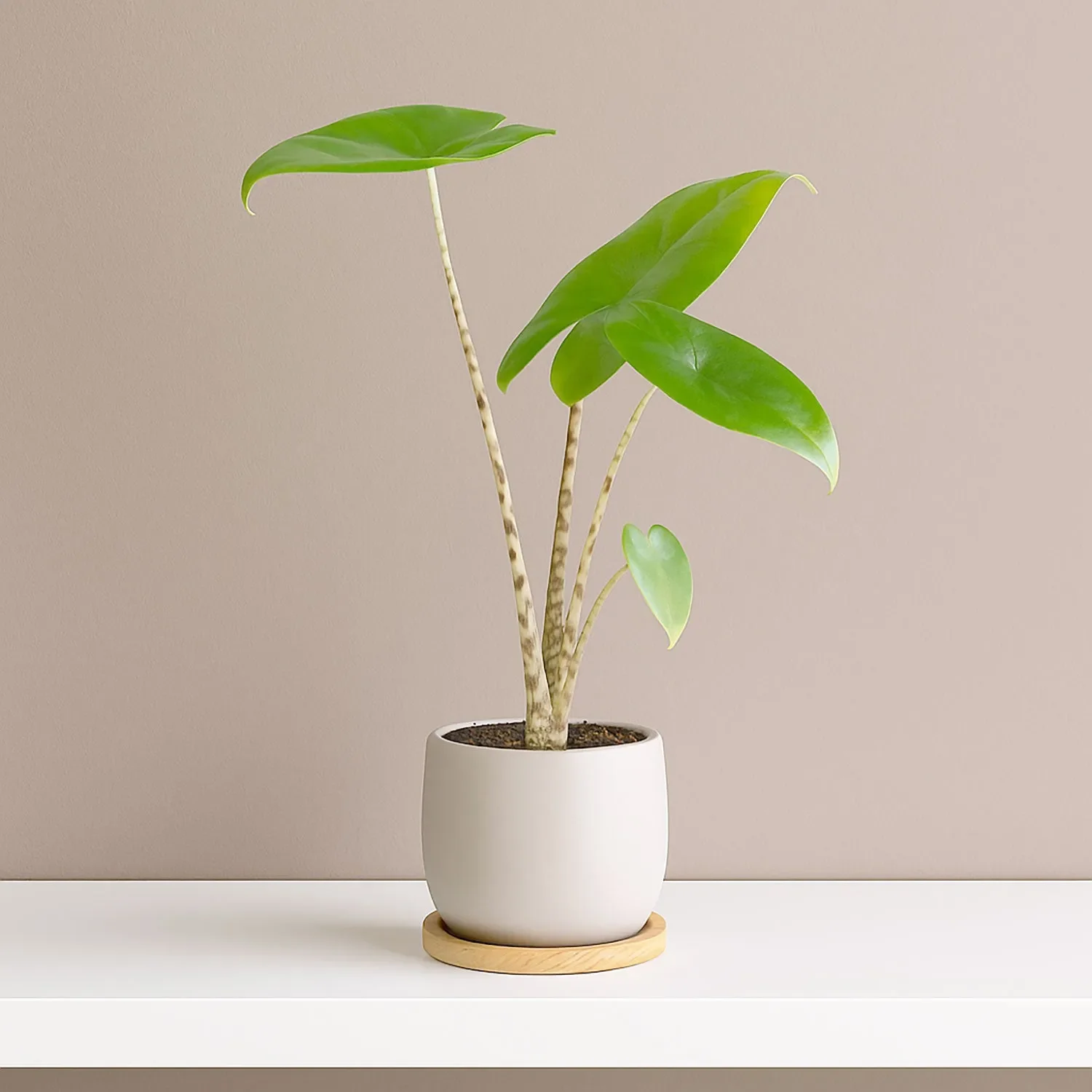
Trevesia burckii, commonly known as the Ghost Foot Plant, is a rare and highly ornamental tropical species admired for its distinctive, deeply lobed foliage that resembles a ghostly hand or footprint. A member of the Araliaceae family and native to the rainforests of Southeast Asia, particularly Indonesia and Malaysia, this plant brings a truly exotic and sculptural presence to any botanical collection.
Its large, fan-shaped leaves are divided into dramatic, finger-like lobes — a unique characteristic that gives rise to its nickname, “Ghost Foot.” The foliage is a soft matte green with silvery undertones, and the underside may display faint purple hues. As it matures, Trevesia burckii forms a slender trunk crowned with a canopy of striking, umbrella-like leaves, giving it a tree-like silhouette that’s both bold and elegant.
Architectural, rare, and otherworldly, Trevesia burckii is a true collector’s plant — one that adds tropical grandeur and sculptural intrigue to modern interiors, greenhouses, or conservatories.
Trevesia burckii – Care Guide
Light
Thrives in bright, indirect light that mimics the filtered sunlight of its native rainforest habitat. It tolerates some gentle morning or late-afternoon sun but should be protected from harsh direct rays, which can scorch the delicate lobed leaves.
Watering
Keep the soil consistently moist but never soggy. Water when the top 3–5 cm of soil feels dry, allowing excess water to drain away completely. During winter, reduce watering frequency slightly but avoid allowing the soil to dry out completely, as the plant prefers steady moisture.
Temperature and Humidity
Temperature: Prefers warmth between 20–30 °C and should be kept above 15 °C at all times. Protect from cold drafts and sudden temperature fluctuations.
Humidity: Moderate to high humidity (60–80%) keeps the leaves lush and prevents browning. Mist occasionally or use a humidifier to replicate its tropical environment.
Soil and Potting
Use a rich, airy, and well-draining mix — compost combined with perlite, coco coir, and a little bark or sand ensures moisture retention without compaction. Repot every 2–3 years in spring, choosing a sturdy pot to support its developing trunk and expansive canopy.
Feeding
Feed every 4–6 weeks in spring and summer with a diluted, balanced liquid fertiliser. Avoid over-fertilising, as this can cause leaf spotting or salt build-up. Suspend feeding in autumn and winter when growth slows.
Pruning and Maintenance
Remove older or damaged leaves near the base to maintain shape and promote new growth. Wipe leaves gently with a soft, damp cloth to remove dust and keep the plant looking fresh. As the plant matures, lower leaves may naturally drop, revealing a slender trunk — part of its natural growth pattern.
Growth and Maturity
A moderately fast grower under the right conditions, Trevesia burckii can reach 1.5–2 metres indoors and up to 3 metres in a greenhouse or tropical garden. It develops into a small tree-like plant with a dramatic canopy of lobed leaves — a living sculpture that becomes more striking with age.
Common Issues
-
Yellowing leaves: Overwatering or poor drainage.
-
Brown edges: Low humidity or inconsistent watering.
-
Drooping leaves: Cold stress or under-watering.
-
Pests: Occasionally affected by spider mites or scale — treat promptly with neem oil or insecticidal soap.
Background and Benefits
Native to Southeast Asia, Trevesia burckii grows in tropical rainforests where it thrives in high humidity and diffused light. Its unique leaf structure and upright form make it one of the most distinctive species in the Araliaceae family, which also includes Schefflera and Polyscias.
This rare species is cultivated primarily for its unusual, palm-like foliage and dramatic architectural appeal. Symbolically, its hand-shaped leaves represent creativity, strength, and individuality — traits that mirror its one-of-a-kind appearance. Beyond aesthetics, its large leaves also contribute to improving indoor air quality by filtering pollutants and increasing humidity.
Quick Care Summary
-
Light: Bright, indirect light; tolerates soft morning sun
-
Water: Keep soil evenly moist; allow top few cm to dry slightly
-
Temperature: 20–30 °C; avoid below 15 °C
-
Humidity: Moderate to high (60–80%)
-
Soil: Rich, airy mix – compost, perlite, bark, coco coir
-
Feed: Every 4–6 weeks in spring/summer
-
Growth: 1.5–2 m tall; tree-like habit with deeply lobed, hand-shaped leaves
⚠️ Toxicity note: Mildly toxic if ingested; keep away from pets and children.
Styling Tip
Showcase Trevesia burckii as a statement plant in a bright, humid room or conservatory where its dramatic leaf structure can be fully appreciated. Place it in a large ceramic or textured terracotta planter to complement its sculptural silhouette. It pairs beautifully with softer, rounded foliage like Calathea orbifolia or Philodendron ‘Imperial Green’ for contrast. Perfect for modern tropical interiors, studios, or greenhouses, the Ghost Foot Plant adds a touch of the extraordinary — a botanical centrepiece that captures the mystery and elegance of the rainforest.
Original: $59.38
-70%$59.38
$17.81Product Information
Product Information
Shipping & Returns
Shipping & Returns
Description
Trevesia burckii, commonly known as the Ghost Foot Plant, is a rare and highly ornamental tropical species admired for its distinctive, deeply lobed foliage that resembles a ghostly hand or footprint. A member of the Araliaceae family and native to the rainforests of Southeast Asia, particularly Indonesia and Malaysia, this plant brings a truly exotic and sculptural presence to any botanical collection.
Its large, fan-shaped leaves are divided into dramatic, finger-like lobes — a unique characteristic that gives rise to its nickname, “Ghost Foot.” The foliage is a soft matte green with silvery undertones, and the underside may display faint purple hues. As it matures, Trevesia burckii forms a slender trunk crowned with a canopy of striking, umbrella-like leaves, giving it a tree-like silhouette that’s both bold and elegant.
Architectural, rare, and otherworldly, Trevesia burckii is a true collector’s plant — one that adds tropical grandeur and sculptural intrigue to modern interiors, greenhouses, or conservatories.
Trevesia burckii – Care Guide
Light
Thrives in bright, indirect light that mimics the filtered sunlight of its native rainforest habitat. It tolerates some gentle morning or late-afternoon sun but should be protected from harsh direct rays, which can scorch the delicate lobed leaves.
Watering
Keep the soil consistently moist but never soggy. Water when the top 3–5 cm of soil feels dry, allowing excess water to drain away completely. During winter, reduce watering frequency slightly but avoid allowing the soil to dry out completely, as the plant prefers steady moisture.
Temperature and Humidity
Temperature: Prefers warmth between 20–30 °C and should be kept above 15 °C at all times. Protect from cold drafts and sudden temperature fluctuations.
Humidity: Moderate to high humidity (60–80%) keeps the leaves lush and prevents browning. Mist occasionally or use a humidifier to replicate its tropical environment.
Soil and Potting
Use a rich, airy, and well-draining mix — compost combined with perlite, coco coir, and a little bark or sand ensures moisture retention without compaction. Repot every 2–3 years in spring, choosing a sturdy pot to support its developing trunk and expansive canopy.
Feeding
Feed every 4–6 weeks in spring and summer with a diluted, balanced liquid fertiliser. Avoid over-fertilising, as this can cause leaf spotting or salt build-up. Suspend feeding in autumn and winter when growth slows.
Pruning and Maintenance
Remove older or damaged leaves near the base to maintain shape and promote new growth. Wipe leaves gently with a soft, damp cloth to remove dust and keep the plant looking fresh. As the plant matures, lower leaves may naturally drop, revealing a slender trunk — part of its natural growth pattern.
Growth and Maturity
A moderately fast grower under the right conditions, Trevesia burckii can reach 1.5–2 metres indoors and up to 3 metres in a greenhouse or tropical garden. It develops into a small tree-like plant with a dramatic canopy of lobed leaves — a living sculpture that becomes more striking with age.
Common Issues
-
Yellowing leaves: Overwatering or poor drainage.
-
Brown edges: Low humidity or inconsistent watering.
-
Drooping leaves: Cold stress or under-watering.
-
Pests: Occasionally affected by spider mites or scale — treat promptly with neem oil or insecticidal soap.
Background and Benefits
Native to Southeast Asia, Trevesia burckii grows in tropical rainforests where it thrives in high humidity and diffused light. Its unique leaf structure and upright form make it one of the most distinctive species in the Araliaceae family, which also includes Schefflera and Polyscias.
This rare species is cultivated primarily for its unusual, palm-like foliage and dramatic architectural appeal. Symbolically, its hand-shaped leaves represent creativity, strength, and individuality — traits that mirror its one-of-a-kind appearance. Beyond aesthetics, its large leaves also contribute to improving indoor air quality by filtering pollutants and increasing humidity.
Quick Care Summary
-
Light: Bright, indirect light; tolerates soft morning sun
-
Water: Keep soil evenly moist; allow top few cm to dry slightly
-
Temperature: 20–30 °C; avoid below 15 °C
-
Humidity: Moderate to high (60–80%)
-
Soil: Rich, airy mix – compost, perlite, bark, coco coir
-
Feed: Every 4–6 weeks in spring/summer
-
Growth: 1.5–2 m tall; tree-like habit with deeply lobed, hand-shaped leaves
⚠️ Toxicity note: Mildly toxic if ingested; keep away from pets and children.
Styling Tip
Showcase Trevesia burckii as a statement plant in a bright, humid room or conservatory where its dramatic leaf structure can be fully appreciated. Place it in a large ceramic or textured terracotta planter to complement its sculptural silhouette. It pairs beautifully with softer, rounded foliage like Calathea orbifolia or Philodendron ‘Imperial Green’ for contrast. Perfect for modern tropical interiors, studios, or greenhouses, the Ghost Foot Plant adds a touch of the extraordinary — a botanical centrepiece that captures the mystery and elegance of the rainforest.