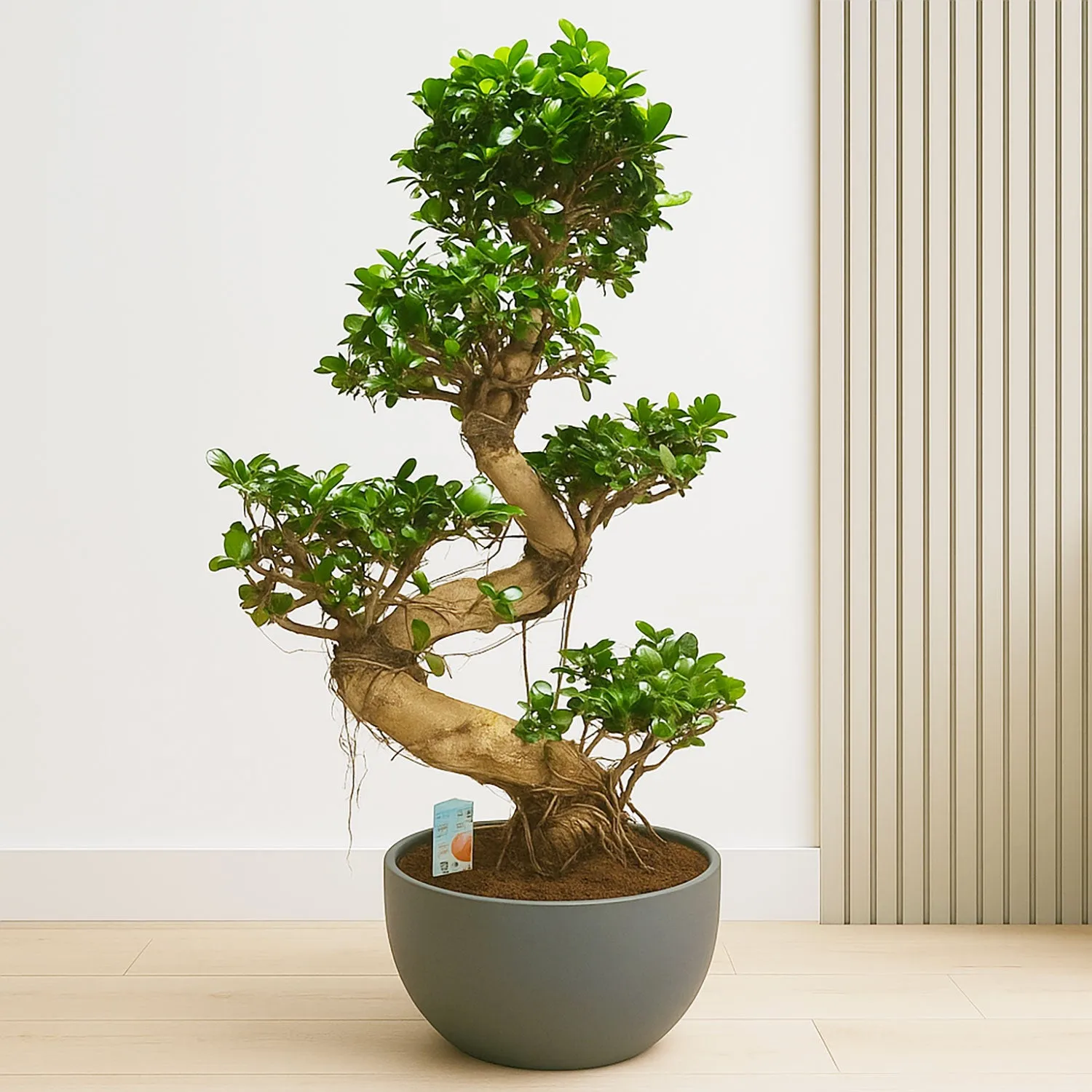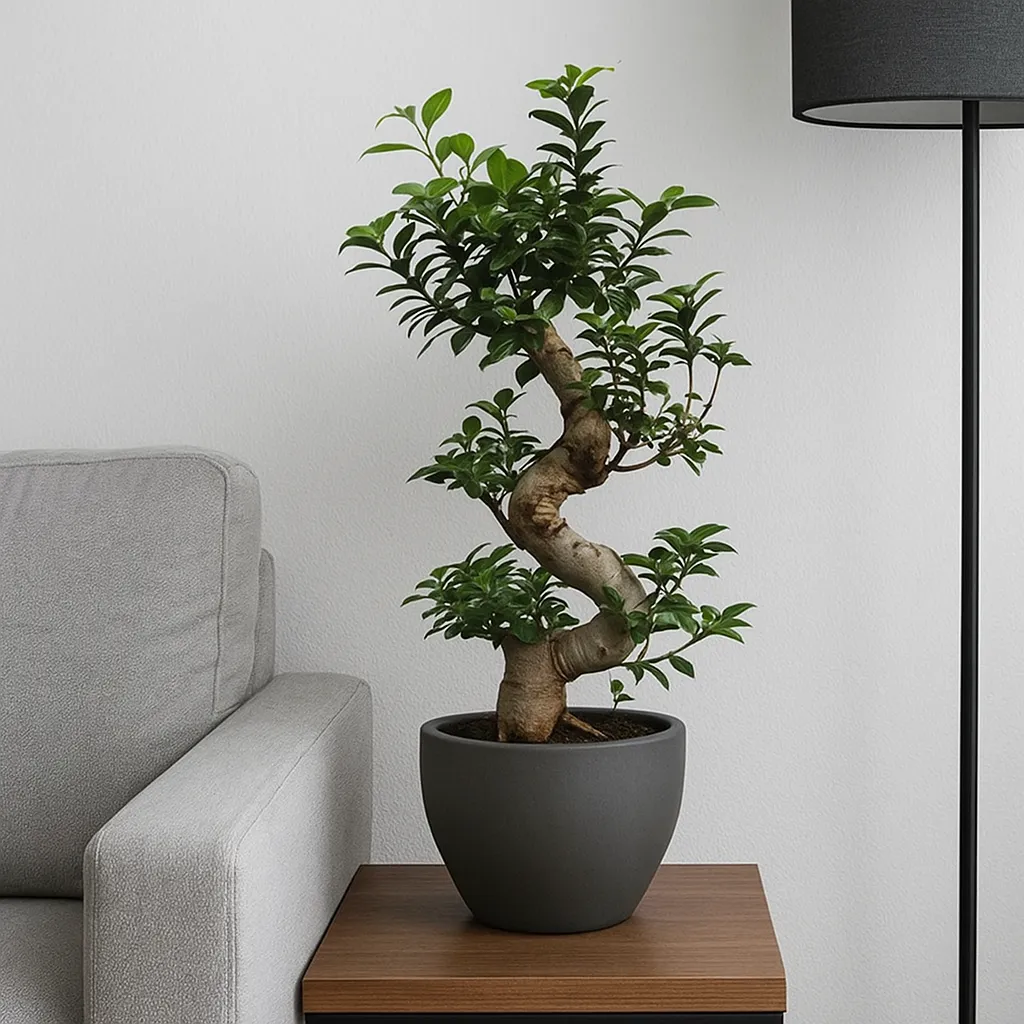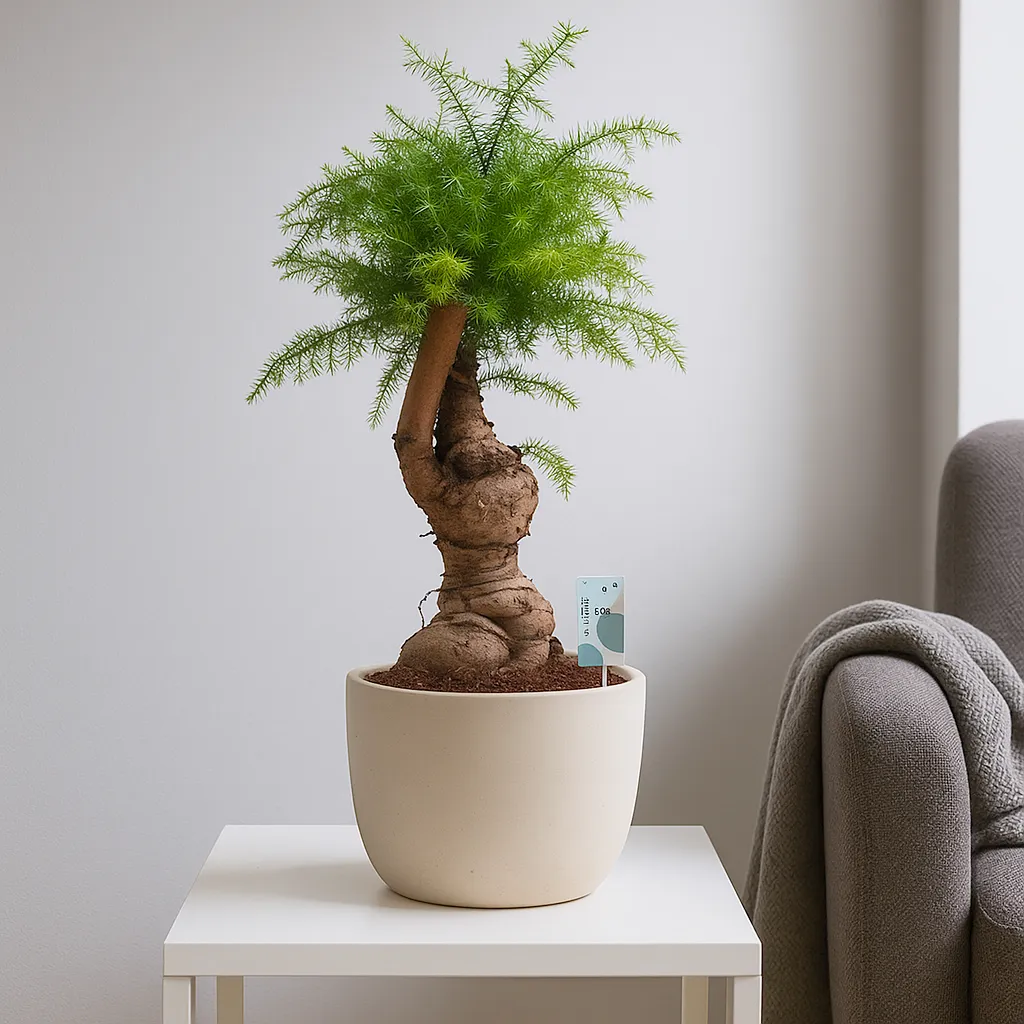

75 - 90cm Bonsai Araucaria Cunninghamii Tree 27cm Ceramic Pot House Plant
Araucaria cunninghamii Bonsai – Plant Description
Araucaria cunninghamii, commonly known as the Hoop Pine, is a majestic evergreen conifer native to Australia and Papua New Guinea. In the wild, it can grow to more than 60 metres tall, forming part of ancient subtropical rainforests. As a bonsai, however, this species is trained and maintained at a miniature scale, becoming an elegant and distinctive ornamental tree.
The Hoop Pine bonsai is characterised by its upright, symmetrical growth habit and dense whorls of needle-like foliage. The fine, linear leaves are deep green, forming neat sprays along evenly spaced branches. Its natural tendency to grow in a conical shape lends itself beautifully to bonsai styling, evoking the look of a mature forest tree in miniature.
Unlike many broadleaf bonsai, Araucaria cunninghamii brings a coniferous charm, with foliage that remains evergreen throughout the year. Its formal, architectural structure makes it particularly suited for upright bonsai styles such as Chokkan (formal upright) or Moyogi (informal upright).
Araucaria cunninghamii Bonsai – Care Guide
Light
Requires bright light for healthy growth. Outdoors, place in full sun to partial shade. Indoors, it should be positioned in the brightest location possible, ideally by a south-facing window or under grow lights.
Watering
Keep soil evenly moist but never waterlogged. Hoop Pine does not tolerate prolonged drought; however, it also dislikes sitting in soggy conditions. Water when the top 2–3 cm of soil feels dry. In hot weather, daily checks are recommended.
Temperature and Humidity
-
Temperature: Prefers mild conditions of 15–24°C. It is frost-sensitive and must be protected from cold temperatures below 10°C.
-
Humidity: Appreciates moderate humidity. If grown indoors, mist occasionally or place near a humidity tray to prevent browning of needle tips.
Soil and Potting
Use a well-draining bonsai soil mix containing akadama, pumice, and lava rock, or a free-draining sandy loam. Repot every 2–3 years in spring, pruning roots carefully to avoid stress.
Feeding
Feed every 4 weeks during the growing season (spring and summer) with a balanced bonsai fertiliser. Reduce feeding in autumn and stop in winter when growth slows.
Pruning and Training
Prune back new growth regularly to maintain shape and encourage denser foliage. Wiring can be used carefully on young branches, but avoid excessive bending, as older wood is brittle. Pinching back candles or new shoots helps refine the silhouette.
Growth and Maturity
As a bonsai, Araucaria cunninghamii develops into a refined miniature tree with strong vertical structure and layered foliage. With patience and careful shaping, it can resemble a stately conifer forest giant in miniature form.
Common Issues
-
Brown needle tips: Usually caused by low humidity or underwatering.
-
Yellowing foliage: May indicate poor drainage or nutrient deficiency.
-
Pests: Occasionally susceptible to scale insects or spider mites; inspect foliage regularly.
Background and Benefits
Hoop Pines have been growing for millions of years and are living reminders of ancient coniferous forests. As a bonsai, Araucaria cunninghamii captures this prehistoric majesty in miniature, offering an elegant evergreen focal point that remains decorative year-round.
✅ Quick Care Summary
-
Light: Full sun to bright indoor light
-
Water: Keep evenly moist, not soggy
-
Temperature: 15–24°C; frost-sensitive
-
Humidity: Moderate; mist indoors
-
Soil: Free-draining bonsai mix
-
Feed: Monthly in spring/summer
-
Growth: Upright conifer with evergreen needle-like foliage
Original: $263.95
-70%$263.95
$79.18Product Information
Product Information
Shipping & Returns
Shipping & Returns
Description
Araucaria cunninghamii Bonsai – Plant Description
Araucaria cunninghamii, commonly known as the Hoop Pine, is a majestic evergreen conifer native to Australia and Papua New Guinea. In the wild, it can grow to more than 60 metres tall, forming part of ancient subtropical rainforests. As a bonsai, however, this species is trained and maintained at a miniature scale, becoming an elegant and distinctive ornamental tree.
The Hoop Pine bonsai is characterised by its upright, symmetrical growth habit and dense whorls of needle-like foliage. The fine, linear leaves are deep green, forming neat sprays along evenly spaced branches. Its natural tendency to grow in a conical shape lends itself beautifully to bonsai styling, evoking the look of a mature forest tree in miniature.
Unlike many broadleaf bonsai, Araucaria cunninghamii brings a coniferous charm, with foliage that remains evergreen throughout the year. Its formal, architectural structure makes it particularly suited for upright bonsai styles such as Chokkan (formal upright) or Moyogi (informal upright).
Araucaria cunninghamii Bonsai – Care Guide
Light
Requires bright light for healthy growth. Outdoors, place in full sun to partial shade. Indoors, it should be positioned in the brightest location possible, ideally by a south-facing window or under grow lights.
Watering
Keep soil evenly moist but never waterlogged. Hoop Pine does not tolerate prolonged drought; however, it also dislikes sitting in soggy conditions. Water when the top 2–3 cm of soil feels dry. In hot weather, daily checks are recommended.
Temperature and Humidity
-
Temperature: Prefers mild conditions of 15–24°C. It is frost-sensitive and must be protected from cold temperatures below 10°C.
-
Humidity: Appreciates moderate humidity. If grown indoors, mist occasionally or place near a humidity tray to prevent browning of needle tips.
Soil and Potting
Use a well-draining bonsai soil mix containing akadama, pumice, and lava rock, or a free-draining sandy loam. Repot every 2–3 years in spring, pruning roots carefully to avoid stress.
Feeding
Feed every 4 weeks during the growing season (spring and summer) with a balanced bonsai fertiliser. Reduce feeding in autumn and stop in winter when growth slows.
Pruning and Training
Prune back new growth regularly to maintain shape and encourage denser foliage. Wiring can be used carefully on young branches, but avoid excessive bending, as older wood is brittle. Pinching back candles or new shoots helps refine the silhouette.
Growth and Maturity
As a bonsai, Araucaria cunninghamii develops into a refined miniature tree with strong vertical structure and layered foliage. With patience and careful shaping, it can resemble a stately conifer forest giant in miniature form.
Common Issues
-
Brown needle tips: Usually caused by low humidity or underwatering.
-
Yellowing foliage: May indicate poor drainage or nutrient deficiency.
-
Pests: Occasionally susceptible to scale insects or spider mites; inspect foliage regularly.
Background and Benefits
Hoop Pines have been growing for millions of years and are living reminders of ancient coniferous forests. As a bonsai, Araucaria cunninghamii captures this prehistoric majesty in miniature, offering an elegant evergreen focal point that remains decorative year-round.
✅ Quick Care Summary
-
Light: Full sun to bright indoor light
-
Water: Keep evenly moist, not soggy
-
Temperature: 15–24°C; frost-sensitive
-
Humidity: Moderate; mist indoors
-
Soil: Free-draining bonsai mix
-
Feed: Monthly in spring/summer
-
Growth: Upright conifer with evergreen needle-like foliage