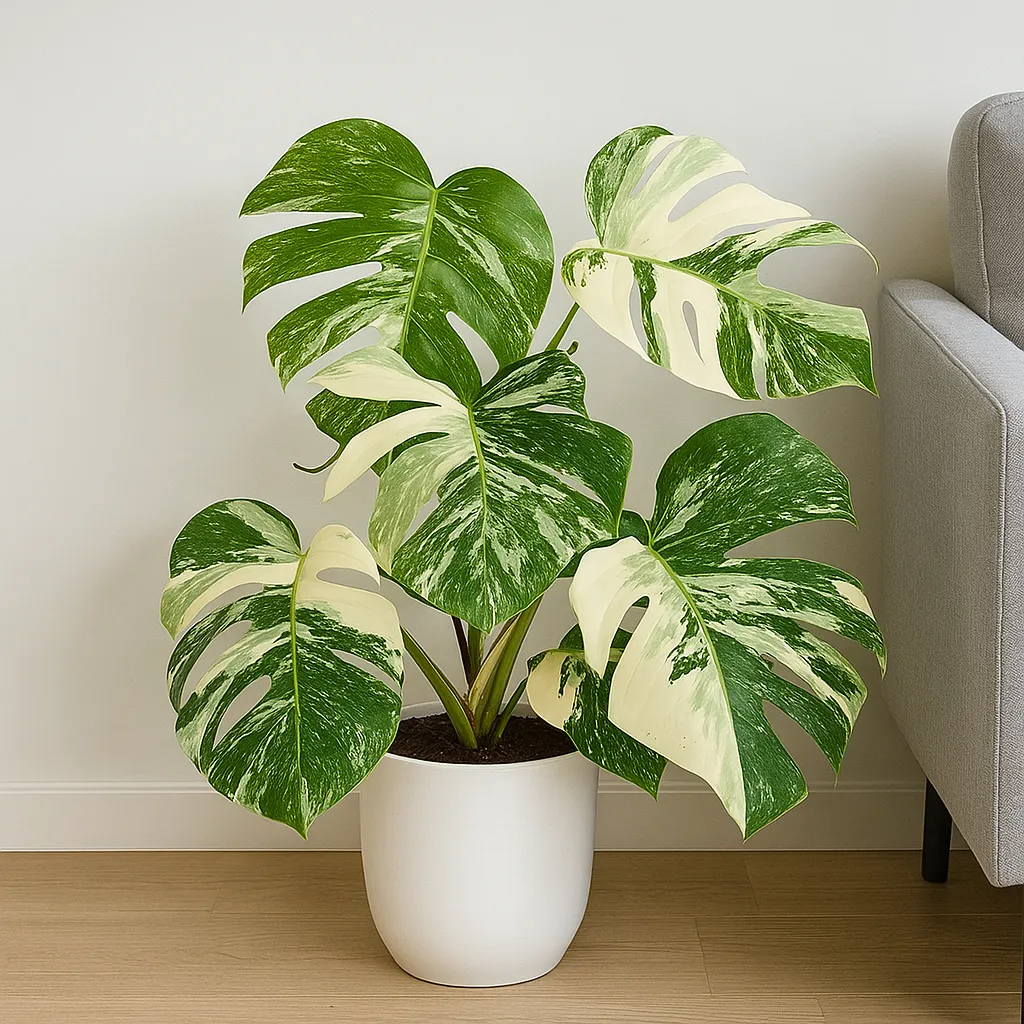
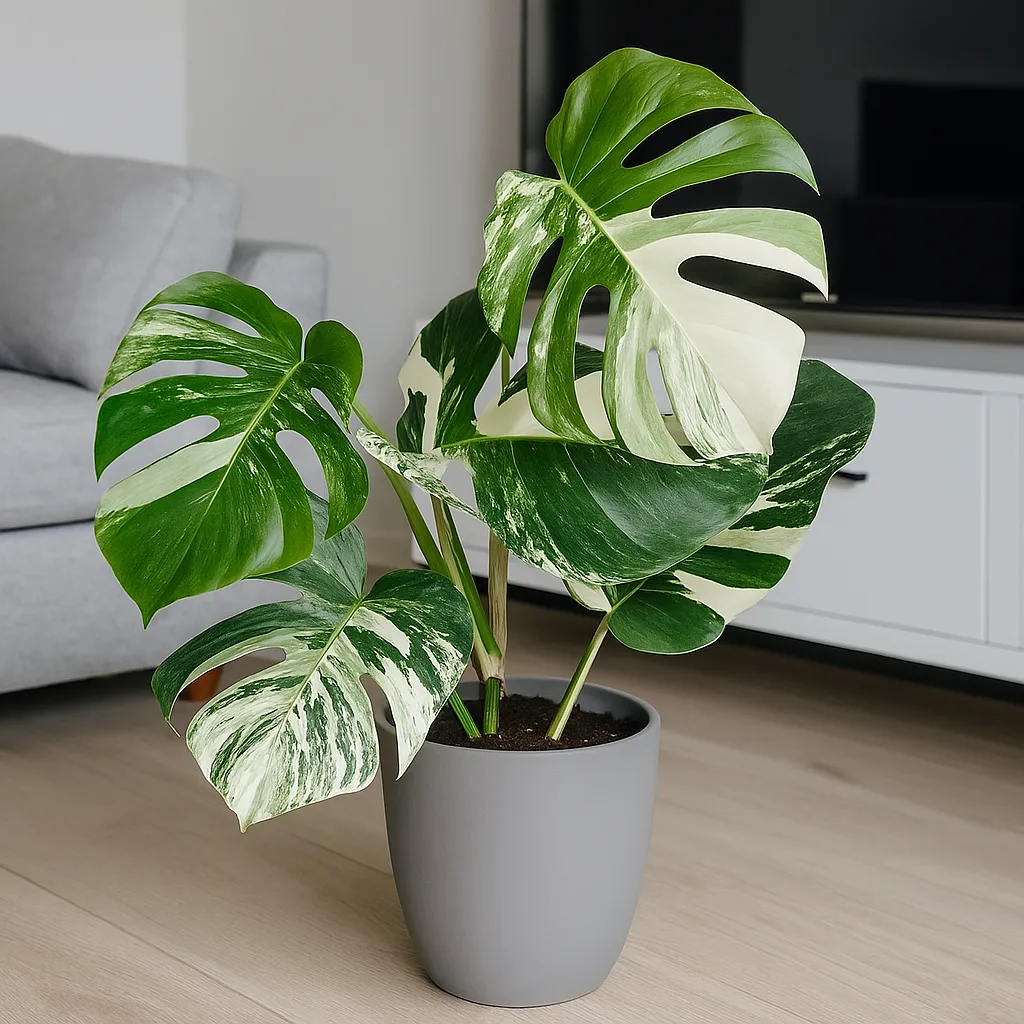
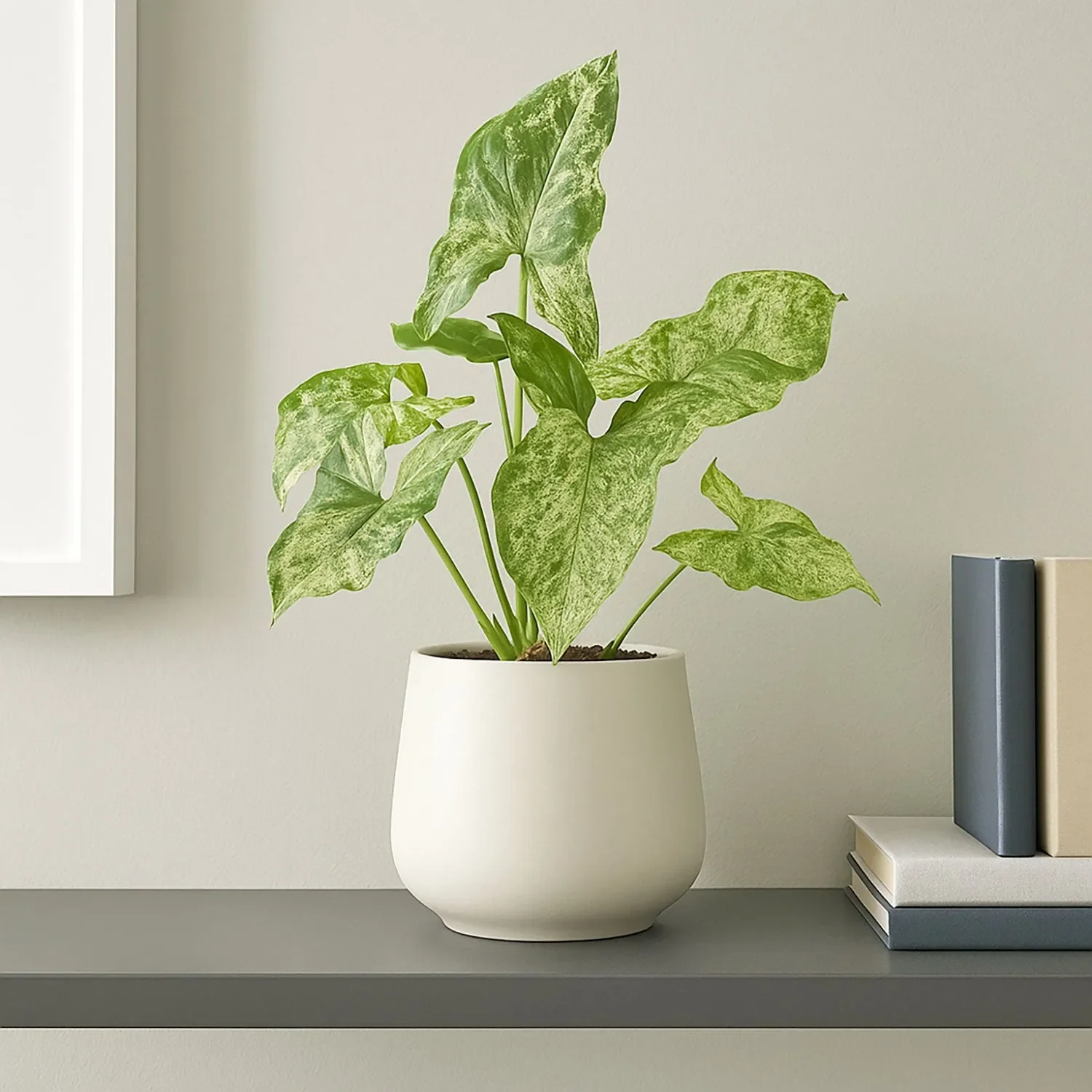
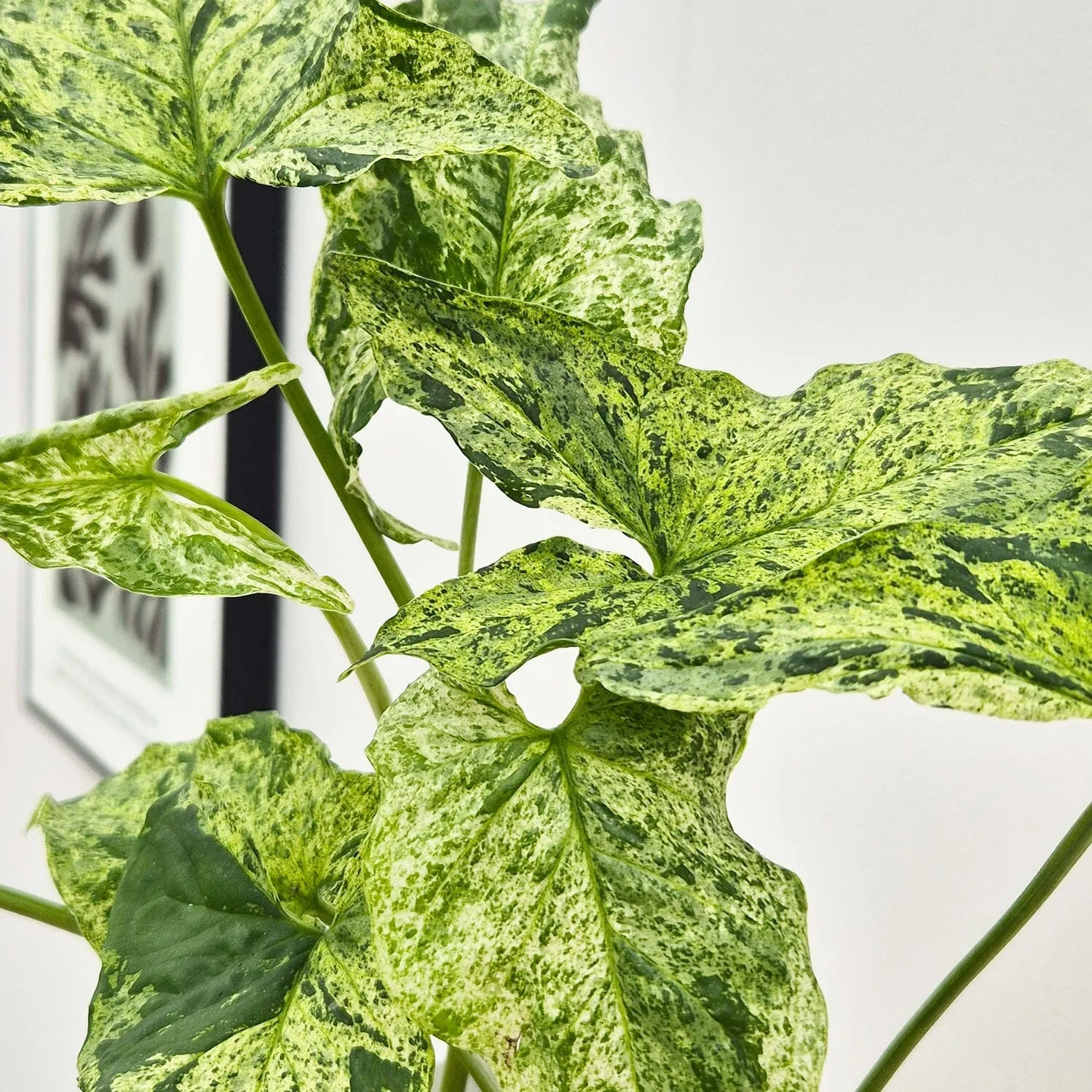
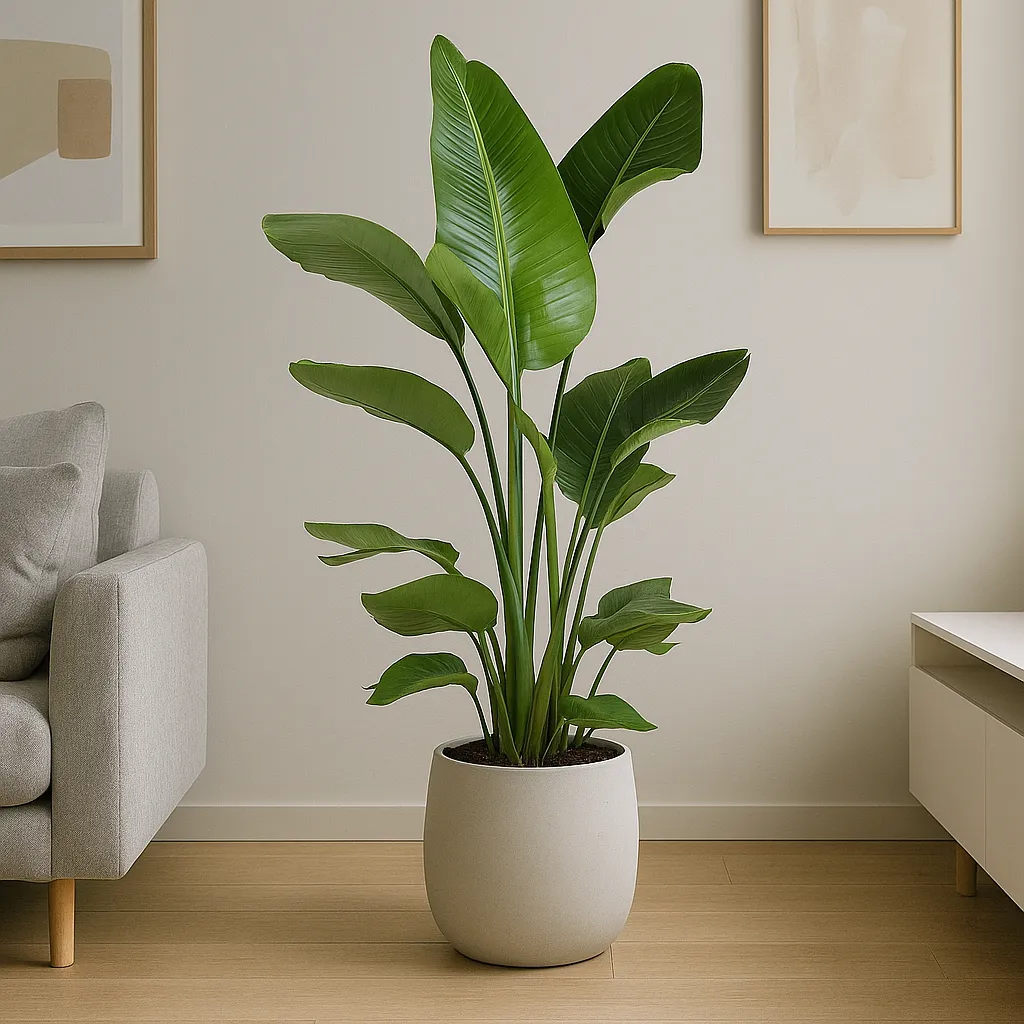
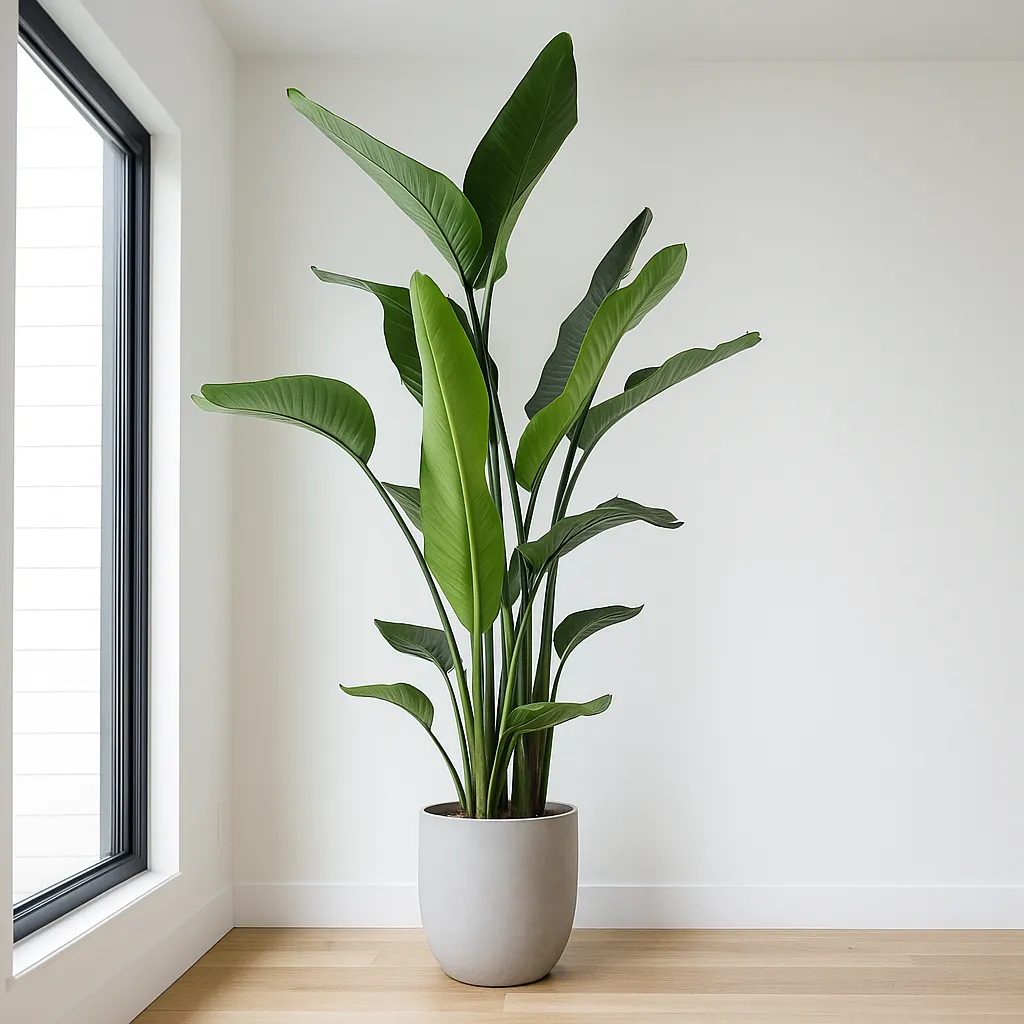
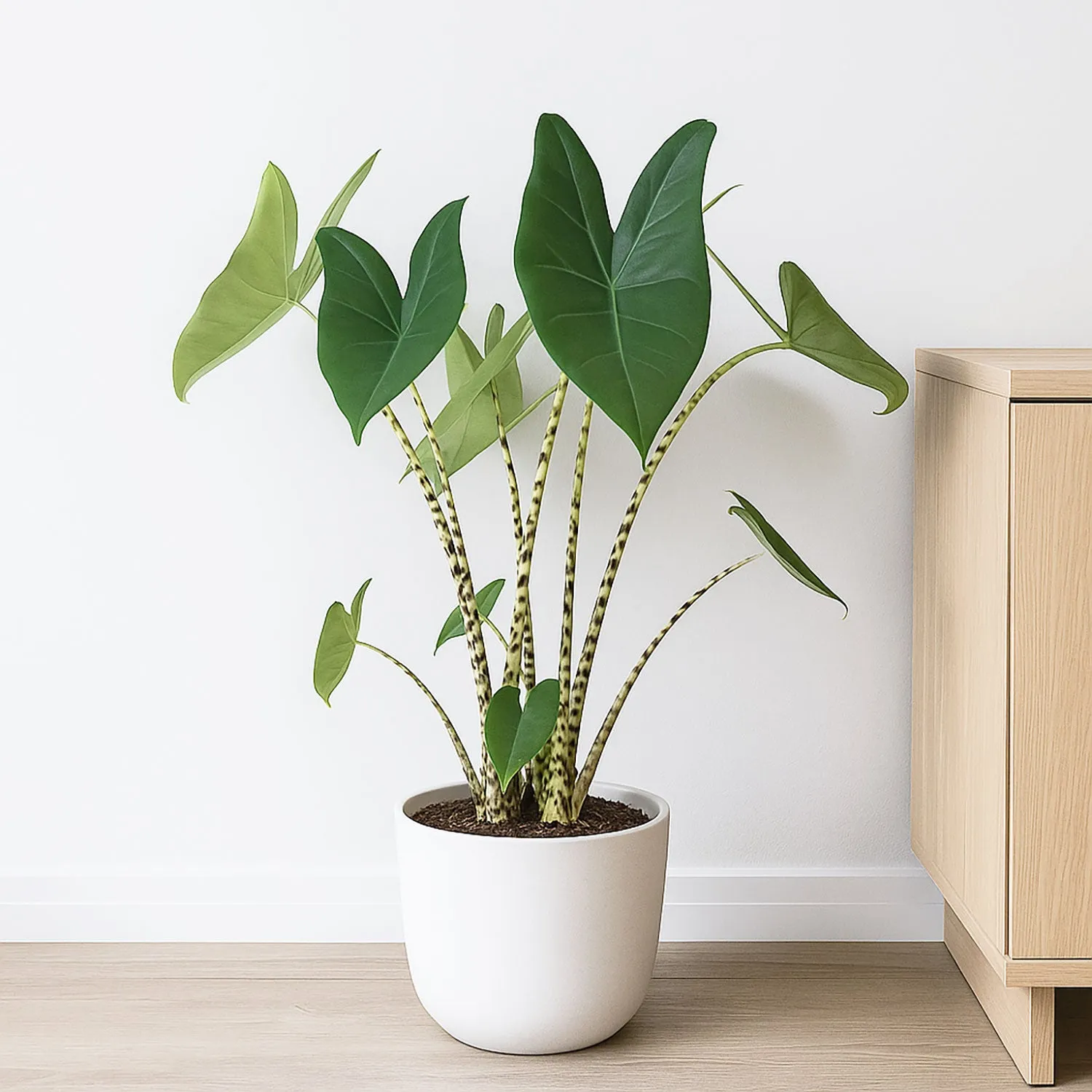
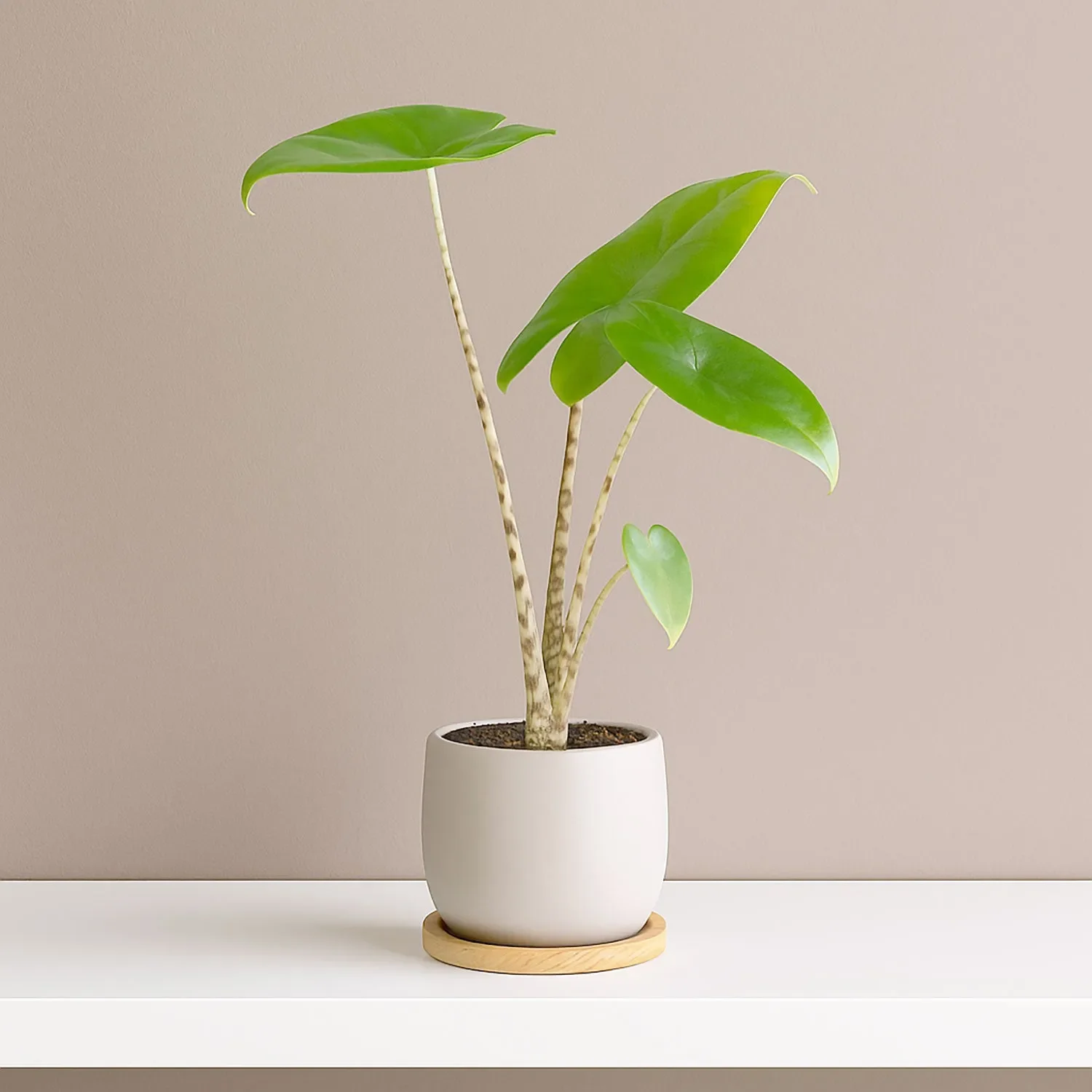
90 - 100cm XXL Anthurium Crassinervium Karma Birdnest 35cm Pot House Plant
🌿 Anthurium crassinervium ‘Karma’ — Karma Birdnest Anthurium
Anthurium crassinervium ‘Karma’, commonly known as the Karma Birdnest Anthurium, is a bold, sculptural tropical plant admired for its thick, leathery leaves, prominent central veining, and compact, upward-arching growth habit. Native to the mountainous regions of Central and South America, A. crassinervium is known as a bird’s nest-type Anthurium, forming a tidy, symmetrical rosette of long, lance-shaped leaves that emerge vertically and gently spread as they mature. The ‘Karma’ cultivar is selected for its particularly clean form and glossy foliage, making it a popular choice for contemporary interiors and minimalist plant styling. Though not grown for its flowers, it may produce a pale, slender spadix with time. This species is one of the more forgiving Anthuriums, tolerating moderate indoor conditions as long as humidity and airflow are managed. A perfect specimen plant for those seeking bold greenery without excessive fuss.
☀️ Light Requirements
-
Indoors: Prefers bright, indirect light. Will tolerate medium light but grows best with good ambient brightness.
-
Direct sun: Avoid prolonged direct sunlight, which may cause leaf burn or fading.
-
Low light: Growth may slow and foliage may become leggy or less glossy.
🌡️ Temperature & Humidity
-
Ideal temperature: 18–28°C (65–82°F)
-
Minimum temperature: Keep above 15°C (59°F); protect from cold draughts or sharp temperature changes.
-
Humidity: Thrives in moderate to high humidity (50–70%). Will benefit from a humidifier or pebble tray in drier rooms.
💧 Watering Needs
-
Watering frequency: Water when the top 3–5 cm of soil is dry. Keep soil lightly moist but never saturated.
-
Winter: Reduce watering slightly when light and temperatures drop.
-
Water quality: Use rainwater or filtered water to avoid mineral deposits on foliage.
🪴 Soil & Repotting
-
Soil type: Loose, well-draining mix. Use a blend of houseplant compost with orchid bark, perlite, and a touch of coco coir or sphagnum moss.
-
pH: Slightly acidic to neutral (5.5–6.5)
-
Repotting: Every 1–2 years or when rootbound. Choose a container with good drainage and not excessively oversized.
🌱 Feeding
-
Growing season (spring–summer): Feed monthly with a balanced liquid fertiliser, diluted to half strength.
-
Autumn–winter: Feeding can be reduced or paused depending on light levels and temperature.
✂️ Pruning & Maintenance
-
Pruning: Minimal. Remove any yellowing, damaged, or older leaves at the base to maintain a clean silhouette.
-
Leaf care: Wipe with a damp, soft cloth to remove dust and maintain the glossy appearance.
-
Airflow: Ensure good air circulation to prevent fungal issues, especially in higher humidity environments.
🌾 Propagation
-
Division: Best propagated by gently dividing clumps or offsets during repotting.
-
Stem cuttings: Rarely used but possible with basal shoots in mature specimens.
🐛 Pests & Problems
-
Common pests: Spider mites, thrips, mealybugs, and aphids — more common in dry air or overcrowded areas.
-
Symptoms: Speckled leaves, webbing, sticky residue, or stunted growth.
-
Treatment: Wipe leaves and treat with neem oil or insecticidal soap. Increase humidity and isolate if needed.
-
Common issues:
-
Leaf curl or crisp edges: Usually due to low humidity or underwatering.
-
Soft or yellowing leaves: Typically caused by overwatering or cold stress.
-
🧤 Toxicity & Safety
-
Toxicity: Mildly toxic if ingested by pets or humans. Can cause oral irritation or digestive upset.
-
Precaution: Keep out of reach of small children and animals.
🏡 Indoor Care Highlights
-
A beautifully symmetrical, glossy-leaved Anthurium ideal for bright rooms, desks, and decorative planters.
-
One of the easier Anthuriums to grow indoors, with good tolerance to standard room conditions.
-
Works well as a statement plant or part of a structured foliage display.
-
Pairs wonderfully with other low, architectural plants such as Sansevieria, Zamioculcas, or Aspidistra.
-
A stylish, low-maintenance choice for both seasoned collectors and interiors enthusiasts.
Product Information
Product Information
Shipping & Returns
Shipping & Returns
Description
🌿 Anthurium crassinervium ‘Karma’ — Karma Birdnest Anthurium
Anthurium crassinervium ‘Karma’, commonly known as the Karma Birdnest Anthurium, is a bold, sculptural tropical plant admired for its thick, leathery leaves, prominent central veining, and compact, upward-arching growth habit. Native to the mountainous regions of Central and South America, A. crassinervium is known as a bird’s nest-type Anthurium, forming a tidy, symmetrical rosette of long, lance-shaped leaves that emerge vertically and gently spread as they mature. The ‘Karma’ cultivar is selected for its particularly clean form and glossy foliage, making it a popular choice for contemporary interiors and minimalist plant styling. Though not grown for its flowers, it may produce a pale, slender spadix with time. This species is one of the more forgiving Anthuriums, tolerating moderate indoor conditions as long as humidity and airflow are managed. A perfect specimen plant for those seeking bold greenery without excessive fuss.
☀️ Light Requirements
-
Indoors: Prefers bright, indirect light. Will tolerate medium light but grows best with good ambient brightness.
-
Direct sun: Avoid prolonged direct sunlight, which may cause leaf burn or fading.
-
Low light: Growth may slow and foliage may become leggy or less glossy.
🌡️ Temperature & Humidity
-
Ideal temperature: 18–28°C (65–82°F)
-
Minimum temperature: Keep above 15°C (59°F); protect from cold draughts or sharp temperature changes.
-
Humidity: Thrives in moderate to high humidity (50–70%). Will benefit from a humidifier or pebble tray in drier rooms.
💧 Watering Needs
-
Watering frequency: Water when the top 3–5 cm of soil is dry. Keep soil lightly moist but never saturated.
-
Winter: Reduce watering slightly when light and temperatures drop.
-
Water quality: Use rainwater or filtered water to avoid mineral deposits on foliage.
🪴 Soil & Repotting
-
Soil type: Loose, well-draining mix. Use a blend of houseplant compost with orchid bark, perlite, and a touch of coco coir or sphagnum moss.
-
pH: Slightly acidic to neutral (5.5–6.5)
-
Repotting: Every 1–2 years or when rootbound. Choose a container with good drainage and not excessively oversized.
🌱 Feeding
-
Growing season (spring–summer): Feed monthly with a balanced liquid fertiliser, diluted to half strength.
-
Autumn–winter: Feeding can be reduced or paused depending on light levels and temperature.
✂️ Pruning & Maintenance
-
Pruning: Minimal. Remove any yellowing, damaged, or older leaves at the base to maintain a clean silhouette.
-
Leaf care: Wipe with a damp, soft cloth to remove dust and maintain the glossy appearance.
-
Airflow: Ensure good air circulation to prevent fungal issues, especially in higher humidity environments.
🌾 Propagation
-
Division: Best propagated by gently dividing clumps or offsets during repotting.
-
Stem cuttings: Rarely used but possible with basal shoots in mature specimens.
🐛 Pests & Problems
-
Common pests: Spider mites, thrips, mealybugs, and aphids — more common in dry air or overcrowded areas.
-
Symptoms: Speckled leaves, webbing, sticky residue, or stunted growth.
-
Treatment: Wipe leaves and treat with neem oil or insecticidal soap. Increase humidity and isolate if needed.
-
Common issues:
-
Leaf curl or crisp edges: Usually due to low humidity or underwatering.
-
Soft or yellowing leaves: Typically caused by overwatering or cold stress.
-
🧤 Toxicity & Safety
-
Toxicity: Mildly toxic if ingested by pets or humans. Can cause oral irritation or digestive upset.
-
Precaution: Keep out of reach of small children and animals.
🏡 Indoor Care Highlights
-
A beautifully symmetrical, glossy-leaved Anthurium ideal for bright rooms, desks, and decorative planters.
-
One of the easier Anthuriums to grow indoors, with good tolerance to standard room conditions.
-
Works well as a statement plant or part of a structured foliage display.
-
Pairs wonderfully with other low, architectural plants such as Sansevieria, Zamioculcas, or Aspidistra.
-
A stylish, low-maintenance choice for both seasoned collectors and interiors enthusiasts.