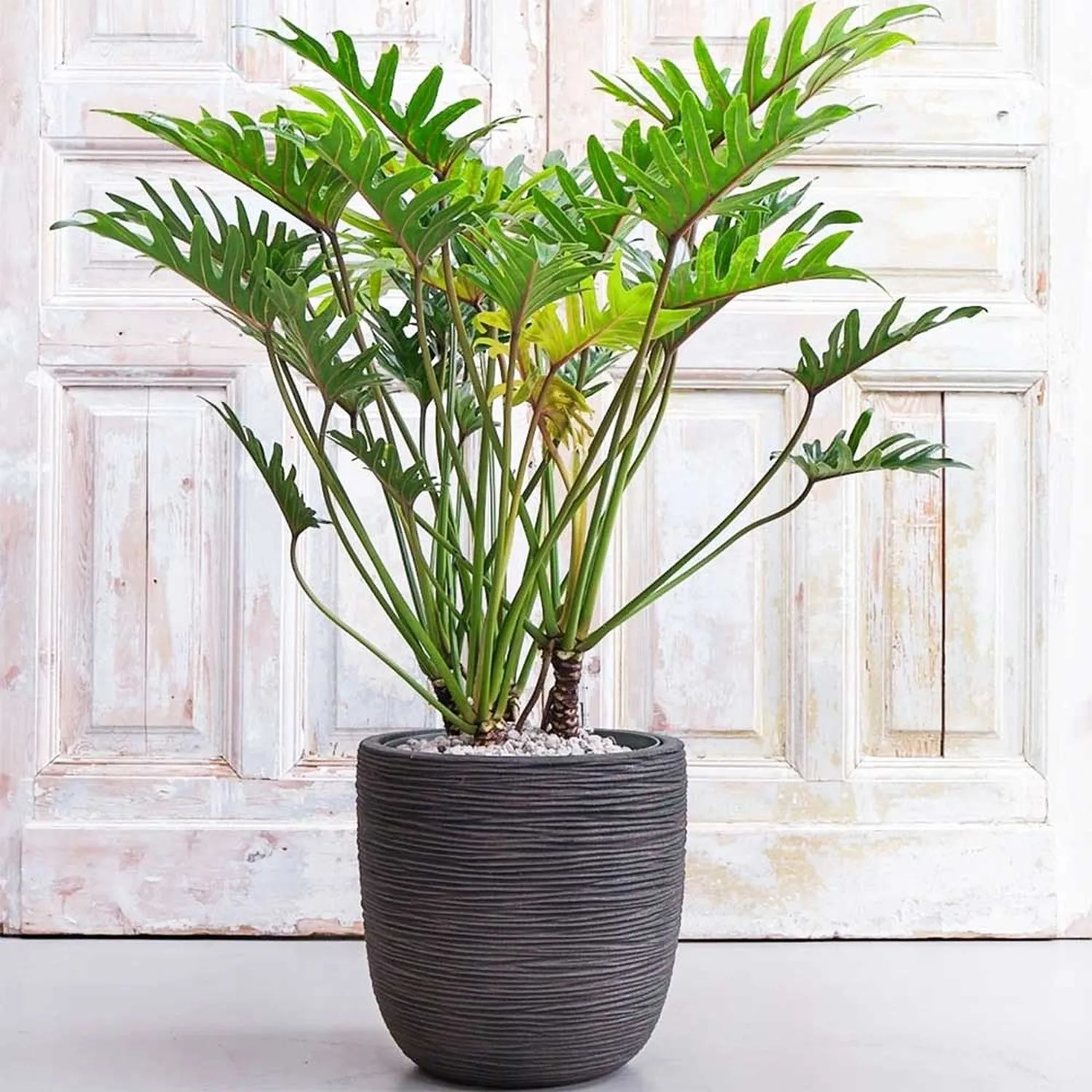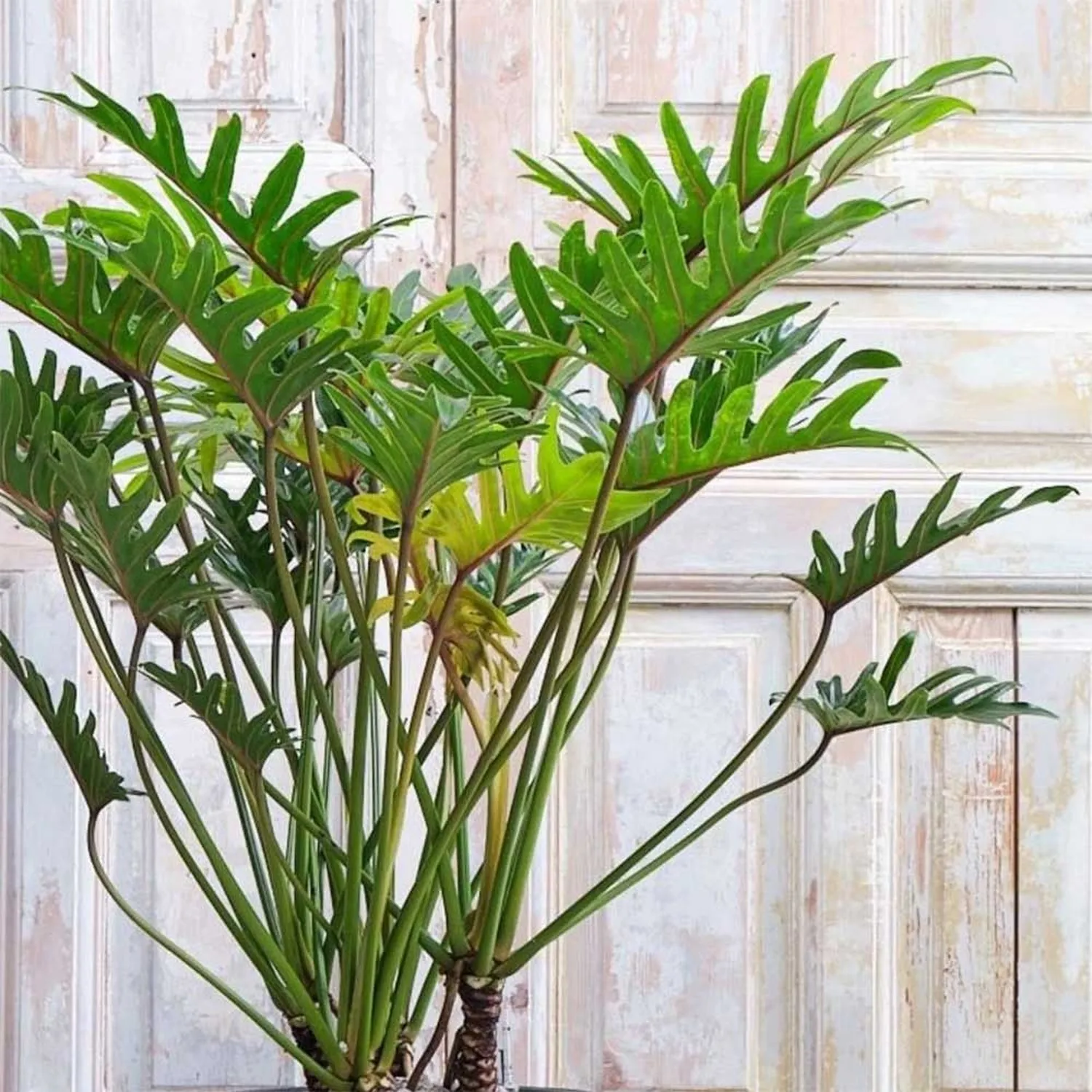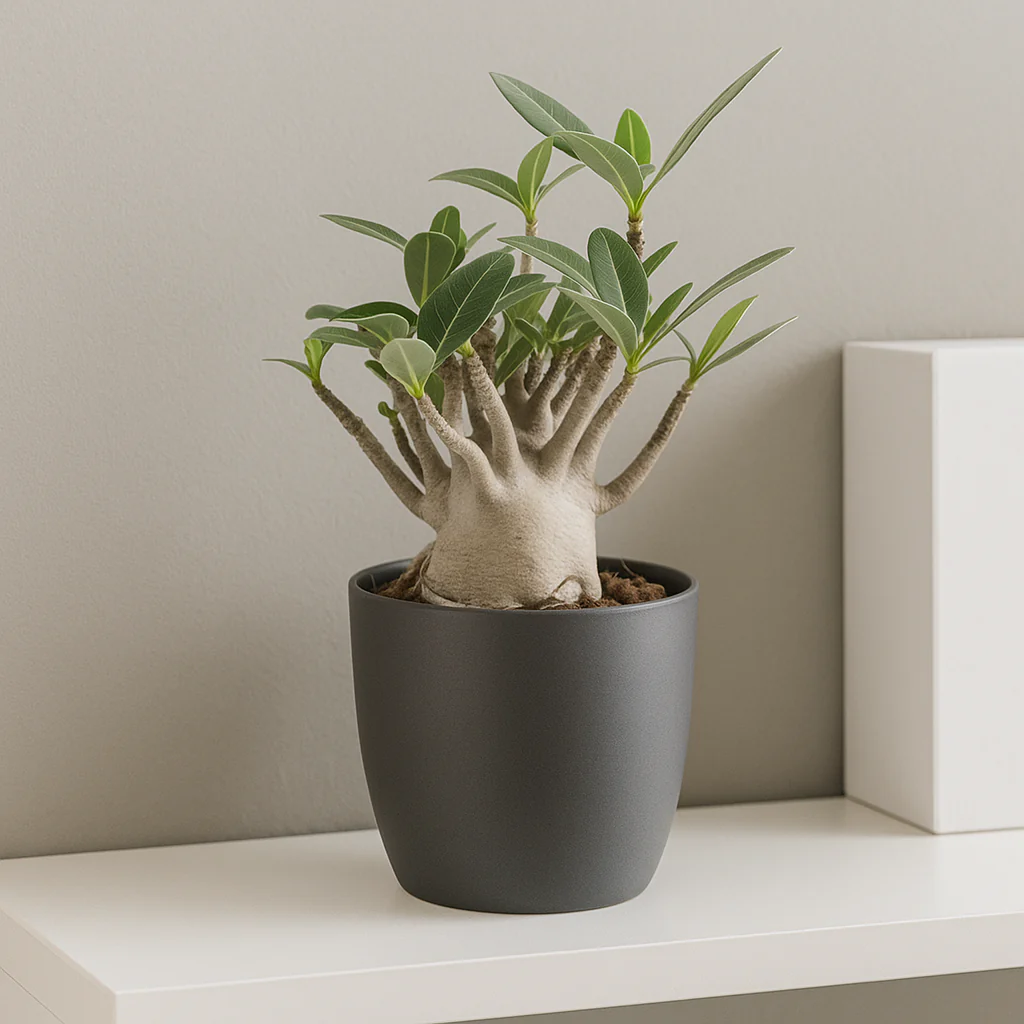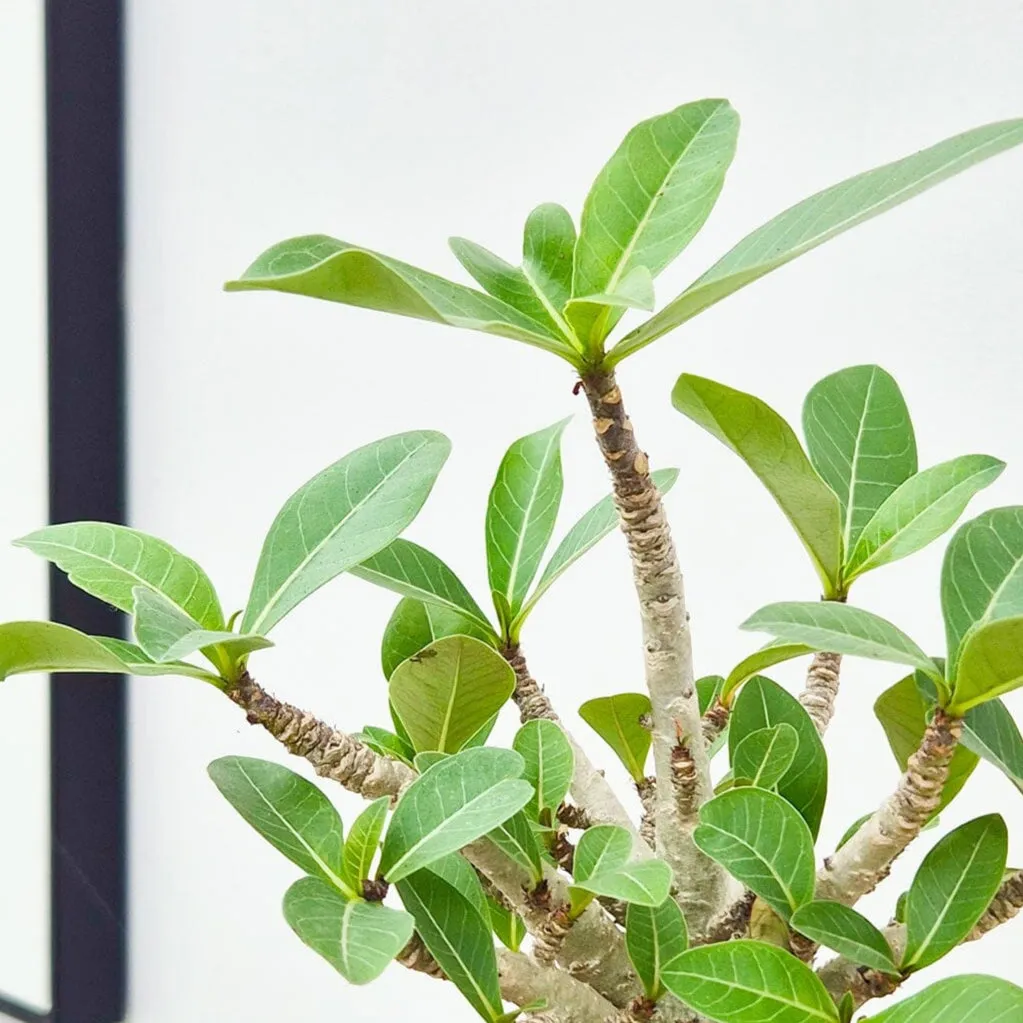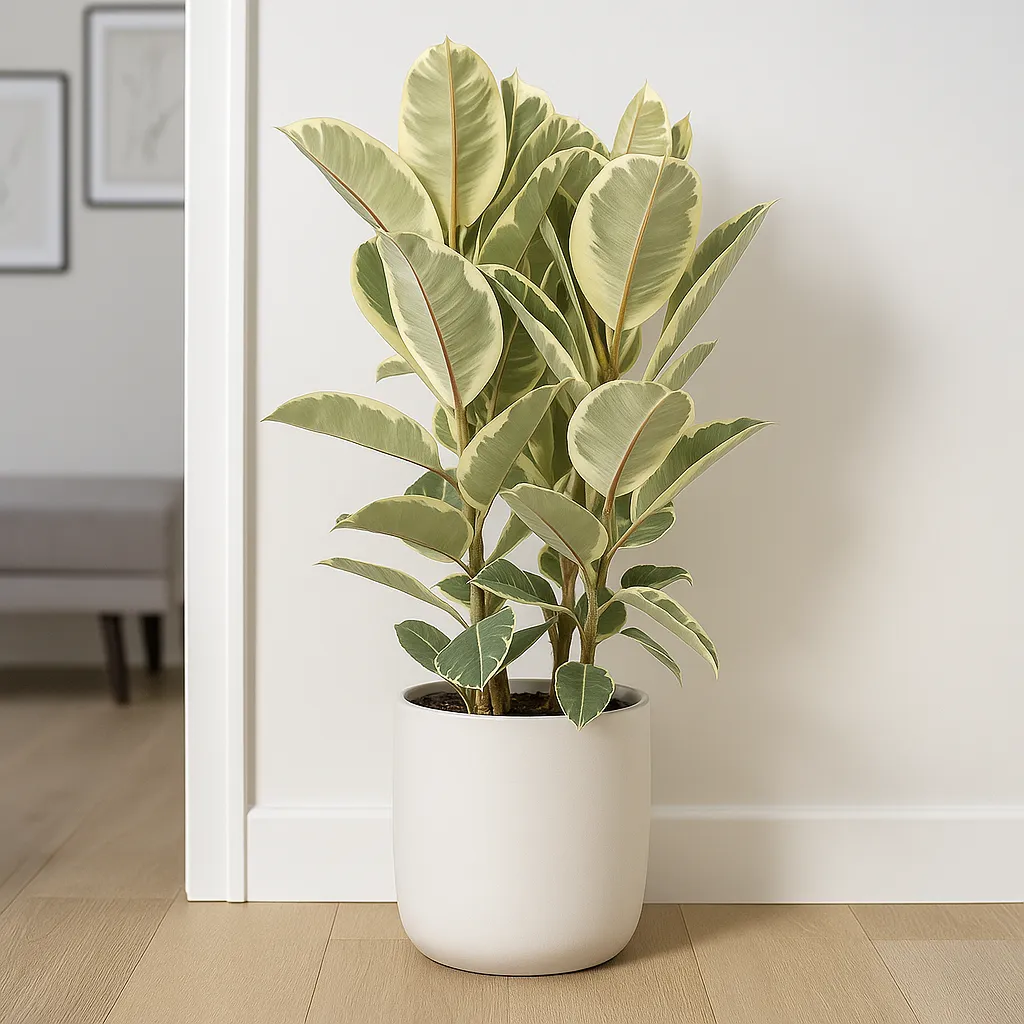
90 - 110cm XXL Ficus Tineke 3 Stem Rubber Plant 27cm Pot House Plant
Ficus elastica ‘Tineke’ – Plant Description
The Ficus elastica ‘Tineke’, often called the Variegated Rubber Plant, is a striking houseplant admired for its bold foliage and sculptural form. Originating from tropical regions of South and South-East Asia, this plant belongs to the Moraceae family and has become a popular feature in homes and offices alike.
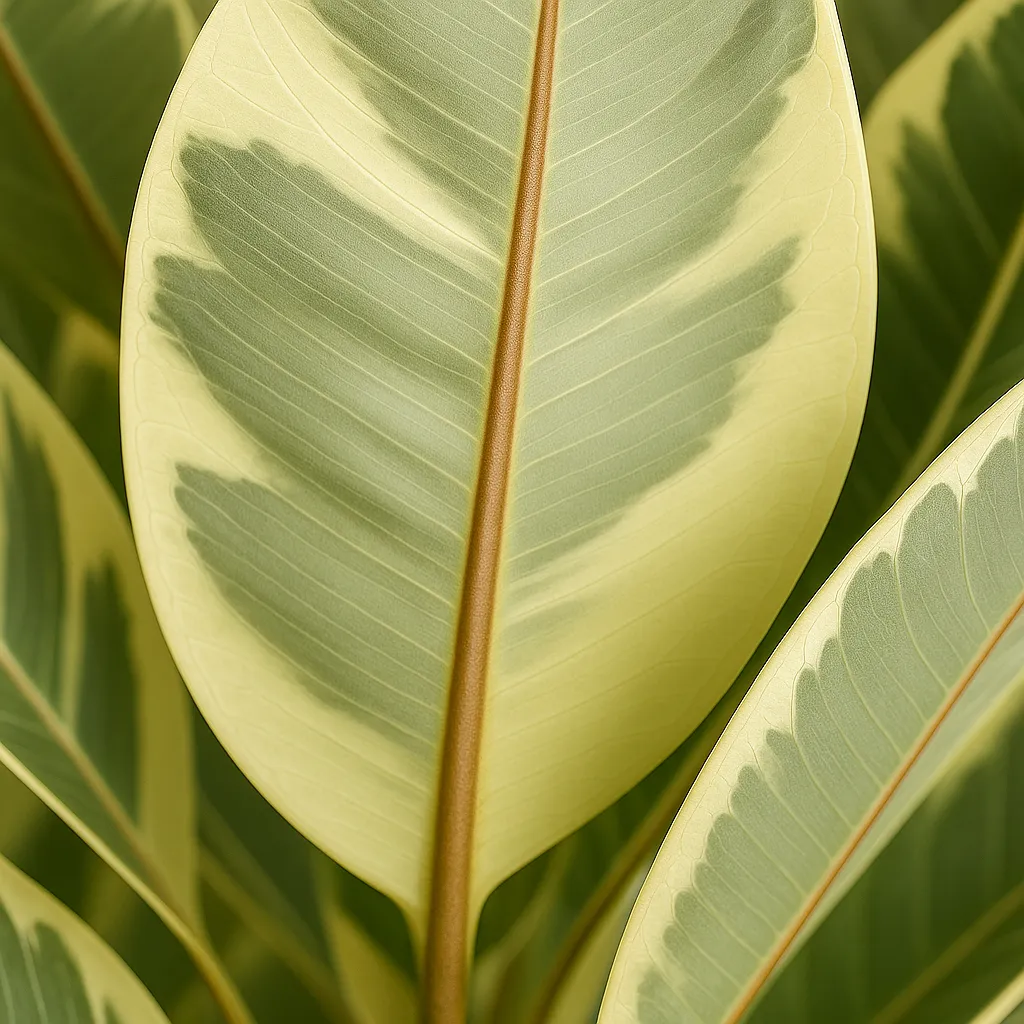
Its broad, glossy leaves can reach 20–30 cm in length and are painted with a unique mix of creamy white, soft green, and deeper forest green. Some leaves are edged in pale yellow or ivory, and new growth unfurls from a pinkish sheath that brings a touch of blush before the leaves mature. The strong, upright stems create a tree-like silhouette, making it ideal as a statement piece in modern interiors.
In the wild, the Rubber Plant can grow over 30 metres tall, forming part of the tropical forest canopy. Indoors, it stays much smaller, typically 1.5–2 metres when mature, depending on the size of its container and the conditions provided. Its dramatic foliage and air-purifying qualities make it both decorative and functional, a perfect choice for those seeking a low-maintenance yet eye-catching plant.
Ficus elastica ‘Tineke’ – Care Guide
Light
Thrives in bright, indirect light. The variegation requires more light than green-leaved Ficus varieties to maintain its creamy patterns. It can adapt to medium light but may lose vibrancy. Direct sun for long periods may scorch the pale sections of the leaves.
Watering
Water when the top 2–5 cm of soil feels dry. In spring and summer, this may be every 7–10 days; in autumn and winter, reduce to every 2–3 weeks. Drooping leaves suggest thirst, while yellowing or brown spots often indicate too much water.
Temperature and Humidity
Ideal temperatures are between 18–26°C. Keep away from draughts and avoid sudden changes in temperature. Normal indoor humidity is usually fine, but the plant will benefit from occasional misting or a pebble tray in dry environments.
Soil and Potting
Use a free-draining potting mix, such as peat-free compost blended with perlite or orchid bark. Repot every 1–2 years in spring if the roots are crowded, moving up just one pot size at a time.
Feeding
Apply a balanced liquid houseplant fertiliser once every 3–4 weeks during the growing season (spring through early autumn). Stop feeding during the winter.
Pruning and Shaping
Trim back leggy growth in spring or summer to encourage bushiness. Always use sharp, clean tools and wear gloves, as the plant produces a white latex sap that can irritate skin.
Growth and Maturity
Indoors, it is unlikely to flower but will continue to develop into an upright, elegant specimen. Rotate the pot every few weeks to ensure even growth.
Common Issues
-
Leaf drop: often caused by sudden changes in light, temperature, or watering habits.
-
Brown edges: usually linked to low humidity or inconsistent watering.
-
Pests: may attract mealybugs, scale, or spider mites. Wipe leaves regularly to remove dust and check for pests.
Background and Benefits
Like other Ficus species, ‘Tineke’ is valued as an air-purifying plant, helping to filter toxins such as formaldehyde from indoor air. Historically, Ficus elastica was tapped for latex, though commercial rubber now comes from another species. Today, it is mainly celebrated as a symbol of prosperity and resilience, adding both beauty and life to interior spaces.
✅ Quick Care Summary
-
Light: Bright, indirect
-
Water: When topsoil is dry
-
Temperature: 18–26°C, stable conditions
-
Soil: Free-draining compost mix
-
Feed: Monthly in spring/summer
-
Toxicity: Toxic to pets if eaten
Original: $60.71
-70%$60.71
$18.21Product Information
Product Information
Shipping & Returns
Shipping & Returns
Description
Ficus elastica ‘Tineke’ – Plant Description
The Ficus elastica ‘Tineke’, often called the Variegated Rubber Plant, is a striking houseplant admired for its bold foliage and sculptural form. Originating from tropical regions of South and South-East Asia, this plant belongs to the Moraceae family and has become a popular feature in homes and offices alike.
Its broad, glossy leaves can reach 20–30 cm in length and are painted with a unique mix of creamy white, soft green, and deeper forest green. Some leaves are edged in pale yellow or ivory, and new growth unfurls from a pinkish sheath that brings a touch of blush before the leaves mature. The strong, upright stems create a tree-like silhouette, making it ideal as a statement piece in modern interiors.
In the wild, the Rubber Plant can grow over 30 metres tall, forming part of the tropical forest canopy. Indoors, it stays much smaller, typically 1.5–2 metres when mature, depending on the size of its container and the conditions provided. Its dramatic foliage and air-purifying qualities make it both decorative and functional, a perfect choice for those seeking a low-maintenance yet eye-catching plant.
Ficus elastica ‘Tineke’ – Care Guide
Light
Thrives in bright, indirect light. The variegation requires more light than green-leaved Ficus varieties to maintain its creamy patterns. It can adapt to medium light but may lose vibrancy. Direct sun for long periods may scorch the pale sections of the leaves.
Watering
Water when the top 2–5 cm of soil feels dry. In spring and summer, this may be every 7–10 days; in autumn and winter, reduce to every 2–3 weeks. Drooping leaves suggest thirst, while yellowing or brown spots often indicate too much water.
Temperature and Humidity
Ideal temperatures are between 18–26°C. Keep away from draughts and avoid sudden changes in temperature. Normal indoor humidity is usually fine, but the plant will benefit from occasional misting or a pebble tray in dry environments.
Soil and Potting
Use a free-draining potting mix, such as peat-free compost blended with perlite or orchid bark. Repot every 1–2 years in spring if the roots are crowded, moving up just one pot size at a time.
Feeding
Apply a balanced liquid houseplant fertiliser once every 3–4 weeks during the growing season (spring through early autumn). Stop feeding during the winter.
Pruning and Shaping
Trim back leggy growth in spring or summer to encourage bushiness. Always use sharp, clean tools and wear gloves, as the plant produces a white latex sap that can irritate skin.
Growth and Maturity
Indoors, it is unlikely to flower but will continue to develop into an upright, elegant specimen. Rotate the pot every few weeks to ensure even growth.
Common Issues
-
Leaf drop: often caused by sudden changes in light, temperature, or watering habits.
-
Brown edges: usually linked to low humidity or inconsistent watering.
-
Pests: may attract mealybugs, scale, or spider mites. Wipe leaves regularly to remove dust and check for pests.
Background and Benefits
Like other Ficus species, ‘Tineke’ is valued as an air-purifying plant, helping to filter toxins such as formaldehyde from indoor air. Historically, Ficus elastica was tapped for latex, though commercial rubber now comes from another species. Today, it is mainly celebrated as a symbol of prosperity and resilience, adding both beauty and life to interior spaces.
✅ Quick Care Summary
-
Light: Bright, indirect
-
Water: When topsoil is dry
-
Temperature: 18–26°C, stable conditions
-
Soil: Free-draining compost mix
-
Feed: Monthly in spring/summer
-
Toxicity: Toxic to pets if eaten