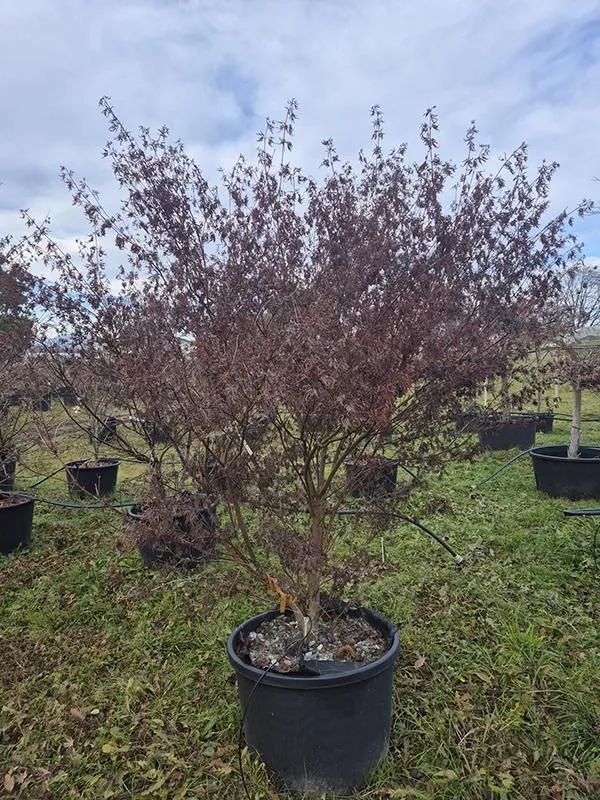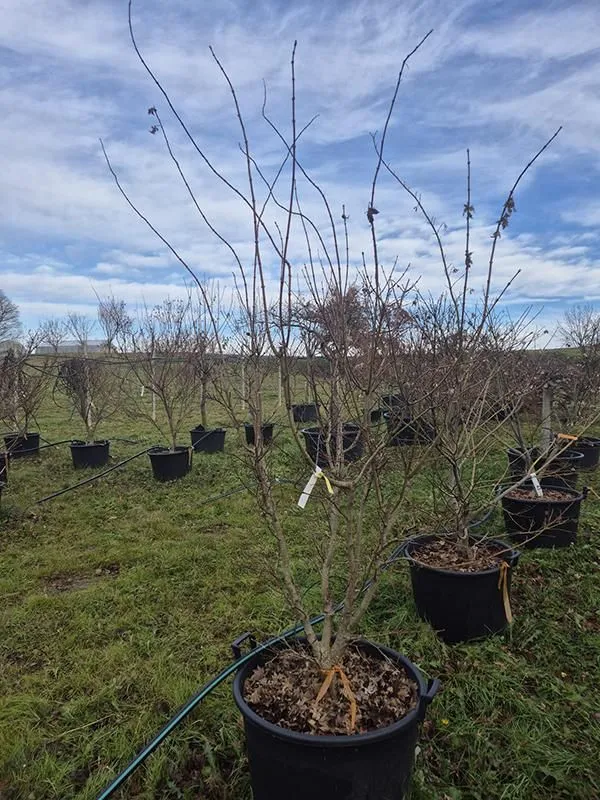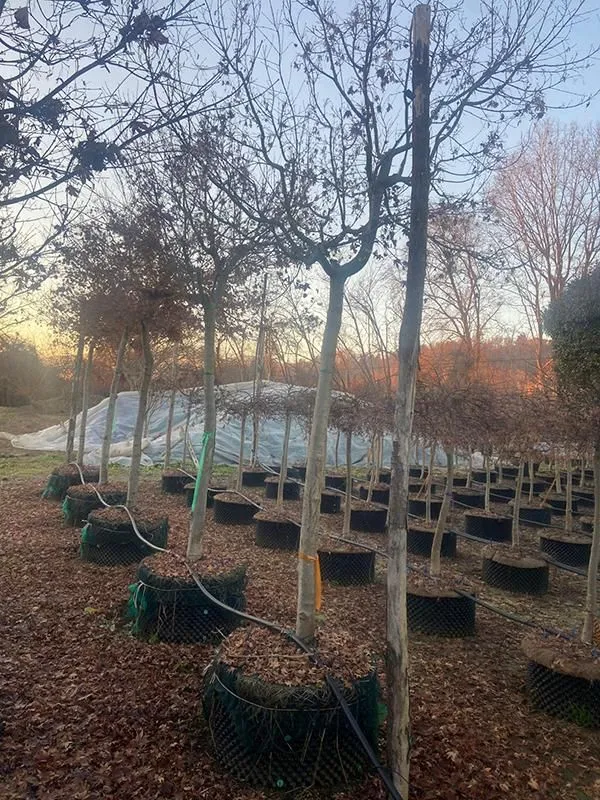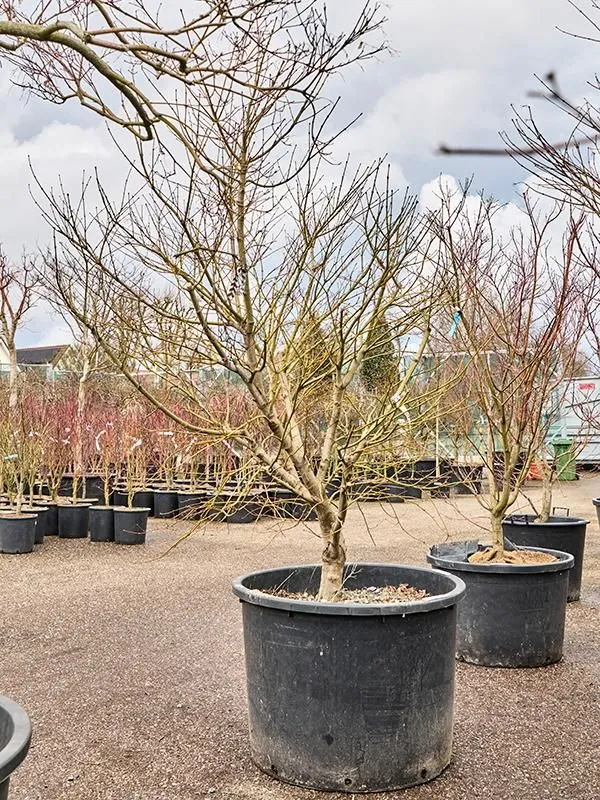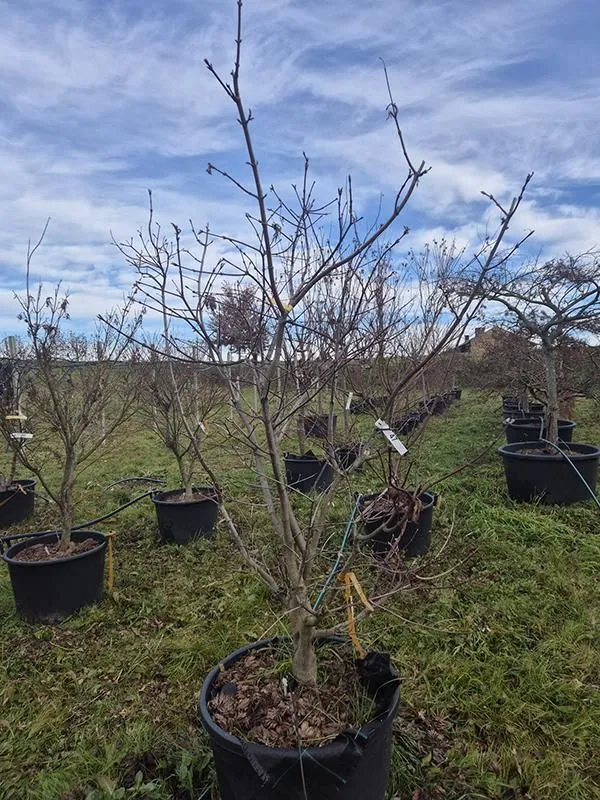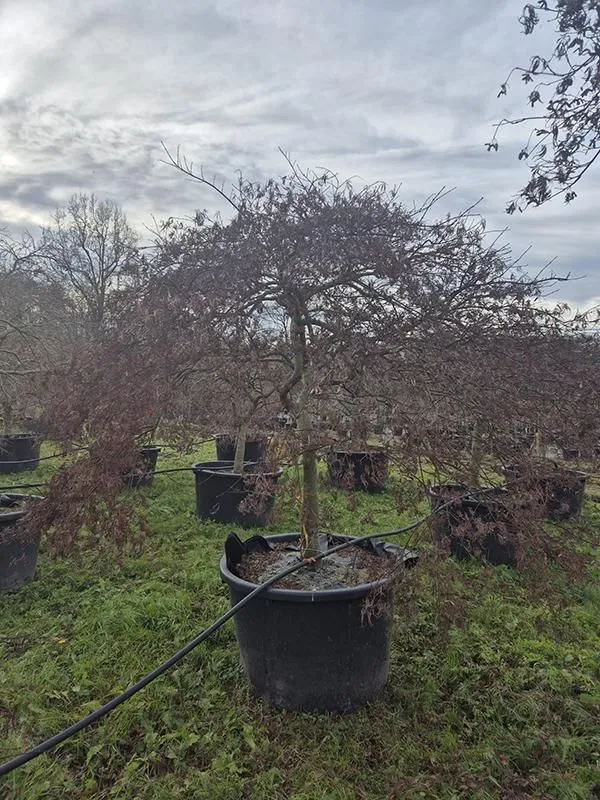
Acer Palmatum 'Inaba-shidare' 100cm Pot 270cm Height Outdoor Tree
Acer palmatum ‘Inaba-shidare’ is a stunning lace-leaf Japanese maple, highly prized for its dramatic, long-lasting colour and elegant cascading form. Originating from Japan, this cultivar is especially valued for its rich, deep tones that hold exceptionally well throughout the season.
🌿 Key Features:
-
Foliage: Deeply dissected, lace-like leaves emerge a brilliant crimson in spring, deepen to a sumptuous burgundy-purple through summer, and transform to fiery scarlet in autumn. Unlike many red Japanese maples that fade to bronze or green, ‘Inaba-shidare’ maintains its vibrant dark tones exceptionally well.
-
Habit: Forms a graceful, cascading mound with arching branches, typically reaching 1.5–2 metres high with a spread of 2.5–3 metres, developing a beautiful layered, dome-like shape that adds architectural elegance to gardens.
-
Bark: Young stems have subtle reddish tones, providing gentle winter interest.
It is perfect as a specimen tree in lawns, near ponds, on raised beds or walls where its branches can gracefully spill over, or as a statement plant in large containers.
🌱 Detailed Care Guide for Acer palmatum ‘Inaba-shidare’
📍 Position & Light
-
Prefers partial shade or dappled sunlight.
-
Tolerates some morning sun, which helps intensify leaf colour, but protection from hot afternoon sun is essential to prevent leaf scorch.
-
Needs a sheltered position, away from strong winds which can shred delicate foliage.
🌬️ Shelter
-
Avoid exposed, windy sites which can cause browning and tatter the fine leaves.
-
Protect from late spring frosts which may damage tender new shoots.
💧 Watering
-
Likes soil to be consistently moist but well-drained.
-
Water regularly during dry periods, particularly in the first few years after planting and if grown in pots.
-
Mulch each spring with compost or bark to conserve moisture and keep roots cool.
🪴 Soil
-
Prefers slightly acidic to neutral, fertile, humus-rich soil.
-
Avoid heavy clay or alkaline ground. If necessary, plant in raised beds or containers with ericaceous compost mixed with grit for drainage.
🍽️ Feeding
-
Feed lightly in spring with a balanced slow-release fertiliser or a specialist acer feed.
-
Avoid high-nitrogen feeds which encourage soft, sappy growth more vulnerable to wind and frost.
✂️ Pruning & Maintenance
-
Minimal pruning needed.
-
Remove any dead, damaged, or crossing branches in late autumn or winter while dormant.
-
Avoid heavy pruning, which can ruin its elegant cascading form.
🪲 Pests & Problems
-
Generally pest-free.
-
May occasionally attract aphids on soft new growth.
-
Leaf scorch (brown tips or edges) is typically caused by drought, excessive sun, or wind exposure rather than disease.
🚰 Container Growing
-
Excellent in large containers, perfect for patios or small gardens.
-
Use ericaceous compost with added grit, ensure pots have good drainage and raise on feet to prevent waterlogging.
-
Water regularly in dry spells and wrap pots in fleece or bubble wrap in harsh winters to protect roots.
Original: $5,609.13
-70%$5,609.13
$1,682.74Product Information
Product Information
Shipping & Returns
Shipping & Returns
Description
Acer palmatum ‘Inaba-shidare’ is a stunning lace-leaf Japanese maple, highly prized for its dramatic, long-lasting colour and elegant cascading form. Originating from Japan, this cultivar is especially valued for its rich, deep tones that hold exceptionally well throughout the season.
🌿 Key Features:
-
Foliage: Deeply dissected, lace-like leaves emerge a brilliant crimson in spring, deepen to a sumptuous burgundy-purple through summer, and transform to fiery scarlet in autumn. Unlike many red Japanese maples that fade to bronze or green, ‘Inaba-shidare’ maintains its vibrant dark tones exceptionally well.
-
Habit: Forms a graceful, cascading mound with arching branches, typically reaching 1.5–2 metres high with a spread of 2.5–3 metres, developing a beautiful layered, dome-like shape that adds architectural elegance to gardens.
-
Bark: Young stems have subtle reddish tones, providing gentle winter interest.
It is perfect as a specimen tree in lawns, near ponds, on raised beds or walls where its branches can gracefully spill over, or as a statement plant in large containers.
🌱 Detailed Care Guide for Acer palmatum ‘Inaba-shidare’
📍 Position & Light
-
Prefers partial shade or dappled sunlight.
-
Tolerates some morning sun, which helps intensify leaf colour, but protection from hot afternoon sun is essential to prevent leaf scorch.
-
Needs a sheltered position, away from strong winds which can shred delicate foliage.
🌬️ Shelter
-
Avoid exposed, windy sites which can cause browning and tatter the fine leaves.
-
Protect from late spring frosts which may damage tender new shoots.
💧 Watering
-
Likes soil to be consistently moist but well-drained.
-
Water regularly during dry periods, particularly in the first few years after planting and if grown in pots.
-
Mulch each spring with compost or bark to conserve moisture and keep roots cool.
🪴 Soil
-
Prefers slightly acidic to neutral, fertile, humus-rich soil.
-
Avoid heavy clay or alkaline ground. If necessary, plant in raised beds or containers with ericaceous compost mixed with grit for drainage.
🍽️ Feeding
-
Feed lightly in spring with a balanced slow-release fertiliser or a specialist acer feed.
-
Avoid high-nitrogen feeds which encourage soft, sappy growth more vulnerable to wind and frost.
✂️ Pruning & Maintenance
-
Minimal pruning needed.
-
Remove any dead, damaged, or crossing branches in late autumn or winter while dormant.
-
Avoid heavy pruning, which can ruin its elegant cascading form.
🪲 Pests & Problems
-
Generally pest-free.
-
May occasionally attract aphids on soft new growth.
-
Leaf scorch (brown tips or edges) is typically caused by drought, excessive sun, or wind exposure rather than disease.
🚰 Container Growing
-
Excellent in large containers, perfect for patios or small gardens.
-
Use ericaceous compost with added grit, ensure pots have good drainage and raise on feet to prevent waterlogging.
-
Water regularly in dry spells and wrap pots in fleece or bubble wrap in harsh winters to protect roots.