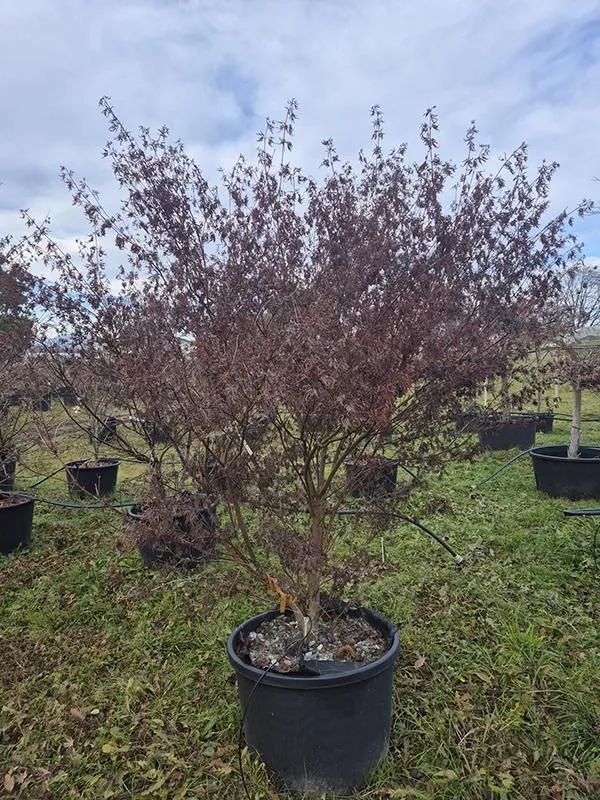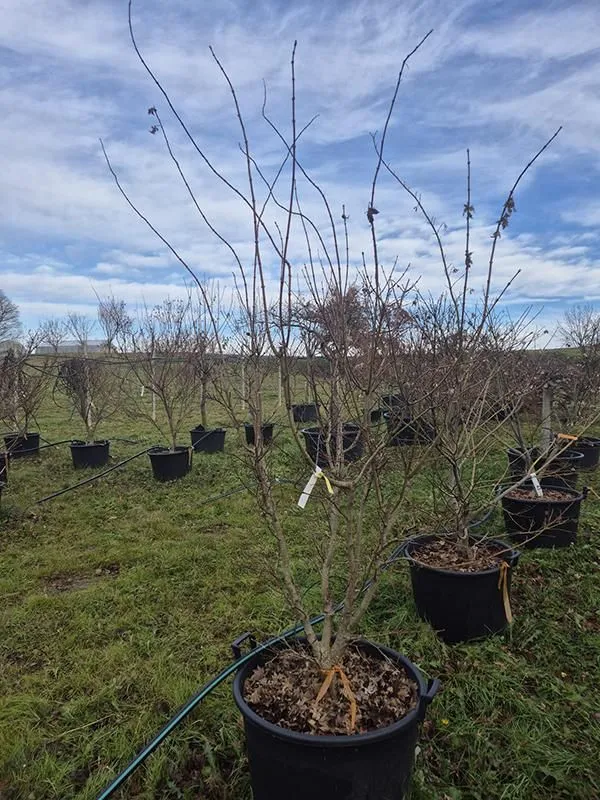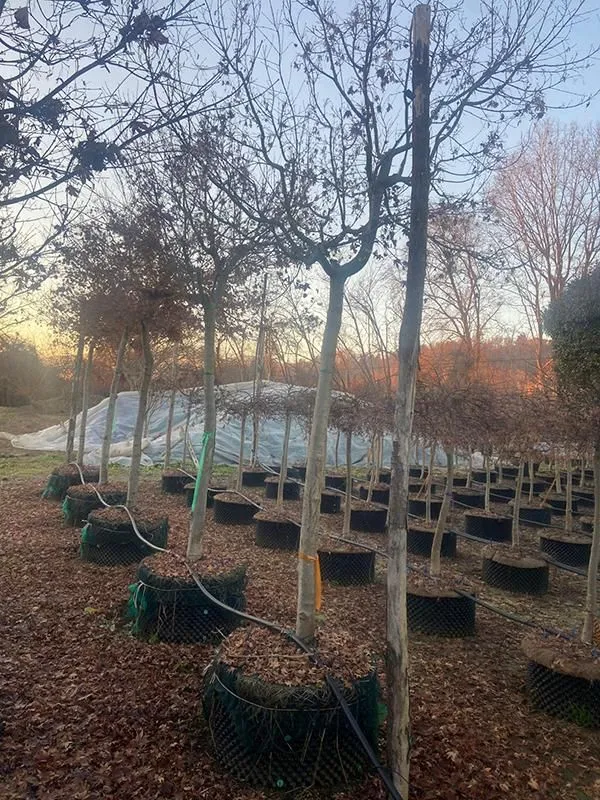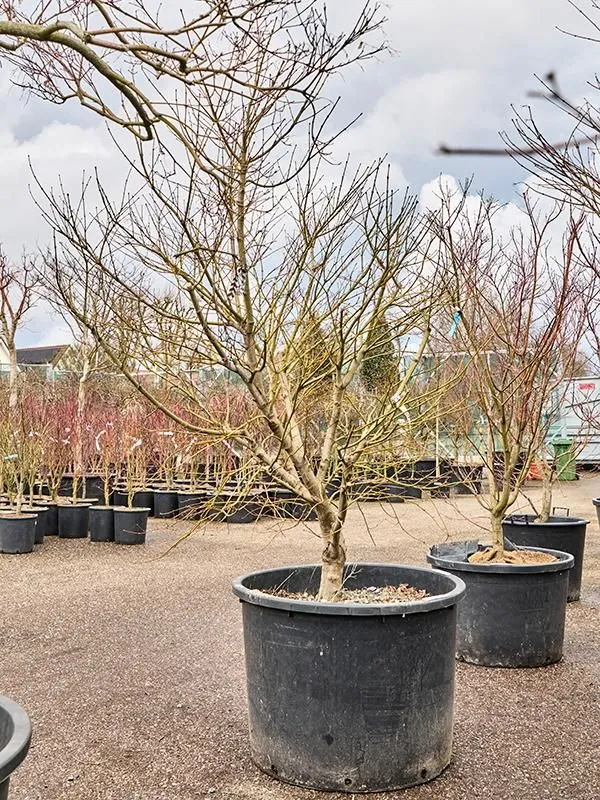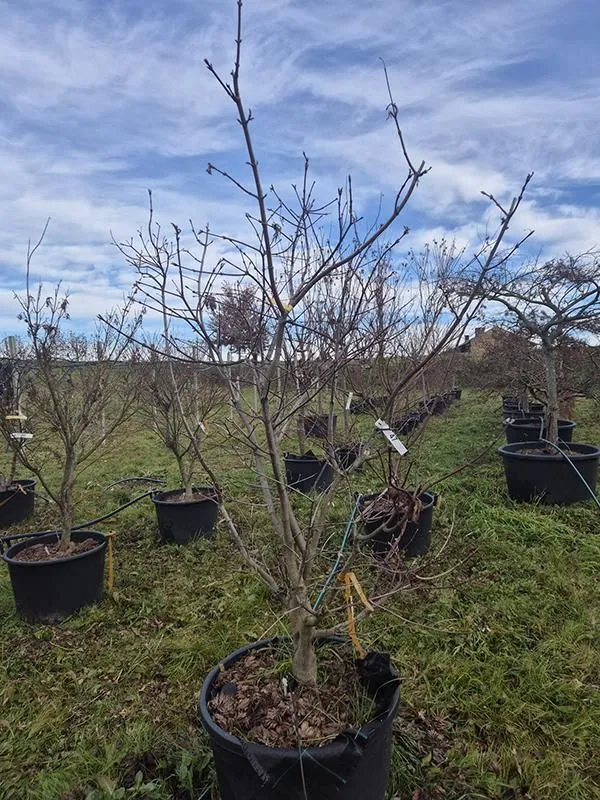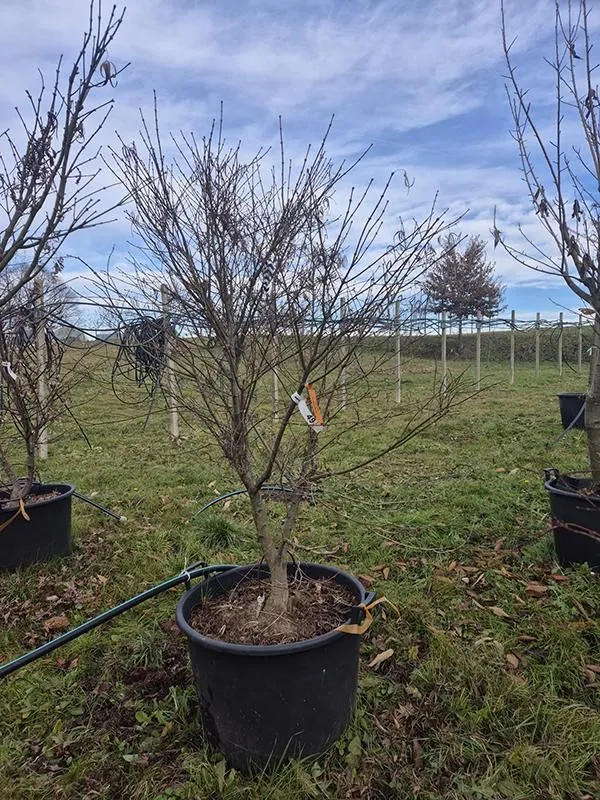
Acer Palmatum 'Linearilobum' 62cm Pot 210cm Height Outdoor Tree
Acer palmatum ‘Linearilobum’ is a striking Japanese maple cultivar, distinguished by its narrow, strap-like leaves which give it a uniquely delicate, almost bamboo-like appearance. This variety is part of the group often called threadleaf or linear-lobed Japanese maples, offering a very different texture to typical broad palmate forms.
🌿 Key Features:
-
Foliage: Long, thin, ribbon-like lobes form graceful, finely divided leaves. In spring, foliage emerges a vivid bright red, softening to a rich greenish-red to burgundy through summer. In autumn, it turns brilliant fiery red and orange, giving a spectacular display.
-
Habit: Forms a small, upright, elegant tree with a light, airy canopy. Typically grows to 3–4 metres high with a spread of 2–3 metres, developing a softly rounded shape as it matures.
-
Bark: Smooth grey-brown branches give subtle winter structure after leaf fall.
The fine, linear foliage makes ‘Linearilobum’ a wonderful contrast plant, ideal for adding delicate texture and movement to borders, woodland gardens, or Japanese-themed plantings.
🌱 Detailed Care Guide for Acer palmatum ‘Linearilobum’
📍 Position & Light
-
Prefers partial shade or dappled sunlight.
-
Will tolerate some morning or early afternoon sun, which enhances colour, but protect from hot midday or late afternoon sun to prevent leaf scorch.
-
Always plant in a sheltered position, away from strong winds.
🌬️ Shelter
-
Important to avoid exposed spots. Wind can easily damage the narrow, delicate leaf lobes, causing them to brown or tear.
💧 Watering
-
Likes soil to be consistently moist but well-drained.
-
Water deeply during dry spells, particularly when newly planted or if grown in containers.
-
Apply a mulch in spring to conserve moisture and keep roots cool.
🪴 Soil
-
Prefers slightly acidic to neutral, fertile, humus-rich soil.
-
Avoid heavy clay or highly alkaline soils. If necessary, plant in raised beds or containers using ericaceous compost with added grit for drainage.
🍽️ Feeding
-
Feed lightly in spring with a balanced slow-release fertiliser or a specific feed for acers.
-
Avoid high-nitrogen fertilisers which can promote soft growth more prone to wind or frost damage.
✂️ Pruning & Maintenance
-
Requires very little pruning.
-
Remove any dead, damaged or crossing branches in late autumn or winter while dormant.
-
Avoid hard pruning, which ruins its naturally airy form.
🪲 Pests & Problems
-
Generally pest-free and low maintenance.
-
May occasionally attract aphids on soft new shoots.
-
Leaf scorch (brown edges) usually results from drought, strong winds or intense sun, not disease.
🚰 Container Growing
-
Excellent choice for large pots, especially if garden soil is unsuitable.
-
Use ericaceous compost with added grit, ensure the pot drains freely and is raised on feet.
-
Keep consistently watered, and protect container roots in harsh winters by wrapping or moving to a sheltered spot.
Original: $2,639.59
-70%$2,639.59
$791.88Product Information
Product Information
Shipping & Returns
Shipping & Returns
Description
Acer palmatum ‘Linearilobum’ is a striking Japanese maple cultivar, distinguished by its narrow, strap-like leaves which give it a uniquely delicate, almost bamboo-like appearance. This variety is part of the group often called threadleaf or linear-lobed Japanese maples, offering a very different texture to typical broad palmate forms.
🌿 Key Features:
-
Foliage: Long, thin, ribbon-like lobes form graceful, finely divided leaves. In spring, foliage emerges a vivid bright red, softening to a rich greenish-red to burgundy through summer. In autumn, it turns brilliant fiery red and orange, giving a spectacular display.
-
Habit: Forms a small, upright, elegant tree with a light, airy canopy. Typically grows to 3–4 metres high with a spread of 2–3 metres, developing a softly rounded shape as it matures.
-
Bark: Smooth grey-brown branches give subtle winter structure after leaf fall.
The fine, linear foliage makes ‘Linearilobum’ a wonderful contrast plant, ideal for adding delicate texture and movement to borders, woodland gardens, or Japanese-themed plantings.
🌱 Detailed Care Guide for Acer palmatum ‘Linearilobum’
📍 Position & Light
-
Prefers partial shade or dappled sunlight.
-
Will tolerate some morning or early afternoon sun, which enhances colour, but protect from hot midday or late afternoon sun to prevent leaf scorch.
-
Always plant in a sheltered position, away from strong winds.
🌬️ Shelter
-
Important to avoid exposed spots. Wind can easily damage the narrow, delicate leaf lobes, causing them to brown or tear.
💧 Watering
-
Likes soil to be consistently moist but well-drained.
-
Water deeply during dry spells, particularly when newly planted or if grown in containers.
-
Apply a mulch in spring to conserve moisture and keep roots cool.
🪴 Soil
-
Prefers slightly acidic to neutral, fertile, humus-rich soil.
-
Avoid heavy clay or highly alkaline soils. If necessary, plant in raised beds or containers using ericaceous compost with added grit for drainage.
🍽️ Feeding
-
Feed lightly in spring with a balanced slow-release fertiliser or a specific feed for acers.
-
Avoid high-nitrogen fertilisers which can promote soft growth more prone to wind or frost damage.
✂️ Pruning & Maintenance
-
Requires very little pruning.
-
Remove any dead, damaged or crossing branches in late autumn or winter while dormant.
-
Avoid hard pruning, which ruins its naturally airy form.
🪲 Pests & Problems
-
Generally pest-free and low maintenance.
-
May occasionally attract aphids on soft new shoots.
-
Leaf scorch (brown edges) usually results from drought, strong winds or intense sun, not disease.
🚰 Container Growing
-
Excellent choice for large pots, especially if garden soil is unsuitable.
-
Use ericaceous compost with added grit, ensure the pot drains freely and is raised on feet.
-
Keep consistently watered, and protect container roots in harsh winters by wrapping or moving to a sheltered spot.