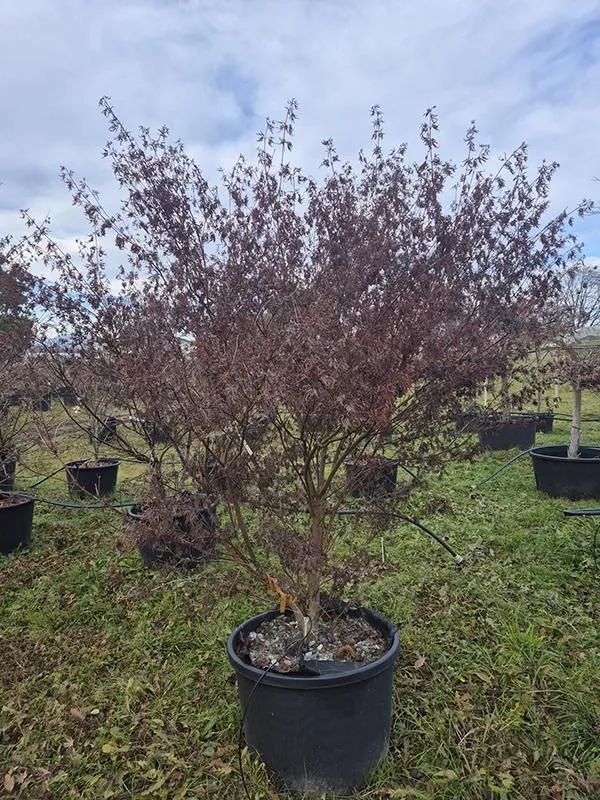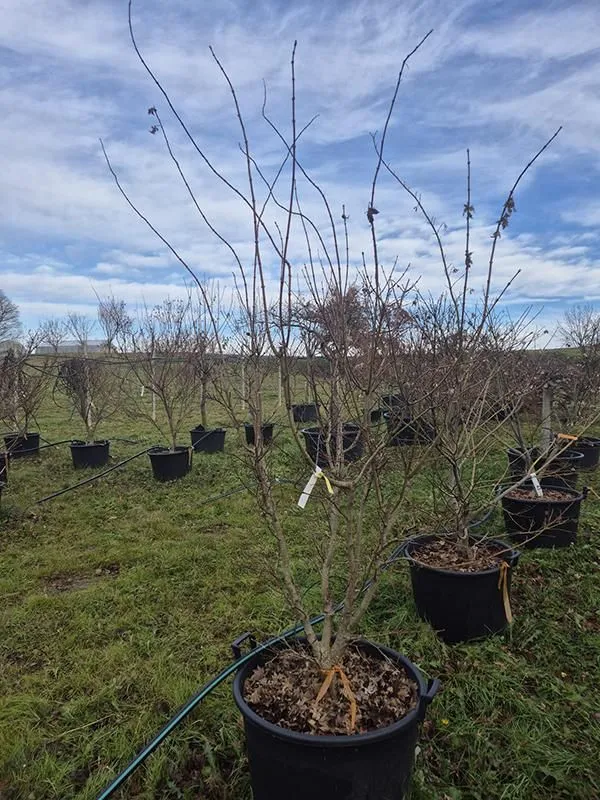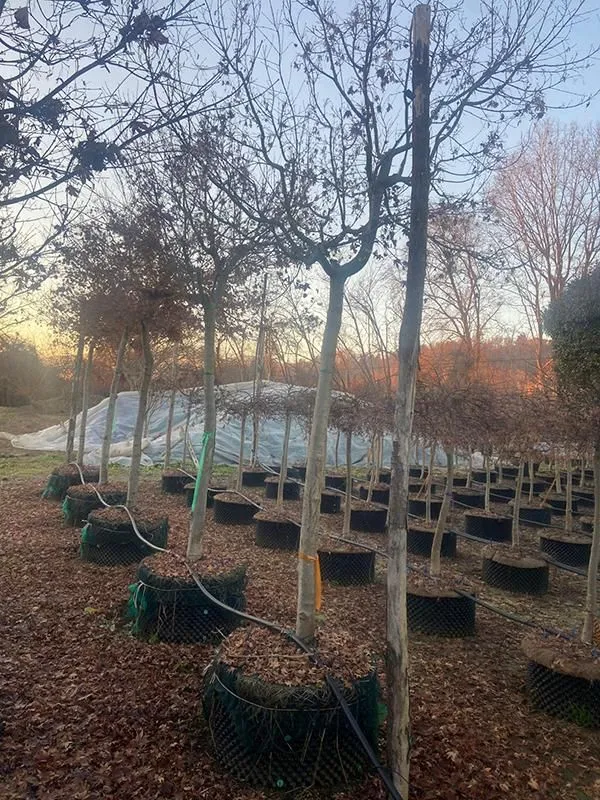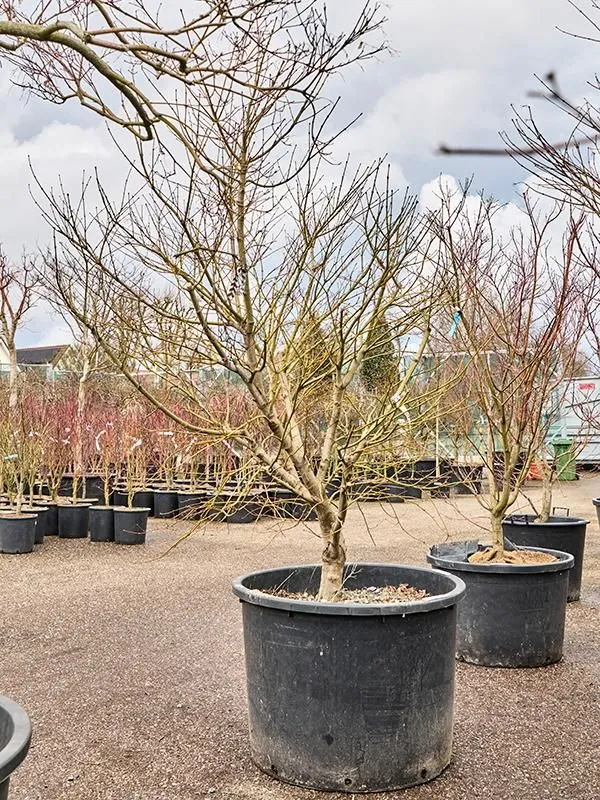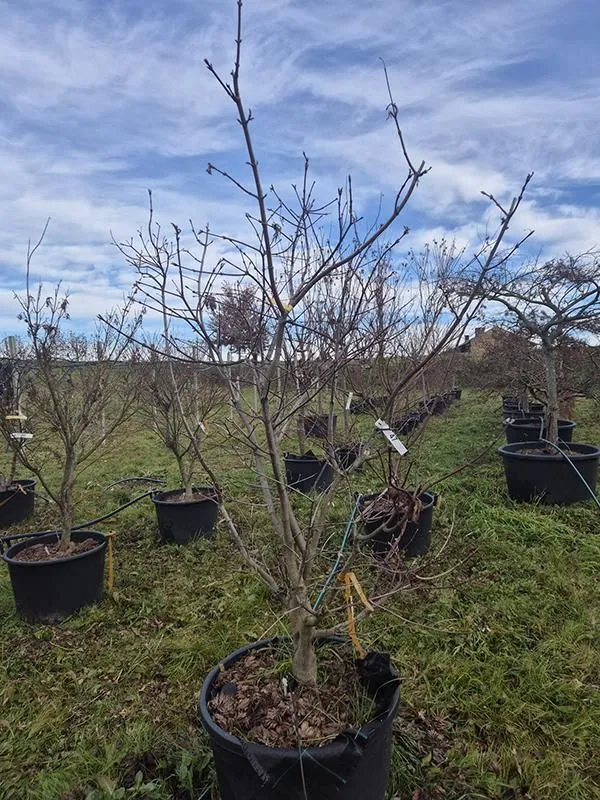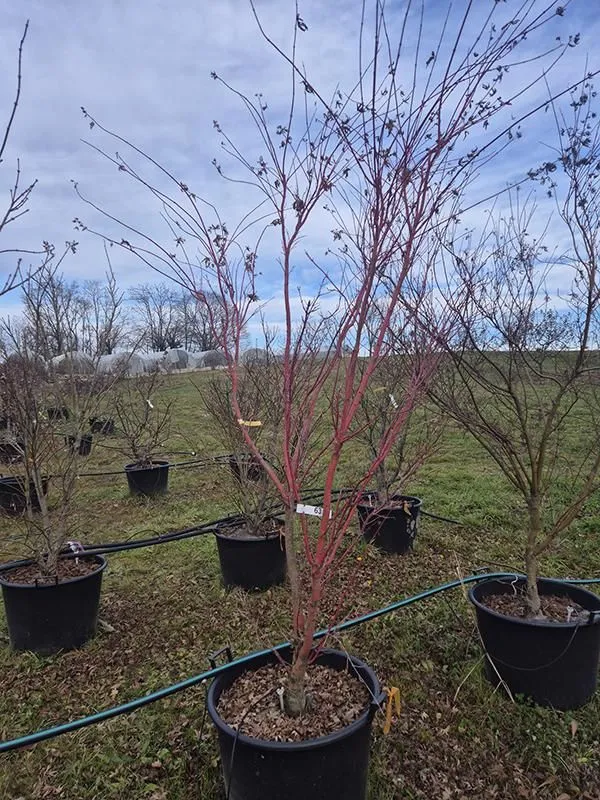
Acer Palmatum 'Sangokaku' 60cm Pot 300cm Height Outdoor Tree
Acer palmatum ‘Sangokaku’, commonly known as the Coral Bark Maple, is one of the most popular Japanese maples, celebrated for its striking coral-red young stems which provide exceptional winter interest. Its elegant structure, delicate foliage and year-round beauty make it a standout choice for gardens large and small.
🌿 Key Features:
-
Foliage: Palmate leaves emerge a soft yellow-green in spring, sometimes tinged with pink, and mature to a fresh light green through summer. In autumn, they turn brilliant shades of gold, apricot and warm orange, creating a stunning seasonal display.
-
Bark: After leaf fall, the young shoots and branches reveal vivid coral-red bark, which glows particularly well in low winter light or against evergreen backdrops. This striking feature gives ‘Sangokaku’ its common name.
-
Habit: A graceful, upright, vase-shaped small tree typically growing to 4–6 metres high, with a spread of around 3–4 metres over time.
-
Overall appeal: Offers multi-season interest — fresh spring growth, elegant summer foliage, glowing autumn tones and vibrant winter stems.
Because of its year-round display and relatively robust nature, ‘Sangokaku’ is a favourite specimen for lawns, near patios or in sheltered borders.
🌱 Detailed Care Guide for Acer palmatum ‘Sangokaku’
📍 Position & Light
-
Prefers partial shade or dappled sunlight, but ‘Sangokaku’ is one of the more sun-tolerant Japanese maples, coping well with morning or late afternoon sun.
-
Protect from hot, intense afternoon sun to avoid leaf scorch, especially in exposed gardens.
🌬️ Shelter
-
Choose a sheltered site, out of strong or cold winds which can damage delicate leaves and reduce winter bark intensity.
💧 Watering
-
Likes soil to be consistently moist but well-drained.
-
Water thoroughly during dry spells, particularly in the first few years after planting or if grown in pots.
-
Mulch in spring with bark or compost to conserve moisture and protect the shallow roots.
🪴 Soil
-
Prefers slightly acidic to neutral, fertile, humus-rich soil.
-
Avoid very alkaline or heavy clay. If needed, plant in raised beds or containers using ericaceous compost mixed with grit for improved drainage.
🍽️ Feeding
-
Feed lightly in spring with a balanced slow-release fertiliser or a specific acer feed.
-
Avoid high-nitrogen fertilisers which encourage lush, soft growth that is more vulnerable to wind or frost.
✂️ Pruning & Maintenance
-
Needs minimal pruning.
-
Remove any dead, damaged or crossing branches in late autumn or winter while dormant.
-
Avoid hard pruning which can spoil its elegant, layered shape.
🪲 Pests & Problems
-
Generally robust and trouble-free.
-
May occasionally attract aphids on new shoots.
-
Leaf scorch (browned edges or tips) is usually caused by drought, strong winds or intense sun, not by disease.
🚰 Container Growing
-
An excellent choice for a large pot, especially on patios or where garden soil isn’t suitable.
-
Use ericaceous compost with added grit, ensure the pot drains well and is raised on feet.
-
Water consistently and protect roots in harsh winters by wrapping or moving to a sheltered spot.
Original: $3,299.49
-70%$3,299.49
$989.85Product Information
Product Information
Shipping & Returns
Shipping & Returns
Description
Acer palmatum ‘Sangokaku’, commonly known as the Coral Bark Maple, is one of the most popular Japanese maples, celebrated for its striking coral-red young stems which provide exceptional winter interest. Its elegant structure, delicate foliage and year-round beauty make it a standout choice for gardens large and small.
🌿 Key Features:
-
Foliage: Palmate leaves emerge a soft yellow-green in spring, sometimes tinged with pink, and mature to a fresh light green through summer. In autumn, they turn brilliant shades of gold, apricot and warm orange, creating a stunning seasonal display.
-
Bark: After leaf fall, the young shoots and branches reveal vivid coral-red bark, which glows particularly well in low winter light or against evergreen backdrops. This striking feature gives ‘Sangokaku’ its common name.
-
Habit: A graceful, upright, vase-shaped small tree typically growing to 4–6 metres high, with a spread of around 3–4 metres over time.
-
Overall appeal: Offers multi-season interest — fresh spring growth, elegant summer foliage, glowing autumn tones and vibrant winter stems.
Because of its year-round display and relatively robust nature, ‘Sangokaku’ is a favourite specimen for lawns, near patios or in sheltered borders.
🌱 Detailed Care Guide for Acer palmatum ‘Sangokaku’
📍 Position & Light
-
Prefers partial shade or dappled sunlight, but ‘Sangokaku’ is one of the more sun-tolerant Japanese maples, coping well with morning or late afternoon sun.
-
Protect from hot, intense afternoon sun to avoid leaf scorch, especially in exposed gardens.
🌬️ Shelter
-
Choose a sheltered site, out of strong or cold winds which can damage delicate leaves and reduce winter bark intensity.
💧 Watering
-
Likes soil to be consistently moist but well-drained.
-
Water thoroughly during dry spells, particularly in the first few years after planting or if grown in pots.
-
Mulch in spring with bark or compost to conserve moisture and protect the shallow roots.
🪴 Soil
-
Prefers slightly acidic to neutral, fertile, humus-rich soil.
-
Avoid very alkaline or heavy clay. If needed, plant in raised beds or containers using ericaceous compost mixed with grit for improved drainage.
🍽️ Feeding
-
Feed lightly in spring with a balanced slow-release fertiliser or a specific acer feed.
-
Avoid high-nitrogen fertilisers which encourage lush, soft growth that is more vulnerable to wind or frost.
✂️ Pruning & Maintenance
-
Needs minimal pruning.
-
Remove any dead, damaged or crossing branches in late autumn or winter while dormant.
-
Avoid hard pruning which can spoil its elegant, layered shape.
🪲 Pests & Problems
-
Generally robust and trouble-free.
-
May occasionally attract aphids on new shoots.
-
Leaf scorch (browned edges or tips) is usually caused by drought, strong winds or intense sun, not by disease.
🚰 Container Growing
-
An excellent choice for a large pot, especially on patios or where garden soil isn’t suitable.
-
Use ericaceous compost with added grit, ensure the pot drains well and is raised on feet.
-
Water consistently and protect roots in harsh winters by wrapping or moving to a sheltered spot.