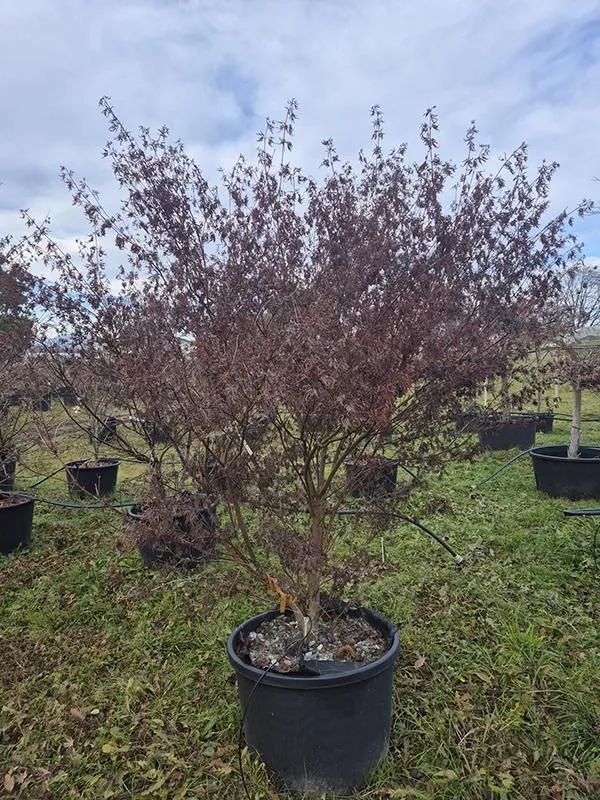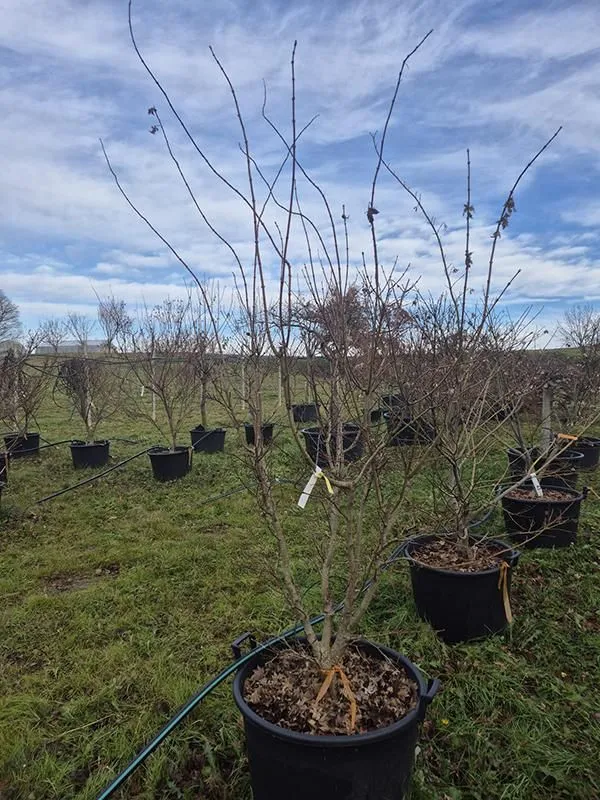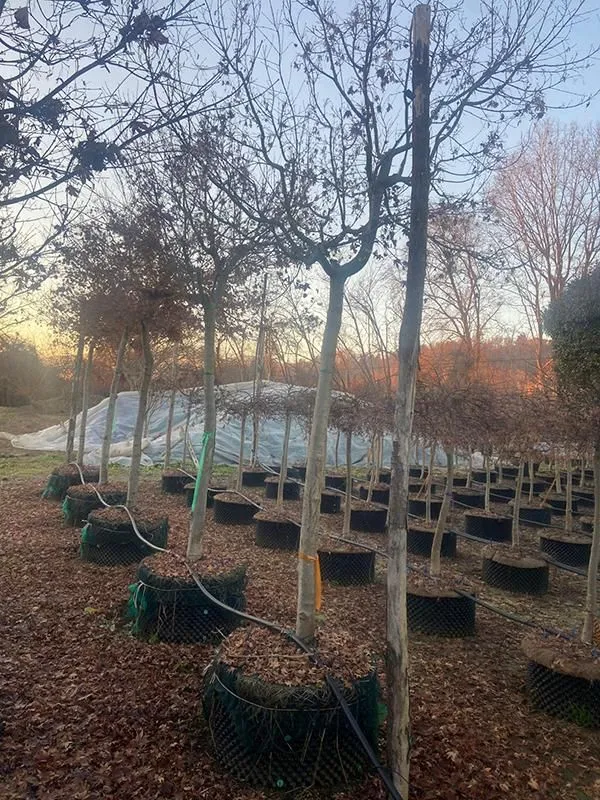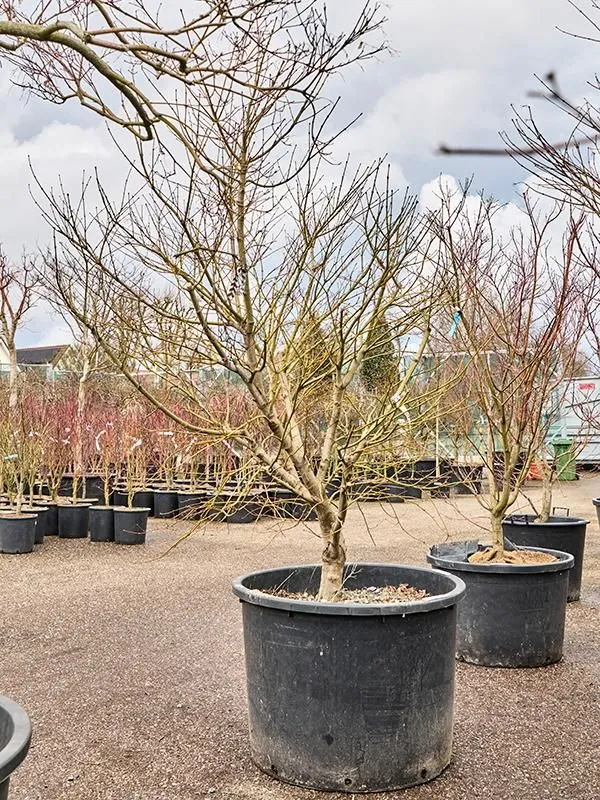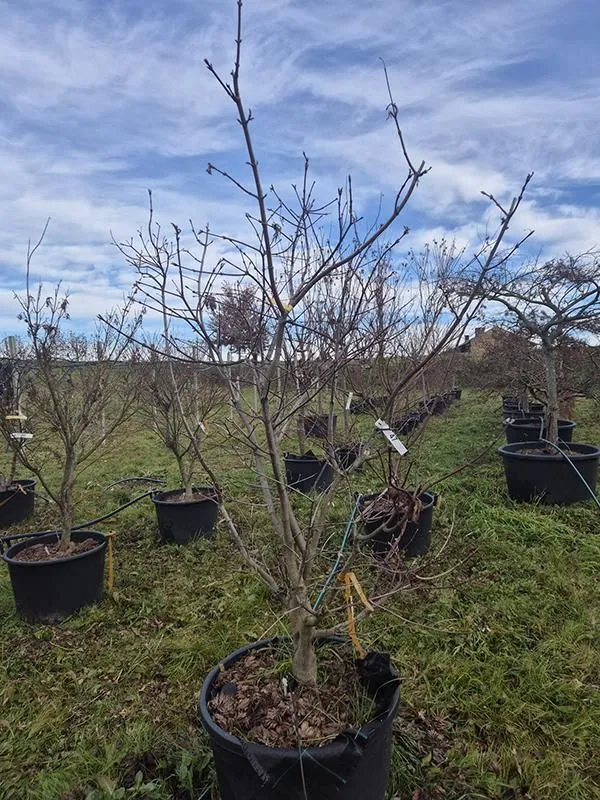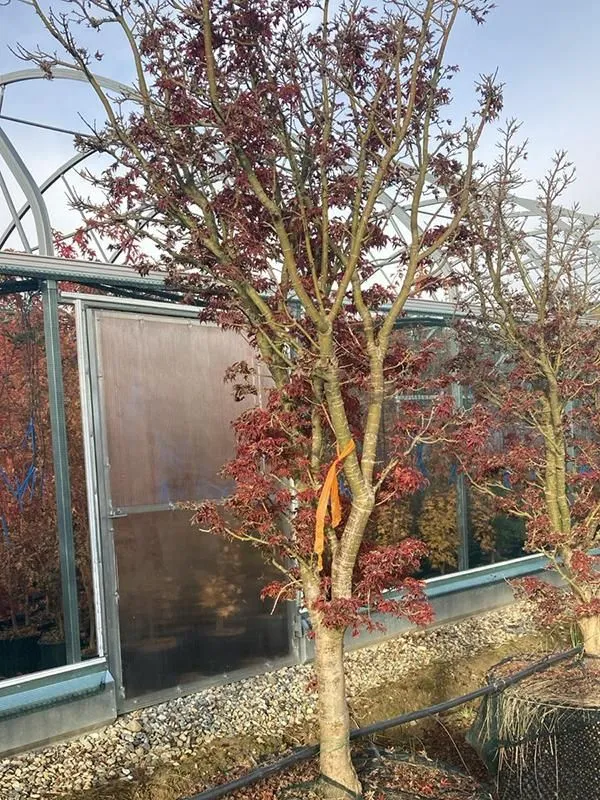
Acer Palmatum 'Shishigashira' 112cm Pot 300cm Height Outdoor Tree
Acer palmatum ‘Shishigashira’, commonly known as the Lion’s Head Maple, is a unique and highly sought-after cultivar of the Japanese maple. Unlike the typical finely dissected or broad-lobed forms, ‘Shishigashira’ stands out for its densely packed, crinkled foliage and striking, architectural habit.
🌿 Key Features:
-
Foliage: Small, curled, crinkled leaves are arranged closely along the stems, giving a dense, almost sculptural appearance. The foliage emerges a deep rich green in spring and summer, turning stunning shades of gold, orange and red in autumn, often with multiple tones on the same tree.
-
Habit: A slow-growing, upright, compact tree or large shrub typically reaching 2.5–4 metres high with a slightly narrower spread. The growth is stiffly upright at first, gradually developing into a picturesque, irregular shape with age.
-
Bark: Smooth grey-brown bark adds subtle interest in winter once the leaves have fallen.
Its distinctive foliage texture and naturally tidy form make ‘Shishigashira’ ideal as a specimen in small gardens, courtyards, or for use in Japanese-style plantings. It’s also highly prized for bonsai.
🌱 Detailed Care Guide for Acer palmatum ‘Shishigashira’
📍 Position & Light
-
Prefers partial shade or dappled sunlight.
-
Can tolerate more sun than many Japanese maples, which enhances its strong autumn colour, but still benefits from protection from hot afternoon sun to prevent leaf scorch.
-
Always plant in a sheltered spot, protected from strong winds.
🌬️ Shelter
-
Important to avoid exposed sites. Cold or drying winds can damage foliage and lead to browning edges.
💧 Watering
-
Likes soil to be consistently moist but well-drained.
-
Water thoroughly during dry periods, particularly in the first few years or if grown in containers.
-
Mulch annually in spring to conserve moisture and keep the shallow root system cool.
🪴 Soil
-
Prefers slightly acidic to neutral, fertile, humus-rich soil.
-
Avoid heavy clay or alkaline conditions. If needed, plant in raised beds or large containers using ericaceous compost with added grit for drainage.
🍽️ Feeding
-
Feed lightly in spring with a balanced slow-release fertiliser or a feed specifically formulated for acers.
-
Avoid high-nitrogen fertilisers, which encourage soft growth more prone to wind and frost damage.
✂️ Pruning & Maintenance
-
Requires minimal pruning.
-
Remove any dead, damaged or crossing branches in late autumn or winter while dormant.
-
Avoid hard pruning, which disrupts its natural, unique structure.
🪲 Pests & Problems
-
Generally pest-free and very low maintenance.
-
May occasionally suffer aphids on tender new growth.
-
Leaf scorch (brown edges or tips) is usually caused by drought, strong wind or intense sun, rather than disease.
🚰 Container Growing
-
Excellent choice for growing in large pots, ideal for patios or small gardens.
-
Use ericaceous compost mixed with grit, ensure containers have good drainage and are raised on pot feet.
-
Keep well-watered, and in harsh winters, wrap pots or move to a sheltered spot to protect roots.
Original: $6,598.98
-70%$6,598.98
$1,979.69Product Information
Product Information
Shipping & Returns
Shipping & Returns
Description
Acer palmatum ‘Shishigashira’, commonly known as the Lion’s Head Maple, is a unique and highly sought-after cultivar of the Japanese maple. Unlike the typical finely dissected or broad-lobed forms, ‘Shishigashira’ stands out for its densely packed, crinkled foliage and striking, architectural habit.
🌿 Key Features:
-
Foliage: Small, curled, crinkled leaves are arranged closely along the stems, giving a dense, almost sculptural appearance. The foliage emerges a deep rich green in spring and summer, turning stunning shades of gold, orange and red in autumn, often with multiple tones on the same tree.
-
Habit: A slow-growing, upright, compact tree or large shrub typically reaching 2.5–4 metres high with a slightly narrower spread. The growth is stiffly upright at first, gradually developing into a picturesque, irregular shape with age.
-
Bark: Smooth grey-brown bark adds subtle interest in winter once the leaves have fallen.
Its distinctive foliage texture and naturally tidy form make ‘Shishigashira’ ideal as a specimen in small gardens, courtyards, or for use in Japanese-style plantings. It’s also highly prized for bonsai.
🌱 Detailed Care Guide for Acer palmatum ‘Shishigashira’
📍 Position & Light
-
Prefers partial shade or dappled sunlight.
-
Can tolerate more sun than many Japanese maples, which enhances its strong autumn colour, but still benefits from protection from hot afternoon sun to prevent leaf scorch.
-
Always plant in a sheltered spot, protected from strong winds.
🌬️ Shelter
-
Important to avoid exposed sites. Cold or drying winds can damage foliage and lead to browning edges.
💧 Watering
-
Likes soil to be consistently moist but well-drained.
-
Water thoroughly during dry periods, particularly in the first few years or if grown in containers.
-
Mulch annually in spring to conserve moisture and keep the shallow root system cool.
🪴 Soil
-
Prefers slightly acidic to neutral, fertile, humus-rich soil.
-
Avoid heavy clay or alkaline conditions. If needed, plant in raised beds or large containers using ericaceous compost with added grit for drainage.
🍽️ Feeding
-
Feed lightly in spring with a balanced slow-release fertiliser or a feed specifically formulated for acers.
-
Avoid high-nitrogen fertilisers, which encourage soft growth more prone to wind and frost damage.
✂️ Pruning & Maintenance
-
Requires minimal pruning.
-
Remove any dead, damaged or crossing branches in late autumn or winter while dormant.
-
Avoid hard pruning, which disrupts its natural, unique structure.
🪲 Pests & Problems
-
Generally pest-free and very low maintenance.
-
May occasionally suffer aphids on tender new growth.
-
Leaf scorch (brown edges or tips) is usually caused by drought, strong wind or intense sun, rather than disease.
🚰 Container Growing
-
Excellent choice for growing in large pots, ideal for patios or small gardens.
-
Use ericaceous compost mixed with grit, ensure containers have good drainage and are raised on pot feet.
-
Keep well-watered, and in harsh winters, wrap pots or move to a sheltered spot to protect roots.