Alocasia Ninja Elephant Ear House Plant 6cm Pot
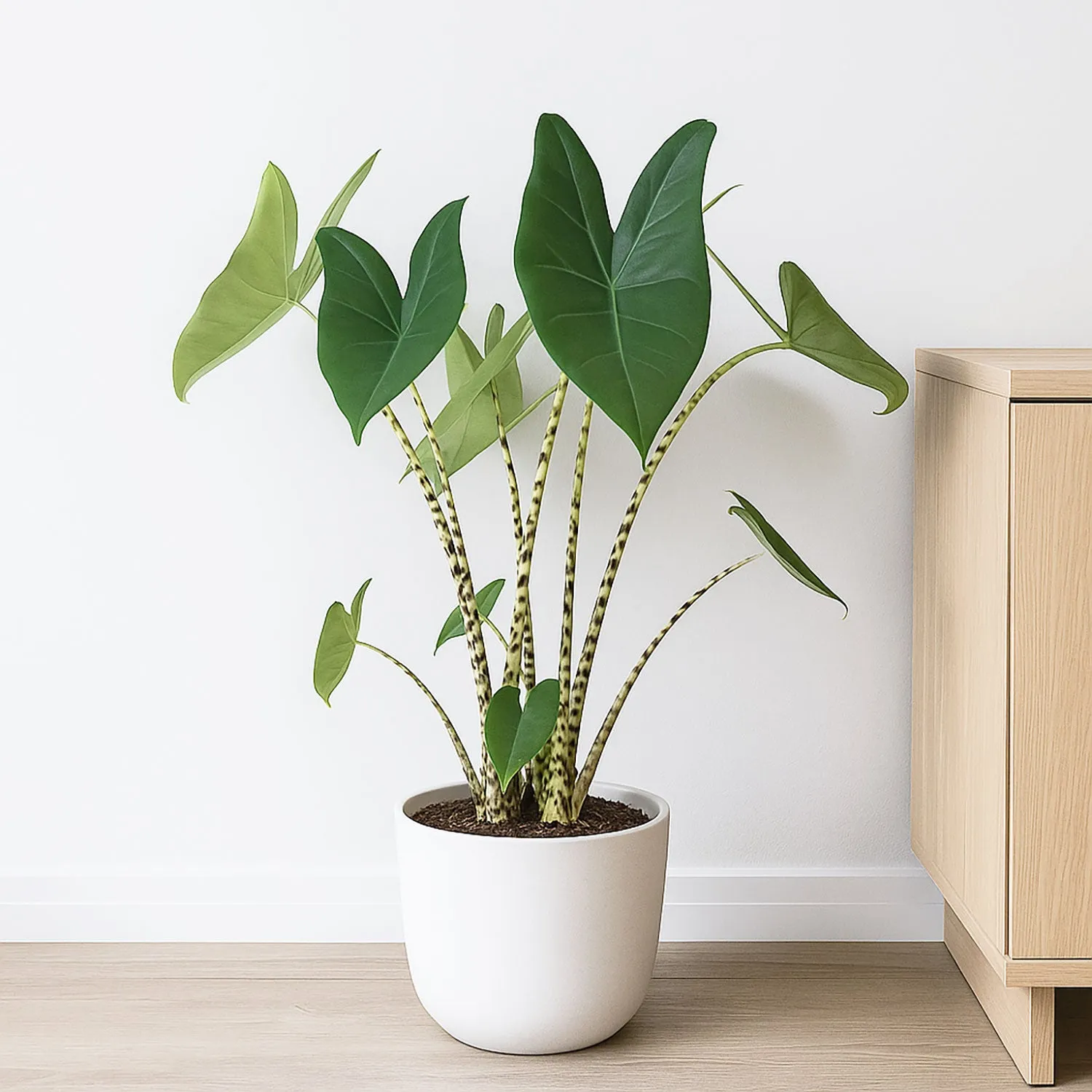
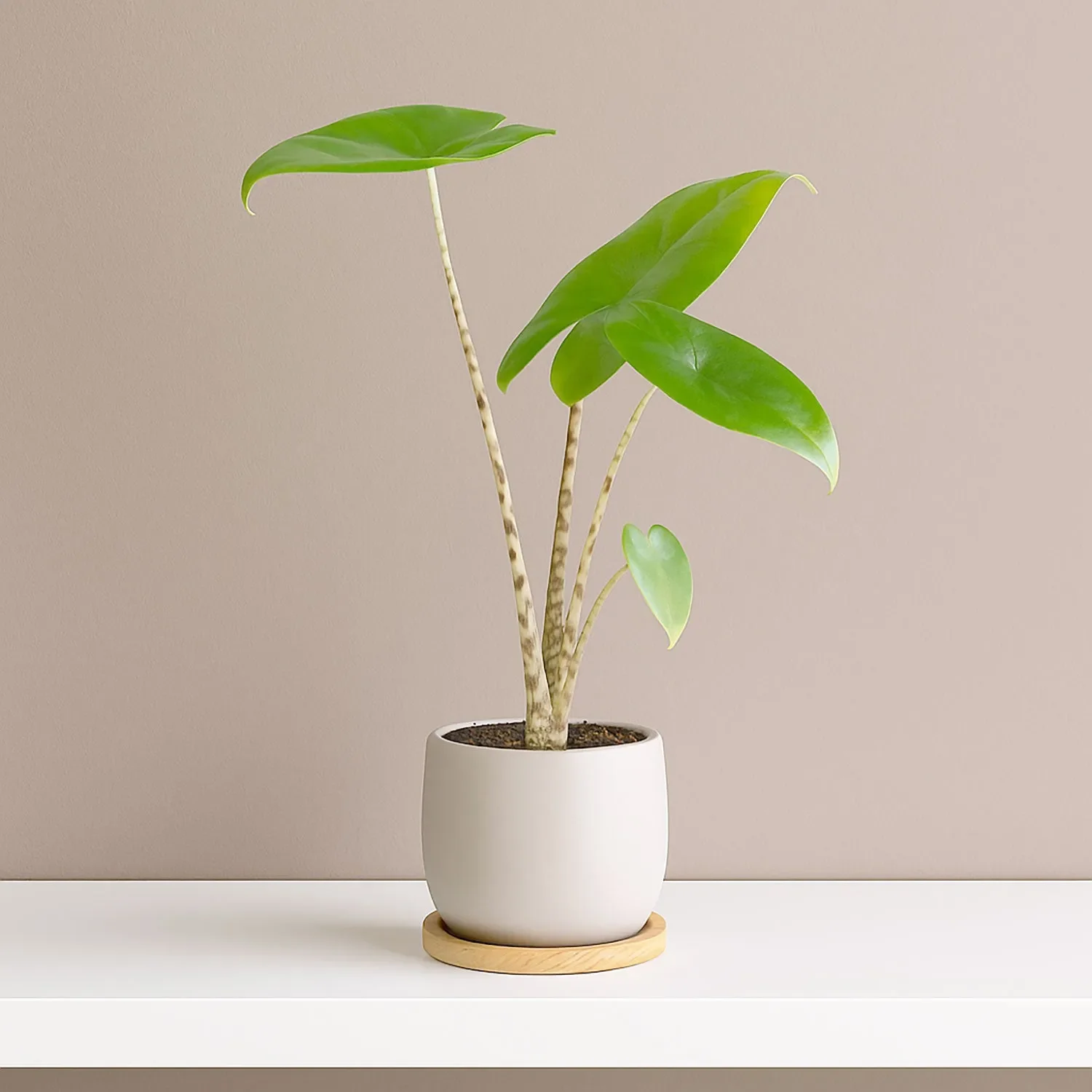
Alocasia ‘Ninja’ is a compact, dramatic aroid known for its deep green, almost black foliage contrasted with striking silvery-white veins. Its bold leaf structure and high-contrast colouring give it a sharp, architectural look — perfect for modern interiors.
Often compared to other dark-leaved Alocasias, ‘Ninja’ stands out for its slightly rounded, thick leaves and intense vein definition. It remains more compact than many other varieties, making it ideal for shelves, desks or smaller spaces.
Key Features
-
🌿 Deep green to near-black velvety foliage
-
🌿 Prominent silver-white veins
-
🌿 Compact growth habit
-
🌿 Upright, architectural form
-
🌿 Perfect statement plant for small spaces
Care Guide
Light
Bright, indirect light is essential.
-
East or west-facing windows are ideal
-
Avoid harsh direct sun (can scorch leaves)
-
Too little light may reduce vein contrast and slow growth
Alocasias thrive in bright rooms but prefer filtered light rather than direct exposure.
Watering
Alocasia ‘Ninja’ prefers evenly moist soil but does not tolerate sitting in water.
-
Water when the top 2–3cm of soil feels dry
-
Keep soil lightly moist during spring and summer
-
Reduce watering in autumn and winter
Overwatering is the most common issue and can quickly cause root rot.
Humidity
High humidity is very important.
-
Ideal range: 60–75%
-
Benefits greatly from a humidifier
-
Grouping with other plants can help
Low humidity may cause:
-
Brown edges
-
Leaf curling
-
Crispy tips
Temperature
-
Ideal: 18–26°C
-
Avoid temperatures below 15°C
-
Protect from cold draughts and sudden changes
Alocasias dislike temperature fluctuations.
Soil & Potting Mix
Use a well-draining but moisture-retentive mix:
-
Peat-free houseplant compost
-
Perlite
-
Orchid bark
-
A small amount of coco coir
The goal is airflow around roots while retaining consistent moisture.
Feeding
Feed during active growth (March–September):
-
Balanced liquid fertiliser every 2–4 weeks
-
Reduce feeding in winter
Alocasias are moderate feeders during growing season.
Growth Habit
‘Ninja’ grows upright from a central rhizome, producing new leaves from the centre.
-
Typically stays compact
-
Mature height: around 30–50cm
-
Produces thick, sturdy stems
Older leaves may naturally yellow and drop as new growth emerges — this is normal.
Dormancy
In cooler months, Alocasia ‘Ninja’ may slow down or partially go dormant.
-
Reduce watering
-
Do not fertilise
-
Keep warm and bright
If it drops leaves in winter, don’t panic — it often regrows in spring.
Propagation
Propagation is usually done by division:
-
Remove the plant from its pot
-
Gently separate offsets from the rhizome
-
Repot into fresh soil
This is best done during spring when growth resumes.
Common Problems
Yellowing leaves
-
Often overwatering
Brown edges
-
Low humidity
Drooping leaves
-
Inconsistent watering or temperature stress
Spider mites
-
Common in dry air — check undersides of leaves
Styling Ideas
-
Pair with lighter foliage plants for contrast
-
Use in minimalist or modern interiors
-
Display in matte black or neutral ceramic pots
-
Ideal for desks, shelving or plant cabinets
Toxicity
Like most Alocasias, it is toxic if ingested by pets or humans. Keep away from cats and dogs.
Original: $7.91
-70%$7.91
$2.37Product Information
Product Information
Shipping & Returns
Shipping & Returns
Description
Alocasia ‘Ninja’ is a compact, dramatic aroid known for its deep green, almost black foliage contrasted with striking silvery-white veins. Its bold leaf structure and high-contrast colouring give it a sharp, architectural look — perfect for modern interiors.
Often compared to other dark-leaved Alocasias, ‘Ninja’ stands out for its slightly rounded, thick leaves and intense vein definition. It remains more compact than many other varieties, making it ideal for shelves, desks or smaller spaces.
Key Features
-
🌿 Deep green to near-black velvety foliage
-
🌿 Prominent silver-white veins
-
🌿 Compact growth habit
-
🌿 Upright, architectural form
-
🌿 Perfect statement plant for small spaces
Care Guide
Light
Bright, indirect light is essential.
-
East or west-facing windows are ideal
-
Avoid harsh direct sun (can scorch leaves)
-
Too little light may reduce vein contrast and slow growth
Alocasias thrive in bright rooms but prefer filtered light rather than direct exposure.
Watering
Alocasia ‘Ninja’ prefers evenly moist soil but does not tolerate sitting in water.
-
Water when the top 2–3cm of soil feels dry
-
Keep soil lightly moist during spring and summer
-
Reduce watering in autumn and winter
Overwatering is the most common issue and can quickly cause root rot.
Humidity
High humidity is very important.
-
Ideal range: 60–75%
-
Benefits greatly from a humidifier
-
Grouping with other plants can help
Low humidity may cause:
-
Brown edges
-
Leaf curling
-
Crispy tips
Temperature
-
Ideal: 18–26°C
-
Avoid temperatures below 15°C
-
Protect from cold draughts and sudden changes
Alocasias dislike temperature fluctuations.
Soil & Potting Mix
Use a well-draining but moisture-retentive mix:
-
Peat-free houseplant compost
-
Perlite
-
Orchid bark
-
A small amount of coco coir
The goal is airflow around roots while retaining consistent moisture.
Feeding
Feed during active growth (March–September):
-
Balanced liquid fertiliser every 2–4 weeks
-
Reduce feeding in winter
Alocasias are moderate feeders during growing season.
Growth Habit
‘Ninja’ grows upright from a central rhizome, producing new leaves from the centre.
-
Typically stays compact
-
Mature height: around 30–50cm
-
Produces thick, sturdy stems
Older leaves may naturally yellow and drop as new growth emerges — this is normal.
Dormancy
In cooler months, Alocasia ‘Ninja’ may slow down or partially go dormant.
-
Reduce watering
-
Do not fertilise
-
Keep warm and bright
If it drops leaves in winter, don’t panic — it often regrows in spring.
Propagation
Propagation is usually done by division:
-
Remove the plant from its pot
-
Gently separate offsets from the rhizome
-
Repot into fresh soil
This is best done during spring when growth resumes.
Common Problems
Yellowing leaves
-
Often overwatering
Brown edges
-
Low humidity
Drooping leaves
-
Inconsistent watering or temperature stress
Spider mites
-
Common in dry air — check undersides of leaves
Styling Ideas
-
Pair with lighter foliage plants for contrast
-
Use in minimalist or modern interiors
-
Display in matte black or neutral ceramic pots
-
Ideal for desks, shelving or plant cabinets
Toxicity
Like most Alocasias, it is toxic if ingested by pets or humans. Keep away from cats and dogs.