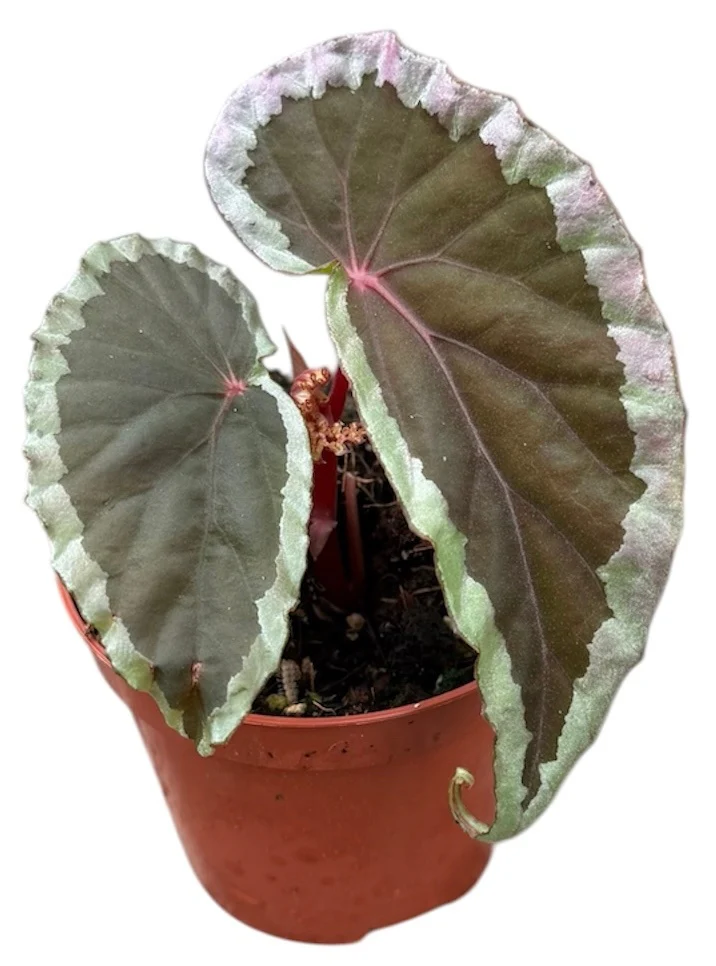
Begonia Baramensis 8cm Pot 15cm Height House Plant
Begonia baramensis is an unusual and highly sought-after species begonia prized for its elongated, heavily textured foliage and striking metallic sheen. The leaves are narrow and slightly pointed, often deep olive green to almost black, with shimmering silver markings and prominent veining running from the centre to the edges. In bright indirect light, the foliage can appear almost iridescent, with flashes of bronze, silver and deep burgundy.
Unlike many compact rex begonias, Begonia baramensis has a more upright, slightly arching growth habit. Mature plants usually reach around 30–50cm tall, producing stems topped with dramatic foliage that creates a lush, tropical look. The undersides of the leaves are often reddish-purple, adding extra interest when viewed from below.
This species is grown mainly for its foliage, although mature plants may occasionally produce small clusters of pale pink to white flowers. Its darker colouring and unusual leaf shape make it an excellent addition to your Dark Collection, pairing especially well with Philodendron micans, Tradescantia zebrina and Maranta ‘Fascinator’.
Detailed Care Guide
Light
Begonia baramensis prefers bright, indirect light.
Place it close to an east or north-facing window, or a little back from a brighter south or west-facing window. Too much direct sunlight can scorch the leaves and reduce the metallic sheen, whilst too little light may make the foliage lose some of its colour and pattern.
Watering
Keep the compost evenly lightly moist, allowing the top 2–3cm to dry slightly before watering again.
- Water thoroughly, then let any excess drain away
- Never leave the pot sitting in water
- Reduce watering during winter when growth slows
Begonia baramensis is sensitive to overwatering, and constantly wet compost can quickly lead to root rot or stem rot.
Water around the base of the plant rather than over the leaves, as wet foliage can encourage spotting or mildew.
Humidity
This species enjoys high humidity and grows best at around 60–80%.
If the air in your home is dry, especially during winter, it is best to use:
- A humidifier
- A pebble tray
- Grouping with other plants
Begonia baramensis can also do very well in a terrarium or cabinet if humidity is difficult to maintain.
Avoid misting directly onto the leaves, as this can leave marks or lead to fungal problems.
Temperature
Keep Begonia baramensis warm, ideally between 18–26°C.
Avoid:
- Temperatures below 15°C
- Cold draughts
- Sudden changes in temperature
- Placing it near radiators or open windows
Stable warmth and humidity will help keep the foliage looking its best.
Compost
Use a light, airy and well-draining compost mix.
A suitable mix is:
- 2 parts houseplant compost
- 1 part perlite
- 1 part orchid bark or coco chips
This provides moisture whilst still allowing enough air around the roots.
Feeding
Feed every 2–4 weeks during spring and summer with a balanced liquid houseplant fertiliser at half strength.
Do not feed during winter when growth naturally slows.
Repotting
Repot every 1–2 years in spring if necessary.
Only move it to a slightly larger pot if:
- Roots are growing from the drainage holes
- The compost dries out very quickly
- The plant has become rootbound
Begonia baramensis usually prefers to be slightly snug in its pot.
Common Problems
- Crispy leaf edges: Usually caused by low humidity
- Yellow leaves: Often a sign of overwatering
- Brown spots: Water left on the leaves or too much direct sun
- Limp stems: Root rot from soggy compost
- Loss of colour or metallic sheen: Not enough light
Pet Safety
Begonia baramensis is toxic if eaten and should be kept away from pets and young children. The leaves and stems may cause irritation and stomach upset if consumed.
Original: $39.58
-70%$39.58
$11.87Product Information
Product Information
Shipping & Returns
Shipping & Returns
Description
Begonia baramensis is an unusual and highly sought-after species begonia prized for its elongated, heavily textured foliage and striking metallic sheen. The leaves are narrow and slightly pointed, often deep olive green to almost black, with shimmering silver markings and prominent veining running from the centre to the edges. In bright indirect light, the foliage can appear almost iridescent, with flashes of bronze, silver and deep burgundy.
Unlike many compact rex begonias, Begonia baramensis has a more upright, slightly arching growth habit. Mature plants usually reach around 30–50cm tall, producing stems topped with dramatic foliage that creates a lush, tropical look. The undersides of the leaves are often reddish-purple, adding extra interest when viewed from below.
This species is grown mainly for its foliage, although mature plants may occasionally produce small clusters of pale pink to white flowers. Its darker colouring and unusual leaf shape make it an excellent addition to your Dark Collection, pairing especially well with Philodendron micans, Tradescantia zebrina and Maranta ‘Fascinator’.
Detailed Care Guide
Light
Begonia baramensis prefers bright, indirect light.
Place it close to an east or north-facing window, or a little back from a brighter south or west-facing window. Too much direct sunlight can scorch the leaves and reduce the metallic sheen, whilst too little light may make the foliage lose some of its colour and pattern.
Watering
Keep the compost evenly lightly moist, allowing the top 2–3cm to dry slightly before watering again.
- Water thoroughly, then let any excess drain away
- Never leave the pot sitting in water
- Reduce watering during winter when growth slows
Begonia baramensis is sensitive to overwatering, and constantly wet compost can quickly lead to root rot or stem rot.
Water around the base of the plant rather than over the leaves, as wet foliage can encourage spotting or mildew.
Humidity
This species enjoys high humidity and grows best at around 60–80%.
If the air in your home is dry, especially during winter, it is best to use:
- A humidifier
- A pebble tray
- Grouping with other plants
Begonia baramensis can also do very well in a terrarium or cabinet if humidity is difficult to maintain.
Avoid misting directly onto the leaves, as this can leave marks or lead to fungal problems.
Temperature
Keep Begonia baramensis warm, ideally between 18–26°C.
Avoid:
- Temperatures below 15°C
- Cold draughts
- Sudden changes in temperature
- Placing it near radiators or open windows
Stable warmth and humidity will help keep the foliage looking its best.
Compost
Use a light, airy and well-draining compost mix.
A suitable mix is:
- 2 parts houseplant compost
- 1 part perlite
- 1 part orchid bark or coco chips
This provides moisture whilst still allowing enough air around the roots.
Feeding
Feed every 2–4 weeks during spring and summer with a balanced liquid houseplant fertiliser at half strength.
Do not feed during winter when growth naturally slows.
Repotting
Repot every 1–2 years in spring if necessary.
Only move it to a slightly larger pot if:
- Roots are growing from the drainage holes
- The compost dries out very quickly
- The plant has become rootbound
Begonia baramensis usually prefers to be slightly snug in its pot.
Common Problems
- Crispy leaf edges: Usually caused by low humidity
- Yellow leaves: Often a sign of overwatering
- Brown spots: Water left on the leaves or too much direct sun
- Limp stems: Root rot from soggy compost
- Loss of colour or metallic sheen: Not enough light
Pet Safety
Begonia baramensis is toxic if eaten and should be kept away from pets and young children. The leaves and stems may cause irritation and stomach upset if consumed.