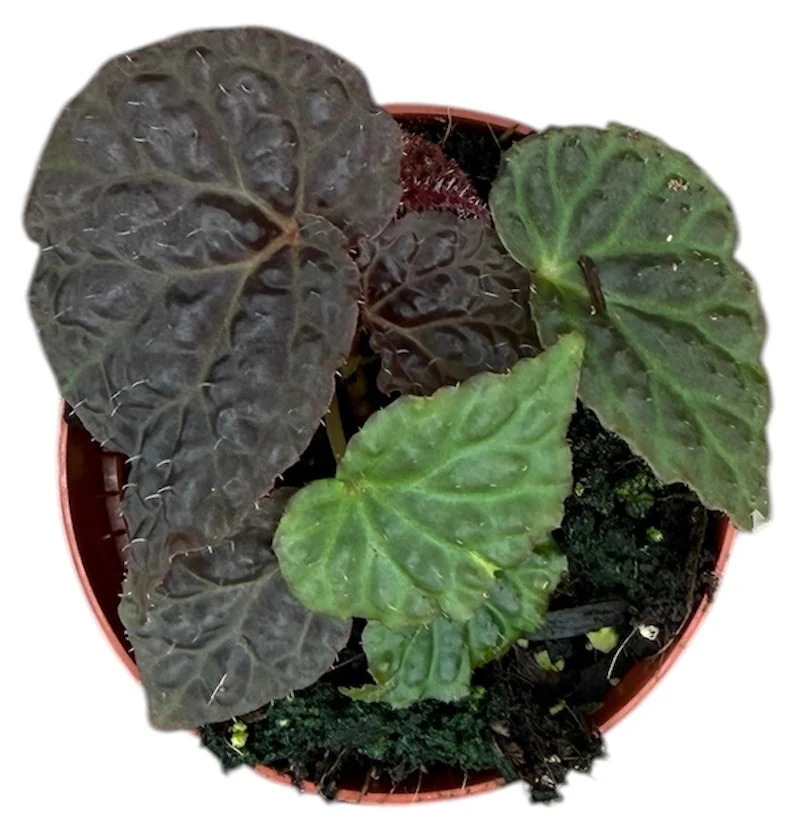
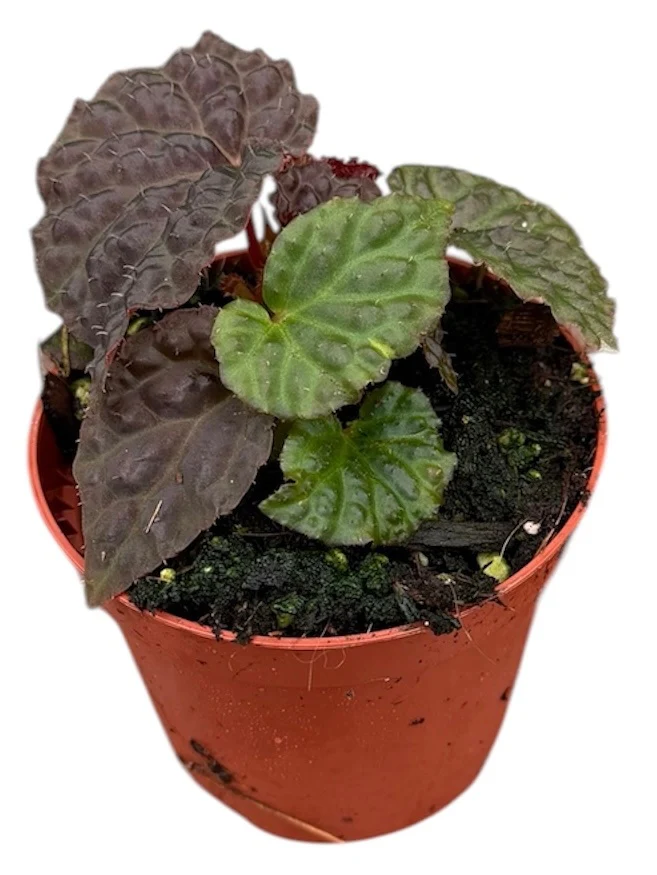
Begonia Black Mountain 8cm Pot 15cm Height House Plant
Begonia Black Mountain is a dramatic rex begonia with exceptionally dark foliage. The large, spiralled leaves are a deep charcoal-purple to almost black, with subtle metallic silver highlights and rich burgundy undertones. Depending on the light, the foliage can appear velvety black with a faint sheen running across the surface.
The leaves are heavily textured with gently ruffled edges and pronounced veining, giving the plant a luxurious, almost gothic appearance. The undersides are usually deep wine-red, adding further contrast when the foliage catches the light.
Begonia Black Mountain forms a compact, bushy mound, typically growing to around 20–30cm tall and wide. It is grown primarily for its striking foliage, although mature plants may occasionally produce small pale pink flowers that contrast beautifully against the dark leaves.
Its rich colouring makes it a perfect fit for your Dark Collection alongside Zamioculcas zamiifolia ‘Raven’, Philodendron ‘Florida Bronze’ and Tradescantia zebrina. The near-black foliage also creates a stunning contrast beside the lighter silver tones of Begonia Silver Moon.
Detailed Care Guide
Light
Begonia Black Mountain prefers bright, indirect light.
Place it near an east or north-facing window, or a little back from a brighter window. The dark foliage needs good light to maintain its rich colour, but direct sun can scorch the leaves and leave pale patches.
Too little light may cause the plant to become greener and lose some of its dramatic colouring.
Watering
Allow the top 2–3cm of compost to dry slightly before watering.
- Keep the compost evenly lightly moist
- Water thoroughly, then let excess drain away
- Never leave the pot sitting in water
- Reduce watering slightly in winter
Begonia Black Mountain is sensitive to overwatering, and constantly wet compost can quickly lead to root rot.
Water around the base of the plant rather than over the leaves to avoid spotting.
Humidity
This begonia enjoys moderate to high humidity, ideally around 50–70%.
To help increase humidity:
- Group it with other plants
- Use a pebble tray
- Position a humidifier nearby
Avoid misting directly onto the leaves, as the dark velvety foliage can mark easily if kept wet.
Temperature
Keep Begonia Black Mountain between 18–24°C.
Avoid:
- Temperatures below 15°C
- Cold draughts
- Sudden changes in temperature
- Radiators and heaters
Stable conditions help maintain the best foliage colour and prevent leaf drop.
Compost
Use a light, airy compost mix that drains well.
A suitable mix is:
- 2 parts houseplant compost
- 1 part perlite
- 1 part orchid bark or coco chips
This provides enough moisture without leaving the roots waterlogged.
Feeding
Feed every 2–4 weeks during spring and summer with a balanced liquid houseplant fertiliser at half strength.
Too much feed can scorch the roots and cause brown edges, so little and often is best.
Repotting
Repot every 1–2 years in spring if necessary.
Only move to a slightly larger pot if:
- Roots are coming through the drainage holes
- The compost dries out very quickly
- The plant has become overcrowded
Begonia Black Mountain prefers to remain slightly rootbound.
Common Problems
- Crispy brown edges: Low humidity or dry compost
- Yellowing leaves: Usually caused by overwatering
- Brown patches: Direct sun or water sitting on the leaves
- Faded, greener foliage: Not enough light
- Soft stems or collapsing growth: Root rot from overly wet soil
Pet Safety
Begonia Black Mountain is toxic if eaten and should be kept away from pets and young children. The leaves and stems can cause irritation and stomach upset if consumed.
Original: $32.98
-70%$32.98
$9.89Product Information
Product Information
Shipping & Returns
Shipping & Returns
Description
Begonia Black Mountain is a dramatic rex begonia with exceptionally dark foliage. The large, spiralled leaves are a deep charcoal-purple to almost black, with subtle metallic silver highlights and rich burgundy undertones. Depending on the light, the foliage can appear velvety black with a faint sheen running across the surface.
The leaves are heavily textured with gently ruffled edges and pronounced veining, giving the plant a luxurious, almost gothic appearance. The undersides are usually deep wine-red, adding further contrast when the foliage catches the light.
Begonia Black Mountain forms a compact, bushy mound, typically growing to around 20–30cm tall and wide. It is grown primarily for its striking foliage, although mature plants may occasionally produce small pale pink flowers that contrast beautifully against the dark leaves.
Its rich colouring makes it a perfect fit for your Dark Collection alongside Zamioculcas zamiifolia ‘Raven’, Philodendron ‘Florida Bronze’ and Tradescantia zebrina. The near-black foliage also creates a stunning contrast beside the lighter silver tones of Begonia Silver Moon.
Detailed Care Guide
Light
Begonia Black Mountain prefers bright, indirect light.
Place it near an east or north-facing window, or a little back from a brighter window. The dark foliage needs good light to maintain its rich colour, but direct sun can scorch the leaves and leave pale patches.
Too little light may cause the plant to become greener and lose some of its dramatic colouring.
Watering
Allow the top 2–3cm of compost to dry slightly before watering.
- Keep the compost evenly lightly moist
- Water thoroughly, then let excess drain away
- Never leave the pot sitting in water
- Reduce watering slightly in winter
Begonia Black Mountain is sensitive to overwatering, and constantly wet compost can quickly lead to root rot.
Water around the base of the plant rather than over the leaves to avoid spotting.
Humidity
This begonia enjoys moderate to high humidity, ideally around 50–70%.
To help increase humidity:
- Group it with other plants
- Use a pebble tray
- Position a humidifier nearby
Avoid misting directly onto the leaves, as the dark velvety foliage can mark easily if kept wet.
Temperature
Keep Begonia Black Mountain between 18–24°C.
Avoid:
- Temperatures below 15°C
- Cold draughts
- Sudden changes in temperature
- Radiators and heaters
Stable conditions help maintain the best foliage colour and prevent leaf drop.
Compost
Use a light, airy compost mix that drains well.
A suitable mix is:
- 2 parts houseplant compost
- 1 part perlite
- 1 part orchid bark or coco chips
This provides enough moisture without leaving the roots waterlogged.
Feeding
Feed every 2–4 weeks during spring and summer with a balanced liquid houseplant fertiliser at half strength.
Too much feed can scorch the roots and cause brown edges, so little and often is best.
Repotting
Repot every 1–2 years in spring if necessary.
Only move to a slightly larger pot if:
- Roots are coming through the drainage holes
- The compost dries out very quickly
- The plant has become overcrowded
Begonia Black Mountain prefers to remain slightly rootbound.
Common Problems
- Crispy brown edges: Low humidity or dry compost
- Yellowing leaves: Usually caused by overwatering
- Brown patches: Direct sun or water sitting on the leaves
- Faded, greener foliage: Not enough light
- Soft stems or collapsing growth: Root rot from overly wet soil
Pet Safety
Begonia Black Mountain is toxic if eaten and should be kept away from pets and young children. The leaves and stems can cause irritation and stomach upset if consumed.