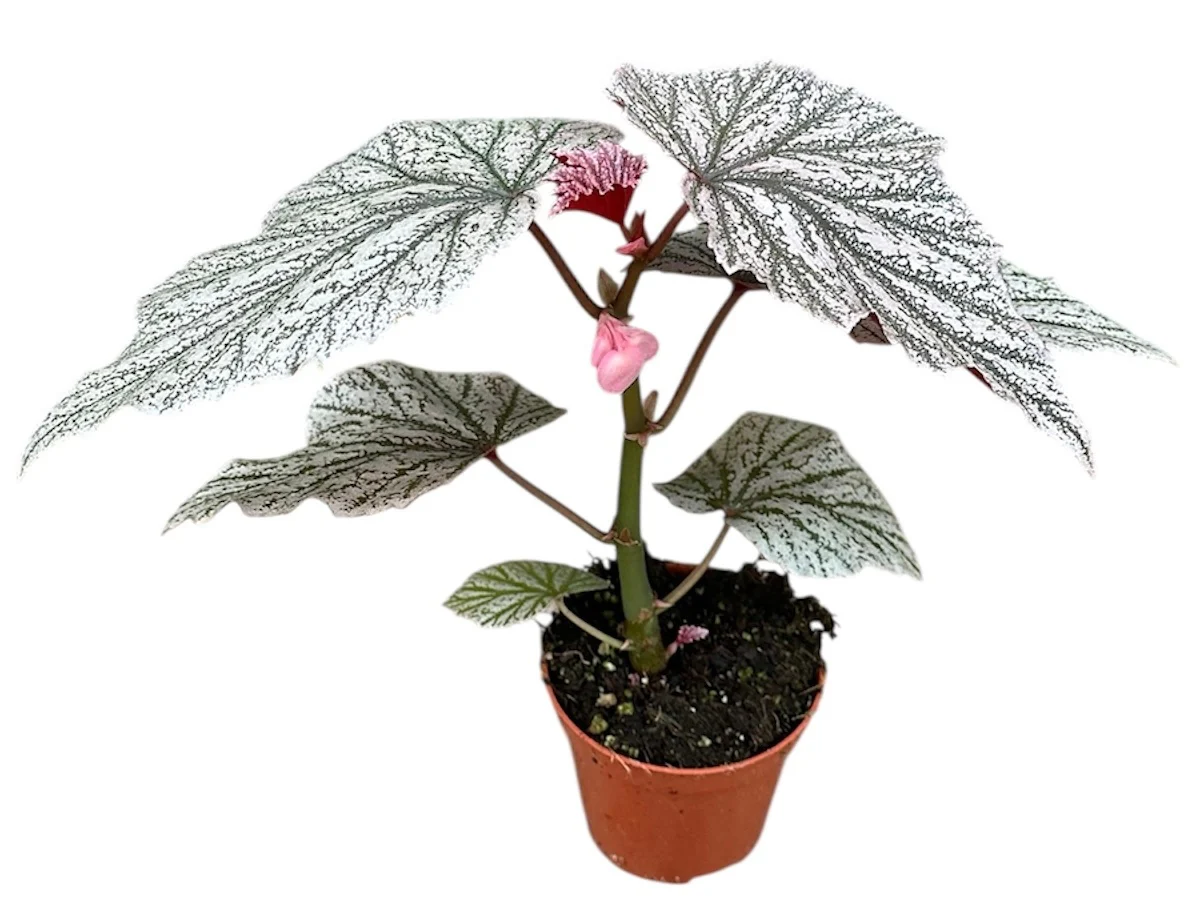
Begonia Pink Mix 8cm Pot 15cm Height House Plant
Begonia Pink Mix is a beautiful mixed selection of begonias featuring a range of pink-toned foliage, flowers and patterns. Depending on the individual plant included, you may see leaves with blush pink splashes, silver and green marbling, burgundy undersides or soft pink blooms held above the foliage.
Each plant in the mix is slightly different, making every one unique. Some plants may have bold, patterned rex begonia-style leaves, whilst others may have softer, rounded foliage with delicate pink flowers. The shared feature throughout the collection is the striking pink colouring that makes these begonias stand out in any houseplant display.
Begonia Pink Mix plants usually remain compact, making them ideal for shelves, desks, windowsills and terrariums. Most varieties will grow to around 20–35cm tall and wide over time.
The pink tones pair especially well with the plants in your Pink Hues collection, particularly alongside Ficus ‘Belize’, Syngonium ‘Pink Robusta’ and Aglaonema ‘Pink Star’, creating a coordinated display full of warm, colourful foliage.
Detailed Care Guide
Although the exact appearance may vary, most begonias in a pink mix enjoy very similar care.
Light
Place your Begonia Pink Mix in bright, indirect light.
A position near an east or north-facing window is ideal. Too much direct sunlight can scorch the leaves and fade the pink colouring, whilst too little light may reduce the intensity of the colours and slow growth.
Watering
Water when the top 2–3cm of compost feels dry.
Begonias prefer lightly moist compost, but they do not like to sit in wet soil.
- Water thoroughly, then allow excess water to drain away
- Reduce watering during autumn and winter
- Never leave the pot standing in water
Overwatering is one of the most common causes of problems and can quickly lead to root rot.
Humidity
Most begonias enjoy moderate to high humidity, ideally around 50–70%.
They grow best in kitchens, bathrooms or grouped with other houseplants. If your home is dry, especially during winter, a pebble tray or humidifier can help.
Avoid misting directly onto the leaves, particularly on varieties with textured or velvety foliage, as this can cause spotting.
Temperature
Keep your Begonia Pink Mix somewhere warm, ideally between 18–24°C.
Avoid:
- Cold draughts
- Temperatures below 15°C
- Sudden temperature changes
- Placing it close to radiators
Compost
Use a light, airy compost that drains well whilst still holding a little moisture.
A good mix is:
- 2 parts houseplant compost
- 1 part perlite
- 1 part orchid bark or coco coir
This helps prevent soggy roots whilst keeping the plant healthy.
Feeding
Feed every 2–4 weeks during spring and summer with a balanced liquid fertiliser diluted to half strength.
Too much fertiliser can scorch the roots and cause brown edges on the leaves, so little and often is best.
Repotting
Repot every 1–2 years in spring if needed. Most begonias prefer to be slightly snug in their pots.
Only move up to a pot one size larger when:
- Roots are growing from the drainage holes
- The compost dries out very quickly
- The plant has outgrown its current pot
Common Problems
- Brown crispy edges: Low humidity or dry compost
- Yellowing leaves: Usually overwatering
- Mushy stems or drooping growth: Root rot from sitting in wet soil
- Faded pink colouring: Not enough light
- Brown patches on leaves: Direct sun or water sitting on the foliage
Pet Safety
Begonias are toxic if eaten and should be kept away from pets and young children. The leaves and stems can cause irritation and stomach upset if consumed.
Original: $39.58
-70%$39.58
$11.87Product Information
Product Information
Shipping & Returns
Shipping & Returns
Description
Begonia Pink Mix is a beautiful mixed selection of begonias featuring a range of pink-toned foliage, flowers and patterns. Depending on the individual plant included, you may see leaves with blush pink splashes, silver and green marbling, burgundy undersides or soft pink blooms held above the foliage.
Each plant in the mix is slightly different, making every one unique. Some plants may have bold, patterned rex begonia-style leaves, whilst others may have softer, rounded foliage with delicate pink flowers. The shared feature throughout the collection is the striking pink colouring that makes these begonias stand out in any houseplant display.
Begonia Pink Mix plants usually remain compact, making them ideal for shelves, desks, windowsills and terrariums. Most varieties will grow to around 20–35cm tall and wide over time.
The pink tones pair especially well with the plants in your Pink Hues collection, particularly alongside Ficus ‘Belize’, Syngonium ‘Pink Robusta’ and Aglaonema ‘Pink Star’, creating a coordinated display full of warm, colourful foliage.
Detailed Care Guide
Although the exact appearance may vary, most begonias in a pink mix enjoy very similar care.
Light
Place your Begonia Pink Mix in bright, indirect light.
A position near an east or north-facing window is ideal. Too much direct sunlight can scorch the leaves and fade the pink colouring, whilst too little light may reduce the intensity of the colours and slow growth.
Watering
Water when the top 2–3cm of compost feels dry.
Begonias prefer lightly moist compost, but they do not like to sit in wet soil.
- Water thoroughly, then allow excess water to drain away
- Reduce watering during autumn and winter
- Never leave the pot standing in water
Overwatering is one of the most common causes of problems and can quickly lead to root rot.
Humidity
Most begonias enjoy moderate to high humidity, ideally around 50–70%.
They grow best in kitchens, bathrooms or grouped with other houseplants. If your home is dry, especially during winter, a pebble tray or humidifier can help.
Avoid misting directly onto the leaves, particularly on varieties with textured or velvety foliage, as this can cause spotting.
Temperature
Keep your Begonia Pink Mix somewhere warm, ideally between 18–24°C.
Avoid:
- Cold draughts
- Temperatures below 15°C
- Sudden temperature changes
- Placing it close to radiators
Compost
Use a light, airy compost that drains well whilst still holding a little moisture.
A good mix is:
- 2 parts houseplant compost
- 1 part perlite
- 1 part orchid bark or coco coir
This helps prevent soggy roots whilst keeping the plant healthy.
Feeding
Feed every 2–4 weeks during spring and summer with a balanced liquid fertiliser diluted to half strength.
Too much fertiliser can scorch the roots and cause brown edges on the leaves, so little and often is best.
Repotting
Repot every 1–2 years in spring if needed. Most begonias prefer to be slightly snug in their pots.
Only move up to a pot one size larger when:
- Roots are growing from the drainage holes
- The compost dries out very quickly
- The plant has outgrown its current pot
Common Problems
- Brown crispy edges: Low humidity or dry compost
- Yellowing leaves: Usually overwatering
- Mushy stems or drooping growth: Root rot from sitting in wet soil
- Faded pink colouring: Not enough light
- Brown patches on leaves: Direct sun or water sitting on the foliage
Pet Safety
Begonias are toxic if eaten and should be kept away from pets and young children. The leaves and stems can cause irritation and stomach upset if consumed.