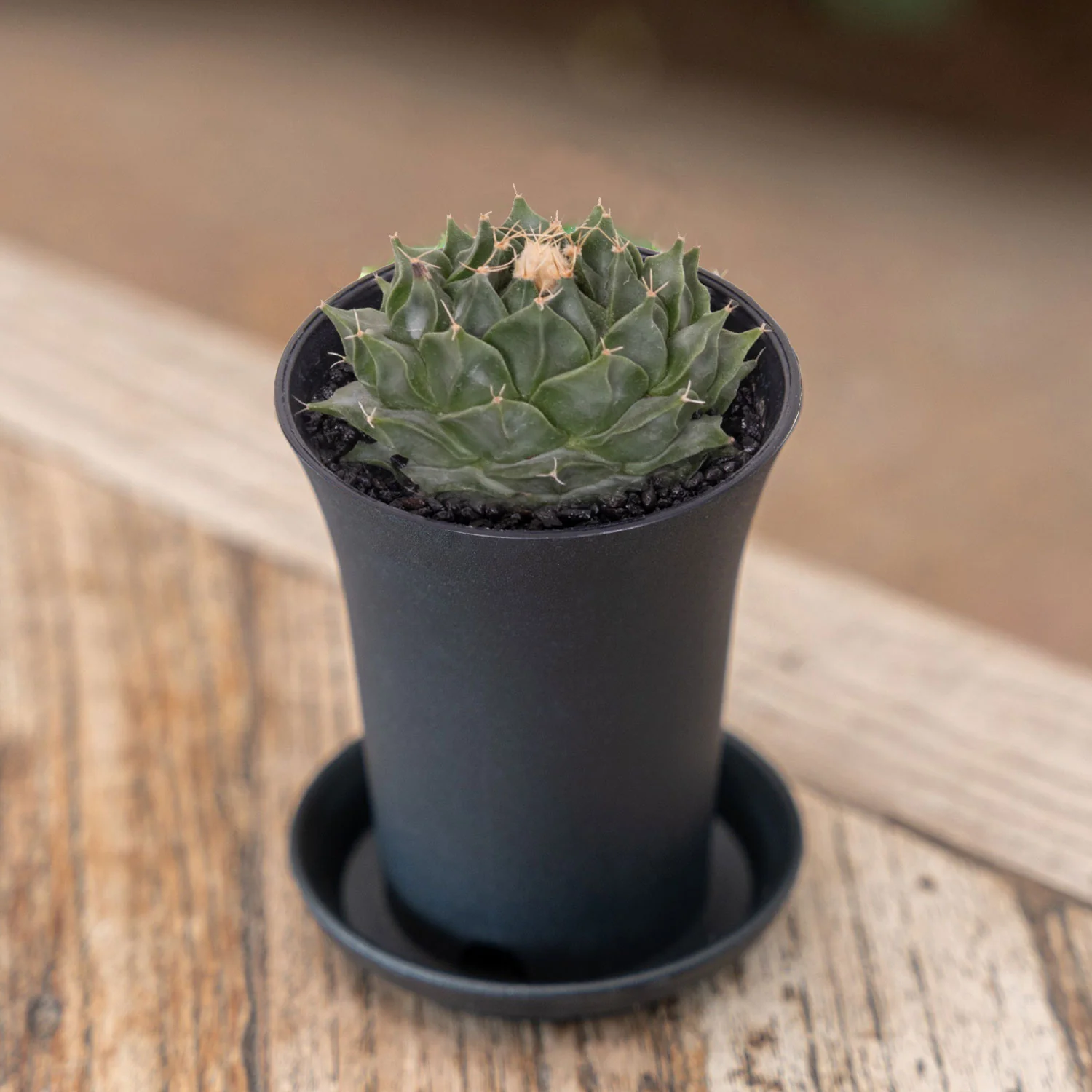
Cactus Obregonia Denegrii House Plant in 7.5cm Pot
Obregonia denegrii, commonly known as the Artichoke Cactus, is one of the most unusual and sought-after cacti in the world, admired for its geometric, spiral growth and deeply sculptural form. A member of the Cactaceae family and native to the arid limestone regions of Tamaulipas, Mexico, this extraordinary species is instantly recognisable for its tightly arranged, triangular tubercles that resemble an artichoke or pine cone.
The plant forms a low, flattened rosette with thick, grey-green to blue-green segments arranged in a perfect spiral pattern. Each tubercle has a rough, almost stone-like texture, giving the cactus a prehistoric, fossilised appearance. Spineless and slow-growing, Obregonia denegrii looks more like a piece of natural sculpture than a traditional cactus — making it a true collector’s species and a centrepiece in any serious cactus collection.
Rare, architectural, and timeless, Obregonia denegrii is a living example of desert minimalism and natural design perfection.
Obregonia denegrii – Care Guide
Light
Thrives in bright, indirect to lightly filtered sunlight. It enjoys strong light to maintain compact growth and pronounced texture, but should be protected from harsh midday sun, which can scorch the grey-green epidermis. A bright windowsill or greenhouse with light shade is ideal.
Watering
Water very sparingly. Allow the soil to dry out completely between waterings, then water thoroughly and let all excess drain away. Overwatering is the most common cause of failure with Obregonia denegrii. During winter dormancy, water only once every 4–6 weeks, or not at all if kept cool.
Temperature and Humidity
Temperature: Prefers warm conditions between 18–30 °C during the growing season. It can tolerate cooler temperatures down to around 8–10 °C if kept completely dry.
Humidity: Low humidity is essential. Ensure excellent airflow to prevent rot and fungal problems.
Soil and Potting
Use a very free-draining mineral cactus mix — pumice, coarse sand, grit, limestone chips, and a small amount of cactus compost work best. This species prefers lean, rocky substrates similar to its natural habitat. Repot every 3–4 years in spring, as it dislikes frequent disturbance.
Feeding
Feed lightly once or twice during spring and summer with a diluted, low-nitrogen cactus fertiliser. Overfeeding can cause unnatural growth and reduce the plant’s compact form. Do not feed in autumn or winter.
Pruning and Maintenance
No pruning is required. Remove old dried flowers if present and gently brush dust away with a soft brush to keep the textured surface clean. Handle carefully, as the tubercles can bruise if knocked.
Growth and Maturity
An extremely slow-growing cactus, Obregonia denegrii may take many years to reach maturity, typically growing to 8–15 cm in diameter. Mature plants can produce small pink to purplish flowers from the centre during summer, followed by elongated seed pods. Its slow pace and long lifespan make it a true long-term collector’s plant.
Common Issues
-
Rot: Almost always caused by overwatering or poor drainage.
-
Sun scorch: Too much direct, intense sunlight.
-
Shrivelling: Extended drought during the growing season (light watering corrects this).
-
Pests: Rare, but occasionally mealybugs — treat promptly if detected.
Background and Benefits
Obregonia denegrii is a monotypic genus — meaning it is the only species in its genus — which adds significantly to its botanical importance and collectability. It grows in extremely harsh, rocky conditions in the wild, where rainfall is scarce and soils are mineral-rich and alkaline.
Highly prized by cactus enthusiasts, this species symbolises patience, resilience, and natural order. Its mathematically precise spiral growth has made it a favourite among lovers of geometry, architecture, and minimalist design.
Quick Care Summary
-
Light: Bright, indirect to filtered sun
-
Water: Allow soil to dry completely; water very sparingly
-
Temperature: 18–30 °C (down to 8–10 °C if dry)
-
Humidity: Low; excellent airflow required
-
Soil: Mineral cactus mix – pumice, grit, sand, limestone
-
Feed: Light feeding once or twice in spring/summer
-
Growth: 8–15 cm; slow-growing, spiral artichoke-shaped cactus
⚠️ Toxicity note: Non-toxic and spineless; safe to handle with care.
Styling Tip
Display Obregonia denegrii in a shallow ceramic or stone pot to emphasise its flattened, geometric form. A top dressing of pale gravel or crushed limestone enhances its natural, fossil-like appearance. Perfect for minimalist interiors, cactus cabinets, or collector shelves, this plant pairs beautifully with other sculptural species such as Astrophytum asterias, Ariocarpus, or Gymnocalycium forms.
Original: $39.58
-70%$39.58
$11.87Product Information
Product Information
Shipping & Returns
Shipping & Returns
Description
Obregonia denegrii, commonly known as the Artichoke Cactus, is one of the most unusual and sought-after cacti in the world, admired for its geometric, spiral growth and deeply sculptural form. A member of the Cactaceae family and native to the arid limestone regions of Tamaulipas, Mexico, this extraordinary species is instantly recognisable for its tightly arranged, triangular tubercles that resemble an artichoke or pine cone.
The plant forms a low, flattened rosette with thick, grey-green to blue-green segments arranged in a perfect spiral pattern. Each tubercle has a rough, almost stone-like texture, giving the cactus a prehistoric, fossilised appearance. Spineless and slow-growing, Obregonia denegrii looks more like a piece of natural sculpture than a traditional cactus — making it a true collector’s species and a centrepiece in any serious cactus collection.
Rare, architectural, and timeless, Obregonia denegrii is a living example of desert minimalism and natural design perfection.
Obregonia denegrii – Care Guide
Light
Thrives in bright, indirect to lightly filtered sunlight. It enjoys strong light to maintain compact growth and pronounced texture, but should be protected from harsh midday sun, which can scorch the grey-green epidermis. A bright windowsill or greenhouse with light shade is ideal.
Watering
Water very sparingly. Allow the soil to dry out completely between waterings, then water thoroughly and let all excess drain away. Overwatering is the most common cause of failure with Obregonia denegrii. During winter dormancy, water only once every 4–6 weeks, or not at all if kept cool.
Temperature and Humidity
Temperature: Prefers warm conditions between 18–30 °C during the growing season. It can tolerate cooler temperatures down to around 8–10 °C if kept completely dry.
Humidity: Low humidity is essential. Ensure excellent airflow to prevent rot and fungal problems.
Soil and Potting
Use a very free-draining mineral cactus mix — pumice, coarse sand, grit, limestone chips, and a small amount of cactus compost work best. This species prefers lean, rocky substrates similar to its natural habitat. Repot every 3–4 years in spring, as it dislikes frequent disturbance.
Feeding
Feed lightly once or twice during spring and summer with a diluted, low-nitrogen cactus fertiliser. Overfeeding can cause unnatural growth and reduce the plant’s compact form. Do not feed in autumn or winter.
Pruning and Maintenance
No pruning is required. Remove old dried flowers if present and gently brush dust away with a soft brush to keep the textured surface clean. Handle carefully, as the tubercles can bruise if knocked.
Growth and Maturity
An extremely slow-growing cactus, Obregonia denegrii may take many years to reach maturity, typically growing to 8–15 cm in diameter. Mature plants can produce small pink to purplish flowers from the centre during summer, followed by elongated seed pods. Its slow pace and long lifespan make it a true long-term collector’s plant.
Common Issues
-
Rot: Almost always caused by overwatering or poor drainage.
-
Sun scorch: Too much direct, intense sunlight.
-
Shrivelling: Extended drought during the growing season (light watering corrects this).
-
Pests: Rare, but occasionally mealybugs — treat promptly if detected.
Background and Benefits
Obregonia denegrii is a monotypic genus — meaning it is the only species in its genus — which adds significantly to its botanical importance and collectability. It grows in extremely harsh, rocky conditions in the wild, where rainfall is scarce and soils are mineral-rich and alkaline.
Highly prized by cactus enthusiasts, this species symbolises patience, resilience, and natural order. Its mathematically precise spiral growth has made it a favourite among lovers of geometry, architecture, and minimalist design.
Quick Care Summary
-
Light: Bright, indirect to filtered sun
-
Water: Allow soil to dry completely; water very sparingly
-
Temperature: 18–30 °C (down to 8–10 °C if dry)
-
Humidity: Low; excellent airflow required
-
Soil: Mineral cactus mix – pumice, grit, sand, limestone
-
Feed: Light feeding once or twice in spring/summer
-
Growth: 8–15 cm; slow-growing, spiral artichoke-shaped cactus
⚠️ Toxicity note: Non-toxic and spineless; safe to handle with care.
Styling Tip
Display Obregonia denegrii in a shallow ceramic or stone pot to emphasise its flattened, geometric form. A top dressing of pale gravel or crushed limestone enhances its natural, fossil-like appearance. Perfect for minimalist interiors, cactus cabinets, or collector shelves, this plant pairs beautifully with other sculptural species such as Astrophytum asterias, Ariocarpus, or Gymnocalycium forms.