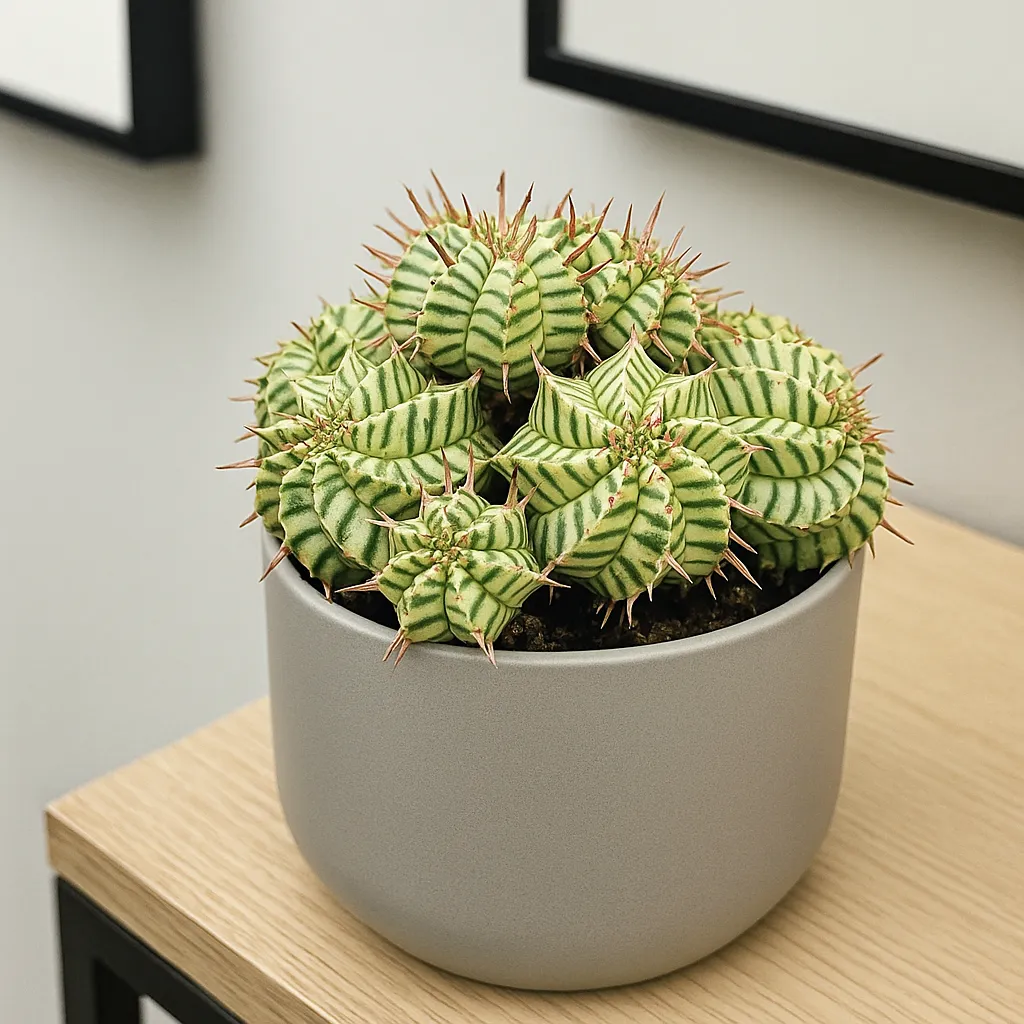


Euphorbia Meloformis Variegata Cactus House Plant in 10.5cm Pot
Euphorbia meloformis variegata is a rare and beautifully patterned succulent from the Euphorbiaceae family, native to South Africa. Often referred to as the Melon Spurge, this variegated form is particularly prized by collectors for its compact, sculptural shape and striking marbling.
The plant has a globular to columnar body, typically divided into 6–10 vertical ribs with distinct ridges. Its variegation appears as irregular streaks and swirls of creamy white, soft green, and sometimes hints of pink or yellow, creating a marbled effect across its surface. Over time, the plant develops small offsets (pups) at the base, forming attractive clusters.
In summer, mature plants may produce small, delicate yellow-green cyathia (Euphorbia flowers) on short stems. Its geometric form and pastel variegation make Euphorbia meloformis variegata an exceptional specimen for collectors of rare succulents or minimalistic plant displays.
Euphorbia meloformis variegata – Care Guide
Light
Thrives in bright light to full sun. Indoors, place near a sunny south- or west-facing window. Outdoors, provide full sun with protection from extreme midday heat. Variegated plants need strong light to maintain their colouring.
Watering
Water sparingly. Allow the soil to dry completely between waterings. During the growing season (spring and summer), water approximately every 2–3 weeks; in winter, water very rarely. Overwatering is the most common cause of issues.
Temperature and Humidity
-
Temperature: Prefers 20–30°C in summer and must be kept above 10°C in winter. Protect from frost at all times.
-
Humidity: Tolerates low humidity and thrives in dry air.
Soil and Potting
Use a gritty, free-draining cactus or succulent mix. Add extra sand or perlite if needed to ensure quick drainage. Repot every 2–3 years in spring, or when the plant outgrows its pot.
Feeding
Feed monthly during the growing season with a diluted cactus fertiliser. Do not feed during winter dormancy.
Pruning and Maintenance
Minimal maintenance is required. Remove dried flower stems or dead offsets if desired. Handle with care — all Euphorbias exude a milky sap that can irritate skin.
Growth and Maturity
A slow-growing succulent that typically reaches 10–15 cm tall and wide. Over time, it produces offsets to form a neat, rounded cluster.
Common Issues
-
Soft or yellowing stems: Overwatering or poor drainage.
-
Faded variegation: Insufficient light.
-
Sunburn marks: Sudden exposure to intense sun after low-light conditions.
-
Pests: Occasionally mealybugs or scale insects.
Background and Benefits
Euphorbia meloformis takes its name from the Greek “melo,” meaning melon, due to its round, ribbed shape. The variegated form adds a layer of colour and visual intrigue to the already sculptural species. Its resilience, geometric symmetry, and soft pastel tones make it a favourite for collectors of rare succulents and modern interior displays.
✅ Quick Care Summary
-
Light: Bright light to full sun
-
Water: Sparingly; allow soil to dry fully
-
Temperature: 20–30°C; protect below 10°C
-
Humidity: Low; prefers dry conditions
-
Soil: Gritty, free-draining cactus compost
-
Feed: Monthly in spring/summer
-
Growth: Compact globular succulent, 10–15 cm; ribbed body with cream, green, and pink marbling
Original: $52.78
-70%$52.78
$15.83Product Information
Product Information
Shipping & Returns
Shipping & Returns
Description
Euphorbia meloformis variegata is a rare and beautifully patterned succulent from the Euphorbiaceae family, native to South Africa. Often referred to as the Melon Spurge, this variegated form is particularly prized by collectors for its compact, sculptural shape and striking marbling.
The plant has a globular to columnar body, typically divided into 6–10 vertical ribs with distinct ridges. Its variegation appears as irregular streaks and swirls of creamy white, soft green, and sometimes hints of pink or yellow, creating a marbled effect across its surface. Over time, the plant develops small offsets (pups) at the base, forming attractive clusters.
In summer, mature plants may produce small, delicate yellow-green cyathia (Euphorbia flowers) on short stems. Its geometric form and pastel variegation make Euphorbia meloformis variegata an exceptional specimen for collectors of rare succulents or minimalistic plant displays.
Euphorbia meloformis variegata – Care Guide
Light
Thrives in bright light to full sun. Indoors, place near a sunny south- or west-facing window. Outdoors, provide full sun with protection from extreme midday heat. Variegated plants need strong light to maintain their colouring.
Watering
Water sparingly. Allow the soil to dry completely between waterings. During the growing season (spring and summer), water approximately every 2–3 weeks; in winter, water very rarely. Overwatering is the most common cause of issues.
Temperature and Humidity
-
Temperature: Prefers 20–30°C in summer and must be kept above 10°C in winter. Protect from frost at all times.
-
Humidity: Tolerates low humidity and thrives in dry air.
Soil and Potting
Use a gritty, free-draining cactus or succulent mix. Add extra sand or perlite if needed to ensure quick drainage. Repot every 2–3 years in spring, or when the plant outgrows its pot.
Feeding
Feed monthly during the growing season with a diluted cactus fertiliser. Do not feed during winter dormancy.
Pruning and Maintenance
Minimal maintenance is required. Remove dried flower stems or dead offsets if desired. Handle with care — all Euphorbias exude a milky sap that can irritate skin.
Growth and Maturity
A slow-growing succulent that typically reaches 10–15 cm tall and wide. Over time, it produces offsets to form a neat, rounded cluster.
Common Issues
-
Soft or yellowing stems: Overwatering or poor drainage.
-
Faded variegation: Insufficient light.
-
Sunburn marks: Sudden exposure to intense sun after low-light conditions.
-
Pests: Occasionally mealybugs or scale insects.
Background and Benefits
Euphorbia meloformis takes its name from the Greek “melo,” meaning melon, due to its round, ribbed shape. The variegated form adds a layer of colour and visual intrigue to the already sculptural species. Its resilience, geometric symmetry, and soft pastel tones make it a favourite for collectors of rare succulents and modern interior displays.
✅ Quick Care Summary
-
Light: Bright light to full sun
-
Water: Sparingly; allow soil to dry fully
-
Temperature: 20–30°C; protect below 10°C
-
Humidity: Low; prefers dry conditions
-
Soil: Gritty, free-draining cactus compost
-
Feed: Monthly in spring/summer
-
Growth: Compact globular succulent, 10–15 cm; ribbed body with cream, green, and pink marbling