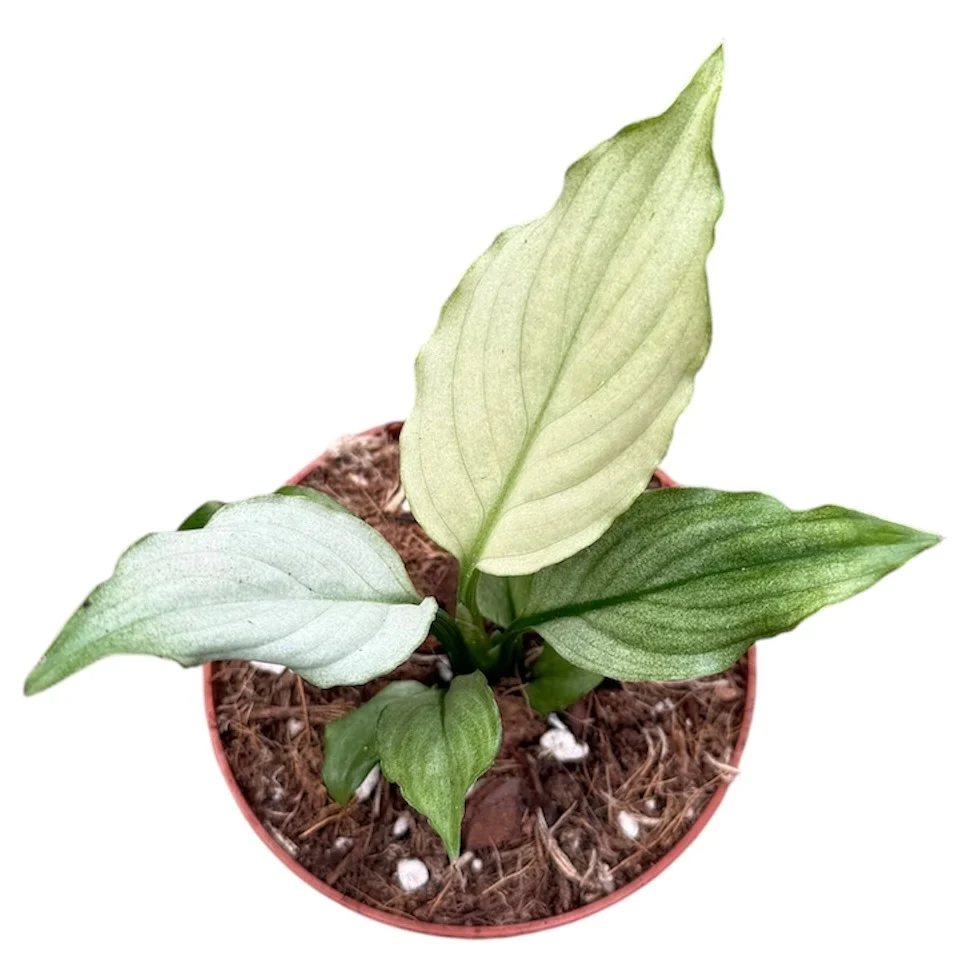
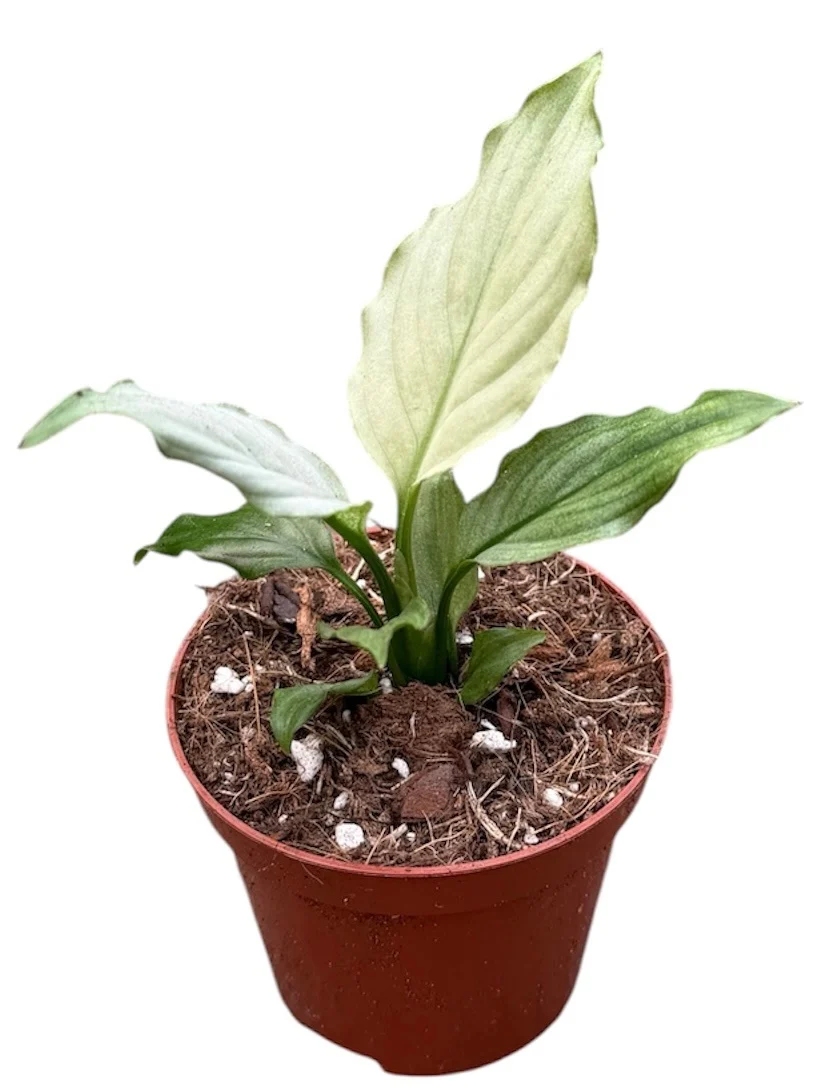
Spathiphyllum Blue Ice 8cm Pot 10cm Height Rare House Plant
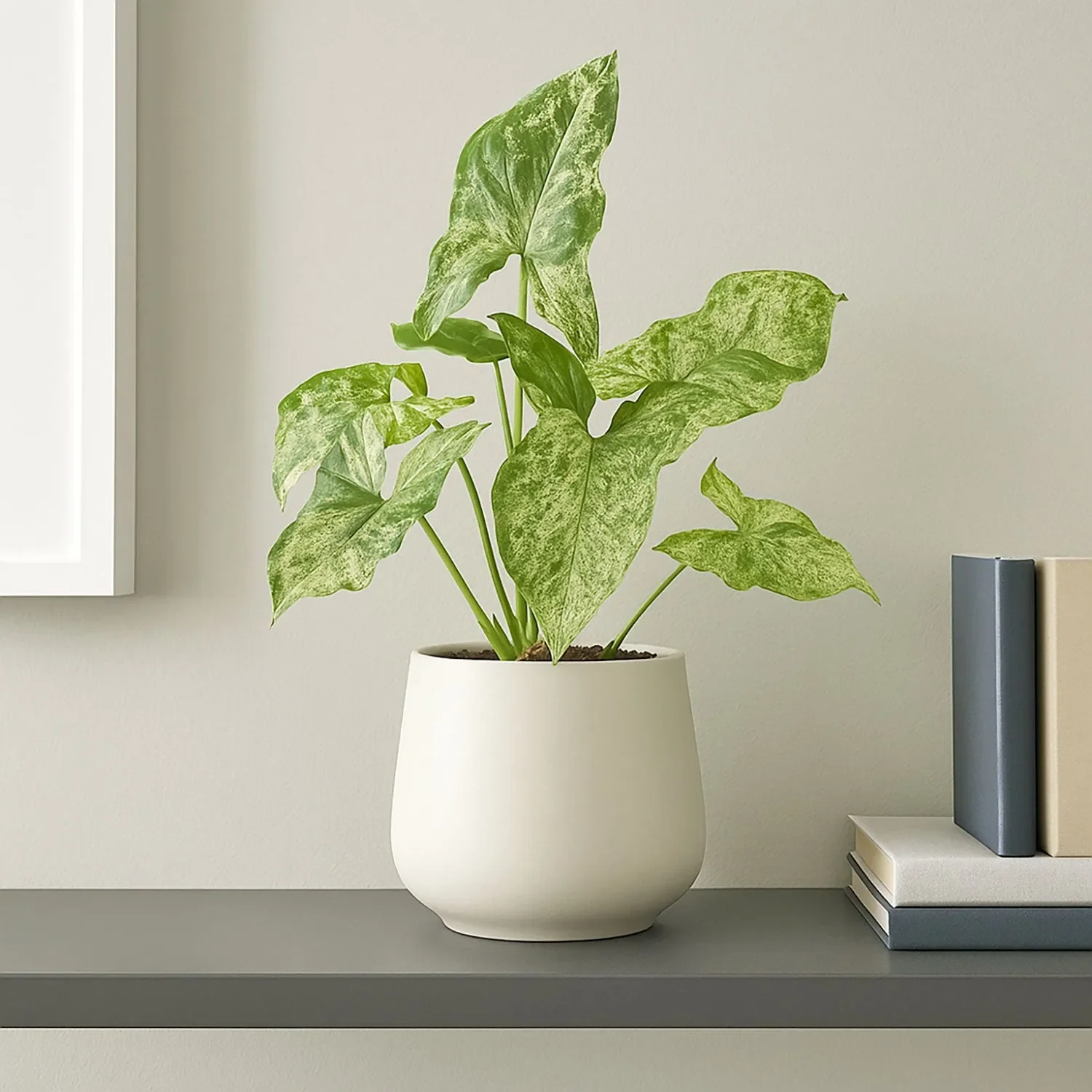
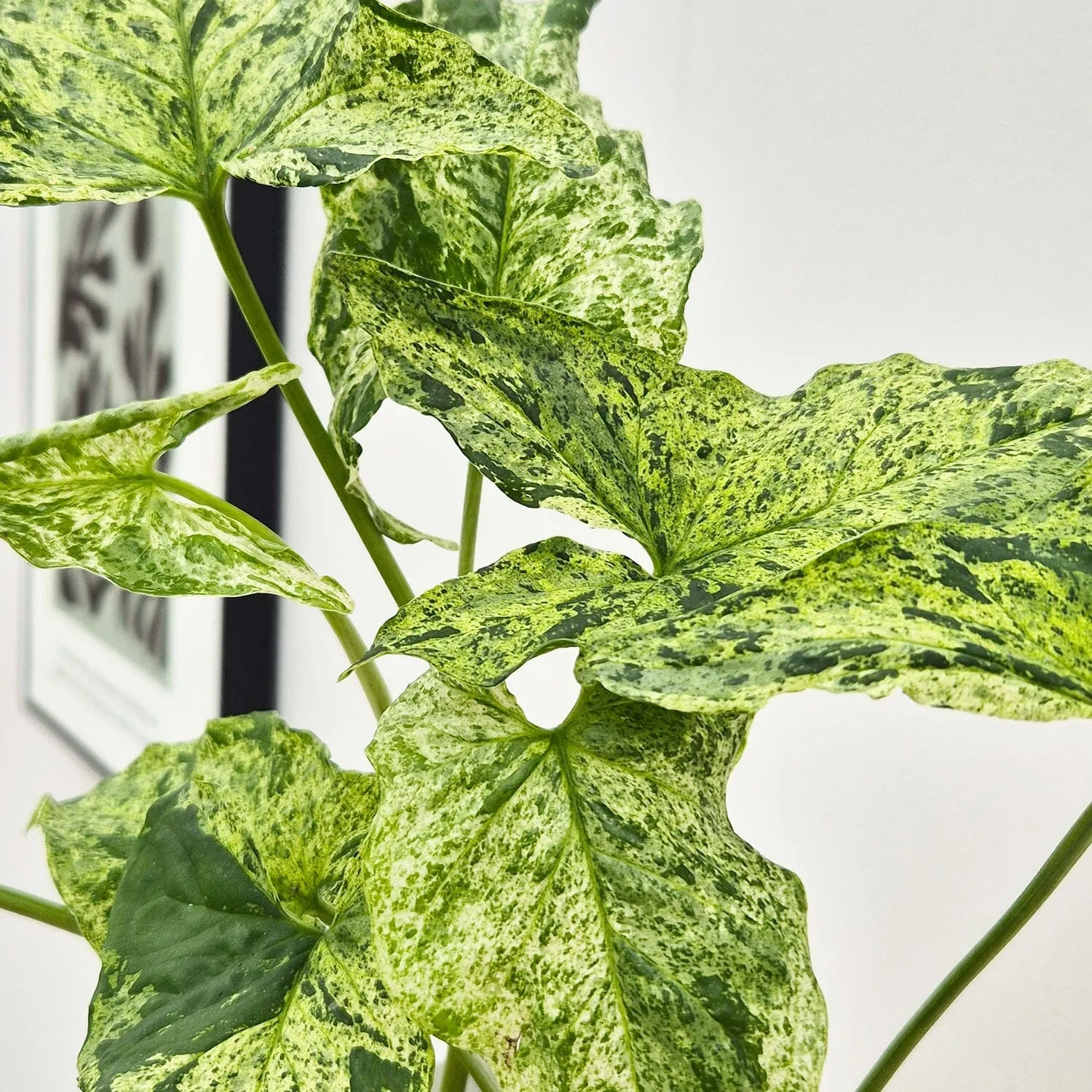
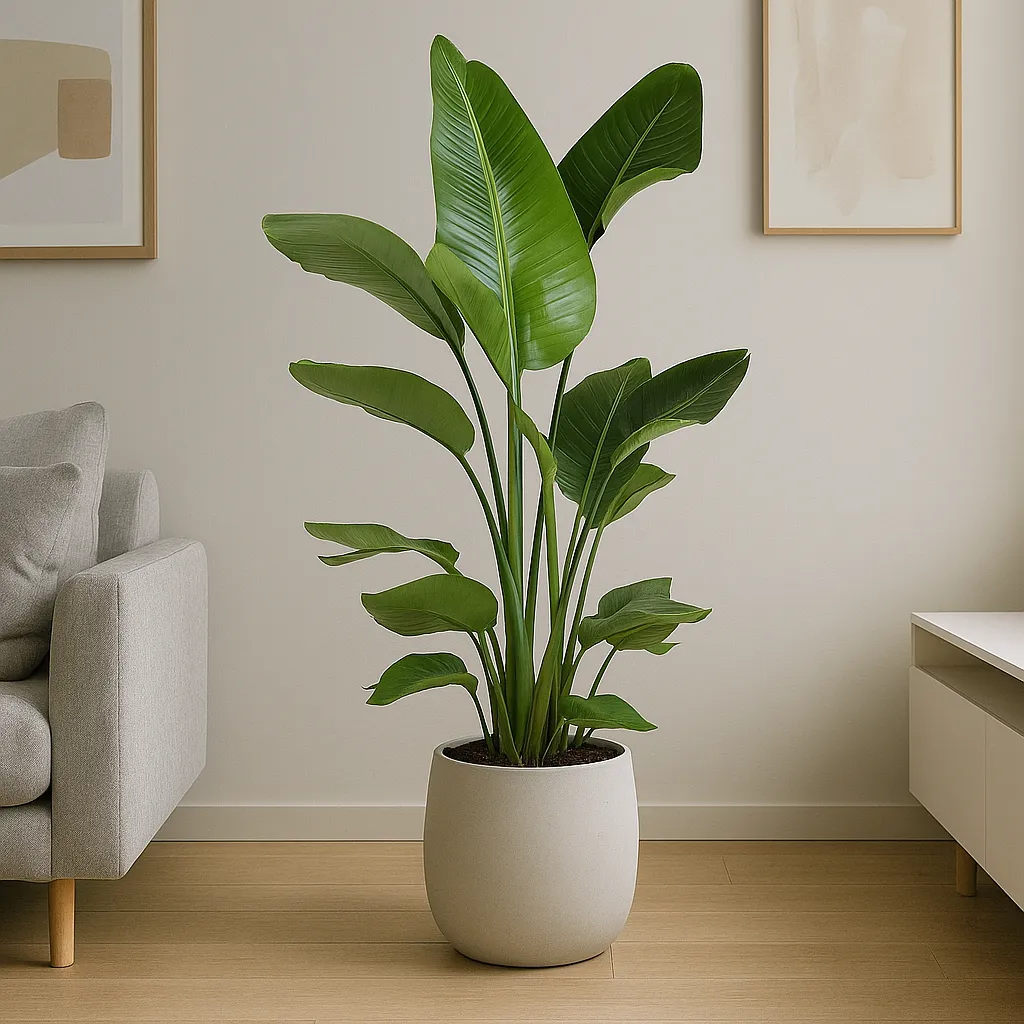
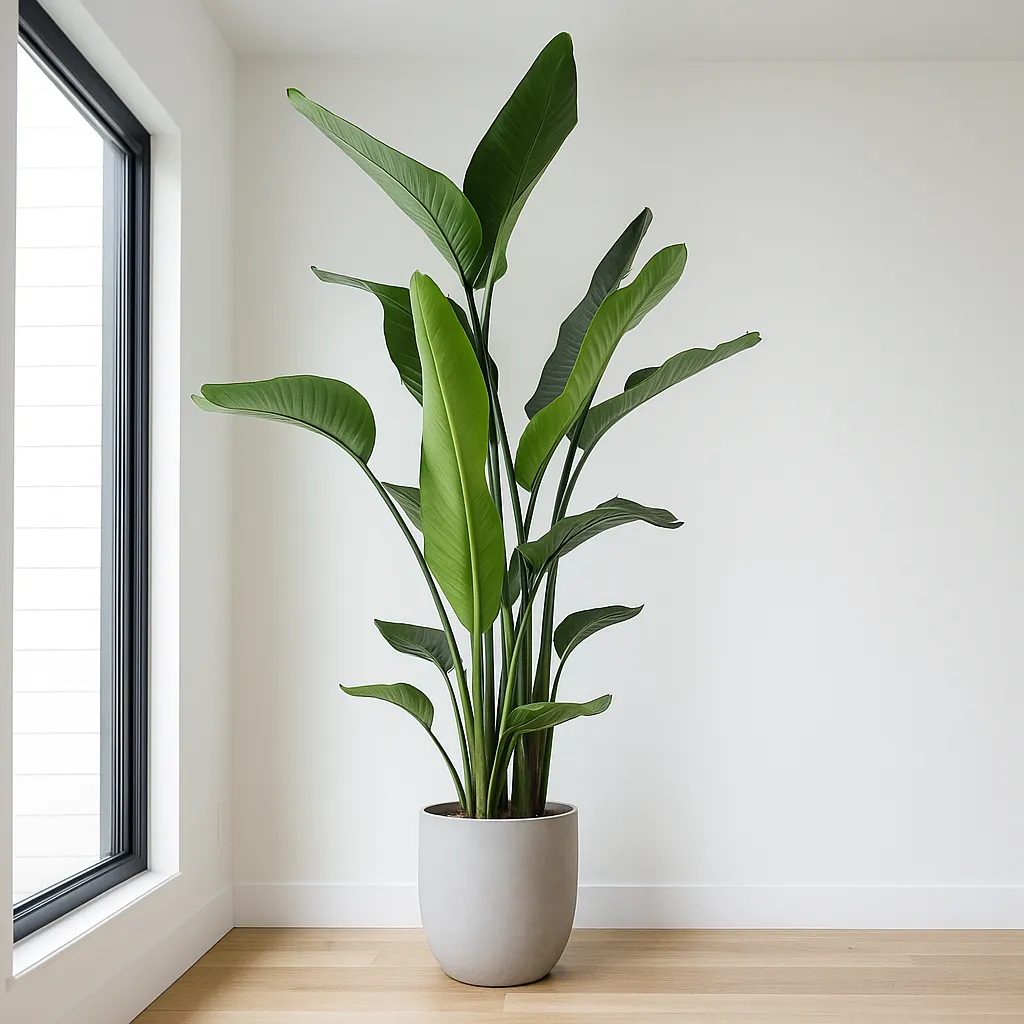
Spathiphyllum ‘Blue Ice’ is a striking and unusual Peace Lily variety grown for its dramatic foliage and elegant tropical appearance. Unlike traditional green Peace Lilies, ‘Blue Ice’ features deep green leaves with a cool-toned, almost blue-grey sheen that gives the plant its distinctive icy appearance. The glossy foliage is broad, heavily textured and architectural, making it an excellent statement plant for modern interiors.
As the plant matures, it develops a fuller, clumping growth habit with lush upright leaves that create a dense tropical display. Under the right conditions, mature plants can also produce the classic white Peace Lily flowers — elegant white spathes surrounding a pale spadix — which contrast beautifully against the darker foliage.
Spathiphyllum ‘Blue Ice’ is ideal for homes, offices and shaded indoor spaces thanks to its ability to tolerate lower light conditions while still maintaining an impressive appearance.
Key Features
- Rare and unusual Peace Lily variety
- Dark green foliage with a cool blue-toned sheen
- Large glossy leaves with a tropical appearance
- Produces elegant white flowers in good conditions
- Excellent air-purifying houseplant
- Suitable for lower light rooms
- Easy-care and beginner friendly
Spathiphyllum ‘Blue Ice’ Care Guide
Light Requirements
Spathiphyllum ‘Blue Ice’ prefers bright indirect light but is highly adaptable.
Best lighting conditions:
- Bright filtered light near a window
- East or north-facing rooms
- A few feet back from stronger south-facing windows
It can tolerate lower light conditions better than many tropical houseplants, although growth may slow and flowering can become less frequent.
Avoid prolonged direct sunlight, especially during summer, as it can scorch the leaves and fade the deep colouring.
Watering
Peace Lilies prefer lightly moist soil but dislike sitting in water.
Watering guide:
- Water when the top 2–3cm of soil feels dry
- Keep soil evenly moist during active growth
- Reduce watering slightly during winter
Spathiphyllum will often droop dramatically when thirsty, making it fairly easy to know when watering is needed. Once watered, the foliage usually recovers quickly.
Avoid:
- Constantly soggy compost
- Waterlogged pots
- Letting the plant stand in excess water
Overwatering is one of the most common causes of yellowing leaves and root rot.
Humidity
Spathiphyllum ‘Blue Ice’ enjoys moderate to high humidity.
Ideal humidity:
- 50%+ humidity preferred
- Benefits from kitchens and bathrooms with natural light
- Appreciates occasional misting or nearby humidifiers
Higher humidity helps maintain lush foliage and prevents crispy leaf edges.
Temperature
This tropical plant prefers warm indoor temperatures.
Ideal temperature range:
- 18°C to 27°C
Avoid:
- Temperatures below 12°C
- Cold draughts
- Radiators and sudden temperature fluctuations
Soil & Potting Mix
Use a well-draining but moisture-retentive houseplant compost.
Ideal mix:
- Houseplant compost
- Coco coir or peat-free organic matter
- Perlite or bark for drainage
The soil should remain lightly moist while still allowing airflow around the roots.
Feeding
Feed during the growing season for stronger foliage and flowering.
Recommended feeding:
- Balanced liquid houseplant fertiliser
- Every 2–4 weeks during spring and summer
Reduce feeding during autumn and winter when growth naturally slows.
Growth & Size
Spathiphyllum ‘Blue Ice’ develops into a lush medium to large houseplant over time.
Typical indoor size:
- Around 60–100cm tall
- Broad spreading foliage with dense clumping growth
Mature plants become increasingly impressive with age.
Flowering
With sufficient light and consistent care, ‘Blue Ice’ may produce elegant white flowers throughout the warmer months.
Flower production is encouraged by:
- Bright indirect light
- Consistent watering
- Regular feeding
- Stable warm temperatures
Common Problems
Yellow Leaves
Usually caused by:
- Overwatering
- Poor drainage
- Cold conditions
Brown Leaf Tips
Commonly linked to:
- Dry air
- Underwatering
- Mineral build-up from tap water
Drooping Leaves
Usually indicates thirst, although severe overwatering can also cause drooping.
Pet Safety
Like other Peace Lilies, Spathiphyllum ‘Blue Ice’ is toxic to pets if ingested due to calcium oxalate crystals.
Keep away from:
- Cats
- Dogs
- Small children
Why Choose Spathiphyllum ‘Blue Ice’?
Spathiphyllum ‘Blue Ice’ combines the easy-going nature of a traditional Peace Lily with richer foliage colouring and a more premium tropical appearance. Its dark glossy leaves, subtle blue undertones and elegant flowers make it a fantastic statement houseplant for both beginners and experienced collectors alike.
Product Information
Product Information
Shipping & Returns
Shipping & Returns
Description
Spathiphyllum ‘Blue Ice’ is a striking and unusual Peace Lily variety grown for its dramatic foliage and elegant tropical appearance. Unlike traditional green Peace Lilies, ‘Blue Ice’ features deep green leaves with a cool-toned, almost blue-grey sheen that gives the plant its distinctive icy appearance. The glossy foliage is broad, heavily textured and architectural, making it an excellent statement plant for modern interiors.
As the plant matures, it develops a fuller, clumping growth habit with lush upright leaves that create a dense tropical display. Under the right conditions, mature plants can also produce the classic white Peace Lily flowers — elegant white spathes surrounding a pale spadix — which contrast beautifully against the darker foliage.
Spathiphyllum ‘Blue Ice’ is ideal for homes, offices and shaded indoor spaces thanks to its ability to tolerate lower light conditions while still maintaining an impressive appearance.
Key Features
- Rare and unusual Peace Lily variety
- Dark green foliage with a cool blue-toned sheen
- Large glossy leaves with a tropical appearance
- Produces elegant white flowers in good conditions
- Excellent air-purifying houseplant
- Suitable for lower light rooms
- Easy-care and beginner friendly
Spathiphyllum ‘Blue Ice’ Care Guide
Light Requirements
Spathiphyllum ‘Blue Ice’ prefers bright indirect light but is highly adaptable.
Best lighting conditions:
- Bright filtered light near a window
- East or north-facing rooms
- A few feet back from stronger south-facing windows
It can tolerate lower light conditions better than many tropical houseplants, although growth may slow and flowering can become less frequent.
Avoid prolonged direct sunlight, especially during summer, as it can scorch the leaves and fade the deep colouring.
Watering
Peace Lilies prefer lightly moist soil but dislike sitting in water.
Watering guide:
- Water when the top 2–3cm of soil feels dry
- Keep soil evenly moist during active growth
- Reduce watering slightly during winter
Spathiphyllum will often droop dramatically when thirsty, making it fairly easy to know when watering is needed. Once watered, the foliage usually recovers quickly.
Avoid:
- Constantly soggy compost
- Waterlogged pots
- Letting the plant stand in excess water
Overwatering is one of the most common causes of yellowing leaves and root rot.
Humidity
Spathiphyllum ‘Blue Ice’ enjoys moderate to high humidity.
Ideal humidity:
- 50%+ humidity preferred
- Benefits from kitchens and bathrooms with natural light
- Appreciates occasional misting or nearby humidifiers
Higher humidity helps maintain lush foliage and prevents crispy leaf edges.
Temperature
This tropical plant prefers warm indoor temperatures.
Ideal temperature range:
- 18°C to 27°C
Avoid:
- Temperatures below 12°C
- Cold draughts
- Radiators and sudden temperature fluctuations
Soil & Potting Mix
Use a well-draining but moisture-retentive houseplant compost.
Ideal mix:
- Houseplant compost
- Coco coir or peat-free organic matter
- Perlite or bark for drainage
The soil should remain lightly moist while still allowing airflow around the roots.
Feeding
Feed during the growing season for stronger foliage and flowering.
Recommended feeding:
- Balanced liquid houseplant fertiliser
- Every 2–4 weeks during spring and summer
Reduce feeding during autumn and winter when growth naturally slows.
Growth & Size
Spathiphyllum ‘Blue Ice’ develops into a lush medium to large houseplant over time.
Typical indoor size:
- Around 60–100cm tall
- Broad spreading foliage with dense clumping growth
Mature plants become increasingly impressive with age.
Flowering
With sufficient light and consistent care, ‘Blue Ice’ may produce elegant white flowers throughout the warmer months.
Flower production is encouraged by:
- Bright indirect light
- Consistent watering
- Regular feeding
- Stable warm temperatures
Common Problems
Yellow Leaves
Usually caused by:
- Overwatering
- Poor drainage
- Cold conditions
Brown Leaf Tips
Commonly linked to:
- Dry air
- Underwatering
- Mineral build-up from tap water
Drooping Leaves
Usually indicates thirst, although severe overwatering can also cause drooping.
Pet Safety
Like other Peace Lilies, Spathiphyllum ‘Blue Ice’ is toxic to pets if ingested due to calcium oxalate crystals.
Keep away from:
- Cats
- Dogs
- Small children
Why Choose Spathiphyllum ‘Blue Ice’?
Spathiphyllum ‘Blue Ice’ combines the easy-going nature of a traditional Peace Lily with richer foliage colouring and a more premium tropical appearance. Its dark glossy leaves, subtle blue undertones and elegant flowers make it a fantastic statement houseplant for both beginners and experienced collectors alike.